西门子

Search documents
成都:工业强市,奋力跑赢“上半场”
Mei Ri Jing Ji Xin Wen· 2025-06-30 06:50
Core Insights - Chengdu's industrial sector is experiencing significant growth, with a reported 8.0% year-on-year increase in industrial added value from January to May 2023, driven by strong performances in automotive manufacturing and electronics [1][2] - The city is focusing on digital transformation and the integration of AI in manufacturing, aiming to enhance efficiency and quality across various industries [2][3] - Chengdu's strategic initiatives include the establishment of smart factories and digital workshops, with a target of upgrading 2,000 industrial enterprises by 2025 [4] Industrial Growth - Chengdu's industrial added value increased by 8.0% year-on-year in the first five months of 2023, with 24 out of 37 major industries reporting growth [1] - The automotive manufacturing sector saw a remarkable growth of 26.2%, while the production of new energy vehicles surged by 435.8% [1] - The city has built 283 smart factories and digital workshops, establishing a "flock-style" transformation model [3] Digital Transformation - The government is promoting the "AI + manufacturing" initiative to enhance the integration of digital technologies with manufacturing advantages [2] - Chengdu aims to achieve a digital design tool penetration rate of 93% and a key process CNC rate of 68% by 2025 [4] - The city has been recognized as a pilot city for the "5G + industrial internet" integration application [3] Global Expansion - Chengdu enterprises are increasingly looking to international markets, with significant export growth of 23.4% for local brands from January to April 2023 [5] - The city has organized multiple overseas industrial activities, resulting in over 50 billion yuan in signed contracts [5][6] - The 2025 "Invest in Chengdu" global investment conference showcased 16 major industrial projects with a total signing amount of 825.3 billion yuan [6] Regional Coordination - Chengdu is positioned as a core city in the Chengdu-Chongqing economic circle, with plans to enhance its role as a western economic and technological innovation center [7] - The city is collaborating with surrounding areas to promote regional economic development and has launched a high-quality development plan for county-level cities [8] - The focus on low-altitude economy development is part of a broader strategy to enhance industrial cooperation and resource sharing within the Chengdu metropolitan area [8]
为“中国芯”装上“苏州脑”
Su Zhou Ri Bao· 2025-06-28 00:48
Core Insights - The rapid development of emerging technologies such as 5G, artificial intelligence, and autonomous driving has led to a significant increase in chip demand, with EDA (Electronic Design Automation) being a crucial technology in the semiconductor industry that determines chip performance and innovation capability [1] - The global chip design market is dominated by the "three giants" of EDA: Cadence, Synopsys, and Siemens, but domestic companies in Suzhou are making strides in the EDA sector [1] - Suzhou-based companies like Peifeng Tunan, Fuhui Technology, and Xiliancheng Software are innovating in EDA tools and services, aiming to enhance the competitiveness of domestic semiconductor firms [1][2][3] Company Developments - Xiliancheng focuses on the design phase of chip development, utilizing self-developed EDA tools to analyze chip layouts and significantly improve efficiency, achieving a tenfold increase in analysis speed compared to manual methods [2][3] - The company has developed a technology chain that includes EDA tools and IP design services, helping clients navigate intellectual property challenges and reduce development costs [3][4] - Fuhui Technology has launched an AI-based EDA tool, AnaSage, which automates the design process for analog chips, reducing design cycles from months to weeks and improving accuracy [5][6][7] - Peifeng Tunan is creating a "virtual wafer factory" using digital twin technology, providing comprehensive EDA software and process development services to optimize semiconductor manufacturing [8][9][10] Industry Trends - The EDA sector is witnessing a shift towards domestic innovation, with companies like Peifeng Tunan and Fuhui Technology developing tools that not only compete with international products but also offer unique advantages tailored to local needs [9][10] - The integration of AI and traditional EDA tools is becoming a key differentiator, enabling faster and more efficient chip design processes [6][7] - The collaboration between local semiconductor firms and EDA companies is enhancing the development of tailored solutions, fostering a closed-loop ecosystem from design to production [10]
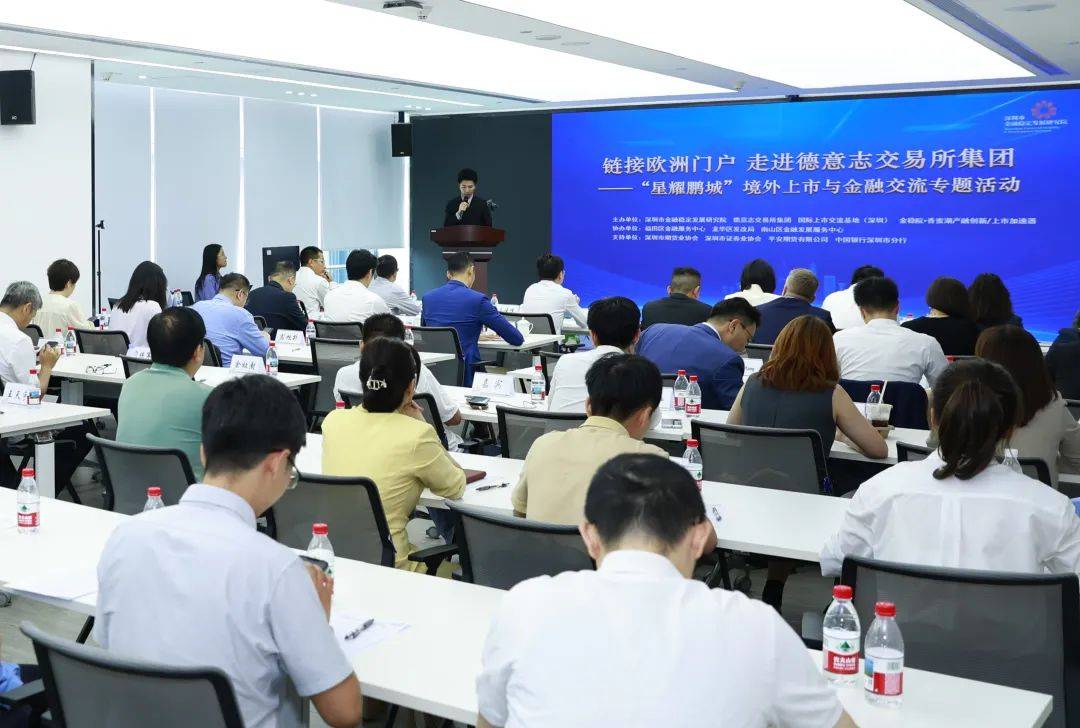
链接欧洲门户 走进德意志交易所集团——“星耀鹏城”境外上市与金融交流专题活动成功举行
Sou Hu Cai Jing· 2025-06-27 02:20
Core Insights - The event "Linking to the European Gateway: Entering the Deutsche Börse Group" was successfully held in Shenzhen, aimed at promoting innovation and openness in the Guangdong-Hong Kong-Macao Greater Bay Area, facilitating connections between tech enterprises and financial institutions with European markets [1][2] - Deutsche Börse Group, as the largest exchange group in continental Europe, showcased its comprehensive financial services, including support for companies from listing to foreign exchange management, and emphasized the importance of cross-border financial cooperation [3][5] Group 1: Event Overview - The event was co-hosted by multiple organizations including the Shenzhen Financial Stability Development Research Institute and Deutsche Börse Group, with support from local financial associations [2] - It attracted representatives from over a hundred listed companies, financial institutions, and specialized enterprises in the Greater Bay Area [1] Group 2: Deutsche Börse Group's Role - Deutsche Börse Group operates across the entire financial market trading process, providing a full cycle of support for Shenzhen enterprises seeking internationalization [3][5] - As of March 2025, 496 companies were listed on Deutsche Börse, including major international firms like Siemens and BASF, highlighting its role as a key platform for Chinese enterprises to access European capital markets [5] Group 3: Financial Services and Trends - The event included discussions on global energy market trends and risk management strategies, with participation from leading financial institutions and experts [5][6] - The Shenzhen Financial Stability Development Research Institute is actively promoting the "Starry Phoenix City" initiative to support high-quality development of enterprises and enhance internationalization [7][8] Group 4: Shenzhen's Market Position - As of May 31, 2025, Shenzhen had a total of 584 listed companies, with 151 being overseas listings, ranking third in the number of A-share listed companies in China [7] - The city has seen a total of 8 new listings in 2025, tying with Suzhou for the highest number of new listings in the country [7]

风暴眼|在海外击溃中国企业的,竟然往往不是友商
Feng Huang Wang Cai Jing· 2025-06-27 00:26
Core Insights - Chinese companies are successfully entering international markets by addressing specific consumer needs and preferences, leading to the emergence of world-class enterprises in various sectors [1][2][3] Group 1: Successful Case Studies - TYMO, a personal care brand, targets specific demographics such as Latinx and African descent consumers with its hair styling products, priced at $70 to $80, achieving significant sales in North America and Europe [2] - Carote, a cookware brand, capitalizes on the trend of aesthetically pleasing kitchenware, offering products in pastel colors that have become bestsellers on global platforms like Amazon [2] - Govee, a lighting brand, focuses on DIY culture by allowing users to customize their lighting setups, successfully tapping into the demand for personalized home decor in Western markets [3] Group 2: Market Entry Strategies - Companies should tailor their overseas strategies based on specific market demands rather than generalizing about entire countries, as demonstrated by a pet apparel brand that found success in Europe by catering to high-end winter clothing needs [4][5] - Understanding the target consumer group is crucial; for instance, marketing to immigrant communities in Germany can be more effective than targeting the broader German population [5] Group 3: Common Pitfalls - Misunderstanding consumer needs can lead to product failures, as seen with a product that added unnecessary features, causing consumer confusion rather than meeting their relaxation needs [6] - Companies often face challenges not just from competitors but also from local industry associations that may resist foreign entrants disrupting established markets [8] Group 4: Cultural Considerations - There is a significant cultural difference in consumer behavior between Eastern and Western markets, with Chinese companies often adopting a multifunctional approach while Western consumers prefer specialized products [7] - Effective communication and cultural understanding are essential for success in foreign markets, as relying solely on translation tools may not bridge the cultural gaps [15] Group 5: Future Trends - The "Great Wealth Transfer" is expected to create a new generation of consumers with significant purchasing power, emphasizing the need for companies to engage with younger demographics now to build long-term relationships [13][14] - Companies must adapt to changing lifestyles and consumer preferences, as the current generation values experiences and aesthetics, which can influence product development and marketing strategies [14]
向“智”升级 中德加强智能制造领域合作
Xin Hua She· 2025-06-26 12:24
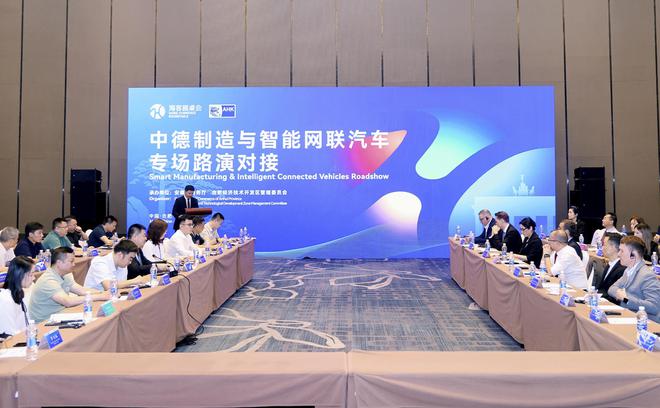
Group 1 - The core event was the Sino-German Intelligent Manufacturing Industry Matchmaking Conference held in Hefei, Anhui, where nearly 100 German companies and institutions participated, resulting in 28 trade investment projects worth over 6.8 billion yuan [2][5] - The conference highlighted the shift in Sino-German cooperation from "technology introduction" to "joint innovation" and "mutual empowerment," providing a collaborative model for global intelligent manufacturing [2][5] - German companies, such as Würth and Trumpf, are increasingly engaging in R&D in China, recognizing the strong innovation potential of Chinese enterprises and talent [3][4] Group 2 - The 2024/2025 Business Confidence Survey by the China-Germany Chamber of Commerce indicated that 55% of German companies in China expect their Chinese competitors to become industry innovation leaders in the next five years [3] - The cooperation between Chinese and German firms is expanding from individual projects to a systematic ecosystem, with a focus on technology sharing, standard recognition, and capacity collaboration [5] - Local governments in China, such as Anhui and Hunan, are actively supporting Sino-German cooperation through the establishment of international cooperation parks and financial incentives for German investment projects [5]
自主可控应对新挑战,国产EDA多项新成果亮相
Bei Jing Ri Bao Ke Hu Duan· 2025-06-25 08:09
Group 1 - The EDA (Electronic Design Automation) industry, known as the "mother of chips," is a crucial technology field for China's technological advancements, with a pressing need for self-sufficiency in the EDA supply chain due to international trade dynamics [1] - The domestic digital EDA leader, Hejian Gongruan, has launched several self-developed EDA and IP products, marking significant progress in domestic EDA technology innovation, with performance levels comparable to international benchmarks [1] - Recent U.S. government actions have led to a suspension of EDA and IP product services to mainland China, indicating extreme restrictions on China's semiconductor industry and a complete reliance on domestic EDA supply chains for advanced chip technology [1] Group 2 - Domestic EDA and IP companies are transitioning from "usable" to "highly usable" tools, with Hejian Gongruan offering free trials of key products to users before the U.S. EDA supply ban [2] - Hejian Gongruan's high-speed interface IP solutions have achieved breakthroughs in domestic technology, supporting both domestic and international advanced processes, with successful deployments across hundreds of companies [2] - The company's intelligent computing chip interconnect IP solutions cover advanced standards, facilitating breakthroughs in performance for high-performance computing, communication, autonomous driving, and industrial IoT sectors, thus promoting a self-sufficient supply chain for China's supercomputing and AI chip enterprises [2]
工业AI如何落地?不是通用智能,而是“懂行”的AI
Hua Er Jie Jian Wen· 2025-06-25 03:10
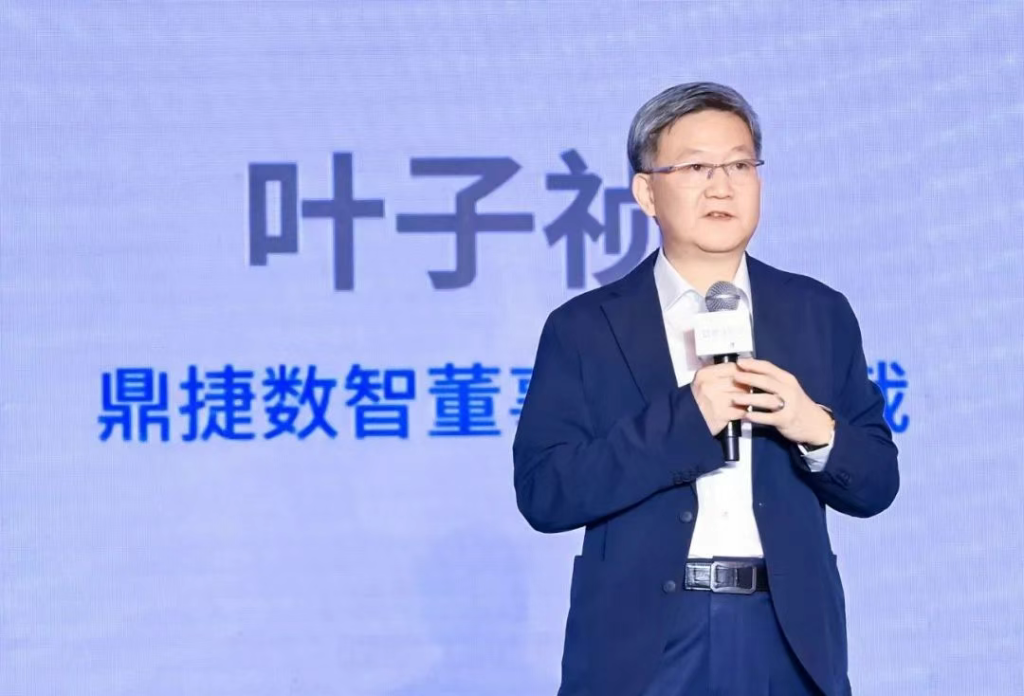
Core Insights - The article discusses the rise of Industrial AI as a significant revolution in the manufacturing sector, contrasting it with the more visible generative AI trends in content creation and software [1] - It highlights the challenge of transferring tacit knowledge from experienced workers to digital systems, emphasizing the need for a system that can effectively bridge the gap between operational technology and information technology [1][2] Group 1: Industrial AI Development - Industrial AI is seen as a solution to the challenge of integrating the tacit knowledge of experienced workers into digital systems, which is crucial for the future of Chinese manufacturing [1] - Dingjie Zhizhi has launched a series of enterprise-level AI suites aimed at connecting the "arterial" and "venous" knowledge within manufacturing [1][2] Group 2: Challenges in AI Adoption - Many manufacturing companies face a dilemma between the risks of falling behind in AI adoption and the potential pitfalls of investing in technology without a clear strategic purpose [4] - The need for a "thinking system" rather than just a technical system is emphasized, advocating for a decoupled architecture that separates knowledge from action [4] Group 3: Product Matrix and Features - Dingjie has developed a "three-layer rocket" product matrix to integrate the experience of skilled workers with large model reasoning [5] - The first layer, the Intelligent Data Suite, aims to conduct a comprehensive "data CT" for factories, addressing the issue of data silos between operational and management data [6][7] Group 4: Intelligent Collaboration - The second layer involves the creation of a self-developed MACP protocol that enables digital employees to collaborate effectively, enhancing decision-making processes across departments [8][10] - This collaboration allows for complex decision-making tasks to be executed efficiently by multiple AI agents working together [10] Group 5: AIoT Command Center - The third layer includes an AIoT command center that connects various production and facility devices, facilitating a comprehensive AI-driven operational environment [11][12] - The Industrial Mechanism AI aims to understand the underlying physical processes in manufacturing, transforming tacit knowledge into actionable insights [12][13] Group 6: Knowledge Digitalization - Dingjie’s system addresses the aging workforce in manufacturing by digitizing tacit knowledge, capturing it in a structured format that AI can understand [14] - The approach includes multi-modal data capture during demonstrations to lower the barrier for knowledge entry into the system [14] Group 7: Real-World Applications - Case studies from Jia Li Co. and Ying Fei Te illustrate the practical applications of Dingjie’s AI solutions, showcasing significant improvements in productivity and efficiency [17][19][23] - Jia Li Co. achieved a 20% increase in per capita output and a 15% reduction in energy consumption through AI-driven transformations [19] Group 8: Business Model Evolution - The article discusses a shift from traditional project-based revenue models to subscription-based models in industrial software, driven by AI capabilities [24][25] - This evolution allows for a more flexible adoption of AI technologies, reducing the initial capital investment required from companies [25] Group 9: Future of Industrial AI - The competitive landscape is shifting towards the ability to translate complex industry knowledge into AI-understandable formats, which will be crucial for success in the industrial AI space [28] - The article concludes with the notion that the future of industrial AI will depend on trust in algorithms, continuous knowledge acquisition, and the ability to foster a thriving ecosystem of third-party developers [28][29]
杭汽轮B(200771) - 000771杭汽轮B投资者关系管理信息20250623
2025-06-23 08:38
Group 1: Company Overview and Product Applications - The company specializes in gas turbine products primarily used in distributed energy projects across various industries, including power, chemicals, municipal services, and papermaking [1] - Successful provision of gas turbine units for projects such as Kunshan GCL, Zhejiang Petrochemical, and China Guodian [1] - Over 50 gas turbine units have been delivered in collaboration with Siemens [1] Group 2: Research and Development Progress - The first self-developed 55MW gas turbine successfully ignited in 2025, with ongoing performance testing [2] - Hydrogen combustion tests have been completed with a 40% hydrogen blend [2] - The first commercial demonstration project has been established in Lianyungang to promote marketization of self-developed turbines [2] Group 3: Revenue Sources and Service Capabilities - Revenue from gas turbine business includes project sales and long-term service contracts [2] - A wholly-owned subsidiary is developing a professional talent pool for gas turbine maintenance, enhancing service capabilities [2] Group 4: Competitive Advantages - The company has 67 years of experience in the industrial turbine market, serving core clients in refining, petrochemicals, metallurgy, and coal chemical industries [2] - Established multiple domestic industry standards, creating competitive advantages in market presence, brand, technology, quality, talent, and service [2] - Customization, flexible manufacturing, and agile service enhance user experience [2] Group 5: Major Asset Restructuring Progress - The restructuring plan has been approved by the State-owned Assets Supervision and Administration Commission and the shareholders' meeting, with subsequent reporting to the stock exchange [2]

中金公司 全球投资月月谈
中金· 2025-06-23 02:09
Investment Rating - The report suggests a cautious approach towards various sectors due to the impact of tariffs on GDP and corporate earnings, particularly in Europe and Japan [1][4][12]. Core Insights - Tariffs have a varied impact on GDP and corporate earnings across different regions, with Europe experiencing a GDP impact of approximately 0.2%-0.4% and Japan facing a potential drag of 0.9% on GDP growth for the fiscal year 2025 [1][4][12]. - Most corporate earnings are affected by tariffs in the range of 5%-15%, with companies having high profit margins able to pass on costs through price increases [1][5][8]. - The consumer sector, particularly sportswear, can absorb tariff costs through price hikes, while large appliances are less affected due to local production [1][8][50]. - The technology sector, including companies like Apple and Amazon, faces significant challenges, with potential profit impacts exceeding double digits for Amazon [1][8][42]. Summary by Sections Economic Impact - The static assessment indicates that tariffs will reduce Japan's GDP growth by 0.9% and EPS growth by 5%-7% in 2025 [3][12]. - The EU's new tariffs could suppress GDP growth by 0.2-0.4 percentage points, with additional uncertainty potentially reducing growth by another 0.2 percentage points [1][10]. Sector-Specific Impacts - In the consumer sector, sports footwear can offset tariff costs with price increases of 8%-10%, while luxury goods may require a 3%-5% price increase to maintain margins [1][8][50]. - The technology sector is particularly vulnerable, with Apple facing an 8%-10% negative impact and Amazon potentially experiencing double-digit profit declines [1][8][42]. - The chemical industry shows resilience due to global operations and high local self-sufficiency, although supply chain vulnerabilities remain a concern [29]. Corporate Strategies - Companies with diversified revenue sources, such as those with significant overseas income, are less affected by U.S. tariffs [5][8]. - Firms in the industrial sector are adapting by adjusting pricing strategies to mitigate the impact of tariffs on profit margins [32][36]. - The report highlights the importance of local production and supply chain management in mitigating tariff impacts, particularly for companies in the electrical equipment sector [35][36]. Market Dynamics - The report notes that the European market is currently underweight in terms of investment, with capital inflows remaining low despite the challenges posed by tariffs [11]. - The agricultural sector is facing increased tariffs from China, but the overall impact on U.S. agricultural exports has been limited due to reduced reliance on U.S. soybeans [27][28]. Future Outlook - The report emphasizes the need for companies to remain agile in response to ongoing tariff negotiations and potential retaliatory measures from other countries [6][7]. - Companies in the semiconductor and hardware sectors are advised to closely monitor tariff developments, as they could significantly impact production costs and pricing strategies [42][45].

「大水漫灌」失效,家电家居打新如何重构增长?
36氪· 2025-06-20 09:05
为什么家电家居打新 呈现出非常明显的两极分化? 2024年,海信曾推出了一款高端电视产品。这款产品被寄予厚望,但实际的销量并没有达到预期。 面对落差,海信内部多次开会复盘。一次会议上,海信视像营销副总经理孙建勋指出了一个尖锐问题:如果卖点展示不能精准解决用户痛点,即使参数再 高,也没有用。 特别是电商平台的新品销售,过去那种习以为常的展示参数策略,如今失效了。会议现场众人面面相觑,很多人还停留在旧经验中。 在复盘了去年高端新品的问题之后,海信重振旗鼓,今年推出又一款高端电视新品E8Q。这款产品创造了海信高端产品首发的纪录,在京东上线28小时就成 为百吋销售TOP1。客单价1万以上的高端电视,一天就实现1400台销售——这个全新的销售纪录远远超出了孙建勋的预期。 同一个品牌的两款新品,销售表现为何相去甚远? 这是家电家居行业经历迷茫期的一个缩影。最近几年,智能化浪潮给家电家居行业带来的增长红利逐渐消退,很 多 家电家居 品牌在 新品销售上有些心有余 而力不足。 今年,沉寂已久的家电家居行业出现了久违的热闹,各个品牌都在推新品,但局面却是冰火两重天。一些品牌虽然推出了新品,整体表现并不尽如人意,甚 至让整个品牌陷 ...