
拓普集团

Search documents
抢位成功!「宇树科技」率先完成IPO辅导
Robot猎场备忘录· 2025-11-16 00:05
Core Viewpoint - Yushu Technology has completed its IPO counseling and is entering the acceptance phase, marking a significant step towards becoming the first humanoid robot company listed on the A-share market [2][4]. Group 1: IPO Progress of Yushu Technology - Yushu Technology completed its IPO counseling on November 10 and is now in the acceptance phase [2]. - The company submitted its counseling registration materials on July 8 and was publicly announced on July 18, taking four months to reach this stage [4]. - If the IPO application proceeds smoothly, Yushu Technology is expected to be listed in the first half of 2026 [4]. Group 2: Industry Context and Competition - The humanoid robot industry is experiencing a rush towards IPOs, with many leading companies accelerating their processes [4]. - The article highlights the chaotic nature of the industry, where some startups are accused of misleading investors by exaggerating their technological capabilities [5][6]. - The competition is intense, as companies like ZhiYuan Robotics are also pushing for rapid IPOs, which adds pressure on Yushu Technology [6][7]. Group 3: Financial and Market Implications - The rush to IPO is driven by the unsustainable nature of current business models and the influx of new players without established technological barriers [6]. - Investors are eager for liquidity, with some shareholders expressing that failing to go public could jeopardize the company's survival [6]. - The article suggests that while IPOs may provide short-term funding, achieving a sustainable business model is crucial for long-term success in the humanoid robot sector [8].


近百个募投项目变更的背后:汽车供应链加速智能化与出海布局
Shang Hai Zheng Quan Bao· 2025-11-14 18:39
Core Insights - The automotive parts industry is undergoing significant changes, with 71 companies announcing fundraising project adjustments, totaling 99 changes, which is more than double last year's total [2] - The adjustments are primarily focused on two main trends: the shift towards intelligent upgrades and global expansion, with funds being redirected from domestic production to overseas expansion [2] Group 1: Intelligent Upgrades - Many parts manufacturers are reallocating funds from traditional automotive production lines to intelligent component production lines, such as control systems and smart sensors, to meet the demand for new energy vehicles and intelligent driving [3] - For instance, Top Group announced a shift of 400 million yuan in unspent funds towards its "Intelligent Manufacturing Industrial Park" project to produce air suspension systems and smart door drive systems [4] Group 2: Global Expansion - The second major trend involves companies redirecting funds to establish overseas production facilities, responding to the global expansion needs of major automotive manufacturers [5] - Examples include Tianyouwei allocating 103 million yuan for a new automotive electronics factory in South Korea and Top Group investing 380 million yuan in a thermal management system project in Thailand [5] Group 3: Market Dynamics - The shift in funding reflects a restructuring of the supply chain driven by cost-cutting pressures from downstream manufacturers, leading to increased opportunities for local suppliers [4] - Local suppliers are gaining market share in areas like air suspension systems, with domestic companies accounting for 89% of the market share based on installation volume from January to August this year [4] Group 4: Caution in Investment - Despite the trend of reallocating funds, some companies are exhibiting caution in their decision-making, focusing on risk dilution and controlling the pace of project development [6] - Top Group has indicated a careful approach to its expansion plans, emphasizing the need for a balanced investment strategy to mitigate risks associated with rapid growth [6][7]

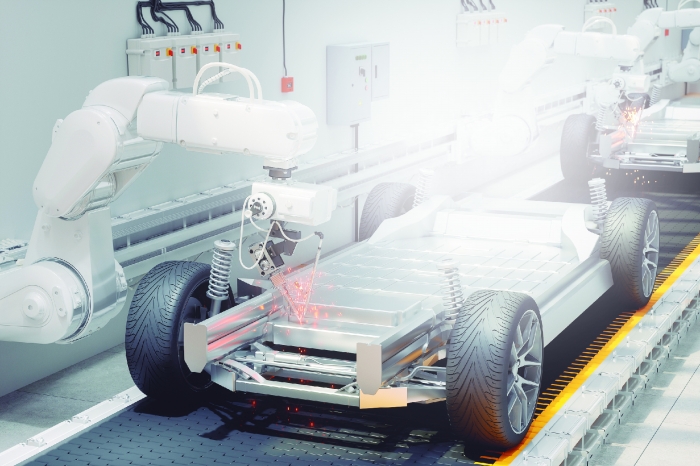
拓普集团(601689.SH):积极布局机器人躯体结构件、传感器、足部减震器、电子柔性皮肤等
Ge Long Hui· 2025-11-14 08:28
Core Viewpoint - The company recognizes the vast market potential and promising development prospects of embodied intelligent robots, making the expansion of its robotics business a key growth strategy [1] Group 1: Business Development - The company has initiated collaboration with clients starting from linear actuators, receiving positive feedback, and subsequently began the development of rotary actuators [1] - The company is also developing dexterous motors and has already sent samples to clients, indicating rapid project progress [1] Group 2: Product Portfolio - The company is actively laying out a platform product structure for its robotics business, including components such as robotic body structures, sensors, foot shock absorbers, and electronic flexible skin [1]
拓普集团:公司前三季度部分客户的某些车型爬产不及预期,导致公司墨西哥工厂的产能利用率受到一定影响
Mei Ri Jing Ji Xin Wen· 2025-11-14 08:02
Core Viewpoint - The company anticipates a gradual improvement in its financial performance starting in the fourth quarter, following adjustments made in response to production challenges faced earlier in the year [1]. Group 1 - The company reported that some customers' vehicle production did not meet expectations, which affected the capacity utilization of its Mexican plant [1]. - An increase in depreciation and amortization ratios was noted, which temporarily impacted profit release [1]. - The company has been actively making adjustments since the beginning of the year to address these issues [1]. Group 2 - The company expressed confidence that the situation is expected to improve in the fourth quarter [1].
中国汽车-拓展边界⸺零部件供应商走向全球
2025-11-14 03:48
Summary of the Conference Call on the Chinese Automotive and Shared Mobility Industry Industry Overview - The report focuses on the **Chinese automotive and shared mobility industry** and the global expansion of automotive parts suppliers [1][2]. Key Insights - **Declining Domestic Profits**: Chinese automotive parts suppliers are experiencing declining domestic profits, prompting them to seek global opportunities. The report favors companies with low overseas business ratios but rapid expansion (e.g., Xingyu, Desay) and those with large and improving overseas operations (e.g., Minth, Keboda) [3][4]. - **Global Expansion Acceleration**: Over the past decade, the Chinese automotive industry has been exploring overseas opportunities. Despite increasing tariff uncertainties, parts suppliers are accelerating their global expansion by shifting from exports to establishing overseas factories to counteract de-globalization trends. A compound annual growth rate (CAGR) of **12%** is expected for Chinese automotive parts suppliers from **2025 to 2030**, with a projected market opportunity of **$240 billion** by **2030**, achieving a **10%** share of the overseas market (+3.5 percentage points) [3][4][22]. - **Push and Pull Factors**: The intensifying price competition in the domestic automotive market, rising profit pressures, and losses from new projects are driving suppliers to reduce domestic exposure. Conversely, the early adoption of smart electric vehicles in China has led to improvements in product quality and technical specifications, enabling suppliers to provide competitive parts for the next generation of global vehicles [3][4][23]. Important Trends - **Shift from Exports to Overseas Factories**: The report indicates that acquisitions bring new customers, while exports yield higher profit margins. However, suppliers are expected to establish overseas factories due to domestic competition. Popular locations for these factories include **Mexico** (serving U.S. automakers), **Eastern Europe**, **North Africa**, and **Southeast Asia**. It is anticipated that net profit margins for overseas factories may be **10-15 percentage points** lower than exports and **0-5 percentage points** lower than domestic factories, although margins are expected to improve over time [4][26]. - **Individual Company Impact**: Traditional parts suppliers are seen as having a greater advantage in going overseas, followed by smart hardware suppliers. Companies like Xingyu and Desay, despite currently having less than **10%** of their revenue from overseas, are expected to accelerate their overseas income through new project wins. Minth, Keboda, and Fuyao are expected to continue improving profitability despite tariff disruptions due to enhanced operational efficiency [4][29]. Company Ratings Adjustments - **Upgrades**: Companies such as Xingyu (601799.SS), Desay (002920.SZ), Keboda (603786.SS), and Minth (0425.HK) have been rated as Overweight (OW) due to their potential for growth and expansion [8][30]. - **Downgrades**: Sanhua (002050.SZ) and Tuopu (601689.SS) have been downgraded to Equal-weight (EW) as optimistic market expectations regarding humanoid robots and overseas expansion are already reflected in their stock prices. The report anticipates a slowdown in U.S. electric vehicle growth starting in Q4 2025 and a slowdown in the Chinese market beginning in 2026 [4][29]. Additional Insights - **Export Growth**: The report notes that the export value of Chinese automotive parts is expected to grow at a CAGR of **10%** from **2019 to 2024**, significantly higher than the **1%** CAGR from **2014 to 2019**. This growth is attributed to the need for suppliers to mitigate tariff risks by increasing offshore manufacturing [22][23]. - **Challenges in Domestic Market**: The domestic market presents a dilemma for suppliers, as joint venture clients offer better prices but declining sales, while local clients provide volume growth but at lower prices [23][25]. Conclusion - The Chinese automotive parts suppliers are at a pivotal point, with the need to adapt to both domestic challenges and global opportunities. The focus on overseas expansion, driven by competitive pressures and improved product quality, positions these suppliers for potential growth in the coming years.




两则唱衰言论,刷屏人形机器人赛道一、二级市场
Robot猎场备忘录· 2025-11-14 00:03
Market Overview - The secondary market for humanoid intelligent robots is currently in a downturn, while the primary market remains active [2][3] - On November 6, the robot sector experienced a significant rally, driven by news related to Tesla's Optimus and other key players in the T-chain [2][3] - The only notable upward movement in the market this month occurred on November 6, highlighting the current state of the technology sector [3] Key Catalysts - The main catalyst for the recent market activity is Tesla's Optimus, with multiple events expected in Q4, including factory audits and earnings calls [3][4] - However, the delay of the Optimus Gen3 prototype until Q1 next year has created a "negative" sentiment, leaving the robot sector in a state of anticipation for positive news [3][5] Goldman Sachs Report - On November 7, Goldman Sachs released a report on nine core suppliers in the T-chain, focusing on production capacity, mass production timelines, market share expectations, and sales strategies [4][5] - Most suppliers are actively planning production capacity in China and overseas, but no substantial orders or clear mass production timelines have been confirmed [5] Industry Challenges - The humanoid robot industry faces challenges such as misleading representations of capabilities by some startups, which create a false impression of fully autonomous systems [10][11] - The industry consensus acknowledges the long-term potential of humanoid robots, but highlights difficulties in mass production and effective application in real-world scenarios [12][13] Company Developments - Several T-supply chain companies have begun receiving initial design drafts for the V3 version, with finalization expected soon [6] - Notable companies in the T-chain include Top Group, Sanhua, and Junsheng, which are all involved in various components for Tesla's Optimus [6][8] Future Outlook - The industry is expected to see a surge in activity as companies work towards mass production and effective deployment of humanoid robots [12][16] - The market is characterized by a mix of optimism and caution, as companies navigate the complexities of production and market demand [12][17]


宁波A股十年,IPO企业数量、质量保持全国前列
Sou Hu Cai Jing· 2025-11-13 13:26
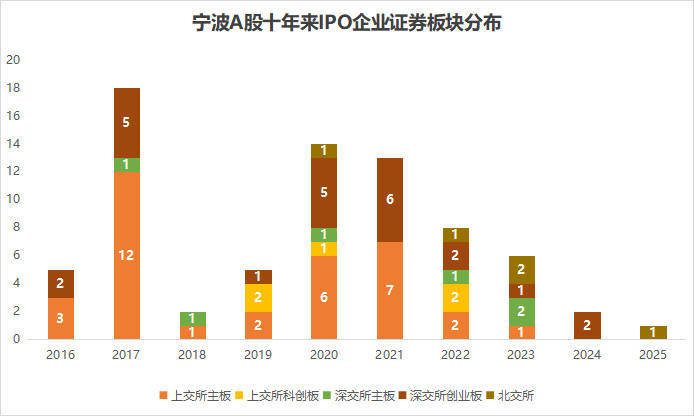
Core Points - The A-share market index (Shanghai Composite Index) has reached 4026.52 points, marking a new high in nearly a decade, driven by multiple factors including policies, funding, and industry dynamics [2][4] - Over the past decade, the "Ningbo Legion" has consistently performed well in terms of both the quantity and quality of IPOs, maintaining a leading position nationally [3][6] - Ningbo's A-share IPOs have been closely aligned with the overall market trends, with significant milestones achieved in 2017 and 2020 [4][6] IPO Market Dynamics - The A-share IPO process can be divided into three phases over the last decade: recovery (2013-2018), prosperity (2019-2022), and tightening (2023 onwards) [4] - Ningbo has seen a total of 123 A-share IPOs, ranking in the top ten cities in China for both the number of IPOs and total market capitalization, which stands at 1.62 trillion yuan [6][19] - The manufacturing sector remains a strong foundation for Ningbo's IPOs, with 63 companies listed on the Shanghai Stock Exchange and 17 on the Shenzhen Stock Exchange [9][11] Regional Distribution and Growth - The distribution of listed companies in Ningbo has evolved, with the top regions now being Yinzhou and Beilun, while Yuyao has emerged as a significant player [12][14] - Yinzhou continues to lead in terms of market capitalization, with notable companies like Ningbo Bank and Ningbo Port contributing significantly [14] - The growth of IPOs in Beilun, Yuyao, and Cixi has been remarkable, with each region seeing substantial increases in both the number of companies and total market value [14][16] Industry Focus and Future Outlook - Beilun has focused on new energy vehicles and robotics, while Yuyao has developed strengths in automotive parts and integrated circuits [16][19] - Despite the growth, many Ningbo-listed companies remain relatively small, with only five companies exceeding 50 billion yuan in market capitalization [19] - There are currently 51 companies in Ningbo preparing for IPOs, indicating a potential for further economic vitality through capital market engagement [19]
【干货分享】中国一体化压铸行业市场运行态势及发展趋势预测报告(智研咨询)
Sou Hu Cai Jing· 2025-11-13 08:15
Core Viewpoint - The automotive industry is rapidly transitioning towards lightweight, intelligent, and electric vehicles, leading to the emergence of integrated die-casting technology, which simplifies production processes and enhances efficiency [2][4]. Industry Overview - Integrated die-casting technology consolidates multiple components into a single large casting, significantly reducing production complexity and costs while improving vehicle performance [2][4]. - Tesla's implementation of this technology in the Model Y has demonstrated a reduction in the number of parts from over 70 to a single casting, resulting in a weight reduction of approximately 10% and an increase in vehicle range [2][4]. Market Growth - The integrated die-casting industry in China is projected to grow from 0.09 billion yuan in 2020 to 18.57 billion yuan by 2024, with a compound annual growth rate (CAGR) of 279% [2]. - By 2025, the market size is expected to reach 36.8 billion yuan, driven by increasing demand from the booming new energy vehicle sector [2]. Technological Advancements - Integrated die-casting technology simplifies traditional automotive manufacturing processes by merging stamping and welding into a single step, thus reducing manufacturing costs by approximately 40% and increasing production efficiency [5][6]. - The use of super-large die-casting machines is crucial for this technology, with only a few manufacturers capable of producing machines with capacities exceeding 6000 tons [12]. Policy Support - The Chinese government has introduced various policies to promote integrated die-casting technology, which is essential for the lightweight production of vehicles, thereby supporting the transition to electric and intelligent vehicles [8][9]. - Recent initiatives include the "Nonferrous Metals Industry Stabilization and Growth Work Plan" aimed at accelerating the development of integrated die-casting and related technologies [9]. Industry Chain - The integrated die-casting industry chain consists of upstream raw materials and equipment, midstream die-casting companies, and downstream vehicle manufacturers [10]. - Key players in the upstream market include American Aluminum and German Rheinmetall, while domestic companies are striving for local alternatives [10]. Application in Automotive Sector - Integrated die-casting is primarily used in manufacturing critical automotive components such as rear floors, front compartments, and battery trays, significantly simplifying the assembly process and reducing costs [14]. - The production of new energy vehicles in China has surged, with output expected to grow from 340,500 units in 2015 to 12.888 million units by 2024, reflecting a CAGR of 49.74% [14].
华龙证券:25Q3乘用车业绩分化 市场年底前有望迎来抢购潮
Zhi Tong Cai Jing· 2025-11-13 07:38
Core Viewpoint - The automotive sector is experiencing mixed performance, with passenger vehicles showing revenue growth but declining profits, while commercial vehicles and parts suppliers are benefiting from improved fundamentals and new product launches [1][2][3]. Passenger Vehicles - In Q3 2025, the passenger vehicle sector achieved a revenue growth of 7.4% year-on-year, which is lower than the consolidated sales growth of 14.4%, primarily due to a price war that led to a decrease in average selling price by 0.99 million yuan per vehicle [2]. - The sector's net profit attributable to the parent company was 9.49 billion yuan, down 25.1% year-on-year [2]. - New product launches and a shift towards high-end models are driving revenue growth for car manufacturers, with companies like Xpeng Motors and Leap Motor seeing rapid sales growth due to low base effects and significant new vehicle releases [2]. Commercial Vehicles - The commercial vehicle market is showing continuous improvement, with significant sales growth since June 2025, contributing to a recovery in sector valuations [1]. - The heavy truck segment reported a revenue of 108 billion yuan in Q3 2025, reflecting a year-on-year increase of 26.9%, with net profit rising 55.3% to 3.84 billion yuan [5]. - The bus segment also performed well, with a revenue increase of 30.6% year-on-year, driven by higher single-vehicle income [4]. Auto Parts - The auto parts sector achieved a revenue of 368.37 billion yuan in Q3 2025, up 10.4% year-on-year, with net profit increasing by 22.6% to 19.64 billion yuan [3]. - Nearly 80% of auto parts companies reported revenue growth in Q3 2025, driven by strong terminal sales and effective cost control measures [3]. - The introduction of several key new models in the passenger vehicle market is expected to boost the performance of core suppliers in the supply chain [3]. Recommendations - Companies in a strong new product cycle such as Great Wall Motors, Seres, SAIC Motor, and Xpeng Motors are recommended for attention [6]. - Strong supply chain players and those involved in humanoid robotics and intelligent driving, such as Longsun Technology and Joyson Electronics, are also highlighted as potential investment opportunities [6]. - For commercial vehicles, leading companies like Weichai Power and Yutong Bus are suggested as beneficiaries of the industry's recovery [6].
拓普集团(601689):拓普集团三报点评:海外产能利用率短期拖累公司盈利,明年将迎经营拐点蓄势待发
Changjiang Securities· 2025-11-13 06:13
Investment Rating - The investment rating for the company is "Buy" and is maintained [4]. Core Views - The company achieved a revenue of 7.99 billion yuan in Q3 2025, representing a year-on-year increase of 12.1%, while the net profit attributable to shareholders was 670 million yuan, down 13.7% year-on-year. The company is expected to enter a turning point in operations next year as it expands its nine product lines globally [2][4]. Summary by Sections Financial Performance - In Q3 2025, the company reported a revenue of 79.9 billion yuan, up 12.1% year-on-year and 11.5% quarter-on-quarter. The net profit attributable to shareholders was 6.7 billion yuan, down 13.7% year-on-year and 7.9% quarter-on-quarter, with a net profit margin of 8.4%, a decrease of 2.5 percentage points year-on-year [2][4][8]. Market Dynamics - The domestic downstream market showed high prosperity, with passenger vehicle production reaching 7.693 million units, up 13.9% year-on-year. Key clients like Tesla and Geely contributed to revenue growth, although overseas client sales were below expectations, impacting profit margins [8]. Future Outlook - The company is set to enhance its production capacity to 1.5 million sets by 2025, with new factories in various locations including Mexico and Thailand. The expansion into new fields such as robotics and liquid cooling is expected to drive future growth, with anticipated net profits of 2.8 billion, 3.39 billion, and 4.13 billion yuan for 2025-2027 [8][4].