Temu

Search documents
Meta Stock Holds Upside Potential as Analysts Cut Price Targets
MarketBeat· 2025-04-16 14:02
Core Viewpoint - Analysts have been reducing their price targets for Meta Platforms, with an average decrease of 14% since early April, primarily due to concerns over new tariff policies impacting the business [1][2]. Price Target and Analyst Ratings - Despite the lowered price targets, analysts maintain a Buy or Overweight rating for Meta, indicating a potential upside of over 23% compared to the stock's closing price on April 14 [2]. - The current price target averages $690.79, suggesting a 35.75% upside from the current price of $508.86 [10]. Impact of Tariffs - Tariffs have a limited direct impact on Meta, as the majority of its revenue comes from advertising, which is not tariff-affected. However, costs related to virtual reality hardware and data center buildouts could be negatively impacted [3][4]. - The indirect effects of tariffs may be more damaging, as increased costs for companies could lead to reduced advertising budgets, directly affecting Meta's revenue [5]. Specific Advertising Revenue Concerns - Meta derives significant advertising revenue from platforms like Temu and Shein, which may face increased costs due to the removal of the de minimis exemption, leading to a potential decrease in their advertising spend [6][7]. - Analysts estimate that Temu and Shein contribute 2% to 4% of Meta's overall ad revenue, with 11% of Meta's Family of Apps revenue coming from Chinese companies in 2024 [7][8]. Competitive Positioning - Meta may outperform other advertising platforms during periods of reduced spending, as advertisers are less likely to cut budgets for Meta and Google Search, which are seen as effective platforms for ad spending [9]. - Meta captured 21.3% of total ad spending, significantly higher than YouTube's 5.6%, indicating a strong preference among marketers for Meta's advertising effectiveness [11].



刘肇宁:美国“掀桌子”怎么办?这三种应对措施对中企而言很关键
Guan Cha Zhe Wang· 2025-04-14 11:07
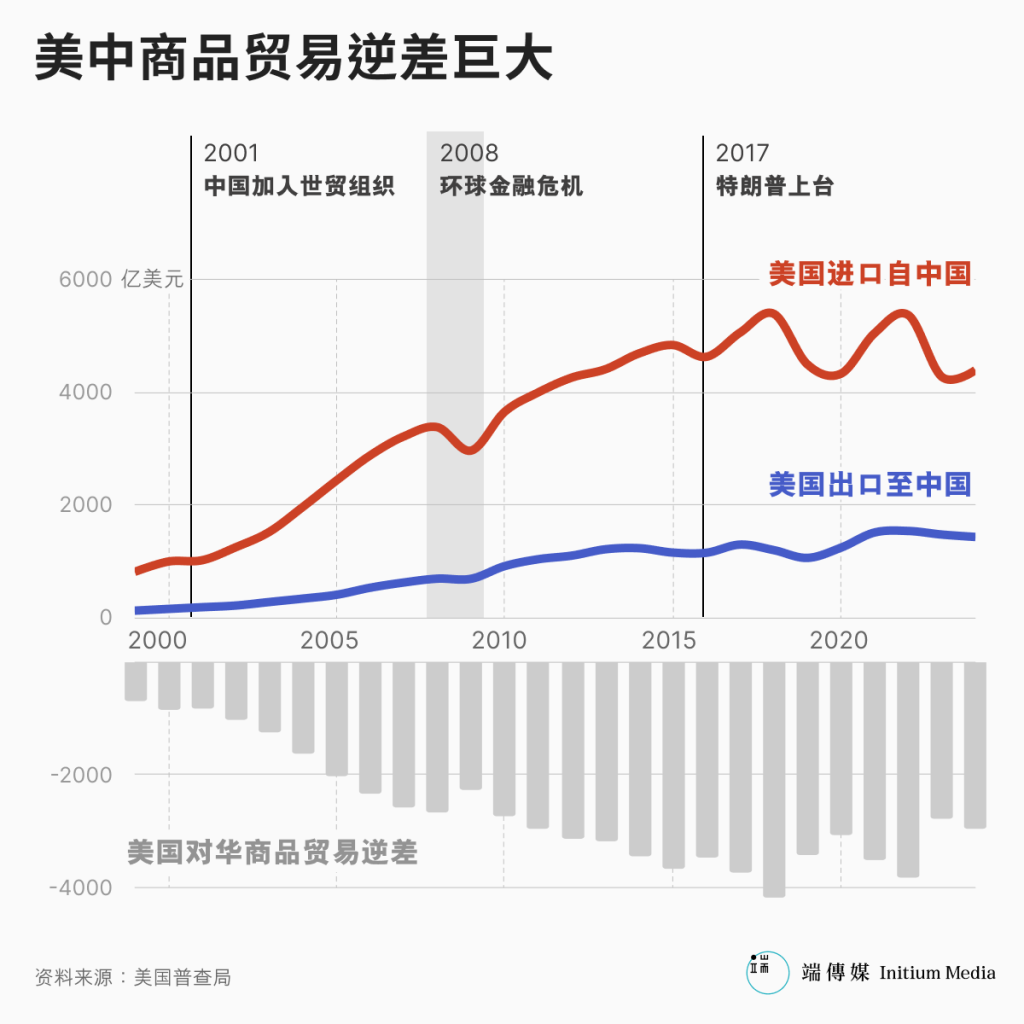
Core Viewpoint - The recent fluctuations in U.S. tariff policies under the Trump administration have created significant challenges for Chinese export businesses, particularly in the cross-border e-commerce sector, which heavily relies on small package direct mail models [1][15]. Group 1: Impact on Chinese Export Businesses - The U.S. tariff policies have led to a change in cost structures for Chinese exporters, making it difficult to pass on tariff costs to U.S. consumers, thereby compressing profit margins [1][5]. - Approximately 15% of China's total exports are directed to the U.S., and labor-intensive industries are particularly vulnerable to high tariffs, potentially leading to a withdrawal from the U.S. market [1][5]. - The cancellation of the $800 small package exemption has posed a major challenge for cross-border e-commerce sellers, necessitating a complete transformation of their business models [15][16]. Group 2: Strategies for Adaptation - Companies are advised to adjust their supply chain layouts by relocating production to countries like Mexico or Southeast Asia to benefit from lower tariffs [2][5]. - Optimizing supply chains and enhancing product differentiation can help companies maintain competitiveness despite tariff increases [6][8]. - Some companies are considering establishing manufacturing facilities in the U.S. to mitigate tariff impacts, although this comes with its own set of challenges and uncertainties [7][9]. Group 3: Market Diversification - Companies are encouraged to reduce reliance on the U.S. market and explore emerging markets in Southeast Asia, the Middle East, and Latin America, which have shown rapid trade growth with China [12][19]. - A strategic reassessment of product offerings is necessary, focusing on high-margin items that can withstand tariff pressures while considering market dynamics [9][12]. Group 4: Long-term Implications - The ongoing tariff war reflects a broader geopolitical struggle, with potential long-term impacts on global trade dynamics and the international order [25][29]. - The shift towards a more diversified international trade system is seen as essential for mitigating risks associated with U.S. tariff policies and fostering a more stable global economic environment [29][30].
关税风暴中的跨境电商从业者:抢运、迁徙与韧性大考
36氪未来消费· 2025-04-11 13:07
Core Viewpoint - The article discusses the dramatic impact of the U.S. government's decision to terminate the $800 tax exemption for small packages from China, which has led to significant uncertainty and challenges for cross-border e-commerce businesses [3][5][21]. Group 1: Policy Changes and Their Impact - On April 3, 2023, the U.S. announced the end of the $800 tax exemption for small packages from China, effective May 2, 2023, causing immediate concern among cross-border e-commerce sellers [3][5]. - The policy changes began with a 10% tariff on Chinese goods announced on February 1, 2023, followed by a temporary restoration of the $800 exemption on February 7, only to be revoked later [4][5]. - Cumulative tariffs on Chinese goods have reached as high as 54%, with potential increases to 104% and 125% in subsequent announcements, creating a chaotic environment for sellers [5][6]. Group 2: Seller Reactions and Strategies - Many sellers, like Leo, rushed to ship goods before the new tax rules took effect, leading to increased shipping costs and logistical challenges [9][10]. - The uncertainty around tariffs has led to a halt in cooperation between sellers and suppliers, with some sellers opting to raise prices by 5%-10% to alleviate pressure [11][12]. - Some sellers are resorting to refunding customers due to the inability to predict tariffs accurately, while others are adjusting their pricing strategies to cope with increased costs [12][15]. Group 3: Market Dynamics and Adaptation - Major players like Temu and SHEIN, which benefited from the previous tax exemption, have begun shifting their business models to mitigate the impact of the new tariffs [21][22]. - The article highlights a trend of sellers exploring markets outside the U.S. and relocating production to countries with more favorable tariff conditions [28][29]. - Despite the challenges, some sellers remain optimistic, believing that their products still offer competitive pricing even after accounting for tariffs [12][21].

速递|中美贸易强烈震荡,部分深圳跨境卖家连夜撤出美国市场,越南墨西哥成最大赢家
Z Finance· 2025-04-10 17:30
Core Viewpoint - The unprecedented increase in tariffs on Chinese imports to the U.S. is causing significant disruption in the cross-border e-commerce industry, forcing many Chinese sellers on platforms like Amazon to either raise prices or exit the U.S. market entirely [1][2]. Group 1: Impact on Chinese Sellers - The president of the Shenzhen Cross-Border E-Commerce Association stated that the tariff situation is not merely a tax issue but a severe blow to the entire business model, making it extremely difficult for companies to operate in the U.S. market [1]. - A survey of five Amazon sellers in Shenzhen revealed that three are considering raising export prices, while two plan to withdraw from the U.S. market [1]. - Approximately half of the sellers on the Amazon platform are from China, with over 100,000 registered Amazon businesses in Shenzhen alone, generating total annual revenue of $35.3 billion [1]. Group 2: Shift in Market Strategy - Sellers are facing a dilemma as global markets struggle to absorb the large production capacity previously directed at the U.S., while intense price competition is eroding profit margins [2]. - A seller specializing in bags and Bluetooth speakers has raised U.S. market prices by 30% and is shifting resources to markets in Europe, Canada, and Mexico [2]. - Another experienced seller predicts significant price increases as existing inventory runs out, with production costs for certain products rising from $3 to $7 due to tariffs, necessitating a price hike of at least 20% to maintain profit margins [2]. Group 3: Broader Implications - The president of the association warned that the tariff-induced shockwave could lead to deeper social impacts, as the global supply chain undergoes significant restructuring [2].
关税闹剧下,20 多位全球贸易参与者的 72 小时
晚点LatePost· 2025-04-10 14:52
现在他们能做的更多是等待。 文 丨 郑可书 李梓楠 龚方毅 管艺雯 制图 丨 黄帧昕 编辑 丨 黄俊杰 管艺雯 过去 72 小时,我们对谈了 20 多位在进出口体系各个环节的参与者,从平台到商家,从品牌到物流 商, 从工厂到他们的零部件供应商。 就在对谈期间,数字一直在变,美国对中国商品加征的关税从 54%(包括上一轮冲突加的 20%)变成 104%,昨夜又涨到 125%。 | 进口 | 国家和 | | | 4月9日 | | 4月9日 | 实际 | | --- | --- | --- | --- | --- | --- | --- | --- | | 足F | 地区 | 2月4日 | | (原计划) | | (变化) | 加总税率 | | 18.5% | 欧盟 | | | 20% | - | 10% | = 10% | | 15.5% | 墨西哥 | 25% | | | | | = 25%* | | 13.4% | 中国 | 两轮次 (10% + 10%) | + | 两轮次 (34% + 50%) | + | 21% | = 125% | | 12.6% | 加拿大 | 25% | | | | | ll 2 ...
中国“出海人”进入极限生存模式
阿尔法工场研究院· 2025-04-10 10:07
以下文章来源于霞光社 ,作者李小天 洋紫 唐飞 霞光社 . 赋能企业全球化 作者 | 李小天 洋紫 唐飞 根据德意志银行调查,美国人购物车中中国商品占比高达65%,美国老百姓的钱包正在逐渐干瘪。 《华尔街日报》描述了一位50岁的纽约市民,在跑了多家商店并向店员致电争取后,终于抢购到那 家商店最后一台中国品牌的电视机。 来源 | 霞光社 导 语 :关税释放了地壳深层的岩浆原力,搅动了产能的乾坤大挪移。 靴子终于落地了。 美东时间4月9日凌晨(即北京时间中午12点),美国对中国再征收的50%额外关税正式生效。而在 几天前的4月2日,特朗普政府向全球主要贸易伙伴宣布"对等关税"方案,其中对中国在现行税率基 础上,再加34%的关税。 时至今日,特朗普第二任期内对中国所有商品累计加征的新关税税率将达到104%,中美贸易战全面 爆发。 关税大棒,持续冲击着中国各行业产业链,同时也扰动着全球经贸格局。 正如桥水基金创始人达利欧4月7日在领英发布的文章所说:"我们正在目睹全球主要货币秩序、政 治秩序和地缘政治秩序的典型崩溃。美国主导的多边合作世界秩序正在被单边的强权统治模式所取 代。这种崩溃一生中只发生一次,但在历史上,类似 ...

关税加到104%了,跨境行业怎么样了?
佩妮Penny的世界· 2025-04-09 12:29
家人们,活久见啊。 从没想到过有一天能见到 104% 的关税…… 我只是一个普通人,只想好好混吃等死,为什么老是要逼我见证历史…… 刚刚官方消息,中国这边已经已经跟上了, 真正的对等关税!太对等了,大家都 104%,都别活了! 感觉大家坐在牌桌两端: 中国:Call! 川普:……(SOS,我本来只是想偷鸡!) 现在就看到最后谁受不了先 Fold 了。 先别说天塌不塌了,我的股票账户最近连遭重锤,曲线已经塌陷了。这是一柄双刃剑,我看了看推特,感觉海外的股民也很痛。 | | ਟ | T | Stilly | | 25 | | 3 | | | --- | --- | --- | --- | --- | --- | --- | --- | --- | | | | TSLA | LLY | | WMT | | AVGO | | | | | -37.78% | -3.96% | | -4.67% | | -39.37% | | | AAPL | AMZN | Bi | 1 | | CB | | | | | -21.87% | -20.58% | JPM | XOM | | MA | NFLX | ORCI | | | | ...

速递|跨境电商行业或不复存在,小额包裹关税翻3倍至90%,10美元商品将要征收150美元关税
Z Finance· 2025-04-09 05:01
Core Viewpoint - The article discusses the significant adjustment in the U.S. tariff policy targeting low-value packages from China, which will impact cross-border e-commerce platforms like Shein and Temu, forcing a fundamental restructuring of their business models [1][5][6]. Summary by Sections Tariff Policy Changes - On April 8, President Trump signed an executive order to raise tariffs on low-value packages (under $800) from China, marking a major shift in U.S. customs policy [1]. - The new tariff implementation will occur in three phases: - Historical standard (before May 1, 2025): Exempt from tariffs [1]. - First adjustment (May 2 - May 31, 2025): Tariff rate increases to 90% of the value or $75 per item [2]. - Ultimate measure (from June 1, 2025): A fixed tariff of $150 per item, equating to a punitive rate of 1500% on typical $10 goods [3]. Impact on E-commerce Platforms - The tariff changes specifically target the international postal transport system, directly affecting platforms like Shein and Temu that rely on the "de minimis" exemption [5]. - In 2023, 2.3 billion packages from China entered the U.S. through this channel, accounting for 62% of the U.S. cross-border e-commerce package volume [5]. - The policy effectively cuts off the long-standing tax-free channel for these platforms, necessitating a reevaluation of their U.S. business strategies [6]. Strategic Adjustments - In response to the new tariffs, Shein has established a new logistics center in Seattle, while Temu is expanding its U.S. warehousing network [6]. - Industry expert Ram Ben Tzion predicts that the new tariffs may compel these companies to reassess their business outlook in the U.S. [6]. - FedEx has indicated its willingness to assist clients in adapting to the new regulations, emphasizing the importance of accurate customs documentation [6]. Market Projections - Market research firm eMarketer forecasts that Temu's sales in the U.S. could reach $30 billion in 2024, positioning it as a strong competitor against retail giants like Amazon [6]. - However, the loss of the tax exemption may weaken Temu's price competitiveness in the market [6]. Chinese Government Response - The Chinese Ministry of Commerce has stated that the unilateral increase in tariffs by the U.S. will harm the mutual interests of businesses and consumers in both countries [7]. - China urges the U.S. to correct its actions and resolve concerns through equal negotiations to promote stable and sustainable development of U.S.-China relations [7].
中金看海外 | 日本电商行业初探:低渗透率下的平台博弈与跨境重构
中金点睛· 2025-04-06 23:57
Core Viewpoint - The article analyzes the characteristics and landscape of the Japanese e-commerce industry through a comparative lens with China, highlighting the low penetration rate, consumption upgrades, and limited impact of live commerce in Japan [1] Group 1: Characteristics of the Japanese E-commerce Industry - Japan's e-commerce penetration rate is approximately 9.4% in 2023, significantly lower than China's 27.6% and the US's 15.8% [2][4] - Factors contributing to the low penetration include an aging population, small household sizes, strong offline consumption, high logistics costs, and low mobile payment adoption [2][7] - Japanese e-commerce is experiencing a consumption upgrade, with consumers prioritizing quality over price, as evidenced by the increase in nominal average transaction prices from 1,648 yen in 2013 to 2,931 yen in 2023 [15][19] - The interest and participation rates in live commerce among Japanese consumers are significantly lower than in China, with only 2.8% having purchased through live streams [20][21] Group 2: Competitive Landscape - The top players in Japan's e-commerce market are Amazon Japan, Rakuten Group, and LINE Yahoo, with market shares increasing post-pandemic [3][26] - Amazon Japan leads in GMV and user numbers, successfully replicating its logistics and membership systems in Japan [36][41] - Rakuten Group has over 100 million members, leveraging a robust points system to enhance user loyalty [44][48] - LINE Yahoo, while having a large platform, still needs to improve efficiency and user engagement [50][53] Group 3: Impact of Cross-Border E-commerce - Chinese cross-border e-commerce platforms like SHEIN and Temu are rapidly gaining market share in Japan, leveraging cost advantages and localized operations [29][33] - Amazon Japan has responded to this competition by reducing commission rates and delivery fees for small items, indicating a competitive response to the "catfish effect" brought by cross-border e-commerce [33][34] - TikTok Shop is expected to enter the Japanese market, potentially reshaping consumer habits and intensifying competition [30] Group 4: Future Trends and Challenges - The Japanese e-commerce market is seen as a high-potential market with relatively mild competition, but it faces challenges such as inflation risks, regulatory scrutiny on cross-border e-commerce, and the need for adaptation to AI-driven changes [4][58] - The logistics costs in Japan remain high due to elevated labor costs and a concentrated logistics industry, which may hinder e-commerce growth [14][24] - The potential adjustment of tax policies regarding small imports could impact the cross-border e-commerce landscape [34]


Why Alibaba Stock Is Tanking Today
The Motley Fool· 2025-04-04 18:27
Core Viewpoint - Alibaba's shares have experienced a significant decline, losing up to 13.9% in value, primarily due to new tariffs imposed by the U.S. government targeting Chinese e-commerce platforms [1][4]. Group 1: Impact of Tariffs - President Trump's executive order has eliminated the de minimis tariff exemptions for packages valued up to $800 from China and Hong Kong, meaning all shipments will now be subject to tariffs regardless of their value [2]. - The U.S. government has accused Chinese companies, including Alibaba, of engaging in "deceptive shipping practices," which have exploited the de minimis exemption to smuggle illicit substances [3]. Group 2: Market Dynamics - The volume of de minimis shipments entering the U.S. surged to 1.36 billion last year, a significant increase from 139 million in 2015, indicating a growing reliance on low-value imports from Alibaba and its competitors [3]. - The changes in tariff policy represent a substantial disruption for Alibaba, necessitating adjustments to its cross-border business model to remain competitive in the market [4].