
中国海洋石油

Search documents
《分布式能源规划员》(综合能源服务方向)培训通知丨系列培训
中国能源报· 2026-01-11 13:04
Core Viewpoint - The article emphasizes the importance of developing distributed energy and integrated energy services as a crucial path towards carbon neutrality, highlighting the need for skilled professionals in energy planning and management [1]. Group 1: Training Overview - The training titled "Distributed Energy Planner (Integrated Energy Services Direction)" is organized to address the shortage of professionals in energy planning, conversion, and intelligent control [1]. - The training will take place online from January 14 to January 17, 2026 [2]. - The training is hosted by the Human Resources and Social Security Ministry's Social Security Capacity Building Center and organized by China Energy News Co., Ltd [2]. Group 2: Target Audience - The training targets various stakeholders including provincial and municipal power companies, energy groups, and enterprises in the oil and gas sector [2]. - It also includes new energy companies (wind, solar, storage), energy service companies, equipment manufacturers, and research institutions [2]. - Additionally, it is aimed at investment professionals in the integrated energy sector and those interested in distributed energy and integrated energy services [2]. Group 3: Course Outline - The course covers an overview of integrated energy services, including its connotations, driving forces, and current development status both domestically and internationally [3]. - It includes modules on planning comprehensive energy solutions, distributed photovoltaic projects, natural gas distributed energy applications, and smart microgrids [4]. - The curriculum also addresses hydrogen energy applications, new energy storage, energy efficiency projects, and zero-carbon factory assessments [4]. Group 4: Training Costs - The training fee is set at 3600 yuan per person, which includes training, materials, and certification costs [5]. Group 5: Contact Information - For inquiries, contact Yang at 15801248899 or Wang at 15201547047 [6].


美委和中东局势动荡,油价短期受地缘风险支撑
Ping An Securities· 2026-01-11 10:29
Investment Rating - The report maintains a "Strong Outperform" rating for the oil and petrochemical sector [1]. Core Viewpoints - The oil price is supported in the short term by geopolitical risks, particularly due to tensions between the U.S. and Venezuela, as well as instability in the Middle East [6]. - The supply of oil from Venezuela may see a recovery, but significant uncertainties remain regarding the scale of production due to the need for substantial investment [6]. - The fluorochemical sector is expected to maintain high levels of activity due to supply constraints and favorable demand driven by policy support [6]. - The semiconductor materials sector is experiencing a positive cycle with improving fundamentals and domestic substitution trends [7]. Summary by Sections Oil and Petrochemicals - Geopolitical tensions are influencing oil prices, with WTI crude futures rising by 2.72% and Brent crude by 3.70% in early January 2026 [6]. - The U.S. Treasury Secretary indicated potential easing of sanctions on Venezuela, which could lead to increased oil supply, but investment interest from U.S. companies remains cautious [6]. - The macroeconomic outlook includes a projected 150 basis point rate cut by the Federal Reserve in 2026, with stable employment growth signals [6]. Fluorochemicals - The supply quota for HFCs has increased slightly, with a total of 797,845 tons for 2026, which is a year-on-year increase of 5,963 tons [6]. - The demand for refrigerants is expected to grow due to continued government subsidies and favorable policies, particularly in the home appliance and automotive sectors [6]. - The production of household air conditioners is projected to increase by 11% year-on-year in January 2026, indicating strong demand [6]. Semiconductor Materials - The semiconductor materials sector is benefiting from a positive inventory destocking trend and improving end-market fundamentals [7]. - The report suggests that the sector may see further upward movement due to cyclical recovery and domestic substitution [7]. - Companies to watch include Shanghai Xinyang, Lianrui New Materials, and Qiangli New Materials [7].
以AI赋能筑牢能源转型“智能屏障”
Zhong Guo Neng Yuan Wang· 2026-01-11 03:25
Core Insights - The integration of artificial intelligence (AI) and energy is a strategic approach to ensure energy security, promote green transformation, and cultivate new productive forces in China, reflecting the country's commitment to solving development challenges through technological innovation [1] Policy Direction - Since the 18th National Congress, significant achievements have been made in China's energy sector, but the triple mission of ensuring safety, promoting transformation, and improving efficiency remains challenging. By 2025, China's total electricity consumption is expected to exceed 10 trillion kilowatt-hours, with new wind and solar power installations projected at approximately 370 million kilowatts [2] - The National Development and Reform Commission and the National Energy Administration have issued implementation opinions to promote high-quality development of "AI + energy," establishing a timeline and roadmap for deep integration [2] - The goal is to explore replicable and scalable comprehensive solutions and business models, creating a new paradigm for the integration of AI and energy [2] Practical Applications - AI is enhancing efficiency across the entire energy supply chain. In coal mining, AI inspection systems have significantly improved safety hazard identification, reducing underground personnel by 25% [3] - In thermal power generation, intelligent scheduling systems can reduce coal consumption by 0.8 grams per kilowatt-hour, leading to substantial CO2 emissions reductions [3] - AI applications in renewable energy, such as precise forecasting models in Inner Mongolia, are increasing the utilization rate of green electricity and addressing transmission challenges [3] Competitive Advantages - China possesses unique competitive advantages in energy intelligent transformation, with over 80% of major international oil and gas companies already investing in energy digitalization. The country has a vast energy market and diverse application scenarios, with the AI industry expected to exceed 700 billion yuan by 2024 [4] - The "East Data West Calculation" project is facilitating the migration of computing power to clean energy-rich areas, creating favorable conditions for China to take the lead in global energy transition [4] Challenges and Solutions - Despite initial successes, the integration of AI and energy faces multiple challenges, including the "black box" nature of large models affecting reliability in critical areas like grid scheduling and nuclear safety [5] - Data sharing is hindered by inconsistent standards and the "data island" phenomenon, particularly in the oil and gas sector due to confidentiality and management differences [5] - There is a shortage of interdisciplinary talent who understand both energy systems and AI algorithms, which is a bottleneck for industry upgrades [5] Future Development - The integration of AI and energy is becoming a crucial indicator of core competitiveness in the energy sector, transforming the industry from passive to proactive management [6] - The ongoing transformation must prioritize safety and address existing bottlenecks to ensure that AI becomes the core engine of energy transition [6]
新浪财经资讯AI速递:昨夜今晨财经热点一览 丨2026年1月11日
Xin Lang Cai Jing· 2026-01-10 23:36
Group 1 - The U.S. stock market is set to face a critical test with the start of the Q4 earnings season, particularly with major banks reporting their results and the upcoming release of the December CPI data, which is crucial for assessing the Federal Reserve's interest rate path [1][15] - SpaceX has received approval from the FCC to increase its Starlink satellite constellation by 7,500 units, bringing the total to 15,000, which is expected to enhance global internet service capabilities and is a key component of its IPO plan with a target valuation of approximately $1.5 trillion [1][15] Group 2 - The Chinese government has initiated a strong intervention in the food delivery industry to end "involution" competition, promoting a shift from price wars to value-driven strategies, focusing on supply chain optimization and service enhancement [2][16] - Major supermarkets like Sam's Club and Costco have seen a surge in demand for affordable down jackets, with a notable product selling out quickly, reflecting a shift in consumer perception towards high-quality, cost-effective options [2][16] Group 3 - Following the announcement of closing seven stores, IKEA experienced a surge in customer traffic, with long queues forming as consumers anticipated clearance sales, although the actual discount events will not start until January 15 [3][16] - The photovoltaic sector is experiencing significant volatility due to regulatory scrutiny, with major companies facing market downturns as a result of antitrust discussions, leading to a pessimistic outlook on pricing mechanisms and supply-demand dynamics [4][17] Group 4 - The People's Bank of China has increased its gold reserves for 14 consecutive months, with the value of global official gold reserves surpassing U.S. Treasury bonds for the first time in 30 years, indicating a shift in global reserve asset preferences [18] - Several regions in China have raised the upper limit for urban and rural residents' basic pension insurance contributions, with Yunnan becoming the first province to set the cap at 10,000 yuan per year, aimed at encouraging higher personal account accumulation [5][18] Group 5 - The chairman of Microchip Technology, known as the "father of China's etching machine," plans to reduce his stake in the company due to tax-related matters after restoring his Chinese nationality, which may impact the company's strategic direction [6][19] - The commercial aerospace concept has become a recent market hotspot, positively affecting the stock prices of several wind power companies, as they seek new growth avenues through diversification into aerospace-related businesses [12][24] Group 6 - The price of lithium carbonate has surged past 140,000 yuan per ton, increasing by 19% in just six days, driven by supply disruptions and rising demand from the power and storage sectors, with a notable shift in pricing mechanisms observed [13][24]

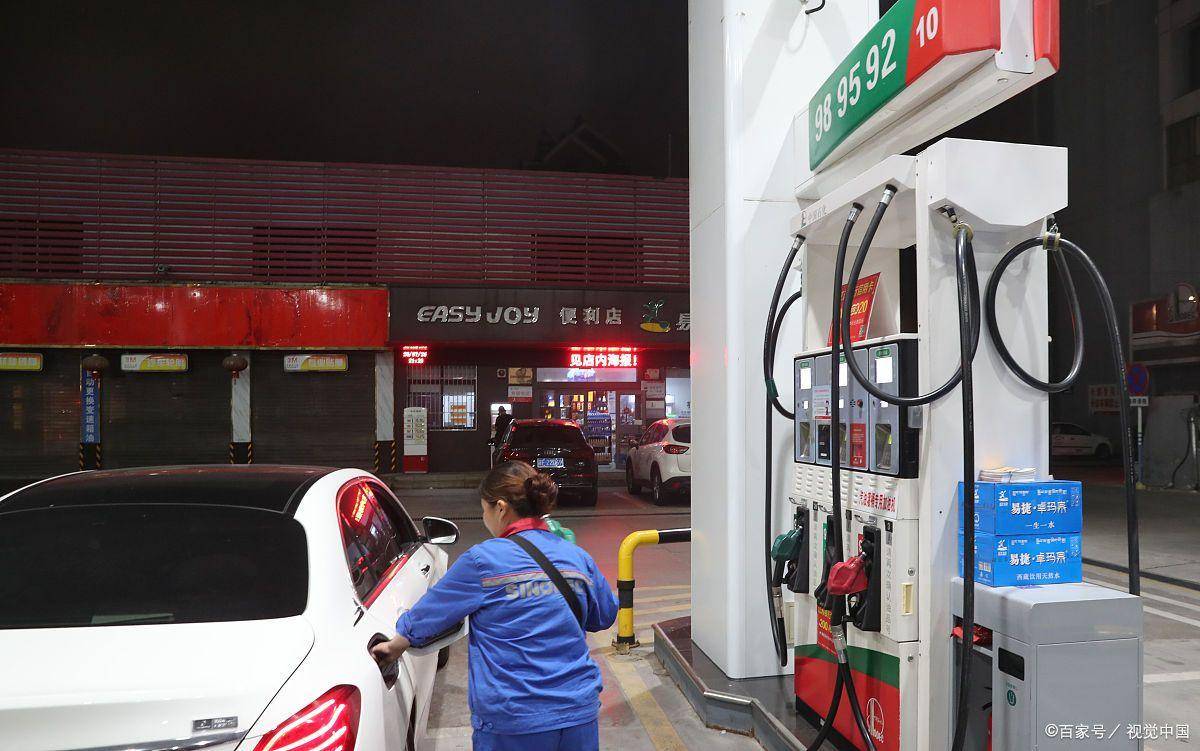
油价一夜下跌!今天1月10日调整后,全国加油站92、95汽油最新售价
Sou Hu Cai Jing· 2026-01-10 22:40
Core Viewpoint - The oil prices have remained stable this week, with 92-octane gasoline priced around 6.69 yuan per liter and 95-octane gasoline below 7.21 yuan, reflecting a significant decrease from previous highs [1][2] Price Trends - In 2025, gasoline and diesel prices dropped by over 900 yuan per ton, resulting in savings of approximately 0.7 to 0.8 yuan per liter [1] - The first price adjustment of 2026 was initially expected to increase prices, but instead, it remained unchanged, with a slight increase of 45 yuan per ton noted [1] - The current price adjustment cycle began on January 7 and is expected to conclude on January 20, with a current decrease rate of -1.60% in crude oil prices, potentially leading to a further drop of 80 yuan per ton [1][2] Regional Price Variations - Gasoline prices vary significantly across regions, with 95-octane gasoline priced at 7.14 yuan in Beijing and up to 7.31 yuan in Guangxi, while some areas in the northwest are cheaper, such as Shaanxi at 6.97 yuan [2] - The price for 98-octane gasoline also shows considerable disparity, ranging from 7.72 yuan in Gansu to 9.29 yuan in Guangdong [3] Pricing Mechanism - The pricing mechanism for oil adjustments is based on a ten-working-day cycle, referencing the average prices of Brent, WTI, and Dubai crude oil, with adjustments triggered by fluctuations exceeding 50 yuan per ton [3] - The market sentiment can shift rapidly based on news of increased supply, affecting domestic prices despite the global economic recovery not significantly boosting industrial oil demand [3][6] Future Expectations - The likelihood of a price decrease on January 20 is high, with potential savings of three to four yuan for a full tank, which can accumulate to significant annual savings for frequent drivers [5] - Current global supply remains ample, keeping prices under pressure, and unless a major geopolitical event occurs, prices are expected to continue on a downward trend [6]
标普港股通低波红利指数投资价值析:键布局港股通+红利+低波
Guoxin Securities· 2026-01-10 08:28
Group 1 - The report emphasizes that in a declining economic growth environment, dividend strategies remain effective as investors seek more certain assets, benefiting dividend strategies which have bond-like attributes during low interest periods [1][9][44] - Policy support is enhancing the attractiveness of dividend assets, with increasing dividend payouts from listed companies, particularly notable since 2024, indicating a trend towards greater dividend distributions [1][17][20] - The S&P Hong Kong Low Volatility High Dividend Index (SPAHLVCP.SPI) offers better investment value compared to A-shares, with a 12-month dividend yield of 5.6% and a PE ratio of 5.7, showcasing its comparative advantage in valuation and yield [1][23][39] Group 2 - The S&P Hong Kong Low Volatility High Dividend Index was launched on February 20, 2017, and includes stocks from the Hang Seng Composite Index that meet specific dividend yield and volatility criteria [2][27][45] - The index is primarily composed of large-cap stocks, with a balanced distribution across sectors such as finance, real estate, and energy, ensuring diversification and stability [2][29][31] - As of December 31, 2025, the index's historical performance is strong, with a cumulative increase of 99.41% since 2021 and an annualized return of approximately 14.8%, outperforming the Hang Seng Index and other dividend indices [2][41][45]
从深化提升行动“成绩单”看国企改革攻坚新成效
Xin Lang Cai Jing· 2026-01-10 02:59
Group 1 - The core viewpoint of the news is that the latest round of state-owned enterprise (SOE) reforms has significantly enhanced the core functions and competitiveness of these enterprises, with the main tasks of the reform action being largely completed [1] - The average annual growth of R&D expenditure for central enterprises has been 6.5% since the 14th Five-Year Plan, with R&D spending exceeding 1 trillion yuan for three consecutive years from 2022 to 2024, and basic research investment growing at an average rate of 19% [2] - The establishment of a modern enterprise system with Chinese characteristics is being continuously improved, with a more scientific and efficient operation of boards of directors and a deepening of market-oriented management mechanisms [3] Group 2 - The optimization of the state-owned asset structure is a key focus of the reform, aimed at accelerating the transformation of momentum and enhancing the strategic support role of the state-owned economy [4] - New central enterprises such as China Chang'an Automobile Group have been established, and 116 strategic reorganizations have been carried out to support pillar industries [4] - The China National Offshore Oil Corporation is advancing the development of strategic emerging industries, with revenue from these industries expected to exceed 15% by 2025 [4] Group 3 - The effectiveness of state-owned asset supervision is being continuously improved, with a focus on a matrix-style regulatory model that balances object and behavior supervision [6] - The integration of smart technology and penetrating supervision has become a trend in regulatory reforms, with platforms being developed to enhance oversight capabilities [7] - Despite the completion of the reform action, there is a commitment to continue deepening reforms and solidifying their outcomes [7]
去年前11个月央企战略性新兴产业营收突破11万亿元
Zheng Quan Ri Bao· 2026-01-09 22:52
Group 1 - The core viewpoint of the news is that the State-owned Assets Supervision and Administration Commission (SASAC) has reported significant progress in the reform and enhancement actions of state-owned enterprises (SOEs) over the past three years, focusing on structural layout, technological innovation, corporate governance, and regulatory mechanisms [1] - The SASAC highlighted that central enterprises have engaged in professional integration, concentrating industries in key areas, with notable examples including China National Petroleum Corporation and China Southern Power Grid, which involved asset integration exceeding 100 billion yuan [1] - A total of 116 strategic reorganizations involving 229 first-level enterprises have been conducted across various regions to develop pillar industries [1] Group 2 - The development of strategic emerging industries and future industry layouts by central enterprises is showing positive momentum, with revenues in these sectors exceeding 11 trillion yuan in the first 11 months of 2025 [2] - Specific companies reported significant revenue contributions from strategic emerging industries, such as China Mobile with over 800 billion yuan, and China National Offshore Oil Corporation with over 15% of its revenue from these sectors [2] - R&D expenditure among central enterprises has seen an annual growth of 6.5% since the 14th Five-Year Plan, with basic research investment increasing by 19% from 2022 to 2024 [2] Group 3 - China Huaneng has established a comprehensive research management and talent selection mechanism based on a "ranking and commanding" approach, with 16 assessment indicators and a dynamic correction mechanism for accountability [3] - Central enterprises have developed 134 external pilot verification platforms and created over 800 application scenarios in 16 key industries to promote the integration of technological and industrial innovation [3] - Despite the completion of the reform actions, SASAC emphasizes the need for ongoing reform efforts, particularly in addressing common issues in state-owned enterprise reforms [3]



中国海洋石油(00883.HK):1月9日南向资金减持376.36万股
Sou Hu Cai Jing· 2026-01-09 19:25
Core Viewpoint - Southbound funds reduced their holdings in China National Offshore Oil Corporation (CNOOC) by 3.76 million shares on January 9, while experiencing a net increase of 34.43 million shares over the last five trading days [1] Group 1: Southbound Fund Activity - In the last 20 trading days, southbound funds have reduced their holdings on 11 days, with a total net reduction of 26.96 million shares [1] - Currently, southbound funds hold 10.242 billion shares of CNOOC, accounting for 21.54% of the company's total issued ordinary shares [1] Group 2: Company Overview - CNOOC is primarily engaged in the exploration, development, production, and sales of crude oil and natural gas [1] - The company operates through three segments: exploration and production, trading, and business segment, which includes management and research and development [1] - The exploration and production segment focuses on upstream oil activities, including conventional oil and gas, shale oil and gas, oil sands, and other unconventional oil and gas [1]

去年前11个月央企战略性新兴产业营收突破11万亿元 国有经济向“新”布局成绩突出
Zheng Quan Ri Bao· 2026-01-09 16:25
Group 1 - The State-owned Assets Supervision and Administration Commission (SASAC) has reported that the three-year deepening and enhancement action for state-owned enterprises (SOEs) has largely been completed, achieving progress in areas such as structural layout, technological innovation, corporate governance, and regulatory mechanisms [1] - Central enterprises have undertaken a series of professional integrations, focusing on concentrating industries in key areas and advantageous tracks, with significant asset scale integrations reported, such as China Petroleum and Southern Power Grid [1] - A total of 116 strategic reorganizations involving 229 first-level enterprises have been conducted across various regions to develop pillar industries [1] Group 2 - The revenue from strategic emerging industries of central enterprises has exceeded 11 trillion yuan in the first 11 months of 2025, indicating a positive trend in their development [2] - Specific companies have reported substantial revenue from strategic emerging industries, with China Mobile projecting over 800 billion yuan, and China National Offshore Oil Corporation (CNOOC) achieving over 15% revenue share from these sectors [2] - Research and development (R&D) funding for central enterprises has increased by an average of 6.5% annually since the 14th Five-Year Plan, with basic research investment growing by 19% annually from 2022 to 2024 [2] Group 3 - China Huaneng has established a comprehensive research management and talent selection mechanism based on a "ranking and commanding" approach, with 16 assessment indicators and a dynamic correction mechanism to support innovation [3] - Central enterprises have developed 134 external pilot verification platforms and created over 800 application scenarios in 16 key industries to promote the integration of technological and industrial innovation [3] - Despite the completion of the deepening enhancement action, SASAC emphasizes the need for ongoing reform efforts to address common issues in state-owned enterprise reform [3]