一汽集团

Search documents
加速头部主动降噪品牌BRISONUS规模化,苏州国芯加码华研慧声
半导体芯闻· 2025-12-16 10:57
Core Viewpoint - Huayan Huisheng (Suzhou) Electronics Technology Co., Ltd. has received a new round of strategic investment from Suzhou Guoxin Technology Co., Ltd. (688262.SH) to accelerate the implementation of in-vehicle active noise cancellation solutions and advance the research and development of AI acoustic algorithms and applications [1] Group 1 - The funding will focus on building an AI intelligent acoustic system centered around "acoustic scenarios," achieving a full-link upgrade from algorithm models to hardware systems [1] - Huayan Huisheng has established itself as a leading provider of system-level in-vehicle acoustic solutions, continuously innovating in automotive cabin space acoustic active control technology [1] - The company has developed a "3D active noise cancellation" and "spatial immersive audio" strategy, leveraging "massive data + customized algorithms" to create the "boundaryless sound" acoustic brand, gradually building a commercial moat [1] Group 2 - Over the past three years, Huayan Huisheng has provided dozens of model developments for major OEMs, including SAIC, Chery, Geely, FAW Group, Xiaopeng Motors, Ford, and Volkswagen [2] - The company launched its RNC road noise active cancellation technology in June 2024, achieving a peak noise reduction of over 10 decibels and marking a local breakthrough in the field [2] - By October 2025, Huayan Huisheng had delivered over 150,000 RNC systems, leading the market share in China and ranking among the top three globally [2] Group 3 - In March 2025, the domestic high-performance audio DSP chip CCD5001 developed by Suzhou Guoxin was successfully mass-produced, designed specifically for in-vehicle acoustic control scenarios [3] - The CCD5001 chip features a 12nm process and HIFI5 core, with a single-core computing power of 6.4 GFLOPS, filling a market gap in domestic high-performance DSP chips for vehicles [3] - The renewed investment from Guoxin Technology reflects strong confidence in the future strategic direction focused on intelligent acoustics [3]



锂电回收拐点将至,天奇金泰阁启动资本赋能
高工锂电· 2025-12-16 10:27
Core Viewpoint - The article highlights the successful launch of capital operations by Tianqi Jintai Ge Group, marking a new phase of deep integration between industry and capital in the lithium battery recycling sector, which is undergoing significant restructuring and growth opportunities [2][4]. Industry Overview - The global energy transition and "dual carbon" goals are driving the importance of lithium battery recycling as a key component for national resource security and sustainable industrial development [4]. - The era of retiring batteries is approaching, with approximately 4 million new energy vehicles added in China from 2018 to 2020, leading to a significant number of batteries expected to retire between 2025 and 2027 [4]. Market Potential - Predictions indicate that the volume of retired power batteries will exceed 1 million tons by 2025, and by 2030-2032, the annual retirement scale could soar to 3.5 million tons, corresponding to a market size exceeding 100 billion yuan [5]. - The industry faces a "bad money drives out good" dilemma, with nearly 190,000 battery recycling companies in China, but only 156 recognized as compliant by the Ministry of Industry and Information Technology [5]. Company Positioning - Tianqi Jintai Ge has been a key player in the lithium battery recycling industry since 2004, evolving from a regional player to a leading enterprise after strategic control by Tianqi Co. in 2020 [5][6]. - The company is listed in the Ministry of Industry and Information Technology's compliance list and has established four production bases in Ganzhou, capable of processing hundreds of thousands of tons of waste lithium batteries annually [6]. Technological and Resource Advantages - Tianqi Jintai Ge demonstrates core competitiveness through self-developed recycling technology, achieving efficient recovery of cobalt, nickel, manganese, lithium, phosphorus, and iron [7]. - The company has built a global recycling network covering Japan, South Korea, Europe, the United States, and Southeast Asia, creating a dual-track resource recycling system [7]. Collaborative Ecosystem - The company has established long-term partnerships with major automotive manufacturers and battery material leaders, creating a closed-loop lithium battery recycling industry chain [7]. - The chairman of Tianqi Co. emphasized that the initiation of capital operations is a significant milestone in the company's development and a strategic move towards deep integration of "industry + capital" in lithium battery recycling [7]. Future Outlook - With the impending wave of over 1 million tons of retired batteries, the lithium battery recycling industry is poised for a golden period of scaled development [9]. - Tianqi Jintai Ge aims to leverage this capital operation to enhance technological innovation and deepen collaboration across the industry chain, contributing to sustainable development in the global energy system [9].


航天智造(300446) - 投资者关系活动记录表
2025-12-16 08:14
Group 1: Automotive Parts Business Performance - The company's automotive parts sales revenue increased by 25% year-on-year in the first nine months of 2025, surpassing the passenger car sales growth rate of 13.7% [2][3] - Key advantages contributing to this growth include strong customer resources and brand partnerships with major manufacturers like Geely, Changan, and BYD [2][3] - The company has established a comprehensive industrial layout with over 20 production bases, ensuring rapid response to customer demands [3] Group 2: Military Products and Future Projections - Military product revenue reached 673.38 million yuan in the first half of 2025, reflecting a growth of 6.96% compared to the previous year [4] - An upgraded automation project for military explosive materials is expected to be operational by September 30, 2026, with projected annual revenue of 15 million yuan [4] Group 3: New Materials and High-Performance Functional Materials - The company’s weather-resistant functional materials, primarily used in high-end applications, generated sales revenue of 39.52 million yuan in the first half of 2025 [5] - High-performance functional materials sales reached 105 million yuan in the same period, focusing on domestic substitution and innovative product development [5] Group 4: Strategic Development Plans - The company has proposed a "1334" development strategy aimed at becoming a world-class aerospace intelligent equipment manufacturer [5] - Plans for capital operations and industrial development are in place to enhance the company's growth and market position [5]

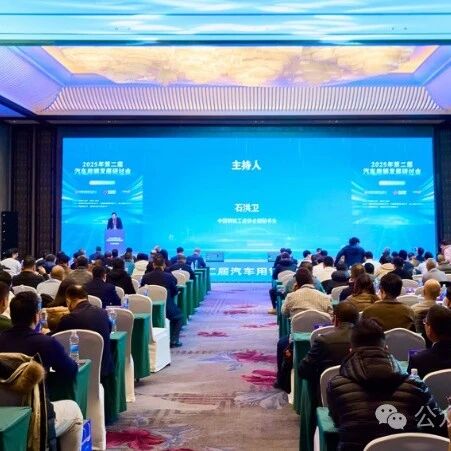
2025年第二届汽车用钢发展研讨会召开——加快构建钢铁、汽车协同发展产业链生态圈
中汽协会数据· 2025-12-15 11:35
Core Viewpoint - The article discusses the second automotive steel development seminar held in Wuxi, Jiangsu, emphasizing the collaboration between the automotive and steel industries to address challenges and promote innovation in automotive steel applications [2][26]. Group 1: Industry Development and Challenges - The current state of the steel industry is influenced by the automotive sector's quality upgrades, which have led to increased competition and a phenomenon of "involution" among steel companies, negatively impacting supply stability and product quality [7]. - The automotive industry is experiencing a shift towards high-strength, green, low-carbon, and cost-effective steel, necessitating closer collaboration between the automotive and steel sectors to tackle common challenges and accelerate technological innovation [9][11]. Group 2: Key Insights from Industry Leaders - Industry leaders highlighted the need for a unified approach to overcome competitive pressures, emphasizing innovation and the establishment of a low-carbon supply chain as critical for sustainable development [7][11]. - The global automotive steel market is projected to grow, with a focus on low-carbon, high-strength, and diversified products, as the automotive sector faces competition from alternative materials [14]. Group 3: Seminar Participation and Contributions - The seminar was attended by over 260 representatives from 70 steel companies and 20 automotive companies, showcasing a broad interest in the collaboration between these industries [26]. - Various experts presented on topics related to automotive steel development trends, demand changes, and technological innovations, indicating a collective effort to address industry challenges [21].




信邦智能(301112) - 2025年12月10日投资者关系活动记录表
2025-12-10 09:52
Group 1: Company Overview and Acquisition - The target company, Indichip Micro, specializes in automotive-grade mixed-signal chips, with cumulative shipments exceeding 350 million units since its establishment in 2017 [1] - The acquisition aims to enhance the company's position in the automotive chip sector, which is characterized by rapid growth and low domestic replacement rates [5] - The target company generated revenue of 584 million CNY in 2024, with automotive-grade chip revenue accounting for 551 million CNY, representing over 90% of total revenue [2] Group 2: Revenue Composition and Market Demand - The target company's revenue for the reporting period was 494.04 million CNY, 584.15 million CNY, and 385.31 million CNY, with automotive-grade chips being the primary revenue driver [2] - The increasing penetration of the target company's products in the market is expected to sustain revenue growth, driven by rising demand from electric vehicle manufacturers [2] Group 3: Client Base and Market Position - Indichip Micro's products are utilized in over a hundred vehicle models, serving major domestic brands like BYD, SAIC, and Geely, as well as international brands such as Volkswagen and Ford [3] - The company has established a competitive edge in domestic chip production, filling gaps left by foreign manufacturers in the automotive lighting control chip market [4] Group 4: Strategic Benefits of the Acquisition - The acquisition is anticipated to create synergies between the acquirer and the target, optimizing asset quality and enhancing operational resilience [5] - The target company has a strong customer base in the domestic automotive sector, which can help the acquirer expand its market presence and improve customer retention [5]
汽车视点丨年末“翘尾”未现,出口或成2026年车市主要“增长极”
Zhong Guo Jin Rong Xin Xi Wang· 2025-12-09 09:35
Core Insights - The domestic passenger car retail market in China experienced a decline in November, with retail volume at 2.225 million units, down 8.1% year-on-year and a slight decrease of 1.1% month-on-month. Cumulatively, from January to November, retail sales reached 21.483 million units, reflecting a year-on-year growth of 6.1% [1] - The market dynamics show a pattern of "high at the beginning, stable later, and pressure in the fourth quarter," influenced by high base figures from the previous year and a gradual return to normal growth [1] - The "old-for-new" subsidy policy significantly supported market growth earlier in the year, but its impact is diminishing as subsidies are phased out, leading to a decrease in daily subsidy applications [1] Passenger Car Market Performance - In November, the wholesale sales of new energy vehicles (NEVs) saw 22 manufacturers surpassing 10,000 units, contributing 94.2% to total NEV sales, indicating a concentration in the market [2] - Major domestic brands like BYD, Geely, and Chery led the sales, with respective volumes of 475,000, 188,000, and 112,000 units [2] - The "second-generation" new energy brands are gaining momentum, with their market share reaching 14.65%, up 1.1 percentage points year-on-year [2] Export Trends - November marked a record high for passenger car exports at 601,000 units, a significant year-on-year increase of 52.4%. Domestic brands accounted for 525,000 units of this total [3] - Cumulatively, from January to November, exports of domestic brand NEVs reached 1.78 million units, a staggering increase of 139% year-on-year, with NEVs making up 40.6% of total exports [3] - The structure of NEV exports is improving, with the share of plug-in hybrid vehicles rising from 26% to 42% year-on-year [3] Promotional Activities and Market Dynamics - The anticipated year-end "tail effect" in the market did not materialize, although promotional activities remain strong, particularly for traditional fuel vehicles and NEVs [4] - In November, the average promotional discount for traditional fuel vehicles was stable at 24%, while NEVs saw an increase in promotional intensity, averaging 10.1% [4] - The average price reduction for new NEVs from January to November was 24,000 yuan, equating to 11.7% of the vehicle price [4] Inventory and Market Outlook - Due to weak retail performance in November, overall industry inventory increased by 60,000 units, contrasting sharply with a decrease of 220,000 units in the same month last year [5] - The inventory warning index for automotive dealers rose to 55.6%, indicating a decline in industry prosperity [5] - Looking ahead, the expiration of the NEV purchase tax exemption is expected to boost December sales but may create pressure for 2026, potentially leading to a "micro-growth" phase in the domestic market [6] Future Projections - Analysts predict that total passenger car wholesale sales will grow by approximately 2.9% in 2026, with NEVs expected to drive this growth with a projected increase of 19% [7] - The competitive landscape is set to intensify with 173 new models expected to launch, over 90% of which will be NEVs or offer NEV options [7] - The domestic market may enter a deep adjustment phase in 2026, with globalization becoming a critical factor for future automotive company trajectories [7]






乘联分会:11月全国乘用车市场零售222.5万辆,同比下降8.1%
Xin Lang Cai Jing· 2025-12-08 08:19
Group 1 - In November, the national passenger car market retail reached 2.225 million units, a year-on-year decrease of 8.1% and a month-on-month decrease of 1.1% [1][4] - Cumulative retail for the year reached 21.483 million units, showing a year-on-year growth of 6.1% [1][4] - The retail growth rate for the domestic car market fluctuated throughout the year, with a notable decline in the fourth quarter, aligning with the initial forecast of a "low in the front, high in the middle, and flat at the end" trend [1][4] Group 2 - Seven key characteristics of the passenger car market in November include record highs in production, exports, and wholesale, with exports reaching historical peaks [2][5] - State-owned major groups' self-owned brands showed strong growth, with a combined year-on-year increase of 3% in November [2][5] - The new car launches this year, along with measures to curb disorderly price reductions, resulted in stable overall trends, with November's new energy vehicle promotions maintained at 10% [2][5] Group 3 - In November, domestic retail of fuel vehicles decreased by 22%, while pure electric vehicle retail grew by 9.2% [2][5] - The penetration rate of new energy vehicles in November reached 59.3%, supported by policies such as tax exemptions for new energy vehicles [2][5] - From January to November, self-owned fuel passenger car exports totaled 2.61 million units, down 8%, while self-owned new energy exports reached 1.78 million units, up 139% [2][5] Group 4 - In November, self-owned brand retail was 1.49 million units, a year-on-year decrease of 4% and a month-on-month decrease of 3.5% [3][6] - The domestic retail market share of self-owned brands was 67%, an increase of 3 percentage points year-on-year [3][6] - The market share of self-owned brands for the year-to-date reached 65%, up 5 percentage points compared to the same period last year, with significant gains in the new energy and export markets [3][6]
特朗普松绑油耗标准:全球车企抢跑“油电同强时代”
智通财经网· 2025-12-06 09:08
Core Viewpoint - The proposal by former President Trump to terminate strict fuel economy standards set by the Biden administration poses a significant challenge to Europe's aggressive policies on banning fuel vehicles, highlighting a shift in the automotive industry's dynamics towards a more sustainable and diversified future led by China's oil-electric hybrid strategy [1][9]. Group 1: Policy Changes and Impacts - Trump's proposal aims to reduce the average cost of purchasing new cars by $1,000, potentially saving Americans $109 billion over five years [3]. - The new fuel efficiency standard proposed by Trump's administration requires vehicles to achieve approximately 34 miles per gallon by 2031, compared to Biden's target of 50 miles per gallon [2]. Group 2: Industry Dynamics - The automotive industry's core profits are derived from fuel vehicles, and the transition to electric vehicles represents a significant restructuring of interests, with traditional automakers facing survival pressures due to lost profits from engine manufacturing and after-sales services [4]. - The shift in stance among U.S. automakers from supporting electric vehicle initiatives to opposing stringent regulations reflects the industry's struggle with profit erosion amid changing policies [4]. Group 3: European Market Challenges - European automakers are under severe pressure from the EU's legislation to ban fuel vehicles by 2035, which is seen as overly ambitious and detrimental to businesses [5]. - The EU's "Fit for 55" plan aims for a 55% reduction in new car carbon emissions by 2030, with a complete transition to zero emissions by 2035, but this has led to some companies planning to abandon engine development altogether [5]. Group 4: Global Automotive Trends - The trend of oil-electric hybrid strategies is gaining traction globally, with Asian automakers, particularly Chinese brands like BYD, Geely, and Chery, significantly increasing their market share [7][8]. - The global automotive market remains predominantly fuel-based, with 73% of vehicles still using fuel, indicating that a rapid transition to electric vehicles is unlikely in the short term [8]. Group 5: China's Strategic Position - China's oil-electric hybrid strategy is viewed as a successful model, with the recent release of the 3.0 roadmap emphasizing the continued importance of internal combustion engines alongside electric vehicles [10]. - By 2040, it is projected that 85% of new passenger vehicles in China will be electric, with a significant market still remaining for non-pure electric models, positioning Chinese automakers as key players in the global automotive technology landscape [10].


中国汽车的真正考验,才刚开始
Xin Lang Cai Jing· 2025-12-06 07:04
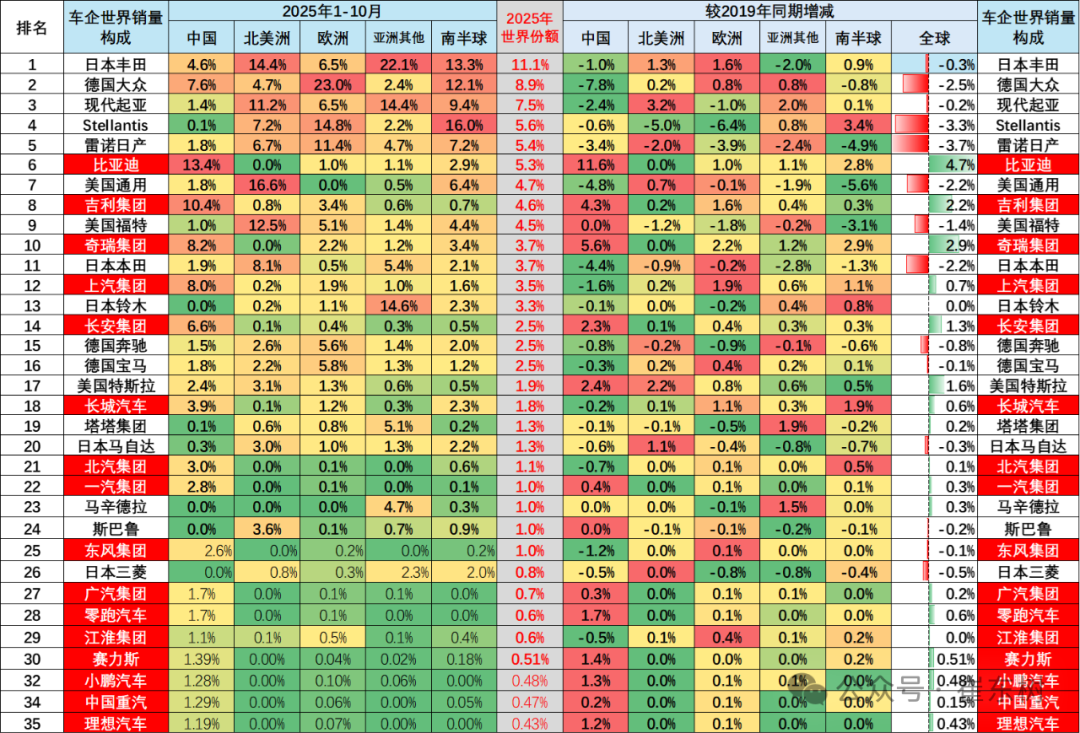
Core Viewpoint - The Chinese automotive industry is facing a significant downturn, with 2026 expected to be one of the most challenging years in its history due to declining sales and market conditions [5][37]. Group 1: Market Performance - Retail sales of passenger cars in China saw a 15% year-on-year increase earlier this year, but growth has rapidly declined since July, with October experiencing an overall negative growth [7][39]. - In November, daily retail sales averaged 4.6 million units, down 19% year-on-year in the first week, and 6.7 million units, down 9% in the second week [8][39]. - Major automakers are struggling to meet their sales targets, with only a few smaller new players achieving their goals by November [8][40]. Group 2: Industry Challenges - The automotive industry is transitioning from subsidy-driven growth to competition based on real demand and efficiency, indicating a significant shift in market dynamics [40][41]. - The impact of subsidies is diminishing, with over 50% of sales in 2025 attributed to trade-in programs, highlighting a reliance on government incentives [9][41]. - The market is experiencing a "strategic waiting" phase among consumers, leading to a decline in new orders as buyers anticipate better deals [15][48]. Group 3: Future Outlook - The expected decline in new energy vehicle purchase tax incentives in 2026 is anticipated to further exacerbate market challenges [15][47]. - The penetration rate of new energy vehicles is slowing, with a notable drop in total retail volume despite high growth rates in percentage terms [15][47]. - The industry is likely to undergo a significant restructuring, with weaker companies facing exit from the market, marking a shift from scale expansion to value competition [32][65]. Group 4: Technological Developments - The automotive sector is exploring various technological advancements, including smart driving and battery innovations, but progress varies across different areas [51][54]. - The introduction of solid-state batteries and centralized computing is underway, but widespread adoption is not expected until 2026 or later [54][55]. - The smart driving sector is experiencing a technological leap, with new models expected to enhance user trust and influence purchasing decisions in 2026 [57][60].



中国汽车的真正考验,才刚开始
虎嗅APP· 2025-12-06 03:32
Core Viewpoint - The article highlights that 2026 is expected to be a challenging year for the Chinese automotive industry, with significant declines in sales and a shift from subsidy-driven growth to competition based on real demand and efficiency [2][9]. Sales Performance - Retail sales of passenger cars in China saw a 15% year-on-year growth at the beginning of the year, but the growth rate has sharply declined since July, with October experiencing an overall negative growth [4][8]. - In November, the average daily retail sales of passenger cars were 46,000 units, down 19% year-on-year in the first week, 9% in the second week, and 7% in the third week [6]. Company Targets and Achievements - BYD aimed for 4.6 million units and achieved 4.18 million units by November, facing challenges to meet its target [7]. - SAIC Group set a target of 4.5 million units, with 4.11 million units sold by November, likely to meet its goal [7]. - Chery and Li Auto are unlikely to meet their targets, while Xiaomi and Leap Motor have already achieved theirs [11]. Market Dynamics - The automotive industry is experiencing its lowest profit margins in five years, with an average profit margin of only 3.8%, leading to significant price reductions [8]. - The market is shifting from a subsidy-driven model to one focused on genuine consumer demand and efficiency, indicating a potential industry "cold wave" in 2026 [8][41]. Subsidy Impact - The impact of subsidies is diminishing, with over 50% of sales in 2025 attributed to trade-in programs, which are now facing adjustments and reductions in many regions [10][13]. - The withdrawal of subsidies is leading to a significant drop in consumer purchasing activity, as many are adopting a "wait-and-see" approach [19][23]. Technological Developments - The article discusses various technological advancements in the automotive sector, including developments in autonomous driving and battery technology, which are seen as potential growth areas for 2026 [26][30]. - The shift towards "software-defined vehicles" and advancements in intelligent driving systems are expected to play a crucial role in the market's future [30][40]. Industry Outlook - The automotive industry is facing a structural adjustment, with weaker companies likely to exit the market as competition intensifies [47]. - The transition from scale expansion to value competition is seen as essential for the long-term health of the industry, with a focus on innovation and efficiency [47][48].