地平线

Search documents
英伟达的汽车生意经
自动驾驶之心· 2026-01-24 02:55
Core Viewpoint - NVIDIA is transitioning from a hardware supplier to a comprehensive provider of autonomous driving solutions, focusing on a full-stack approach that includes cloud training, simulation, and in-vehicle inference capabilities [4][7]. Group 1: Three Pillars of Full-Stack Solutions - NVIDIA's automotive strategy is built on three main components: DGX for AI model training, OVX for simulation, and AGX for in-vehicle inference [8][20]. - DGX serves as an AI model training factory, utilizing a supercomputing cluster of thousands of GPUs to process vast amounts of driving data [11][12]. - OVX creates a virtual world that mirrors real-world conditions, allowing for extensive testing of autonomous driving algorithms without the risks and costs associated with real-world testing [13][14][16]. - AGX represents NVIDIA's well-known in-vehicle computing chips, which have evolved to provide significantly higher processing power, becoming standard in various flagship models [18][20]. Group 2: Business Model Evolution - NVIDIA's revenue model has shifted from solely selling hardware to offering engineering services, which include deep involvement in automakers' production projects [21][23]. - The company charges a one-time engineering service fee, akin to a "coaching fee," to assist automakers in optimizing their algorithms on NVIDIA's platform [24][25]. - This service model fosters a win-win situation, enhancing automakers' capabilities while providing NVIDIA with valuable feedback for continuous product improvement [25]. Group 3: Open Source Strategy - In early 2025, NVIDIA announced the open-sourcing of its Alpamayo series, which includes a large-scale reasoning model and a comprehensive simulation framework [28][29][30]. - This strategic move aims to lower industry barriers, expand the ecosystem, and establish NVIDIA as a leader in defining the next generation of autonomous driving technology [34][35]. - The open-source approach also serves to mitigate geopolitical risks by transforming core technologies into global public assets [34]. Group 4: Demand from the Chinese Market - NVIDIA's accelerated pace in the automotive sector is largely driven by demand from the Chinese market, which is ahead of overseas automakers by two to three years in smart vehicle development [38][40]. - The rapid iteration and high expectations for functionality from Chinese automakers have prompted NVIDIA to develop specialized tools like TensorRT-LLM for Auto in record time [38][40]. Group 5: Competitive Landscape - NVIDIA maintains confidence against competitors by emphasizing that the ultimate competition in smart driving lies in systemic engineering capabilities and a continuously evolving ecosystem [41][42]. - The company has built a comprehensive stack that includes chips, safety certifications, operating systems, middleware, and development tools, creating a high barrier to entry for competitors [42][44].


FINE2026丨智能终端×新材料:六大主题展集结,洞见未来产业新机遇
DT新材料· 2026-01-22 16:11
Core Viewpoint - The 2026 Future Industries New Materials Expo (FINE 2026) aims to lead global innovation in new materials, emphasizing their critical role in the transformation of high-tech industries and the future economy [1][2]. Group 1: Event Overview - FINE 2026 will take place from June 10 to 12, 2026, at the Shanghai New International Expo Center, featuring a total exhibition area of 50,000 square meters and over 800 exhibitors [12][34]. - The expo will include more than 300 strategic and cutting-edge technology reports, showcasing innovations applicable to various industries such as AI, aerospace, smart vehicles, and renewable energy [2][20]. Group 2: Focus Areas - The event will concentrate on five common demands of future industries: advanced semiconductors, advanced batteries, lightweight functional materials, low-carbon sustainability, and thermal management [2][10]. - Six thematic exhibition areas will be established, including advanced semiconductors, advanced batteries and energy materials, thermal management, lightweight and sustainable materials, new materials technology innovation, and future smart terminals [12][15]. Group 3: Participation and Audience - FINE 2026 is expected to attract over 100,000 professional visitors, including industry leaders and investors, facilitating precise connections between enterprises and industry resources [34][35]. - The event will invite over 5,000 industry investors to support quality startups and enhance collaboration opportunities [10][35]. Group 4: Supporting Organizations - The expo is organized by DT New Materials, in collaboration with various associations and institutions, including the China Productivity Promotion Center and the Ningbo New Materials Industry Association [4][5]. - The event will leverage the extensive network of DT New Materials, which has established connections with over 200,000 professionals across various sectors [10]. Group 5: Historical Context and Expectations - FINE 2026 builds on the success of previous events, including the 2025 International Carbon Materials Expo and the 2025 Thermal Management Expo, which collectively attracted over 35,000 professional visitors from 27 countries [7][34]. - The expo is positioned as a pivotal opportunity for businesses to engage in technology transfer and innovation integration, aiming to solidify the foundation for new productivity in the materials sector [2][10].
华为吃高端,Momenta占中端:智驾的“圈地运动”谁能终结?
3 6 Ke· 2026-01-22 09:39
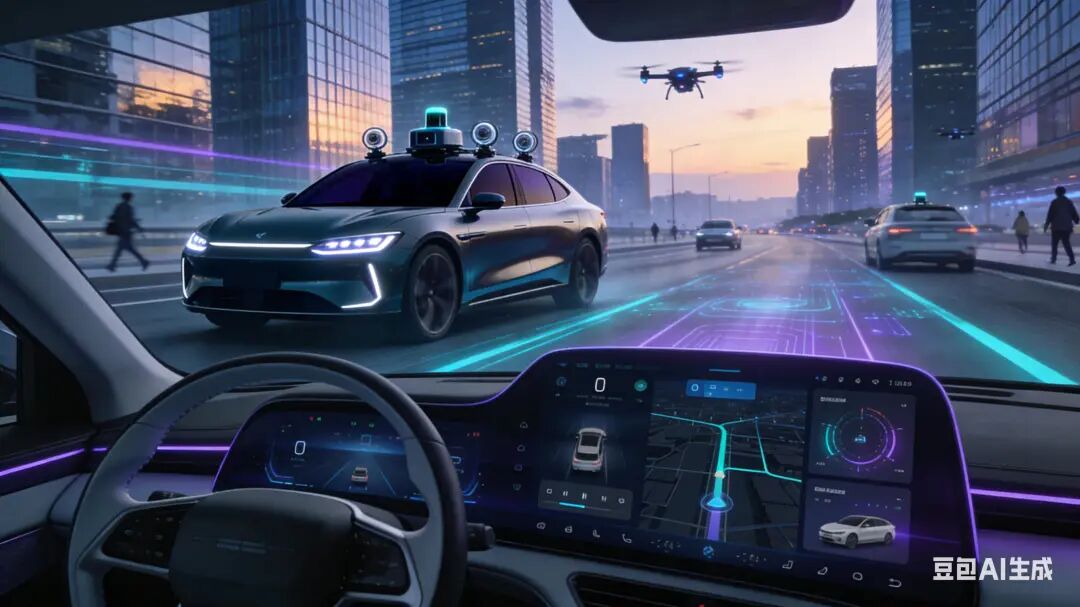
Core Insights - In 2025, the adoption of intelligent driving in China is expected to experience explosive growth, with L2 level vehicles' sales projected to reach a penetration rate of 66.1% by the end of the year, indicating that intelligent driving has become a standard feature in vehicles [1][2][3] Group 1: Market Trends - The intelligent driving industry is facing a significant downturn despite the growth in adoption, leading to a "survival of the fittest" scenario [2][3] - The competition is shifting focus from high-speed NOA (Navigation on Autopilot) to urban NOA, with over 3.129 million vehicles equipped with urban NOA sold from January to November 2025 [12][13] - Mainstream models priced below 300,000 yuan contributed 68.9% of urban NOA sales, indicating a move towards mass-market adoption [14][15] Group 2: Technological Pathways - Two main technological pathways are emerging: the "Vision-Language-Action" (VLA) route, which emphasizes rapid iteration and compatibility with existing hardware, and the "World Model" route, which focuses on deeper cognitive paradigms [5][7][10] - Companies like XPeng and Li Auto are strong proponents of the VLA route, while Huawei represents the World Model approach [6][9] Group 3: Competitive Landscape - The market is characterized by a trend of "self-research dominance" with a high concentration of third-party suppliers, where domestic brands accounted for 81.1% of urban NOA vehicle sales [18][19] - The collapse of companies like Haomo and the shift towards third-party suppliers highlight the challenges faced by automakers in self-research capabilities [20][21] - Leading third-party suppliers, such as Huawei and Momenta, dominate the market, with Momenta holding approximately 61.06% market share [25][26] Group 4: Future Outlook - The competition is expected to intensify, with predictions that only two or three intelligent driving companies may survive by 2026 [32] - The integration of software and hardware is becoming crucial for companies to build competitive advantages, with a focus on deep collaboration between chip design and software development [35][39] - Companies like Horizon Robotics are positioning themselves as challengers to the dominant players by targeting cost-sensitive markets and offering integrated solutions [44][47]
2025年几家自动驾驶公司的采访总结
自动驾驶之心· 2026-01-22 09:07
Core Algorithm - The industry has shifted towards end-to-end solutions, moving away from modular approaches, at least in public discourse [1] - The introduction of world models is prevalent, with some companies using them to generate training data, while others incorporate them into end-to-end models to enhance performance [1][8] - There is a divergence in opinions regarding the necessity of language models (VLA) in autonomous driving, with some companies arguing that language is not essential for driving tasks [1][11] Simulation and Infrastructure - The closed-loop systems have evolved from data-driven to simulation testing and training loops [2] - 3DGS is highlighted as a crucial technology for building simulation environments, as emphasized by Tesla at CVPR 2025 [5] - Infrastructure is critical, with companies like Xiaomi and Li Auto noting its benefits for development efficiency [3][14] Organizational Capability - Organizational ability is vital, as large autonomous driving teams face significant management challenges [4] - Team culture and collaboration are emphasized as essential for overcoming complex technical and management issues [5] Technical Choices Comparison - A comparison of various companies' technical choices reveals differing approaches to core technologies and the role of world models and simulation tools [9] - Companies like Li Auto advocate for a training loop that evolves from imitation to self-learning, while NVIDIA emphasizes interpretability and reasoning in AI [9] Key Non-Core Factors - R&D infrastructure and engineering efficiency are crucial for the success of autonomous driving technologies [14] - Simulation and synthetic data are becoming essential for addressing corner cases that real-world data cannot cover [14] - The scale of computing power and chip adaptation is critical, as autonomous driving is not just a software issue but also a hardware challenge [15] User Experience and Safety - User experience and safety are paramount, with companies like Xiaomi stressing the importance of balancing advanced technology with user concerns [17] - The need for a dual-stack safety mechanism is highlighted, ensuring that even aggressive end-to-end models have a fallback to traditional rule-based systems for safety [19]


免费领取!100+硅碳负极项目清单(第1批)——企业、产能、技术、进度......
DT新材料· 2026-01-21 16:05
| 800+ 200+ 30+ 50,000m | | --- | | 企业参展 科研院所 | | 2026 . 06 . 10 → 06 . 12 | 在新能源产业迭代升级的浪潮中,固态电池已成为撬动行业变革的核心支点,是衡量国家高端制造实力的重要 标志。 在固态电池体系中,负极直接决定电池的能量密度、循环寿命, 是制约电池整体性能升级的关 键环节 。 相比于传统石墨负极, 硅基负极凭借优异的性能 ( 硅理论 比容量 是传统石墨负极的10倍以上 )和与固态 电池体系的高匹 配 度( 降低 固-固界面阻抗,抑制锂 枝晶析出 ), 已成为当前固态电池体系主流选择 。 作为高能量密度电池的核心材料, 硅碳负极已成为固态电池产业链的关键布局方向。 2025年,国内硅碳负极 赛道更是呈现全面开花、项目密集落地的火热态势。 据 DT 新材料不完全统计,2025年国内硅碳负极落地项 目数量突破 100 个,规划总产能超 30 万吨,行业总投资额高达800 亿元! 我们已梳理2025年硅碳负极项目(涵盖受理、公示、开工、投产等全阶段)的核心信息 , 囊括产能规划、技 术路线、项目规模等关键内容。 扫描下方二维码,转发即可领 ...
百度的两个天才:一个做智驾芯片,一个做大模型,他们的故事比电影还精彩
创业邦· 2026-01-21 10:19
Core Insights - Minimax's stock price surged over 80% on its debut, reaching a market capitalization of over 90 billion HKD, highlighting the significant market interest in AI companies [5] - The relationship between Minimax's founder, Yan Junjie, and Horizon Robotics' founder, Yu Kai, is pivotal in understanding the evolution of China's AI industry [6] Group 1: Historical Context - In 2014, Baidu was establishing itself as a leader in AI research, with Yu Kai leading the initiative at Baidu's IDL [9] - Yan Junjie, facing restrictions from his academic advisor, interned at Baidu IDL, which significantly altered his career trajectory [11][12] Group 2: Key Discoveries and Influences - During his internship, Yan Junjie had access to substantial GPU resources and discovered the Scaling Law, which later became foundational for Minimax [17][18] - Yu Kai's philosophy of combining algorithms with engineering greatly influenced Yan Junjie, shaping his approach to AI development [20][22] Group 3: Talent Development at Baidu - Baidu's IDL not only nurtured Yan Junjie and Yu Kai but also produced other influential figures in the AI sector, such as Dario Amodei of Anthropic [24][25] - The environment at Baidu during 2012-2015 was instrumental in cultivating a generation of AI leaders who would later impact the industry significantly [25] Group 4: Diverging Paths and Shared Philosophies - Yu Kai focused on hardware and algorithms for autonomous driving, while Yan Junjie concentrated on large language models and multimodal AI, both embodying Baidu's "algorithm + engineering" philosophy [33] - Both founders are set to achieve public listings in Hong Kong within a two-year span, reflecting their successful entrepreneurial journeys [33] Group 5: Broader Implications - The story illustrates that great companies not only create products but also foster talent and ecosystems, as seen with Baidu's investment in AI from 2012 to 2015 [37] - The mentorship provided by Yu Kai to Yan Junjie emphasizes the importance of learning effective methodologies in resource-constrained environments, a competitive edge for Chinese AI firms [37] - The influence of Baidu as an AI talent incubator is profound, with its alumni reshaping the AI landscape both in China and globally [37]


自动驾驶的“中国方案”:在审慎包容中奔向规模化商用
Zhong Guo Xin Wen Wang· 2026-01-21 08:22
Group 1 - The core focus of the global L4 autonomous driving competition has shifted from laboratory demonstrations to practical mass production and commercial operations [1] - China is a deep participant and innovation source in the global autonomous driving race, leveraging its complex urban road scenarios and comprehensive local supply chain [2][3] - Leading Chinese companies are transforming their technological capabilities into real transportation services, with significant operational expansions and testing initiatives [2] Group 2 - China's autonomous driving development emphasizes safety, integrating it into a comprehensive policy framework that includes "vehicle-road-cloud-network-map" design [3] - The industry adopts a pragmatic approach with a focus on safety redundancy, ensuring that vehicles maintain basic safety capabilities even in the event of system failures [4] - The mainstream business model in the Chinese Robotaxi sector involves collaboration among technology providers, operators, and manufacturers, gradually unlocking commercial scenarios [5] Group 3 - The Chinese industry is addressing challenges such as costs and public perception through deep collaborations with traditional manufacturers and innovative operational models [6][7] - A systematic approach to safety, innovation, and global competitiveness is central to China's autonomous driving strategy, aiming to balance safety and technological advancement [8] - China's unique solutions for complex urban traffic scenarios are expected to provide a globally referenceable "Chinese experience" in autonomous driving [8]
未知机构:中信证券高阶智驾江浙沪调研邀请1月26日1月28日-20260120
未知机构· 2026-01-20 02:25
Summary of the Conference Call on Advanced Intelligent Driving Industry Overview - The conference focuses on the advanced intelligent driving industry, covering the entire supply chain from Level 2 (L2) to Level 4 (L4) autonomous driving technologies, including chips, algorithms, sensors, and operations [1] Key Companies and Insights - **Cao Cao Mobility**: Highlighted as a leading ride-hailing platform with a focus on the latest Robotaxi trials [1] - **TuDatong**: Supplier of lidar technology for NIO, involved with new joint ventures and emerging automotive companies [1] - **Horizon Robotics**: Recognized as a leader in intelligent driving chips and algorithms, with a focus on Robotaxi applications [1] - **Pony.ai**: Engaged in domestic Robotaxi and Robotruck operations [1] - **Hesai Technology**: A leading lidar manufacturer supporting Robotaxi operations for companies like Li Auto and Xiaomi [1] - **WeRide**: Focused on both domestic and international Robotaxi operations, with end-to-end intelligent driving algorithms [1] - **Didi Chuxing**: Shanghai-based Robotaxi operator with key business leaders participating in the conference [1] - **ArcSoft Technology**: Supplier of Driver Monitoring Systems (DMS) and intelligent driving algorithms, expected to benefit from strong L2 standards [1] Additional Important Points - The event is designed to provide investors with a comprehensive understanding of each segment of the advanced intelligent driving supply chain [1] - The conference will take place across multiple cities including Hangzhou, Suzhou, and Shanghai from January 26 to January 28 [1] - Participation is limited, indicating high interest and potential investment opportunities in the sector [1]
地平线再下一城......
自动驾驶之心· 2026-01-20 00:39
Core Viewpoint - The article discusses the collaboration models between automotive manufacturers and suppliers in the autonomous driving sector, highlighting the establishment of joint ventures as a strategic approach to enhance product development and brand positioning [4][6][14]. Group 1: Joint Venture Formation - Beijing Zhiyu Technology Co., Ltd. was established as a joint venture between BAIC and Horizon Robotics, with BAIC holding a 65% stake and Horizon 35%, focusing on intelligent assisted driving products [4]. - The joint venture model allows manufacturers to maintain brand identity while leveraging supplier expertise, enhancing the overall value proposition [7]. - This model also enables manufacturers to have greater control over the development process, ensuring alignment with their strategic goals [8]. Group 2: Product Ownership and Development Models - There are primarily two models for product ownership: a one-time buyout where the manufacturer owns the developed product, and a licensing model where the supplier retains ownership and charges per unit sold [9][10]. - The licensing model is becoming more prevalent due to its efficiency and adaptability in a rapidly changing market [11]. - Products developed through joint ventures are typically owned by the joint venture itself, allowing manufacturers to exert more influence over the development process [12]. Group 3: Industry Trends and Challenges - Many traditional manufacturers struggle with in-house development of autonomous driving technologies, often leading to partnerships with suppliers or the formation of joint ventures [18][19]. - The article suggests that as the industry evolves, the trend of forming joint ventures will likely increase, with manufacturers potentially abandoning in-house development in favor of supplier solutions [21]. - The challenges faced by manufacturers include limited technical capabilities and the need for substantial data to effectively develop and iterate autonomous driving models [20].
英伟达正在被中国车企抛弃
阿尔法工场研究院· 2026-01-20 00:08
Core Viewpoint - The automotive industry is shifting from reliance on NVIDIA's chips to self-developed solutions, as companies like Xiaopeng and NIO are moving towards their own chip development to reduce costs and enhance performance [2][5][20]. Group 1: Market Dynamics - Xiaopeng has released four new models equipped with its self-developed Turing driving chip, marking a complete departure from NVIDIA's chips [2]. - NIO is transitioning to its self-developed Shenqi chip, which is expected to significantly reduce costs compared to purchasing NVIDIA chips [2][8]. - NVIDIA's market share in China's high-end driving chip sector is projected to decline from 39% in 2024 to 25% in 2025, indicating a significant shift in the competitive landscape [2][9]. Group 2: Competitive Landscape - In 2024, NVIDIA's Orin-X chip held a 39.8% market share with 2.1 million units, but competitors like Horizon are gaining ground with lower-cost alternatives [5][6]. - Horizon's J5 chip has secured contracts with over nine automakers, including major brands like BYD and SAIC, highlighting the increasing competition in the market [6][9]. - By 2025, NVIDIA's partnerships with major clients like NIO and Xiaopeng have diminished, indicating a loss of influence in the market [6][8]. Group 3: Financial Performance - In the first three quarters of fiscal year 2025, NVIDIA reported $147.8 billion in total revenue, with only $1.7 billion (approximately 1%) coming from automotive business, underscoring the limited impact of automotive sales on overall performance [14][16]. - The automotive segment's revenue is significantly overshadowed by NVIDIA's data center business, which accounts for nearly 90% of its income [14][16]. Group 4: Future Outlook - NVIDIA is attempting to pivot from being a chip supplier to a comprehensive smart driving solution provider, but this transition faces challenges as competitors strengthen their positions [20]. - The launch of NVIDIA's open-source VLA model, aimed at assisting automakers lacking full-stack development capabilities, reflects its strategy to maintain relevance in the evolving market [20][21]. - However, the practical utility of the VLA model has been questioned, indicating potential hurdles in its adoption and effectiveness [21].