南京银行

Search documents
银行业周度追踪2025年第48周:保险长钱入市,聚焦红利与科创-20251208
Changjiang Securities· 2025-12-08 05:32
Investment Rating - The report maintains a "Positive" investment rating for the banking sector [10] Core Insights - The banking sector has experienced a third consecutive week of decline, primarily due to a rebound in market risk appetite, leading to the outflow of previously defensive capital. The bond market has also adjusted, affecting investment returns. Despite short-term style changes, the report remains optimistic about the revaluation direction of bank stocks, particularly favoring large banks like Bank of Communications and China Merchants Bank, as well as leading city commercial banks such as Nanjing Bank, Jiangsu Bank, and Hangzhou Bank [2][7] - Recent adjustments in insurance risk factors encourage long-term allocations towards low volatility dividend stocks and technology innovation sectors. The National Financial Regulatory Administration has lowered risk factors for certain indices, which is expected to enhance the solvency of insurance companies and promote long-term investments in quality equity assets [4][39] Summary by Sections Market Performance - The banking index fell by 1.1% this week, underperforming the CSI 300 and ChiNext indices by 2.3% and 2.9% respectively. The average dividend yield for the six major state-owned banks in A-shares rose to 3.85%, with a 200 basis point spread over the 10-year government bond yield. H-shares maintain a 5% average dividend yield, with a 23% discount compared to A-shares [7][20][26] Credit Growth - As of the end of October 2025, credit growth across various regions remains differentiated, with major provinces like Jiangsu, Zhejiang, Shandong, Sichuan, and Anhui maintaining growth rates above 8%. Sichuan leads with a growth rate of 10.8%. Corporate loans continue to be the main growth driver, with Jiangsu and Sichuan showing growth rates of 13.6% and 13.3% respectively [6][34] Insurance Capital Allocation - Insurance capital is in a continuous process of increasing allocations to bank stocks, particularly during the third quarter adjustment period. The report outlines three core strategies for capital allocation: large insurance funds strategically investing in state-owned banks and leading city commercial banks, and smaller insurance companies seeking long-term equity investment opportunities in smaller banks [5][39]




从“看资产”到“押未来”——南京银行镇江分行“投贷联动”破题科技企业融资难
Jiang Nan Shi Bao· 2025-12-08 03:24
Group 1 - The core concept of the "Investment-Loan Linkage" model is to provide not just funding but also deep empowerment for technology companies, exemplified by the experience of Botent Robotics, which views its banking partner as a collaborator in innovation rather than just a financial provider [1][2] - Botent Robotics has established stable partnerships with over 400 leading domestic and international companies, applying its products across various industries including food, daily chemicals, electronics, automotive, and new energy [1] - The "Investment-Loan Linkage" service from Nanjing Bank has alleviated immediate funding needs for Botent Robotics and integrated it into a "Science and Technology Enterprise Ecosystem," offering industry connections and policy insights [1][2] Group 2 - The "Investment-Loan Linkage" model is a comprehensive financial solution tailored for technology enterprises, focusing on long-term value rather than short-term financial performance, allowing companies to concentrate on research and market exploration [2] - Nanjing Bank's initiative aims to shift the focus from traditional asset-based evaluations to knowledge-based assessments, recognizing that many tech companies' most valuable assets are talent, technology, and intellectual property [3] - The model combines bank credit and equity investment functions, collaborating with government parks, venture capital institutions, and industry funds to provide a comprehensive financing solution for technology companies at various development stages [3] Group 3 - A local medical technology company exemplifies the effectiveness of the "Investment-Loan Linkage" model, having received critical product testing reports that serve as a "pass" for clinical application, despite initially lacking mature products or revenue [4] - Nanjing Bank's assessment process for this company relied on "soft information" such as team background, technological barriers, and market prospects rather than traditional hard assets, leading to a supportive financing solution [4] - Since the launch of the "Investment-Loan Linkage" service in Zhenjiang, Nanjing Bank has hosted 52 events, served over 650 technology enterprises, and disbursed nearly 13 billion yuan in technology loans, effectively broadening financing channels for innovation-driven companies [4] Group 4 - Nanjing Bank aims to continue its mission of being a close partner to technology enterprises, focusing on innovative financial services to support the cultivation of new productive forces and contribute to high-quality local economic development [5]
银行业2026年度策略
2025-12-08 00:41
Summary of the Conference Call on the Banking Industry Strategy for 2026 Industry Overview - The conference call focuses on the banking industry, particularly the outlook for 2026 and the valuation of bank stocks [1][2]. Key Points and Arguments 1. Valuation Improvement - 2026 is expected to be a critical year for the valuation of bank stocks, with a significant narrowing of interest margin decline anticipated to enhance bank performance, especially for large banks [1][4]. - The net interest margin (NIM) and return on equity (ROE) are expected to move in tandem, with improvements in NIM likely to drive price-to-book (PB) valuations higher [1][4]. 2. Domestic and International Valuation Discrepancies - There is a notable valuation disparity between domestic banks and those in the US and Japan, with domestic and some European banks being undervalued [5]. - Historical data suggests that banks perform well during inflationary periods and economic recoveries, even achieving excess returns post-risk exposure [5]. 3. External Environment and Recovery - The current domestic environment is stable but lacks clear signs of recovery. Drawing from experiences in the US and Japan, banks can achieve excess returns after risk clearance [6]. - Large banks like Agricultural Bank of China have room for PB improvement, supported by ongoing insurance fund purchases, despite short-term impacts from indices and geopolitical events [6]. 4. Non-Interest Income and Profit Growth - The performance of the bond market is expected to have a limited impact on future earnings expectations. Non-interest income for listed banks is under pressure in 2025 but is projected to stabilize and improve in 2026 [7]. - The overall profit growth is expected to remain steady, benefiting from positive factors related to net interest margin [7]. 5. Timing for Investment - Historical data indicates that bank stocks typically show significant excess returns in the first and fourth quarters, particularly in December and January [9]. - City commercial banks are highlighted as having substantial investment value due to their low valuations and stable profit expectations [3][9]. 6. Future Changes and Turning Points - 2026 is anticipated to be a turning point for the banking industry, with stabilized interest margins and no significant deterioration in mortgage loan delinquency rates [12]. - The current trend of declining bad debt rates suggests a favorable outlook for bank stocks in the coming years [12][14]. 7. Real Estate Market Impact - Despite falling property prices, mortgage asset quality has not significantly deteriorated, indicating a potential easing of related risks in 2026 [13]. 8. Factors Influencing Bank Stock Performance - Short-term performance may be influenced by systemic weaknesses in other sectors, with a more favorable outlook if policies become more proactive in 2026 [11]. - The allocation of insurance funds and the performance of cyclical industries are also critical factors to monitor [11]. 9. Long-Term Prospects for City Commercial Banks - High-quality city commercial banks are expected to outperform large banks, with potential returns of approximately five times over the next three to five years [24]. - These banks, such as Hangzhou Bank and Jiangsu Bank, are characterized by low price-to-earnings ratios and stable profit growth [24]. 10. Investment Selection Criteria - In the current market environment, emphasis should be placed on high-quality city commercial banks due to their profit growth potential and better asset quality [25]. - Large commercial banks are also worth considering, but individual assessments of their investment value are necessary [25]. Other Important Considerations - The overall non-performing loan ratio is expected to remain stable in 2026, with some banks potentially seeing declines [16]. - The growth rate of bank scale is anticipated to slow down compared to 2025, reflecting a long-term downward trend in China's economic growth [16]. - Fee income and investment returns are projected to stabilize and improve in 2026, although investment returns may not reach 2025 levels [17]. This summary encapsulates the key insights and projections regarding the banking industry as discussed in the conference call, providing a comprehensive overview of the anticipated trends and investment opportunities for 2026.
调整险企风险因子,或撬动超千亿增量资金入市
Zheng Quan Shi Bao· 2025-12-07 23:44
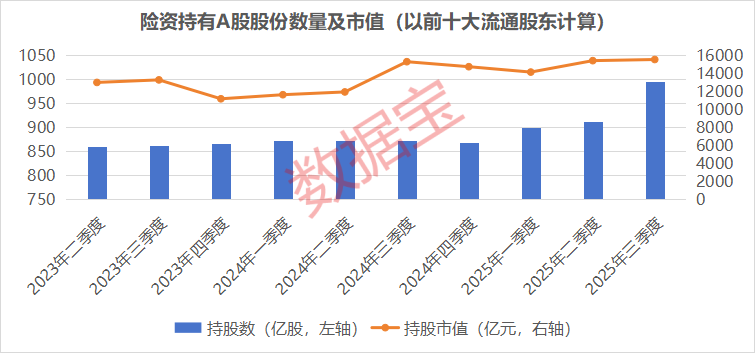
受上述消息刺激,A股保险指数上周五(12月5日)尾盘大涨,中国太保、中国平安当日涨幅均超过5%。 多次优化风险因子 险资长钱加速入市可期 事实上,这并非首次对保险公司风险因子的优化。2023年9月,国家金融监督管理总局发布《关于优化保险公 司偿付能力监管标准的通知》,其中提出,对于保险公司投资沪深300指数成份股,风险因子从0.35调整为 0.3;投资科创板上市普通股票,风险因子从0.45调整为0.4。 今年5月,央行、金融监管总局和证监会在国新办发布会上宣布一揽子金融政策,其中有关保险行业的增量政 策包括:进一步扩大保险资金长期投资试点范围,为市场注入更多增量资金;调整偿付能力监管规则,将股 票投资风险因子进一步下调10%。 招银国际今年5月研报指出,经测算,若将股票投资风险因子对应释放的最低资本全部用于配置沪深300股 票,有望带来逾1500亿元增量入市资金,险资长钱加速入市可期。 从A股市场来看,以前十大流通股东的持股情况来看(保留中国人寿、平安银行两只大股东为险资的个股), 截至2025年三季度末,险资持股数量接近996亿股,持股市值(期末收盘价)达到1.56万亿元,持股数量及持 股市值均创近10个季 ...




公募绩效考核优化,把握优质金融
HTSC· 2025-12-07 12:35
Investment Rating - The report maintains an "Overweight" rating for the securities and banking sectors, while also recommending a focus on quality insurance companies [9]. Core Insights - The report highlights investment opportunities in the order of securities > banking > insurance, emphasizing the optimization of performance evaluation rules for fund companies, which is expected to enhance long-term incentive mechanisms and promote sustainable development in the fund industry [12][31]. - The China Securities Regulatory Commission (CSRC) has introduced new regulations to strengthen governance and oversight across the entire lifecycle of listed companies, which is anticipated to improve market stability and investor confidence [15][16]. - The People's Bank of China (PBOC) has conducted a 1 trillion yuan reverse repurchase operation to support liquidity, particularly during the year-end and Spring Festival periods, with major banks expected to begin distributing mid-term dividends [31][33]. Summary by Sections Securities - The CSRC has proposed to relax capital and leverage restrictions for high-quality securities firms, which is expected to enhance their operational efficiency [14]. - In November, the number of new A-share accounts increased by 3% month-on-month, with a year-to-date growth of 8%, indicating sustained market interest [18]. - The report recommends focusing on high-quality brokers with low price-to-book (PB) ratios, including CITIC Securities, Guotai Junan, and GF Securities [12][13]. Banking - The PBOC's recent reverse repurchase operations are aimed at ensuring ample liquidity in the market, especially during high-demand periods [31][32]. - The report notes that the banking sector's PB ratio is currently at 0.71, indicating a relatively low valuation compared to historical levels, suggesting potential for recovery [31]. - Recommended banking stocks include Nanjing Bank, Chengdu Bank, and Shanghai Bank, which are considered high-quality picks [31][33]. Insurance - The insurance sector has shown resilience, with regulatory adjustments to risk factors for equity investments leading to a significant increase in stock prices [46]. - The report suggests that investors should focus on leading insurance companies, such as China Life and Ping An, which are expected to benefit from improved liquidity conditions [46][47]. - Regulatory changes are aimed at encouraging long-term investments by insurance companies, which could enhance their stability and support economic growth [48][49].




金融行业周报:险资股票因子下调,看好券商板块盈利修复-20251207
Western Securities· 2025-12-07 12:26
Investment Rating - The report indicates a positive outlook for the insurance sector, with a recommendation to focus on strong insurance companies such as New China Life Insurance, China Ping An, China Life Insurance H, and China Taiping [2][17] Core Insights - The non-bank financial sector (Shenwan) index increased by 2.27%, outperforming the CSI 300 index by 0.99 percentage points, while the insurance sector saw a significant rise of 5.08% [1][9] - The insurance sector's growth is attributed to several factors, including a reduction in long-term stock holding risk factors, expected strong performance in dividend insurance products, and improved global liquidity due to anticipated interest rate cuts in the US [2][16] - The brokerage sector is expected to experience a valuation correction, with a current price-to-book (PB) ratio of 1.36x, indicating potential for recovery in profitability and valuation [2][19] - The banking sector has underperformed, with a decline of 1.18%, and is currently undervalued with a PB ratio of 0.55x, suggesting room for future valuation improvement [3][20] Summary by Sections Insurance Sector - The insurance index rose by 5.08%, significantly outperforming the CSI 300 index by 3.80 percentage points, driven by regulatory adjustments that lowered risk factors for long-term stock holdings [1][13] - The sector is expected to benefit from a favorable environment for dividend insurance products, with strong growth anticipated in the coming year [2][16] - Key recommendations include focusing on companies like New China Life Insurance and China Ping An, which are positioned for growth [17] Brokerage Sector - The brokerage index increased by 1.14%, with a current PB ratio of 1.36x, indicating a potential mismatch between profitability and valuation [2][19] - Regulatory changes are expected to enhance capital efficiency for leading brokerages, creating opportunities for investment in firms with strong fundamentals [2][18] - Recommended stocks include Guotai Junan, Huatai Securities, and Orient Securities, particularly those involved in mergers or restructuring [19] Banking Sector - The banking sector saw a decline of 1.18%, with a PB ratio of 0.55x, indicating that banks are currently undervalued [3][20] - Concerns about asset quality, particularly related to real estate and local government debt, have affected market perceptions, but there is potential for recovery as regulatory support continues [23][24] - Recommendations include focusing on high-quality city commercial banks in economically developed regions, such as Hangzhou Bank and Ningbo Bank [20][24]



银行业周报(20251201-20251207):数字人民币定位有望晋级,支付领域大有可为-20251207
Huachuang Securities· 2025-12-07 11:45
Investment Rating - The report maintains a "Recommended" investment rating for the banking sector, indicating a positive outlook for the industry in the near term [1]. Core Insights - The positioning of the digital RMB is expected to advance, with significant potential in the payment sector. The People's Bank of China (PBOC) is working on optimizing the management system for digital RMB, which may evolve from a cash-like payment instrument (M0) to broader monetary categories (M1, M2) [2][8]. - Infrastructure development for digital RMB is progressing, with the establishment of international and operational centers in Shanghai and Beijing, respectively. As of September 2025, the cumulative transaction amount in pilot areas reached 14.2 trillion yuan, with 2.25 billion personal wallets opened [3][8]. - The banking sector is expected to see a systematic recovery in valuations in 2026, transitioning from a defensive to a growth-oriented investment logic. Key investment themes include high dividend yields and low valuations, particularly as risk-free interest rates decline [9]. Summary by Sections Industry Overview - The banking sector comprises 42 listed companies with a total market capitalization of approximately 1.15 trillion yuan, representing 13.04% of the market [4]. - The average daily trading volume for A-shares was 10,583.60 billion yuan, reflecting a 0.65% increase from the previous week [8]. Performance Metrics - The absolute performance of the banking sector over the past month is 5.0%, with a relative performance of 2.8% compared to the benchmark [5]. - The report highlights that the banking index underperformed the CSI 300 index by 2.46 percentage points during the week [8]. Investment Recommendations - The report suggests focusing on three main investment lines: 1. State-owned banks and major commercial banks like China Merchants Bank. 2. Quality joint-stock banks and city commercial banks with improving net interest margins and credit costs. 3. City commercial banks benefiting from regional policies and showing significant performance potential [9]. - Specific banks recommended for investment include China Merchants Bank, CITIC Bank, and several city commercial banks such as Chengdu Bank and Chongqing Bank [9][10].


与世界各国共享机遇共同发展——扩大高水平对外开放,开创合作共赢新局面
Ren Min Ri Bao· 2025-12-07 07:33
Group 1: Core Perspectives - The necessity of open cooperation and mutual benefit is a fundamental requirement for Chinese-style modernization, as emphasized by the current global economic challenges and the need for strategic direction [1] - China is committed to expanding its openness, with the "15th Five-Year Plan" advocating for steady institutional opening and international cooperation to promote reform and development [1][2] Group 2: Self-Initiated Opening - The concept of self-initiated opening is highlighted as a key feature of China's high-level openness, reflecting a strategic choice that aligns with the country's realities and global trends [2][3] - Initiatives such as the China International Import Expo and zero-tariff policies for least developed countries demonstrate China's proactive approach to international trade [2] Group 3: Trade Innovation and Development - Foreign trade is identified as a crucial engine for economic growth and a key lever for expanding openness, with China's goods trade remaining the largest globally and service trade second [6] - The "15th Five-Year Plan" outlines new requirements for enhancing trade quality and efficiency, focusing on goods, services, and digital trade [6][8] Group 4: Investment Cooperation - China aims to combine "bringing in" and "going out" strategies for investment, leveraging its vast market to create favorable conditions for foreign investment while guiding global supply chain layouts [10][12] - The establishment of a comprehensive overseas service system is essential for enhancing companies' global capabilities and supporting their international operations [13]
银行资负跟踪20251207:Q4银行浮盈兑现估算和EVE指标影响看法
CMS· 2025-12-07 05:03
Investment Rating - The report maintains a "Recommended" investment rating for the banking industry [2] Core Insights - The banking sector is experiencing a significant adjustment in long-term bonds, with a projected interest rate increase of 25-42 basis points, aligning with the "asset shortage" logic [14][15] - There is an ongoing demand for banks to realize floating profits from bond markets, particularly as the high base from the previous year's Q4 is expected to exert greater pressure on profit realization this year [14][15] - The report outlines three scenarios for revenue growth in 2025, indicating that banks may need to sell bonds worth approximately 0.20 trillion to 1.14 trillion yuan depending on the revenue growth target [15][19] Summary by Sections Section 1: Floating Profit Realization and EVE Indicator Impact - The report discusses the ongoing pressure for banks to realize floating profits in December, with expectations of significant bond sales to support stable performance [14][15] - It highlights the need for banks to manage duration risk effectively, as the current structure of liabilities is shortening, which may impact stability [16][17] Section 2: Loan and Bond Yield Comparison - The report provides insights into the yield comparison between loans and bonds, indicating a need for banks to adjust their strategies in response to changing market conditions [8] Section 3: Deposit Rate Tracking - The report tracks changes in deposit rates, noting adjustments made by specific banks to their deposit rates, which may influence overall funding costs [6] Section 4: Bill Discounting Volume and Price Tracking - The report analyzes the trends in bill discounting, indicating a significant drop in short-term bill rates while highlighting seasonal patterns in the market [24][25] Section 5: Central Bank Dynamics and Market Rate Tracking - The report details the central bank's operations, including reverse repos and liquidity management, which are crucial for maintaining market stability [25][26] Section 6: Government Debt Financing and Fiscal Strength Tracking - The report discusses the government's debt financing activities and their implications for fiscal policy, emphasizing the need for careful monitoring of future fiscal measures [26] Section 7: Interbank Certificate of Deposit Tracking - The report notes a positive net financing position for interbank certificates of deposit, indicating a shift in funding strategies among banks [28]
江苏首单!南京企业用数据贷了1000万
Nan Jing Ri Bao· 2025-12-07 04:45
Core Insights - The first "data intellectual property + data asset" dual pledge financing has been successfully implemented in Nanjing, marking a significant innovation in the financialization of data assets [1][3] - The "Shuzhi Loan" product, launched by Nanjing Bank, allows technology-based SMEs to convert their data assets into low-cost credit funding, providing a new financing pathway for innovative enterprises [3][6] Group 1 - Nanjing Bank has completed the first full-process data intellectual property and data asset pledge financing for Kaos Data Technology Co., Ltd., indicating that data assets can serve as collateral for financing [1][4] - The financing involved a total credit issuance of 10 million RMB, supported by a comprehensive evaluation of data rights ownership, value, and compliance conducted by Nanjing Bank in collaboration with relevant institutions [3][4] Group 2 - Nanjing Bank has been actively innovating its financial services for technology enterprises, having served nearly 88,000 tech companies and provided over 860 billion RMB in funding as of November [6] - The bank has also launched various innovative financial products, including the "R&D Pipeline Loan" and a talent financing fund, to address the funding needs of biotech companies and tech talent [6]