
长江存储

Search documents
湖北最小城市,被顺丰带“飞”了
3 6 Ke· 2025-06-16 03:29
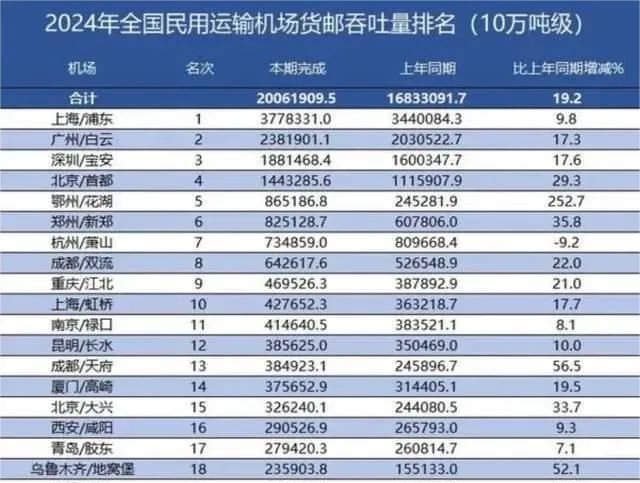
Core Insights - The article highlights the rapid development of Ezhou Huahu International Airport, which has become a significant cargo hub in China, surpassing Zhengzhou Airport to become the top cargo airport in Central China [4][6][10]. Group 1: Airport Development - Ezhou Huahu International Airport is the world's fourth and Asia's first dedicated cargo hub, with a projected cargo throughput of 865,186.8 tons in 2024, marking a 252.7% increase from the previous year [4][7][10]. - The airport aims to reach a cargo throughput of 2.45 million tons by 2025 and 3.3 million tons by 2030, with expectations to rank among the top three cargo airports in China in the coming years [9][10]. Group 2: Economic Impact - The establishment of the airport has led to significant economic growth in the region, attracting over 96 projects with a total investment of 108 billion yuan by 2024 [37]. - Ezhou has become a logistics hub, with over 80 logistics companies, including major players like JD.com and YTO Express, setting up operations at the airport [37][41]. Group 3: Strategic Location - Ezhou's geographical advantages allow it to cover major economic regions in China, including the Yangtze River Delta and the Pearl River Delta, facilitating next-day delivery services to a vast population [20][22]. - The city boasts a comprehensive transportation network, including deep-water ports and rail connections, enhancing its logistics capabilities [20][21]. Group 4: Partnerships and Collaborations - SF Express has partnered with the Ezhou government to develop the airport, which has led to the fastest approval and construction timelines in Chinese civil aviation history [25][26]. - The airport has attracted global companies, including eight Fortune 500 firms, establishing regional centers to leverage the logistics capabilities offered by the airport [39]. Group 5: Future Prospects - The airport is positioned to become a global supply chain center and high-end processing hub, with plans to enhance cross-border e-commerce capabilities by 2025 [41][42]. - Ezhou's development is compared to Memphis, USA, indicating a shift in how cities can leverage logistics hubs for economic growth [33][46].


山西证券研究早观点-20250616
Shanxi Securities· 2025-06-16 02:32
Group 1 - The core viewpoint of the report highlights that Jingyi Equipment (688652.SH) is deeply engaged in semiconductor-specific temperature control and waste gas treatment equipment, steadily increasing its market share in the domestic market [4][6] - The semiconductor-specific temperature control equipment has broken the foreign monopoly, leading to a rapid increase in sales and performance. The company is a domestic supplier achieving import substitution, with over 60% of its revenue coming from temperature control equipment [6][7] - The market for semiconductor-specific temperature control equipment is highly concentrated, with the company leading the domestic market share, which is expected to reach approximately 39% by 2024 [6][7] Group 2 - The demand for semiconductor-specific process waste gas treatment equipment has significant growth potential, with the company's market share steadily increasing. The market size for this equipment in China is projected to reach 2.471 billion yuan by 2025 [6][7] - The domestic market for wafer transfer equipment has a very low localization rate, and the company has a significant local advantage. The market size for wafer transfer equipment in China is expected to reach 333 million USD by 2028 [6][7] - The company is one of the few domestic equipment suppliers achieving mass production and shipment of Chiller/Scrubber devices, with a projected market space of approximately 6 billion yuan for its existing products in China by 2025 [7]
半导体设备商中科仪冲刺北交所IPO 客户涵盖台积电/中芯国际/长江存储等
Ju Chao Zi Xun· 2025-06-12 09:06
Group 1 - The China Academy of Sciences Shenyang Instrument Co., Ltd. (referred to as Zhongke Instrument) has completed the counseling report for its public offering of stocks and listing on the Beijing Stock Exchange, as disclosed by the China Securities Regulatory Commission [1] - Zhongke Instrument has established a governance structure, accounting foundation, and internal control system necessary for becoming a listed company, and its key personnel are well-versed in the legal responsibilities and obligations related to the issuance and operation in the securities market [1] - The company's IPO journey has undergone several adjustments, initially applying for the Sci-Tech Innovation Board in December 2020, withdrawing the application in May 2021, and later restarting its listing plan in January 2023, ultimately deciding to change its application to the Beijing Stock Exchange by April 2025 [1] Group 2 - Zhongke Instrument primarily engages in the research, production, and sales of dry vacuum pumps and vacuum instruments, which are essential for creating a clean vacuum environment in semiconductor manufacturing processes [2] - The company's vacuum instrument products are categorized into three main types: large scientific devices, vacuum film instruments, and new material preparation equipment, with services including maintenance and technical support for these products [2] - The technical service business focuses on providing maintenance and support for dry vacuum pumps and vacuum instruments to integrated circuit and photovoltaic product manufacturers, with subsidiaries established in Shanghai and Wuhan for efficient customer service [2] Group 3 - The subsidiaries Shanghai Shangkai Instrument and Wuhan Shangkai Instrument are qualified suppliers for major integrated circuit manufacturers such as TSMC, SMIC, Changjiang Storage, and Dalian Intel, directly handling maintenance and repair orders for dry vacuum pumps [3] - These subsidiaries manage the entire process of receiving customer equipment, performing repairs, replacing parts, and testing before returning the equipment to clients [3]

特气品类业内最全,已为多家行业龙头供货,合肥「先微气体」完成数千万元A+轮融资|36氪首发
3 6 Ke· 2025-06-11 09:46
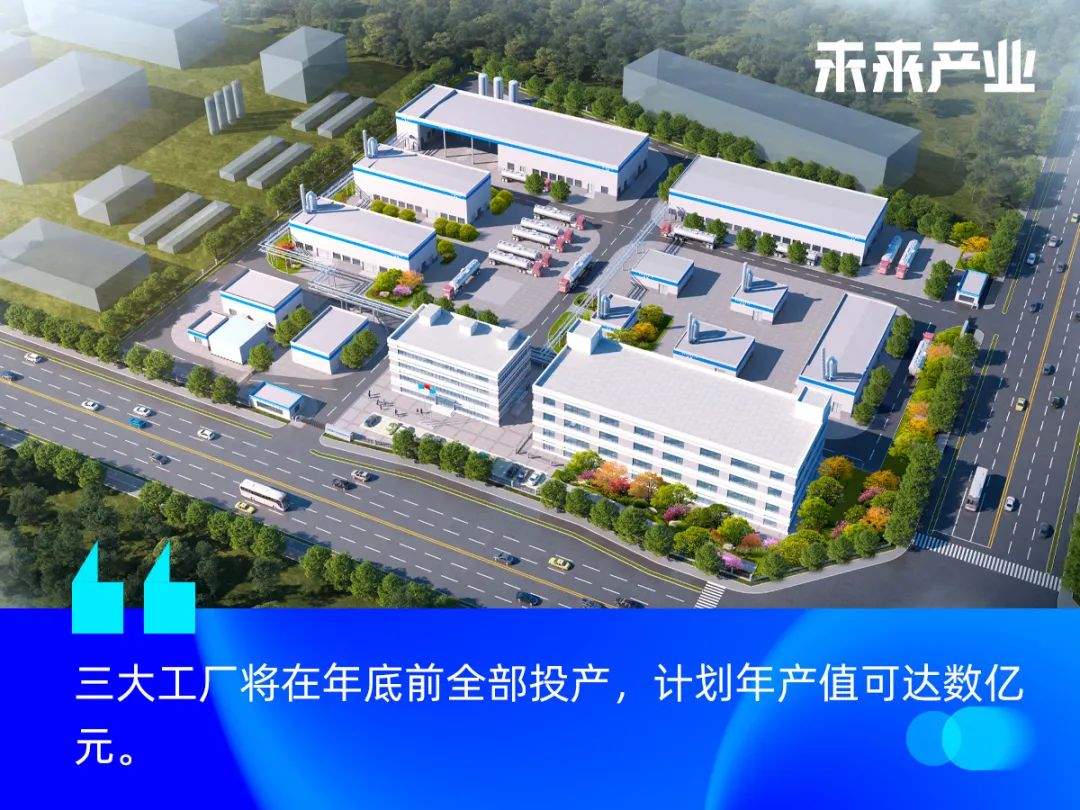
Core Viewpoint - Hefei Xianwei Semiconductor Materials Co., Ltd. (Xianwei Gas) has completed a multi-million A+ round financing to enhance R&D, team expansion, and working capital [2][3]. Company Overview - Founded in 2022, Xianwei Gas specializes in the R&D, production, storage, transportation, and analysis of high-purity electronic specialty gases, addressing the national strategic gas resource shortage [2][3]. - The founder, Dong Yizhong, has over 20 years of experience in gas production, R&D, product application, marketing, and team management, with a founding team averaging over 20 years in leading chip and gas companies [2][3]. Market Potential - The electronic specialty gas market is expected to reach 30-40 billion by 2026, driven by the rapid development of high-tech industries such as integrated circuits and display panels [3][4]. - Historically, the domestic supply of electronic specialty gases relied heavily on foreign companies, but since 2017, domestic firms have begun to scale up and replace imports [3][4]. Product and Service Capabilities - Xianwei Gas has developed a comprehensive product line covering over 100 types of specialty gases, including diffusion gases, etching gases, cleaning gases, and laser gases, making it the company with the most diverse product offerings in China [4][5]. - The company has established three production bases in Anhui, with the Feidong base already operational and the other two bases expected to be operational by mid-2025 [5][6]. Commercialization and Client Base - Xianwei Gas has secured major clients in the integrated circuit, display panel, and new energy sectors, including Jianghuai Automobile, Volkswagen, and Changxin Integrated [5][6]. - The company is also in discussions with leading firms like BOE and TCL Huaxing for further collaboration [6]. Investment Insights - Investors view electronic specialty gases as essential for the electronics industry, with high demand from sectors like new energy vehicles and photovoltaic cells [7]. - Xianwei Gas's team possesses critical technology in gas synthesis, purification, and packaging, positioning the company favorably for market competition and domestic substitution efforts [7].
芯片专利博弈后,长江存储再起诉美光散布诽谤信息
Nan Fang Du Shi Bao· 2025-06-10 11:16
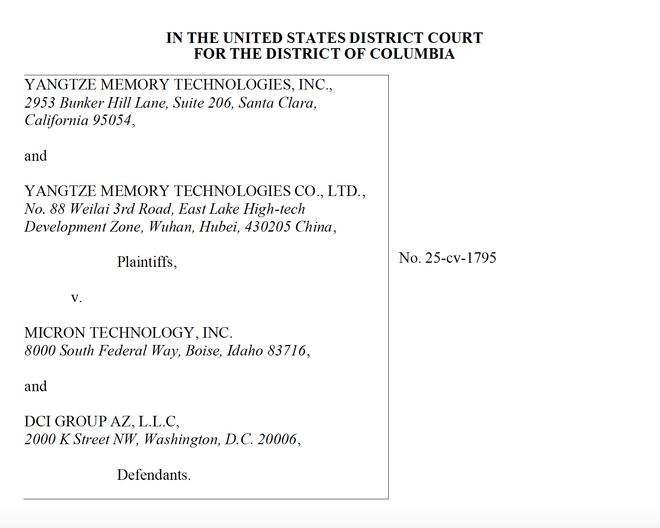
Core Viewpoint - Yangtze Memory Technologies Co. (YMTC) has filed a lawsuit against Micron Technology and a public relations firm, DCI, accusing them of conspiring to spread false information about YMTC's flash memory chips posing a data security threat [1][3]. Group 1: Allegations and Legal Actions - YMTC claims that since September 2020, DCI has disseminated false information on its "China Tech Threat" website, alleging that YMTC's chips could be used to monitor millions of American consumers, compromising data privacy and national security [3]. - The lawsuit argues that YMTC's chips lack essential components for remote control or wireless communication, such as antennas and modems, and asserts that Micron and DCI should have known these claims were false [3]. - YMTC alleges that Micron and DCI orchestrated a "pseudo-grassroots" misinformation campaign to damage YMTC's reputation and business interests, thereby protecting Micron's market share [3]. Group 2: Impact on Business - The false information has reportedly led to significant business losses for YMTC, including the loss of a deal with a leading original equipment manufacturer that planned to source 40% of its NAND flash chip needs from YMTC, resulting in hundreds of millions of dollars in losses [4]. - YMTC has experienced sales declines and market opportunity losses, which forced the company to implement a 10% workforce reduction in early 2023 to manage additional costs incurred from reputation recovery efforts [4]. Group 3: Ongoing Legal Disputes - In addition to the current lawsuit, YMTC previously filed a defamation lawsuit in California against a Danish consulting firm funded by Micron, alleging that it published false reports damaging to YMTC's market reputation [5]. - YMTC and Micron are also involved in a prolonged patent dispute, with YMTC accusing Micron of infringing on multiple patents related to 3D NAND Flash technology [5]. - Recent court rulings have required Micron to provide sensitive technical documents to YMTC, while Micron has sought to overturn these rulings citing national security concerns [5]. Group 4: Market Position - According to TrendForce, as of Q4 2024, Micron holds a 13.8% share of the global NAND Flash memory market, ranking fourth behind Samsung, SK Hynix, and Kioxia, which collectively control about 84% of the market [6]. - YMTC, established in 2016, has yet to significantly disrupt the existing market dynamics in the flash memory sector [6].

美光拒绝向长江存储提供机密文件!
国芯网· 2025-06-10 10:42
国芯网[原:中国半导体论坛] 振兴国产半导体产业! 不拘中国、 放眼世界 ! 关注 世界半导体论坛 ↓ ↓ ↓ 尽管法院最终裁定长江存储可以获取这73页文件,但美光仍然坚持认为这一决定是错误的,并称考虑到 长江存储与政府联系,这一请求是危险的,希望最高法院能够推翻这一裁决。 ***************END*************** 美光声称,这些文件涉及国家安全问题,不应被提供给被列入美国商务部实体清单的中国企业。 长江存储与美光之间的纠纷始于2023年11月,当时长江存储在美国起诉美光,称其侵犯了其8项与3D NAND相关的美国专利。在法院审理过程中,就需要证据展示,不过根据双方共同商定的保护令,高度 敏感材料的访问权限仅限于外部律师和专家,还规定打印副本总数不超过1500页,且不超过30页连续打 印。 最终,长江存储从美光的"150系列Traveler Presentation"中请求了73页打印页面,其中包含有关美光最新 和即将推出的3D NAND设备的信息。 美光在一份声明中表示:"长江存储要求美光最新一代芯片的源代码打印页数是早期一代芯片的10倍"。 6月10日消息,据外媒报道,美国存储芯 ...
国内存储双雄崛起,突破国际垄断格局,长鑫和长存季度营收双双突破10亿美元大关
是说芯语· 2025-06-10 04:29
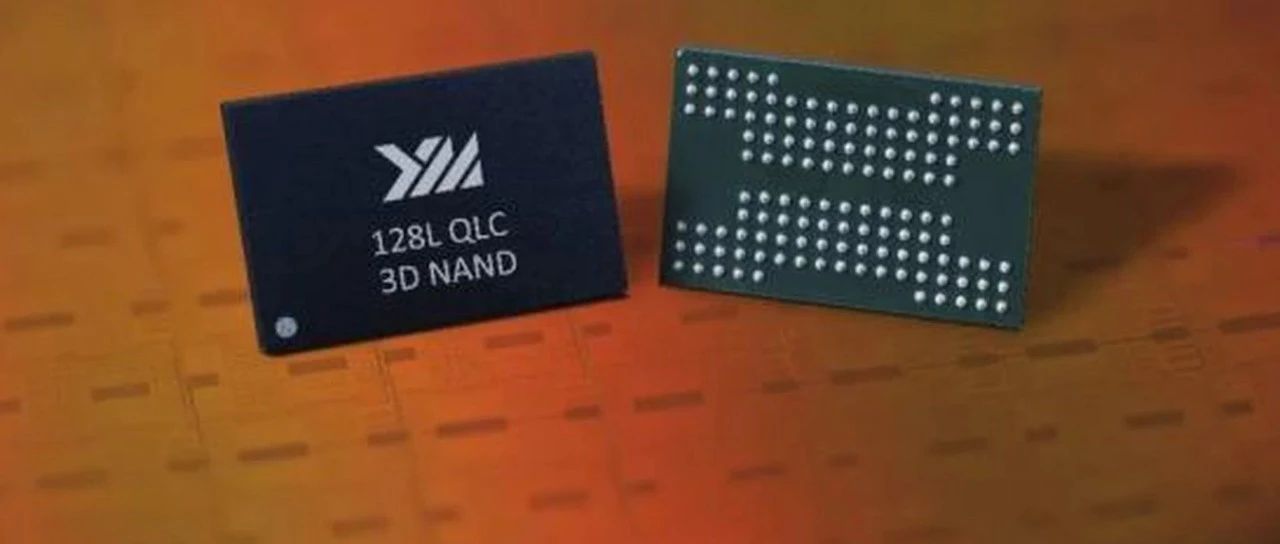
Core Viewpoint - The global storage market is witnessing significant growth, with Chinese companies CXMT and YMTC achieving quarterly revenues exceeding $1 billion, indicating a shift in market dynamics previously dominated by international giants [1][3]. Group 1: Company Achievements - CXMT has become a leader in the domestic DRAM industry through continuous technological research and capacity expansion, with its production base in Hefei enhancing output and aligning with international standards [2]. - YMTC has established a strong presence in the NAND Flash sector, leveraging its self-developed 3D NAND technology, which is widely used in consumer electronics and data centers [2]. Group 2: Market Trends - The global storage market is projected to reach $167 billion in 2024, driven by the rapid development of emerging technologies such as AI, big data, and cloud computing, leading to explosive demand for storage chips [3]. - In 2025, the demand for NAND Flash and DRAM Bit capacity is expected to grow by 12% and 15% respectively compared to 2024, particularly in AI server deployments where DRAM and NAND requirements are significantly higher than standard servers [3]. Group 3: Technological Advancements - CXMT is optimizing its DRAM manufacturing process, with its new factory in Hefei producing 18.5nm DRAM chips, achieving an initial monthly capacity of 100,000 wafers [4]. - YMTC continues to innovate in 3D NAND technology with its self-developed Xtacking architecture, enhancing read/write speeds and storage density, providing a competitive edge in the market [4]. Group 4: Industry Impact - The rise of CXMT and YMTC is setting a benchmark for other domestic storage companies, driving technological upgrades and development across the entire industry [4]. - The growth of domestic storage enterprises is expected to enhance China's position in the global semiconductor supply chain, reducing reliance on imported storage chips and ensuring national information security [4].

华为鸿蒙系统本不叫“鸿蒙”,鸿蒙原名竟另有隐情,华为董事长揭秘
Sou Hu Cai Jing· 2025-06-09 01:02
Group 1 - The core viewpoint is that Huawei's HarmonyOS has emerged as a significant third option in the global operating system market, breaking the previous duopoly of Android and iOS, and providing a domestic alternative that is no longer reliant on foreign systems [1][5] - HarmonyOS has achieved substantial growth, with projections indicating that by 2025, devices running HarmonyOS will exceed 700 million, covering 18 major industry categories, and native applications will account for over 60% [5][7] - The open-source model of HarmonyOS has fostered industry collaboration, with companies like Zhongke Chuangda and Runhe Software developing industry solutions based on OpenHarmony, and chip manufacturers like SMIC and Yangtze Memory Technologies deeply adapting to HarmonyOS [7] Group 2 - The name "Harmony" was not originally intended for the operating system; it was initially the name of an internal kernel, and the media's misinterpretation led to its widespread adoption as the system's name [3][5] - The transition from a reliance on Android compatibility to a fully native HarmonyOS has been marked by significant achievements, dispelling earlier doubts about its capabilities [5][6] - Huawei's chairman emphasized that HarmonyOS is not just a Huawei product but a foundational infrastructure for the era of interconnected devices [7]

2025中国城市最新排名:世界一线四个,一线城市八个,厦门二线
Sou Hu Cai Jing· 2025-06-07 20:51
Group 1 - The latest ranking of Chinese cities for 2025 highlights the competitive landscape based on international influence, economic vitality, innovation momentum, and hub value [1] - The top-tier cities in the world remain Beijing, Shanghai, Hong Kong, Guangzhou, and Shenzhen, while eight cities including Wuhan, Hangzhou, Chengdu, Chongqing, Tianjin, Suzhou, Nanjing, and Taipei are classified as first-tier cities in China [1][3] - Xiamen stands out as a second-tier city, showcasing a differentiated development path with a focus on innovation and cross-border e-commerce [5][7] Group 2 - Beijing has 218 regional headquarters of multinational companies, while Shanghai's port trade accounts for 3.2% of global trade [3] - Hong Kong's cross-border wealth management scale is projected to exceed 1.8 trillion yuan by 2025, and Shenzhen's high-tech output accounts for over 62% of its GDP [3] - Xiamen's cross-border e-commerce import and export volume represents 52% of Fujian's total, and its integrated circuit production has a yield rate of 98% [5][7] Group 3 - Chengdu's dual airports have seen an 18% increase in cargo volume, and its China-Europe Railway Express accounts for 30% of the national total [8] - Chongqing's new trade routes cover 118 countries, with notebook computer production accounting for 40% of the global market [8] - Wuhan's optical valley has a production value exceeding 1 trillion yuan, and Suzhou's biopharmaceutical industry has a fund size exceeding 200 billion yuan [8] Group 4 - The competition among second-tier cities is intensifying, with Ningbo having 83 champion enterprises and Hangzhou's live-streaming e-commerce accounting for 28% of the national total [9] - Shenzhen's energy consumption per unit of GDP has decreased to one-third of the national average, while Chengdu's ecological parks offset 27% of industrial emissions [9] - The Yangtze River Delta's "innovation outposts" cover all 41 cities, and the Chengdu-Chongqing region is building a shared scientific city [11] Group 5 - Xiamen's development trajectory illustrates the elevation path of second-tier cities, emphasizing "delicate productivity" over traditional scale advantages [11][13] - The future urban landscape in China may witness a revaluation of value, suggesting that not all beacons need to be towering structures, as smaller lights can also guide the way [13]

海量数据20250605
2025-06-06 02:37
Company and Industry Summary Company Overview - The company has seen a continuous increase in total orders for the first four months of 2025, entering multiple provincial framework procurement orders and achieving breakthroughs in sectors such as telecommunications, finance, and manufacturing. New clients include Industrial Bank and Yangtze Memory Technologies, with additional contracts signed in state-owned enterprises and resource industries [2][5]. Financial Performance and Projections - The company aims for a revenue target of 500 million yuan for 2025, with expectations that the vector database products will contribute to revenue by the end of the year. The revenue target is currently on track [2][6]. - The gross profit margin for high-margin database business has exceeded 60%, with expectations for further improvement in the second and third quarters of 2025 [4][20]. Industry Dynamics - The company has made significant progress in the party and government information innovation sector, benefiting from subsidy policies in third-tier regions, which have increased procurement willingness. First and second-tier regions are also reporting good progress in documentation submissions [2][9]. - The financial sector is less affected by replacement policies, with ample funding contributing significantly to revenue. State-owned enterprises and manufacturers show a high willingness to replace systems, leading to deeper collaborations [2][15]. Technological Developments - The company is focusing on centralized database development using Oracle Rack technology, high concurrency, and high performance. Vector database technology is a new focus area, with ongoing cloud adaptation and testing [3][8]. - The vector database products are being tested with clients in finance, government, and healthcare, with applications in large models, recommendation systems, and fraud detection [6][17]. Operational Insights - The company has expanded its sales team, with an expected increase in employee count from approximately 910 to 1,060 by the end of the year, primarily to enhance delivery capabilities [7][22]. - Research and development investment remains stable at around 200 million yuan, with a team of over 400 personnel [3][22]. Market Opportunities and Challenges - The company anticipates a 40% revenue growth compared to last year's 370 million yuan, driven by industry growth and policy benefits. However, challenges remain due to varying impacts of policies across different sectors [20][21]. - The company is currently in a wait-and-see mode regarding mergers and acquisitions due to tightening policies, focusing on integrating and consolidating while maintaining revenue and profit [19]. Key Takeaways - The company is positioned well within the market, with a strong order book and significant growth potential in high-margin sectors. The focus on technological advancements and strategic partnerships will be crucial for sustaining growth in a competitive landscape [2][20][21].
