方正证券

Search documents
关税冲击如何影响国内市场?
Sou Hu Cai Jing· 2025-10-13 14:26
Core Viewpoint - The U.S. plans to impose an additional 100% tariff on all goods imported from China starting November 1, 2025, and implement export controls on "all critical software," leading to a decline in global risk assets and increased market volatility [1][2]. Market Reactions - Following the announcement, the Shanghai Composite Index fell below 3900 points, and the bond market saw a general decline in interest rates, with 30-year and 10-year government bonds dropping by 5.01 and 2.54 basis points, respectively [1]. - On October 10, the Nasdaq and S&P 500 indices dropped by 3.56% and 2.71%, while international spot gold rose by 1.05%, surpassing $4000 per ounce [1]. Analyst Perspectives - Analysts believe that the recent escalation in U.S.-China trade tensions is primarily due to unreasonable sanctions on China's shipbuilding industry, with the market expected to adopt a cautious approach [1][2]. - Compared to the previous "reciprocal tariff" policy in April, the current market reaction is more measured, as investors have gained experience and are more prepared for potential outcomes [2][3]. A-Share Market Outlook - Despite short-term volatility, several brokerages maintain a positive long-term outlook for the A-share market, citing factors such as the resilience of Chinese enterprises, improving company quality, increasing dividends and buybacks, and sustained capital inflows [4]. - The A-share market is expected to remain focused on domestic factors, with analysts noting that the current market environment is stronger than in April [3][4]. Bond Market Impact - The impact of the current tariff escalation on the bond market is expected to be less severe than in April, with analysts predicting that the 10-year government bond yield will fluctuate between 1.7% and 1.75% [5][6]. - The market's learning effect from previous tariff announcements has led to a more rational response, with current sentiment favoring equities over bonds, limiting the extent of yield declines [6][7].
前10平均收益率高达193.94%!第八届评选倒计时,这几个获奖指标请重点关注!新财富投顾评选9月战报
新财富· 2025-10-13 09:11
金秋九月,A股市场以一轮气势如虹的上涨,为投资者带来了丰收的喜悦。在此背景下,正在激烈进行中的、为期6个月的第八届新财富最佳投资顾问评 选"投资管理能力评价"亦捷报频传,参评投顾们凭借卓越的投资管理能力,业绩全面绽放,与火热的市场相得益彰。 0 1 前10平均收益率高达193.94% 投顾业绩"水涨船高" | | | | 特约合作伙伴 | | --- | --- | --- | --- | | | | 第八届 新财富 最佳投资顾问评选 | | | | | NewFortune Best Investment Advisor | | | | | 协办单位 | 玉朝阳永续 Go-Goal | | | 战略支持机构 | 電 学术支持平台 | 役 同 星 深 | | | | 9月全国TOP50投顾 | | | | | (股票交易组) | | | 名次 | 姓名 | 机构 | 营业部/分公司 | | | 何海杰 | 中信建投证券 | 江阴澄江西路证券营业部 | | | 李奇 | 华西证券 | 成都西玉龙街证券营业部 | | | 雷梦瑶 | 国联民生证券 | 浙江分公司 | | 4 | 王旭胤 | 申万宏源证券 | 上海 ...


A股、黄金,双双上热搜!
Zhong Guo Zheng Quan Bao· 2025-10-13 08:28
Market Overview - A-shares opened significantly lower but rebounded throughout the day, with the Shanghai Composite Index nearing flat by the end of trading [1] - The market saw a total trading volume exceeding 2.37 trillion yuan [4] Gold Sector - The gold concept stocks surged in the afternoon, with leading stocks such as Yuguang Jinlan (豫光金铅) hitting the daily limit and reaching a historical high [5] - The price of gold in the London spot market broke through $4,070 per ounce, while silver approached $51.70 per ounce, both marking historical highs [7] - Major domestic gold jewelry brands reported rising prices, with Chow Tai Fook's gold jewelry priced at 1,190 yuan per gram [7] - The number of gold-related financial products has increased, with 48 products currently in existence and 14 newly established this year [7] - CITIC Securities reported that global central banks are increasing gold purchases, with China's gold reserves rising for 11 consecutive months, reaching 74.06 million ounces [7] Controlled Nuclear Fusion Sector - The controlled nuclear fusion concept stocks remained active, with companies like Hezhan Intelligent (合锻智能) achieving significant gains [9] - Recent breakthroughs in nuclear fusion technology have been reported, including the successful delivery of key components for the BEST project in Anhui [12] - The Chinese Academy of Sciences announced significant progress in the CRAFT project, which is crucial for commercializing fusion energy [12] - The upcoming International Atomic Energy Agency Fusion Energy Conference (FEC2025) in Chengdu is expected to further highlight advancements in this field [12] - Analysts suggest that the domestic controlled nuclear fusion sector may see a second wave of market activity due to favorable industry factors [13]



方正证券:国电投改革步入深水区 把握资产证券化红利
智通财经网· 2025-10-13 03:28
Group 1 - The core viewpoint of the report is that the expectation of asset securitization significantly boosts stock prices, particularly for companies under the State Power Investment Corporation (SPIC) such as Yuanda Environmental Protection, Electric Power Investment and Financing, and Jilin Electric Power, which are anticipated to have substantial market value increases due to potential asset injections or mergers and acquisitions [1][2][4] Group 2 - SPIC plans to restructure assets among its subsidiaries, including listed companies like Shanghai Electric Power and Yuanda Environmental Protection, with a focus on enhancing operational efficiency and market mechanisms [2][3] - As of the end of 2024, SPIC's thermal power installed capacity is 83.53 million kilowatts, and hydropower installed capacity is 26.58 million kilowatts, with a current asset securitization ratio of approximately 51.4% [2] - The group has a broad asset securitization space, with significant water, nuclear, aluminum, and hydrogen assets yet to be listed, indicating long-term potential for asset securitization [4] Group 3 - Recent announcements from Electric Power Investment and Financing and Yuanda Environmental Protection regarding major asset restructurings suggest a strategic shift towards integrating nuclear and hydropower assets, enhancing the group's overall asset value [4] - The group has undergone several strategic mergers and restructurings since its establishment, indicating a clear path towards professional business integration and financial asset listings [3] - The group has developed a comprehensive aluminum industry chain, with plans for further acquisitions and restructuring to enhance the integration of aluminum assets within Electric Power Investment [4] Group 4 - Investment recommendations highlight the potential of Electric Power Investment (stable profitability in coal, power, and aluminum integration), Electric Power Investment and Financing (future nuclear power operation platform), and Yuanda Environmental Protection (domestic hydropower asset integration platform) [5] - Shanghai Electric Power and Jilin Electric Power are positioned to become key platforms for international and renewable energy asset integration, respectively [5]


A股,热搜!科创50翻红
Zheng Quan Shi Bao· 2025-10-13 03:09
Core Viewpoint - The A-share market showed significant volatility, with the Sci-Tech 50 Index being the first to turn positive after a sharp decline in the morning session, indicating potential resilience in certain sectors amidst broader market concerns [1][2][5]. Market Performance - The A-share market opened sharply lower, with the Shanghai Composite Index down 2.49%, Shenzhen Component down 3.88%, and ChiNext down 4.44%. However, the Sci-Tech 50 Index managed to turn positive during the continuous auction phase, rising over 1% [5]. - By the time of reporting, the Shanghai Composite Index's decline narrowed to under 1%, while the Shenzhen Component and ChiNext were down 1.64% and 1.61%, respectively. The Sci-Tech 50 Index was up 1.33% [5]. Sector Analysis - Among industry sectors, the comprehensive, automotive, machinery equipment, home appliances, and media sectors experienced the largest declines. In contrast, sectors such as non-ferrous metals, steel, banking, and agriculture showed relative resilience [5]. Company-Specific News - Wentech Technology (600745) opened with a limit down and remained at that level during the continuous auction phase. This was attributed to recent announcements regarding its subsidiary, Anshi Semiconductor, facing regulatory challenges from the Dutch government and a court ruling, which may impact operational efficiency [6][8]. Institutional Perspectives on Tariff Impact - Multiple brokerage firms expressed that the impact of the new round of tariffs on the market is expected to be less severe than the "reciprocal tariffs" from April. They noted that the current situation offers more negotiation room and is likely to be less disruptive [4][10]. - Research from various institutions, including Galaxy Securities and Guojin Securities, indicated that the market's reaction to the current tariff situation is expected to be more measured compared to the previous April incident, with established mechanisms in place to stabilize the market [11][12].


医药股延续近期跌势 君实生物跌近8% 康龙化成跌超6%
Zhi Tong Cai Jing· 2025-10-13 02:28
Group 1 - Pharmaceutical stocks continue to decline, with CRO sector leading the drop, including significant declines in Junshi Biosciences (down 7.98%), Kanglong Chemical (down 6.3%), Kelaiying (down 5.69%), and Tigermed (down 3.48%) [1] - Recent market trends in the pharmaceutical sector are attributed to several factors, including a deal between the Trump administration and Pfizer to lower drug prices in the U.S., which is seen as a reconciliation signal between U.S. pharmaceutical companies and the government [1] - The U.S. Senate's consideration of a bill to prohibit certain Chinese biotech companies from receiving federal funding has led to a significant pullback in the CXO sector [1] Group 2 - Recent tensions in U.S.-China trade relations have escalated, with a renewed tariff war expected; however, the pharmaceutical market is not overly concerned as the industry has shown resilience since the first tariff war in April [2] - The innovative drug and CXO sectors have outperformed other sub-industries, driven by China's rising independent innovation and ongoing overseas business development, which are less affected by tariffs [2] - The CXO sector benefits from strong upstream and downstream relationships and a service pricing model that allows companies to pass on tariff pressures relatively freely [2]



不惧关税冲击:多位券商首席看好加仓机会,砸坑即买点
Feng Huang Wang· 2025-10-12 22:23
Core Viewpoint - The consensus among brokerages is that the impact of the current trade tensions will be significantly less than that experienced in April, with many viewing the situation as an opportunity rather than a cause for panic [1][4][5][10]. Group 1: Market Reactions and Strategies - Multiple brokerages emphasize the "TACO" trading strategy, suggesting that short-term market declines due to tariff threats often present buying opportunities [1][7][11]. - Analysts from various firms, including Guangfa Securities and Huaxi Securities, predict that the current market environment is different from April, with a more robust monetary and fiscal policy backdrop supporting the market [7][10]. - The potential for a minor risk-reward rebalancing is noted, with expectations of a short-term reduction in leveraged funds against the backdrop of strong market fundamentals [4]. Group 2: Economic and Policy Insights - The ongoing trade tensions are viewed as a tactical maneuver by the U.S. to gain leverage in negotiations, with the likelihood of a resolution being high [6][11]. - Analysts highlight that the long-term trend for A-shares remains bullish, supported by structural improvements in earnings and credit recovery [13]. - The upcoming APEC summit is identified as a critical event that may influence future negotiations and market sentiment [6]. Group 3: Investment Opportunities - Specific sectors such as technology, AI, and semiconductor industries are recommended for investment, particularly in the context of potential market volatility [7][10]. - The focus on domestic policies aimed at stabilizing growth and addressing internal demand is seen as a key driver for future market performance [9][13]. - Analysts suggest that the current market conditions may provide favorable entry points for investors, particularly in light of historical patterns observed during similar market conditions [7][8].




中美关税阴云再起!专家、机构解读:A股不会重演4月行情
Nan Fang Du Shi Bao· 2025-10-12 13:57
Core Viewpoint - The recent announcement by President Trump regarding a 100% tariff on all products from China has reignited concerns over US-China trade relations, with the new tariffs set to take effect on November 1. This has led to market adjustments, with significant declines in both A-shares and US stocks [1][2]. Group 1: Market Reactions - Following Trump's announcement, A-shares experienced a pullback, with the Shanghai Composite Index adjusting from a previous high of 3900 points to 3897.03 points. In the US, major indices also fell, with the Nasdaq dropping by 3.56% and the Nasdaq Golden Dragon China Index declining by 6.10% [1]. - Experts believe that the market is better prepared for this round of tariff discussions compared to previous instances, indicating that the short-term emotional impact on A-shares will be less severe than in April [4][5]. Group 2: Expert Opinions - Analysts from Huaxi Securities and other firms suggest that the likelihood of the 100% tariff being implemented is low, and the current trade tensions are expected to serve as leverage for future negotiations rather than lead to significant market disruptions [2][3]. - The sentiment among analysts indicates a shift in mindset, with increased confidence in handling external uncertainties. This is attributed to prior experiences with tariff announcements, which have led to better psychological preparedness in the market [3][4]. Group 3: Long-term Outlook - The long-term trajectory of the market will largely depend on the progress of tariff negotiations, particularly leading up to the APEC meeting and the November 1 deadline. The focus remains on internal economic and policy developments within China rather than solely on external pressures [3][6]. - The current market environment is characterized by a supportive policy framework aimed at stabilizing capital markets, which is expected to mitigate the impact of any potential downturns [6][7].
美联储独立性受质疑 “助攻”黄金飙涨?
Sou Hu Cai Jing· 2025-10-12 11:16
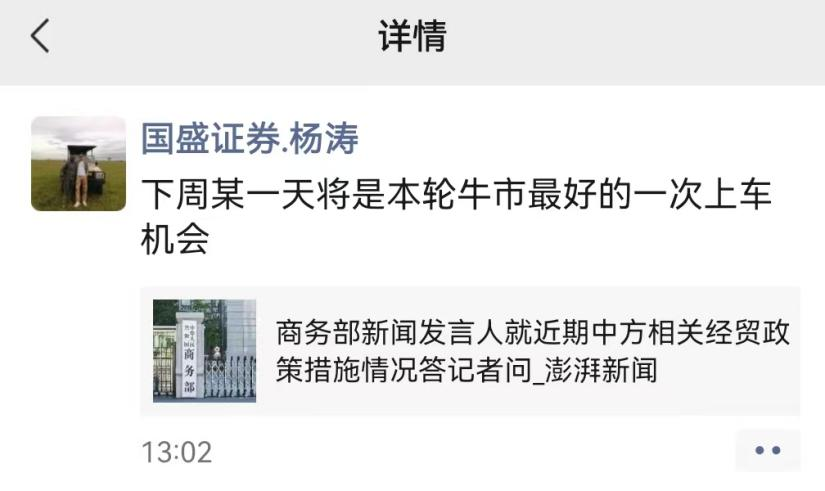
Core Insights - The recent surge in gold prices is driven by expectations of Federal Reserve interest rate cuts, global central bank gold purchases, and ongoing geopolitical risks [1][2] - Concerns about the independence of the Federal Reserve, particularly due to pressure from President Trump, are influencing market perceptions and driving up gold prices [1][2] Federal Reserve Independence - The independence of the Federal Reserve is under scrutiny, with potential implications for gold prices as any perceived intervention could increase risk aversion and weaken the US dollar, making gold more attractive [1][2] - Despite external pressures, the Federal Reserve's independence has not been fundamentally undermined, as evidenced by the recent decision to cut rates with a strong majority vote [2][5] - The latest dot plot indicates a division among Federal Reserve officials regarding future rate cuts, with some expecting additional cuts this year [2][4] Global Economic Context - The shift in international relations, particularly the US's "reciprocal tariffs" policy, is leading to a loss of credibility for the US as a core participant in the international monetary system, which in turn is driving demand for gold as a safe-haven asset [6][10] - The loss of the US's AAA credit rating by major rating agencies has raised questions about the sustainability of the dollar as a reserve currency [6][10] Central Bank Gold Purchases - Since 2016, the pricing of gold has shifted from being driven by "transaction value" to "reserve value," indicating a growing preference for gold among central banks as they seek to diversify away from dollar assets [11][13] - A recent survey indicates that 95% of central banks expect to increase their gold reserves in the next 12 months, the highest percentage since the survey began in 2019 [13][16] - The proportion of gold in central bank reserves has risen to 26.8%, surpassing the share of US Treasury securities for the first time since 1996 [16] Long-term Outlook for Gold - The ongoing issues with the US dollar's creditworthiness and the strategic value of gold are expected to support gold prices in the long term [11][16] - The combination of increasing gold purchases by central banks and the unresolved challenges facing the dollar's credit system suggests a potential long-term bull market for gold [11][16]
美联储独立性受质疑,“助攻”黄金飙涨?
Sou Hu Cai Jing· 2025-10-12 06:07
Group 1 - The recent surge in gold prices is driven by expectations of Federal Reserve interest rate cuts, global central bank gold purchases, and ongoing geopolitical risks, leading to increased market risk aversion [1][2] - Concerns about the independence of the Federal Reserve have emerged due to President Trump's public pressure and attempts to reshape its decision-making body, which some believe is a key factor behind the rise in gold prices [1][3] - Analysts suggest that if the Federal Reserve's independence is compromised, it could weaken the US dollar and enhance the attractiveness of gold, thereby driving up its price [2][3] Group 2 - Despite external pressures, the Federal Reserve's independence has not been significantly undermined, as evidenced by its recent decision to cut interest rates with a strong majority vote [3][5] - The divergence within the Federal Reserve regarding future interest rate cuts indicates that its independence remains intact, with a likelihood of further rate cuts in the near term [5] - The erosion of US credibility in the international monetary system, particularly following the removal of its AAA credit rating, raises questions about the sustainability of the dollar as a reserve currency, leading to increased interest in gold as a safe-haven asset [6][7][10] Group 3 - The shift in gold pricing from being driven by "transaction value" to "reserve value" since 2016 suggests a long-term bullish trend for gold prices, especially as the cracks in the dollar's credibility continue to expand [11][13] - Central banks have significantly increased their gold purchases, with 95% of surveyed central banks indicating plans to boost their gold reserves in the next 12 months, reflecting a growing preference for gold over dollar assets [13][15] - The ongoing issues with the US dollar's credit risk and the uncertainty surrounding US fiscal policies under the Trump administration are prompting central banks to enhance their gold reserves as a strategic asset allocation move [13][15]