
邮储银行

Search documents
五部门:实施中小微企业贷款贴息政策
Xin Lang Cai Jing· 2026-01-20 04:32
Core Viewpoint - The Ministry of Finance has announced a loan interest subsidy policy for small and micro enterprises, providing a 1.5% annual subsidy on eligible fixed asset loans and new policy financial instruments, with a maximum subsidy loan limit of 50 million yuan per enterprise, effective from January 1, 2026, for a preliminary period of one year [1][3]. Group 1: Policy Content - The policy targets small and micro private enterprises involved in key industry chains and their upstream and downstream sectors, including but not limited to those recommended by financing coordination mechanisms or shared by the Ministry of Industry and Information Technology [2]. - The supported sectors include new energy vehicles, industrial mother machines, pharmaceuticals, medical equipment, software, civil aircraft, servers, mobile communication devices, new displays, industrial robots, and various service industries such as technology, logistics, and environmental protection [3]. Group 2: Implementation Mechanism - The policy will be executed through a "total-to-total" model, where the Ministry of Finance will coordinate with major banks, including the Development Bank and several commercial banks, to streamline the process of subsidy fund allocation and management [5]. - Eligible enterprises can apply for loans directly from the designated banks, which will make independent decisions based on market principles [6]. Group 3: Funding Process - The subsidy funds will be allocated using a "pre-allocation + settlement" method, with banks required to submit annual subsidy fund applications by February 5, 2026, and provincial finance departments to report these applications to the Ministry of Finance by February 28, 2026 [7]. - Monthly reports on loan issuance and subsidy usage will be submitted by banks to the relevant finance departments, ensuring transparency and accountability in the use of funds [9]. Group 4: Supervision and Management - The Ministry of Finance will oversee the implementation of the policy, ensuring budget management and conducting audits on the use of subsidy funds [10]. - Banks are required to monitor the flow of loan funds to prevent misuse, and any violations will result in penalties, including the recovery of subsidy funds [10].
五部门发布实施中小微企业贷款贴息政策通知 支持以人工智能等为代表的新兴领域
智通财经网· 2026-01-20 04:27
Core Viewpoint - The Chinese government has announced a loan interest subsidy policy aimed at supporting small and micro enterprises in key industries, effective from January 1, 2026, with a subsidy rate of 1.5% for loans up to 50 million yuan per enterprise [1][4]. Group 1: Policy Content - The policy targets small and micro private enterprises involved in key industrial chains and their upstream and downstream sectors [3]. - Eligible industries include new energy vehicles, industrial mother machines, pharmaceuticals, medical equipment, software, civil aircraft, servers, mobile communication devices, new displays, industrial robots, and agricultural machinery [4]. - The subsidy will be provided for fixed asset loans and new policy financial tools used by small and micro enterprises [4]. Group 2: Subsidy Standards - The central government will provide a 1.5% annual interest subsidy for eligible loans, with a maximum loan amount of 50 million yuan per enterprise and a term not exceeding 2 years [4]. - The policy is initially set to last for one year, with the possibility of extension based on future evaluations [4]. Group 3: Implementation Mechanism - The policy will be executed through a "total-to-total" model, where financial departments will coordinate directly with banks [5][6]. - Banks will be responsible for loan approvals based on market principles and will manage the disbursement of funds [7]. - Monthly reporting on loan issuance and subsidy usage will be required from banks to ensure compliance and oversight [9]. Group 4: Supervision and Management - The Ministry of Finance will oversee the implementation and conduct audits to ensure proper use of subsidy funds [10]. - Banks are required to monitor the flow of loan funds to prevent misuse, such as investment in speculative activities [10].



盘中,涨停!A股,突然异动!
Zhong Guo Ji Jin Bao· 2026-01-20 04:23
Market Overview - A-shares opened high but closed lower, with the Shanghai Composite Index down 0.3% at 4101.62 points, Shenzhen Component down 1.22%, and ChiNext Index down 1.83% [1] - The total trading volume in the Shanghai and Shenzhen markets reached 1.85 trillion yuan, an increase of 568 billion yuan compared to the previous trading day [2] Sector Performance - The communication equipment, aerospace military, electronic components, basic metals, and energy equipment sectors experienced significant declines [2] - The banking and insurance sectors saw a notable rise, with food and beverage, real estate, and semiconductor sectors also performing well [2] Banking and Insurance Sector - The banking and insurance sector showed resilience, with major insurance stocks like China Life and Ping An rising over 1% [3] - Key banking stocks such as CITIC Bank increased by over 2%, while other banks like China Construction Bank and Bank of China rose by over 1% [5] - A report from China Galaxy Securities indicated that structural monetary policy tools and a marginal improvement in RMB credit could support bank lending [5] Food and Beverage Sector - The food and beverage sector was active, with food processing stocks leading the gains, including Hongmian Co., Jingji Zhino, and Weizhi Xiang, all hitting the daily limit [6] - Notable performers included Hongmian Co. with a 10.13% increase and Jingji Zhino with a 10.01% increase [7] Real Estate Sector - The real estate sector showed a rebound, with stocks like Dayue City and Chengtou Holdings hitting the daily limit, and others like China Merchants Shekou and Binjiang Group rising over 5% [8] - Recent data from the National Bureau of Statistics indicated a slight decrease in new residential sales prices in first-tier cities, which may influence market sentiment [10] Aerospace and Military Sector - The aerospace and military sector faced significant declines, with stocks like Tongyu Communication and Aerospace Power hitting the daily limit down, and Aerospace Hongtu dropping 13% [11] - Other companies in the sector, such as China Satellite and China Aerospace, also saw declines exceeding 6% [12]






四部门:延长服务业经营主体贷款贴息政策实施期限 将数字、绿色、零售3类消费领域纳入支持范围
智通财经网· 2026-01-20 04:21
Core Viewpoint - The Ministry of Finance, Ministry of Commerce, People's Bank of China, and Financial Regulatory Bureau have announced an optimization of the loan interest subsidy policy for service industry operators, expanding support to new sectors and extending the policy's implementation period until December 31, 2026 [1][3]. Group 1: Policy Extension and Support - The implementation period for the loan interest subsidy policy has been extended to December 31, 2026, with loans issued between March 16, 2025, and December 31, 2025, following the existing subsidy guidelines [3][4]. - The maximum loan amount eligible for interest subsidies has been increased to 10 million yuan per borrower, with a subsidy period not exceeding one year and an annual subsidy rate of 1% [4][5]. Group 2: Expanded Support Areas - The policy now includes three additional consumption sectors: digital, green, and retail, alongside the existing eight sectors such as catering, health, and tourism [4][5]. - The digital sector corresponds to "Internet and related services" and "digital content services," while the green sector includes categories like "property management" and "green transportation" [4][5]. Group 3: Banking and Operational Mechanisms - A total of 21 national banks and various commercial banks are designated as eligible institutions for processing these loans, enhancing the accessibility of the subsidy program [5][6]. - The operational mechanism will be optimized to improve efficiency, including a joint review process among financial institutions and regulatory bodies [6][7]. Group 4: Financial Management and Reporting - The subsidy funds will be managed through a "pre-allocation + settlement" method, ensuring timely disbursement and settlement of funds between banks and provincial finance departments [6][7]. - Banks are required to report on the execution of the policy monthly, detailing loan issuance and subsidy usage, to ensure transparency and accountability [8].
五部门发布关于实施中小微企业贷款贴息政策的通知
Xin Lang Cai Jing· 2026-01-20 04:09
Policy Overview - The Ministry of Finance and other departments issued a notice on January 20 regarding the implementation of interest subsidy policies for small and micro enterprises [1] - The policy aims to support the growth of private enterprises, stimulate private investment, and enhance economic resilience [1] Target Audience - The policy applies to all small and micro private enterprises involved in key industry chains and their upstream and downstream sectors, including those recommended by financing coordination mechanisms [1][2] Supported Sectors - The policy supports various key industries such as new energy vehicles, industrial mother machines, pharmaceuticals, medical equipment, software, and agricultural machinery, among others [2] Interest Subsidy Standards - From January 1, 2026, eligible small and micro enterprises will receive an annual interest subsidy of 1.5% on fixed asset loans, with a maximum loan size of 50 million yuan per enterprise [2] Participating Banks - A total of 21 national banks and certain city commercial banks with a financial regulatory rating of 3A or above are designated as participating banks in this program [3] Operational Mechanism - The policy will be implemented through a "total-to-total" model, where the Ministry of Finance coordinates with major banks to streamline processes for fund allocation and auditing [4] Application Process - Eligible enterprises can apply for loans directly from participating banks, which will make independent decisions based on market principles [5] Fund Allocation and Settlement - The subsidy funds will be allocated using a "pre-allocation + settlement" method, with banks required to submit annual subsidy requests by February 5, 2026 [5][6] Monitoring and Reporting - Participating banks must report on loan issuance and subsidy usage monthly, while provincial finance departments will compile and report on the implementation status to the Ministry of Finance [8] Supervision and Compliance - The Ministry of Finance and financial regulatory authorities will conduct joint inspections to ensure compliance, with strict penalties for any violations [9]
科技贷款余额增幅两位数!湖南银行业这样服务新质生产力
Bei Ke Cai Jing· 2026-01-20 03:47
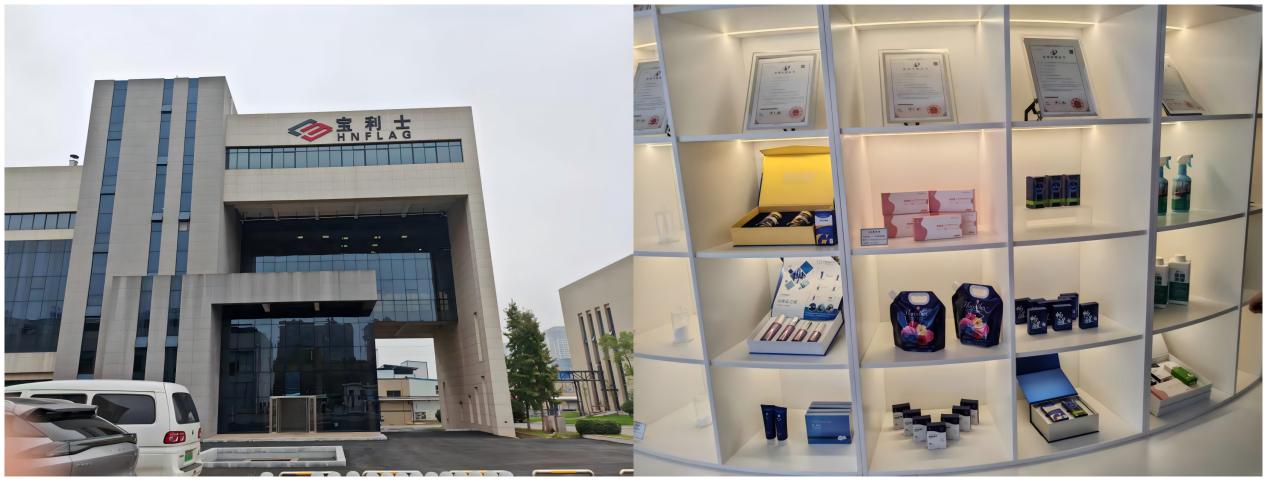
Core Insights - Hunan Province is experiencing a rise in technological innovation, with significant growth in R&D investment and the number of high-tech enterprises, indicating a strong shift towards a knowledge-based economy [1][18]. Group 1: R&D and Innovation Growth - Since the start of the 14th Five-Year Plan, Hunan's total R&D investment has grown at an annual rate of 11.61%, reaching 139.46 billion yuan [1]. - The number of high-tech enterprises in Hunan has surpassed 17,500, doubling in size [1]. - Hunan's regional innovation capability ranking has improved from 12th to 9th in the nation [1]. Group 2: Financial Support for Tech Enterprises - Hunan Bank provided a comprehensive "financing + intelligence" service to Baolisi Biotechnology Co., which faced significant funding challenges for its new production line project [5][6]. - The bank's tailored financial solutions were based on an in-depth understanding of the company's technology and market needs, demonstrating a shift towards supporting innovation-driven companies [6][11]. - Chichip Semiconductor faced typical financing difficulties due to high R&D costs and lack of collateral, prompting a re-evaluation of credit assessment models by banks [7][10]. Group 3: Long-term Partnerships and Support - Hunan Huya Optical Technology Co. established a trusting relationship with Postal Savings Bank, which provided a 3 million yuan credit loan and later a 13.8 million yuan loan, significantly boosting the company's operational capacity [12][13]. - The partnership with Changsha Rural Commercial Bank has supported Liyu Group's growth through a four-phase service plan, enhancing the company's capabilities and financial stability over seven years [14][17]. - Liyu Group's asset scale increased by 285%, revenue by 589%, and workforce by 294%, showcasing the effectiveness of long-term financial support [17].

推进“质量三强一基” 加快建设质量强国—— 我国质量发展工作取得明显进展和积极成效
Xin Lang Cai Jing· 2026-01-20 03:29
Core Insights - China's quality development work has shown significant progress, with manufacturing product quality compliance rate reaching 93.93% and consumer goods quality compliance rate at 92.11% [1] - The implementation of 1,856 quality strong chain projects and the establishment of 1,420 quality technology innovation alliances have engaged 5,375 leading enterprises and 280,000 participating enterprises [1] - The focus on key sectors such as integrated circuits, rare earths, and artificial intelligence has led to the release of 134 national standards and the establishment of 10 international standards [1] Group 1: Quality Development Achievements - The quality competitiveness index for manufacturing has improved to 85.86, and satisfaction rates for life services and public services have increased to 81.33 and 81.62, respectively [1] - The quality strong chain projects have resolved 25,000 quality bottlenecks, enhancing the resilience and safety of industrial and supply chains [1] - The "Quality Three Strengths and One Foundation" initiative aims to enhance enterprise, industry, and regional quality development, promoting the construction of a quality strong nation [1] Group 2: Regional Quality Initiatives - Changping District in Beijing and Deqing County in Zhejiang Province are examples of localities implementing quality strong initiatives to drive high-quality economic and social development [3] - The establishment of the Quality Golden Ding Award in Deqing County incentivizes enterprises achieving breakthroughs in quality, promoting collaboration between large and small enterprises [3] - The market regulatory authority is advancing the "Quality Three Strengths and One Foundation" initiative across various levels to support sustainable urban development and modern industrial systems [3] Group 3: Financial Support for Quality Improvement - The introduction of quality financing products like "Liaozhi Loan" in Liaoning Province and "Longzhi Loan" in Heilongjiang Province has facilitated credit access for quality award-winning enterprises [6] - These quality financing measures have helped 40,000 enterprises secure loans totaling over 280 billion yuan, demonstrating the financial sector's support for quality enhancement [6] - The collaboration between market regulators and financial institutions aims to use quality as a basis for enterprise financing, revitalizing old industrial bases in Northeast China [6] Group 4: Policy Measures for Quality Enhancement - The market regulatory authority has issued guidelines to improve product and service quality on online trading platforms, proposing 15 measures to enhance quality management [7] - A series of policies have been introduced to address consumer product recall issues, ensuring effective management from offline to online environments [7] - During the "14th Five-Year Plan" period, significant recalls were executed, including 1,046 automotive recalls affecting 37.59 million vehicles, enhancing public safety and quality perception [7]

药都“金融良方”让老人乐享智慧生活
Jin Rong Shi Bao· 2026-01-20 02:12
Core Viewpoint - The article highlights the efforts of the People's Bank of China in Bozhou to enhance financial services for the elderly, addressing their challenges in digital payment integration and promoting a more inclusive financial environment for the aging population [1][2][3][4]. Group 1: "Changchun Flower" Initiative - The "Changchun Flower" brand has become a trusted symbol of financial services for the elderly in Anhui Province, focusing on personalized service and accessibility [2]. - All "Changchun Flower" outlets meet the "five standards" for hardware, including features like non-slip ramps, dedicated service areas, and senior-friendly equipment [2]. - The initiative has achieved over 60% coverage in county areas, upgraded 980 ATMs for elderly use, and provided over 1,200 home service visits benefiting more than 1,900 elderly individuals [2]. Group 2: "Le Ling Pay" Digital Payment Solutions - The "Le Ling Pay" initiative simplifies mobile payment processes for the elderly, introducing a user-friendly app version and voice command features for transactions [3]. - Over 100 educational sessions have been conducted to teach elderly users about mobile banking and ATM operations, allowing them to experience and resolve issues in real-time [3]. - The program aims to integrate payment services with daily activities of the elderly, targeting to serve over 400,000 individuals by 2025 through various community partnerships [3]. Group 3: "One Card" Convenience - The social security card has become a vital tool for elderly residents in Bozhou, facilitating payments for healthcare, transportation, and pension collection [4]. - A collaborative model involving 11 banks has established 411 one-stop service points for social security card services, enhancing accessibility for elderly users [4]. - The initiative has distributed over 100 billion yuan in pensions, benefiting more than 800,000 elderly individuals, and has created a multi-scenario service system centered around the social security card [4]. Group 4: Financial Literacy and Cultural Integration - The People's Bank of China in Bozhou has implemented innovative financial education programs that combine cultural experiences with financial literacy for the elderly [6]. - Activities have included health checks and financial education sessions, reaching over 25,000 elderly individuals through more than 500 events planned for 2025 [6]. - This approach not only promotes financial knowledge but also preserves traditional cultural practices, creating a holistic experience for the elderly [6].
天山南北 牧歌新唱
Jin Rong Shi Bao· 2026-01-20 02:12
Core Viewpoint - Xinjiang is accelerating the construction of a green livestock industry cluster, focusing on ecological priority and green development, supported by Postal Savings Bank's financial solutions to invigorate traditional livestock farming [1] Group 1: Company Development - The company, Yihama Pastoral Dairy Co., has successfully implemented an automated production line for dairy products, enhancing operational efficiency [2] - Postal Savings Bank provided a timely loan of 400,000 yuan to support the company's strategic transformation and diversification into various milk powder products [2][3] - The company has established partnerships with research institutions, resulting in 11 utility model patents and recognition as a "specialized, refined, and innovative small and medium-sized enterprise" [3] Group 2: Industry Upgrades - The company is expanding its operations by planning new standardized fresh milk collection stations and investing in a leisure ranch, aiming for a comprehensive upgrade of the entire industry chain [4] - Postal Savings Bank issued a 5 million yuan "Science and Technology Credit Loan" to facilitate the company's technological upgrades and capacity expansion [4] Group 3: Community Impact - Over the past five years, Postal Savings Bank has provided over 10 million yuan in loans to the company, significantly contributing to its growth and enabling it to process 200 tons of fresh milk daily [5] - The bank has also launched a "Farm and Pastoral Loan" product to support downstream livestock farmers, benefiting over 500 households and facilitating a financing solution for the agricultural community [5][6] - The company's annual sales revenue has doubled compared to 2020, highlighting the impact of Postal Savings Bank's support on both the company and local farmers [5]
从“一粒果” 到“一条链”
Jin Rong Shi Bao· 2026-01-20 02:12
Core Viewpoint - The development of the seabuckthorn industry in Muling City, Heilongjiang Province, is significantly contributing to local economic growth and rural revitalization through innovative financial support and comprehensive industry chain development [1][3]. Industry Overview - Muling City's seabuckthorn is recognized for its plump fruit, vibrant orange color, and rich nutritional value, making it a sought-after product in both domestic and international health food markets [1]. - The seabuckthorn industry has evolved into a comprehensive development model, integrating seedling cultivation, deep processing, cosmetics manufacturing, and e-commerce sales, creating a new pattern from "one fruit" to "one chain" [1]. Financial Support and Innovation - The People's Bank of China, Mudanjiang Branch, has implemented a financial service system specifically for the seabuckthorn industry, focusing on policy guidance, institutional collaboration, and product innovation to meet the credit needs of this unique economic sector [1][3]. - Financial institutions have introduced various innovative credit products tailored to the seabuckthorn industry's characteristics, such as "Longyin e-Agricultural Loan" and "Planting Quick Loan," which provide quick access to funds for farmers [4]. Growth Projections - By 2025, the seabuckthorn planting area in Muling City is expected to reach 80,000 acres, with an annual production exceeding 35,000 tons, contributing to rural prosperity [1]. - Financial institutions in Mudanjiang City are projected to issue a total of 2.11 billion yuan in loans to the seabuckthorn and other specialty planting industries, reflecting a year-on-year growth of 13.7% [3].