
传音控股

Search documents
20万亿政策红利引市场激情,深圳国资概念股集体大涨
2 1 Shi Ji Jing Ji Bao Dao· 2025-10-23 10:36
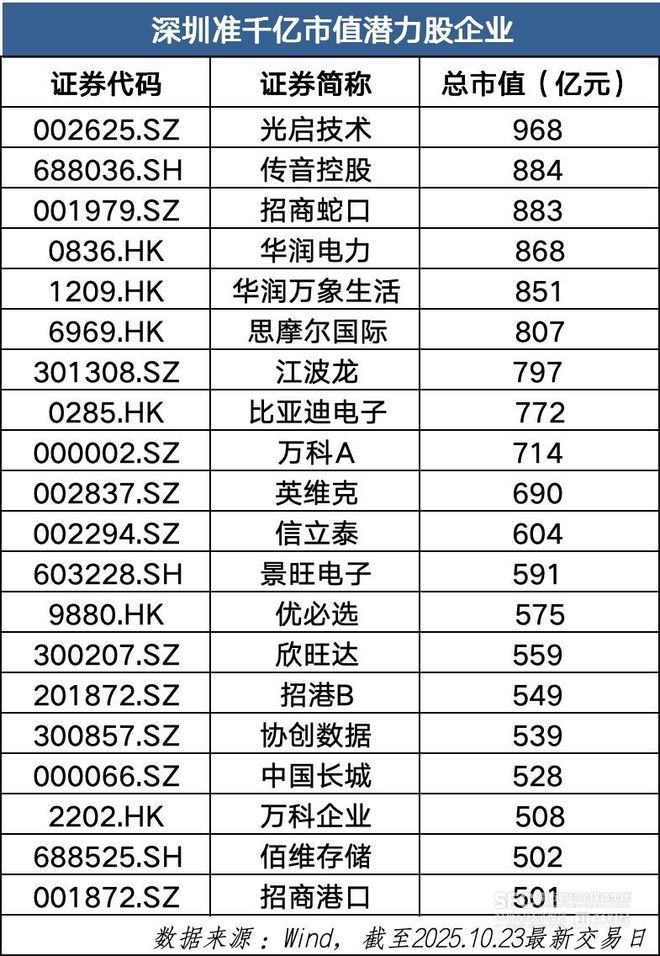
Wind数据显示,截至最新交易日,目前A股上市公司中,深圳共有18家企业市值超过千亿元;港股上市 公司中,深圳共有10家企业市值超过千亿港元。与此同时,在A股市场和港股市场中,市值超过500亿 元的企业有20家,这些企业涉猎人工智能、机器人、集成电路等战略性新兴产业赛道,有望冲刺千亿级 别。 21世纪经济报道记者 吴佳楠 深圳报道 深圳支持企业并购重组的最新政策,在A股市场上,引动一波特殊行情。 日前,深圳发布《深圳市推动并购重组高质量发展行动方案(2025—2027年)》(简称《行动方 案》)。《行动方案》提出,力争到2027年底,辖区上市公司质量全面提升,境内外上市公司总市值突 破20万亿元,培育形成千亿级市值企业20家。此外,并购重组市场量质齐升,累计完成并购项目超200 单、交易总额超1000亿元,落地一批行业示范案例。 此外,Wind数据显示,今年以来深圳并购市场持续升温。根据最新披露日,今年以来,按照交易竞买 方看,深圳共计发生414件并购事件,其中已完成208件,涉及重大并购重组事件的有11件。 利好消息一出,深圳国资概念股集体大涨。截至10月23日收盘,建科院、深水规院、广田集团、特发信 息、 ...

MLOps概念涨2.41%,主力资金净流入9股
Zheng Quan Shi Bao Wang· 2025-10-23 10:14
Core Insights - The MLOps concept has seen a rise of 2.41%, ranking third among concept sectors, with 15 stocks increasing in value, including Keda Guokuan which hit a 20% limit up [1][2] - Major gainers in the MLOps sector include Green Alliance Technology, Qiming Information, and Transsion Holdings, with increases of 8.29%, 5.29%, and 3.11% respectively [1][2] - The sector experienced a net inflow of 491 million yuan, with nine stocks receiving net inflows, and five stocks exceeding 30 million yuan in net inflow [2] Stock Performance - Keda Guokuan led the net inflow with 373.34 million yuan and a daily increase of 20.01%, achieving a net inflow ratio of 17.78% [3][4] - Other notable stocks include Runhe Software with a net inflow of 136.81 million yuan and a daily increase of 2.19%, and Green Alliance Technology with a net inflow of 64.75 million yuan and an 8.29% increase [3][4] - Stocks with significant declines include Aobi Zhongguang, ST Chuangyi, and Guanghuan New Network, with decreases of 1.66%, 1.60%, and 1.58% respectively [1][4]

消费电子板块10月23日跌1.04%,昀冢科技领跌,主力资金净流出18.74亿元
Zheng Xing Xing Ye Ri Bao· 2025-10-23 08:14
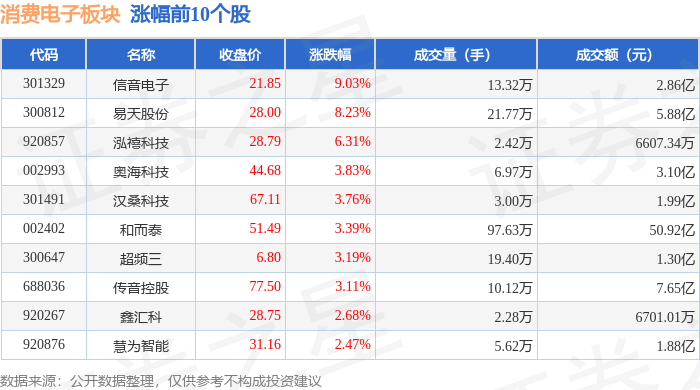
Core Insights - The consumer electronics sector experienced a decline of 1.04% on October 23, with Yunzhong Technology leading the drop [1] - The Shanghai Composite Index closed at 3922.41, up 0.22%, while the Shenzhen Component Index closed at 13025.45, also up 0.22% [1] Consumer Electronics Sector Performance - Notable gainers included: - Xinyin Electronics (Code: 301329) with a closing price of 21.85, up 9.03% and a trading volume of 133,200 shares, totaling 286 million yuan [1] - Yitian Co., Ltd. (Code: 300812) closed at 28.00, up 8.23% with a trading volume of 217,700 shares, totaling 588 million yuan [1] - Major decliners included: - Yunzhong Technology (Code: 688260) closed at 31.60, down 7.00% with a trading volume of 68,800 shares, totaling 221 million yuan [2] - Yidao Information (Code: 001314) closed at 49.68, down 3.96% with a trading volume of 66,700 shares, totaling 333 million yuan [2] Capital Flow Analysis - The consumer electronics sector saw a net outflow of 1.874 billion yuan from institutional investors, while retail investors contributed a net inflow of 1.658 billion yuan [2] - Key stocks with significant capital flow included: - Deep Technology (Code: 000021) with a net inflow of 82.59 million yuan from institutional investors [3] - Transsion Holdings (Code: 688036) with a net inflow of 53.54 million yuan from institutional investors [3]



中国企业出海适应当地市场的实践:因地制宜,行稳致远
Shenwan Hongyuan Securities· 2025-10-23 07:15
Demand Side Adaptation - Technical products must obtain core certifications and optimize functionalities based on local infrastructure and user habits[3] - Consumer products should prioritize cultural resonance, creating products that align with local aesthetic preferences rather than merely expanding sales channels[3] Supply Side Considerations - Companies must balance cost and compliance, addressing not only visible challenges like exchange rates and logistics but also the critical details of overseas policy compliance[3] - The new EU battery carbon footprint regulations present significant challenges for Chinese battery manufacturers entering the European market[3][24] Market Entry Strategy - Successful overseas expansion requires moving beyond "copy-paste" strategies to develop localized business models across compliance, supply chains, sales channels, and cultural integration[10] - Companies should focus on building efficient and stable local operational systems to meet both rigid and flexible market demands[11] Risk Factors - Uncertainties in overseas policies and compliance can hinder the pace and depth of market entry, potentially impacting performance[5] - Exchange rate fluctuations may lead to currency losses, affecting overall profitability[37] Case Studies - Transsion Holdings tailored its products for the African market by developing features like skin tone imaging technology and local language voice recognition systems[13] - Pop Mart's overseas strategy involves integrating its IP with local narratives and establishing flagship stores in major cities to enhance brand presence[18]
广东南山:创新生态驱动城市发展
2 1 Shi Ji Jing Ji Bao Dao· 2025-10-23 05:23
Core Insights - Nanshan District in Shenzhen is emerging as a leading innovation hub, with 218 listed companies and over 5,500 national high-tech enterprises by October 2025, showcasing a robust innovation ecosystem [1][3]. Group 1: Innovation Ecosystem - The innovation vitality in Nanshan stems from respect for market rules and careful cultivation of the innovation ecosystem, featuring major players like Tencent and DJI alongside numerous innovative SMEs [2]. - Nanshan has implemented supportive policies since 2013, including the "Six Actions to Support Innovation and Entrepreneurship" plan, which provides financial, spatial, and application scenario incentives to stimulate entrepreneurial activity [3][4]. - The region boasts an impressive patent ownership rate, with 826 invention patents per 10,000 people, which is 23 times the national average [3]. Group 2: Policy and Financial Support - Nanshan's policy approach encourages market-driven innovation without strictly defining industries, leading to the emergence of key sectors such as fintech, robotics, and logistics, as well as new fields like semiconductors and artificial intelligence [4]. - A strategic direct investment seed fund and angel fund totaling 500 million yuan have been established to support startups in AI and robotics, allowing for a high-risk tolerance in funding [4]. Group 3: Talent Attraction and Development - Nanshan has developed a talent-centric environment, providing various support measures for young professionals, including rent-free housing for recent graduates and affordable industrial research spaces [6][7]. - The district has a talent pool of 1.2 million, with high-level talents constituting over 50% of the total, fostering collaboration and innovation across different sectors [7]. Group 4: Global Integration - Nanshan is positioning itself as a global innovation resource hub, with the establishment of the Global Service Center to assist companies in international expansion and facilitate cross-border collaborations [9]. - The district's enterprises, such as ZTE and DJI, have successfully penetrated international markets, demonstrating the effectiveness of its global outreach strategies [9][10]. Group 5: Industry Collaboration - The integration of academia and industry in Nanshan has created a robust innovation ecosystem, with partnerships between leading companies and universities enhancing technology transfer and collaborative research [10]. - The presence of major enterprises and research institutions has established Nanshan as a global center for the robotics industry, showcasing the importance of diverse business models and sustainable growth [10].

科创50ETF指数(588040)翻红涨近1%,寒武纪完成定增,前三季营收暴涨2386%
Xin Lang Cai Jing· 2025-10-22 06:06
Group 1 - The core viewpoint of the news highlights the significant performance of the Sci-Tech Innovation Board and its constituent stocks, particularly the strong growth of Han's Robotics, which reported a revenue increase of 2386.38% year-on-year for the first three quarters of 2025 [1] - Han's Robotics achieved a net profit of 1.605 billion yuan, marking a turnaround from losses in the previous year [1] - The Sci-Tech 50 ETF index closely tracks the performance of the Sci-Tech Innovation Board 50 constituent index, which consists of 50 securities with high market capitalization and liquidity, reflecting the overall performance of representative Sci-Tech enterprises [1] Group 2 - As of September 30, 2025, the top ten weighted stocks in the Sci-Tech Innovation Board 50 index accounted for 58.07% of the total index weight, indicating a concentration of investment in these key companies [2] - The top ten stocks include major players such as SMIC, Haiguang Information, and Han's Robotics, showcasing the leading firms in the semiconductor and AI sectors [2] - The news also mentions various ETFs related to the Sci-Tech sector, including the Sci-Tech 50 ETF and its enhanced version, indicating a growing interest in investment products linked to this industry [2]

突发利好,000620,超500万手封涨停!
Zheng Quan Shi Bao· 2025-10-22 05:06
Group 1 - The A-share market showed strong fluctuations with the Shanghai Composite Index down 0.44% and the ChiNext Index down 0.89% as of the morning close [1] - The technology sector saw significant gains, with leading stocks like Tianfu Communication rising nearly 10% and Zhongji Xuchuang increasing nearly 4%, reaching historical highs [1] - Over 30 stocks hit the daily limit up, with Yingxin Development (000620) experiencing a massive surge due to a sudden positive announcement [1][2] Group 2 - Yingxin Development announced a cash acquisition of 81.8091% of Changxing Semiconductor, which specializes in memory chip packaging and testing, leading to a 10.1% increase in its stock price [2] - Changxing Semiconductor has a strong technological foundation with 76 valid patents and is recognized as a national high-tech enterprise [2] - The stock of Yingxin Development reached a price of 2.18 yuan per share, with a trading volume exceeding 318 million shares [2] Group 3 - The optical module index has been rebounding, with Zhongji Xuchuang's stock price hitting a historical high and its market capitalization surpassing 500 billion yuan [3] - Despite a general pullback in A-share technology assets, the fundamentals in high-growth areas like PCB, AI chips, and storage remain strong, suggesting continued investment opportunities [3] - The AI industry has seen a phase of adjustment, but major companies are accelerating product updates, which is expected to create new application scenarios and investment opportunities in upstream sectors [3] Group 4 - Over 60 technology stocks have seen a price decline of over 20% since their September highs, with significant representation in AI, new energy, pharmaceuticals, and robotics sectors [4] - Some stocks, like Yifang Bio, have experienced a substantial pullback of nearly 39%, despite having over 110% gains year-to-date [4] - Certain stocks, such as Transsion Holdings and Runze Technology, have seen their prices decline despite overall market trends [4]


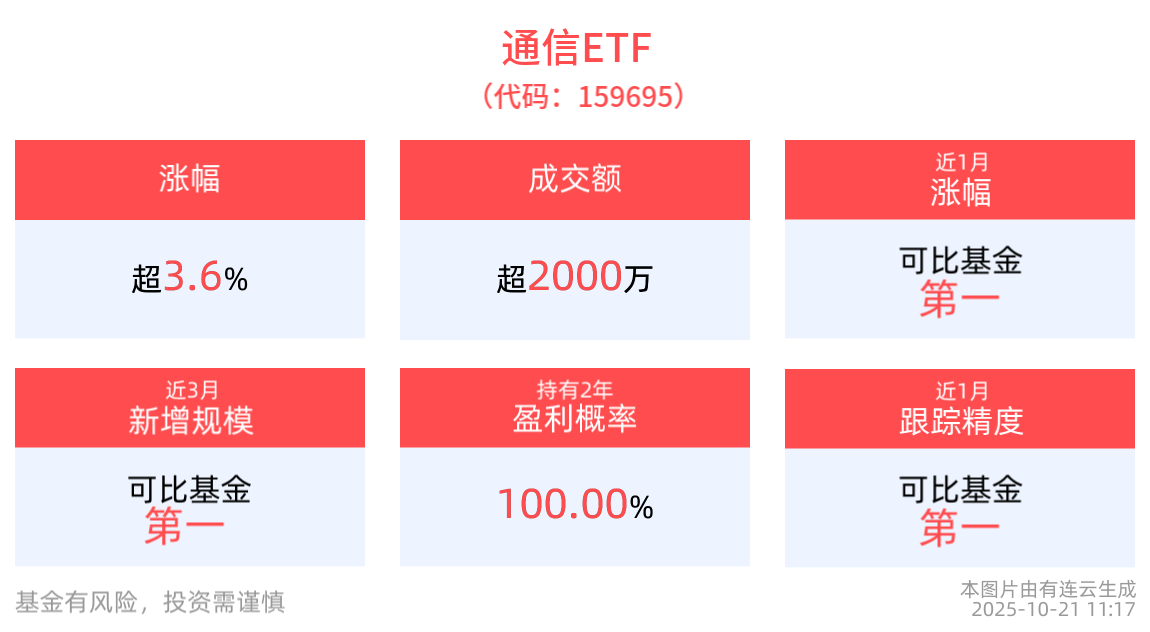
AI算力驱动光模块持续高景气,通信ETF(159695)盘中上涨3.63%,成分股中际旭创领涨
Sou Hu Cai Jing· 2025-10-21 03:44
Group 1 - The core viewpoint highlights the strong performance of the communication ETF, which has seen a net value increase of 94.23% over the past two years, ranking 39th out of 2358 index equity funds, placing it in the top 1.65% [2] - The communication ETF has recorded a maximum monthly return of 33.97% since its inception, with the longest consecutive monthly gains lasting 5 months and a total increase of 76.35%, averaging a monthly return of 7.57% during rising months [2] - Nvidia's Rubin has raised shipment expectations, indicating that leading companies may begin to increase total demand for 1.6T next year, reinforcing the sustainability and certainty of the high prosperity cycle for optical modules driven by AI computing power [2] Group 2 - The top ten weighted stocks in the Guozheng Communication Index account for 66.02% of the index, with major companies including Zhongji Xuchuang, Xinyi Sheng, ZTE, China Telecom, China Mobile, and China Unicom [3] - The stock performance of key companies shows varied results, with Zhongji Xuchuang increasing by 9.20% and China Telecom decreasing by 0.58%, while other companies like Xinyi Sheng and ZTE also showed positive growth [5] - Investors can access AI transformation opportunities in optical communication through the communication ETF linked fund (019072) [5]





台积电三季度营收超预期,Q3全球智能手机市场持续复苏 | 投研报告
Zhong Guo Neng Yuan Wang· 2025-10-21 01:05
Core Viewpoint - TSMC's Q3 2025 revenue reached $33.1 billion, exceeding guidance, with a year-on-year growth of 40.8% and a net profit increase of 39.1% [1][2][3] Industry Summary - The electronic sector is experiencing a moderate recovery, with a focus on structural opportunities in AI computing, AIOT, semiconductor equipment, key components, and rising storage prices [2][6] - Global smartphone shipments in Q3 2025 reached 323 million units, a 2.6% year-on-year increase, driven by high-end models, while China's smartphone shipments declined to 68 million units, down 0.6% year-on-year [1][4][5] Company Performance - TSMC's Q3 2025 revenue was $33.1 billion, with a year-on-year increase of 40.8% and a quarter-on-quarter increase of 10.1%. The net profit was 452.3 billion NTD, up 39.1% year-on-year [3] - The revenue growth was primarily driven by AI and high-performance computing (HPC) demand, contributing 57% to total revenue, while smartphone, IoT, automotive electronics, and consumer electronics accounted for 30%, 5%, 5%, and 1% respectively [3] - TSMC's revenue guidance for Q4 2025 is between $32.2 billion and $33.4 billion, with a gross margin expected between 59% and 61% [3] Market Dynamics - The global smartphone market is recovering moderately, with high-end innovations and emerging regions driving growth, while the Chinese market faces challenges of weak demand and structural transformation [5][6] - Domestic brands like Xiaomi, Transsion, and Vivo have shown growth in the global smartphone market, while Chinese brands are experiencing varying degrees of decline due to seasonal factors and limited new products [4][5] Investment Recommendations - The industry is advised to focus on companies benefiting from strong domestic and international demand in the AIOT sector, as well as those involved in AI innovation and upstream supply chain domestic substitution [6]

“中国企业500强”见证经济活力(人民时评)
Ren Min Ri Bao· 2025-10-20 21:48
Group 1 - The threshold for entering the "2025 China Top 500 Enterprises" list has increased for 23 consecutive years, with the number of enterprises exceeding 100 billion yuan reaching 267, and 15 enterprises reporting revenues over 1 trillion yuan, indicating a dual leap in scale and quality of large enterprises in China [1] - State-owned enterprises (SOEs) and private enterprises (PEs) are driving market vitality, with 251 SOEs and 249 PEs in the top 500, reflecting a balanced contribution from both ownership types and the implementation of the "two unwavering" principles [1][2] - The manufacturing sector contributed 40.48% to the revenue of the top 500 enterprises, while the service sector contributed 40.29%, showcasing a balanced development that challenges the notion that strong manufacturing must come at the expense of services [2] Group 2 - The "2025 China Top 100 Multinational Corporations" list has seen an 11.76% increase in the entry threshold, with overseas assets totaling 11.96 trillion yuan, indicating a steady improvement in the average multinational index [3] - Chinese enterprises are not merely exporting products but are achieving "value export" through global industrial chain restructuring, with companies like vivo and Transsion capturing significant shares in emerging markets [3] - The synergy between SOEs and PEs, the integration of manufacturing and services, and the local-global linkage are injecting new vitality into economic development, positioning Chinese enterprises for continued growth and transformation [3]