
雀巢

Search documents
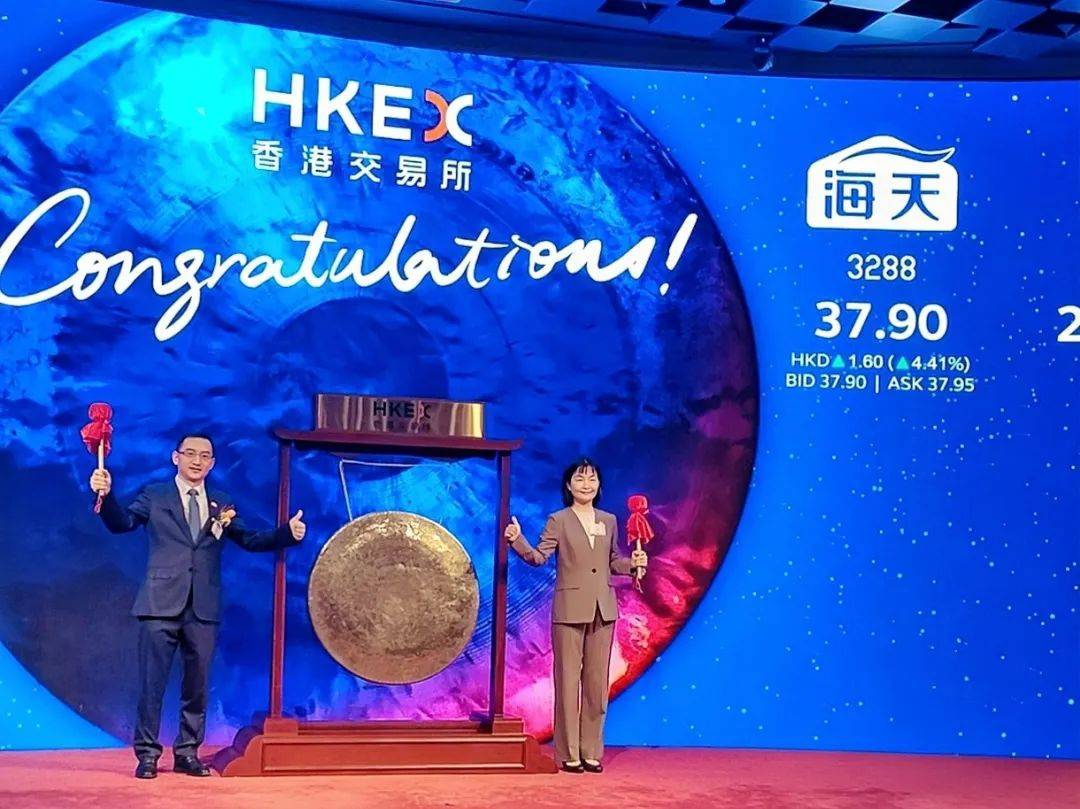
海天味业918倍认购破发:“打工女皇”程雪获335亿身家,募资超百亿港元拓展海外
Sou Hu Cai Jing· 2025-06-20 12:19
Core Viewpoint - The initial public offering (IPO) of Haitian Flavoring and Food Co., Ltd. faced a dramatic decline in stock performance after a strong start, reflecting concerns about its growth potential and market conditions [3][4][6]. Company Performance - Haitian Flavoring opened at 37.5 HKD, a 3.3% increase from the issue price of 36.3 HKD, but later fell below the issue price, closing at 36.5 HKD on the first day [3][6]. - On June 20, the stock continued to decline, closing at 38.51 HKD, with a total market capitalization of 224.9 billion HKD [3][6]. - The IPO raised over 10 billion HKD, with 918.15 times oversubscription during the public offering, indicating high initial investor interest [3][8]. Market Context - Analysts suggest that Haitian Flavoring's growth is hindered by domestic overcapacity and limited international demand, leading to poor performance expectations [4][10]. - The company aims to increase its international revenue share from less than 7% in 2024 to 15% within three years, targeting Southeast Asia as a primary market [14][17]. Leadership Transition - Cheng Xue, known as the "Soy Sauce Queen," took over leadership in September 2024, marking a significant transition for the company [11][12]. - Cheng holds approximately 13% of the company's shares and has been instrumental in its growth trajectory [11][12]. Financial Highlights - In 2024, Haitian Flavoring reported revenue of 26.9 billion CNY, a 9.53% increase year-on-year, and a net profit of 6.34 billion CNY, up 12.75% [14]. - The first quarter of 2025 continued this growth trend, with revenue of 8.32 billion CNY and a net profit of 2.20 billion CNY, reflecting increases of 8.08% and 14.77%, respectively [15]. Inventory Concerns - Despite revenue growth, the company faces challenges with rising inventory levels, particularly a 44.69% increase in oyster sauce stock, which could pose operational risks [16].


上市10天,全球甜味剂巨头,市值腰斩了!
Sou Hu Cai Jing· 2025-06-20 09:29
Core Viewpoint - New Qi'an (02573.HK), a food additive manufacturer, experienced a significant stock price fluctuation after its IPO, initially soaring by over 60% but subsequently falling below the issue price within ten trading days, indicating volatility in market performance [1][3]. Group 1: Market Position - New Qi'an, established in 2003, is the leading global producer of food-grade glycine, holding a market share of 5.1% by volume and 3.1% by revenue, and ranks fifth in the sucralose market with a share of approximately 4.8% (volume) and 4.5% (revenue) [5]. - The company serves clients across approximately 40 countries on six continents, highlighting its extensive global reach [5]. Group 2: Revenue and Profit Trends - The company's financial performance has been declining, with revenue dropping from 761 million yuan in 2022 to 447 million yuan in 2023, before a slight recovery to 569 million yuan in 2024. Net profit fell from 122 million yuan to 43.4 million yuan, representing a 64.4% decline from 2022 to 2024 [8]. - The decline in performance is attributed to oversupply in the market, particularly affecting food-grade glycine and sucralose, leading to significant price reductions [10]. Group 3: Product Contribution - Food-grade glycine and sucralose are expected to contribute 42% and 41.8% of the company's revenue in 2024, respectively, indicating their importance as core revenue pillars [7]. Group 4: Strategic Focus and Future Plans - New Qi'an primarily targets overseas markets, with only 20.5% of its revenue coming from mainland China, while North America accounts for 41.1% [13]. - The company plans to use funds raised from its IPO to expand production capacity in Thailand and Indonesia, invest in R&D, and enhance its presence in international markets, aiming to strengthen its global position and overcome current performance challenges [13].

圣桐特医上市前大额分红:资金“提前起舞”,背后逻辑几何?
3 6 Ke· 2025-06-20 09:24
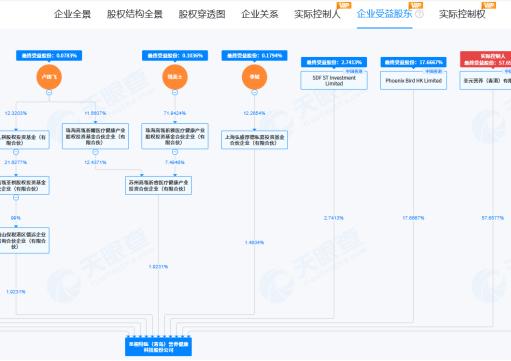
Group 1: Core Insights - Saintong Medical Nutrition, a company specializing in medical foods, has submitted its prospectus to the Hong Kong Stock Exchange, marking a significant move in a niche market that currently lacks publicly listed companies focused on medical foods as their main business [2][3][5]. Group 2: Industry Overview - The target demographic for medical foods primarily includes infants and the elderly, with a promising growth outlook due to an aging population and increasing chronic diseases [4]. - The market for infant medical foods in China is projected to reach 13.5 billion yuan in 2024, accounting for 58.2% of the medical food market [4]. Group 3: Company Performance - Saintong Medical Nutrition's projected revenues for 2022, 2023, and 2024 are 491 million yuan, 654 million yuan, and 834 million yuan, respectively, with year-on-year growth rates of 33% and 27% for 2023 and 2024 [5]. - The adjusted net profits for the same years are expected to be 120 million yuan, 174 million yuan, and 199 million yuan, with growth rates of 45% and 14% for 2023 and 2024 [5]. Group 4: Business Risks - The company heavily relies on a single product line, with allergy prevention products constituting 85.5%, 88.2%, and 90.3% of total revenue from 2022 to 2024, posing a risk if market demand shifts [7][8]. - The medical food sector is highly specialized, and relying on a single business model may limit growth potential, as the market for specific segments like premature infant products is relatively small [9][11]. Group 5: Competitive Landscape - Saintong Medical Nutrition holds a market share of 6.3% in China's medical food market, which is significantly lower than international competitors like Nestlé (44.2%) and Danone (16.3%) [14][16]. - The company faces challenges in brand recognition and market positioning, as it has been operating independently from its parent company, Saint Yuan Group, since 2021 [12][13]. Group 6: Financial Strategy - Despite low R&D investment, the company has declared substantial dividends, totaling approximately 467 million yuan from 2022 to 2024, raising questions about its financial strategy [33][35]. - The company’s short-term liabilities have increased, with net current liabilities reaching 404.5 million yuan by the end of 2024, indicating potential financial strain [38].
茶咖日报|违规收集个人信息!多个茶咖知名品牌被通报
Guan Cha Zhe Wang· 2025-06-19 12:42
Group 1: Mobile Applications and Data Privacy - 64 mobile applications, including well-known brands like Starbucks and CoCo, have been reported for illegal collection and use of personal information [1][2] - This is not the first time tea brands have been named for personal information collection issues, with previous complaints regarding excessive data requests from users [1] - In March 2023, Shanghai Consumer Protection Commission found similar issues with brands like CoCo and Yi Dian Dian, where customers were forced to provide personal information to place orders [2] Group 2: Starbucks Store Closure - Starbucks will close its Guangzhou Taikoo Hui store on June 28 due to adjustments in the shopping mall's business layout [3] - The company emphasizes that store closures and renovations are part of its ongoing strategy to adapt to changing consumer demands and market conditions [3] - Nearby Starbucks locations will continue to provide services, ensuring customer access to their products [3] Group 3: New Tea Beverage Trends - New tea beverages are driving regional fruits like Huangpi and lychee to a national market, with brands like Luckin Coffee and Heytea incorporating these ingredients into seasonal products [4] - The trend includes a variety of regional specialties being introduced to the national market, breaking geographical barriers in product availability [4] - New tea brands are increasingly collaborating with supply chains to establish exclusive agricultural bases, enhancing product differentiation and consumer experience [4] Group 4: Nestlé's Investment in Brazil - Nestlé plans to invest 7 billion Brazilian Reais (approximately 9.3 billion RMB) in Brazil from 2025 to 2028, an increase from the previous investment of 6.3 billion Reais [5] - Brazil is Nestlé's third-largest market, with projected revenues of approximately 4 billion Swiss Francs (around 4.9 billion USD) in 2024 [5] - The new investment plan includes over 500 million Reais specifically for the coffee business, which is part of the overall investment strategy [5]



海天味业港股上市,全球化战略与估值重构待考
Jing Ji Guan Cha Wang· 2025-06-19 04:35
Group 1 - Haitian Flavor Industry officially listed on the Hong Kong Stock Exchange on June 19, with a final offering price of HKD 36.30 per share, raising approximately HKD 10.0096 billion [1] - The company aims to enhance its global brand image and competitiveness through its IPO, with about 20% of the net proceeds allocated for establishing a global brand and expanding sales channels [2] - As of the report date, Haitian's A-share price was CNY 38.98, with a market capitalization of CNY 216.3 billion and a P/E ratio of 32.64, reflecting a significant decline from its peak market value of nearly CNY 700 billion [2] Group 2 - In 2022, Haitian experienced its first net profit decline since its listing, with both revenue and net profit decreasing in 2023, although a recovery is expected in 2024 with projected revenue of CNY 26.901 billion, a year-on-year increase of 9.53% [3] - The global condiment market is projected to reach CNY 21.4 trillion in 2024, with Haitian holding a market share of 1.1%, indicating potential growth opportunities in international markets [4] - As of June 19, Haitian's market capitalization was HKD 248.8 billion, with a P/E ratio of 30.1, outperforming other condiment companies in Hong Kong [5]
哈根达斯中国业务或被出售 通用磨坊在华面临多重困境
Xi Niu Cai Jing· 2025-06-19 02:11
Core Viewpoint - General Mills is considering selling its Haagen-Dazs ice cream business in China, with preliminary valuations reaching hundreds of millions of dollars, and the process may start in 2025 [2] Financial Performance - General Mills reported a net sales figure of $4.842 billion for Q3 of fiscal year 2025, a 5% decrease year-over-year [3] - The net profit for the same quarter was $626 million, down 7% compared to the previous year, falling short of investor revenue expectations [2][3] - The international market, including China, saw a net sales decline of 3% [4] Market Challenges - Haagen-Dazs has faced significant challenges in the Chinese market, with over 60 stores closing in one year, reducing the total from 466 to 403 [4] - The brand's customer traffic has experienced a double-digit decline, indicating a decrease in consumer interest and loyalty [4] - The Chinese ice cream market is shifting towards diversified and personalized consumption, with consumers prioritizing quality, health, and cost-effectiveness over traditional premium positioning [4][5] Competitive Landscape - Local brands like Moutai Ice Cream are gaining popularity through cultural collaborations and targeted marketing strategies, appealing to younger consumers [5] - International brands such as Nestlé and Dairy Queen are leveraging price advantages to attract price-sensitive middle-class consumers, further squeezing Haagen-Dazs' market share [5] - The shift towards a "value-for-money" era in the Chinese ice cream industry has diminished the allure of foreign luxury brands, with Haagen-Dazs' average price of approximately 58 yuan becoming misaligned with current consumer preferences [5]


雷军、马斯克……为什么企业家爱减肥?
Sou Hu Cai Jing· 2025-06-19 01:26
Group 1: Importance of Weight Management for Entrepreneurs - Successful weight management by entrepreneurs like Elon Musk and Lei Jun enhances their professional image and becomes a key part of their company's IP strategy [1][5] - Lei Jun's weight loss journey is closely linked to Xiaomi's high-end branding strategy, showcasing the importance of personal image management for corporate identity [5][6] - The positive impact of Lei Jun's weight management includes improved brand image, increased consumer trust, and enhanced team motivation [6][8] Group 2: Weight Discrimination and Its Effects - Weight discrimination is a significant issue, with 50.7% of adults in China being overweight or obese, leading to mental health risks and workplace challenges [10][13] - Studies indicate that overweight individuals face a 40% increase in depression risk and experience significant workplace discrimination, affecting their performance and career advancement [10][13] - The stigma associated with obesity can lead to decreased productivity and increased healthcare costs for companies [10][13] Group 3: Opportunities in the Health Industry - The "Weight Management Year" initiative by the National Health Commission is expected to drive innovation in the health industry, creating opportunities in health food, fitness technology, and medical services [15][16] - There is a growing demand for low-sugar, low-fat, and high-protein products, as well as personalized nutrition services, which are anticipated to thrive under this policy [16][18] - The fitness industry is likely to see growth in smart home fitness equipment and online weight loss programs, while the restaurant sector may shift towards healthier options [18][19] Group 4: Challenges and Strategic Recommendations - Companies should be aware of the tightening regulations regarding weight loss products and the risks of market saturation in health-related services [19] - Cross-industry collaborations, such as partnerships between food brands and medical institutions, are recommended to leverage the policy benefits and enhance service offerings [19]

消费新观察|冷饮品牌疯狂“整活”,鸡腿、汉堡冰淇淋成夏日爆款
Sou Hu Cai Jing· 2025-06-18 14:45
Core Insights - The rise of creative ice cream products, resembling fast food items like chicken legs and hamburgers, reflects a growing trend in the ice cream market, attracting consumer interest and sales [1][2][3] Industry Trends - The Chinese ice cream market reached a size of 160 billion yuan in 2021, with a cumulative increase of over 90% since 2015, maintaining its position as the largest globally. It is projected to grow to 248 billion yuan by 2026 [2] - The popularity of unique ice cream shapes and flavors indicates a shift in consumer preferences towards novelty and emotional satisfaction, moving from mere functional consumption to emotional experiences [3] Product Innovations - Creative ice creams, such as the "big chicken leg" ice cream priced at 9.9 yuan, have seen significant sales, with some stores selling up to 1,000 units per month and achieving a 100% positive feedback rate over three months [1][2] - Other innovative products include frozen fruit ice creams, with popular options like frozen mango and pineapple priced at 7.8 yuan each, appealing particularly to younger consumers [2]
蛋鸡产业非笼养转型的商业价值
Sou Hu Cai Jing· 2025-06-18 01:55
Core Viewpoint - The global egg-laying hen industry is transitioning from traditional caged systems to cage-free models, driven by consumer concerns for animal welfare and food safety, government regulations, and corporate sustainability strategies. Group 1: Commercial Factors - Over 2,500 cage-free commitments have been made globally, with a transition rate of 75% in 2023, particularly notable in Europe (80%) and the U.S. (73%) [1][19][27] - The EU and several countries have banned or plan to phase out caged systems, while 10 states in the U.S. have prohibited battery cages, necessitating proactive planning by companies in regions without such legislation [1][30] - Transitioning to cage-free systems requires capital investment, with lower stocking densities impacting profitability and increasing feed and labor costs. Strategies to mitigate these costs include phased transitions, raising prices, securing contracts, and employee training [1][40][41] Group 2: Animal Welfare - Cage-free systems significantly improve the living conditions of hens, with no significant difference in mortality rates compared to enriched cages, and health issues can be managed through better design and management [3][61] - Cage-free systems allow hens to express natural behaviors such as flapping, dust bathing, and perching, which are severely restricted in caged environments [3][65] - Psychological well-being is enhanced in cage-free systems, with reduced fear and stress levels, leading to increased positive behaviors like exploration and dust bathing [4] Group 3: Human Factors - Consumers are increasingly concerned about hen welfare and are willing to pay a premium for cage-free eggs, believing them to be more nutritious, safe, and natural [5][6] - The nutritional quality of cage-free eggs can be superior under good management, and food safety risks are more related to management practices than the type of system used [6][7] - Farmers face challenges in transitioning due to costs and labor, but consumer demand and market access opportunities drive the shift, with professional training improving success rates [7] Group 4: Environmental Impact - Cage-free systems increase feed, electricity, and land use, with feed being the primary environmental impact source, particularly due to land use changes from soybean and palm oil production [8][9] - Strategies to mitigate environmental impacts include using alternative feeds, optimizing formulations, selecting specific breeds, and adjusting consumption patterns, as demonstrated by companies like Barilla and Kipster [9]

如何看待宠物食品行业最新变化?
2025-06-18 00:54
Summary of Pet Food Industry Conference Call Industry Overview - The pet food industry is experiencing a shift towards fresh food products, which may become a new trend. However, scaling this trend relies more on channel transformation rather than just industrial production [1][2] - Leading companies like Guobao Pet and Zhongchong need to enhance their last-mile channel strategies and improve their understanding of preservation requirements to gain market advantages [1][2] Research and Development - Domestic pet food companies have a relatively low level of R&D investment. Although some companies claim high R&D spending, the actual impact on current research outcomes is minimal [3][4] - There is a significant gap in quality management systems compared to leading companies in Europe and the U.S. [4] - The next important niche markets are functional foods and kitchen foods, which require clear definitions and clinical validation [4] Market Entry and Competition - The entry of new brands into the pet food market has decreased from 2020 to 2023, with new entrants accounting for about 25%. The market concentration (CR10) has reached over 35% and is expected to rise to 50% in the next three years [5] - Despite the high concentration, the Chinese market remains in its early stages, with lower pet ownership rates compared to countries like Vietnam and Thailand, indicating ongoing opportunities [5] - Key success factors for new entrants include strong channel capabilities, product visual creativity, brand management skills, and cost leadership [5] Channel Strategy - Acquiring traditional distribution channels may not be valuable in the current market environment, especially in developed cities where traditional pet store retail scales are diminishing [6] - Retail brand channels have significant potential and will become increasingly important in the next 3 to 5 years [6][7] Competitive Landscape - The competitive landscape is expected to become more intense over the next two to three years, with significant changes in industry dynamics [8] - Five key areas to watch include innovative medical ecosystems, emerging retail brands, supply chain and brand restructuring mergers, globally scalable brands, and essential domestic cat litter brands [8] Brand Development - New entrants show a polarization trend, with some brands performing well while others lag behind. Successful brands leverage centralized channels and comprehensive capabilities [9] - In the low-end market, cost leadership is crucial, while the mid-range emphasizes cost-effectiveness and quality, and the high-end focuses on value leadership [10] Marketing and Founder Influence - TikTok's self-broadcasting is not a profitable channel for most pet food brands, but it can serve as a valuable marketing tool [11] - Founders play a critical role in brand development, especially in the early stages, with their vision, learning ability, and inner strength being vital for sustained growth [12] Long-term Potential - Brands with a strong historical presence and a focus on staple food segments, such as Guobao and Zhongchong, are expected to have greater development potential in the long term [13] - Companies that have not yet completed their capitalization process but show strong performance, like Xianlang's parent company Jiji, also have significant opportunities [13]