
翰森制药

Search documents
活动 | 马到成功,2025福布斯中国年终盛典
Xin Lang Cai Jing· 2026-02-07 13:33
Group 1 - The Forbes China Year-End Gala held on February 4, 2026, in Shanghai gathered outstanding entrepreneurs and industry leaders from technology, healthcare, semiconductors, and investment sectors to discuss future trends in artificial intelligence, hard technology, biomedicine, and business civilization [2] - Forbes China has been releasing various rankings since entering the Chinese market in 2003, including the Best CEO in China and the Top 50 Innovative Companies in China, which serve as important references for observing changes in China's business society [2] - The event featured a forum with keynote speeches and roundtable discussions covering topics such as healthcare, technology, talent, and sustainable development, aimed at exploring industry development trajectories and prospects [4] Group 2 - The keynote speech by Han Xu, CEO of WeRide, emphasized the strategic significance of autonomous driving as the first large-scale application of physical AI, predicting that within five years, everyone could stop driving, leading to the era of household service robots [6] - Chen Zhisheng, CEO of WuXi Biologics, forecasted that tumors could become controllable chronic diseases within five years, similar to diabetes, and discussed the transformative application of digital technology in drug production [12] - Xu Siqing, founder of Alpha Community, highlighted the dual nature of technological advancement, particularly in AI, which presents both opportunities and challenges to existing human life orders [16] Group 3 - Zhang Hua, founder and chairman of Shibang Group, warned that the era where labor is no longer a necessity is approaching, urging companies to design new job structures for collaboration between humans and intelligent agents [18] - Zhu Jia, partner at Guanghe Venture Capital, pointed out that the core bottleneck limiting AI development is not semiconductor chips but power supply, which is driving nuclear fusion technology towards commercialization [20] - The roundtable discussions included insights on the semiconductor industry's supply-demand mismatch, with Wu Shengwu, chairman of Rongxin Semiconductor, noting a structural contradiction where high-end demand faces capacity shortages while non-specialty processes are oversupplied [27] Group 4 - Liu Yuqing, assistant president of Huafeng Technology Group, emphasized the critical role of advanced packaging in enhancing computing power in the post-Moore's Law era, advocating for a focus on deepening capabilities in the domestic equipment sector [29] - Fang Ling, co-founder of CGL, observed a shift in talent competition within the semiconductor industry from purely technical talent to composite talent with commercial awareness, predicting that AI will exacerbate workplace differentiation [31] - The event also recognized companies like Huafeng Technology and Microchip Technology for their innovative contributions to the industry, awarding them the "2025 Forbes China Innovation Power 50" [58]




中国500强,上海增速第一!
财联社· 2026-02-06 14:58
Core Insights - The total value of the top 500 companies in China increased by 21 trillion yuan (38%), reaching 77 trillion yuan, with an average value growth of 41.5 billion yuan, now at 153 billion yuan [4][5] - The entry threshold for the list rose to 34 billion yuan, an increase of 7.5 billion yuan from the previous year, marking a historical high [4][5] - The technology sector continues to be a growth engine, with significant increases in the number and market value of companies in semiconductor, biomedicine, artificial intelligence, and new energy sectors [4][6] Industry Performance - The semiconductor sector has emerged as a leading industry, surpassing life sciences to become the second-largest sector in the list, with TSMC's value increasing by 3.5 trillion yuan, making it the highest-valued private enterprise in China [6][7][12] - New entrants in the semiconductor industry have become crucial for growth, with 95 new companies on the list, including two new semiconductor firms valued over 100 billion yuan [7][12] - The life sciences sector remains robust, with companies like BeiGene and Hansoh Pharmaceutical showing significant value increases, indicating steady growth despite being overtaken by semiconductors [7][12] Regional Highlights - Shanghai has 57 companies on the list, an increase of 7 from the previous year, making it the city with the fastest growth in the number of listed companies [14][15] - The city is a preferred research and development base, with 101 companies establishing their main R&D facilities there, highlighting its strategic importance in the tech sector [14][15] - Shanghai's companies are primarily concentrated in high-tech sectors such as semiconductors and life sciences, aligning with national trends towards innovation-driven industries [15][16] Emerging Trends - Nearly 40% of this year's listed companies were not on the list four years ago, indicating a dynamic shift in the corporate landscape [6][13] - The focus on hard technology is evident, with a significant number of new companies in AI computing, consumer electronics, and new energy sectors [6][10] - The integration of the Yangtze River Delta region has fostered a collaborative development environment, with 161 companies from this area making it to the list, accounting for 32% of the total [16]


翰森制药:产品销售收入将快速增加,推广力度可能略加强-20260206
ZHONGTAI INTERNATIONAL SECURITIES· 2026-02-06 13:25
Investment Rating - The report maintains a "Buy" rating for the company with a target price adjusted to HKD 42.10 [4][7]. Core Insights - The company's product sales revenue is expected to continue growing rapidly, driven by the successful launch of key innovative drugs in the oncology and liver disease sectors [1][3]. - Increased promotional efforts are anticipated, particularly with the upcoming launch of the drug Amivantamab in the UK, which may lead to higher sales expenses [2]. - Long-term revenue from licensing agreements is expected to increase, particularly from a deal with Glenmark Specialty for the commercialization of Amivantamab in various regions [3]. Financial Summary - Revenue projections for the company are as follows: - 2023: RMB 10,104 million - 2024: RMB 12,261 million (21.3% growth) - 2025E: RMB 15,426 million (25.8% growth) - 2026E: RMB 15,600 million (1.1% growth) - 2027E: RMB 17,644 million (13.1% growth) [6][12] - Shareholder net profit estimates are: - 2023: RMB 3,278 million - 2024: RMB 4,372 million (33.4% growth) - 2025E: RMB 5,434 million (24.3% growth) - 2026E: RMB 4,739 million (-12.8% decline) - 2027E: RMB 5,828 million (23.0% growth) [6][12]. - The company’s earnings per share (EPS) are projected to be: - 2023: RMB 0.55 - 2024: RMB 0.74 - 2025E: RMB 0.92 - 2026E: RMB 0.79 - 2027E: RMB 0.98 [6][12]. Target Price and Valuation - The target price has been adjusted to HKD 42.10 based on a discounted cash flow (DCF) model, reflecting the company's growth potential despite an upward revision in sales expense forecasts [4][7].
翰森制药(03692):产品销售收入将快速增加,推广力度可能略加强
ZHONGTAI INTERNATIONAL SECURITIES· 2026-02-06 12:34
Investment Rating - The report maintains a "Buy" rating for the company with a target price adjusted to HKD 42.10 [4][7]. Core Insights - The company's product sales revenue is expected to continue growing rapidly, driven by the successful launch of key innovative drugs in the oncology and liver disease sectors [1][3]. - Increased promotional efforts are anticipated, particularly with the upcoming launch of the drug Amivantamab in the UK, which may lead to higher sales expenses [2]. - Long-term revenue from licensing agreements is expected to increase, particularly from a deal with Glenmark Specialty for the commercialization of Amivantamab in various regions [3]. Financial Summary - Revenue projections for the company are as follows: - 2023: RMB 10,104 million - 2024: RMB 12,261 million (growth rate of 21.3%) - 2025E: RMB 15,426 million (growth rate of 25.8%) - 2026E: RMB 15,600 million (growth rate of 1.1%) - 2027E: RMB 17,644 million (growth rate of 13.1%) [6][12] - Shareholder net profit estimates are: - 2023: RMB 3,278 million - 2024: RMB 4,372 million (growth rate of 33.4%) - 2025E: RMB 5,434 million (growth rate of 24.3%) - 2026E: RMB 4,739 million (decline of 12.8%) - 2027E: RMB 5,828 million (growth rate of 23.0%) [6][12] - The company’s earnings per share (EPS) projections are: - 2023: RMB 0.55 - 2024: RMB 0.74 - 2025E: RMB 0.92 - 2026E: RMB 0.79 - 2027E: RMB 0.98 [6][12] Target Price and Valuation - The target price has been adjusted to HKD 42.10 based on a discounted cash flow (DCF) model, reflecting a potential upside from the current price of HKD 36.62 [4][7].
港股创新药ETF(159567)涨0.79%,成交额8.49亿元
Xin Lang Cai Jing· 2026-02-06 12:25
Core Viewpoint - The Hong Kong Innovative Drug ETF (159567) has shown a slight increase in performance, with a closing rise of 0.79% and a trading volume of 849 million yuan on February 6, 2024 [1]. Group 1: Fund Overview - The Hong Kong Innovative Drug ETF (159567) was established on January 3, 2024, with an annual management fee of 0.50% and a custody fee of 0.10% [1]. - As of February 5, 2024, the fund's total shares stood at 10.244 billion, with a total size of 7.906 billion yuan, reflecting a 2.36% decrease in shares and a 0.13% increase in size since December 31, 2023 [1]. Group 2: Liquidity and Trading Activity - Over the last 20 trading days, the cumulative trading amount for the ETF reached 21.573 billion yuan, with an average daily trading amount of 1.079 billion yuan [1]. - Since the beginning of the year, the ETF has recorded a cumulative trading amount of 29.237 billion yuan over 25 trading days, averaging 1.169 billion yuan per day [1]. Group 3: Fund Management - The current fund manager is Ma Jun, who has managed the fund since its inception, achieving a return of 56.50% during the management period [1]. Group 4: Top Holdings - The top holdings of the Hong Kong Innovative Drug ETF (159567) include: - CSPC Pharmaceutical Group (10.44% holding, 108 million shares, market value of 825 million yuan) [2] - BeiGene (9.91% holding, 4.8299 million shares, market value of 782 million yuan) [2] - CanSino Biologics (9.72% holding, 7.52 million shares, market value of 768 million yuan) [2] - China Biologic Products (9.66% holding, 13.7 million shares, market value of 763 million yuan) [2] - Innovent Biologics (9.53% holding, 10.9295 million shares, market value of 753 million yuan) [2] - Other notable holdings include 3SBio, Hansoh Pharmaceutical, and Kelun-Biotech [2].


科创板企业扎堆登陆“中国500强”
3 6 Ke· 2026-02-06 10:55
Group 1 - The total value of the top 500 companies in China increased by 21 trillion yuan (38%), reaching 77 trillion yuan, with an average value growth of 41.5 billion yuan, now at 1.53 trillion yuan [1][2] - The entry threshold for the list rose to 34 billion yuan, an increase of 7.5 billion yuan from the previous year, marking a historical high [1][2] - The technology sector continues to be a growth engine, with significant increases in the number and market value of companies in semiconductor, biomedicine, artificial intelligence, and new energy sectors [1][2] Group 2 - Nearly 40% of this year's listed companies were not on the list four years ago, with new entrants primarily from consumer electronics, AI computing, and new energy sectors [2] - The semiconductor industry surpassed the life sciences sector to become the second-largest industry in the list, with TSMC leading the growth [3] - Notable semiconductor companies include TSMC, which saw a value increase of 3.5 trillion yuan, and Cambrian, which grew by 370 billion yuan [3] Group 3 - The new energy sector also performed well, with CATL's value increasing by 690 billion yuan, and other companies like Sungrow and EVE Energy showing significant growth [4] - The Shanghai region had 57 companies on the list, an increase of 7 from the previous year, making it the city with the fastest growth in the number of listed companies [10] - Shanghai is a key research and development hub, with 101 companies establishing their main R&D bases there, reflecting its strong innovation capabilities [10][11] Group 4 - The STAR Market (科创板) has a strong presence in the list, with 45 companies, showcasing the focus on hard technology sectors like semiconductors and biomedicine [6][7] - The semiconductor sector is particularly prominent among STAR Market companies, with many of the highest-valued startups in this field [8] - The overall trend indicates that STAR Market companies are in a high-growth phase, aligning with the broader trend of nearly 40% of this year's companies being new entrants [9]



互联网大跳水,医疗、科技等紧随其后,大消费逆势红盘
Ge Long Hui· 2026-02-06 05:27
内容只是个人观点,仅供参考,不作为投资依据!欢迎关注交流,互相学习、共同探讨! 恒生互联网跳空低开后超跌反弹,盘中一度下跌2.56%,截至目前下跌1.57%。其中快手下跌2.73%,腾 讯控股下跌2.42%,阿里巴巴下跌2.38%,商汤下跌2.11%;地平线机器人逆势上涨2.76%。 银行探底回升,截至目前下跌0.09%,盘中一度下跌0.69%。其中渣打银行下跌2.51%,大新银行下跌 1.43%,汇丰控股下跌1.29%,中银香港下跌1.08%;招商银行逆势上涨2.11%。 开盘后直线跳水,盘中一度大跌1.6%,随后超跌反弹,截至目前下跌0.86%。互联网跌幅居前,恒生医 疗、科技等紧随其后,大消费逆势红盘。 大消费相对抗跌,低开高走,盘中会有波折但趋势明显,截至目前下跌0.27%。其中百胜中国大涨 8.26%,巨子生物上涨5.6%,名创优品上涨5.25%;翰森制药、信达生物、康方生物等股跌幅均在3%上 方。 ...




国产创新药,正在破局
3 6 Ke· 2026-02-05 11:26
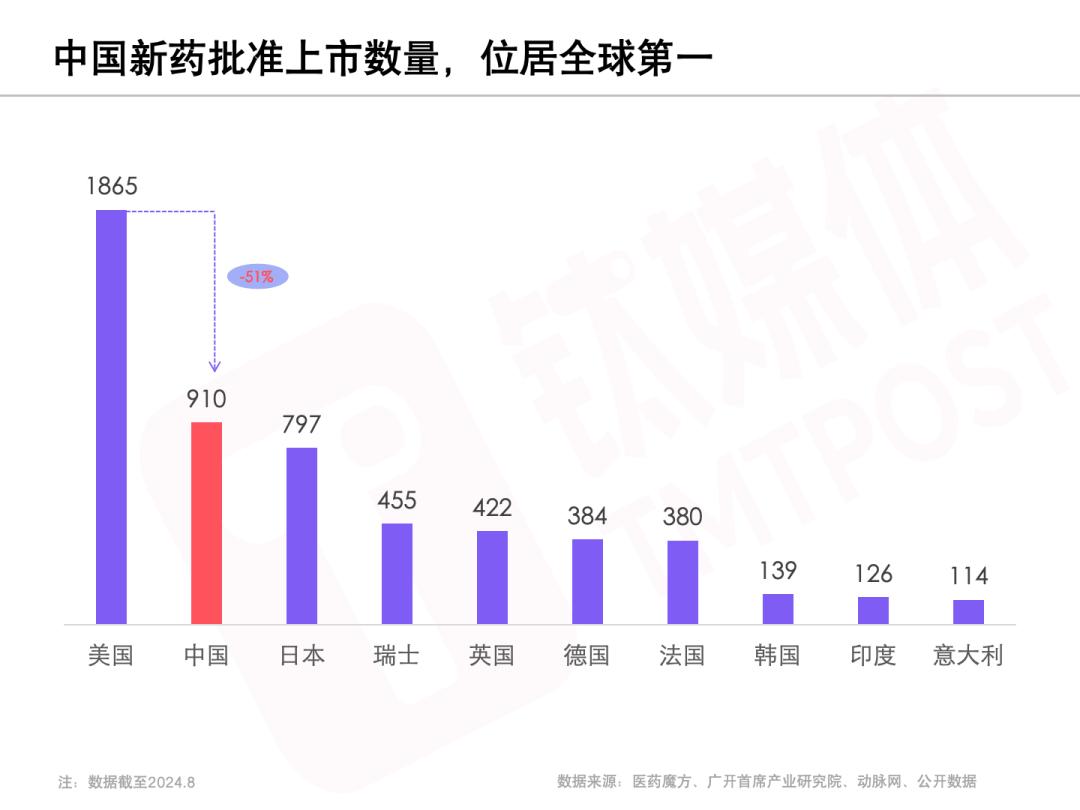
Core Viewpoint - The article discusses the significant progress in China's innovative drug development, highlighting the increase in the number of new drugs approved and the growing competitiveness of Chinese pharmaceutical companies in both domestic and international markets [4][16]. Group 1: Growth of Innovative Drugs - In 2024, the number of domestically developed Class 1 new drugs in China reached 40, a substantial increase from just 9 in 2018 [2][3][4]. - Since the beginning of the 14th Five-Year Plan, 113 innovative drugs have been approved, which is 2.8 times the number approved during the 13th Five-Year Plan [4]. - As of August 2024, there are 910 new drugs available in China, indicating a robust growth in the pharmaceutical market [6]. Group 2: Clinical Trials and Breakthroughs - In a head-to-head clinical trial, the drug Ivoris (依沃西单抗) developed by Kangfang Biopharma outperformed the global best-selling cancer drug, Pembrolizumab (K drug), marking a significant achievement for Chinese innovation [7][9]. - The global sales of Pembrolizumab reached $29.482 billion in 2024, underscoring the competitive landscape [8]. Group 3: Market Dynamics and International Expansion - Chinese innovative drugs are not only performing well domestically but are also gaining traction in international markets, with products like Sidakio (西达基奥仑赛) achieving $1.596 billion in cumulative sales since its launch [12][13]. - The total transaction scale of technology licensing by Chinese pharmaceutical companies exceeded $34 billion in 2024, indicating a shift towards international collaboration [14][15]. Group 4: R&D Landscape and Challenges - As of August 2024, there are 5,380 new drug candidates in development in China, accounting for over one-third of the global pipeline [18]. - The average cost of developing an innovative drug is around $1 billion, with a typical development timeline of 10 years [20][21]. - The efficiency of drug development in China is improving, with preclinical phases taking 12-20 months compared to 24-36 months internationally [23]. Group 5: Policy Support and Ecosystem - The Chinese government has implemented various policies since 2008 to support innovative drug development, including expedited approval processes and financial incentives [28][29]. - The combination of government support, industry collaboration, and technological advancements is creating a conducive environment for innovation in the pharmaceutical sector [41]. Group 6: Future Outlook - The article emphasizes that the development of innovative drugs in China has made significant strides over the past decade, transitioning from imitation to innovation [42]. - The government's continued support for innovative drugs is expected to enhance the industry's growth and provide hope for patients [42].

平安证券(香港)港股晨报-20260205



Ping An Securities Hongkong· 2026-02-05 02:59
Market Overview - The Hong Kong stock market showed mixed performance with the Hang Seng Index closing at 23,831 points, down 145 points or 0.61% [1] - The market turnover decreased to 82.799 billion [1] - The net inflow of funds through the Hong Kong Stock Connect was 484 million, with Shanghai Stock Connect contributing 283 million and Shenzhen Stock Connect 201 million [1] Sector Performance - Energy and real estate sectors performed well, with coal-related assets rising due to supply constraints from Indonesia, leading to Yanzhou Coal Mining increasing over 10% and China Shenhua Energy rising over 5% [1] - Domestic property stocks also saw gains, with Shimao Group up over 14%, Sunac China up over 8%, Vanke up over 6%, and Yuexiu Property up over 6% [1] - Conversely, chip and tech stocks declined, with Shanghai Fudan down over 5%, Hua Hong Semiconductor down nearly 5%, and Tencent Holdings down nearly 4% [1] US Market Performance - The US stock market had mixed results, with the Dow Jones up 0.53%, while the S&P 500 and Nasdaq fell by 0.51% and 1.51% respectively [2] - Notable gainers included Amgen, which rose over 8%, and Nike, which increased by over 5% [2] - The tech sector faced challenges, with the Nasdaq China Golden Dragon Index down 1.95% and major chip stocks like AMD dropping over 17% [2] Investment Opportunities - The report emphasizes the importance of "technological self-reliance" and AI applications as key themes for future growth in the Hong Kong stock market, suggesting that leading companies in these sectors may see medium to long-term development opportunities [3] - It is recommended to focus on sectors supported by policies aimed at expanding domestic consumption, such as sports apparel and non-essential services [3] - The report highlights the continued value of Hong Kong stocks centered around Chinese assets, particularly in technology, consumer sectors, and undervalued state-owned enterprises [3] Company Highlights - ZTE Corporation (0763.HK) is noted for its comprehensive communication manufacturing capabilities, with a projected revenue of 121.299 billion for 2024, despite a slight decline [10] - The company maintains a high gross margin of 37.91% and is expected to see significant growth in its server and storage revenue, particularly in the AI computing sector [10] - Analysts predict ZTE's net profits for 2025 and 2026 to be 7.98 billion and 8.81 billion RMB respectively, indicating a relatively low valuation compared to its earnings potential [10]
中泰国际每日晨讯-20260205
ZHONGTAI INTERNATIONAL SECURITIES· 2026-02-05 02:13
2026 年 2 月 5 日 星期四 昨日港股窄幅波动。恒生指数及国企指数分别收报 26,847 点及 9,048 点,前者上升 0.1%,后者下跌 0.1%。港股成交合共 2,854 亿港元,较前日的 3,352 亿港元,下跌 14.9%,或反映投资者观望情绪增加。分类指数方面,能源、地产建筑、原 材料业指数分别上升 3.0%、2.1%、1.4%;资讯科技、非必需性消费则分别下跌 3.4%、0.4%。蓝筹个股方面,信义玻璃 (868 HK)及中国神华(1088 HK)领涨,分别上升 5.9%及 5.7%;携程集团(9961 HK)及腾讯控股(700 HK)领跌,分别下跌 6.1%及 4.0%。 主要内房港股明显上升,例如华润置地(1109 HK)、中国海外发展(688 HK)、越秀地产(123 HK)、万科企业(2202 HK)上涨 3.9%-6.2%。近期部分投资机构预期政府在短中期未来将公布更积极推动房地产政策。至目前为止,房地产销售数字仍需 突围,存销比率也较高。我们盼望推动政策的力度可较大。 ➢ 每日大市点评 昨晚美股表现分化,科技股受到抛售,例如 AMD(AMD US)下跌 17.3%,光伏股则上 ...