耐世特

Search documents
广发证券:“定比例”补贴对乘用车行业利润拉动几何?
Zhi Tong Cai Jing· 2026-01-09 07:57
Core Viewpoint - The adjustment of the vehicle trade-in policy to a "proportional subsidy" will significantly benefit mid-to-high-end vehicles, with an estimated profit increase of 15.9 billion yuan for the passenger car industry in 2026 [1][2]. Group 1: Policy Changes and Impact - The new policy, effective from December 30, 2025, provides a subsidy of 12% for new energy vehicles and 10% for fuel vehicles, with maximum subsidies of 20,000 yuan and 15,000 yuan respectively for scrapping [1]. - The trade-in subsidy for purchasing new energy and fuel vehicles will be 8% and 6% respectively, with maximum subsidies of 15,000 yuan and 13,000 yuan [1]. - The adjustment in Chongqing shows that the sales proportion of vehicles priced above 200,000 yuan increased to 39.1% in November 2025, up by 6.3 percentage points from July 2025 [1]. Group 2: Profit Projections - The estimated profit increase of 15.9 billion yuan for the passenger car industry in 2026 is based on the assumption that domestic terminal sales will remain flat year-on-year [1]. - The theoretical profit space for different price segments is projected to grow as follows: 0 billion yuan for under 100,000 yuan, 0.3 billion yuan for 100,000-150,000 yuan, 0.7 billion yuan for 150,000-200,000 yuan, and 2.5 billion yuan for above 200,000 yuan [1]. - The total amount of trade-in subsidies is expected to decline by approximately 30 billion yuan in 2026, but the subsidies for vehicles priced above 150,000 yuan will increase by about 14 billion yuan [2]. Group 3: Investment Recommendations - Recommended stocks in the passenger vehicle chain include Geely Automobile, BYD, Chery Automobile, and others for right-side opportunities, while Great Wall Motors and Changan Automobile are suggested for left-side opportunities [3]. - Companies showing potential turning points include SAIC Motor [3]. - In the upstream and downstream chains, recommended stocks include Minth Group, Yinlun Machinery, and others for right-side opportunities, while Yongda Automobile and New Coordinates are suggested for left-side opportunities [3].

广发证券:“定比例”补贴对乘用车行业利润拉动几何?
Zhi Tong Cai Jing· 2026-01-09 03:29
Core Viewpoint - The adjustment of the vehicle trade-in policy to a "proportional subsidy" will significantly benefit mid-to-high-end vehicles, with an expected profit increase of 15.9 billion yuan for the passenger car industry in 2026 [1][2][3]. Group 1: Policy Changes and Impacts - The new policy, effective from December 30, 2025, includes a scrapping subsidy of 12% for new energy vehicles and 10% for fuel vehicles, with maximum subsidies of 20,000 yuan and 15,000 yuan respectively [1]. - The trade-in subsidy will provide 8% for new energy vehicles and 6% for fuel vehicles, with maximum subsidies of 15,000 yuan and 13,000 yuan respectively [1]. Group 2: Profit Projections - Based on data from Chongqing, the proportional subsidy is expected to increase the profit of the passenger car industry by 15.9 billion yuan in 2026, with profit growth in different price segments projected as follows: 0 yuan for under 100,000 yuan, 300 million yuan for 100,000-150,000 yuan, 2.9 billion yuan for 150,000-200,000 yuan, and 12.8 billion yuan for above 200,000 yuan [2][3]. - The total amount of trade-in subsidies is projected to decline by approximately 30 billion yuan in 2026, but the subsidy amount for vehicles priced above 150,000 yuan is expected to increase by about 14 billion yuan [3]. Group 3: Investment Recommendations - The report suggests focusing on various companies within the passenger vehicle supply chain, including Geely, BYD, Chery, and others as potential investment opportunities [4]. - Companies positioned for growth include SAIC Motor, while others like Great Wall Motors and Changan Automobile are identified as left-side targets [4].
耐世特20260107
2026-01-08 02:07
Key Points Summary Company Overview - The company discussed is **Nexteer Automotive**, focusing on its **steer-by-wire** technology and market strategies in the automotive industry [2][3][4]. Industry Insights - The steer-by-wire business is accelerating, with mass production expected to start by the end of Q1 or early Q2 2024, and small-scale production in 2025, with some projects potentially delayed until 2026 [2][3]. - New regulations for steer-by-wire in China will take effect on July 1, 2024, which will not impact current projects but will accelerate the commercialization of the technology in the long term [4][5]. - The company competes with major players like Bosch and ZF in the global steer-by-wire market, leveraging localized R&D and quick response to customer needs [2][6]. Financial Performance and Projections - The company anticipates improved profitability in 2026 due to the end of the new product introduction phase and the realization of scale effects [4][10]. - The financial performance for the second half of 2025 is expected to remain stable despite external factors like tariffs, with a better performance in the Chinese market compared to the first half [11][12]. Customer and Market Dynamics - The company is set to launch multiple steer-by-wire projects in the first half of 2026, including partnerships with North American electric vehicle leaders and Chinese new energy vehicle companies [3][12]. - The Chinese market is expected to outperform the European and American markets, driven by a diverse customer base including BYD, Li Auto, and Xiaomi [12][15]. Product Pricing and Trends - Initial pricing for steer-by-wire products is high, estimated between 3,000 to 4,000 RMB, but may decrease with standardization and economies of scale [8][9]. - The steer-by-wire technology offers significant advantages in extreme conditions, enhancing driving experience and safety, which justifies the higher costs [9]. Competitive Advantages - The company’s competitive edge lies in its localized R&D and ability to respond quickly to market demands, particularly in the L3 and above autonomous driving sectors [6][16]. - The company is also focusing on maintaining strong export business and expanding into new product lines like rear-wheel steering [17]. Regulatory Impact - The implementation of new regulations is expected to accelerate the adoption of steer-by-wire technology among new energy vehicle manufacturers, who are likely to move faster than traditional automakers [4][5]. Future Growth Potential - The company believes that despite challenges in the Chinese market, it can outperform the market due to its strong customer relationships and diverse product offerings [12][15][16].

永金证券晨会纪要-20260107
永丰金证券· 2026-01-07 11:24
Core Insights - The report highlights a positive market sentiment driven by expectations of a "soft landing" for the economy and potential interest rate cuts, as evidenced by the Dow Jones and S&P 500 reaching historical highs [9][12] - The report emphasizes the strong performance of AI-related stocks, particularly Micron Technology, which saw a significant price increase, reflecting investor enthusiasm in the sector [9][12] - The report suggests a strategic approach to investing in risk assets, recommending a diversified allocation across AI, cyclical, and defensive sectors [9] Market Overview - The Dow Jones Industrial Average closed at 49,462.08, up 484.90 points or 0.99%, marking its first close above 49,000 [12] - The S&P 500 index rose 42.77 points or 0.62% to close at 6,944.82, while the Nasdaq increased by 151.35 points or 0.65% [12] - The Hang Seng Index closed at 26,710.45, up 363.21 points or 1.38%, reflecting a three-day upward trend [14] Economic Data - The US services PMI for December was reported at 52.5, lower than the initial estimate, indicating a slight contraction in the services sector [12] - The Federal Reserve officials indicated a need for at least a 1% interest rate cut this year to support economic growth, highlighting the current tight monetary policy [12] Company-Specific Insights - Micron Technology's stock price reached a new high, increasing by 7.8%, driven by strong demand for AI-related memory chips [9][12] - Nvidia's CEO announced that their next-generation chip, Vera Rubin, has been fully produced, offering five times the AI computing power of its predecessor [12] - Southern Copper Corporation reported Q3 2025 net sales of approximately $3.38 billion, a year-on-year increase of about 15%, with net profit exceeding $1 billion, reflecting strong fundamentals [25] Sector Analysis - The report notes that the technology and internet sectors in China are expected to continue outperforming the market, with UBS identifying a list of favored stocks including Tencent and Alibaba [14] - The report indicates that the Hong Kong residential property market has shown signs of recovery, with a projected increase in prices of at least 10% this year [14] Investment Strategy - The report recommends a diversified investment strategy through ETFs focused on AI, semiconductors, resource stocks, and precious metals, while also suggesting a small allocation to leading stocks as satellite holdings [9]
耐世特(01316) - 截至二零二五年十二月三十一日止之股份发行人的证券变动月报表
2026-01-07 08:10
股份發行人及根據《上市規則》第十九B章上市的香港預託證券發行人的證券變動月報表 截至月份: 2025年12月31日 狀態: 新提交 第 1 頁 共 11 頁 v 1.1.1 FF301 呈交日期: 2026年1月7日 I. 法定/註冊股本變動 | 1. 股份分類 | 普通股 | 股份類別 | 不適用 | | | 於香港聯交所上市 (註1) | | 是 | | | --- | --- | --- | --- | --- | --- | --- | --- | --- | --- | | 證券代號 (如上市) | 01316 | 說明 | | | | | | | | | | | 法定/註冊股份數目 | | | 面值 | | | 法定/註冊股本 | | | 上月底結存 | | | 4,000,000,000 | HKD | | 0.1 | HKD | | 400,000,000 | | 增加 / 減少 (-) | | | | | | | HKD | | | | 本月底結存 | | | 4,000,000,000 | HKD | | 0.1 | HKD | | 400,000,000 | 本月底法定/註冊股本總額: ...
朝闻国盛:A股具备相对优势
GOLDEN SUN SECURITIES· 2026-01-07 00:06
Group 1: Core Insights - A-shares are recommended for investment due to their relative advantages, with a current win rate of 19% and a return to neutral levels in terms of odds [3] - The report highlights the performance of various industries, with defense and military showing a 55.9% increase over the past year, while banking and coal industries have underperformed [1] - The report emphasizes the potential growth in the semiconductor market driven by advancements in power supply technology and the demand for SiC devices, with a projected market size of approximately $1.15 billion by 2030 [8] Group 2: Sector Recommendations - Investment suggestions include focusing on growth-oriented real estate and energy companies, as well as internet firms benefiting from AI advancements [2] - In the food and beverage sector, the report recommends investing in both premium liquor brands and consumer staples, highlighting companies like Moutai and Yili for their recovery potential [5] - The report suggests that the advanced packaging and AR glasses markets could provide new growth opportunities for SiC devices, driven by increased power density in AI data centers [8]
汽车行业深度报告:EMB线控制动是发展智能底盘、实现主动安全的关键基础,2026有望迎来量产元年
LIANCHU SECURITIES· 2026-01-06 12:18
Investment Rating - The report maintains a "Positive" investment rating for the industry [6] Core Insights - The EMB (Electro-Mechanical Brake) system is identified as a key foundation for developing intelligent chassis and achieving active safety in vehicles, with mass production expected to begin in 2026 [1][3] - The EMB system features a decoupled hardware and software architecture, eliminating components like the iBooster and hydraulic lines, allowing for direct control of braking force at the wheel hub, which meets the rapid and precise braking demands of Advanced Driver Assistance Systems (ADAS) [3][4] - The domestic EMB market is projected to grow at a CAGR of over 70% from 2026 to 2030, with an expected market size exceeding 11.5 billion yuan by 2030 [4][48] Summary by Sections 1. Overview of Brake Technology Development - Traditional fuel vehicles used vacuum boosters for braking, which are expected to be phased out due to their complexity and slow response times [10] - The transition to electric vehicles has led to the adoption of electric vacuum pumps, but they have not been widely accepted due to issues like noise and short lifespan [11] - In the era of intelligent and connected vehicles, both EHB (Electro-Hydraulic Brake) and EMB systems are expected to develop concurrently, with EMB being more suitable for future intelligent chassis technology [13][14] 2. Introduction to EMB Line Control Braking - EMB achieves soft and hard decoupling by directly controlling the braking force at each wheel through electrical signals, enhancing response time and efficiency [27] - The EMB system includes electronic brake calipers, controllers, and various sensors, making it the control center for multiple safety algorithms [27] - The commercial application of EMB in commercial vehicles is anticipated to be faster than in passenger vehicles due to higher demands for braking performance and safety [37] 3. Market Size and Growth Potential - The EMB market is expected to see significant growth, with projections indicating a market size of over 11.5 billion yuan by 2030, driven by the rapid development of intelligent connected vehicles [48][51] - The report outlines a detailed forecast for EMB penetration rates, estimating a market size of approximately 1.42 billion yuan in 2026, with a projected CAGR of over 70% from 2026 to 2030 [51][52] 4. Participating Companies - Several domestic companies are accelerating their layout in the EMB market, with mass production timelines generally targeting 2025-2026 [52] - Key players include traditional brake system manufacturers like Bosch and Continental, as well as domestic firms such as Berteli and Asia-Pacific Co., which are preparing for mass production [52][54] - Startups like Coordinate Systems and Huasheng Ruili are also making strides, with some already achieving prototype development and testing [53][54]
汽车行业点评报告:催化不断,2026年重视智驾和robotaxi产业趋势
CMS· 2026-01-06 11:30
Investment Rating - The report maintains a "Recommended" rating for the automotive industry, indicating a positive outlook for the sector's fundamentals and expectations for the industry index to outperform the benchmark index [5]. Core Insights - The year 2026 is projected to be a breakthrough year for the smart driving and robotaxi industries, with significant advancements expected [3]. - Nvidia's release of the open-source VLA (Vision-Language-Action) model, Alpamayo 1, is anticipated to catalyze developments in autonomous driving, with the first vehicle equipped with this model, the Mercedes CLA, expected to hit the roads in the U.S. in Q1 2026 [2]. - The report highlights the expected growth in the robotaxi sector, with Waymo projected to exceed 450,000 rides per week by 2025 and Tesla's robotaxi operations expanding significantly in Austin, which is expected to have a notable financial impact in the second half of 2026 [3]. - Regulatory advancements are also noted, with the Ministry of Industry and Information Technology granting L3 access licenses to two companies, and the Ministry of Public Security announcing the initiation of national standards for autonomous driving regulations [3]. Industry Overview - The automotive industry comprises 267 companies, with a total market capitalization of 4,785.2 billion and a circulating market capitalization of 4,146.4 billion [5]. - The industry has shown strong performance, with absolute returns of 8.0% over one month, 26.4% over six months, and 54.0% over twelve months [7]. - Relative performance against the benchmark has also been positive, with 5.1% over one month, 7.9% over six months, and 29.0% over twelve months [7]. Related Companies - Key players in the industry include Bertel, Nexteer, Horizon Robotics, Black Sesame, Desay SV, and others involved in various aspects of smart driving technology and robotaxi operations [4].


【天风汽车】英伟达开源智驾大模型,商业化落地加速-0106
Ge Long Hui· 2026-01-06 09:39
Group 1 - Nvidia has launched an open-source vision-language-action model, Alpamayo 1, for autonomous driving, featuring 10 billion parameters and a significant breakthrough in openness, providing complete development resources from data to deployment [1] - The model is an inference-based VLA that can reason causal relationships before decision-making, predict intentions of others, and handle multi-step decisions, resulting in a 12% improvement in planning accuracy, a 37% increase in action consistency, and a 25% reduction in collision rates [1] - Nvidia's DRIVE system is entering mass production, with the first model being the new Mercedes CLA, set to hit the roads in the US in 2026, and plans to test Robotaxi services in collaboration with partners in 2027 [1] Group 2 - The open-source end-to-end model is expected to reconstruct the intelligent driving ecosystem, further lowering the threshold for Level 4 (L4) autonomous driving, with recommendations for Robotaxi algorithm companies such as Xiaoma and Wenyuan, and attention on unmanned mining vehicle targets like Xidi Zhijia and Boleton, as well as the upcoming listing of Yikong Zhijia [2] - Recommended components for safety redundancy include steering systems from Cybercab's exclusive supplier, Nexperia, braking systems from Bertley and Ruikem, lidar from Hesai and Suteng, and chips from Horizon and Black Sesame [2] - In addition to intelligent driving, Nvidia's Isaac platform and GR00T basic module development cover various types of robots, including industrial, humanoid, and consumer-grade, with a positive outlook on the resonance between intelligent driving and robotics domain control companies like Kobot, Desay SV, and Jingwei Hengrun [2]
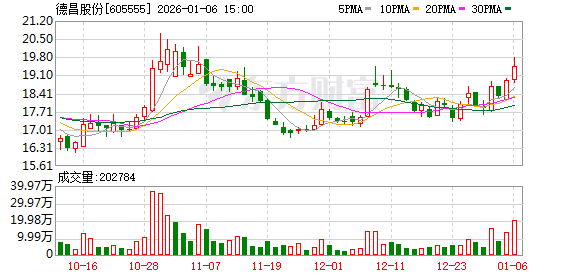
德昌股份:浙江世宝是公司EPS汽车转向电机产品的客户之一,EPS汽车转向电机产品已与耐世特等建立合作
Mei Ri Jing Ji Xin Wen· 2026-01-06 08:34
Group 1 - The company has confirmed that Zhejiang Shibao is one of its customers for EPS automotive steering motor products [2] - The company has established partnerships for its EPS automotive steering motor products with several other companies, including Nidec, ZF, JTEKT, and Schaeffler [2]