国投电力

Search documents
多省纷纷废止风光发电项目,新能源“香饽饽”不香了吗
Di Yi Cai Jing· 2025-06-05 11:15
Core Viewpoint - The large-scale cancellation of renewable energy projects is primarily attributed to tightened policies and regulatory measures in the industry [1][6][9]. Summary by Sections Project Cancellations - Multiple provinces in China, including Shanxi, Ningxia, Shaanxi, and Fujian, have announced the cancellation of numerous renewable energy projects due to non-compliance with new regulatory requirements [1][2][4][5]. - For instance, Shanxi's recent announcement included the cancellation of 14 projects totaling over 590,000 kilowatts [1]. - In Fujian, 10 solar projects were canceled, amounting to a total capacity of 114.3 megawatts, involving major energy companies [5]. Policy Changes - The National Development and Reform Commission and the National Energy Administration have implemented stricter policies regarding project approvals and timelines, requiring projects to be completed by specific deadlines or face cancellation [2][6]. - The "136 Document" introduced a market-driven pricing mechanism for renewable energy, shifting from guaranteed pricing to market-based pricing, which has altered investment dynamics in the sector [6][7]. Economic Viability - The decline in expected returns due to changing electricity pricing has made many projects economically unfeasible, leading companies to halt or cancel projects [7][8]. - Major companies like China Power Construction and State Power Investment Corporation have announced project terminations due to these economic pressures [7]. Industry Challenges - The rapid expansion of the renewable energy sector has led to issues such as blind expansion and project "occupying" without actual development, resulting in resource wastage [9][10]. - The industry faces significant pressure from the integration of large-scale renewable energy into the grid, necessitating a restructuring and optimization of project management [11].

ETF热门榜:沪做市公司债相关ETF成交居前,基准国债ETF(511100.SH)交易活跃-20250605
Xin Lang Cai Jing· 2025-06-05 09:54
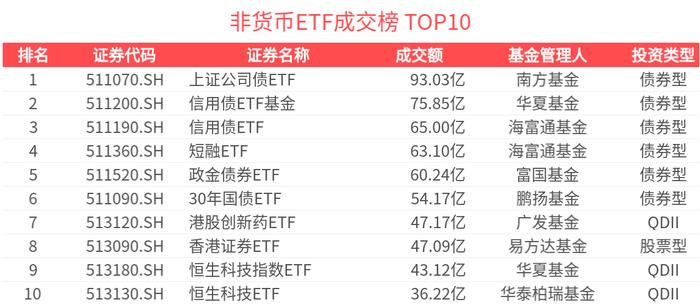
Summary of Key Points Core Viewpoint - The trading volume of non-monetary ETFs reached 200.295 billion yuan on June 5, 2025, with 50 ETFs exceeding 1 billion yuan in trading volume. The market is showing significant activity in various ETF categories, particularly in bond and thematic ETFs [1]. Trading Volume and Performance - The top three ETFs by trading volume are: - Shanghai Company Bond ETF (511070.SH) with 9.303 billion yuan - Credit Bond ETF Fund (511200.SH) with 7.585 billion yuan - Credit Bond ETF (511190.SH) with 6.500 billion yuan [4] - The average daily trading volume for the Shanghai Company Bond ETF over the last five days is 7.184 billion yuan, indicating increased activity [2]. Turnover Rate - The highest turnover rates are observed in: - Benchmark National Bond ETF at 249.89% - 0-4 Local Bond ETF at 163.00% - Saudi ETF at 160.18% [7] - The Shanghai Company Bond ETF has a recent turnover rate of 66.04% over the last five days, showing significant trading activity [2]. Thematic ETFs - Thematic ETFs include: - Hong Kong Innovative Drug ETF - Hong Kong Securities ETF - Hang Seng Technology Index ETF - Hang Seng Technology ETF [1] - The Hong Kong Innovative Drug ETF (520500.SH) has a trading volume increase of 38.70% compared to the previous trading day [3]. ETF Performance Metrics - The Hang Seng Innovative Drug ETF has a recent trading volume of 4.62 billion yuan over the last five days, with a notable increase in trading activity [3]. - The Green Power ETF (159669.SZ) has a recent trading volume of 1.06 billion yuan and is focused on the public utility sector [8]. Market Volatility - The top three ETFs by volatility are: - China Securities 2000 Index ETF with a volatility of 10.50% - Green Power ETF with 10.46% - Yangtze River Protection Theme ETF with 9.29% [11]
中国11大电力央企,为何全部重仓盐城?
Sou Hu Cai Jing· 2025-06-04 14:25
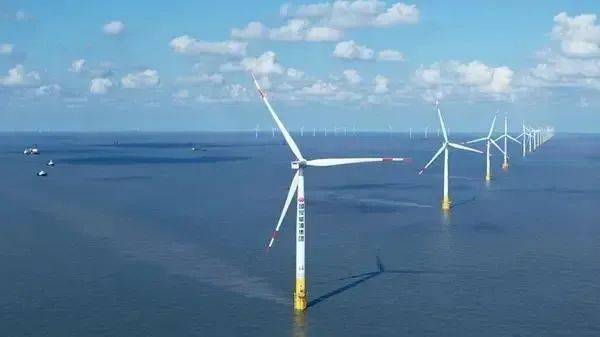
Core Viewpoint - The article highlights China's significant advancements in power generation, particularly in clean energy, and emphasizes the strategic importance of Yancheng as a hub for renewable energy projects involving major state-owned enterprises [1][9]. Group 1: Power Generation Capacity - As of 2024, China's power generation capacity is approximately 3349 GW, nearly three times that of the United States, which stands at 1225 GW [1]. - The increasing share of clean energy in China's power generation is a notable trend, indicating a shift towards sustainable energy sources [1]. Group 2: Renewable Energy Projects in Yancheng - Yancheng has attracted all 11 major state-owned power enterprises, making it a unique city with full coverage of the power industry [9]. - Significant investments include the East Taihai Offshore Wind Power Project, a joint venture between China and France, with an investment of 8 billion yuan [2]. - The Dafeng Offshore Wind Power Project, developed by Huaneng Group, has an annual output of 1.14 billion kWh of clean energy, saving 350,000 tons of standard coal and reducing CO2 emissions by 931,000 tons [4]. Group 3: Advantages of Yancheng - Yancheng boasts a coastline of 582 kilometers and favorable wind conditions, with average wind speeds exceeding 7.6 m/s at 100 meters height, making it ideal for wind power generation [12][13]. - The region also has high solar radiation levels, with annual totals between 1400-1600 kWh/m², supporting the development of solar power projects [15]. Group 4: Industry Development and Supply Chain - Yancheng has established the largest offshore wind power industrial cluster in China, with a production capacity accounting for 40% of the national total [22]. - The city is also home to major solar energy companies, achieving a solar cell production capacity of 84.5 GW and module production of 120.4 GW, ranking first in the country [22]. Group 5: Market Dynamics and Energy Consumption - The Yangtze River Delta region, where Yancheng is located, is a major electricity consumption area, with a projected total electricity consumption exceeding 20,000 billion kWh in 2024, accounting for 21.1% of the national total [27][29]. - Yancheng's proximity to major consumption centers like Shanghai enhances its ability to sell generated electricity at competitive prices [29]. Group 6: Low-Carbon Development Initiatives - Yancheng is recognized as a pilot city for carbon peak initiatives, aiming to lead in low-carbon development practices [38]. - The city is actively exploring the establishment of a green standard system to support carbon emission reduction efforts and enhance its role in global climate governance [56][57].
【基础化工】新一轮环保督察启动,持续关注农药和颜料板块——行业周报(20250526-20250601)(赵乃迪/胡星月)
光大证券研究· 2025-06-04 13:56
Group 1 - The third round of the fourth batch of central ecological environment protection inspections has been fully launched, with eight inspection teams focusing on five provinces and three central enterprises [2] - The pesticide industry is undergoing capacity optimization, with the recent explosion at Youdao Chemical affecting the supply of chlorantraniliprole, which may lead to price increases [3] - Chlorantraniliprole is a highly efficient and low-toxicity insecticide, currently the top-selling insecticide globally, with the explosion impacting short-term supply [3] Group 2 - The organic pigment industry is experiencing continuous consolidation, with a focus on high-performance organic pigment domestic substitution due to stricter environmental policies and tightening profit margins [4] - High-performance organic pigments are becoming a new trend in the industry, with few domestic companies mastering core production technologies, leading to a favorable competitive landscape for industry leaders [4]

海通国际证券利率债周报-20250604
Haitong Securities International· 2025-06-04 09:31
Core Insights - The report suggests that spot electricity prices may have bottomed out, leading to potential improvements in valuation and performance for the sector [1] - The analysis indicates that the electricity market is undergoing significant changes, particularly in the context of coal-fired power generation and renewable energy integration [3] Group 1: Coal Power - In northern regions, the proportion of renewable energy is higher, making coal power more scarce during peak times, which could lead to price increases [3] - The report anticipates that after three years of decline, the spot electricity price in Gansu will rise for the first time in 2025, surpassing long-term contracts [3] - In Q1 2025, coal power generation in China decreased by 4.7% year-on-year, with major state-owned enterprises experiencing significant drops in electricity output [21][22] Group 2: Hydropower - The report highlights that large hydropower resources are becoming increasingly scarce as most potential sites have been developed, particularly outside Tibet [35] - It is projected that hydropower prices will see a moderate increase during the 14th Five-Year Plan period, driven by further marketization [42] - Major hydropower companies are expected to show stable profit growth, with significant revenue from electricity sales [45] Group 3: Renewable Energy - The report notes that by 2024, the installed capacity of renewable energy in China reached 1.41 billion kilowatts, accounting for 42% of total installed capacity, with a compound annual growth rate (CAGR) of 27.4% from 2020 to 2024 [10][57] - The analysis indicates that the new energy policy aims to stabilize electricity prices and control the growth rate of installed capacity, suggesting a potential slowdown in future capacity additions [3] - The report also points out that the profitability of renewable energy is under pressure due to market dynamics, with significant declines in electricity prices observed in Guangdong [61][62]
9169.63万元主力资金今日撤离公用事业板块
Zheng Quan Shi Bao Wang· 2025-06-04 08:56
主力资金净流出的行业有14个,汽车行业主力资金净流出规模居首,全天净流出资金17.87亿元,其次 是国防军工行业,净流出资金为17.40亿元,净流出资金较多的还有医药生物、机械设备、银行等行 业。 沪指6月4日上涨0.42%,申万所属行业中,今日上涨的有28个,涨幅居前的行业为美容护理、综合,涨 幅分别为2.63%、2.53%。跌幅居前的行业为交通运输、国防军工、公用事业,跌幅分别为0.58%、 0.24%、0.12%。公用事业行业位居今日跌幅榜第三。 资金面上看,两市主力资金全天净流入10.74亿元,今日有17个行业主力资金净流入,电子行业主力资 金净流入规模居首,该行业今日上涨1.17%,全天净流入资金30.70亿元,其次是非银金融行业,日涨幅 为0.99%,净流入资金为15.88亿元。 公用事业行业资金流出榜 | 代码 | 简称 | 今日涨跌幅(%) | 今日换手率(%) | 主力资金流量(万元) | | --- | --- | --- | --- | --- | | 600025 | 华能水电 | -1.51 | 0.20 | -5128.49 | | 600886 | 国投电力 | -1.56 | ...
今日投资参考:绿电直连顶层设计出台 休闲旅游景气度有望延续
Zheng Quan Shi Bao Wang· 2025-06-04 02:14
3日,两市股指盘中维持震荡上扬走势,北证50指数涨超1%。截至收盘,沪指涨0.43%报3361.98点,深 证成指涨0.16%报10057.17点,创业板指涨0.48%报2002.7点,北证50指数涨1.03%,沪深北三市合计成 交11640亿元,成交额和此前一日大致相当。行业方面,医药、银行、纺织服装、食品饮料、军工、保 险、券商等板块走高,创新药、减肥药、医美概念、黄金概念、体育概念等活跃;钢铁、煤炭、电力等 板块疲弱。 光大证券认为,短期外部风险扰动最严重的时候或许已经过去,但仍需要对特朗普后续政策的反复保持 警惕。近期国内政策仍积极发力,预计后续政策仍将持续落地。随着中美两国为"对等关税"按下90 天"暂停键",短期内出口或将保持高增,预计消费仍是经济修复的重要动能之一。内外因素交织之下, 预计指数6月整体保持震荡。 今日投资机会解析 光大证券指出,此次督察强调黄河流域生态保护,多地已有项目因环保问题关停。农药行业继续向绿色 清洁低碳方向发展,政策推动减量增效,淘汰高毒高风险产品,提升行业集中度。友道化学爆炸事件影 响氯虫苯甲酰胺短期供应,成本支撑增强,价格或上涨。有机颜料行业在环保趋严背景下持续整合 ...
10万亿度!全国“电力改革”总龙头,装机份额全球第一,或是6月首妖!
Sou Hu Cai Jing· 2025-06-03 08:12
Core Insights - The electricity market in China has undergone significant transformation over the past decade, evolving from a single to a multi-faceted market system, with market-based transactions increasing dramatically from 1.1 trillion kWh in 2016 to 6.2 trillion kWh in 2024, representing a growth of 5.1 trillion kWh and reaching 63% of total electricity consumption [1][5] Industry Developments - A multi-layered market system has been established, consisting of "inter-provincial spot + provincial spot + medium to long-term trading," with five provincial electricity spot markets currently operational and seven in trial phases [3] - The electricity sector is set to experience a historic turning point in 2025, with the national unified electricity market construction entering a critical phase, driven by policy, market, and technology [5][6] Market Structure - The transition from "mainly intra-provincial trading" to "cross-provincial and cross-regional collaboration" is underway, utilizing real-time price signals for optimal resource allocation [6] Key Companies - Guodian Power: A core listed company under the State Energy Group, significant in electricity market transactions and renewable energy [8] - Huadian International: A listed company controlled by China Huadian Group, focusing on hydropower development and clean energy [8] - Guotou Power: A clean energy generation company primarily focused on hydropower, benefiting from cross-regional transmission and market reforms [9] - Guodian Nari: A leading company in power grid automation, providing essential technical support for the national unified electricity market [10]
未知机构:XZ公用136号文实施现货市场加速推进电力市场化产生裂变效应-20250603
未知机构· 2025-06-03 01:50
Summary of Conference Call Records Industry Overview - The conference call discusses the electricity market in China, particularly focusing on the implementation of the New Energy 136 Document and the acceleration of the spot market, which signifies a shift towards market-oriented electricity pricing [1][1]. Key Points and Arguments - The New Energy 136 Document, effective from June 1, marks a significant step in the marketization of the electricity sector, particularly for new energy sources, which now account for the second-largest share of electricity generation [1][1]. - Over ten provinces have begun long-cycle trial operations of the electricity spot market this year, enhancing the supply-demand relationship in electricity pricing [1][1]. - The introduction of the spot market has led to increased price volatility, with some pilot provinces like Shandong and Shanxi experiencing intraday price fluctuations exceeding 50% [2][2]. - As renewable energy capacity continues to grow, it is expected that more trading cycles will be dominated by renewable sources, which will lower overall price levels. However, traditional thermal power will still play a crucial role during periods of insufficient renewable output, maintaining higher prices during those times [3][3]. - The volatility in price curves is leading to a compression of trading cycles, pushing for weekly, multi-day, and even daily trading to become mainstream [4][4]. - The comprehensive electricity price for thermal power has risen during periods of declining coal prices, indicating a shift towards a model where thermal power is not just about generation but also about price regulation [4][4]. Recommendations - The report recommends focusing on national comprehensive power companies and northern thermal power companies with performance elasticity, such as: - Jintou Energy - Datang Power (H) - Huaneng International (H+A) - Huadian International (H+A) - Continued recommendations for Waneng Power, Sheneng Co., Huaneng Hydropower, and Guodian Power [4][4]. - For green energy, companies like Xintian Green Energy, Datang New Energy, and Longyuan Power (H) are highlighted. - In the hydropower sector, recommended companies include Yangtze Power, Chuan Investment Energy, Guotou Power, and Huaneng Hydropower [4][4]. Risks - The report outlines several risks associated with the marketization of electricity trading, including: - Price volatility risks due to market fluctuations - Risks from variations in wind and water resources - Significant increases in thermal coal prices - Delays in resource approval for new energy projects - Risks from macroeconomic downturns affecting electricity demand [4][4].



国家推广绿电直连项目,绿电机制竞价正式开启
Changjiang Securities· 2025-06-03 00:25
Investment Rating - The report maintains a "Positive" investment rating for the public utility sector [8]. Core Insights - The introduction of the "Green Electricity Direct Connection" model is expected to enhance demand certainty and consumption levels compared to traditional projects, particularly benefiting distributed commercial solar, offshore wind, and integrated projects in certain western regions [2][12]. - The green electricity pricing mechanism has transitioned to a competitive bidding phase, marking a shift from a supply-driven growth phase to a mature market regulated by demand [12]. - The report emphasizes that the "carbon neutrality" initiative and electricity market reforms will reshape the intrinsic value of power operators throughout the 14th Five-Year Plan period [12]. Summary by Sections Green Electricity Direct Connection - The National Development and Reform Commission and the National Energy Administration have established a framework for the "Green Electricity Direct Connection" model, allowing renewable energy sources to supply electricity directly to single users [12]. - Projects must have at least 60% of their generated electricity consumed on-site and a minimum of 30% of total electricity consumption from self-generated sources, with a gradual increase in self-consumption expected by 2030 [12]. - The model is anticipated to reduce price risks through long-term power purchase agreements (PPAs), enhancing project profitability [12]. Pricing Mechanism Transition - Starting June 1, new green electricity projects will no longer follow a benchmark pricing mechanism but will adopt a market-driven pricing model, with a competitive bidding process determining the final price [12]. - The report suggests that this transition may lead to a slowdown in new installations, which is viewed positively as it could alleviate pricing pressures and improve long-term growth prospects [12]. Investment Recommendations - The report recommends focusing on quality power operators such as Huadian International, China Resources Power, and Huaneng International, as well as hydropower companies like Yangtze Power and Guotou Power [12][16][17]. - For the renewable energy sector, it highlights companies like Longyuan Power and China Nuclear Power as key investment opportunities due to their strong market positions and growth potential [12][18].