长安汽车

Search documents
德邦股份拟主动退市 京东物流近38亿元收购剩余股份
Chang Jiang Shang Bao· 2026-01-14 07:26
Group 1 - Vanke's "whistleblower" Yu Liang announced retirement without gratitude, raising concerns about the company's future as it receives a 30.8 billion yuan financial support from Shenzhen Metro to aid in orderly recovery [1] - Chang'an Bank received a 10 billion yuan capital injection from state-owned enterprises, with its capital adequacy ratio dropping to 11.66% after four years without an IPO [1] - Ideal Auto's delivery volume fell short of expectations, achieving only 63% of its target, resulting in a net loss of 620 million yuan for the quarter [1] Group 2 - Jiaoyun Co. is planning a restructuring, leading to a strong stock price surge, despite having accumulated a non-recurring loss of 1.9 billion yuan over the past six years while attempting to pivot into the cultural tourism sector [1] - Jiechuan Intelligent has only 200 million yuan in cash but plans to spend 4 billion yuan on procurement, with a net profit of 23 million yuan in the first three quarters, raising questions about the effectiveness of its entry into AI [1] - Hearty Noodle is facing challenges in the prepared food sector, having raised 7 rounds of financing with no movement towards an IPO, despite involvement from Tencent and Alibaba [1] Group 3 - Chang'an Automobile's claim of "cancelling year-end bonuses" is disputed, as Zhu Huarong sets an ambitious sales target of 3 million vehicles by 2025, which remains unfulfilled [1] - China Resources Double Crane's subsidiary has a product on the blacklist, with performance growth stagnating and R&D expense ratio dropping to 4.5% [1] - Xiamen Port's 6.2 billion yuan restructuring is close to completion, with the target assets projected to earn 430 million yuan before August 2025 [1] Group 4 - Chongqing Beer resolved an 18-year sales dispute, resulting in an increase of 1.908 million yuan in profits, despite facing declining sales and spending 2.5 billion yuan annually on sales expenses [1] - Zhang Yushuang is leading an 80 billion yuan empire into a second entrepreneurial phase, with Dongyang Sunshine Manufacturing earning 900 million yuan in nine months, raising questions about sustainability [1] - Tesla's projected annual delivery of 1.636 million vehicles in 2025 lags behind BYD, with China remaining its largest market [1] Group 5 - Tianpu Co. saw a stock surge of 1631% amid regulatory scrutiny and rumors of a backdoor listing involving Zhonghao Xinying [1] - Zheshang Bank underwent a management reshuffle, eliminating four assistant positions, with a declining non-performing loan ratio of 1.36% for four consecutive periods [1] - The Xie family, with a wealth of 375.3 billion yuan, re-entered the global wealth rankings, as the "Zhengda System" aims for its first A-share IPO after over 40 years in China [1]



2025年我国新能源汽车出口达261.5万辆,出口规模再上新台阶
Xin Lang Cai Jing· 2026-01-14 07:19
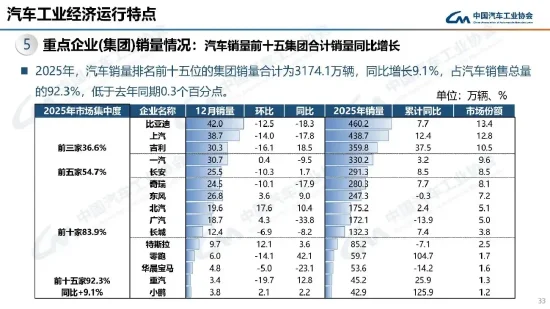
Core Insights - The Chinese automotive industry is projected to achieve record production and sales figures of 34.53 million and 34.40 million vehicles respectively in December 2025, maintaining its position as the world's largest market for 17 consecutive years [1][4]. Group 1: Market Performance - The passenger vehicle market is experiencing steady growth, significantly contributing to the overall automotive market expansion [5]. - The commercial vehicle market is recovering, with production and sales increasing by over 10%, surpassing 4 million units [5]. - New energy vehicles (NEVs) are leading the market, with production and sales exceeding 16 million units, accounting for over 50% of domestic new car sales [5]. Group 2: Export and Trade - The automotive export market shows strong resilience, with total exports exceeding 7 million vehicles, including 2.615 million NEVs, marking a new high in export scale [5]. Group 3: Market Concentration - The top fifteen automotive groups sold a total of 31.741 million vehicles, reflecting a year-on-year growth of 9.1%, which constitutes 92.3% of total vehicle sales, slightly down by 0.3 percentage points from the previous year [5][7]. - The top three groups, BYD, SAIC, and Geely, accounted for 36.6% of total vehicle sales [5][7]. - In the NEV segment, the top fifteen groups sold 15.669 million units, a year-on-year increase of 29.2%, representing 95% of total NEV sales, up by 0.7 percentage points from the previous year [5][7].





重庆智能网联新能源汽车向“新”追“智”逐“绿”
Zhong Guo Xin Wen Wang· 2026-01-14 06:46
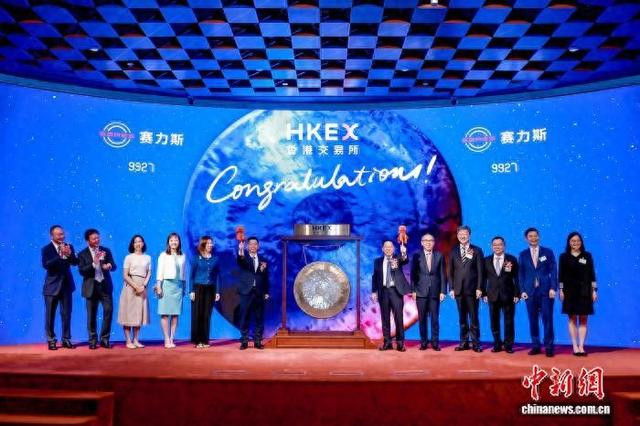
Core Insights - The Chongqing smart connected new energy vehicle market is gaining significant attention as companies report impressive sales figures for 2025, indicating a strong growth trajectory in the industry [1][2][3] Group 1: Company Performance - Changan Automobile reported a total sales volume of 2.913 million units in 2025, marking an 8.5% year-on-year increase, achieving the highest sales in nearly nine years [1] - Seres announced a total sales volume of 472,269 units for the year, reflecting a 10.63% year-on-year growth [1] - The AITO brand, under Seres, delivered over 420,000 vehicles in 2025, leading the high-end new energy vehicle market [1][3] Group 2: Technological Advancements - Changan has made significant technological strides with its self-developed "Golden Shield" battery and the industry’s first multi-in-one electric drive technology, which have entered mass production [4] - The company has also launched the "Tianshu Intelligent" brand, leveraging its technological advantages to enhance market competitiveness [4] - Seres is focusing on a "software-defined vehicle" approach, introducing several industry-leading technologies to strengthen its market position [4] Group 3: Global Expansion - Changan's overseas sales reached 637,000 units in 2025, up 18.9% year-on-year, with plans to establish 20 factories in countries like Brazil and Indonesia [6] - Seres successfully listed on the Hong Kong Stock Exchange, becoming the first luxury new energy vehicle company to achieve an "A+H" listing, facilitating global resource integration and technological collaboration [6] Group 4: Autonomous Driving Development - Chongqing has introduced L3-level autonomous driving vehicles, with Changan receiving the first official license plate for such vehicles in China [8][9] - The city’s complex geographical environment serves as a testing ground for autonomous driving technologies, enhancing their development and validation [10] Group 5: Industry Ecosystem - Chongqing has developed a robust automotive industry ecosystem, led by Changan, Seres, and Qianli Technology, with over a thousand supporting parts manufacturers [11] - The region has established a cluster advantage in software and system capabilities necessary for intelligent driving, with numerous digital workshops and smart factories [12] Group 6: Green Initiatives - In 2025, Chongqing produced nearly 1.3 million new energy vehicles, supported by intelligent manufacturing and carbon reduction initiatives [12] - Financial innovations, such as the establishment of a 1 billion yuan fund, are driving the green transformation of the new energy vehicle industry [14]


车企2025产销快报解析:四大板块齐头并进
Xin Lang Cai Jing· 2026-01-14 06:06
Core Insights - The Chinese passenger car market is projected to retail 23.78 million units in 2025, reflecting a 4% year-on-year growth, supported by policies like "trade-in" [20][21] - Major domestic automakers such as BYD, Geely, Changan, and Leap Motor have achieved significant breakthroughs, while several joint ventures are showing signs of recovery in China [20][21] Domestic Automakers Performance - BYD set a new annual sales record with 4.60 million units sold in 2025, a 7.73% increase, with pure electric vehicle sales reaching 2.25 million units, up 27.85% [21][22] - SAIC Group sold 4.51 million vehicles in 2025, marking a 12.3% increase, with its new energy vehicle sales growing by 33.1% to 1.64 million units [3][21] - China FAW achieved total vehicle sales of 3.30 million units, a 3.2% increase, with its new energy vehicle sales soaring by 71% to 366,000 units [3][22] - Geely exceeded its sales target with 3.02 million units sold, a 39% increase, and its new energy vehicle sales reached 1.69 million units, up 90% [4][22] - Changan's sales reached 2.91 million units, an 8.5% increase, with new energy vehicle sales growing by 51% to 1.11 million units [4][23] - Chery Group achieved a record high of 2.81 million units sold, with new energy vehicle sales increasing by 54.9% to 903,800 units [5][23] Joint Ventures Performance - Joint ventures are under pressure but some have found ways to adapt, with FAW-Volkswagen selling 1.59 million vehicles, maintaining its position as the top joint venture [26][27] - SAIC Volkswagen achieved sales of 1.06 million units, successfully surpassing the million mark [27] - Toyota's joint ventures in China reported positive growth, with FAW Toyota selling 805,500 units, marking three consecutive years of growth [27][28] New Energy Vehicle Market - The new energy vehicle segment is a common highlight across major automakers, with significant growth reported [21][22] - Leap Motor achieved a remarkable 103% year-on-year growth, delivering 596,600 units in 2025 [29] - Xpeng Motors delivered 429,400 units, a 126% increase, while NIO delivered 326,000 units, up 46.9% [30][31] Export Growth - China's automobile exports are expected to exceed 7 million units in 2025, marking a historic high [16][34] - Chery led the export of Chinese passenger cars with 1.34 million units, a 17.4% increase [34][35] - BYD's overseas sales surpassed 1 million units for the first time, reaching 1.05 million units, a 145% increase [35][36] Globalization Strategies - SAIC Group updated its overseas strategy, achieving 1.07 million units in overseas sales, a 3.1% increase [35][36] - Changan's overseas sales reached 637,000 units, an 18.9% increase, while Geely's overseas sales totaled 420,000 units [36][37] - New energy vehicle startups are also targeting international markets, with Leap Motor and Xpeng making significant strides in overseas deliveries [36][37]



壹连科技(301631):深耕电连接组件 新兴业务潜力可观
Xin Lang Cai Jing· 2026-01-14 02:43
Core Insights - The company is a leader in the electric connection component industry, with its core product, CCS, achieving cumulative shipments exceeding 100 million units and winning the 2025 Guangdong Provincial Manufacturing Single Champion award [1] - The company has established a diversified industrial layout centered around new energy vehicles, with revenue contributions from various sectors including energy storage, industrial equipment, medical devices, consumer electronics, and low-altitude economy [1] - The company is actively expanding into emerging business areas such as AIDC, robotics, and low-altitude economy, with significant revenue potential in these sectors [2] - The company plans to issue convertible bonds to raise 1.2 billion yuan for investment in flexible electric connection systems and to supplement working capital, aiming for an annual production capacity of 45 million new flexible electric connection components [3] - Revenue forecasts for 2025-2027 are projected at 5.002 billion, 6.214 billion, and 7.647 billion yuan, with corresponding EPS of 3.34, 4.38, and 5.48 yuan, indicating stable growth in the new energy vehicle and energy storage sectors [4] Revenue Breakdown - In the first three quarters of 2025, revenue from the new energy vehicle sector accounted for 83.6%, while the energy storage sector contributed 10.9%, and other sectors combined accounted for approximately 5.5% [1] - Revenue from AIDC and low-altitude economy sectors reached approximately 19 million and 9 million yuan, respectively, in the first three quarters of 2025, indicating substantial growth potential [2] Strategic Initiatives - The company has established partnerships with leading enterprises in the power and energy storage industries, as well as major automotive manufacturers, and has begun mass production deliveries to North American electric vehicle companies [1] - The company is focusing on key technologies represented by electronic skin, enhancing its competitive edge in the flexible electric connection market [3]
第十八届消费车型盛典:立足新起点,探索新路径,寻求新突破
Zhong Guo Qi Che Bao Wang· 2026-01-14 01:44
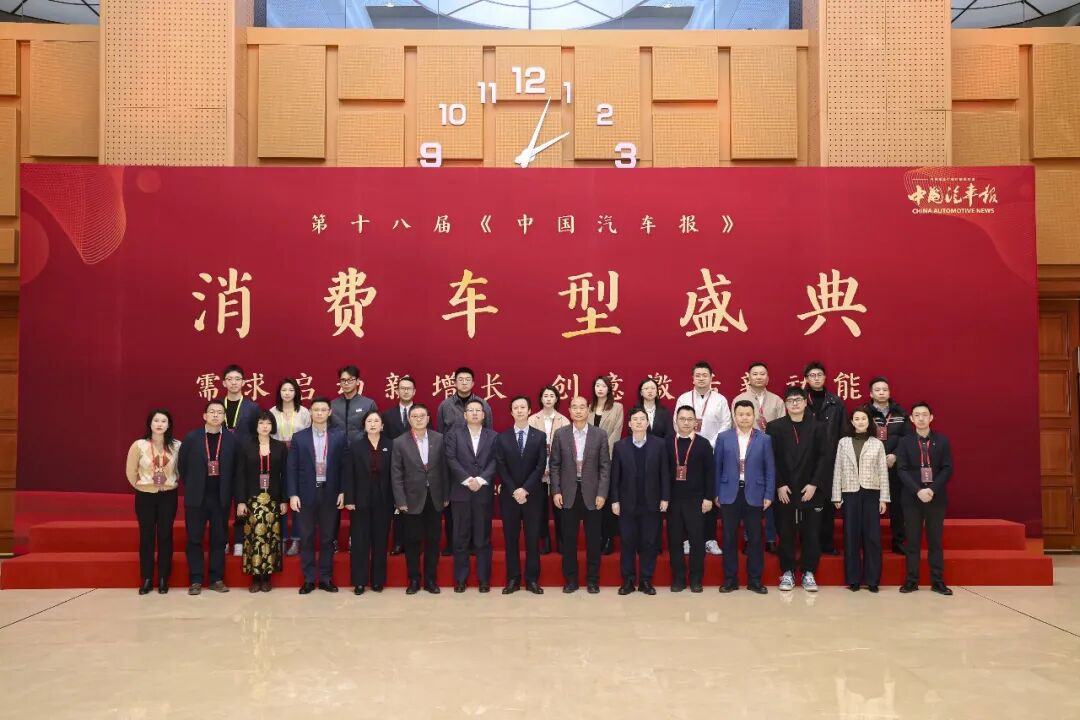
Group 1 - The core theme of the 18th Consumer Vehicle Ceremony is to stimulate new growth through demand and activate new momentum through creativity [2][3] - The event is timely as it marks a critical year for the Chinese automotive industry to seize opportunities and face challenges, ensuring a good start for the 14th Five-Year Plan [3][6] - The automotive industry in China is transitioning from rapid growth to a focus on high-quality development, with an emphasis on innovation and collaboration across the entire industry chain [8][10] Group 2 - Predictions indicate that by 2026, sales of new energy vehicles in China will reach 20 million units, with a market penetration rate of 55% [10] - The focus of automotive policies is shifting towards high standards and consumer-driven growth, with an emphasis on product safety and market consumption [10][12] - The automotive industry is encouraged to explore new consumption scenarios, moving from vehicle ownership to service-oriented models [12] Group 3 - The automotive sector is undergoing a transformation driven by technological advancements, consumer demand for personalization, and the integration of artificial intelligence [15][19] - Companies are focusing on building comprehensive safety systems and enhancing user experience through intelligent and safe mobility solutions [19][21] - The design and innovation in the automotive industry are increasingly influenced by global perspectives, with a push for differentiation and emotional value in products [27][31] Group 4 - The global dialogue on automotive design emphasizes the importance of Chinese designers gaining recognition on the world stage, enhancing the competitiveness of Chinese automotive brands [33][37] - The long-term vision in automotive design is crucial, with a focus on creating timeless designs that resonate with market and historical significance [35][37] - The automotive industry is at a pivotal moment, with the potential for Chinese automotive design to become a global leader in innovation and cultural expression [37]
长安汽车申请换电站电池储存装置专利,有效保护电池周向
Jin Rong Jie· 2026-01-14 01:41
财经频道更多独家策划、专家专栏,免费查阅>> 国家知识产权局信息显示,重庆长安汽车股份有限公司申请一项名为"换电站电池储存装置"的专利,公 开号CN121307388A,申请日期为2025年9月。 专利摘要显示,本申请提供一种换电站电池储存装置,涉及电池储存技术领域,解决了现有技术中电池 储存装置无法同时满足便于取放电池和有效保护电池周向的问题。换电站电池储存装置包括储存组件, 储存组件包括储存盒、放置板、多个弹性件、防护板、多个滑块、第一连接杆、第二连接杆,放置板设 置于储存盒的内部,多个弹性件固定连接于放置板与储存盒之间。防护板可移动地安装于储存盒与放置 板之间。储存盒还设置有多个调节滑槽,多个滑块设置于对应的调节滑槽内。多个滑块中的每个滑块均 连接有第一连接杆和第二连接杆。第一连接杆的第一端连接于防护板,第一连接杆的第二端连接于滑 块。第二连接杆的第一端连接于放置板,第二连接杆的第二端连接于滑块。 天眼查资料显示,重庆长安汽车股份有限公司,成立于1996年,位于重庆市,是一家以从事汽车制造业 为主的企业。企业注册资本991408.606万人民币。通过天眼查大数据分析,重庆长安汽车股份有限公司 共对外投资 ...
锐财经|汽车生产,谁在领跑?
Ren Min Ri Bao Hai Wai Ban· 2026-01-14 00:26
Core Viewpoint - The automotive production landscape in China is evolving, with significant growth in various cities, particularly in electric vehicles, driven by technological innovation and supportive policies [1][2][9]. Group 1: Automotive Production Statistics - In the first 11 months of 2025, Chongqing produced nearly 2.5 million vehicles, marking a 12.1% year-on-year increase [3]. - Beijing and Shanghai both surpassed 1 million vehicles, with Beijing producing 1.335 million vehicles (up 27.6%) and Shanghai producing 1.601 million vehicles, including 1.042 million electric vehicles [3]. - Other cities like Zhengzhou, Qingdao, and Changsha are approaching the 1 million vehicle mark, with Zhengzhou's production reaching 956,300 vehicles (up 16.52%) [3]. Group 2: Electric Vehicle Production - Hefei led the nation in electric vehicle production with 1.246 million units in the first 11 months of 2025, benefiting from a strategic industrial layout [4]. - Major brands such as Jianghuai, NIO, and BYD have established production bases in Hefei, contributing to its strong growth in the electric vehicle sector [4]. Group 3: Industry Support and Innovation - The automotive industry in cities like Liuzhou and Qingdao is supported by a complete industrial chain, with Liuzhou being home to five major vehicle manufacturers [5]. - Innovations in autonomous driving and vehicle networking are being spearheaded in Chongqing, with the first L3 autonomous driving license plate expected by the end of 2025 [5][6]. Group 4: Policy Support - Since the 14th Five-Year Plan, Chongqing has aimed to become a hub for smart connected electric vehicles, while Anhui supports Hefei in becoming a globally influential electric vehicle city [6]. Group 5: Changes in Production Ranking - The ranking of cities by automotive production has shifted due to changes in statistical methods, with production now counted based on the manufacturing location rather than the corporate headquarters [8]. - In 2024, Hefei's production reached 1.9109 million vehicles, surpassing cities like Shanghai and Changchun, while Shenzhen's electric vehicle production reached 2.9353 million units [8]. Group 6: Industry Outlook - The Chinese automotive industry is entering a new phase of high-quality development, supported by a penetration rate of over 50% for electric passenger vehicles and advancements in autonomous driving technology [9].
国企改革成绩单发布
Di Yi Cai Jing Zi Xun· 2026-01-13 15:21
Core Insights - The three-year action plan for deepening state-owned enterprise (SOE) reform has largely been completed, with significant achievements in structural layout, technological innovation, corporate governance, and regulatory mechanisms [2][3] - The State-owned Assets Supervision and Administration Commission (SASAC) emphasizes that while the action plan has concluded, the reform process must continue to deepen and consolidate its results [2] Group 1: Achievements in Reform - SOEs have undergone fundamental changes through multiple rounds of reform, contributing significantly to economic and social development, although challenges remain in original innovation capabilities and safety support in key areas [3] - Central enterprises have established 97 original technology sources and 23 innovation consortia, promoting collaborative research and development [3] - Central enterprises have opened 134 pilot verification platforms and created over 800 application scenarios across 16 key industries [3] Group 2: Strategic Developments - In the strategic emerging industries, central enterprises achieved revenues exceeding 11 trillion yuan from January to November 2025, with significant investments in biopharmaceuticals and low-altitude economy sectors [4][5] - The SASAC is promoting the restructuring and professional integration of SOEs to enhance efficiency and focus on key sectors [5] Group 3: Future Reform Directions - The "14th Five-Year Plan" and subsequent actions have shifted SOE reform from institutional construction to efficiency enhancement, laying a foundation for deeper changes in the "15th Five-Year Plan" [7] - The SASAC plans to further improve the modern enterprise system with a focus on enhancing core functions and competitiveness of SOEs [7][8] - The restructuring of major state-owned enterprises, such as the merger between Sinopec and China Aviation Oil, is seen as a significant step towards optimizing layout and responding to international competition [8][9]


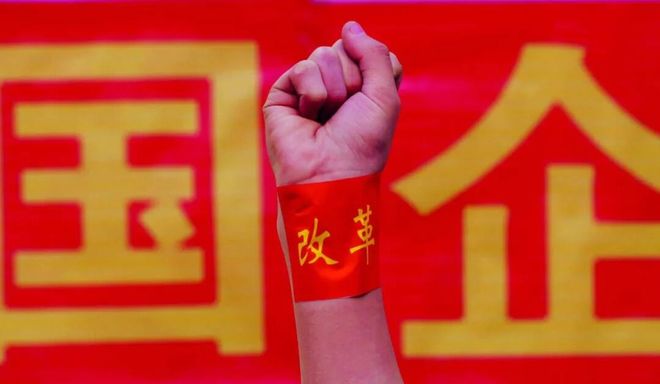
国企改革成绩单发布
第一财经· 2026-01-13 15:18
Core Viewpoint - The article discusses the significant progress made in the reform of state-owned enterprises (SOEs) in China, highlighting achievements in structural layout, technological innovation, corporate governance, and regulatory mechanisms, while also acknowledging existing challenges that need to be addressed for future reforms [4][5]. Reform Achievements - The State-owned Assets Supervision and Administration Commission (SASAC) reported that the reform of SOEs has fundamentally changed their overall appearance and contributed significantly to economic and social development, although issues such as insufficient original innovation capabilities remain [4][5]. - Central enterprises have established 97 original technology sources and led the construction of 23 innovation consortia, promoting collaborative research and development [5][6]. - In the strategic emerging industries sector, central enterprises achieved over 11 trillion yuan in revenue from January to November 2025, with significant investments in biopharmaceuticals and low-altitude economy sectors [5][6]. Strategic Restructuring and Integration - The SASAC has facilitated the restructuring and integration of state-owned enterprises to enhance their core competitiveness, with notable mergers involving assets exceeding 100 billion yuan [6][11]. - New central enterprises have been established, improving resource allocation efficiency, and various regions have initiated strategic reorganizations involving 229 primary enterprises [6][11]. Future Reform Directions - The "14th Five-Year Plan" and subsequent directives emphasize the need for SOEs to strengthen their core functions and enhance competitiveness, setting a clear direction for the next five years [9][11]. - The SASAC aims to deepen reforms by focusing on problem-solving and improving the effectiveness of reforms, with an emphasis on modern corporate governance and management systems [10][11]. - The recent merger between China Petroleum and Chemical Corporation and China Aviation Oil is highlighted as a significant event in the ongoing restructuring of central enterprises, aimed at optimizing their operational focus and responding to international competition [11].