
三星

Search documents
存储芯片公司业绩亮眼,行业高景气2026年仍将持续
Xin Lang Cai Jing· 2026-01-27 22:32
Core Insights - The profitability growth of storage chip companies is driven by the development of AI and computing power industries, leading to a high prosperity period and continuous price increases [1] Industry Overview - The storage chip industry is expected to maintain high prosperity through 2026, with price increases likely to continue throughout the year [1] - The demand from AI is particularly boosting the HBM (High Bandwidth Memory) segment, which is anticipated to remain prosperous until 2028 [1] Company Actions - Major companies such as Samsung and Micron, along with A-share companies like Biwei Storage, Jiangbolong, Demingli, and Zhaoyi Innovation, are actively expanding production to seize the growth opportunities [1] - Companies like Purun Co. are accelerating acquisition efforts to strengthen their core business [1]
存储芯片公司业绩亮眼 行业高景气2026年仍将持续
Shang Hai Zheng Quan Bao· 2026-01-27 22:31
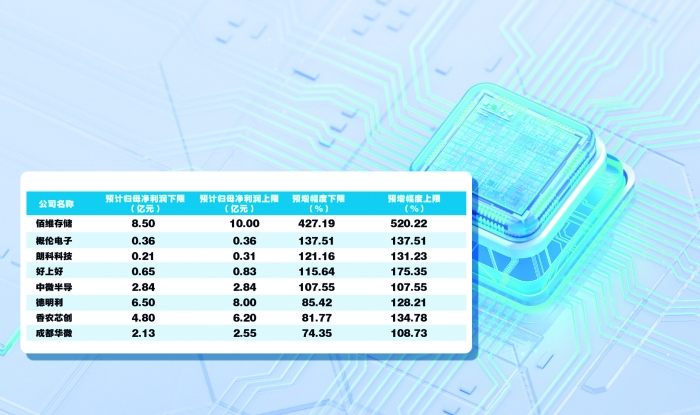
Core Viewpoint - The profitability growth of storage chip companies is driven by the booming AI and computing industries, leading to a high prosperity cycle and continuous price increases in products [1] Group 1: Industry Performance - As of January 27, 2025, 34 storage concept companies in A-shares have released performance forecasts, with 19 companies achieving profitability, and 17 companies showing year-on-year profit growth, representing a 50% success rate [2] - Notably, 8 companies have projected profit growth exceeding 100%, with Baiwei Storage leading the growth [2] - Baiwei Storage expects revenue of 10 billion to 12 billion yuan, a year-on-year increase of 49.36% to 79.23%, and net profit of 850 million to 1 billion yuan, a year-on-year increase of 427.19% to 520.22% [2] Group 2: Price Increases - The primary reason for the high growth in the storage chip industry is the entry into a high prosperity cycle and product price increases [4] - Baiwei Storage indicated that from Q2 2025, as storage prices stabilize and rise, the company's sales revenue and gross margin will gradually improve [4] - The global storage industry began to rebound from Q2 2025, with major manufacturers like SanDisk initiating price increases, followed by others like Samsung and Micron [4] Group 3: Future Trends - The core factors behind the current price increases in storage chips are the explosive demand from AI and supply contractions, leading to structural supply-demand mismatches [5] - Industry experts predict that the core cycle of rising storage prices will last until the end of 2026, with high prosperity expected to continue at least until 2027 [5] Group 4: Expansion Strategies - Companies are actively expanding production to seize opportunities during the high prosperity cycle [6] - International manufacturers are focusing on expanding HBM and high-end NAND production capacities, with plans to gradually release these capacities from 2026 to 2028 [6] - Domestic manufacturers like Yangtze Memory and Changxin Technology are also accelerating their production expansion and technological upgrades [6] Group 5: Specific Company Actions - De Ming Li plans to raise no more than 3.2 billion yuan for SSD and DRAM expansion projects and to support its smart storage management and R&D headquarters [7] - Pu Ran Co. is enhancing its core competitiveness in the storage chip field through the acquisition of Noah Chang Tian, which allows it to take over SK Hynix's 2D NAND-related business [7]


产品涨价驱动 存储芯片公司业绩亮眼 行业高景气2026年仍将持续 全球厂商扩产忙
Shang Hai Zheng Quan Bao· 2026-01-27 18:38
Core Insights - The storage chip industry is experiencing significant profitability growth driven by the demand from AI and computing sectors, leading to a high prosperity cycle and continuous product price increases [1] - The high prosperity in the storage chip industry is expected to persist into 2026, with price increases anticipated throughout the year, particularly in the HBM segment, which may remain robust until 2028 [1] Group 1: Company Performance - As of January 27, 2025, 34 storage concept companies in the A-share market have released performance forecasts, with 19 companies reporting profitability, and 17 companies showing year-on-year profit growth, indicating a 50% success rate [2] - Among these, Bawei Storage is leading with an expected revenue of 10 billion to 12 billion yuan, representing a year-on-year growth of 49.36% to 79.23%, and a projected net profit of 850 million to 1 billion yuan, reflecting a staggering growth of 427.19% to 520.22% [2] - Leading companies like Demingli and Zhaoyi Innovation are also reporting strong performance, with Demingli forecasting revenues of 10.3 billion to 11.3 billion yuan, a year-on-year increase of 115.82% to 136.77%, and net profits of 650 million to 800 million yuan, up by 85.42% to 128.21% [2] Group 2: Industry Trends - The primary driver of the high growth in the storage chip industry is the entry into a high prosperity cycle and product price increases, with companies like Bawei Storage and Demingli reporting improvements in sales revenue and gross margins due to stabilizing storage prices [4] - The global storage industry began to rebound from the second quarter of 2025, with major manufacturers like SanDisk initiating price increases, followed by others such as Samsung and Micron [4] - The current price increase cycle is attributed to a structural supply-demand mismatch caused by an explosion in AI demand and supply constraints, with expectations that the price increase cycle will last until the end of 2026 and high prosperity until at least 2027 [5] Group 3: Expansion Strategies - In response to the ongoing high prosperity and rising product prices, storage companies are announcing expansion plans to capitalize on the industry cycle [6] - International manufacturers are focusing on expanding HBM and high-end NAND production capacities, with companies like Kioxia planning to double its NAND capacity over the next five years to meet growing AI data center demands [6] - Domestic companies such as Yangtze Memory Technologies and Changxin Memory Technologies are also ramping up production, with Bawei Storage and Demingli pursuing capital increases for expansion projects [7]
产品涨价驱动 存储芯片公司业绩亮眼 行业高景气2026年仍将持续,全球厂商扩产忙
Shang Hai Zheng Quan Bao· 2026-01-27 18:36
Core Viewpoint - The storage chip industry is experiencing significant growth driven by AI demand and rising product prices, leading to a high profitability forecast for various companies in the sector [1][5][6]. Group 1: Company Performance Forecasts - Baiwei Storage expects a net profit of 8.5 billion to 10 billion, representing a growth of 427.19% to 520.22% [1][3]. - Demingli anticipates a net profit of 6.5 billion to 8 billion, with a growth rate of 85.42% to 128.21% [3][4]. - 34 storage concept companies have released 2025 performance forecasts, with 19 companies showing profit growth, indicating a 50% success rate [3]. Group 2: Industry Trends and Drivers - The storage chip industry is projected to maintain high profitability through 2026, particularly in the HBM segment, driven by AI demand [2][6]. - The price increase in storage products is attributed to a high demand from AI applications and a supply contraction, leading to a structural supply-demand mismatch [6][7]. - Major companies like Samsung and Micron are expanding production capacities to meet the growing demand, with specific plans to increase DRAM and NAND production [7][8]. Group 3: Expansion and Investment Strategies - Domestic companies such as Changjiang Storage and Changxin Technology are ramping up capital expenditures and production capacity to capitalize on the industry's growth [2][7]. - Baiwei Storage and Demingli are actively pursuing expansion through fundraising and mergers to enhance their core competencies in the storage chip market [8].

混合键合设备:AI算力时代的芯片互连革命与BESI的领航之路
材料汇· 2026-01-27 15:17
Core Viewpoint - Advanced packaging is emerging as a new engine for computing power in the "post-Moore's Law" era, addressing the limitations of traditional chip performance improvements through innovative bonding technologies [4][5]. Group 1: Hybrid Bonding Overview - Hybrid bonding is an advanced packaging technology that combines dielectric bonding and metal interconnects, allowing for high-density, high-performance 3D integration [8][19]. - The development of hybrid bonding has evolved through various stages, from wire bonding to flip chip, and now to hybrid bonding, which enables ultra-fine pitch stacking and packaging [10][11]. - Hybrid bonding can be categorized into wafer-to-wafer (W2W) and chip-to-wafer (C2W) processes, with C2W offering higher flexibility and lower defect rates for smaller chips [14][16]. Group 2: Advantages and Challenges of Hybrid Bonding - The technology allows for extreme interconnect density and performance breakthroughs, achieving interconnect pitches below 1 μm, significantly enhancing data transfer bandwidth [23]. - Hybrid bonding is compatible with existing wafer-level manufacturing processes and can be integrated with TSV and micro-bump technologies, providing cost optimization potential [24]. - Challenges include yield issues, surface smoothness requirements, cleanliness standards, and complex testing processes that need to be addressed for successful mass production [26]. Group 3: Market Demand and Future Prospects - Major HBM manufacturers, including Samsung, Micron, and SK Hynix, have committed to adopting hybrid bonding technology for HBM5, which aims to meet the extreme demands of AI and high-performance computing [28]. - TSMC's SolC technology, which utilizes hybrid bonding, is expected to double its production by 2026, highlighting the growing adoption of this technology [29][30]. - The global market for hybrid bonding equipment is projected to exceed $600 million by 2030, with significant growth anticipated in the Asia-Pacific region [37]. Group 4: Competitive Landscape - The hybrid bonding equipment market is dominated by international players such as BESI, EV Group, and SUSS MicroTec, with BESI holding a market share of 67% in 2023 [44]. - The competitive landscape is evolving, with Chinese companies like Piotech entering the market, indicating advancements in domestic semiconductor equipment capabilities [42].


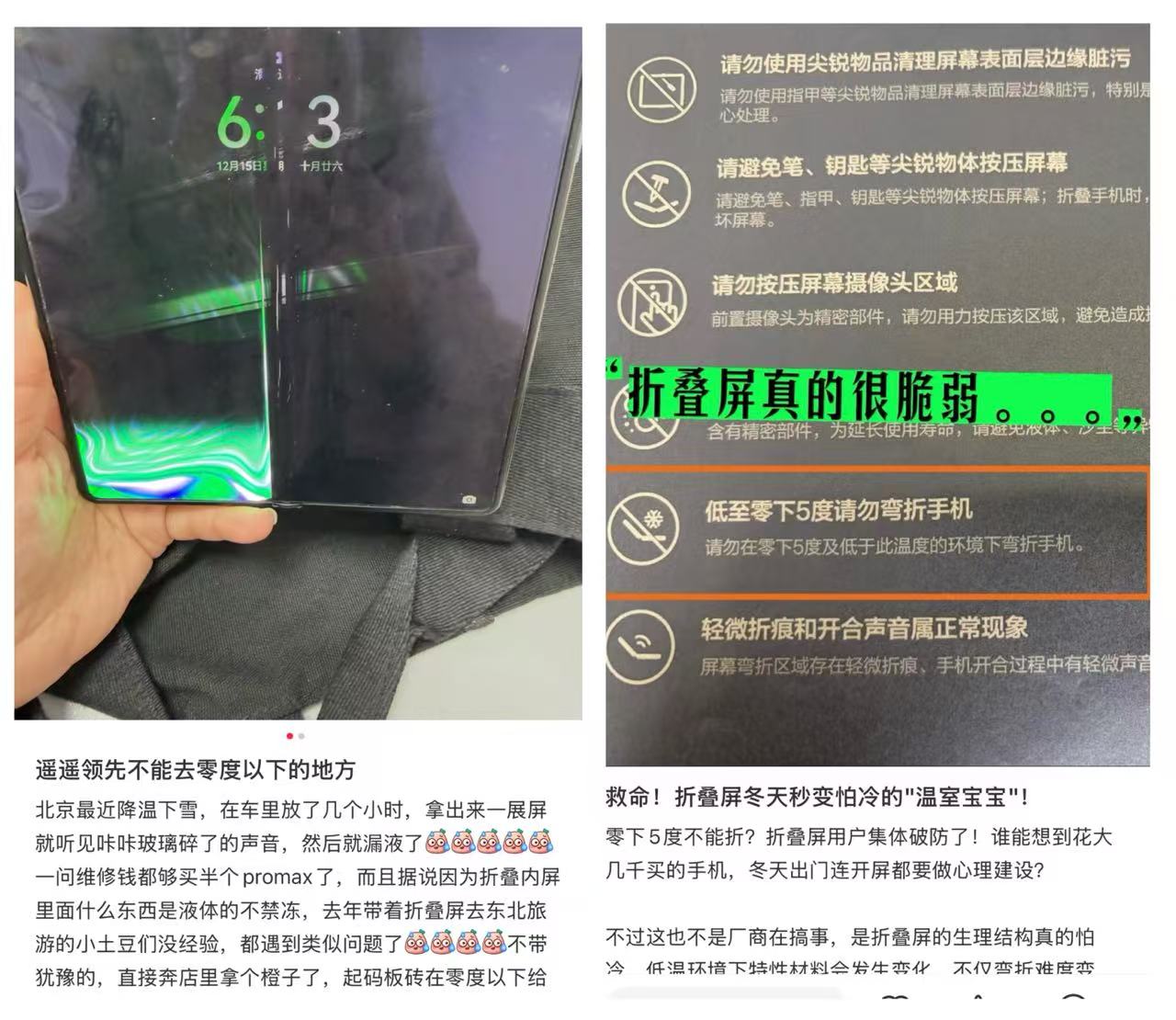
折叠屏手机到了东北变“碎碎冰”?专家建议保温是第一要务
Xin Lang Cai Jing· 2026-01-27 13:42
Group 1 - The core issue highlighted is the vulnerability of foldable screens to low temperatures, leading to complaints from users about screen damage in cold weather [1][4] - Users are advised to avoid using foldable screens in temperatures below zero degrees Celsius, as the materials can become brittle and lead to physical damage [4][5] - The foldable screen market in China is experiencing growth, with a year-on-year increase of 9.2%, reaching approximately 10.01 million units shipped in 2025 [6] Group 2 - Huawei leads the foldable screen market with a 71.8% market share, translating to about 7.18 million units shipped [6] - Honor ranks second in the foldable screen market with a 9.1% market share, attributed to the success of its Magic V5 model [6] - Vivo holds a 4.9% market share, while OPPO and Samsung are tied for fourth place with a 4.3% market share each [6]
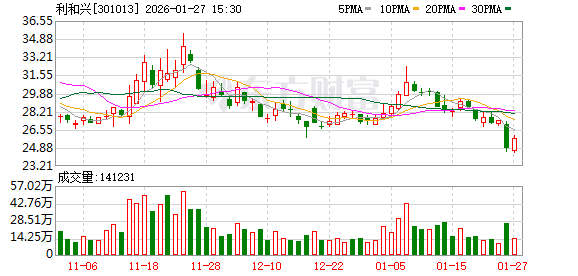
利和兴:投资的赛伯宸半导体公司有涉及DRAM相关的测试业务和技术储备
Zheng Quan Ri Bao· 2026-01-27 11:16
Group 1 - The core viewpoint of the article highlights that Lihexing has investments in Cybertron Semiconductor, which is involved in DRAM-related testing services and technology reserves [2] - Cybertron Semiconductor is actively pursuing business collaborations with leading DRAM companies such as Samsung and SK Hynix [2]
AI军备竞赛下的“隐形赢家”:阿斯麦
Hua Er Jie Jian Wen· 2026-01-27 11:05
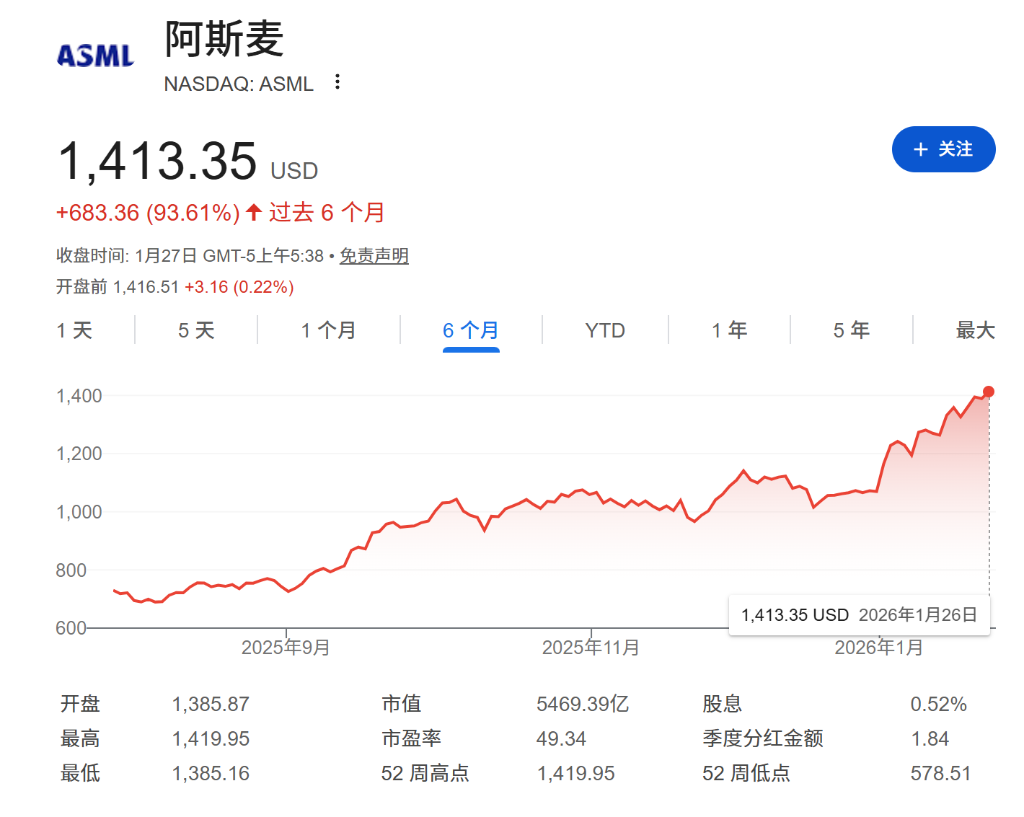
在全球人工智能热潮席卷之际,当市场目光聚焦于芯片巨头英伟达时,处于供应链上游的阿斯麦(ASML)正凭借其在光刻机领域的绝对垄断地 位,成为这场万亿美元级别军备竞赛中不可或缺的隐形赢家。这家荷兰科技巨头不仅掌控着制造高端AI芯片的关键"印钞机",更将随着芯片制造 商资本支出的激增迎来业绩爆发。 下游巨头掀起资本支出狂潮 为了应对AI芯片需求的爆发,全球主要芯片制造商正在大幅提升资本支出,这直接利好阿斯麦。分析师估计,芯片制造商约四分之一的资本支出 用于光刻设备,而这一比例在AI芯片领域可能更高。 阿斯麦将于本周三(1月28日)公布财报,投资者正密切关注其销售预测。受芯片供应紧张及客户扩大投资迹象的推动,阿斯麦股价自去年4月以 来已翻倍,本月涨幅达25%,市值突破5000亿美元,稳居欧洲最有价值科技公司之列。据相关媒体报道,摩根士丹利已维持其"增持"评级,并将 目标价定为1400欧元,预计即将公布的第四季度订单数据将大幅超出市场预期。 市场焦点正从单纯关注当期业绩转向更长期的增长潜力。摩根士丹利分析师团队预测,阿斯麦第四季度订单额可能高达72.7亿欧元,显著高于此 前市场预期的50亿欧元水平。分析师指出,市场已基 ...

珠海冠宇(688772):钢壳电池渗透率提升 低压电池加速导入
Xin Lang Cai Jing· 2026-01-27 10:31
Group 1 - The core viewpoint of the articles highlights the significant growth in the company's 3C battery business, driven by government subsidy policies and strong partnerships with leading smartphone manufacturers like Apple, Xiaomi, and Huawei [1] - The company has successfully implemented a Cell+Pack (A+A) supply model for high-end smartwatch batteries for Samsung and has begun mass production of earphone batteries for Samsung [1] - The company has announced a 2 billion investment to expand its steel shell battery production line, expected to be completed by Q3 2026, which is anticipated to increase the shipment volume of steel shell batteries significantly by 2026 [1] Group 2 - The company has positioned its low-voltage lithium battery as a core business for differentiation and has started bulk supply to major domestic and international electric vehicle manufacturers, with expected shipments exceeding 700,000 units in H1 2025 [2] - The company has developed the first generation of sodium-ion start-stop battery products, providing stable and efficient power supply for vehicles in low-temperature scenarios [2] - The drone and electric motorcycle businesses are also experiencing growth, contributing to overall performance alongside collaborations with leading downstream companies [2] Group 3 - The company's Q3 2025 performance was strong, achieving revenue of 4.22 billion yuan, a year-on-year increase of 33.2%, and a net profit of 270 million yuan, up 62.5% year-on-year and 92.2% quarter-on-quarter [3] - For the first three quarters of 2025, the company reported revenue of 10.321 billion yuan, a 21.2% increase year-on-year, and a net profit of 387 million yuan, a 44.4% increase year-on-year [3] - The strong performance in Q3 was attributed to the peak season for 3C consumption and the successful shipment of steel shell batteries, with expectations for further profit growth as steel shell battery production increases [3] Group 4 - Revenue forecasts for the company are projected at 14.37 billion, 18.37 billion, and 22.73 billion yuan for 2025-2027, with EPS estimates of 0.55, 1.31, and 1.76 yuan respectively [4] - The current stock price corresponds to PE ratios of 37, 16, and 12 times for the respective years, with a "buy" investment rating recommended [4]

1.27犀牛财经晚报:存储短缺或至少持续两到三年
Xi Niu Cai Jing· 2026-01-27 10:25
Group 1: Investment Trends in Precious Metals - Investment silver bars have gained popularity in Shenzhen's Shui Bei market, with a 1000g silver bar priced at 30,860 yuan, indicating a rising interest in silver as an investment and jewelry-making option [1] - Several gold jewelry brands have raised their prices, with Shusheng's gold jewelry priced at 1,577 yuan per gram, reflecting a historical high in gold prices [1] Group 2: Automotive Industry Insights - The automotive industry's sales profit margin has dropped to a historical low of 4.1% for the year 2025, with December's margin at 1.8%, marking a significant decline [2] - TrendForce predicts that global sales of range-extended electric vehicles (REEV) will reach 3 million units by 2030, doubling from 2025, supported by regulatory flexibility and market acceptance [2] Group 3: Semiconductor and Memory Market Developments - Yole's report indicates a 23% growth in global DRAM memory demand by capacity in 2026, with data centers contributing over half of this increase [3] - Synopsys' CEO forecasts that the chip shortage will persist through 2026 and 2027, primarily due to high demand from AI infrastructure and limited production capacity from major memory manufacturers [2][3] Group 4: Corporate Announcements and Financial Projections - Companies like Bohui Innovation and Antu Bio have developed Nipah virus testing kits but have not yet generated significant revenue from them [5] - SK Hynix will exclusively supply HBM3E chips to Microsoft's Maia 200, which will feature a total memory capacity of 216GB [5] - Norde's subsidiary plans to invest 168 million yuan in upgrading a production line to meet high-end copper foil demand [10] - Aisen plans to invest 2 billion yuan in a semiconductor materials manufacturing base in East China, with production expected to start in phases from 2028 to 2035 [11] - Jinma Amusement anticipates a net profit increase of 811.17% to 1069.56% for 2025, projecting earnings between 67 million to 86 million yuan [12] - Red Tower Securities expects a 59.05% increase in net profit for 2025, amounting to 1.215 billion yuan [13] Group 5: Market Performance and Trends - The market saw a rebound with the ChiNext index rising by 0.71%, driven by strong performance in the semiconductor sector and precious metals [22]