
宝钢股份

Search documents
马斯克说对了!继芯片后又一东西在中国全球疯抢,美国反被卡脖子
Sou Hu Cai Jing· 2025-11-07 04:16
Core Viewpoint - The article discusses the ongoing global shortage of transformers, driven by increasing demand from artificial intelligence, electric vehicles, and renewable energy sources, with China positioned as a major beneficiary of this crisis [4][9][39]. Group 1: Transformer Shortage - A global "transformer shortage" is emerging, with long wait times for orders, often extending to three to four years for large transformers and two and a half years for smaller ones [6][9]. - Transformer prices have surged by 60% since 2020, with China's transformer exports nearing 30 billion RMB in the first eight months of the year, reflecting a year-on-year increase of over 50% [9][30]. - The demand for transformers is being driven by the rapid growth of AI and electric vehicles, with over 17 million new electric vehicles expected to be on the road in 2024 alone [11][13][16]. Group 2: Supply Chain Dynamics - The aging electrical grid in the U.S. exacerbates the shortage, with 70% of transformers in service beyond their 25-year lifespan, necessitating the replacement of approximately 500,000 transformers in the next five years [18][30]. - Manufacturers are hesitant to expand production capacity due to fears of a potential market downturn, leading to long order queues and limited domestic production capabilities in the U.S. and Europe [20][21]. - In contrast, China's manufacturing ecosystem is robust, controlling 60% of global transformer production and having developed a complete supply chain from raw materials to end products [22][39]. Group 3: Technological Advancements - China has made significant advancements in producing core materials for transformers, such as oriented silicon steel sheets, reducing reliance on imports and enhancing production efficiency [24][28]. - The introduction of innovative products, like the world's first 500 kV plant oil transformer, demonstrates China's leadership in technology and sustainability [28][39]. - The flexibility of Chinese manufacturers allows for rapid design adjustments to meet diverse customer needs, contrasting with the slower response times of Western firms [32][39]. Group 4: Market Reactions - Despite high tariffs on Chinese transformers, U.S. allies are increasingly turning to China for supplies, highlighting the urgent need for transformers in projects like renewable energy grids [30][35]. - The U.S. government has begun to grant tariff exemptions, indicating a shift in strategy as the demand for transformers continues to rise [37][39]. - The article concludes that China's ability to provide stable, efficient, and innovative solutions positions it favorably in the global market, especially during this supply chain crisis [39].

小鹏AI日后,美银上调其目标价:看好“物理AI”战略和技术变现的能力
Hua Er Jie Jian Wen· 2025-11-07 02:56
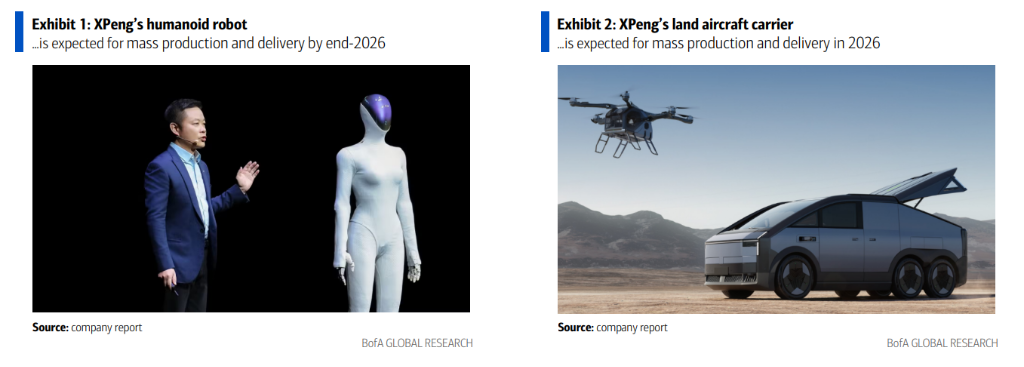
Core Viewpoint - XPeng Motors has gained further recognition from Wall Street following its AI Day, where it outlined its "Physical AI" vision and advancements in artificial intelligence, including the VLA 2.0 model and various innovative products [1][4]. Financial Outlook - Bank of America reiterated a "Buy" rating for XPeng Motors, raising the target price for its American Depositary Shares (ADS) from $26 to $27 and the Hong Kong stock target price from HKD 101 to HKD 105 [1]. - The report indicates a cautious adjustment to XPeng's short-term financial outlook, increasing the non-GAAP net loss forecast for 2025 by 36.7% and lowering profit expectations for 2026 and 2027 by 4.5% and 5.5%, respectively [4][7]. Product and Technology Developments - The highlight of the AI Day was the announcement that Volkswagen has become the first external customer for XPeng's VLA 2.0 model and has ordered its self-developed Turing AI chip, marking a significant step in the commercialization of XPeng's AI technology [4][5]. - XPeng's VLA 2.0 model is described as the operating system for controlling the "Physical AI" world, with applications across various products including Robotaxis, humanoid robots, and flying cars [5][8]. - The company plans to launch three Robotaxi models in 2026, powered by four Turing chips, and anticipates mass production of its humanoid robot by the end of 2026 [8]. Sales and Profit Projections - The report provides updated sales and profit forecasts for XPeng, with slight increases in unit volume and consolidated sales for 2025, 2026, and 2027, while gross profit expectations have been slightly reduced [9]. - The adjusted profit (loss) from operations for 2025 is expected to worsen, with a projected net loss of RMB 1.667 billion, reflecting a 21.4% increase from previous estimates [9].

小鹏机器人,什么档次?对比全球机器人后,我们得出答案
3 6 Ke· 2025-11-07 02:14
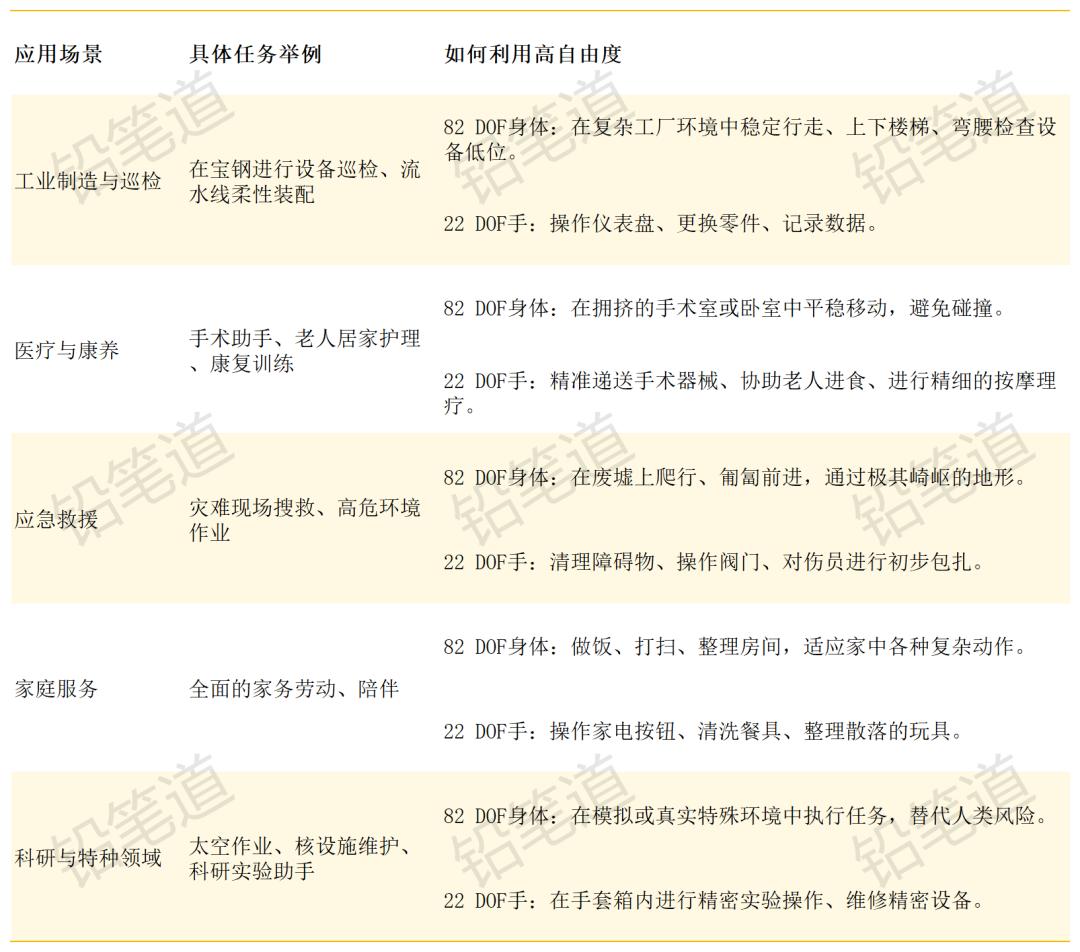
Core Insights - Xiaopeng Motors has launched its new generation robot, IRON, which has garnered significant attention for its human-like appearance and capabilities [1] - The robot features advanced hardware with 82 degrees of freedom (DOF) in its body and 22 DOF in its hands, surpassing many existing robots in the market [2][3] - The robot's flexibility and precision allow it to perform complex tasks across various industries, although its intelligence level remains a critical factor for practical applications [4][6] Group 1: Flexibility and Precision - The IRON robot's body has 82 DOF, enabling it to navigate complex environments and perform tasks that require human-like dexterity [2][4] - Compared to Tesla's Optimus, which has around 40 DOF, Xiaopeng's robot demonstrates superior flexibility [2] - The high degree of freedom in its hands allows for intricate operations such as grasping, writing, and assembly tasks [4] Group 2: Commercialization Progress - IRON has already been integrated into Xiaopeng's production line, where it can install 500 screws daily, saving over 300,000 yuan in labor costs annually [6][10] - The robot's application extends beyond screw installation to industrial inspections, indicating a leading position in commercialization compared to global counterparts [10] Group 3: Mass Production Plans - Xiaopeng aims to achieve mass production of the IRON robot by the end of 2026, with hundreds already deployed in its production line [11][16] - The company is positioned to enter the global first tier of humanoid robots if it successfully meets its production timeline [16] Group 4: Chip Development - The IRON robot is equipped with a self-developed Turing AI chip, boasting a computing power of 2250 TOPS, which is three times that of mainstream chips [17][18] - The self-reliance in chip development allows for greater flexibility in algorithm adaptation and reduces dependency on external suppliers [18]

需要撕衣验证?全网都吵疯了!小鹏的人形机器人,是不是真人
自动驾驶之心· 2025-11-07 00:05
Core Viewpoint - Xpeng Motors has transitioned from being solely an automotive company to an AI company, showcasing its humanoid robot IRON at AI Day 2025, which has sparked widespread discussion and interest in the robotics field [10]. Group 1: Robot Development and Features - Xpeng has been developing humanoid robots for 7 years, evolving from quadrupedal forms to a fully humanoid design with a new skeletal structure and bionic muscle system, significantly reducing mechanical appearance [11]. - The IRON robot stands approximately 1.78 meters tall and weighs 70 kg, making it taller than competitors like NEO [12]. - Equipped with 22 degrees of freedom in its hands and a total of 65 degrees of freedom, IRON can perform complex daily tasks such as folding clothes and cleaning surfaces [14][15]. - The robot's movement capabilities are enhanced by a sophisticated control system, although specific details about its operation remain undisclosed [17][18]. Group 2: AI and Interaction - The core of IRON is powered by Xpeng's self-developed AI brain, utilizing three Turing AI chips with a total computing power of 2,250 TOPS, integrating various cognitive models for perception, language understanding, and action decision-making [24]. - The head features a 3D curved display that serves as both a face and an interactive interface, facilitating more natural human-robot communication [25]. Group 3: Market Strategy and Future Plans - Xpeng plans to mass-produce IRON by 2026, but it will initially be used in specific commercial scenarios such as showroom guides and sales assistants, rather than for large-scale manufacturing [31]. - The company acknowledges the current limitations of robots in industrial applications, estimating a timeline of 3-5 years for industrial use and 5-10 years for household integration [32]. - Xpeng will also launch the IRON SDK to invite third-party developers to create additional applications, with initial partnerships including major companies like Baosteel [33].

科股早知道:AI浪潮推动全球数据中心电力需求激增,SOFC具有广阔空间
Tai Mei Ti A P P· 2025-11-07 00:03
Group 1 - XPeng aims to achieve mass production of advanced humanoid robots by the end of 2026, with a supply chain preparation timeline set for April 2026 [2] - XPeng will open the SDK of its robot IRON to global developers to build an application ecosystem for humanoid robots, with Baosteel as a partner exploring industrial applications [2] - The fifth-generation humanoid robot from XPeng shares high technical similarities with XPeng's automotive technology, including EEA architecture, three-electric system, and 720° eagle-eye system, indicating strong advantages in hardware, models, and supply chain [2] Group 2 - The AI wave is expected to significantly increase global data center electricity demand, potentially doubling to approximately 945 TWh by 2030, surpassing Japan's current total electricity consumption [3] - SOFC (Solid Oxide Fuel Cell) technology is projected to have vast potential due to its higher energy conversion efficiency compared to gas turbines and existing steam turbines, leading to a significant decrease in electricity costs as capacity is released [3] - BloomEnergy predicts that within the next five years, 35 GW of data center capacity will be announced, which is more than six times the average energy capacity of New York City [3]
虹桥论坛:以开放合作构筑全球产业链供应链韧性
Guo Ji Jin Rong Bao· 2025-11-06 13:44
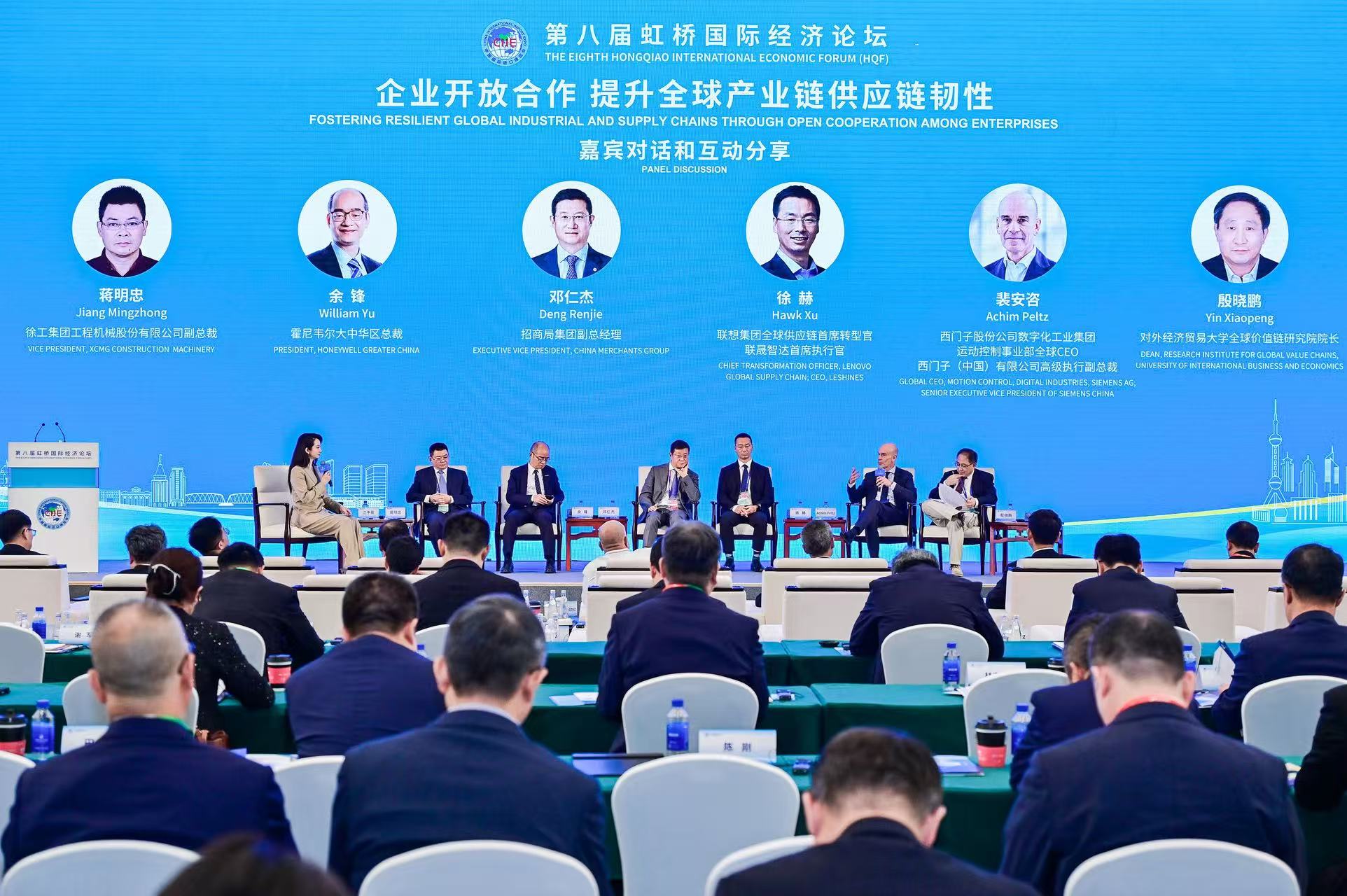
在全球经济复苏艰难、产业链供应链面临重构的背景下,第八届中国国际进口博览会期间举行的虹桥国际经济论坛分论坛"企业开放合作 提升全球产业 链供应链韧性"备受关注。来自国务院国资委、商务部、国际组织及中外大型企业的嘉宾围绕全球产业链的重塑与企业开放合作的实践展开深入探讨。 高水平开放为稳链保供夯实基础 国务院国资委副主任李镇在致辞中表示,中国将坚定不移推动更高水平的对外开放,持续引导中央企业深度融入全球产业链供应链体系。他指出,面对 复杂多变的国际环境,开放合作是增强产业链韧性的重要路径,"相通则共进,相闭则各退"。李镇透露,目前中央企业的海外业务网络已覆盖全球重要经济 体,国资委将继续支持企业在全球范围内拓展合作与投资,并以科技创新带动产业链创新,推动形成更加稳健、安全、高效的供应体系。 商务部副部长盛秋平通过视频致辞指出,尽管全球贸易保护主义抬头、地缘政治风险加剧,但数字化、智能化和绿色化的浪潮也为产业链升级带来了新 机遇。商务部将着力打造"更具韧性、更具活力、更智能化"的全球产业链供应链,持续推进"投资中国"品牌建设,促进货物贸易与生产性服务业创新,支持 官方供图 招商局集团副总经理邓仁杰则表示,招商局正聚 ...
国运来了挡不住!30亿吨铁矿重见天日,美媒:中国将改写全球格局
Sou Hu Cai Jing· 2025-11-06 12:24
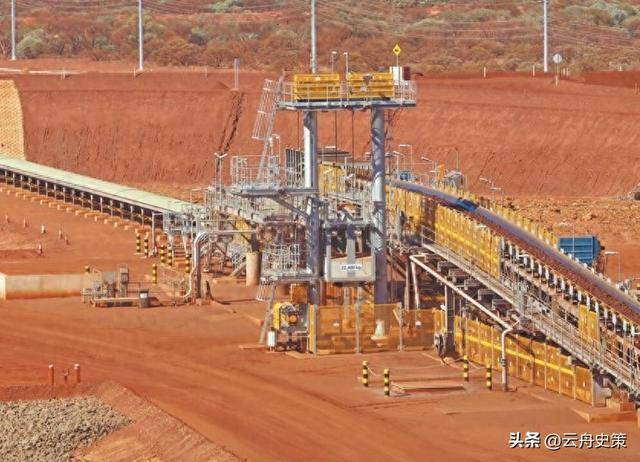
Core Insights - The West African Simandou iron ore project, long dormant for nearly 30 years, is now being revitalized by Chinese companies, marking a significant shift in its development approach [1][3][5] Group 1: Project Development - The Simandou iron ore, known for its high quality with grades exceeding 66%, has faced challenges in development due to unsuitable management practices by Western mining giants [5][7] - Chinese companies, including Chalco and Baowu Steel, have taken over the project, implementing effective management and operational strategies that have accelerated progress [7][9] - By June 2023, the project had recovered delays and achieved over 60% progress in development, showcasing the efficiency of Chinese teams compared to previous efforts [9][15] Group 2: Infrastructure and Logistics - A critical component of the project is the construction of a 600-kilometer railway, including the challenging 12-kilometer Kindiya tunnel, which has been a major obstacle for Western companies [13][15] - Chinese engineers have successfully addressed technical challenges and improved logistics, ensuring continuous construction and timely completion of the railway [15][19] - The railway will connect the Simandou mine to Atlantic ports, significantly enhancing Guinea's GDP by over 25% and facilitating the export of iron ore [17][19] Group 3: Economic and Strategic Implications - The high-grade iron ore from Simandou is crucial for China's steel industry, contributing to a greener transition by reducing energy consumption and carbon emissions [23][25] - The project is expected to provide a stable supply of approximately 120 million tons of iron ore annually, giving China leverage in global iron ore pricing negotiations [27][29] - China's involvement in the Simandou project represents a strategic shift in resource control, allowing for a more assertive role in the global iron ore market and reducing dependency on foreign suppliers [31][33]


全网都吵疯了!小鹏的人形机器人,是不是真人
创业邦· 2025-11-06 10:13
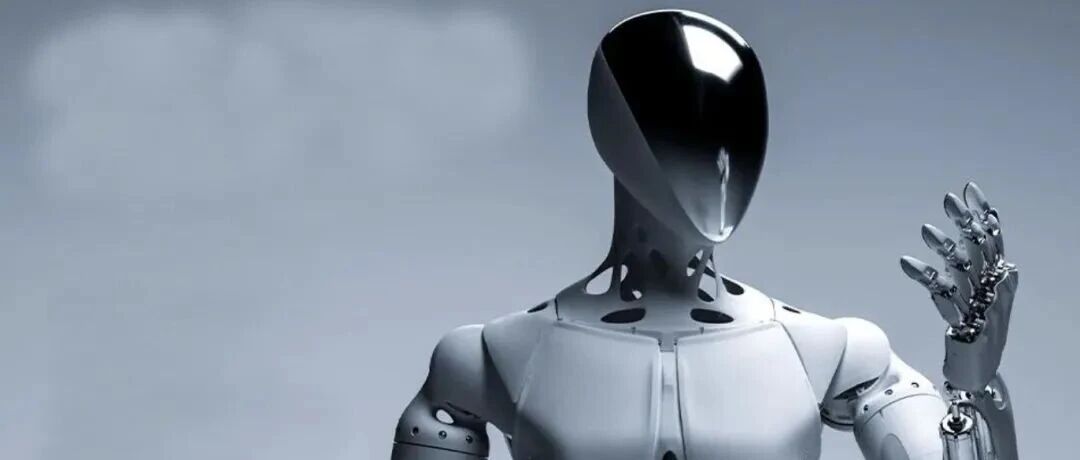
Core Viewpoint - Xpeng Motors has officially transitioned from an automotive company to an AI company, showcasing its humanoid robot IRON at the AI Day 2025 event, which has sparked significant discussion globally [4][7]. Group 1: Robot Development - Xpeng has been developing humanoid robots for seven years, evolving from quadrupedal forms to a fully humanoid design with a new skeletal structure, bionic muscle system, and flexible skin, significantly reducing mechanical appearance [7][9]. - The new IRON stands at approximately 1.78 meters tall and weighs 70 kg, featuring 65 degrees of freedom, which allows for human-like spinal movements, surpassing competitors like NEO by 10 degrees [9][11]. Group 2: Functional Capabilities - IRON's hands utilize miniature harmonic joints with 22 degrees of freedom, enabling it to perform complex daily tasks such as folding clothes and cleaning surfaces [11][13]. - The robot's advanced movement capabilities are supported by a sophisticated control system, although specific details about its operation remain undisclosed [13][18]. Group 3: AI Integration - The core of IRON is powered by Xpeng's self-developed AI brain, driven by three Turing AI chips, achieving a total computing power of 2,250 TOPS, integrating visual perception, language understanding, and action decision-making [18][21]. - The head of IRON features a 3D curved display that serves as both a face and an interactive interface, facilitating more natural human-robot communication [18]. Group 4: Market Strategy and Future Plans - Xpeng plans to mass-produce IRON by 2026, initially deploying it in commercial settings such as showrooms and as sales assistants, rather than for large-scale manufacturing due to current inefficiencies [23]. - The company aims to open the IRON SDK for third-party developers to create additional applications, with initial partnerships including major enterprises like Baosteel [23].
钢铁反内卷:十年供给侧,行业新征程:\内卷\下的钢铁,总量与结构的失衡
Huachuang Securities· 2025-11-06 09:06
Investment Rating - The report maintains a "Recommendation" rating for the steel industry [4]. Core Viewpoints - The steel industry is currently facing an imbalance in both total supply and structural demand, leading to oversupply and price declines. The demand for construction steel has rapidly decreased since the second half of 2021, while supply has not adjusted accordingly, resulting in a negative cycle of oversupply and price drops [2][14]. - A "de-involution" in the steel industry is deemed necessary to address the structural imbalance and enhance competition. The report suggests that past supply-side reforms have positively impacted the industry, and similar measures could benefit the current situation [2][51]. Summary by Sections 1. Imbalance in Total and Structural Supply - Since the second half of 2021, the demand for construction steel has declined sharply due to negative growth in new housing starts, while supply has not decreased proportionately, leading to a clear oversupply situation [14][22]. - The structural issue arises as the demand for construction steel weakens, while the manufacturing sector shows resilience, causing a shift in supply from construction to manufacturing steel, exacerbating the competition in the manufacturing sector [2][25]. - The result has been a long-term decline in steel prices, with the CISA steel price index dropping by 47.82% from its peak in 2021 [33]. 2. Necessity of "De-involution" in the Steel Industry - The macroeconomic environment is under pressure, with the PPI in a downward trend for 36 consecutive months, leading to a significant drop in industrial profits [42][51]. - The report highlights that the previous supply-side reforms during the "13th Five-Year Plan" and "14th Five-Year Plan" brought about positive changes, suggesting that a new round of "de-involution" could similarly benefit the industry [51][52]. 3. Investment Recommendations - The report indicates that leading steel companies are likely to benefit in the long term from the "de-involution" policies, which are expected to optimize the supply structure and support advanced enterprises [8][28]. - The report recommends focusing on high-quality leading companies such as Hualing Steel, Nanjing Steel, Baosteel, Shougang, Hebei Steel, and Xinxing Ductile Iron Pipes, as they are expected to experience profit growth and improved operational conditions [8][28].
总量联合行业《“十五五”规划建议》解读:“十五五”规划引领,资本市场谱写创新升级新机遇
EBSCN· 2025-11-06 08:49
Group 1: Economic Development Goals - The "15th Five-Year Plan" emphasizes maintaining economic growth within a reasonable range, targeting a growth rate of 4.5% to 5% during this period[14] - The plan aims for a significant increase in total factor productivity, which will be a key indicator of economic efficiency and new quality productivity development[15] - The plan highlights the importance of increasing the resident consumption rate, enhancing domestic demand as a primary driver of economic growth[16] Group 2: Capital Market Opportunities - The "15th Five-Year Plan" provides a clear policy direction that is expected to reduce market uncertainties and attract long-term investments into the capital market[20] - Historical trends show that the A-share market performed well during the opening years of previous five-year plans, indicating a potential for similar performance in 2026[21] - The plan outlines three main focus areas for capital market attention: industrial structure upgrading, technological self-reliance, and boosting domestic consumption[22] Group 3: Industry Development Focus - The plan identifies key industries for development, including traditional sectors like mining and machinery, as well as emerging sectors such as new energy and artificial intelligence[18] - It emphasizes the need for a modern industrial system that strengthens the foundation of the real economy and promotes high-level technological self-reliance[19] - The plan encourages the optimization of traditional industries and the cultivation of new and future industries, aiming for a comprehensive upgrade of the industrial structure[19] Group 4: Financial Sector Initiatives - The term "finance" is mentioned 17 times in the plan, underscoring the importance of building a strong financial nation and enhancing the financial system to support high-quality development[26] - The plan calls for improvements in the monetary policy transmission mechanism, aiming to enhance the effectiveness of interest rate adjustments in influencing actual loan rates[27] - It highlights the need for a more market-oriented interest rate formation and transmission mechanism to better serve the real economy[28]