
京东

Search documents
上半年投资什么最赚钱?真相你肯定不相信
第一财经· 2025-09-02 09:46
Core Viewpoint - The most profitable investment in the first half of the year was the Russian Ruble, which appreciated by 41% against the US dollar by June 30, 2023, largely due to a high base interest rate of 20% in Russia [5][6]. Group 1: Investment Trends - The capital that left the US market primarily followed three paths: returning to its origin, filling value gaps, and flowing into speculative markets [6]. - The South Korean stock market ranked second in performance, attributed to its low average price-to-earnings ratio of around 10 times, making it an attractive investment despite political instability [7]. - The Hong Kong Hang Seng Index grew by 20% in the first half of the year, influenced by major companies like Meituan, JD.com, and Alibaba, which have significant weight in the index [8]. Group 2: Market Analysis - The Hong Kong market is seen as a better investment alternative compared to South Korea, Spain, and Germany, especially after a decline from 2020 to 2023, leading to attractive valuation levels [8]. - Some Hong Kong companies maintain high cost-performance ratios, while others, particularly the so-called "four little dragons" of consumption, have inflated valuations [9]. - The A-share market has shown signs of recovery, with the Shanghai Composite Index surpassing 3,500 points, indicating potential for a bull market [10]. Group 3: Investment Strategies - A conservative investment strategy favors low price-to-earnings ratio stocks, particularly large commercial banks, as global liquidity is expected to ease [11]. - The real estate sector remains a critical issue, with predictions that it may bottom out between 2025 and 2026 based on historical data [12]. - Gold prices increased by 26% in the first half of the year, and while there is potential for further gains, caution is advised against leveraging investments in gold due to its speculative nature [13][14].


港股收评:三大指数齐跌,半导体、基建、苹果概念跌幅明显,内银股逆势普涨
Ge Long Hui· 2025-09-02 08:29
Market Performance - The Hong Kong stock market indices collectively declined, failing to maintain the previous day's strong upward trend [1] - The Hang Seng Technology Index experienced a notable drop of 1.22%, while the Hang Seng Index and the National Enterprises Index also fell [1] Sector Performance - Major technology stocks generally declined, with Meituan and Alibaba both dropping nearly 2%, and Baidu and JD.com down by 1.5% [1] - Semiconductor and Apple-related stocks faced significant losses, with Hong Teng Precision plummeting nearly 10%, and both Qiu Tai Technology and Lens Technology falling over 6% [1] - Infrastructure-related stocks, including high-speed rail, building materials, and steel sectors, also saw declines, alongside cryptocurrency, domestic real estate, sports goods, and Chinese brokerage stocks [1] Positive Trends - The banking sector showed a marked improvement in performance during the first half of the year, attracting insurance capital inflows, leading to a collective rise in domestic bank stocks, with Agricultural Bank up nearly 3% and other major banks rising over 1% [1] - The automotive sector saw most stocks rise following the release of August delivery figures, while home appliance, new consumption, lithium battery, and photovoltaic stocks also generally experienced upward trends [1]
美股中概股盘前涨跌互现,纳比特涨7%
Mei Ri Jing Ji Xin Wen· 2025-09-02 08:25
Group 1 - Chinese concept stocks in the US showed mixed performance before the market opened on September 2, with notable gains and losses among various companies [1] - Nabitt experienced a significant increase of 7%, indicating strong investor interest [1] - NIO and Alibaba both saw a rise of 2%, while NetEase increased by 0.6%, reflecting positive market sentiment towards these companies [1] Group 2 - Ctrip declined by 0.7%, suggesting potential concerns or profit-taking among investors [1] - JD.com, Xpeng Motors, and Baidu all fell by 1%, indicating a broader trend of weakness in certain Chinese tech stocks [1]
阿里市值暴涨4000亿,“外卖大战”目前受伤最深的是美团
Zhong Guo Jing Ying Bao· 2025-09-02 08:11
Core Viewpoint - The recent earnings reports from Alibaba, Meituan, and JD.com reveal a competitive landscape in the food delivery market, characterized by rising marketing expenses and a struggle for profitability despite revenue growth [3][5][6]. Group 1: Earnings Performance - Alibaba reported Q1 FY2026 revenue of 247.65 billion yuan, a 2% year-on-year increase, and saw its market value rise by over 400 billion HKD on September 1 [2][3]. - Meituan's Q2 FY2025 revenue reached 91.84 billion yuan, reflecting an 11.7% year-on-year growth, but its stock fell significantly post-earnings release [2][3]. - JD.com achieved Q2 FY2025 revenue of 356.66 billion yuan, a 22.4% increase year-on-year, with relatively stable stock performance compared to its peers [2][3]. Group 2: Marketing Expenses - JD.com significantly increased its marketing expenses to 27.01 billion yuan in Q2 FY2025, up 127.63% from the previous year [3][4]. - Alibaba's marketing expenses rose to 53.18 billion yuan, a 62.64% increase year-on-year, with the expense ratio climbing from 13.4% to 21.5% of revenue [3][4]. - Meituan's marketing spending reached 22.52 billion yuan, a 51.8% increase, but it faced the most significant profit decline among the three companies [4][5]. Group 3: Competitive Dynamics - The food delivery market is experiencing intense competition, with JD.com initiating a subsidy war that prompted Alibaba and Meituan to respond [3][6]. - Meituan's market share has been pressured, leading to a forced entry into the subsidy battle, while JD.com and Alibaba view food delivery as a means to enhance their core retail businesses [6][7]. - Analysts suggest that the long-term impact of the subsidy war will be more detrimental to Meituan, as food delivery is its core business, while for JD.com and Alibaba, it is a supplementary service [6][7]. Group 4: AI and Future Investments - Alibaba's cloud revenue surged by 26% to 33.40 billion yuan, with a commitment to invest 380 billion yuan in AI over the next three years [8][9]. - Meituan has also made strides in AI, recently open-sourcing its self-developed model, indicating a competitive push in this area [8][9]. - The capital market perceives Alibaba and ByteDance as stronger players in AI, while Meituan and JD.com are still developing their capabilities [9].

港股午评:恒指跳水转跌0.61%,科技股弱势,半导体股、苹果概念股跌幅明显
Ge Long Hui· 2025-09-02 04:13
Market Performance - The Hong Kong stock market experienced a decline after an initial rise, with the Hang Seng Tech Index falling by 1.78%, while the Hang Seng Index and the National Enterprises Index decreased by 0.61% and 0.42% respectively [1] - Major technology stocks, which serve as market indicators, collectively dropped, with Meituan and Kuaishou down nearly 3%, and Baidu, Alibaba, and NetEase falling over 1% [1] - Semiconductor stocks faced significant declines, with Shanghai Fudan down over 7% and leading company SMIC dropping nearly 6% [1] Sector Performance - AI concept stocks, which had seen substantial gains previously, experienced a collective pullback, while rare earth, military, heavy machinery, Chinese brokerage, and robotics sectors also saw declines [1] - Gold stocks mostly opened high but closed lower, indicating volatility in that sector [1] Banking and Automotive Sectors - The banking sector showed a notable recovery in performance during the first half of the year, attracting insurance capital inflows, with shares of Agricultural Bank and Construction Bank leading the gains [1] - August automotive delivery results led to an increase in automotive stocks, while some home appliance and lithium battery stocks also saw gains [1]
醉翁之意不在酒 阿里改造即时零售的决心远超预期丨力见
2 1 Shi Ji Jing Ji Bao Dao· 2025-09-01 13:57
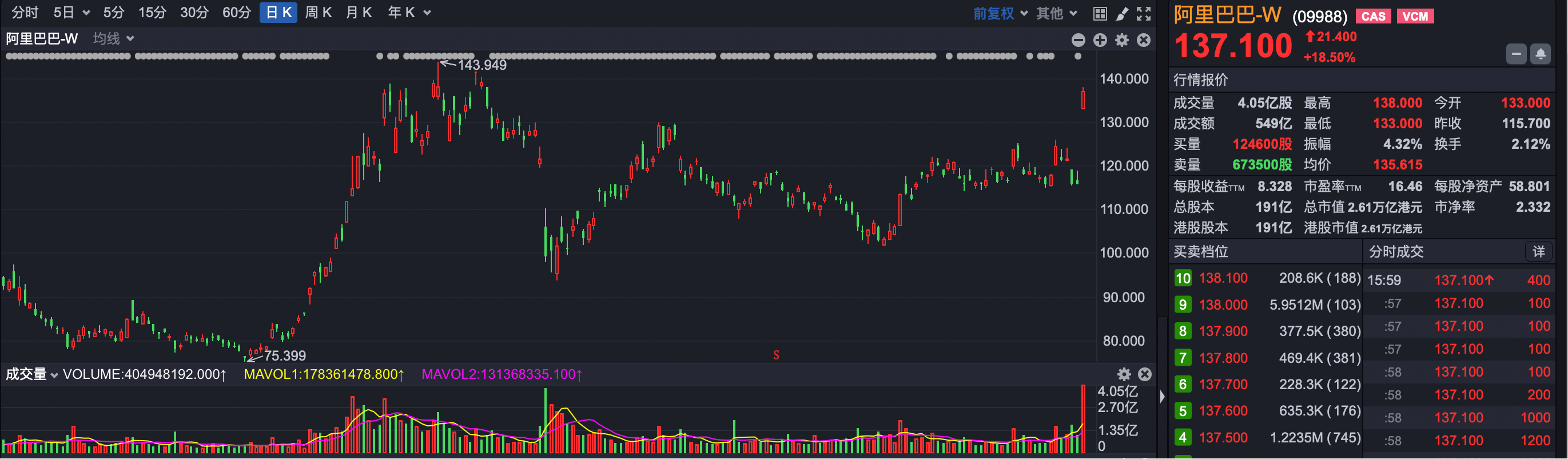
Core Viewpoint - The fierce competition among the three major food delivery giants, Meituan, JD.com, and Alibaba, has led to significant profit declines, with Meituan's net profit down 89%, JD.com's down 50.8%, and Alibaba's down 18% in Q2 2025, resulting in a total profit loss of approximately 20 billion yuan compared to the same period last year [2] Group 1: Financial Performance - Meituan's net profit dropped by 89% year-on-year in Q2 2025, while JD.com and Alibaba saw declines of 50.8% and 18% respectively [2] - The total profit loss for the three companies in this quarter is estimated to be around 20 billion yuan [2] - Alibaba's stock price surged by 18.5% following its earnings report, contrasting with Meituan's nearly 10% drop and JD.com's over 3% decline after their earnings announcements [2] Group 2: Strategic Initiatives - Alibaba's stock performance is bolstered by market expectations surrounding its AI and cloud strategy, with AI contributing 20% to Alibaba Cloud's revenue this quarter [2] - Alibaba's CEO of the China e-commerce division, Jiang Fan, emphasized that the current focus of Taobao Flash Purchase is on user cultivation and scale expansion rather than immediate profitability [2] - Taobao Flash Purchase has achieved a peak daily order volume of 120 million in August, with a weekly average of 80 million, leading to a 200% increase in monthly active buyers compared to April [6] Group 3: Market Dynamics - The competition in the food delivery sector is intensifying, with JD.com preparing substantial funds to challenge Meituan and Ele.me, while Alibaba's commitment to transforming instant retail exceeds JD.com's expectations [3] - Meituan has called for an end to irrational competition, highlighting the need for a more sustainable approach to market practices [7] - The three platforms are expected to increase their subsidy expenditures in the upcoming quarter, with estimates suggesting a potential burn of 92 billion yuan over the next 12 months [5] Group 4: Marketing Strategies - Taobao Flash Purchase has signed 15 celebrity endorsements in the past three months, indicating a significant marketing budget aimed at reaching a broader user base [6] - The marketing strategy includes substantial investments in sports collaborations and events, reflecting a shift towards aggressive promotional tactics [6] - Meituan and JD.com are also investing heavily in celebrity endorsements to enhance their market presence [6] Group 5: Future Outlook - The instant retail business, including Taobao Flash Purchase and Ele.me, has seen a 12% revenue growth, although this is perceived as modest given the significant increase in order volume [6] - Jiang Fan projects that over the next three years, one million stores will join the instant retail ecosystem, potentially generating one trillion yuan in transaction growth [11] - The ongoing development in the instant retail sector is expected to positively impact consumer spending, with a reported 3.4% growth in fast-moving consumer goods sales in Q2 2025 [12]
阿里大涨“助推”港股火箭发射 最强赛道卷土重来 这一板块被机构持续看好
Mei Ri Jing Ji Xin Wen· 2025-09-01 10:47
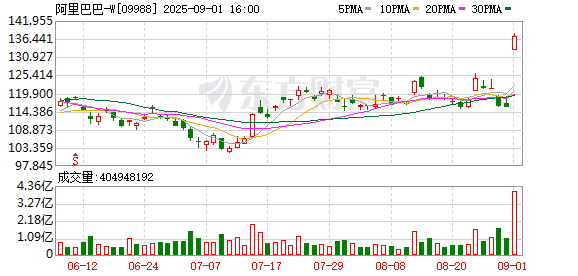
Group 1 - The Hong Kong stock market experienced a strong start in September, with the Hang Seng Index rising by 2.15% and the Hang Seng Tech Index increasing by 2.20% [1] - Alibaba's stock surged by 18.5%, significantly contributing to the rise of both the Hang Seng Index and the Hang Seng Tech Index, driven by its first fiscal quarter performance and strong AI-related product revenue growth [1] - AI-related product revenue for Alibaba has shown triple-digit growth for eight consecutive quarters, with AI contributing over 20% to external commercialization revenue [1] Group 2 - The Hong Kong innovative drug sector has emerged as the strongest segment in the market this year, with seven innovative drug-related ETFs showing over 100% year-to-date growth, and the cumulative growth of the innovative drug ETF reaching 114% [2] - Precious metals stocks also performed well, with significant increases in companies like Tongguan Gold and China Silver Group, driven by rising gold and silver prices [2] - The outlook for the Hong Kong market remains positive, with expectations of a continued upward trend, particularly in AI technology, as global and Chinese tech narratives strengthen [2]
港股1630 | 阿里大涨“助推”港股火箭发射 最强赛道卷土重来 这一板块被机构持续看好
Mei Ri Jing Ji Xin Wen· 2025-09-01 10:04
Market Overview - The Hong Kong stock market experienced a strong start in September, with the Hang Seng Index closing at 25,617.42 points, up 539.8 points, a rise of 2.15% [1] - The Hang Seng Tech Index also saw an increase, closing at 5,798.96 points, up 124.65 points, a rise of 2.20% [1] Alibaba's Performance - Alibaba was a standout performer in the market, contributing significantly to the rise of both the Hang Seng Index and the Hang Seng Tech Index, with an 18.5% increase in its stock price [1] - The surge in Alibaba's stock was driven by its first fiscal quarter earnings report, which highlighted a three-digit growth in AI-related product revenue, with AI contributing over 20% to external commercialization revenue [1] - This marks the eighth consecutive quarter of three-digit growth in Alibaba's AI-related product revenue [1] Other Technology Stocks - Alibaba's strong performance positively impacted other tech stocks, with notable increases: SMIC rose nearly 5%, Baidu over 3%, Xiaomi over 2%, and JD.com over 3% [1] - Tencent Holdings also saw a rise, closing up 1.42% [1] Innovative Drug Sector - The innovative drug sector in Hong Kong showed strong performance, with stocks like Kintor Pharmaceutical rising over 23%, Clover Biopharmaceuticals over 34%, and Sanofi over 10% [3] - WuXi Biologics and WuXi AppTec also saw significant gains, with increases of over 8% and 7%, respectively [3] - The innovative drug sector has been the strongest segment in the Hong Kong market this year, with seven related ETFs having year-to-date gains exceeding 100%, and one ETF achieving a cumulative gain of 114% [3] Precious Metals Sector - The precious metals sector also performed well, with stocks like Tongguan Gold rising 16%, China Silver Group over 12%, and China Gold International over 11% [4] - The rise in precious metals is attributed to fundamental factors, with gold prices hovering around $3,480, nearing historical highs, and silver prices breaking $40 per ounce for the first time since 2011 [4] Future Outlook - Dongwu Securities believes that the Hong Kong market is in a trend of oscillating upward, with both potential drivers and obstacles present [5] - The firm continues to favor AI technology investments, noting that the global AI narrative is strengthening and that there is still room for valuation recovery among leading tech companies in Hong Kong [5]
科技股大涨:AI给经济注入硬核燃料
第一财经· 2025-09-01 08:14
Core Viewpoint - The recent surge in Chinese tech stocks is primarily driven by the AI narrative, with significant market movements observed in companies like Alibaba, Baidu, and JD.com, indicating a historical high interest in the tech sector, particularly the AI industry chain [3][4][6]. Group 1: Market Performance - On September 1, Hong Kong's three major indices opened higher, with Alibaba's stock rising over 18% at one point [3]. - Alibaba's Q1 2026 financial report showed a 10% year-on-year revenue growth and a 76% increase in net profit, exceeding market expectations [6]. - Alibaba Cloud's revenue grew by 26% year-on-year, marking its highest growth rate in nearly three years, with AI-related products seeing triple-digit growth for eight consecutive quarters [6]. - Tencent's stock reached a four-year high of 600 HKD per share in August, reflecting a U-shaped recovery since 2021 [6]. Group 2: Investment Opportunities - The current revaluation of Chinese tech assets is linked to the initiation of a tech innovation cycle, with AI technology driving new investment opportunities [7]. - The semiconductor and AI concept stocks have also performed well, with seven out of the ten most popular A-shares being AI-related [7]. - Companies like Cambricon and SMIC have seen significant stock price increases, with Cambricon's price doubling in the past month [7][8]. Group 3: Industry Trends - Over the past decade, the market capitalization of Chinese tech stocks has shown an upward trend, with a notable increase in the number of tech companies in the top 50 by market cap [8][9]. - In 2016, the tech sector accounted for only 16% of the top 50 companies, while by mid-2025, this figure had risen to 32% [8][9]. - The rise of tech companies in the market reflects a broader shift in the Chinese stock market towards higher tech content, driven by a growing pool of talented tech entrepreneurs and increasing investor recognition [11][12]. Group 4: AI's Impact - AI is expected to automate a significant portion of economic tasks, with estimates suggesting a potential annual revenue opportunity of approximately 1.5 trillion USD from AI [19]. - The current market sentiment remains rational, with strong earnings growth supporting the high valuation levels of tech stocks [19]. - Companies are increasing their capital expenditures in AI, with expectations of revenue benefits becoming evident in the near future [16][17]. Group 5: Future Outlook - The tech sector is anticipated to continue attracting investment, particularly in areas like computing power, optical communication, and emerging hardware fields [20]. - The Hong Kong tech sector is expected to benefit from global capital inflows, while the A-share market shows strong potential in semiconductor equipment and intelligent driving applications [20].



阿里巴巴港股创两年最大涨幅,AI叙事成最大催化剂!
Jin Shi Shu Ju· 2025-09-01 06:45
Core Viewpoint - Alibaba's stock surged approximately 19% in Hong Kong, marking its largest intraday gain since November 2022, alleviating investor concerns over intense competition in the e-commerce sector with Meituan and JD.com [1] Group 1: Financial Performance - Alibaba's latest earnings report revealed a three-digit growth in AI-related product revenue and a 26% increase in cloud computing sales, exceeding market expectations [1] - Analysts have raised their target prices for Alibaba, with JPMorgan increasing its US target price to $170 from $140, and Nomura raising its target from $152 to $170 [1] Group 2: AI and Market Positioning - The strong performance in AI and cloud services indicates that Alibaba is reshaping its positioning beyond just retail dominance, focusing on long-term relevance in the tech stack [2] - Alibaba's CEO stated that investments in AI are yielding tangible results, with a clear path for growth driven by AI [1][3] Group 3: Competitive Landscape - Despite losses in the food delivery and instant retail sectors, analysts noted that AI support remains significant for Alibaba [2] - The company is actively investing in AI, developing large language models to remain competitive in the technology race [3] - The competitive environment is intensifying, with other Chinese companies like Baidu and Tencent rapidly optimizing and releasing AI models, increasing pressure on Alibaba [3]