极氪

Search documents
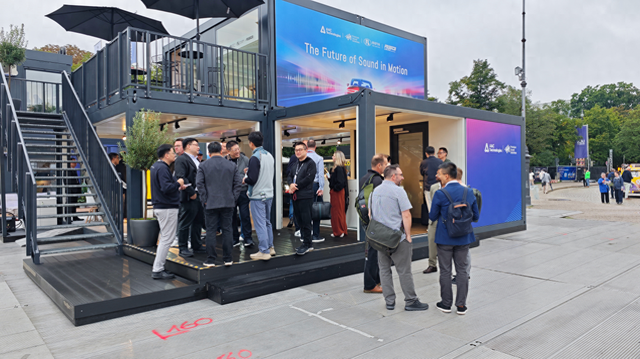
瑞声科技亮相德国车展展示车载技术
Huan Qiu Wang· 2025-09-12 09:04
Core Viewpoint - AAC Technologies showcased its advancements in automotive acoustics and related technologies at the Munich International Motor Show, emphasizing its position as a key player in the automotive sound ecosystem [1][3]. Group 1: Company Developments - Since entering the automotive acoustics sector in 2018, AAC Technologies has integrated key technologies through strategic acquisitions, establishing a comprehensive acoustic ecosystem from perception to output [3]. - The company is now recognized as one of the few suppliers capable of providing end-to-end automotive acoustic solutions, including hardware, software, algorithms, and tuning services [3]. - AAC Technologies is ranked among the top ten global passenger car audio system providers and is the only Chinese company in this category [3]. Group 2: Technological Innovations - The company highlighted its collaboration with Zeekr and Naim Audio in developing the Zeekr 9X model, featuring a custom 9.2.4.8 immersive audio system with 32 speakers and 8 seat transducers, achieving a peak power of 3868W [5]. - The audio system utilizes a 3D virtual surround algorithm to enhance standard stereo sources into multi-layered auditory experiences, restoring three-dimensional spatial information [5]. - AAC Technologies presented a full-stack automotive acoustic solution based on "physical AI," demonstrating its technology's application in products like the Zeekr 9X [5]. Group 3: Market Position and Future Plans - The automotive business segment of AAC Technologies reported a year-on-year revenue growth of 13%, reaching 1.74 billion yuan, indicating its importance within the company's overall operations [5]. - The company aims to leverage global resources to assist partners like First Light Auto Parts and PSG in expanding into overseas markets, providing customized full-stack solutions to enhance the smart driving experience [6].

最高奖励500万,上汽荣威征集黑公关、水军线索
Xin Lang Cai Jing· 2025-09-12 08:28
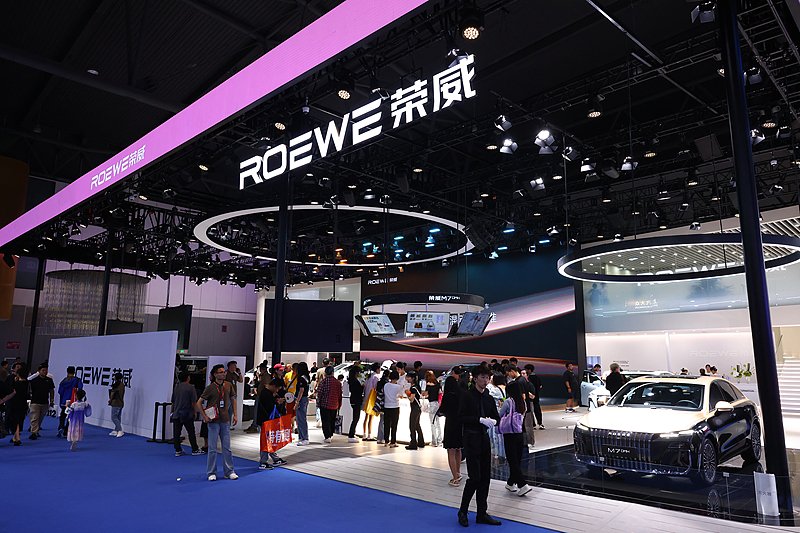
Core Points - SAIC Roewe is publicly soliciting clues about malicious public relations and water army activities, offering rewards up to 5 million RMB for valid information [1][2] - The initiative is part of a broader campaign by the Ministry of Industry and Information Technology and other departments to address online chaos in the automotive industry [2][4] Group 1 - The company is seeking evidence of malicious rumors, defamation, and commercial disparagement against its brands, including self-media accounts and marketing agencies involved in spreading false information [1] - Rewards for valid clues will range from 10,000 to 5 million RMB, depending on the importance and impact of the information provided [1] - The company has committed to strict confidentiality measures to protect the safety of whistleblowers [1] Group 2 - The recent initiative aligns with a three-month nationwide campaign to rectify online chaos in the automotive sector, focusing on illegal profit-making, exaggerated and false advertising, and malicious attacks [2] - Key issues targeted include the use of advanced technologies to create new forms of "internet water army" that generate false content and manipulate public sentiment against competitors [4] - Other companies in the industry, such as BYD and Zeekr, have also implemented high-reward strategies to combat online black public relations, with rewards reaching up to 5 million RMB [4]

报告称小米YU7用户平均年龄27.7岁,未婚比例达近6成
Di Yi Cai Jing· 2025-09-12 05:05
Core Insights - The report by Jielan Road indicates that Xiaomi YU7 owners are predominantly young, with over 50% identifying as "loyal Xiaomi fans" and citing long-term brand trust as a key reason for their purchase [1][4] - The average age of YU7 owners is 27.7 years, with nearly 80% aged between 20 and 30, primarily from first- and second-tier cities, and 86% are male [1][4] - A significant portion of YU7 owners are unmarried, with nearly 60% falling into this category, contrasting with higher marriage rates among owners of competing brands [4][5] User Demographics - Xiaomi YU7 and SU7 share similar user demographics, primarily targeting young individuals in first- and second-tier cities, with a focus on "self-satisfaction" in their purchasing decisions [5] - The first-time car buyer ratio for YU7 is 51%, while for SU7 it is 53%, indicating that these models are often the first car for many young users [5] Purchase Motivations - The primary purchase motivation for YU7 owners is the vehicle's design, with 68% citing it as a key factor, followed by brand loyalty [5][6] - There is a notable shift in brand perception from emotional attachment to the founder to a more product and service-driven brand trust, with 60% of YU7 owners influenced by brand reputation compared to 80% for SU7 [5] Financial Characteristics - YU7 owners have an average annual household income of 314,000 yuan, significantly above the industry average of 272,000 yuan, with rational spending habits reflected in an average annual expenditure of 176,000 yuan [6] - The most common reason for purchasing the YU7 is personal preference, with 61% stating they bought the car because they "saw a car they really liked" [6] Market Dynamics - The YU7's customer base primarily transitions from joint venture brands, but there is also a notable movement from SU7 to YU7, indicating a healthy brand retention and conversion cycle [7] - The active second-hand market for Xiaomi vehicles, driven by long delivery wait times, allows for higher resale values, encouraging some SU7 owners to switch to YU7 within a year of purchase [7]

报告称小米YU7用户平均年龄27.7岁,未婚比例达近6成
第一财经· 2025-09-12 04:44
Core Insights - The report by Jielan Road indicates that Xiaomi YU7 owners are predominantly young, with an average age of 27.7 years, and over 80% are aged between 20 to 30 years [3][6] - More than 50% of YU7 owners identify as "loyal Xiaomi fans," with their purchase motivation stemming from long-term brand trust [3][6] - The user demographic for Xiaomi vehicles, particularly YU7 and SU7, shows a significant trend towards younger, single individuals, with a high percentage of first-time car buyers [7][10] User Demographics - Xiaomi YU7 owners are primarily male (86%) and nearly 60% are unmarried, contrasting with other brands where the married with children ratio is higher [6][7] - The average annual income of YU7 owners is 314,000 yuan, which is above the industry average of 272,000 yuan [8] Purchase Motivations - The primary reason for purchasing the YU7 is emotional attachment, with 61% of owners stating they bought the car because they "really liked it" [8][10] - Key purchase factors include design and brand, with 68% citing exterior design as a crucial decision factor [7][10] Brand Perception - There is a shift in brand perception from emotional attachment to a more rational trust in product and service quality, as seen in the decreasing influence of the founder's charisma from 80% for SU7 owners to 60% for YU7 owners [7][10] - YU7 owners exhibit a strong sensitivity to price-performance ratio, with nearly 70% prioritizing this aspect in their purchasing decision [8] Market Dynamics - The transition from SU7 to YU7 among existing Xiaomi car owners indicates a healthy brand retention and conversion cycle, driven by factors such as long delivery times and high resale value [10]

吉利智驾整合,组织框架曝光:极氪系主导,旷视系妥协
21世纪经济报道· 2025-09-11 14:11
Core Viewpoint - The article discusses the integration of various teams within Geely to form a new entity, Chongqing Qianli Intelligent Driving, focusing on the organizational structure and the challenges faced during this merger [3][6][9]. Group 1: Organizational Structure - Chongqing Qianli Intelligent Driving was established as a joint venture with Geely, Megvii, and others, with each holding a 30% stake, while Lotus holds 5% [6]. - The new organizational structure features a matrix management approach, with vertical departments for system, platform, algorithm, and data development, alongside three horizontal departments [6][8]. - Key leaders include Yang Mu as CTO, Yuan Pingyi as Chief Scientist, and Chen Baocheng overseeing engineering projects [6][8]. Group 2: Integration Challenges - The integration process has faced delays, with only about 2,000 of the planned 3,000 personnel merged, primarily from the Zeekr and Maiqi teams [8][9]. - There is a lack of enthusiasm among team members for the merger, particularly due to the complexities involved in integrating intelligent driving teams compared to other departments [8][9]. - The principle of "stability while seeking progress" is emphasized, with existing reporting relationships maintained and minimal disruption to ongoing projects [9].

速腾聚创全面接入英伟达三大生态 全球自动驾驶换代最强脑眼方案
Zhi Tong Cai Jing· 2025-09-11 12:57
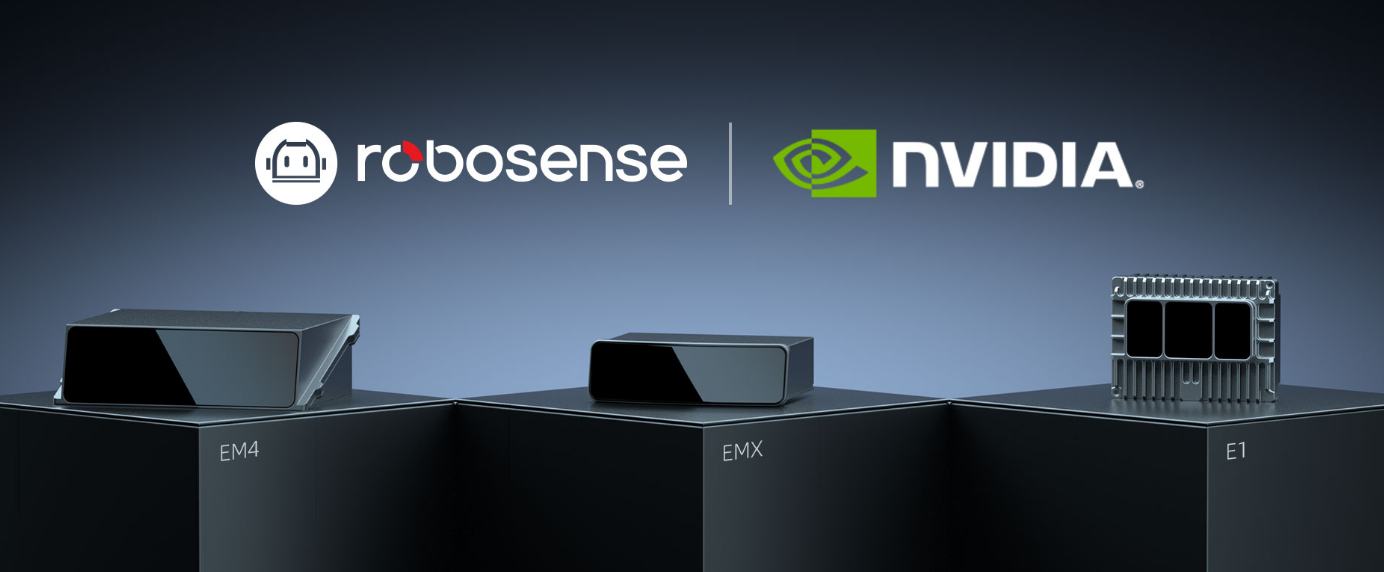
Core Insights - RoboSense has announced a deepened collaboration with NVIDIA to integrate its high-performance automotive-grade digital lidar products into the NVIDIA DRIVE ecosystem, which will enhance the development and testing cycles of autonomous driving technology [1][7] - The combination of NVIDIA DRIVE AGX Thor chip and RoboSense's EM platform is becoming the preferred choice for next-generation autonomous driving systems, adopted by several leading automotive manufacturers and Robotaxi companies [2][3] - RoboSense's lidar products, including the EM4 and E1, are recognized for their advanced capabilities and are being integrated into new advanced driver-assistance systems and autonomous vehicles by various global automakers [4][5] Company Developments - RoboSense's EM platform has entered mass production, securing contracts with eight leading automotive manufacturers for 45 vehicle models within six months of launch, showcasing strong market demand [5] - The EM4 and E1 lidar combinations are favored by major Robotaxi manufacturers for their dual perception capabilities, indicating RoboSense's strong position in the L4 autonomous driving sector [5] - RoboSense is the only lidar company globally that is integrated into NVIDIA's three major ecosystems, highlighting its unique position in the market [6] Industry Trends - The automotive industry is increasingly demanding higher performance and reliability from sensors and AI computing platforms as it moves towards higher levels of autonomous driving [4] - The collaboration between RoboSense and NVIDIA is expected to drive innovation in perception and computing layers, accelerating the deployment of safer and more efficient large-scale autonomous driving applications [7]

速腾聚创(02498)全面接入英伟达三大生态 全球自动驾驶换代最强脑眼方案
智通财经网· 2025-09-11 12:56
Core Insights - RoboSense has deepened its collaboration with NVIDIA to integrate its high-performance automotive-grade digital lidar systems into the NVIDIA DRIVE ecosystem, which will enhance the development and testing cycles of autonomous driving technologies [1][13] - The combination of NVIDIA DRIVE AGX Thor chip and RoboSense's lidar platform is becoming the preferred choice for next-generation autonomous driving systems, adopted by several leading automotive manufacturers and Robotaxi companies [3][5] Group 1 - RoboSense's digital lidar products, including E1, EMX, and EM4, will provide high-definition 3D perception data to NVIDIA DRIVE AGX, facilitating faster deployment of autonomous driving systems [1][6] - The NVIDIA DRIVE AGX platform is the world's first scalable AI computing platform, capable of integrating various sensor data to achieve robust perception and real-time decision-making [5][8] - RoboSense's lidar technology is recognized for its unique advantages, such as the world's only mass-produced 500-line digital lidar EM4 and the all-solid-state lidar E1, which are critical for advanced driving assistance systems and autonomous vehicles [8][10] Group 2 - The collaboration between RoboSense and NVIDIA has been extensive, with RoboSense being a member of the NVIDIA Omniverse ecosystem and contributing high-precision lidar models for autonomous driving simulation testing [13] - RoboSense's lidar systems have been selected by over 45 vehicle models from eight leading automotive manufacturers, indicating strong market acceptance and demand [10] - The integration of RoboSense's lidar with NVIDIA's AI computing platforms is expected to drive innovation in perception and computation layers, accelerating the deployment of safe and efficient large-scale autonomous driving applications [11][13]
购置税窗口期:新能源车集中上新,电池厂忙到年底
高工锂电· 2025-09-11 10:40
Core Viewpoint - The Chinese electric vehicle (EV) market is entering a critical phase as the vehicle purchase tax incentives are set to be reduced starting in 2026, making 2025 a crucial year for automakers and battery manufacturers to maximize sales and prepare for increased competition [2][10]. Market Dynamics - Since September, the Chinese EV market has seen a surge in activity, with multiple automakers like Zhiji, Deep Blue, and Geely launching new models across various segments including sedans, SUVs, and MPVs [3]. - In August, China sold 1.171 million EVs, marking an 18.3% year-on-year increase and a 13% month-on-month increase. The sales of new energy passenger vehicles reached 1.106 million, with a year-on-year growth of 16.5% [4]. Penetration Rates - The penetration rate of EVs in China reached 52.2% in August, with new energy passenger vehicles at 55.1%. From January to August, the production and sales of EVs were 7.008 million and 7.037 million respectively, reflecting a year-on-year growth of 29% and 30.9% [5]. New Model Launches - The launch of new models is driving battery production and technological competition. For instance, the Zhiji LS6 features a battery from CATL with a range of 450 km and rapid charging capabilities [6]. - The Deep Blue S09 emphasizes ultra-fast charging, while the GL8 PHEV from GM showcases advanced battery technology with high energy density and safety features [7]. Battery Industry Recovery - The battery industry is recovering from a previous downturn, with production increasing by 6% to 8% in Q3. Leading companies have seen an 8% month-on-month increase in production, reaching 70 GWh [9]. - Companies like Multi-Flor and Zhengli New Energy are diversifying their offerings, which is expected to enhance growth and resilience in the industry [9]. Future Outlook - The year 2025 is seen as a pivotal moment for both automakers and battery manufacturers, as they prepare for a fully market-driven competition. The gradual withdrawal of purchase tax incentives will challenge companies to enhance product quality and brand loyalty [10].


昔日爆款智己LS6,要靠大增程再次逆袭?
Jing Ji Guan Cha Wang· 2025-09-11 10:33
Core Insights - The launch of the new generation Zhiji LS6 marks a significant step for Zhiji Auto, with prices ranging from 197,900 to 269,900 yuan, and the model is now available for pre-order and delivery [2] - Zhiji Auto has entered the range-extended electric vehicle market with its "Star Super Range Extender" technology, offering a pure electric range of 450 kilometers, comparable to many pure electric models on the market [2] - The LS6 is equipped with batteries from CATL, featuring two versions of 52 kWh and 66 kWh, and can achieve a maximum comprehensive range of 1,500 kilometers with a fuel consumption as low as 0.06L per 100 kilometers [2] Sales Performance - In 2023, Zhiji Auto's total sales reached 38,000 units, with the LS6 contributing significantly, surpassing 10,000 units in December [3] - However, from January to July 2023, cumulative deliveries were 25,000 units, showing a year-on-year decline, with August deliveries at 6,108 units [3] - The LS6 is expected to play a crucial role in driving growth for Zhiji Auto, especially as it targets a price point below 200,000 yuan [3] Product Features - The new generation LS6 features advanced driving control technologies, including the upgraded "Lingxi Digital Chassis," which offers functions like blowout stability control and active anti-rollover [4] - The LS6 also introduces the IM AIOS with an AI Agent for smart assistance, integrating with WeChat for various functionalities, and has enhanced features for adverse weather conditions [4] - In terms of competition, the LS6 faces rivals such as Avita 07, Lantu FREE+, Tesla Model Y, and others, with a strategy focused on "high configuration at low prices" [4] Market Response - The initial market response to the LS6 has been positive, with over 10,000 pre-orders placed within 27 minutes of its launch, indicating strong consumer interest [5]
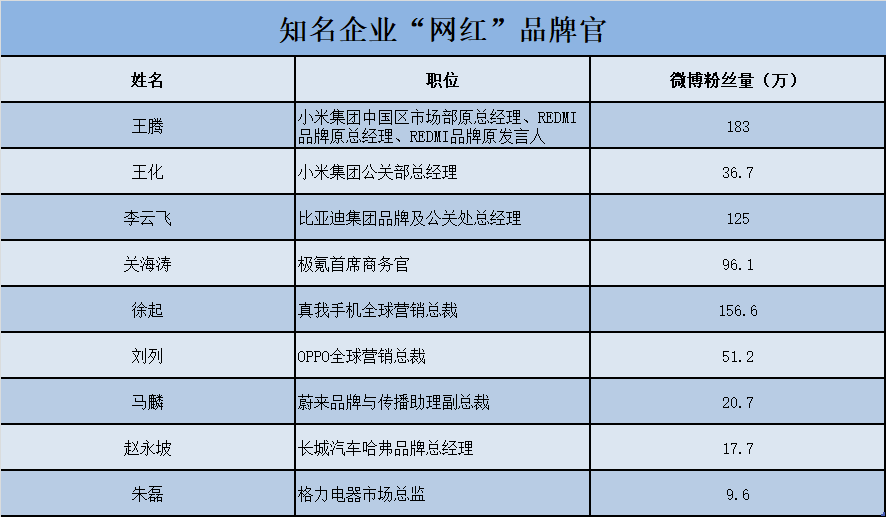
那些社交媒体上的“网红”品牌官:爆料、辟谣、营销和危机公关,“KOL化”催生劳动关系新课题
Mei Ri Jing Ji Xin Wen· 2025-09-10 11:34
Core Viewpoint - The rise of "internet celebrity" brand executives, who serve dual roles in advertising and public relations, is reshaping corporate communication strategies and management practices in the industry [1][7][9]. Group 1: Company Actions and Events - Xiaomi Group terminated Wang Teng, the former General Manager of the China Market Department, due to serious violations including leaking confidential company information [1]. - Wang Teng had a significant online presence with 1.83 million followers on Weibo, highlighting the influence of brand executives in the digital space [3]. - The incident has sparked discussions about the responsibilities and risks associated with brand executives acting as key opinion leaders (KOLs) [1][9]. Group 2: Brand Executive Roles - Brand executives are increasingly taking on the role of KOLs, engaging directly with consumers and leveraging their personal brands to enhance corporate messaging [2][5]. - Executives like Xiaomi's Wang Hua and BYD's Li Yunfei utilize social media to communicate product information and respond to public concerns, thereby deepening customer trust [8][9]. - The trend of KOLization among brand executives raises questions about the balance between internal management duties and external representation [7][9]. Group 3: Industry Trends - The shift towards KOLization reflects a broader trend in corporate communication, where companies are adapting to the rise of social media and the demand for authentic engagement [5][6]. - Executives are now seen as vital assets in marketing strategies, with their personal brands often overshadowing official corporate accounts [9]. - The dynamic between personal and corporate branding is evolving, necessitating new approaches to human resource management and corporate governance [7][9].