宝马

Search documents
急了?奔驰设计师狂怼奥迪“过时”,CEO嫌“太卷”
Feng Huang Wang Cai Jing· 2025-09-15 06:25
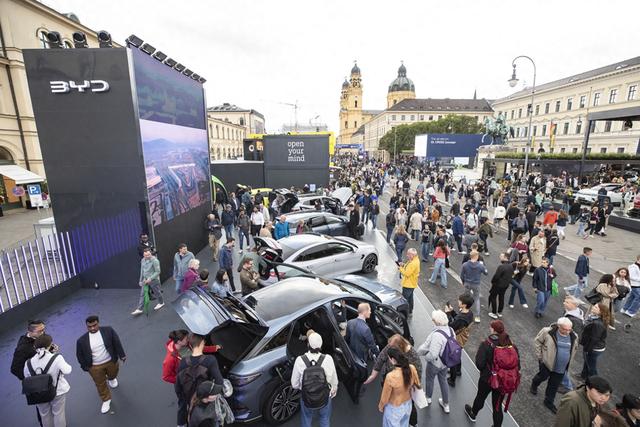
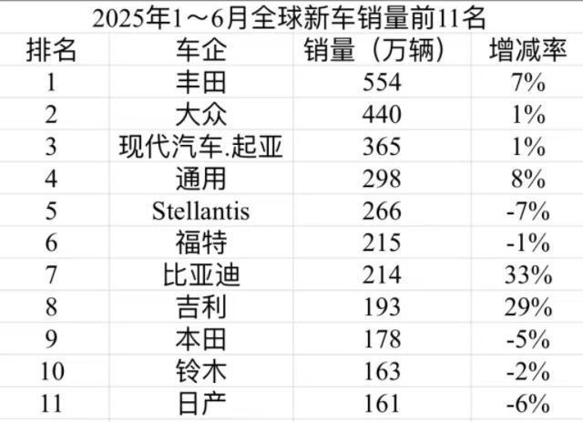
Core Viewpoint - The Munich Auto Show has become a battleground between Chinese automakers and traditional German giants, with over 100 Chinese companies participating, marking a nearly 50% increase from the last event [1] Group 1: Market Dynamics - Chinese automotive registrations surged by 91% since the beginning of the year, with Chinese brands capturing nearly double their market share in Europe to 5.1%, just behind Mercedes' 5.2% [1] - The German automotive industry is facing a critical moment, with warnings from the media that without innovation, companies like Volkswagen may face extinction [1] - The shift in consumer preference towards Chinese electric vehicles is evident, as traditional German brands experience significant sales declines in China, with Mercedes down 14% and Audi down 10.2% in the first half of the year [5] Group 2: Competitive Landscape - Chinese automakers, once seen as imitators, are now leading the charge in electric vehicle innovation, with companies like BYD planning to establish over 1,000 stores across 32 European countries by the end of 2025 [1] - The global automotive landscape is changing, with BYD and Geely showing remarkable growth rates of 33% and 29% respectively, surpassing Honda and Nissan [7] - The BBA (Benz, BMW, Audi) group is adjusting its electric vehicle strategies, moving from aggressive full electrification to a more pragmatic approach that includes hybrid models [9] Group 3: Product Innovations - Mercedes-Benz showcased its new electric GLC model, featuring a 39.1-inch Hyperscreen, which received significant attention at the show [10] - Volkswagen introduced the ID.CROSS concept car, with plans for production models to be released starting in 2026, indicating a push into the entry-level electric vehicle market [11] - Audi is shifting its focus back to driving experience, while BMW is betting on high-tech features to attract consumers [11] Group 4: Economic Pressures - The BBA is facing profit declines due to falling sales, with Mercedes' net profit halving by 55.8% and Volkswagen's operating profit dropping by 32.8% to €6.7 billion [5] - The competitive pricing strategies of Chinese brands are putting pressure on traditional automakers, leading to concerns about profit erosion in the industry [3][10]


J.D. Power智能座舱研究:不同阵营技术差异明显
Zhong Guo Qi Che Bao Wang· 2025-09-15 05:45
Core Insights - J.D. Power and Tongji University's HVR Lab conducted a study on smart cockpits, highlighting the rapid development of AI technology and its impact on vehicle interaction systems [1] - The average score for luxury automotive smart cockpits was 620, with some models excelling in first-word response and complex command recognition [1] - Mainstream automakers' large model functionalities are widespread but lack brand differentiation, as most vehicles perform similarly in basic command recognition and simple scenario responses [1] Group 1 - The study identified significant technical differences in the underlying architecture of "wake-free interaction," with luxury brands relying on preset keyword matching, leading to unintended wake-ups [2] - New entrants in the market utilize innovative algorithms combining voiceprint recognition and contextual analysis to filter out background noise and improve command accuracy [2] - Current large models struggle with complex command recognition, vague demand understanding, and cross-domain collaboration, exposing weaknesses in multi-modal coordination and dynamic intent correction [2] Group 2 - The interaction paradigm is shifting from "passive tools" to "active cognitive partners," with leading brands moving towards proactive service capabilities [3] - Examples of proactive features include reminders based on user habits and automatic adjustments based on passenger needs, although many models still operate on a passive response basis [3] - Future developments in vehicle interaction will focus on enhancing proactive service capabilities and seamless cross-device functionality, which will be key indicators of user experience quality [3] Group 3 - The study on smart cockpits is divided into three phases: luxury, mainstream, and economy, with updated evaluation dimensions and methods [4] - An innovation index scoring model (out of 1000) was employed, consisting of HMI performance index and AI performance index, each contributing 50% to the overall score [4] - The scoring model integrates user satisfaction scores and applies scientific weight distribution to ensure comprehensive and accurate assessments [4]

周观点0914:硅料能耗标准或收紧,顶层定调储能专项行动-20250915
Changjiang Securities· 2025-09-15 02:57
Investment Rating - The report maintains a "Positive" investment rating for the industry [3] Core Insights - The report highlights that the energy consumption standards for silicon materials may tighten, which could lead to the exit of outdated production capacity. Additionally, the demand for energy storage is expected to exceed expectations, driven by new policies and market dynamics [14][41] Summary by Sections 1. Photovoltaics - The silicon material energy consumption standard has been tightened from 7.5 kgce/kg to 6.5 kgce/kg, aimed at phasing out outdated capacity [20] - The mechanism for electricity pricing in Shandong has been implemented, with solar power projects expected to restart demand [21] - The report recommends stocks benefiting from the anti-involution trend, including Tongwei Co., GCL-Poly Energy, and LONGi Green Energy [15][33] 2. Energy Storage - The National Development and Reform Commission and the Energy Administration have issued a plan for large-scale construction of new energy storage, targeting an installed capacity of over 180 GW by 2027 [41] - Various provinces are implementing capacity pricing mechanisms, with Ningxia setting a capacity price of 100 yuan/kW·year from October to December 2025, increasing to 165 yuan/kW·year from January 2026 [40][41] - The report recommends leading companies in the energy storage sector, such as Sungrow Power Supply and Deye Technology [14][41] 3. Lithium Batteries - The lithium battery sector is experiencing stable upward momentum, with a focus on high-end battery manufacturers and solid-state battery developments [14] - The report highlights companies like CATL and Xiamen Tungsten Co. as key players in this space [15] 4. Wind Power - The wind power sector is seeing accelerated industry recovery, particularly in offshore wind and international markets [14] - Recommended stocks include Goldwind Technology and Mingyang Smart Energy, which are expected to benefit from this trend [15] 5. Power Equipment - The report notes that the ultra-high voltage sector remains robust, with ongoing approvals for major projects [14] - Companies such as Mingyang Electric and Sifang Co. are highlighted as potential investment opportunities [15] 6. New Directions - The report emphasizes the growth potential in humanoid robotics and AIDC technologies, with companies like Sanhua Intelligent Controls and Zhejiang Rongtai being recommended [14][15]

295亿落子广州!TCL华星全球首条高世代印刷OLED产线
Zhong Guo Qi Che Bao Wang· 2025-09-15 01:44
Core Viewpoint - TCL Technology's subsidiary TCL Huaxing has signed a project cooperation agreement with the Guangzhou Municipal Government and the Guangzhou Economic and Technological Development Zone to jointly invest in the construction of an 8.6-generation printed OLED display panel production line, with a total investment of approximately RMB 29.5 billion [1] Group 1: Project Overview - The t8 project will be located in Guangzhou and will have a monthly processing capacity of approximately 22,500 pieces of 2290mm×2620mm glass substrates for printed OLED displays [2] - The total investment is about RMB 29.5 billion, with registered capital of RMB 14.75 billion (TCL Huaxing contributing RMB 8.85 billion and state-owned enterprises contributing RMB 5.9 billion) [2] - The project is expected to start construction in November 2025, with a construction period of 24 months, aiming for production around 2027 [2] Group 2: Technology and Market Trends - Printed OLED technology offers multiple advantages that align with the current upgrade direction of automotive display technology, impacting performance and cost [3] - The technology provides excellent color performance and high resolution, meeting the demand for high-definition displays in vehicles [3] - The cost and energy efficiency of printed OLEDs can lower the mass production costs of automotive OLED screens, potentially accelerating their adoption in mid-range vehicles [3] - The global automotive display market is projected to grow significantly, with a compound annual growth rate of 27% for automotive displays, far exceeding the growth rates of laptops and desktop monitors [4] Group 3: Industry Impact - The t8 project is expected to break the dominance of foreign companies in the high-generation AMOLED field, promoting the localization of the automotive display supply chain [5] - TCL Huaxing will become a key domestic supplier of automotive OLED screens, helping car manufacturers reduce reliance on foreign supply chains and improve delivery times [6] - As the penetration of electric vehicles and smart cockpits increases, automotive displays are evolving from functional components to core experience elements, creating a strong demand for high-quality, low-cost display solutions [6]

西贝创始人贾国龙道歉:以后打明牌向胖东来学习;罗永浩提议与贾国龙公开直播对质;宝马调整经典蓝白车标丨邦早报
创业邦· 2025-09-15 00:08
Group 1 - DeepSeek and Yushu Technology were recognized as "smart companies" by MIT Technology Review, highlighting their innovative technology and sustainable business models [3] - The founder of Xibei, Jia Guolong, acknowledged his mistakes in handling a recent controversy and expressed intentions to adopt a more transparent approach, learning from the practices of competitor Pang Donglai [5][6] - Xibei's flagship store in Beijing experienced a significant drop in customer traffic, with a reported decrease of over 70% following the frozen vegetable controversy [12] Group 2 - The ongoing dispute between Jia Guolong and Luo Yonghao regarding the pre-made dishes incident has led to calls for a public live debate to clarify the situation [8][11] - Xibei has temporarily suspended kitchen tours in its restaurants to ensure normal operations and address customer concerns about privacy during filming [12] - The marketing consulting firm Huayi Huayi confirmed that it received over 60 million yuan in consulting fees from Xibei over the past decade, which has sparked discussions about the value of such consulting services [11] Group 3 - Penske Media Corporation (PMC) has filed a lawsuit against Google, alleging that the tech giant illegally used its news content to generate AI summaries, resulting in decreased website traffic [14] - Tesla's German factory plans to increase production due to strong sales data, despite a reported 39% drop in new car registrations in Germany last month [21] - Yao Tang Biotechnology completed a Series B financing round exceeding 300 million yuan, focusing on mRNA and gene editing drug development [22]
崔东树:8月乘用车零售增5% 轿车零售与SUV零售均较低
智通财经网· 2025-09-14 06:16
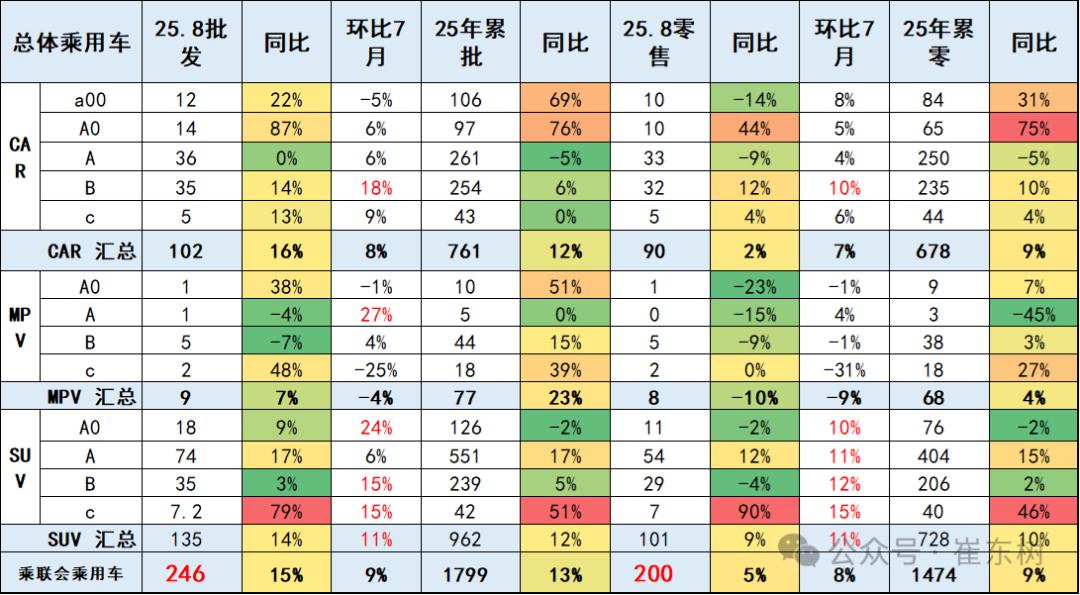
Core Insights - The retail growth of passenger cars in August 2025 is projected to be 5%, significantly lower than the 15% growth in wholesale [1] - The retail decline in August is attributed to high interest rates, limited rebates, and the suspension of subsidies [1] - C-class SUVs emerged as the main retail force in August, with strong performance in the high-end SUV segment [1] Passenger Car Market Overview - The overall wholesale volume for passenger cars in August 2025 reached 246,000 units, reflecting a 15% year-on-year increase [2] - The cumulative wholesale volume for the first eight months of 2025 is 1.799 million units, showing a 13% increase compared to the previous year [2] - Retail sales in August 2025 totaled 200,000 units, a 5% increase year-on-year, with a cumulative retail volume of 1.474 million units, up 9% [2] A00 Segment Performance - A00-class cars had a wholesale volume of 117,300 units in August 2025, with a year-on-year increase of 22% but a month-on-month decrease of 5% [5] - Retail sales for A00-class cars decreased by 14% year-on-year but increased by 8% month-on-month [5] - The cumulative wholesale volume for A00-class cars from January to August 2025 is 1.0575 million units, with a 69% year-on-year increase [5] A0 Segment Performance - A0-class cars achieved a wholesale volume of 140,000 units in August 2025, marking an 87% year-on-year increase and a 6% month-on-month increase [8] - Retail sales for A0-class cars increased by 44% year-on-year and by 5% month-on-month [8] - The cumulative wholesale volume for A0-class cars from January to August 2025 is 972,500 units, reflecting a 76% year-on-year increase [8] A-Class Segment Performance - A-class cars had a wholesale volume of 358,700 units in August 2025, with no year-on-year growth but a 6% month-on-month increase [13] - Retail sales for A-class cars decreased by 9% year-on-year but increased by 4% month-on-month [13] - The cumulative wholesale volume for A-class cars from January to August 2025 is 2.6134 million units, showing a 5% year-on-year decline [13] B-Class Segment Performance - B-class cars had a wholesale volume of 345,900 units in August 2025, reflecting a 14% year-on-year increase and an 18% month-on-month increase [19] - Retail sales for B-class cars increased by 12% year-on-year and by 10% month-on-month [19] - The cumulative wholesale volume for B-class cars from January to August 2025 is 2.5364 million units, with a 6% year-on-year increase [19] MPV Market Trends - B-class MPVs had a wholesale volume of 52,700 units in August 2025, a 7% year-on-year decline but a 4% month-on-month increase [23] - Retail sales for B-class MPVs decreased by 9% year-on-year and by 1% month-on-month [23] - C-class MPVs saw a wholesale volume of 21,200 units in August 2025, with a 48% year-on-year increase but a 25% month-on-month decline [23]


汽车消费遇上补贴耗尽,我们怎么办
汽车商业评论· 2025-09-12 23:08
Core Viewpoint - The sudden suspension of the vehicle replacement subsidy policy in Guangzhou has caused significant concern among car owners and potential buyers, highlighting the volatility of subsidy policies and their impact on consumer behavior and the automotive market [3][5][11]. Group 1: Policy Changes and Impacts - Guangzhou's announcement to suspend the vehicle replacement subsidy with no buffer period has led to anxiety among car owners who have already purchased new vehicles but have not sold their old ones [3][5]. - Consumers who obtained invoices for both new and old vehicles before August 29 are still eligible for subsidies, but the specific timeline for applications remains uncertain [5][11]. - The suspension of subsidies is attributed to the depletion of the funding pool, which is primarily sourced from central and local government finances [5][11]. Group 2: Consumer Behavior - The uncertainty surrounding subsidy approvals has led to a split among consumers, with some eager to submit applications while others adopt a wait-and-see approach due to fears of policy changes [6][10]. - The reduction or elimination of subsidies has made consumers, especially in lower-tier cities, more cautious about purchasing decisions, as they are sensitive to price changes [9][10]. Group 3: Regional Variations in Subsidy Policies - Since May 2025, multiple regions have tightened their subsidy policies, with at least six provinces and around 30 cities halting vehicle replacement subsidies [11][12]. - The types of suspensions vary, with some regions experiencing complete cessation of funding while others have temporarily paused and then resumed their subsidy programs [12][14]. - The "coupon" model for subsidies has emerged in some areas, allowing consumers to claim subsidies in a more controlled manner, which aims to prevent fraudulent claims [15]. Group 4: Market Effects - The tightening of subsidy policies has negatively impacted over 75% of automotive dealerships, with many reporting significant declines in sales [18][19]. - The inventory warning index for dealerships has risen, indicating growing concerns about stock levels and sales performance [19]. - Automotive manufacturers are also feeling the pressure, as reduced subsidies are squeezing profit margins, leading to increased competition and the need for strategic adjustments [19][20].


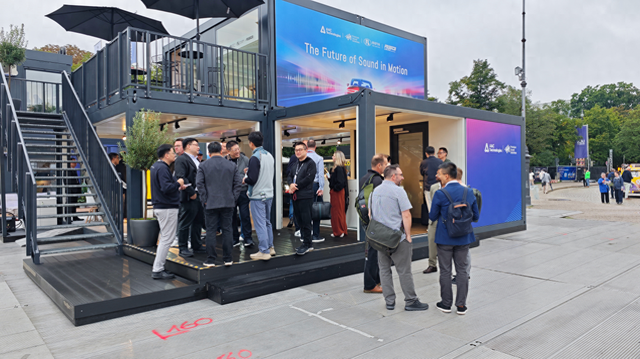
瑞声科技亮相德国车展展示车载技术
Huan Qiu Wang· 2025-09-12 09:04
Core Viewpoint - AAC Technologies showcased its advancements in automotive acoustics and related technologies at the Munich International Motor Show, emphasizing its position as a key player in the automotive sound ecosystem [1][3]. Group 1: Company Developments - Since entering the automotive acoustics sector in 2018, AAC Technologies has integrated key technologies through strategic acquisitions, establishing a comprehensive acoustic ecosystem from perception to output [3]. - The company is now recognized as one of the few suppliers capable of providing end-to-end automotive acoustic solutions, including hardware, software, algorithms, and tuning services [3]. - AAC Technologies is ranked among the top ten global passenger car audio system providers and is the only Chinese company in this category [3]. Group 2: Technological Innovations - The company highlighted its collaboration with Zeekr and Naim Audio in developing the Zeekr 9X model, featuring a custom 9.2.4.8 immersive audio system with 32 speakers and 8 seat transducers, achieving a peak power of 3868W [5]. - The audio system utilizes a 3D virtual surround algorithm to enhance standard stereo sources into multi-layered auditory experiences, restoring three-dimensional spatial information [5]. - AAC Technologies presented a full-stack automotive acoustic solution based on "physical AI," demonstrating its technology's application in products like the Zeekr 9X [5]. Group 3: Market Position and Future Plans - The automotive business segment of AAC Technologies reported a year-on-year revenue growth of 13%, reaching 1.74 billion yuan, indicating its importance within the company's overall operations [5]. - The company aims to leverage global resources to assist partners like First Light Auto Parts and PSG in expanding into overseas markets, providing customized full-stack solutions to enhance the smart driving experience [6].
共话汽车产业绿色变革 全球能源循环计划亮相慕尼黑
Zheng Quan Ri Bao Wang· 2025-09-12 06:01
Core Viewpoint - The global battery circular economy high-end forum, supported by CATL, was successfully held during the IAA in Munich, focusing on the implementation of a circular economy in the battery value chain and the collaboration of policies and finance to promote this initiative [1][2] Group 1: Forum Highlights - The forum was hosted by the Ellen MacArthur Foundation and attended by leading companies in the automotive industry, including CATL, BMW, Mercedes-Benz, and BASF, as well as representatives from global battery alliances [1] - Discussions centered on two main topics: "Paths to Achieve Circularity in the Battery Value Chain" and "Policy and Financial Collaboration to Promote Circular Economy" [1] Group 2: Industry Initiatives - CATL's Vice President emphasized the need for the industry to adopt a circular mindset from the design phase of batteries, integrating innovative technologies and business models to maximize the value of each battery [1] - The Global Energy Circular Program, the first circular economy initiative driven by a Chinese company, aims to eliminate the need for new mining in 50% of global battery production over the next 20 years [1] Group 3: Future Plans - The forum marked a significant step in advancing the Global Energy Circular Program, with plans to collaborate with global partners on pilot projects to explore comprehensive solutions and develop replicable circular economy models [2]
从慕尼黑车展看汽车产业技术转型三大趋势
Bei Jing Ri Bao Ke Hu Duan· 2025-09-11 12:56
Core Insights - The 2025 Munich International Motor Show highlights three major trends in the automotive industry: deepening electrification, software-defined digitalization, and AI-driven intelligence [1][3][9] Electrification - Electrification is no longer an emerging trend but has developed more deeply in both technology and market aspects. Battery technology and alternative power systems are now core focuses, with safety and sustainability of power battery systems being emphasized at the show [3][4] - Chinese companies showcased significant innovations, such as BYD's 1 MW charging platform, achieving the world's highest mass production charging power and speed [4] - Other notable exhibits include CATL's NP3.0 battery safety technology and EVE Energy's standardized cylindrical batteries with digital identification [4] Digitalization - Digitalization is a key driver of the entire mobility ecosystem, with software-defined vehicles being a major technical focus. ZF Group presented software-defined chassis and electric mobility technologies [6][7] - Bosch showcased high-performance onboard computers and flexible vehicle architectures to accelerate automotive digital transformation [7] - NVIDIA emphasized the shift from horsepower to computing power in vehicles, integrating comprehensive safety systems for autonomous driving [7] Intelligence - The show indicates a new phase of automotive intelligence driven by AI and software, with smart driving moving towards large-scale production. Chinese companies are emerging as significant players in this field [9][10] - XPeng Motors displayed a range of technologies, including smart electric vehicles and flying cars, highlighting their advanced technological layout [9] - Yuanrong Qihang presented its latest auxiliary driving platform, showcasing its ability to adapt to various traffic systems and cultures [10]