
腾讯

Search documents
重磅!Meta数十亿美元收购Manus,肖弘将出任Meta副总裁;比亚迪辟谣将推出飞行汽车;微信回应安装包10多年膨胀数百倍丨邦早报
创业邦· 2025-12-30 00:09
Group 1 - Meta acquired Manus, a company developing AI applications, for several billion dollars, marking its third-largest acquisition since its inception, following WhatsApp and Scale AI [1] - Before the acquisition, Manus was valued at $2 billion during a new financing round [1] - After the acquisition, Manus will operate independently, with its founder, Xiao Hong, appointed as Vice President of Meta [1] Group 2 - WeChat's installation package has grown several hundred times over the past decade due to the increasing complexity and richness of features, but the company assures that it is optimizing the package size [3] - Users with over 40GB of space occupied by WeChat have an average of 70% of that space taken up by chat history [3] Group 3 - Leap Motor announced a partnership with China FAW Group, raising approximately 3.744 billion yuan (about 4.138 billion HKD) through a share issuance to enhance R&D and expand its sales network [11] - The company emphasized that the founding team will maintain control despite the investment from FAW [11] Group 4 - Coupang, a South Korean e-commerce platform, announced a compensation plan worth approximately $1.18 billion for users affected by a data breach involving 33.7 million accounts [19] - Each affected account will receive shopping vouchers totaling 50,000 won [19] Group 5 - Counterpoint predicts consumer spending on generative AI will grow from $225 billion in 2023 to $699 billion by 2030, with a compound annual growth rate (CAGR) of 21% [27] - The growth will be driven by both hardware and software segments, with generative AI smartphones expected to see a 26% CAGR in shipments [27]


百度集团-SW(09888.HK):全栈AI 云+芯+ROBOTAXI重估(百度深度之三)
Ge Long Hui· 2025-12-29 21:45
Group 1 - The core viewpoint of the articles highlights the acceleration of AI cloud revenue in China, with major internet companies like Alibaba and Tencent increasing their AI capital expenditures starting from Q3 2024, with projected capital expenditures and revenues exceeding 10% in the first three quarters of 2025, approaching the levels of overseas cloud providers in 2023 [1] - Baidu is advancing its AI full-stack construction, with its intelligent cloud business experiencing rapid growth. In Q3 2025, Baidu's AI cloud revenue reached 6.2 billion yuan, with a year-on-year increase of 33% in AI infrastructure revenue and a 128% increase in accelerator subscription revenue [1] - Baidu's intelligent cloud revenue for the first three quarters of 2025 was 19.33 billion yuan, reflecting a year-on-year growth of 31%, with cloud revenue accounting for 37% of Baidu's core revenue [1] Group 2 - Baidu's self-developed AI chip, Kunlun, is expected to enter a phase of significant volume production, with a product matrix established from cloud to data center. The Tianchi 32 and 64 super nodes were launched in 2025, and the Tianchi 512 super node is set to be released in 2026 [2] - In the field of intelligent driving, Baidu's order volume has significantly increased, with over 310,000 orders in Q3 2025, reflecting a year-on-year growth of over 200%. The company is benefiting from enhanced economies of scale and reduced costs, achieving positive profitability per vehicle [2] - The company has a comprehensive technology system for "car, road, cloud, and map," and is expanding its presence in high-value overseas markets such as Europe and the Middle East [2] Group 3 - The company has upgraded its rating to "Buy," projecting overall revenues for Baidu Group to be 128.5 billion yuan, 133.1 billion yuan, and 141 billion yuan for 2025, 2026, and 2027 respectively, with growth rates of -3%, 4%, and 6% [3] - Using the SOTP valuation method, the overall target valuation for the group is set at 430.2 billion yuan, corresponding to a target price of 172.54 HKD per share [3]

物流行业2026年度投资策略
2025-12-29 15:51
Summary of Key Points from the Conference Call Industry Overview - The logistics industry is experiencing a transformation driven by the reshaping of global supply chains, with Chinese logistics companies expanding into emerging markets such as Southeast Asia and Latin America, creating new demand through capital output [1][2][3] Core Insights and Arguments - **Investment Strategy for 2026**: The strategy focuses on two main lines: leveraging domestic advantages in global markets and reshaping the competitive ecosystem in the domestic logistics industry [2][3] - **Drivers for Chinese Logistics Companies Going Global**: The primary driver is the fundamental change in the global supply chain, moving away from a US-China trade-centric model to new growth points in Southeast Asia and Latin America, which are rich in population and resources [3][4] - **Modes of Expansion**: Chinese logistics companies are expanding through three main models: following mining companies, manufacturing, and e-commerce platforms, with the first and third models showing strong explosive potential [5][6] Market Developments - **E-commerce Market in Southeast Asia and Latin America**: Major platforms like Shopee, TikTok Shop, and Lazada dominate the Southeast Asian market, holding over 50% market share, while Chinese-backed platforms are rapidly entering Latin America [6] - **J&T Express's Overseas Expansion**: J&T Express has rapidly expanded its overseas business through a unique profit-sharing system, achieving over 32% market share in Southeast Asia and planning further expansion into the Middle East and Latin America [7] Impact of Mining Companies on Logistics - Following mining companies requires logistics firms to provide infrastructure in exchange for overseas resources, with significant Chinese investment in African ports and infrastructure [8] Changes in Domestic Express Delivery Industry - The domestic express delivery industry is shifting from price competition to a focus on quality, service, and stability due to the fading of internet traffic dividends and intensified competition among e-commerce platforms [9] E-commerce Tax Policy Changes - Starting in 2025, a new e-commerce tax compliance policy will require platforms to report operator information quarterly, increasing tax pressure on businesses with annual revenues over 5 million yuan [11] Effects of Anti-Competition Policies - The anti-competition policies implemented in 2025 have led to improvements in express delivery prices and profitability, shifting the focus back to service quality and operational efficiency [13] Future Investment Recommendations - Future investments in the logistics sector should focus on companies with advantageous industries going global, restructuring domestic order, and positioning for commodity price cycle reversals [14] Outlook for Bulk Commodity Supply Chain Companies - Bulk commodity supply chain companies are expected to see improved performance as they expand into overseas markets, with top companies achieving 30% of their revenue from international operations [15][16]
小米史上最大减持,来自最信任的人
Xin Lang Cai Jing· 2025-12-29 13:45
小米史上最大规模减持 单从形式上看,林斌的减持安排并不算激进。 公告现实,自2026 年 12 月起,每 12 个月减持金额不超过 5 亿美元,累计不超过 20 亿美元。分期执行的"慢动作",显然是为了规避一次性抛售对二级市 场的剧烈冲击。即便减持完成,林斌仍持有小米约 17% 的股份,并不构成实质性的"清仓离场"。 如果这只是一份财富管理说明书,它理性且标准。但资本市场从不看你留下了多少,只看你拿走了多少。 这20亿美元(约合156亿港元)的套现,是小米上市以来前所未见的: 2019年,晨兴资本减持套现 22 亿港元; 2021年,高通减持套现 11 亿港元; 2024年6月,林斌曾小试牛刀套现 1.79 亿港元。 此次减持规模,是林斌半年前那次套现的87倍,也是小米上市以来首次由核心创始团队系统释放"长期套现"信号。 市场关注度和情绪剧烈波动,不难理解。如果说此前的财务投资人离场是"落袋为安",那作为二号人物的林斌套现离场,就很容易在社媒评论区里看到类 似直白的潜台词:"宁愿成立投资公司去外面看机会,也不想再赌小米的未来。" 减持的时机,也相当微妙。 仅公告前一交易日,小米完成连续第4 日股份回购,累计回 ...

争夺云市场,BAT的新故事
Xin Lang Cai Jing· 2025-12-29 13:02
Core Insights - The Chinese cloud computing industry is undergoing a significant transformation, with AI IaaS market expected to grow by 122.4% year-on-year by mid-2025, indicating a shift towards computing power as a critical resource [2] - Traditional public cloud IaaS growth has stagnated, with a historic decline of 14.1% in non-AI business, highlighting the shift from resource-based services to intelligence-driven solutions [3] Group 1: Market Dynamics - The competitive landscape has shifted dramatically, with a new focus on who will dominate as the "operating system" of the AI era, featuring key players like Baidu, Alibaba, and ByteDance [5] - ByteDance's Volcano Engine has rapidly gained market share, reaching 49.2% in the large model public cloud calling market by mid-2025, disrupting traditional cloud business models [8] - Baidu's strategy focuses on self-developed Kunlun chips to create a differentiated advantage, allowing it to maintain a strong position in the market despite price competition [13][16] Group 2: Technological Evolution - The evolution of cloud computing has transitioned from server leasing in the PC internet era to a digital foundation in the mobile internet era, and now to an intelligent engine in the AI era, emphasizing the integration of computing power, models, data, and industry knowledge [6] - The emergence of AI has necessitated a shift from resource leasing to providing comprehensive capabilities, with cloud vendors needing to transform from "selling resources" to "selling capabilities" to remain competitive [6] Group 3: Strategic Approaches - Alibaba's strategy involves offering free models while charging for cloud services, aiming to create an ecosystem that binds developers to its cloud infrastructure [20][21] - Baidu's focus on enterprise clients and its self-developed technology allows it to avoid the pitfalls of price wars, instead leveraging its technological capabilities to secure a strong market position [16][22] - Tencent is integrating AI capabilities into its existing ecosystem, enhancing monetization efficiency across its platforms [22] Group 4: Future Outlook - The term "cloud computing" is becoming less prominent as the focus shifts to the output of intelligence and the integration of AI into everyday applications [23][24] - The consensus among Chinese cloud vendors is that the ultimate goal is not just data storage but the output of intelligence, marking the beginning of a new era in cloud computing [26]


2025中国科技新风向:大厂千亿重注AI,竞逐超级入口
2 1 Shi Ji Jing Ji Bao Dao· 2025-12-29 11:13
Core Insights - AI has become the central theme in China's technology industry throughout 2025, viewed as a key driver for the next productivity revolution and business model iteration [1] - Major internet companies like Tencent, Alibaba, and ByteDance are intensifying their focus on AI, with significant investments and strategic moves to secure their positions in the market [1][3] Investment Trends - Alibaba announced a substantial investment of 380 billion yuan over three years for cloud and AI hardware infrastructure, which is more than its total investment in the past decade [3] - ByteDance plans to increase its capital expenditure to 150 billion yuan in 2025, marking an 88% year-on-year growth, with expectations to further raise it to 160 billion yuan in 2026 [3] - Tencent's capital expenditure surged by 386% to 36.58 billion yuan in Q4 2024, with projections for 2025 to reach around 100 billion yuan [4] Financial Performance - Alibaba's cloud revenue grew by 34% year-on-year in Q3 2025, with AI-related product revenue maintaining triple-digit growth for nine consecutive quarters [4] - Tencent's marketing services revenue increased by 21% in Q3 2025, driven by improvements from AI-driven advertising platforms [4][7] - Baidu's AI business revenue grew over 50% year-on-year, becoming a core growth engine despite a decline in overall revenue [4] AI Integration in Business - Major companies are embedding AI into their core business lines to enhance operational efficiency and create new growth avenues [6] - Alibaba's AI tools improved operational efficiency for 500,000 merchants during the "Double 11" shopping festival, with average efficiency gains of 1.5 times [7] - Tencent's advertising revenue growth is attributed to AI-driven precision targeting, enhancing the effectiveness of ad placements [9] New Market Opportunities - The competition for AI-native applications is intensifying, with companies vying to establish new "super entry points" in the AI era [10] - The market has seen the emergence of leading AI applications, with ByteDance's Doubao and Tencent's Yuanbao gaining significant user bases [10] - The hardware sector is also evolving, with AI smart glasses and phones being developed to serve as new interaction points for users [12] Future Outlook - The AI landscape is still in its early stages, with ongoing competition among companies to validate user engagement and commercial viability [13] - The integration of AI into both enterprise and consumer applications is expected to blur the lines between the two, driving further innovation and growth [11]

港股收盘(12.29) | 恒指收跌0.71% 汽车、机器人概念股活跃 黄金股普遍回吐
智通财经网· 2025-12-29 08:45
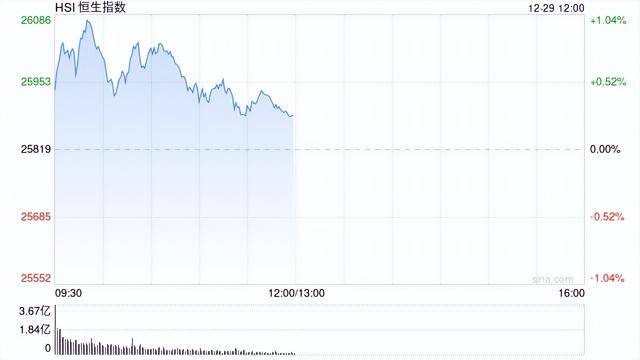
Market Overview - The Hong Kong stock market opened high but closed lower, with the Hang Seng Index down 0.71% to 25,635.23 points and a total turnover of HKD 224.51 billion [1] - The Hang Seng Tech Index fell 0.3% to 5,483.01 points, while the Hang Seng China Enterprises Index decreased by 0.26% to 8,891.71 points [1] Consensus and Divergences - Huatai Securities noted two main consensus points: 1. The logic of the bulk commodity sector is solid, leading to a rapid revaluation 2. Weak recovery in domestic demand suggests a left-side allocation in the consumer sector [1] Blue Chip Performance - BYD Company (01211) led blue-chip stocks, rising 3.74% to HKD 97.1, contributing 20.66 points to the Hang Seng Index [2] - Other notable blue-chip performances included Geely Automobile (00175) up 3.43% and Industrial and Commercial Bank of China (01398) up 1.63% [2] Sector Highlights - The automotive sector saw most stocks rise, with NIO-SW (09866) up 4.89% and Xpeng Motors-W (09868) up 3.88% [3] - The robotics sector showed strong performance, with MicroPort Robotics-B (02252) surging 25.85% and UBTECH (09880) rising 9.13% [4] Individual Company News - UBTECH plans to acquire Fenglong Co. for HKD 1.665 billion, focusing on garden machinery and automotive components [5] - MicroPort Robotics reported over 230 cumulative orders for its surgical robots, with over 160 orders for its bronchoscopic surgical robot "Dudao" [5] Gold Sector Performance - Gold stocks generally retreated, with Zijin Mining International (02259) down 5.86% and Chifeng Jilong Gold Mining (06693) down 5.4% [5] - The gold market experienced volatility, with spot gold prices dropping below USD 4,450 per ounce [6] Power Sector Performance - Power stocks faced pressure, with Huaneng International (00902) down 6.48% and Datang International Power Generation (00991) down 4.7% [6] - The announcement of long-term electricity prices in Guangdong indicated a decline, with a 19.72 cents per kilowatt-hour drop [6] Notable Stock Movements - Junda Co. (02865) surged 21.65% following a strategic partnership announcement in the space energy sector [7] - Youjia Innovation (02431) rose 15.45% as the first batch of L3 autonomous vehicles began large-scale operation [8] - Goldwind Technology (02208) increased by 13.7% after the release of new listing standards for commercial rocket companies [9] - Jiantao Laminates (01888) rose 6.81% due to a price increase announcement amid rising copper prices [10] - MGM China (02282) fell 17.14% after a report indicated a significant increase in brand usage fees starting in 2026 [11]



港股收盘 | 恒指收跌0.71% 汽车、机器人概念股活跃 黄金股普遍回吐
Zhi Tong Cai Jing· 2025-12-29 08:43
Market Overview - The Hong Kong stock market opened high but closed lower, with the Hang Seng Index down 0.71% to 25,635.23 points and a total turnover of HKD 224.51 billion [1] - The Hang Seng Tech Index fell 0.3% to 5,483.01 points, while the Hang Seng China Enterprises Index decreased by 0.26% to 8,891.71 points [1] - Huatai Securities noted significant volatility in asset performance this year, leading to a decline in the clarity of investment themes [1] Blue Chip Performance - BYD (01211) led blue-chip stocks, rising 3.74% to HKD 97.1, contributing 20.66 points to the Hang Seng Index [2] - Other notable blue-chip performances included Geely Automobile (00175) up 3.43% and Industrial and Commercial Bank of China (01398) up 1.63% [2] - Sands China (01928) and CK Hutchison Holdings (00001) faced declines of 4.46% and 3.35%, respectively, negatively impacting the index [2] Sector Highlights - The automotive sector saw most stocks rise, with NIO-SW (09866) up 4.89% and Xpeng Motors-W (09868) up 3.88% [3] - The commercial aerospace sector experienced significant gains, with JunDa Co. (002865) surging 21% due to strategic partnerships in space energy applications [4][7] - Robotics stocks showed strong performance, with MicroPort Robotics-B (02252) rising 25.85% following the establishment of a new standards committee for humanoid robots [4] Individual Company News - Youjiao Innovation (02431) saw a 15.45% increase as the first batch of L3 autonomous vehicles began large-scale operation [8] - MGM China (02282) faced a significant drop of 17.14% due to increased brand usage fees expected to reach HKD 1.2 billion in 2026, impacting EBITDA forecasts [11] - JunDa Co. announced a strategic investment in Shangyi Optoelectronics, focusing on perovskite battery technology for space applications [7]
港股收评:恒指跌0.71%科指跌0.3%!黄金股走弱汽车股走强,蔚来涨4%,紫金黄金国际跌5%,阿里小米腾讯跌1%
Sou Hu Cai Jing· 2025-12-29 08:26
Market Overview - The Hang Seng Index closed at 25,635.23, down 0.71% [2] - The Hang Seng Tech Index fell by 0.30% to 5,483.01 [2] - The State-Owned Enterprises Index decreased by 0.26% to 8,891.71 [2] Automotive Sector - NIO's stock rose over 4%, with a closing price of 40.320, reflecting a 4.89% increase [3] - The central economic work conference and the Ministry of Finance have clarified policies to optimize the "two new" initiatives, focusing on replacing old high-emission vehicles and enhancing subsidies for new energy vehicles [1][2] Gaming Sector - MGM China saw a significant drop of over 17% in its stock price, closing at 12.910 [4] - A new long-term brand cooperation agreement with MGM International is expected to increase brand usage fees from 1.75% to 3.5%, leading to a projected rise in brand fees to HKD 1.2 billion in 2026, up from HKD 600 million in 2025 [3][4] Gold Sector - Gold stocks weakened, with Zijin Mining International dropping over 5% [4] - Spot gold prices fell below USD 4,450 per ounce, influenced by expectations of delayed interest rate cuts by the Federal Reserve due to fiscal and monetary policies [4][5] Brokerage Sector - Chinese brokerage stocks declined, with China International Capital Corporation (CICC) falling over 2% to 19.570 [6] - A report indicates that the brokerage industry is expected to benefit from policies promoting direct financing and the growing demand for standardized products like ETFs [6]
火山引擎官宣成为总台春晚独家AI云合作伙伴,AI人工智能ETF(512930)涨近1%
Xin Lang Cai Jing· 2025-12-29 05:46
Group 1 - The core viewpoint of the news highlights the significant growth and commercialization potential of AI applications in China, particularly with the announcement of Volcano Engine as the exclusive AI cloud partner for the 2026 Spring Festival Gala [1] - The Zhongzheng Artificial Intelligence Theme Index (930713) increased by 0.66%, with notable stock performances from companies such as Tuowei Information (up 9.80%) and Cambrian (up 5.86%) [1] - The AI ETF (512930) also saw an increase of 0.88%, indicating a positive market sentiment towards AI-related investments [1] Group 2 - The Zhongzheng Artificial Intelligence Theme Index comprises 50 listed companies that provide essential resources, technology, and application support for AI, reflecting the overall performance of AI-related securities [2] - As of November 28, 2025, the top ten weighted stocks in the index accounted for 63.92% of the total index weight, with companies like Zhongji Xuchuang and Hikvision among the leaders [2] - The AI ETF has various connection options for investors, including multiple classes of funds for different investment strategies [2]