
陕西煤业

Search documents
供给趋紧需求向好,煤价有望震荡上行,坚定逢低配置
Xinda Securities· 2025-10-26 06:57
Report Industry Investment Rating - The investment rating for the coal mining industry is "Bullish" [2] Report's Core View - Currently at the beginning of a new upward cycle in the coal economy, with fundamental and policy factors in resonance, it's a good time to allocate coal stocks on dips. The coal supply bottleneck is expected to last until the 15th Five - Year Plan. With the westward shift of coal layout and rising costs, coal prices are likely to remain high. The coal sector is a high - performance, high - cash, and high - dividend asset, and the team continues to be bullish on the coal sector and suggests investors focus on the allocation opportunities at the current stage [3][11][12] Summary by Directory I. This Week's Core View and Key Focus - **Core View**: In the current coal economic cycle, supply is tightening due to policies like "over - production inspection", and demand is expected to pick up with the "peak winter" approaching. Coal prices are expected to rise in a volatile manner. The underlying investment logic of coal capacity shortage remains unchanged, and coal stocks are of high cost - effectiveness. Suggest investors allocate on dips [3][11] - **Investment Suggestions**: Focus on stable companies like China Shenhua, Shaanxi Coal Industry; oversold and high - elasticity companies like Yankuang Energy; and high - quality coking coal companies like Lu'an Environmental Energy. Also, pay attention to Huayang Co., Ltd., Yankuang Australia, etc. [3][12] - **Key Focus**: In the first three quarters, the national raw coal output was 3.57 billion tons, a 2.0% year - on - year increase. In September, the electricity consumption increased by 4.5% year - on - year. Australia's coal exports in the first three quarters of 2025 are expected to decline by 5.3% year - on - year [13] II. This Week's Performance of Coal Sector and Individual Stocks - The coal sector rose 1.46% this week, underperforming the broader market. The CSI 300 rose 3.24% to 4660.68. The top three performing sectors were communication, electronics, and machinery [14] - The thermal coal, coking coal, and coke sectors rose 1.68%, 0.89%, and 1.08% respectively [16] - The top three gainers in the coal mining and washing sector were Shanghai Energy (5.65%), Xinji Energy (4.72%), and Pingdingshan Tianan Coal Mining Co., Ltd. (3.83%) [19] III. Coal Price Tracking - **Coal Price Index**: As of October 24, the comprehensive transaction price of CCTD Qinhuangdao thermal coal (Q5500) was 691.0 yuan/ton, up 6.0 yuan/ton week - on - week. The comprehensive average price index of Bohai Rim thermal coal (Q5500K) was 684.0 yuan/ton, up 4.0 yuan/ton week - on - week. The annual long - term contract price of CCTD Qinhuangdao thermal coal (Q5500) was 676.0 yuan/ton, up 2.0 yuan/ton month - on - month [24] - **Thermal Coal Price**: At Qinhuangdao Port, the market price of Shanxi - produced thermal coal (Q5500) was 768 yuan/ton on October 25, up 28 yuan/ton week - on - week. In production areas, prices in Shaanxi, Inner Mongolia, and Datong also increased. Internationally, some prices rose while others fell [30] - **Coking Coal Price**: At ports like Jingtang Port and Lianyungang, and in production areas like Linfen and Yanzhou, coking coal prices increased. The CIF price of Australian Peak Downs hard coking coal in China also rose [32] - **Anthracite and Pulverized Coal Price**: The car - loading price of Jiaozuo anthracite and the car - loading prices of pulverized coal in Changzhi and Yangquan increased [40] IV. Coal Supply and Demand Tracking - **Coal Mine Capacity Utilization**: As of October 24, the capacity utilization rate of sample thermal coal mines was 91%, down 0.7 percentage points week - on - week, and that of sample coking coal mines was 85.06%, down 2.3 percentage points week - on - week [45] - **Import Coal Price Difference**: As of October 24, the price difference of 5000 - kcal and 4000 - kcal thermal coal between domestic and international markets decreased [43] - **Coal - fired Power Consumption and Inventory**: Inland 17 provinces saw an increase in daily coal consumption and inventory, while coastal 8 provinces saw a decrease in daily consumption and an increase in inventory [46] - **Downstream Metallurgical Demand**: The Myspic composite steel price index rose, the price of Tangshan - produced primary metallurgical coke remained flat, the blast furnace operating rate increased, the average profit per ton of coke for independent coking enterprises decreased, the profit per ton of steel for blast furnaces increased, the iron - scrap price difference increased, and the scrap consumption ratio of pure blast furnace enterprises increased [64][65] - **Downstream Chemical and Building Materials Demand**: The prices of urea in some regions changed, the national methanol price index fell, the national ethylene glycol price index rose, the national acetic acid price index fell, the national synthetic ammonia price index rose, the national cement price index fell, the weekly coal consumption in the chemical industry decreased, the cement clinker capacity utilization rate increased, and the float glass operating rate remained flat [68][72][74] V. Coal Inventory Situation - **Thermal Coal Inventory**: Qinhuangdao Port's coal inventory increased, the inventory of 55 ports' thermal coal decreased, and the inventory of sample mines' thermal coal decreased [88] - **Coking Coal Inventory**: The production area's coking coal inventory decreased, the port's coking coal inventory increased, the coking enterprises' coking coal inventory increased, and the steel mills' coking coal inventory decreased [89] - **Coke Inventory**: The coking enterprises' coke inventory decreased, the port's coke inventory increased, and the steel mills' coke inventory decreased [91] VI. Coal Transportation Situation - **International and Domestic Coal Transportation**: As of October 24, the Baltic Dry Index (BDI) was 1991.0 points, down 78.0 points week - on - week. The average daily coal shipment volume of the Datong - Qinhuangdao Railway this week was 100.2 tons, up 0.18 tons week - on - week [104] - **Cargo - to - Ship Ratio of Four Major Ports in the Bohai Rim**: As of October 24, the inventory of four major ports in the Bohai Rim was 1430.9 tons, down 22.10 tons week - on - week, the number of anchored ships was 100, up 8 week - on - week, and the cargo - to - ship ratio was 14.3, down 1.48 week - on - week [102] VII. Weather Situation - As of October 24, the Three Gorges outflow was 11900 cubic meters per second, up 19.36% week - on - week. In the next 10 days, there will be significant precipitation in many regions, and some areas will experience more precipitation than usual. In the long - term, there will also be precipitation in some regions, and the temperature in some areas will be higher or lower than normal [109] VIII. Valuation Table and Key Announcements of Listed Companies - **Valuation Table**: The table shows the closing prices, net profits attributable to the parent company, EPS, and PE ratios of multiple listed coal companies from 2024 to 2027 [110] - **Key Announcements**: This week, companies such as Huaihe Energy, Shanxi Coking Coal, and China Shenhua made announcements regarding asset acquisitions, share pledge releases, profit distributions, and project commissioning [111][113][114]



煤价持续上涨,短期或涨势暂缓、蓄力旺季涨价动能
Minsheng Securities· 2025-10-26 05:11
Investment Rating - The report maintains a "Buy" rating for the coal sector, with specific recommendations for various companies based on their performance and market conditions [3][4]. Core Insights - Coal prices continue to rise, with short-term momentum potentially slowing down as the market prepares for peak demand season. The primary driver of the recent price increase is supply contraction due to production checks, leading to an unexpected rebound in October electricity coal demand [1][7]. - The report anticipates that coal prices may exceed 900 RMB/ton by the end of the year, driven by seasonal demand and ongoing supply constraints [1][7]. - The focus on safety inspections and production checks is expected to further tighten supply, enhancing the upward price momentum as winter approaches [1][7]. Summary by Sections Industry Investment Rating - The coal sector is rated positively, with specific companies highlighted for their strong performance and potential for growth [3][4]. Market Dynamics - The report notes that the coal price has been rising, with a slight slowdown in momentum observed in the latter half of the week. The increase is attributed to supply reductions from production checks and a seasonal uptick in demand as temperatures drop [1][7]. - The report highlights that from July 2025, the monthly year-on-year decline in national raw coal production has been 3.8%, 3.2%, and 1.8%, indicating a tightening supply situation [1][7]. Company Recommendations - Recommended companies include: 1. High spot price elasticity stocks: Lu'an Huanneng, Yanzhou Coal Mining 2. Stable performance and growth stocks: Jinkong Coal Industry, Huayang Co., Ltd. 3. Companies with recovery in production: Shanxi Coal International 4. Industry leaders with stable performance: China Shenhua, China Coal Energy, Shaanxi Coal and Chemical Industry [2][11]. Price Trends - As of October 17, coal prices at Qinhuangdao Port for Q5500 thermal coal reached 768 RMB/ton, reflecting a week-on-week increase of 28 RMB/ton. Prices in various production areas also showed upward trends [8][10]. Supply and Demand Analysis - The report indicates that supply disruptions are intensifying, particularly in the coking coal market, with production declines due to environmental checks and operational adjustments in several regions [2][10]. - The report also notes that the average daily coal consumption in power plants has shown fluctuations, with a recent increase in demand as winter approaches [9][10]. Company Performance - The report provides insights into the performance of key companies, with notable increases in production and sales for several firms, while others have faced declines in revenue and profit margins [37][44]. Conclusion - The coal sector is positioned for potential growth, driven by supply constraints and seasonal demand increases, with specific companies recommended for investment based on their market positioning and performance metrics [2][11].



平安基金高勇标旗下平安瑞兴A三季报最新持仓,重仓宁波银行
Sou Hu Cai Jing· 2025-10-25 15:25
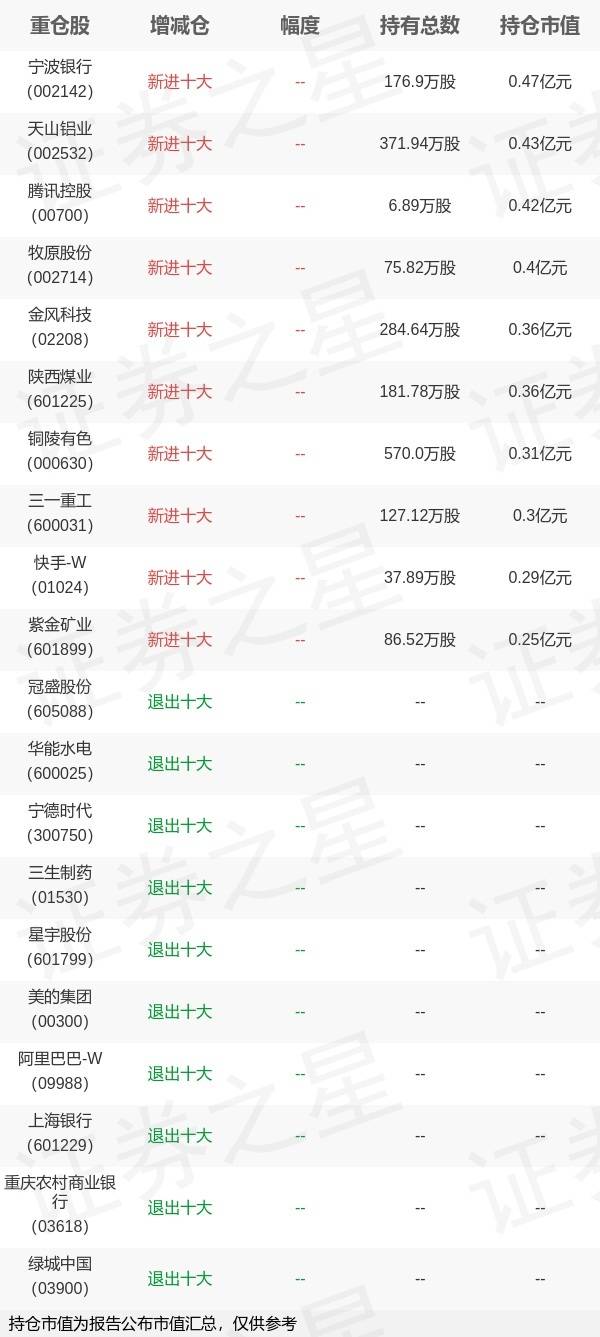
Group 1 - The core point of the article is the performance and changes in the top holdings of the Ping An Ruixing 1-Year Holding Mixed Fund, which reported a net value growth rate of 6.38% over the past year [1] - The fund's top ten holdings saw the addition of several new stocks, including Ningbo Bank, Tianshan Aluminum, Tencent Holdings, Muyuan Foods, and others, indicating a diversification strategy [1] - Ningbo Bank emerged as the largest holding with a 0.69% allocation, while several previous top holdings such as Guansheng Co., Huaneng Hydropower, and Alibaba were removed from the list [1] Group 2 - The new top ten holdings include stocks with significant share quantities and market values, such as Tianshan Aluminum with 3.72 million shares valued at 0.43 billion and Tencent Holdings with 68,900 shares valued at 0.42 billion [1] - The fund's adjustments reflect a strategic shift in investment focus, moving away from previously held stocks to new opportunities in the market [1] - The overall market sentiment and performance of the fund suggest a cautious yet optimistic approach to investment in the current economic climate [1]


信用利差周度跟踪 20251025:信用利差压缩向中长端传导,二永债重回震荡格局-20251025
Xinda Securities· 2025-10-25 15:20
Report Industry Investment Rating No relevant content provided. Core Viewpoints - Credit spread repair has spread to the medium and long - ends. Interest - rate bonds continued to fluctuate. Credit bond yields at all maturities and ratings decreased significantly, with larger declines at medium and long - ends. Credit spreads at all ratings converged, with more significant compression in 5Y and above varieties [2][5]. - Urban investment bond spreads generally declined by 5 - 6BP. Spreads of external rating AAA, AA +, and AA platforms decreased. By administrative level, provincial and municipal platform spreads decreased by 5BP, and district - county platform spreads decreased by 6BP [2][9]. - Most industrial bond spreads declined, while spreads of mixed - ownership and private real - estate bonds continued to rise. Central and state - owned enterprise real - estate bond spreads decreased, while those of mixed - ownership and private real - estate bonds increased. Coal, steel, and some chemical bond spreads decreased [2][18]. - The yields of secondary and perpetual bonds returned to a fluctuating pattern, with low - grade secondary bonds making up for losses. Yields and spreads of different maturities and ratings showed different changes [2][27]. - The 3Y excess spreads of industrial and urban investment perpetual bonds diverged, while the 5Y excess spreads were stable [2][31]. Summary by Directory 1. Credit Spread Repair Spreads to the Medium and Long - Ends - Interest - rate bonds fluctuated. 1Y, 7Y, and 10Y Guokai bond yields rose by 2BP, 3BP, and 1BP respectively, while 3Y and 5Y yields remained flat. Credit bond yields at all maturities and ratings decreased significantly, with larger declines at medium and long - ends. Credit spreads at all ratings converged, with more significant compression in 5Y and above varieties. Rating and term spreads also showed different changes [5]. 2. Urban Investment Bond Spreads Generally Decline by 5 - 6BP - By external rating, AAA platform spreads decreased by 5BP, AA + and AA by 6BP. Different provinces showed different decline ranges. By administrative level, provincial and municipal platform spreads decreased by 5BP, and district - county platform spreads decreased by 6BP [9][13][15]. 3. Most Industrial Bond Spreads Decline, while Spreads of Mixed - Ownership and Private Real - Estate Bonds Continue to Rise - Central and state - owned enterprise real - estate bond spreads decreased by 3 - 4BP, mixed - ownership real - estate bond spreads increased by 17BP, and private real - estate bond spreads increased by 37BP. Coal, steel, and some chemical bond spreads decreased [18]. 4. The Yields of Secondary and Perpetual Bonds Return to a Fluctuating Pattern, with Low - Grade Secondary Bonds Making up for Losses - 1Y AA + and AAA - grade secondary capital bond yields rose by 1 - 2BP, AA grade remained flat, and all - grade perpetual bond yields rose by 1BP, with spreads compressing by 0 - 2BP. 3Y AAA - grade secondary bond yields rose by 3BP, AA + grade by 1BP, AA - grade decreased by 2BP, and all - grade perpetual bond yields remained flat. 5Y AA + and above - grade secondary bond yields and spreads changed within 1BP, AA - grade spreads and yields decreased by 5BP; all - grade perpetual bond yields rose by 1 - 2BP, and spreads rose by 0 - 1BP [27]. 5. The 3Y Excess Spreads of Industrial and Urban Investment Perpetual Bonds Diverge, while the 5Y Excess Spreads are Stable - The 3Y excess spread of industrial AAA perpetual bonds decreased by 1.62BP to 13.89BP, at the 35.51% quantile since 2015. The 5Y excess spread remained flat at 12.39BP, at the 26.19% quantile. The 3Y excess spread of urban investment AAA perpetual bonds increased by 1.67BP to 6.64BP, at the 8.51% quantile; the 5Y excess spread decreased by 0.08BP to 11.00BP, at the 16.51% quantile [31]. 6. Credit Spread Database Compilation Instructions - Market - wide credit spreads, commercial bank secondary and perpetual spreads, and urban investment/industrial perpetual bond spreads are based on ChinaBond medium - short - term notes and ChinaBond perpetual bond data. Urban investment and industrial bond spreads are compiled and statistically analyzed by the R & D center of Cinda Securities. Historical quantiles are calculated since the beginning of 2015 [36]. - The calculation methods for individual bond spreads, excess spreads, and sample selection criteria are provided [38].
煤价继续走强涨幅收窄,供需边际改善后市乐观
ZHONGTAI SECURITIES· 2025-10-25 12:53
Investment Rating - The report maintains an "Overweight" rating for the coal industry, indicating a positive outlook for investment opportunities in this sector [5]. Core Views - The coal price continues to strengthen, with a marginal improvement in supply and demand dynamics, leading to an optimistic outlook for the future [1][8]. - The report highlights that the coal supply is expected to contract due to various factors, including increased safety inspections and government policies aimed at reducing overproduction [7][8]. - As winter approaches, the demand for electricity coal is anticipated to rise, further supporting coal prices [8]. Summary by Sections 1. Industry Overview - The coal industry comprises 37 listed companies with a total market capitalization of approximately 1,982.12 billion yuan [2]. - The report notes a significant increase in coal prices, with the port price for thermal coal exceeding 770 yuan/ton [7]. 2. Supply and Demand Dynamics - The report indicates that domestic coal supply is expected to contract, with coal imports showing a downward trend [7]. - Recent data shows that coal consumption in 25 provinces has increased, with a daily consumption of 5.335 million tons, reflecting a year-on-year increase of 6.94% [8]. 3. Company Performance and Recommendations - Key companies such as China Shenhua, Yancoal Energy, and Shanxi Coking Coal are highlighted as having strong performance and growth potential [5][13]. - The report recommends focusing on high-elasticity stocks like Yancoal Energy, Shanxi Coal International, and Jin控 Coal Industry, which are expected to benefit from the improving coal price environment [8][13]. 4. Price Tracking - The report tracks coal prices, noting that the price of thermal coal at the port has increased by 22 yuan/ton week-on-week [8]. - The average daily production of thermal coal from sample mines is reported at 5.479 million tons, showing a week-on-week decrease of 0.78% [8]. 5. Future Outlook - The report suggests that the coal sector is entering a new upward cycle, with improving fundamentals and potential for price increases due to seasonal demand [8][9]. - The upcoming quarterly reports from major coal companies are expected to confirm the industry's recovery and upward trend in profitability [8].


煤炭:迎峰度冬在即,煤价强势攀升
Huafu Securities· 2025-10-25 11:34
Investment Rating - The report suggests a positive outlook for the coal industry, indicating potential investment opportunities in high-quality core stocks [5][6]. Core Views - The report emphasizes that stabilizing coal prices is crucial for reversing the Producer Price Index (PPI) decline, with a noted correlation between coal prices and PPI [5]. - It highlights that the coal industry may still be in a "golden era" due to energy transformation demands and strict production capacity controls under carbon neutrality policies [5]. - The report anticipates that coal prices will experience fluctuations but trend upwards, with a focus on quality stocks as primary investment targets [5]. Summary by Sections Thermal Coal - As of October 24, 2025, the Qinhuangdao 5500K thermal coal price is 770 CNY/ton, up 2.9% week-on-week [3][28]. - Daily average production from 462 sample mines is 5.479 million tons, down 4.3% week-on-week and 5.7% year-on-year [3][36]. - The report notes a significant drop in daily consumption at power plants, with a slight decrease in inventory levels [3][36]. Coking Coal - The price of main coking coal at Jingtang Port is 1,760 CNY/ton, reflecting a week-on-week increase of 2.9% [4][65]. - Daily average production from 523 sample mines is 761,000 tons, down 2.3% week-on-week [4][64]. - The report indicates a slight decrease in coking coal inventory levels across various regions [4][64]. Investment Recommendations - The report recommends focusing on companies with strong resource endowments and stable operating performance, such as China Shenhua, China Coal Energy, and Shaanxi Coal and Chemical [6]. - It also suggests looking at companies with production growth potential that can benefit from the coal price cycle, including Yanzhou Coal Mining, Huayang Co., and Gansu Energy [6]. - Companies with global resource scarcity attributes and those involved in coal-electricity integration models are highlighted as potential investment targets [6].

煤炭开采板块10月24日跌0.48%,辽宁能源领跌,主力资金净流出12.44亿元
Zheng Xing Xing Ye Ri Bao· 2025-10-24 08:29
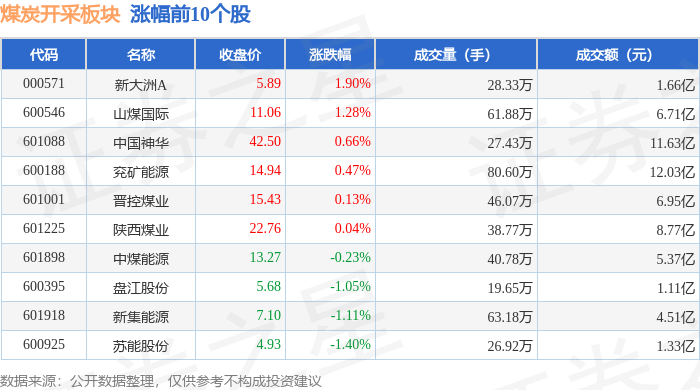
Core Insights - The coal mining sector experienced a decline of 0.48% on October 24, with Liaoning Energy leading the drop [1] - The Shanghai Composite Index closed at 3950.31, up 0.71%, while the Shenzhen Component Index closed at 13289.18, up 2.02% [1] Coal Mining Sector Performance - Notable gainers included: - Xindazhou A (000571) with a closing price of 5.89, up 1.90% on a trading volume of 283,300 shares and a transaction value of 166 million yuan [1] - Shanmei International (600546) closed at 11.06, up 1.28% with a trading volume of 618,800 shares and a transaction value of 671 million yuan [1] - China Shenhua (601088) closed at 42.50, up 0.66% with a trading volume of 274,300 shares and a transaction value of 1.163 billion yuan [1] - Major decliners included: - Liaoning Energy (600758) closed at 4.28, down 9.51% with a trading volume of 1,205,100 shares and a transaction value of 529 million yuan [2] - Zhengzhou Coal Electricity (600121) closed at 5.12, down 8.57% with a trading volume of 1,753,800 shares and a transaction value of 911 million yuan [2] - Dayou Energy (600403) closed at 9.06, down 6.31% with a trading volume of 2,138,200 shares and a transaction value of 1.951 billion yuan [2] Capital Flow Analysis - The coal mining sector saw a net outflow of 1.244 billion yuan from major funds, while retail investors contributed a net inflow of 855 million yuan [2] - Notable capital flows included: - JinKong Coal Industry (601001) with a net inflow of 26.2343 million yuan from major funds, but a net outflow of 35.886 million yuan from retail investors [3] - Shanghai Energy (600508) had a net inflow of 18.8938 million yuan from major funds, with a net outflow of 24.8892 million yuan from retail investors [3] - Liaoning Energy (600758) experienced a net inflow of 12.1569 million yuan from major funds, but a significant net outflow of 83.95 million yuan from retail investors [3]

华源证券:“查超产”改善供需 煤价反弹或助力25Q3煤企业绩环比转增
Zhi Tong Cai Jing· 2025-10-24 07:21
Core Viewpoint - The recent "overproduction check" policy in the coal industry has led to a significant supply-side contraction, which is expected to stabilize and potentially increase coal prices in the long term [1][6]. Group 1: Supply-Side Policy Impact - The "overproduction check" initiated by the National Energy Administration on July 10, 2025, has resulted in a notable decrease in domestic raw coal production, with year-on-year declines of -3.8% and -3.2% in July and August respectively [1]. - The cumulative supply-demand surplus has decreased sharply from 96.29 million tons in the first half of the year to 14.96 million tons by the end of August 2025 [1]. - The price of Qinhuangdao 5500 kcal thermal coal increased from 621 CNY/ton on June 30, 2025, to 699 CNY/ton by September 30, 2025, marking a cumulative increase of 12.6% in Q3 [1]. Group 2: Price Trends and Performance - The average price of Qinhuangdao 5500 kcal thermal coal in Q3 2025 was reported at 672 CNY/ton, reflecting a quarter-on-quarter increase of 6.5% [2]. - The long-term contract price for thermal coal showed a slight decline of -0.7% in Q3, but this is not expected to have a significant negative impact due to the recovery of contract fulfillment rates [2]. - The price of coking coal saw a substantial increase, with the average price for main coking coal at Jing Tang Port reaching 1562 CNY/ton, up 18.8% quarter-on-quarter [2]. Group 3: Production and Cost Management - The overall production of listed coal companies remains within approved capacity limits, with minor overproduction expected to have limited impact on performance [3]. - Cost control has become a key strategy for coal companies in response to declining prices, with significant reductions in labor, material, and safety production costs observed in Q2 2025 [4]. - As coal prices rebound in Q3, it is anticipated that companies will maintain their cost levels rather than pursue further reductions [4]. Group 4: Seasonal Demand and Future Outlook - Despite September typically being a low-demand season for coal, the supply-side contraction is expected to keep prices stable, with a slight increase of 0.1% in September [6]. - The winter season is projected to see stronger demand for heating coal, which, combined with ongoing supply-side policies, may lead to a tighter coal supply and sustained high prices [6]. Group 5: Investment Recommendations - Companies to watch include stable large-scale thermal coal producers such as China Shenhua (601088), China Coal Energy (601898), and Shaanxi Coal and Chemical Industry (601225) [7]. - High-elasticity coal companies like Yanzhou Coal Mining (600188) and Jincheng Anthracite Mining (601001) are also recommended for potential investment [7]. - Quality coking coal companies such as Huaibei Mining (600985) and Pingdingshan Tianan Coal (601666) are highlighted as attractive investment opportunities [7].
同类规模最大的自由现金流ETF(159201)连续8天净流入,合计“吸金”3.15亿元
Sou Hu Cai Jing· 2025-10-24 02:19
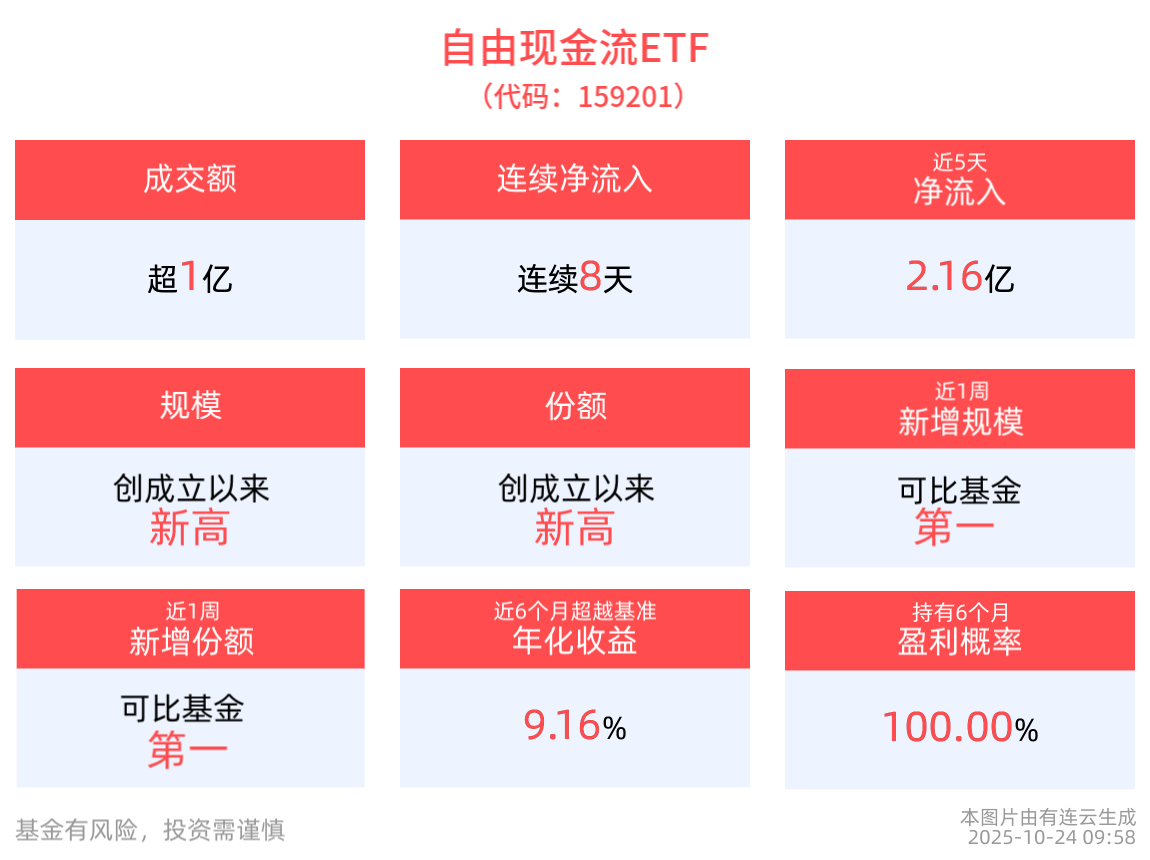
Core Viewpoint - The National Index of Free Cash Flow has shown positive performance, with the Free Cash Flow ETF (159201) experiencing significant inflows and growth in both share and asset size, indicating strong investor interest and confidence in the underlying assets [1][4]. Group 1: Performance Metrics - As of October 23, the Free Cash Flow ETF has achieved a net value increase of 20.82% over the past six months [4]. - The ETF's highest single-month return since inception was 7%, with a maximum consecutive monthly gain of 18.05% [4]. - The ETF has a monthly profit percentage of 85.71% and a historical six-month holding profit probability of 100% [4]. Group 2: Fund Inflows and Size - The Free Cash Flow ETF has seen continuous net inflows over the past eight days, totaling 315 million yuan [1]. - The latest share count for the ETF reached 4.125 billion, marking a new high since its inception [1]. - The total asset size of the ETF is now 4.785 billion yuan, also a record high since inception [1]. Group 3: Risk and Return Analysis - The maximum drawdown for the ETF in the last six months was 3.65%, which is the lowest among comparable funds [4]. - The recovery time after drawdown was 35 days, indicating the fastest recovery among similar funds [4]. Group 4: Fee Structure and Tracking Accuracy - The management fee for the Free Cash Flow ETF is 0.15%, and the custody fee is 0.05%, both of which are the lowest in its category [4]. - The tracking error over the past three months is 0.061%, demonstrating the highest tracking precision among comparable funds [4]. Group 5: Top Holdings - As of September 30, the top ten weighted stocks in the National Index of Free Cash Flow accounted for 54.91% of the index, with notable companies including China National Offshore Oil Corporation and SAIC Motor [5].
“查超产”改善供需煤价反弹或助Q3业绩环比转增 | 投研报告
Zhong Guo Neng Yuan Wang· 2025-10-24 01:28
Core Insights - The coal market is experiencing a rebound in prices due to effective supply-side policies, particularly the "check overproduction" initiative by the National Energy Administration, which has led to a significant reduction in coal supply and improved market balance [2][6] Group 1: Price Trends - The average price of Qinhuangdao 5500 kcal thermal coal for Q3 2025 is reported at 672 RMB/ton, reflecting a 6.5% increase from the previous quarter [1][3] - The long-term contract price for the same coal grade decreased slightly to 669 RMB/ton, a 0.7% decline, indicating a lag in response to market conditions [1][3] - The overall coal price recovery is a key positive variable for Q3 performance, with a cumulative increase of 12.6% in the price from June to September 2025 [2][3] Group 2: Supply and Demand Dynamics - The implementation of the "check overproduction" policy has resulted in a year-on-year decline in domestic raw coal production, with decreases of 3.8% and 3.2% in July and August respectively [2] - The cumulative supply surplus has significantly decreased from 96.29 million tons in the first half of the year to 14.96 million tons by the end of August 2025, indicating a tightening supply situation [2] - Despite a slight decline in production, the impact on overall performance is expected to be limited due to the rebound in coal prices, which has led to improved profit margins for coal companies [4][5] Group 3: Cost Management - Cost control remains a primary focus for coal companies, with significant reductions in operational costs observed in the first half of 2025 due to low coal prices [5] - As coal prices recover in Q3, it is anticipated that companies will maintain their cost levels rather than pursue further reductions, leading to stable or slightly increased costs in line with rising coal prices [5] Group 4: Future Outlook - The winter season is expected to see strong coal prices due to a combination of reduced supply and increased demand for heating, despite September typically being a low-demand period [6] - The coal sector is projected to experience a positive trend in Q3 financial results, supported by the price recovery and favorable market conditions [5][6] - Recommended investment targets include stable large-scale thermal coal companies and high-elasticity coal firms, indicating a strategic focus on resilient players in the market [6]