迈瑞医疗

Search documents
生物医药行业周报:行业周报礼来替尔泊肽全线爆发,2025年合计贡献365亿美元-20260208
Ping An Securities· 2026-02-08 10:09
证券研究报告 行业周报 礼来替尔泊肽全线爆发,2025年合计贡献365亿美元 生物医药行业强于大市(维持) 平安证券研究所生物医药团队 分析师: 叶寅投资咨询资格编号:S1060514100001邮箱:YEYIN757@PINGAN.COM.CN 倪亦道投资咨询资格编号:S1060518070001邮箱:NIYIDAO242@PINGAN.COM.CN 韩盟盟投资咨询资格编号:S1060519060002邮箱:HANMENGMENG005@PINGAN.COM.CN 裴晓鹏投资咨询资格编号:S1060523090002邮箱:PEIXIAOPENG719@PINGAN.COM.CN 何敏秀投资咨询资格编号:S1060524030001邮箱:HEMINXIU894@PINGAN.COM.CN 王钰畅投资咨询资格编号:S1060524090001邮箱:WANGYUCHANG804@PINGAN.COM.CN 曹艳凯投资咨询资格编号:S1060524120001邮箱:CAOYANKAI947@PINGAN.COM.CN 张梦鸽投资咨询资格编号:S1060525070003邮箱:ZHANGMENGGE752@PINGA ...

全球“药王”易主!医药巨头们的最新财报,透露了哪些“财富密码”?
Xin Lang Cai Jing· 2026-02-08 02:12
Group 1: US Pharmaceutical Earnings Season - Eli Lilly reported Q4 revenue of $19.3 billion, a 43% year-over-year increase, with non-GAAP EPS of $7.54, up 42%. The weight loss drug Zepbound has surpassed Novo Nordisk's Wegovy in prescriptions, and the 2026 revenue guidance is set at $80-83 billion, exceeding market expectations with a projected growth of 27% [1][10]. - Novo Nordisk's sales for semaglutide (Ozempic/Wegovy) are expected to reach $34.608 billion in 2025, accounting for 73.9% of total revenue. In China, Ozempic's sales are approximately ¥5.932 billion, while Wegovy's are about ¥874 million. The oral version of Wegovy is set to launch in the US on January 5, 2026, with around 50,000 prescriptions within the first month [2][10]. - Merck's Keytruda achieved annual sales of $31.68 billion, a 7% increase, nearing 50% of total revenue. The new pulmonary hypertension drug Winrevair generated $1.443 billion in sales, more than tripling from 2024 [4][10]. - Johnson & Johnson's Q4 revenue was $24.56 billion, exceeding expectations, with a 10% increase in the innovative pharmaceuticals segment. The 2026 revenue guidance is set at $99.5-100.5 billion, also above expectations [6][10]. - Pfizer's Q4 revenue was $17.6 billion, with a 9% increase excluding COVID products. The 2026 revenue guidance is conservative at $59.5-62.5 billion, reflecting declines in COVID product sales and patent expirations [7][10]. - Sanofi's Q4 earnings exceeded expectations, with record sales of Dupixent reaching €4.246 billion, a 32.2% year-over-year increase [8][10]. Group 2: Industry Trends and Insights - The current earnings season indicates that in the innovative-driven pharmaceutical industry, there are no eternal leaders, only continuous evolution [9][10]. - The competition in the GLP-1 drug market has intensified, with Eli Lilly's tirzepatide overtaking Novo Nordisk's semaglutide, marking a new phase in the industry [10]. - The slowdown in sales growth for Merck's Keytruda, despite record sales, highlights the need for new products and acquisitions to navigate the post-Keytruda era [10]. - The focus of competition is shifting from injectable to oral formulations, as seen with Novo Nordisk's oral Wegovy and Eli Lilly's multi-target drug Retatrutide, to build product moats [10]. - Price competition and pipeline iteration will be key observation points, with the impact of US drug pricing legislation becoming evident and the onset of a "price war" among GLP-1 drugs [10]. Group 3: Hong Kong Pharmaceutical Sector Opportunities - The Hong Kong pharmaceutical sector has seen significant changes, with innovation drugs remaining the strongest growth engine, shifting from "signing" to "realization" of value [11][12]. - The medical device sector is experiencing a "double recovery" opportunity as the impact of centralized procurement policies diminishes, leading to performance and valuation recovery [13][14]. - The Chinese traditional medicine sector is active, driven by favorable policies, but there is a "temperature difference" between policy drivers and fundamental performance, necessitating careful selection of stocks [17][19]. Group 4: ETF Configuration and Strategy - Valuations in the Hong Kong medical sector remain attractive, with the latest PE ratio at 30.77x, still low compared to the past five years [18][19]. - Macro liquidity conditions are favorable, with expectations of RMB appreciation and stable HKD attracting funds to Hong Kong stocks [18][19]. - The upcoming National People's Congress in March will clarify annual growth targets and industry policy priorities, serving as a critical point for risk appetite re-evaluation [18][19].

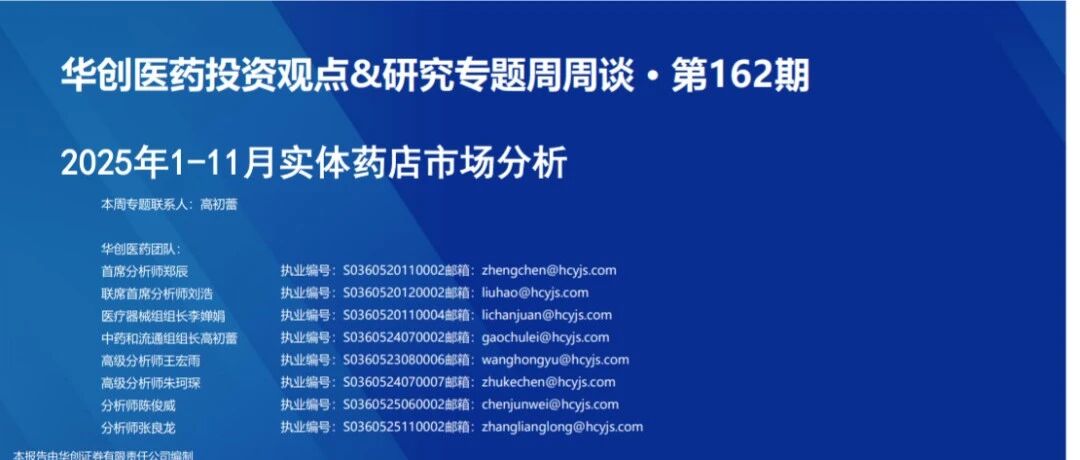
华创医药周观点:2025年1-11月实体药店市场分析 2026/02/07
华创医药组公众平台· 2026-02-07 14:58
Core Viewpoint - The pharmaceutical retail market is transitioning towards high-quality development, with significant growth opportunities anticipated in various segments, including traditional Chinese medicine, medical devices, and innovative drugs [17][22][46]. Market Overview - The retail scale of China's physical pharmacies for January to November 2025 is projected to reach 557.7 billion yuan, showing a slight year-on-year decline of 0.8%. However, the cumulative scale for October and November is expected to be 108.7 billion yuan, reflecting a year-on-year growth of 4.0% [22][30]. - The pharmaceutical retail market is experiencing a recovery phase, driven by ongoing healthcare reforms and the optimization of market structures, which are expected to enhance the industry's long-term growth prospects [22][30]. Category Analysis - **Pharmaceuticals**: The cumulative scale for pharmaceuticals from January to November 2025 is estimated at 453.4 billion yuan, with a year-on-year growth of 0.4%. The sales scale for October and November is projected to be 88 billion yuan, with a year-on-year increase of 5.5% [29]. - **Traditional Chinese Medicine (TCM)**: The cumulative scale for TCM from January to November 2025 is expected to be 42.9 billion yuan, reflecting a year-on-year decline of 4.2%. However, November shows a month-on-month growth of 12.5% [30]. - **Medical Devices**: The cumulative scale for medical devices is projected to be 26.1 billion yuan, with a slight year-on-year decline of 0.4%. The sales scale for October and November is expected to show a year-on-year growth of 6.3% [37]. - **Health Products**: The cumulative scale for health products is anticipated to be 21 billion yuan, with a year-on-year decline of 15.7%. However, November shows signs of recovery with a month-on-month growth of 5.3% [34]. Investment Opportunities - The pharmaceutical sector is expected to benefit from a low valuation environment, with public funds showing low allocation to the sector. The anticipated recovery in macroeconomic factors and the demand for major products are expected to drive growth in the industry [15]. - The innovative drug sector is transitioning from quantity to quality, with a focus on differentiated products and internationalization. Companies with strong pipelines and the ability to deliver profits are recommended for investment [15][46]. - The medical device market is witnessing a recovery in bidding volumes, with ongoing updates and international expansion opportunities. Companies focusing on innovation and product upgrades are expected to perform well [46]. Specific Product Trends - **Top Chemical Drugs**: In October and November 2025, the top 20 chemical drug categories accounted for 78.3% and 80.0% of the market share, respectively, with significant growth in categories such as anti-tumor drugs and systemic antiviral drugs [40][41]. - **Top Traditional Chinese Medicine Products**: The market share for TCM in November reached 86.4%, with notable growth in cold medications and cough remedies [44][45]. Conclusion - The pharmaceutical retail market is poised for a significant transformation, with various segments showing potential for growth. The ongoing reforms and market dynamics are expected to create a favorable environment for investment in the pharmaceutical and healthcare sectors [22][30][46].
华盖资本许小林:中国将诞生万亿医疗公司,四个方向迎来爆发
GLP1减重宝典· 2026-02-07 04:43
Core Viewpoint - The Chinese healthcare industry is at a historical turning point, transitioning from "following innovation" to "leading innovation," with the emergence of trillion-dollar companies becoming a tangible future rather than a distant dream [4][5]. Industry Milestones - By the end of 2025, significant milestones include Eli Lilly becoming the first healthcare company with a market value exceeding $1 trillion, the Hong Kong Stock Exchange leading global financing with over $36 billion, and 3SBio's $1.25 billion upfront payment, indicating China's innovative drugs gaining international pricing power [4][5][7]. Transformation of China's Healthcare Industry - China has evolved from being a major pipeline buyer to a core seller in global business development (BD) transactions, now accounting for 20% of the market, particularly in areas like Antibody-Drug Conjugates (ADC) [7]. - Despite this progress, there remains a significant gap in original innovation compared to the U.S., which is a key reason for the shift in national policy towards new drug innovation [7][8]. Investment Directions - **Direction One**: Investing in original innovations based on top Chinese research institutions is expected to yield high returns, despite the high risks associated with crossing the "valley of death" in technology and commercialization [8][10]. - **Direction Two**: Embracing "three no" companies (no revenue, no profit, not listed) with genuine innovative technologies is becoming a core strategy for professional funds, supported by a robust capital market that allows for high valuations [11][13]. - **Direction Three**: The integration of AI in healthcare is evolving from a mere enabling tool to a creator of new entities, with AI expected to play significant roles in clinical diagnosis, drug development, and even home health management [14][16]. - **Direction Four**: A new era of Chinese multinational corporations (MNCs) is anticipated, with several leading healthcare companies expected to surpass a market value of one trillion, leveraging both internal innovation and global acquisitions [17][19]. Future Outlook - The future of the Chinese healthcare industry is characterized by a convergence of policy, capital, technology (especially AI), and market dynamics, creating an environment ripe for investment in original innovations, pure innovation companies, and AI-driven healthcare solutions [19].
深圳创新“四姐妹”上榜胡润500强前十,迈瑞缩水760亿
Nan Fang Du Shi Bao· 2026-02-06 14:33
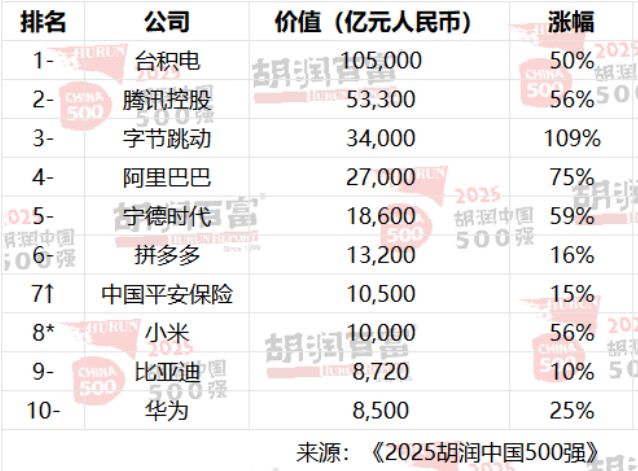
Core Insights - The latest Hurun China 500 list reveals the rankings of 500 non-state-owned enterprises in China, with a notable increase in the entry threshold to 34 billion RMB, a rise of nearly 30% compared to the previous year [1] - The list features 95 new entrants primarily from sectors such as consumer electronics, AI computing power, and new energy, while 99 companies dropped off the list, indicating a trend of fluctuation among companies [1] Group 1: Company Performance - Tencent's value reached 5.3 trillion RMB, marking a 50% increase, driven by strong performances in gaming, advertising, and fintech [2][3] - The "Shenzhen Four Sisters"—Huawei, BYD, Tencent, and China Ping An—are all in the top 10, with values of 850 billion RMB, 872 billion RMB, and 1.05 trillion RMB respectively, reflecting the resilience of Shenzhen's economy [3] - DJI, headquartered in Shenzhen, saw its value double due to its strong position in the consumer drone market and growth in overseas markets [5] Group 2: Industry Trends - The real estate sector saw a decline, with the number of listed companies dropping from 19 to 12 [1] - The Yangtze River Delta region has 161 companies in the Hurun China 500, accounting for 32% of the total, while the Guangdong-Hong Kong-Macau Greater Bay Area has 108 companies, representing 22% [4] - The report highlights that sectors such as AI computing, consumer electronics, innovative pharmaceuticals, and entertainment are key drivers of high-quality development in China's private economy [5]



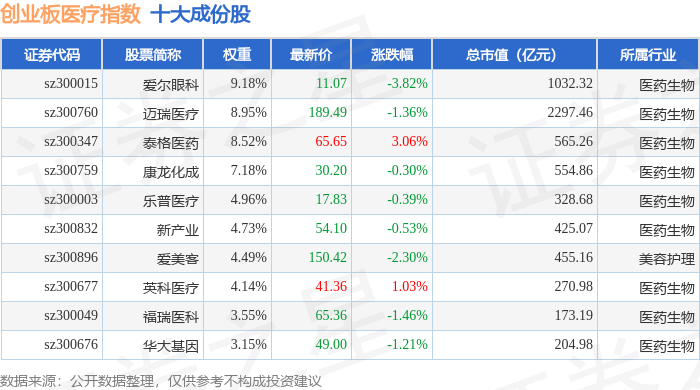
2月6日创业板医疗(970082)指数跌0.63%,成份股爱尔眼科(300015)领跌
Sou Hu Cai Jing· 2026-02-06 10:36
Core Viewpoint - The ChiNext Medical Index (970082) closed at 3882.75 points, down 0.63%, with a trading volume of 14.157 billion yuan and a turnover rate of 2.13% on February 6 [1] Group 1: Index Performance - Among the index constituents, 22 stocks rose while 28 stocks fell, with Tigermed leading the gainers at 3.06% and Aier Eye Hospital leading the decliners at 3.82% [1] - The top ten constituents of the ChiNext Medical Index include Aier Eye Hospital (9.18% weight, latest price 11.07, -3.82% change) and Tigermed (8.52% weight, latest price 65.65, +3.06% change) [1] Group 2: Market Capitalization - The total market capitalization of Aier Eye Hospital is approximately 103.232 billion yuan, while Tigermed's market capitalization is around 56.526 billion yuan [1] - Other notable companies include Mindray Medical (229.746 billion yuan) and Kanglong Chemical (55.486 billion yuan) [1] Group 3: Capital Flow - The net outflow of main funds from the ChiNext Medical Index constituents totaled 604 million yuan, while retail investors saw a net inflow of 412 million yuan [1] - The detailed capital flow shows that Tigermed had a net inflow of 14.716 million yuan from main funds, while retail investors experienced a net outflow of 1.41 million yuan [2]




医药生物行业双周报(2026、1、23-2026、2、5)-20260206
Dongguan Securities· 2026-02-06 05:14
Investment Rating - The report maintains a "Market Perform" rating for the pharmaceutical and biotechnology industry, indicating that the industry index is expected to perform within ±10% of the market index over the next six months [28][37]. Core Insights - The SW pharmaceutical and biotechnology industry underperformed the CSI 300 index, declining by 1.91% from January 23 to February 5, 2026, which is approximately 0.74 percentage points lower than the index [12]. - Most sub-sectors within the industry recorded negative returns during the same period, with offline pharmacies and vaccine sectors showing the best performance, increasing by 3.01% and 0.12% respectively, while other sectors like biological products and chemical preparations saw declines of 3.28% and 3.27% [13]. - Approximately 34% of stocks in the industry recorded positive returns, while 66% experienced negative returns during the reporting period [14]. - The overall price-to-earnings (PE) ratio for the SW pharmaceutical and biotechnology industry was approximately 51.00 times as of February 5, 2026, indicating a decrease in industry valuation [18]. Summary by Sections 1. Market Review - The SW pharmaceutical and biotechnology industry underperformed the CSI 300 index, with a decline of 1.91% from January 23 to February 5, 2026 [12]. - Most sub-sectors recorded negative returns, with offline pharmacies and vaccines performing relatively well [13]. - About 34% of stocks in the industry had positive returns, with significant variations in individual stock performance [14]. - The industry valuation has decreased, with a PE ratio of approximately 51.00 times [18]. 2. Industry News - The 11th batch of national procurement results is set to be implemented in February, with notifications already released by 17 provinces [26]. - The National Medical Insurance Administration has issued a notice to accelerate the cultivation and opening of application scenarios in the medical insurance field [25]. 3. Company Announcements - Jianyou Co., Ltd. announced that its subsidiary received FDA approval for its product, sodium selenite injection [27]. 4. Industry Outlook - The report suggests a focus on investment opportunities in the brain-computer interface sector as part of the 14th Five-Year Plan, with ongoing policy support [28]. - Recommended sectors for investment include medical devices, pharmaceutical commerce, aesthetic medicine, scientific services, hospital and diagnostic services, traditional Chinese medicine, innovative drugs, biological products, and CXO services [29].


深圳重磅!市值超19万亿元!
Zhong Guo Ji Jin Bao· 2026-02-06 02:57
Core Insights - Shenzhen has reached 600 listed companies with a total market capitalization exceeding 19 trillion yuan, showcasing its commitment to innovation and high-quality development [1] - The number of Shenzhen's domestic listed companies has grown by 35.03% during the 14th Five-Year Plan period, with a total market value of 12.59 trillion yuan as of October 2025, accounting for over 10% of the total market value of A-share listed companies [2] - Shenzhen's listed companies are leading in technological innovation, with over half of the companies on the ChiNext and Sci-Tech Innovation Board focusing on high-tech sectors [3] Group 1: Company Growth and Performance - Shenzhen's listed companies contributed over 20 billion yuan in taxes in the last five years and over 35 billion yuan in the last decade, supporting regional employment with over 4 million employees [2] - In the first three quarters of 2025, Shenzhen's listed companies achieved a total revenue of 5.20 trillion yuan and a net profit of 457.8 billion yuan, with revenue growth of 7.36% and net profit growth of 3.98%, surpassing the national average [2] - There are 20 companies in Shenzhen with a market value exceeding 100 billion yuan, with 8 of them forecasting positive earnings for 2025, totaling an expected profit of 253.9 billion yuan [2] Group 2: Technological Innovation - Shenzhen's listed companies are focusing on technological innovation, with 216 companies on the ChiNext and Sci-Tech Innovation Board, representing over half of the total, the highest among major cities in China [3] - The R&D intensity of 162 strategic emerging industry companies in Shenzhen is as high as 7%, with BYD leading with over 54 billion yuan in R&D investment [3] - Notable advancements include Hanon Medical's development of China's first ECMO system, which received EU MDR certification, and the successful R&D of key components for humanoid robots by Huichuan Technology [3][4] Group 3: Capital Market Innovations - Shenzhen companies are leveraging capital market innovations, with several becoming the first in their respective fields to list, such as Beixin Life, the first medical device company under the new Sci-Tech Innovation Board standards [6] - The city has seen a rise in "first stocks" in niche markets, contributing fresh capital to the market while meeting their financing needs [6] - Upcoming listings include Yingstone Innovation, expected to be the first global smart imaging company, and Youbixuan, a humanoid robot company, indicating a strong pipeline of innovative firms [6][7] Group 4: Future Prospects - Shenzhen has cultivated a robust pipeline of quality tech companies poised for future listings, with high-tech products like drones and 3D printers showing significant export growth [8][9] - The export of high-tech products from Shenzhen is projected to grow by 10.1% in 2025, driven by innovative products from companies like DJI and others [9]

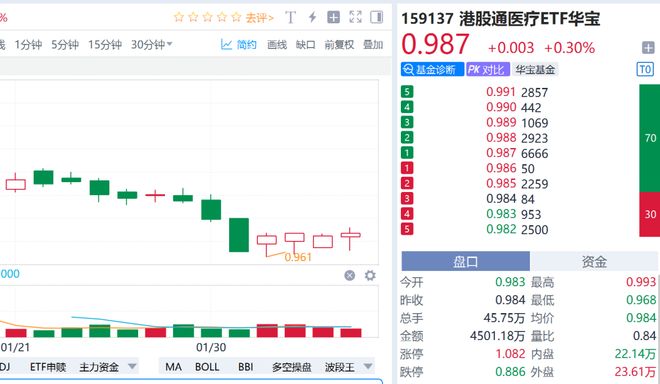
机构称医疗器械有望迎来行业新发展周期,医疗创新ETF(516820)交投活跃
Xin Lang Cai Jing· 2026-02-06 02:57
Group 1 - The core viewpoint of the news highlights the positive performance of the Chinese pharmaceutical and medical device innovation index, with significant gains in specific stocks and a new development plan for traditional Chinese medicine [1] - The China Securities Regulatory Commission and eight other departments have issued a plan to promote the high-quality development of traditional Chinese medicine, aiming to approve a batch of innovative traditional Chinese medicines and cultivate ten major traditional Chinese medicine products by 2030 [1] - The overall funding congestion in the innovative drug sector has slightly decreased compared to Q2, with some funds temporarily withdrawing from innovative drugs, while the medical device sector remains stable and is expected to attract more investment [1] Group 2 - The China Medical and Medical Device Innovation Index (931484) includes 30 listed companies with good profitability and growth potential, reflecting the overall performance of profitable and growth-oriented pharmaceutical and medical device companies [2] - As of January 30, 2026, the top ten weighted stocks in the index account for 63.9% of the total index, including companies like WuXi AppTec, Mindray Medical, and Hengrui Medicine [2]
600家上市公司背后:深圳如何实现从速度到质量的新跨越?
Nan Fang Du Shi Bao· 2026-02-06 02:35
Group 1 - Shenzhen's total number of listed companies has officially surpassed 600, comprising 426 domestic and 174 overseas companies, with a total market capitalization exceeding 19 trillion yuan [2] - During the 14th Five-Year Plan period, the number of domestic listed companies in Shenzhen grew by 35.03%, with a total market value of 12.59 trillion yuan as of January 2026, ranking second among major cities in China [2] - In the first three quarters of 2025, listed companies in Shenzhen achieved a cumulative operating income of 5.20 trillion yuan, a year-on-year increase of 7.36%, outpacing the national average [2] Group 2 - Approximately 80% of newly listed companies in Shenzhen are from the Sci-Tech Innovation Board and the Growth Enterprise Market, highlighting a strong focus on technological innovation [3] - The semiconductor and integrated circuit industry clusters have emerged as significant contributors, with companies like Zhongke Feicai and Laplace rapidly rising in the market [3] - Shenzhen's artificial intelligence and robotics sectors demonstrate global competitiveness, with companies like UBTECH and Huichuan Technology leading the way [3] Group 3 - The cluster of companies in new energy and green technology reflects Shenzhen's industrial transformation, with major players like BYD and Shihang New Energy leading the charge [4][5] - BYD's annual R&D investment exceeds 54 billion yuan, showcasing Shenzhen's commitment to core technology development [5] - The biopharmaceutical sector is also making strides, with companies like Beixin Life and Hanno Medical achieving significant technological breakthroughs [5] Group 4 - Shenzhen's capital market is characterized by a multi-dimensional structure, with a total market capitalization of 12.59 trillion yuan, accounting for over 10% of the total A-share market [6] - In the first three quarters of 2025, main board companies experienced revenue and net profit growth rates of 7.22% and 4.84%, respectively [6] - The overseas listing channel has become a significant growth driver, with 38 new overseas listed companies from Shenzhen between 2023 and 2025 [6] Group 5 - The active M&A market in Shenzhen has accelerated industrial upgrades, with 146 M&A transactions completed in 2025, totaling 86.645 billion yuan [7] - Companies like Luxshare Precision and China Resources Sanjiu are examples of successful acquisitions that enhance their competitive capabilities [7] - The capital market plays a crucial role in promoting high-level circulation among technology, capital, and industry [7] Group 6 - Recent listings of companies like Dongpeng Beverage and Beixin Life reflect the diverse sectors represented in Shenzhen's economy, including consumer goods, hard technology, high-end manufacturing, and modern services [8][9] - Dongpeng Beverage's growth illustrates the path of regional brands becoming national enterprises through capital markets [8] - Beixin Life's listing signifies the capital market's support for innovative biopharmaceutical companies [9] Group 7 - Shenzhen's comprehensive support ecosystem for businesses includes a clear growth path and tailored policies for different types of enterprises [10] - The city has over 20,000 national high-tech enterprises and 1,333 national specialized "little giant" companies, leading the nation in both total and incremental growth [10] - Financial support networks have facilitated over 2.8 trillion yuan in direct financing for Shenzhen enterprises during the 14th Five-Year Plan period [11] Group 8 - Shenzhen's capital market is transitioning from quantity accumulation to structural optimization and quality enhancement, with strategic emerging industries expected to become the main force in future listings [12] - The implementation of the "Shenzhen Action Plan for Promoting High-Quality Development of Mergers and Acquisitions" will enrich the cases of mergers and acquisitions for listed companies [13] - Shenzhen's R&D investment has significantly increased, reaching 2.453 trillion yuan by 2024, with an R&D intensity of 6.67%, ranking first among cities in China [13]