PUMA

Search documents
中银国际:料下半年中国运动鞋服行业竞争仍然激烈 整体消费增长面临挑战
Zhi Tong Cai Jing· 2025-09-17 05:53
Core Viewpoint - The competitive landscape of China's sports footwear and apparel industry is expected to remain intense in the second half of this year, with adverse weather conditions impacting off-season sales and cautious consumer attitudes posing challenges to overall consumption growth [1] Industry Summary - The sports footwear and apparel market may undergo accelerated reshuffling, with competitive local Chinese brands potentially gaining more market share, while international brands like Nike and PUMA are experiencing significant performance setbacks [1] - The report anticipates that international brands acquired by Chinese companies will continue to drive growth in the domestic market, while the overseas expansion of Chinese brands will serve as a long-term growth catalyst [1] - Market consolidation is expected to become more intense and volatile after this year's "Double Eleven" shopping festival [1]
星巴克中国借小红书改造门店;淮海路H&M重新升级开业;罗永浩:西贝的事情告一段落|品牌周报
36氪未来消费· 2025-09-14 14:05
Group 1 - Starbucks China announced a deep collaboration with Xiaohongshu to transform 1,800 stores into "interest community spaces" focusing on themes like pets, crafts, cycling, and running [3][4] - The concept of "Third Place," introduced by sociologist Ray Oldenburg, refers to informal public social spaces between home and work, which Starbucks has successfully commercialized [3][4] - The collaboration aims to extend Starbucks' brand experience beyond just coffee, enhancing its social attributes and cultural identity among younger users [4] Group 2 - H&M reopened its first brand experience center, "House of H&M," in Shanghai, featuring a 3,000 square meter space with multiple product categories and a café [5][6] - The H&M home series has primarily been sold online since its launch in mainland China in 2014, with plans for potential independent stores depending on consumer acceptance [6] Group 3 - The public dispute between Xibei's founder and Luo Yonghao over the use of pre-made dishes has led to a significant drop in Xibei's customer traffic and revenue [8][9] - The controversy highlights the lack of national standards for pre-made dishes in China, leading to differing interpretations between consumers and businesses [8][9] Group 4 - Uniqlo hosted a knitting party to promote its knitwear collection, which is a core product line for the brand, especially popular in the fall and winter seasons [11] - Although specific financial data is lacking, knitwear is estimated to contribute significantly to Uniqlo's overall revenue, potentially accounting for 20% to 30% [11] Group 5 - Lululemon celebrated its 10th anniversary on Tmall with a "Scuba Dynamic Theater" event featuring brand ambassadors and performances [13] - Maison Margiela appointed Miley Cyrus as its first-ever brand ambassador, marking a shift in the luxury brand's approach to celebrity endorsements [14][15] Group 6 - La Mer announced a three-year collaboration with the renowned SALK Institute to research cellular vitality and anti-aging, indicating a shift towards technology-driven skincare [17] - Giorgio Armani's will suggests a preference for selling shares to major fashion groups rather than remaining independent, signaling a potential shift in the luxury brand landscape [18] - Kering Group stated it would not sell its 29% stake in Puma, despite previous reports of seeking buyers, indicating stability in its investment strategy [19] - Ermenegildo Zegna reported a 3.4% decline in revenue but a 53% increase in net profit, attributed to improved profit margins following a direct-to-consumer transformation [20]



开润股份(300577):制造业务稳健增长 净利率改善显著
Xin Lang Cai Jing· 2025-09-03 04:50
Group 1 - The company reported a revenue of 2.427 billion in H1 2025, representing a year-on-year growth of 32.53%, while the net profit attributable to shareholders was 187 million, a decrease of 24.77% due to the impact of investment income from the acquisition of Jiale in H1 2024 [1] - The operational net profit growth rate, excluding the aforementioned impact, was 23.28%, with a non-recurring net profit of 181 million, an increase of 13.98% year-on-year [1] - In Q2 2025, the company achieved a revenue of 1.194 billion, a year-on-year increase of 29.54%, while the net profit attributable to shareholders was 101 million, a decrease of 42.78% [1] Group 2 - The bag manufacturing business generated a revenue of 1.419 billion in H1 2025, reflecting a year-on-year growth of 13.03%, supported by a core strategy targeting major clients [1] - The company’s production capacity for bags reached 22.0733 million units, a year-on-year increase of 3.55%, with a capacity utilization rate of 93.39%, up 2.15 percentage points [1] - The company has established a global supply chain advantage with clients including Nike, ADIDAS, Uniqlo, and others, with approximately 71% of production capacity located overseas, mainly in Indonesia and India [1] Group 3 - The apparel manufacturing segment reported a revenue of 678 million, a significant year-on-year increase of 148.25%, indicating effective implementation of the vertical integration strategy [2] - The subsidiary Shanghai Jiale achieved a revenue of 685 million in H1 2025, with a net profit margin of 5.08%, an increase of 1.8 percentage points year-on-year [2] - The company’s clothing production capacity was 30.0143 million units, with a utilization rate of 50.73%, and approximately 80% of production capacity located overseas, primarily in Indonesia [2] Group 4 - The brand management business generated a revenue of 311 million in H1 2025, a year-on-year increase of 8.87%, with distribution channel revenue from Xiaomi reaching 250 million, up 28.28% [2] - The self-owned brand "90 Points" has optimized its online channel operations, with online sales revenue of approximately 55.486 million, while also expanding into offline channels [2] Group 5 - The overall gross margin for H1 2025 was 24.66%, an increase of 0.72 percentage points, primarily due to improvements in the gross margin of the OEM business [3] - The company reported a significant increase in operating cash flow, reaching 239 million, a year-on-year growth of 3843%, indicating improved operational quality [3] - Inventory amounted to 861 million, a year-on-year increase of 19.33%, with an inventory turnover period of 85 days, an increase of 6 days year-on-year [3]
开润股份(300577):Q2业绩超市场预期 嘉乐净利率显著改善
Xin Lang Cai Jing· 2025-08-28 02:48
Event Overview - The company's revenue, net profit attributable to shareholders, net profit excluding non-recurring gains and losses, and operating cash flow for the first half of 2025 were 2.43 billion, 187 million, 181 million, and 239 million yuan, respectively, showing year-on-year growth of 32.53%, -24.77%, 13.98%, and 3843.34% [1] - The decline in net profit attributable to shareholders was mainly due to a gain of 96 million yuan from the fair value measurement of the equity of Shanghai Jiale included in the consolidated financial statements for the first half of 2024 [1] - The operating cash flow exceeded net profit due to a decrease in operating receivables and an increase in payables [1] Financial Performance - In the second quarter of 2025, revenue, net profit, and net profit excluding non-recurring gains and losses were 1.194 billion, 101 million, and 97 million yuan, respectively, with year-on-year growth of 29.54%, -42.78%, and 21.12% [1] - The performance exceeded market expectations, driven by continuous growth in 2B bag orders and improvements in Jiale's net profit margin [1] Dividend and Incentive Plan - The company plans to distribute a cash dividend of 1.57 yuan for every 10 shares, with a dividend payout ratio of 20% and a dividend yield of 1.37% [2] - The company announced an adjustment to the stock grant price for the 2023 restricted stock incentive plan from 8.24 yuan per share to 7.91 yuan per share [3] Business Segments - The 2B bag OEM business showed double-digit growth in the first half of 2025, with revenue of 1.419 billion yuan, a year-on-year increase of 13.03% [4] - The company maintained strategic communication with top global brands, ensuring stable and high-quality orders [4] - The total production capacity for bags in the first half of 2025 was 22.0733 million units, a year-on-year increase of 3.6%, with a capacity utilization rate of 93.4% [4] Shanghai Jiale Performance - The garment OEM revenue was 679 million yuan, a year-on-year increase of 148.25%, primarily due to the timing of consolidation and its own growth [5] - Shanghai Jiale's revenue for the first half of 2025 was 685 million yuan, with a year-on-year growth of 6.88% [5] 2C Business Growth - The 2C business revenue was 306 million yuan, a year-on-year increase of 8.87%, driven mainly by Xiaomi [6] - The company launched several new products in collaboration with Xiaomi, enhancing its brand presence [6] Profitability Analysis - The company's gross margin for the first half of 2025 was 24.7%, a year-on-year increase of 0.7 percentage points, while the net profit margin decreased [7] - The decline in net profit margin was attributed to an increase in financial expense ratio, a decrease in investment income proportion, and an increase in income tax proportion [7] Inventory and Receivables - The company's inventory amounted to 861 million yuan, a year-on-year increase of 19.33%, with inventory turnover days increasing to 85 days [8] - Accounts receivable were 984 million yuan, a year-on-year increase of 0.87%, with accounts receivable turnover days decreasing to 75 days [9] Payables - Accounts payable were 478 million yuan, a year-on-year decrease of 15.97%, with accounts payable turnover days decreasing to 55 days [10] Investment Outlook - The company is expected to achieve double-digit growth in the 2B bag business, with net profit margins still having room for recovery [11] - The acquisition of Shanghai Jiale opens up a second growth curve for the company, with net profit margins also having recovery potential [11] Revenue Forecast Adjustment - The revenue forecasts for 2025, 2026, and 2027 have been adjusted to 5.533 billion, 6.314 billion, and 7.142 billion yuan, respectively [12] - The adjusted net profit forecasts for the same years are 460 million, 584 million, and 712 million yuan, respectively [12]
2025年第33周:服装行业周度市场观察
艾瑞咨询· 2025-08-25 00:06
Group 1: Industry Environment - The fragrance business is becoming an important area for fashion brands to expand their lifestyle offerings, with the global fragrance market expected to grow from $53 billion in 2025 to $77.53 billion by 2032, driven by high-end segments [3][4] - Luxury brands are investing in upgrading their stores in China despite a slowdown in the luxury market, with new store openings down 38% year-on-year in the first half of 2025 [5] - Sports and outdoor brands are increasingly capturing market share from luxury brands by appealing to high-end consumers through design innovation and upgraded retail experiences [6] Group 2: Market Trends - The outdoor running shoe market is rapidly growing in China, with brands like HOKA and Salomon leading the charge, driven by a surge in events and consumer interest [7] - Chinese domestic sports brands are facing challenges with growth slowing to 5.9%, as they struggle with brand power and market concentration [8] - The shift in brand slogans among sports brands reflects a change in consumer focus towards personal experience and inclusivity, particularly among Gen Z [9] Group 3: Luxury Market Challenges - The luxury goods sector is facing significant challenges, with the global market potentially experiencing zero growth for two consecutive years, largely due to a decline in spending from Gen Z consumers [10] - The beauty segment within luxury brands is one of the few bright spots, but it is not substantial enough to offset declines in core luxury business [10] Group 4: Fashion Industry Dynamics - The Chinese lingerie market is undergoing a transformation, with traditional brands struggling while new brands focusing on comfort and innovation are gaining traction [11] - The fashion industry is seeing a return to conservative and retro styles, with niche brands gaining attention for their craftsmanship and authenticity [12] Group 5: Brand Performance and Strategies - The "Luxury Brand China Vitality List 2025H1" was released, covering 86 luxury brands and their commercial dynamics in China, providing valuable insights for industry leaders [13] - The retail market for clothing and textiles in China reached 742.6 billion yuan in the first half of the year, with natural materials like linen becoming increasingly popular [15] - The sunscreen clothing market is projected to exceed 80 billion yuan in 2024, driven by rising consumer awareness and demand for outdoor activities [16] Group 6: Corporate Developments - Lao Pu Huang Jin expects to report revenue of 12 to 12.5 billion yuan for the first half of 2025, a year-on-year increase of 241%-255%, driven by product optimization and channel expansion [26] - The fashion brand La Chapelle has successfully transformed from bankruptcy to becoming a top seller on Douyin through a brand authorization model [21] - Bosideng is focusing on ESG practices and aims for net-zero emissions by 2038, showcasing its commitment to sustainable development [22]

45块钱一码布,100%可回收再生,这个品牌想从源头改变服装供应链|制造新物种
3 6 Ke· 2025-08-12 08:19
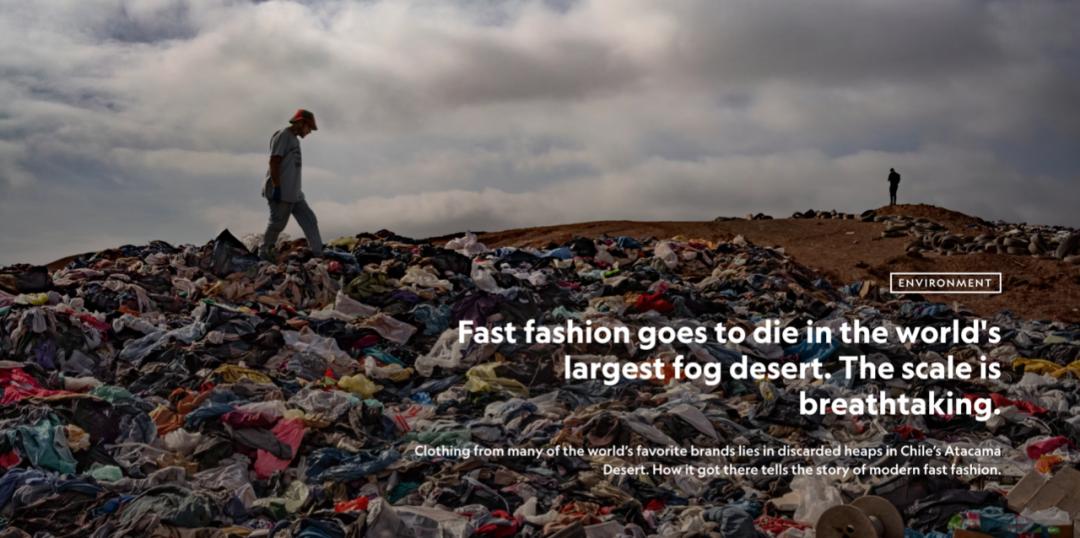
智利一直是二手衣物和未售出服装的处理中心,据央视财经报道,2021年有超过4.6万吨二手衣物流入。即使在这个石头容易被风化为砂砾的地方,这些 废弃衣物也至少需要200年才能完全被降解。 编辑 | 阿至 在南美洲西海岸,位于智利北部的阿塔卡马沙漠被称为世界"干极"。但在这里,一望无际的不仅是沙漠,还有堆积如山的垃圾,主要是废弃轮胎、汽车、 旧衣物和鞋子。 产业链上任何环节的创新,都有可能推动整个链条的供应商转型和效率重构。创新技术的累积、协作关系的变化、理念标准的更迭,一系列要 素叠加,托起中国制造业升级运转的飞轮。 36氪未来产业推出「制造新物种」系列报道,持续关注产业转型中的创新火种和应用案例。 文 | 张冰冰 经线的另一端,阿塔卡马沙漠的对跖点,是中国广东省,这里是全球服装产业至关重要的制造中心。集群协同、柔性制造与供应链创新让服装可以更好、 更快、更低成本地从这里走向全球。 对跖点意味着"地球上最远的两点",广东和阿塔卡马沙漠,则像是服装产业最远的两端,从生产到废弃,一件衣服从工厂出发,销往世界,最终抵达无法 降解的废弃"坟场"。 面对日益加剧的纺织废弃物处理难题,全球都在采取应对措施,加速构建循环纺织 ...
爱马仕、普拉达业绩增长不佳;加拿大鹅喜获高增长
2 1 Shi Ji Jing Ji Bao Dao· 2025-08-04 01:29
Group 1: Financial Performance - Hermès reported a 9% sales growth in Q2, reaching €3.9 billion, with all regions showing growth [15] - Adidas achieved a 7.3% increase in net sales to €12.1 billion, with a significant 70% rise in operating profit to €1.2 billion [2] - Prada's net revenue for H1 reached €2.74 billion, reflecting a 9.1% growth at constant exchange rates [3] - Canada Goose experienced a robust start to the fiscal year with a 22.4% increase in global revenue to CAD 107.8 million [10] - L'Oréal's sales for H1 were €22.47 billion, with a 1.6% growth, and an operating profit margin of 21.1% [9] - SMCP reported a 2.7% increase in sales to €601.1 million, with growth in all regions except Asia [11] Group 2: Management Changes - Kering appointed Luca de Meo as CEO, offering a €20 million signing bonus, which positively impacted the stock price [4] - PUMA appointed Andreas Hubert as COO, aiming to streamline operations by integrating various functions [8] - Arena announced Mark Pinger as the new Chief Brand Officer, effective October 1, 2025 [8] - Jil Sander's CEO Serge Brunschwig resigned after six months in the position [14] Group 3: Brand and Market Insights - The performance of Prada's main brand declined by 1.9%, while Miu Miu surged by 49.2%, indicating a divergence in brand performance [3] - Hermès' leather goods sales grew by 14.8%, while the watch segment faced challenges with a 5.5% decline [15][16] - L'Oréal's digital transformation efforts are beginning to show results, with a growth acceleration from Q1 to Q2 [9] - The luxury market is showing resilience, with brands like Canada Goose capitalizing on strong demand [10]




爱马仕、普拉达业绩增长不佳;加拿大鹅喜获高增长|二姨看时尚
Sou Hu Cai Jing· 2025-08-04 01:21
Group 1: Company Performance - Hermès reported a 9% increase in sales for the second quarter, reaching €3.9 billion, with all regions showing growth [14] - Adidas achieved a 7.3% increase in net sales for the first half of the fiscal year, totaling €12.1 billion, with a gross margin of 51.9% [2] - Prada's net revenue for the first half of the fiscal year reached €2.74 billion, reflecting a 9.1% growth at constant exchange rates [2] - Canada Goose reported a strong start to the new fiscal year with a 22.4% increase in global revenue, amounting to CAD 107.8 million [9] - Kering's stock price rose 24% following the appointment of Luca de Meo as CEO, who received a €20 million signing bonus [3] - SMCP's sales increased by 2.7% to €601.1 million, with all regions outside Asia showing growth [11] Group 2: Operational Changes - PUMA appointed Andreas Hubert as COO, effective September 1, to streamline operations and integrate various functions [6] - Arena announced Mark Pinger as the new Chief Brand Officer, effective October 1, leveraging his sports background for brand growth [7] - Jil Sander's CEO Serge Brunschwig resigned after six months, indicating potential instability in leadership [13] Group 3: Market Trends and Insights - L'Oréal's second-quarter sales grew by 1.6%, with an operating profit margin of 21.1%, indicating a positive trend in digital transformation [8] - The luxury market shows a divergence in brand performance, with Prada's main brand experiencing a slight decline while Miu Miu surged by 49.2% [2][3] - The disappearance of shares held by Hermès' largest individual shareholder may impact brand image and market confidence [5]
海外库存周期专题:下游渐入累库周期,制造板块寻龙头底部布局机会
Changjiang Securities· 2025-07-30 23:30
Investment Rating - The report maintains a "Positive" investment rating for the textile, apparel, and luxury goods industry [9] Core Insights - The U.S. apparel industry is expected to transition from weak replenishment to passive accumulation of inventory due to weak retail performance and expectations [2][6] - The overall inventory levels in the U.S. apparel sector are now considered healthy, shifting from a stable state to an upward trend [4][19] - The demand side remains pressured, with U.S. apparel retail growth stagnating around 0% since May 2022, indicating a weak overall consumption environment [5][37] Summary by Sections Inventory Cycle - The U.S. inventory cycle serves as an effective indicator for assessing manufacturing sentiment [4][16] - Historical transitions from inventory depletion to accumulation phases have typically led to stock price increases for manufacturing companies [4][16] - Current inventory levels in the U.S. apparel sector are healthy, with most brands, except Nike, returning to a healthy inventory state [4][22] Demand Dynamics - The U.S. apparel retail growth has been stagnant, with consumer confidence significantly weakened since 2025 [5][37] - The North American market remains the most pressured, with most brands experiencing a decline in revenue compared to other regions [41][42] Future Outlook - The report anticipates weak order elasticity in the near term, with upstream manufacturing unlikely to see significant recovery [6][34] - The recent tariff policies have provided clarity, enhancing investment certainty in the manufacturing sector [7] Sector Perspective - The report emphasizes the importance of focusing on leading manufacturers in the Southeast Asia region, where tariff impacts have been clarified, and investment certainty has improved [7][22] - The leading manufacturers are expected to gain market share due to their competitive advantages in low-tariff regions [7][22]

德城一企业凭超临界发泡技术抢下李宁、PUMA大单
Qi Lu Wan Bao· 2025-07-28 21:12
Core Viewpoint - The article highlights the successful transformation of Dezhou Xinhua Borun New Materials Technology Co., Ltd. into a high-end supplier in the sports shoe market through digitalization and advanced manufacturing techniques, particularly supercritical foaming technology [3][4]. Group 1: Company Overview - Dezhou Xinhua Borun has entered the supply chains of renowned brands such as Li Ning, PUMA, and HOKA, with orders from Li Ning scheduled until October [3]. - The company has 86 patents and has faced challenges such as low production efficiency and high energy consumption [4]. Group 2: Digital Transformation - In 2021, the company invested 90 million yuan in digital transformation to enhance production efficiency and respond to national strategies [4]. - The introduction of metal 3D printing technology has reduced mold production time from 15 days to under 5 days, improving design capabilities and product competitiveness [6]. Group 3: Production Efficiency and Sustainability - The implementation of supercritical foaming technology has established a new industry benchmark, with a product yield exceeding 95%, which is 15 percentage points higher than the industry average [6]. - The transformation has led to a 10% reduction in order delivery cycles and a daily production capacity exceeding 20,000 pairs of shoe soles, while energy consumption per unit of output has decreased by 5% [7]. Group 4: Future Goals and Industry Impact - The company aims to achieve an annual production target of 30 million pairs of shoe soles through continuous expansion and new project development [7]. - The digital transformation of Xinhua Borun serves as a model for traditional industries, demonstrating that they can achieve high-quality development through the integration of digital technologies [7].