华为

Search documents
行业简报:应急救援无人机:产业化拐点下的多场景落地研究
Tou Bao Yan Jiu Yuan· 2026-02-05 12:24
行业简报 应急救援无人机:产业化拐点下 的多场景落地研究 深度分析应急救援无人机应用场景突破 产业化拐点将如何推动多场景应用落地? 应急无人机发展驱动行业变革 The development of drones drives industry transformation ドローンの発展が業界の変革を推進する 报告提供的任何内容(包括但不限于数据、文字、图表、图像等)均系头豹研究院独有的高度机密性文件(在报告中另 行标明出处者除外)。未经头豹研究院事先书面许可,任何人不得以任何方式擅自复制、再造、传播、出版、引用、改 编、汇编本报告内容,若有违反上述约定的行为发生,头豹研究院保留采取法律措施、追究相关人员责任的权利。头豹 研究院开展的所有商业活动均使用"头豹研究院"或"头豹"的商号、商标,头豹研究院无任何前述名称之外的其他分支机构 ,也未授权或聘用其他任何第三方代表头豹研究院开展商业活动。 头豹研究院 1 行业研读 | 2025/09 应急无人机 应急救援无人机如何从辅助工具升级为核心救援节点 • 技术进步,无人机突破了以往的续航、复杂环境适应性差等问题,从 被动执行升级为智能救援中枢,政府也需要提升灾害响应 ...
“三新”赋能,激发文旅产业升级新动能
Xin Lang Cai Jing· 2026-02-05 12:21
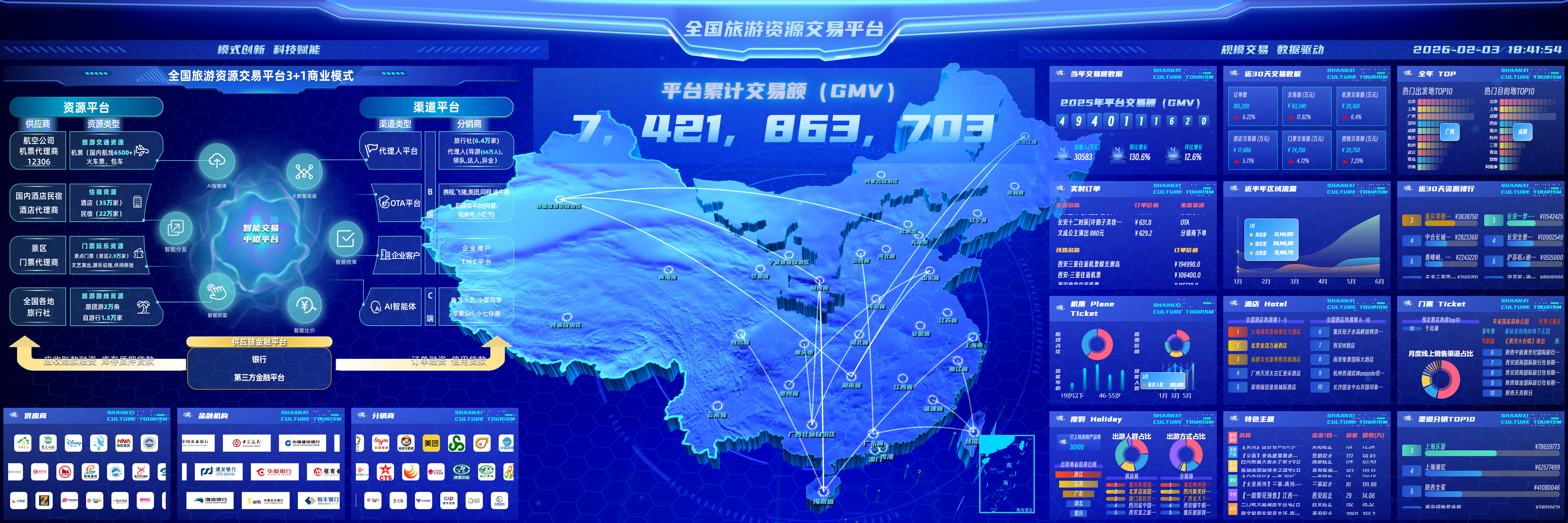
Core Insights - The integration of AI in the tourism sector is enhancing the travel experience for users, allowing for personalized travel planning and immersive experiences [1][3][4] Group 1: AI Integration in Tourism - The introduction of AI travel assistants like "Xiao Qi" enables users to generate customized travel itineraries and even create travel videos effortlessly [1][3] - Shaanxi Cultural Investment Group is leveraging "Cultural Tourism + AI" to innovate and create a smart tourism ecosystem, focusing on technology empowerment and cultural integration [3][4] Group 2: Innovative Models and Platforms - The establishment of the first national tourism resource internet trading platform by Shaanxi Cultural Investment Group addresses challenges faced by small and medium-sized travel agencies, such as resource fragmentation and financing difficulties [5][20] - The platform has aggregated over 6,500 flight routes, 100,000 hotels, and 20,000 tourism products, achieving a transaction scale exceeding 70 billion [21] Group 3: New Business Models and Content Creation - The "AI video factory" concept is being developed, which includes an AI short video creative ecosystem and various platforms for content production and distribution [20][24] - The NE99 digital entertainment complex has transformed traditional retail spaces into immersive digital experiences, attracting visitors with innovative projects like "The Empire Code - The Tomb of Qin Shi Huang" [24][26] Group 4: Cultural and Historical Engagement - The "Chang'an Twelve Hours" theme street is utilizing advanced technologies to create immersive cultural experiences, blending traditional Chinese culture with modern digital storytelling [29][31] - The upcoming phase of the theme street project will further enhance the experience with AI interactions and holographic projections, aiming to create a comprehensive cultural theme park [31]

防火墙行业报告:市场集中度较高,市场稳步发展,定制化防火墙产品将不断涌现
Xin Lang Cai Jing· 2026-02-05 12:18
Core Insights - The firewall market in China is steadily growing, with the market size expected to increase from $1.17 billion in 2016 to $3.02 billion by 2025, and projected to reach $3.156 billion in 2026 [2][7][20] - The growth is driven by policy support, increasing market demand, and technological advancements, particularly with the deployment of 5G, private networks, and industrial internet [2][15] - The rise of edge computing is increasing the demand for lightweight firewalls, and customized firewall products for scenarios like IoT and smart cities are expected to emerge [2][15] Firewall Industry Definition and Classification - A firewall is an access control product that creates barriers between internal networks and insecure external networks, preventing unauthorized access and attacks [3][16] - Firewalls can be categorized based on technology into traditional firewalls, Unified Threat Management (UTM) firewalls, Next-Generation Firewalls (NGFW), and AI firewalls [5][18] - They can also be classified by form into software firewalls, hardware firewalls, and chip-level firewalls [5][18] Current Development Status - The firewall industry is characterized as a critical component of IT infrastructure, acting as a gatekeeper for network security [7][20] - The market is experiencing steady growth due to supportive policies and increasing technological advancements [7][20] Industry Value Chain - The upstream of the firewall industry includes basic hardware (chips, hard drives, network cards, etc.) and basic software (BIOS, operating systems, encryption) [9][22] - The midstream consists of firewall products, while the downstream applications span various sectors including government, finance, telecommunications, energy, education, healthcare, transportation, and aerospace [9][22] Key Companies - Notable listed companies in the firewall sector include Sangfor Technologies (300454.SZ), Tianrongxin (002212.SZ), Hillstone Networks (688030.SH), Deepin Technology (300768.SZ), Ruijie Networks (301165.SZ), Venustech (002439.SZ), Qihoo 360 (688561.SH), and NSFOCUS (300369.SZ) [2][15]





武汉楼市迎来“返乡置业”潮,有楼盘送28.8万元折扣大礼包
Xin Lang Cai Jing· 2026-02-05 12:18
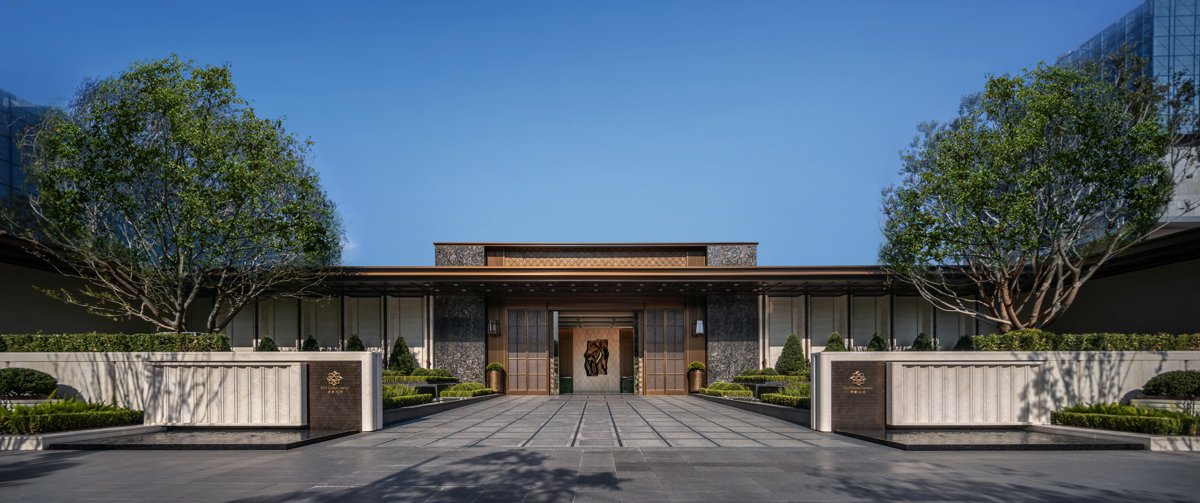
极目新闻记者 徐媛媛 春节脚步渐近,位于武昌徐东,即将开通的地铁12号线团结大道站旁的保利琅誉营销中心,迎来了一拨拨从全国各地陆续返汉的置业者。 王先生是武汉人,在广州IT行业工作。"华为、小米等头部企业纷纷在武汉加大投资,高新产业发展很快,我一直有回来工作的打算。"他说,春节假期提前 回家,主要就是为了看房。 "这段时间,来项目现场咨询的返乡置业者明显增多。"保利琅誉营销负责人燕大浪介绍,今年1月底,项目加推了一期最后一栋楼,不少购房者即为外地返 乡人士。 保利琅誉营销中心春节期间不打烊 去年9月,保利琅誉首开即售罄,10月、11月稳居洪山区套数、金额、面积"三冠王"。今年1月,项目销售37套,成为洪山区住宅销售套数第一名。为吸引返 乡置业人群,保利琅誉春节不打烊,特别推出了99折优惠活动。 放眼武汉三镇,主流房企春节期间大多照常营业,优惠活动层出不穷。 中海地产以"四海归家·萬方安和"为主题,打造全国统一品牌活动。在武汉,中海寰宇天下观云府推出返乡置业购房专属房源及1%优惠,江叁號院返乡客群 总房价立减5万元,中海东湖玖章春节期间认购可得额外1%优惠。 华润置地相关负责人介绍,春节假期,武汉楼盘开门迎接返 ...
问界M7累计交付量超10万台
Xin Lang Cai Jing· 2026-02-05 12:18
2月5日,@华为终端 宣布,问界M7累计交付量突破10万台。 2月5日,@华为终端 宣布,问界M7累计交付量突破10万台。 ...
科技世界中,被遗忘的班加罗尔
3 6 Ke· 2026-02-05 11:50
2000年前后,在中国许多科技园区、政策文件中,一个名字频频出现——班加罗尔。 这座位于印度南部,几乎与北京纬度相近的城市,被誉为印度的硅谷。微软、IBM、德勤的外包中心在那里星罗棋布,数以十万计的印度程序员为全球企 业敲代码、测试系统、做客户支持。 班加罗尔成了一个符号:不靠资源、不靠资本、只靠外包,也能崛起。 在中国,"学习班加罗尔"的口号一度被科技官员和企业家反复提起。 为什么班加罗尔的光环不再被追捧?中国IT业又走上了一条怎样的道路? 01 曾经的班加罗尔学习热 1990年代的班加罗尔,是全球外包经济的样本。Infosys、Wipro、TCS等巨头崛起,承包着欧美大公司的软件定制项目。 而那时的中国,刚刚加入WTO,处于信息化的前夜,一切都在与世界接轨的热潮中。 在这样的语境里,一股"学习班加罗尔"的热潮迅速蔓延。 2000年,国务院颁布了纲领性的《鼓励软件产业和集成电路产业发展的若干政策》(俗称"18号文件"),明确将鼓励软件出口和承接国际项目上升为国家 战略。 多份地方政府规划甚至明确写道"要打造中国的班加罗尔"。 但二十多年过去,班加罗尔依旧是印度IT产业的心脏,中国却几乎不再提"学习班加罗尔" ...

邵宇| 黄金暴涨的逻辑:39万亿美元国债,是否庞氏骗局?【问诊2026中国经济】
Sou Hu Cai Jing· 2026-02-05 11:27
Group 1 - Gold prices surged to over $5,500 per ounce in early 2026, a significant increase from around $2,000 two years prior, driven by geopolitical tensions and economic uncertainties [1][6][20] - The current global economic landscape is characterized by three major bubbles: gold, digital currencies, and artificial intelligence, reflecting structural contradictions in the global economy [3][6][8] - Historical precedents for gold price surges include the collapse of the Bretton Woods system in 1973 and the U.S. debt crisis in the 1980s, both of which led to significant increases in gold value [6][18][20] Group 2 - The real estate bubble poses a unique risk to the economy, as excessive construction leads to resource wastage, and its collapse can have severe repercussions, as seen in the 2008 financial crisis [5][6] - The current technology bubble, particularly in artificial intelligence, is expected to be significantly larger than previous bubbles, with potential impacts on employment and economic structures [8][9][12] - The evolution of the AI bubble is driven by narratives that attract investment, similar to historical tech booms, but it raises concerns about job displacement and societal impacts [9][10][12] Group 3 - The demand for gold is influenced by its dual role as an economic asset and a safe haven during geopolitical crises, making it a preferred choice in times of uncertainty [18][20] - The future of the monetary system is under scrutiny, with gold being viewed as a potential ultimate store of value amidst concerns over fiat currency inflation and digital currency volatility [20][21] - The ongoing geopolitical conflicts and the shifting global order are contributing to the rising gold prices, as investors seek stability in uncertain times [27][28][34] Group 4 - The Chinese economy is facing challenges in maintaining growth amidst global uncertainties, emphasizing the need for investment in both emerging and traditional industries [34][35] - The K-shaped economic recovery highlights disparities between sectors, necessitating a balanced approach to support both new and traditional industries for sustainable growth [35][36] - The importance of stabilizing asset prices is crucial for maintaining public confidence and encouraging investment, particularly in the stock and real estate markets [36][39]
让机器人告别触觉残疾!国产“电子皮肤”爆发,特斯拉都在抢着用
Sou Hu Cai Jing· 2026-02-05 10:27
你能想象,当机器人像人一样,有了触觉会变成什么吗? 如果说给王力宏伴舞、秀高难度空翻的宇树机器人,走猫步的小鹏机器人,就让你感觉惊艳的话,那更 震惊的还在后面。 一旦人形机器人从"舞台表演"走向实用,能像人一样端茶倒水,那才是王炸。 而这些场景,正在变成现实。 福莱新材的第三代电子皮肤,让人形机器人的动态力控精度能达到克级,抓取豆腐不碎、拿取鸡蛋不损 伤分毫;把芯片植入到指尖,机器人能准备知道手里抓的是什么; 香港城市大学团队,甚至研发出了能"感知疼痛"的电子皮肤,你揍机器人一拳,它能感到"疼痛"。 现在,电子皮肤主要用在机器人的手和指头上,正在往手腕、肩膀、膝盖这些部位拓展。 可这技术,全球就少数几家企业能搞定!高端市场,基本被欧、美、日的企业把控着: 全球柔性触觉传感器前五大厂商: 美国的Novasentis、Tekscan, 更神奇的是,国内的玩家们,正在研发能自愈的电子皮肤。 但这些高科技,有的在实验室里,有的只是局部量产。现实的场景是什么? 现在全球的人形机器人,看着会走会跳,但一到真实场景就翻车。为啥?因为它们全是"触觉残疾人"。 咱先感受下人类的皮肤有多牛:一个成年人的皮肤面积约有1.5至2平米 ...


城区争夺、AI路线、三强格局:智能驾驶的转折之年
第一财经· 2026-02-05 09:44
Core Insights - The white paper from the China Automotive New Supply Chain Research Institute indicates that urban NOA (Navigation Assisted Driving) is the current core competitive scenario, with a forecasted penetration rate exceeding 10% by the end of 2025, marking a transition from technology validation to large-scale commercialization [2] Group 1: Urban NOA as the Core Battlefield - Urban NOA serves as a critical technology validation scene for the evolution from high-level assisted driving to fully autonomous driving, and it is a key indicator of suppliers' market positions [4] - The annual shipment volume of vehicles with high-level intelligent driving capabilities in China is expected to reach around 5 million units by 2026, with urban NOA being a vital link between L2+ assisted driving and fully autonomous driving [4] - The delivery quantity of urban NOA has become a core benchmark for measuring the technical strength of intelligent driving suppliers, directly influencing their bargaining power and collaboration depth with automotive clients [6] Group 2: AI Players Breakthrough with 270% Growth - In the third-party urban NOA market, Huawei HI has established itself as a leading player due to its comprehensive self-developed capabilities and ecosystem collaboration, while Momenta leverages its extensive production experience and partnerships with major automakers [8] - Yuanrong Qixing has emerged rapidly, achieving a growth multiplier of 2.7 times in installed capacity from January to October 2025 [8][9] - Yuanrong Qixing's approach focuses on using AI to solve core challenges in intelligent driving, significantly reducing deployment and update costs to about one-third of traditional high-precision mapping solutions [9] Group 3: Paradigm Shift in Intelligent Driving - The intelligent driving industry is undergoing a paradigm shift from "rule-driven" to "data-driven," with a focus on model learning boundaries rather than human-defined boundaries [10] - Yuanrong Qixing's rapid growth validates this shift, as the market begins to favor players that utilize AI thinking to address challenges [10] - The integration of production vehicle data into Robotaxi operations is expected to enhance model capabilities and provide a stable, cost-effective solution for rapid deployment [11] Group 4: Competitive Landscape and Future Outlook - By 2026, the competition in intelligent driving and smart vehicles is expected to intensify, with a focus on cost reduction and experience enhancement [13] - Yuanrong Qixing has set a production target of 1 million vehicles for 2026, indicating a shift from survival to thriving in the competitive landscape [13] - The transition from following to leading in the intelligent driving sector is attributed to cumulative technological advancements rather than a single breakthrough product [13]