中国联通

Search documents
年内30家A股公司更新分拆上市“进度条” 科技型企业分拆趋势明显
Zheng Quan Ri Bao· 2025-12-01 00:11
Group 1 - The core viewpoint of the articles highlights the increasing trend of spin-off listings among A-share companies in China, with a focus on optimizing capital structure and enhancing valuation levels through independent financing channels [1][2][4] - As of November 30, 2023, a total of 30 A-share companies have updated their spin-off listing progress, with 8 in the board proposal stage, 6 approved by shareholders, 7 completed, and 9 terminated [1] - The spin-off listings are concentrated in strategic emerging industries such as high-end equipment manufacturing, new materials, information technology, and biomedicine, supported by government policies aimed at facilitating financing for technology-driven enterprises [2][4] Group 2 - Notable examples of spin-offs include China Unicom's plan to spin off its subsidiary Unicom Smart Network Technology for listing on the Shenzhen Stock Exchange, which aims to enhance innovation and operational quality [2] - In the high-end manufacturing sector, the successful spin-off of Suzhou Huichuan Power System from Huichuan Technology demonstrates the benefits of independent valuation and market expansion funding [3] - The trend of spin-offs is diversifying, with listings occurring across various boards including the main board, ChiNext, and the Hong Kong Stock Exchange, indicating a significant rise in both "A-share spin-offs" and "A to H spin-offs" [4][5] Group 3 - The spin-off of Zhejiang Huari Technology from Dahua Technology is driven by industry trends and strategic planning, allowing for enhanced capital strength and market expansion capabilities while establishing a market-oriented incentive mechanism [5] - The focus of spin-offs has shifted from quantity expansion to quality enhancement, emphasizing the technological barriers, profitability, and independent growth potential of subsidiaries [6]




海报漫谈丨话费充值门槛悄然提高,你的消费自由被“绑架”了吗?
Sou Hu Cai Jing· 2025-11-30 21:36
Core Viewpoint - The shift in recharge policies by popular payment platforms like WeChat, Alipay, and Taobao, which have eliminated small recharge options (10 yuan, 20 yuan), now requiring a minimum of 50 yuan or even 100 yuan, has raised public concerns about consumer rights being compromised [1][2]. Group 1: Changes in Recharge Options - Major third-party platforms have removed small denomination recharge options, standardizing the minimum recharge amount to 50 yuan, while platforms like JD and Douyin have set the minimum at 100 yuan [2]. - In contrast, the three major telecom operators still allow users to customize their recharge amounts, with options as low as 0.01 yuan to 1 yuan available on their official apps [4]. Group 2: Technical and Cost Considerations - The absence of small recharge options on third-party platforms is not due to technical limitations, as evidenced by the flexibility offered by telecom operators [5]. - Industry experts suggest that the decision to eliminate small recharge options is driven by operational costs, as transaction fees and maintenance costs for small transactions are not covered by the commission earned [6]. Group 3: Impact on Consumers - The increased recharge minimum significantly affects low-consumption users, such as the elderly and students, who typically require only small amounts for their phone usage [7]. - Users with backup phone numbers often rely on small recharges to maintain their accounts, and the higher minimums increase their costs [8]. Group 4: Regulatory and Strategic Recommendations - To address these issues, regulatory bodies should establish clear guidelines to protect "recharge freedom," ensuring that platforms retain options for small and customizable recharge amounts [10]. - Companies are encouraged to focus on user convenience rather than imposing higher barriers, as true customer loyalty is built through accessible services rather than forced compliance [10].


年内30家A股公司更新分拆上市“进度条”
Zheng Quan Ri Bao· 2025-11-30 16:05
"A拆A"有望再添一例。中国中车股份有限公司(以下简称"中国中车")11月28日公告称,拟分拆所属子公司中车戚墅堰机 车车辆工艺研究所股份有限公司(以下简称"中车戚所")至深交所创业板上市。分拆完成后,中国中车仍将保持对中车戚所的 控制权。 本报记者 毛艺融 事实上,今年多家A股公司更新了分拆上市进展。Wind数据显示,截至11月30日,按公告日计,年内累计已有30家A股公 司更新分拆上市进展。从分拆上市进度来看,其中8家为董事会预案阶段、6家股东大会通过、7家完成,9家终止。 分拆上市是企业优化资本结构、提升估值水平、实现专业化发展的关键举措。南开大学金融学教授田利辉在接受《证券日 报》记者采访时表示,分拆上市对母公司来说,能够聚焦主业,提升集团治理效能。同时,分拆为子公司开辟独立融资通道, 可直接通过IPO、再融资或引入战略投资者募集资金,用于技术研发、产能扩张或并购整合,将显著提升资本运作效率与响应 速度。 以浙江大华技术股份有限公司(以下简称"大华股份")为例,分拆子公司浙江华睿科技股份有限公司(以下简称"华睿科 技")赴港上市有多重考量。工业互联、机器视觉和移动机器人领域研发投入巨大,单独上市后可缓 ...
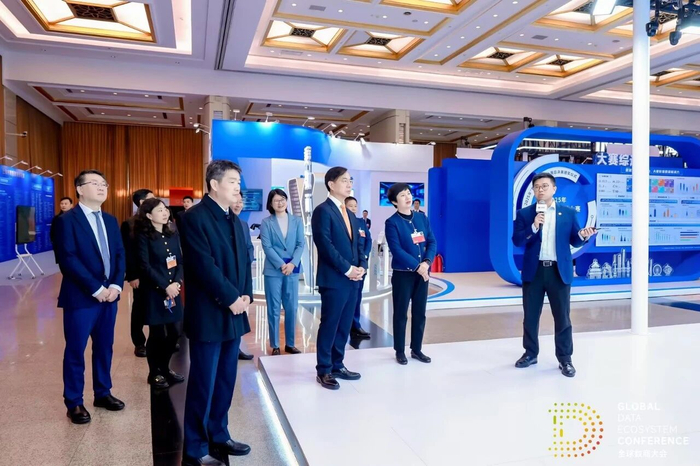
中国联通“申帆”上海!重磅亮相2025全球数商大会,升帆护航企业出海
第一财经网· 2025-11-30 14:53
Core Points - The 2025 Global Digital Business Conference was held in Shanghai, focusing on the market-oriented allocation of data elements and the application of digital technology innovation [1][3] - China Unicom showcased its full-chain digital service capabilities and launched the "Shan Fan" initiative to support Chinese enterprises in going global [3][5] - The conference emphasized collaboration among government, industry, academia, and research to explore new opportunities for enterprises going abroad [5][19] Group 1: Conference Overview - The conference theme was "Connecting Global Business for a Future Without Boundaries" [1] - Key figures, including Liu Liehong, head of the National Data Bureau, and Zhang Yahong, Vice Mayor of Shanghai, delivered opening remarks [1] - The event aimed to contribute Shanghai's wisdom and solutions to the national data element system construction [1] Group 2: China Unicom's Initiatives - China Unicom launched the "Shan Fan" initiative to serve as a digital hub for Chinese enterprises going global [3][11] - The initiative aims to integrate global resources and enhance international cooperation in the digital field [3][11] - China Unicom's international division has been active for 25 years, focusing on building a reliable digital service platform for the Belt and Road Initiative [7] Group 3: Collaborative Efforts - The conference featured discussions on effective pathways for enterprises to go abroad and the construction of diversified market structures [5][19] - China Unicom partnered with various organizations to create a joint overseas service network, enhancing support for enterprises [15] - The establishment of the "Shanghai Green Low-Carbon Data Innovation Laboratory" aims to promote safe cross-border flow of green data [13] Group 4: Technological Advancements - The conference included the launch of international standards for renewable energy certificate interoperability, promoting collaboration in the digital and green energy sectors [9][22] - Blockchain technology was highlighted as a key driver for enhancing cross-border trust and trade efficiency [14][22] - The focus on talent development was emphasized as crucial for innovation in the digital economy [20][25]
调研| 光模块——新一轮产能释放的前夜(附股)
Xin Lang Cai Jing· 2025-11-30 11:43
Group 1 - The core viewpoint is that the computing power industry is in a high prosperity cycle, driven by the rapid growth of demand due to continuous innovation in AI models [1] - Major companies like Google and NVIDIA have reported earnings that exceeded expectations, indicating a positive feedback loop between model innovation and computing power construction [1] - North American giants are increasing capital expenditures significantly, with Meta raising its forecast for capital spending from $66-72 billion to $70-72 billion, Google from $85 billion to $91-93 billion, and Amazon's expected capital expenditure around $125 billion for the year [1] Group 2 - Leading optical module manufacturers are expanding production capacity both domestically and internationally to meet explosive demand for computing power [2] - Companies like NewEase and Zhongji Xuchuang are establishing production bases in Thailand to optimize cost structures and mitigate geopolitical risks, with significant expansions planned for 2025-2026 [2] - Financial data supports the intensity of capacity expansion, with Zhongji Xuchuang reporting a 1765.7% increase in construction projects compared to the beginning of the year [2] Group 3 - A new round of concentrated capacity release is expected in Q1 2026, which will open up growth opportunities for the industry [3] - The optical module industry is facing supply bottlenecks due to rapidly growing demand, prompting leading manufacturers to adopt a dual-line expansion strategy in mainland China and Thailand [3] - The industry is transitioning from "capacity release" to "performance climb," with expectations of steady performance growth as production scales up and processes mature [3] Group 4 - Companies to watch in the computing power sector include leading optical module firms like Zhongji Xuchuang and NewEase, as well as other key players in the optical device market [4] - The focus is also on domestic computing power supply chains, including liquid cooling segments and edge computing platforms [5]



国内外产业政策周报:商业航天司设立,整治内卷聚焦价格治理及储能-20251130
CMS· 2025-11-30 07:00
Domestic Policy Topics: Establishment of Commercial Space Administration, Focus on Price Governance and Energy Storage - The establishment of the Commercial Space Administration aims to address the overlapping functions and decentralized management of multiple departments in the commercial space sector, marking a key step towards standardized and scaled regulation [4][7][8] - The recent policy developments include the issuance of a development plan for commercial space, which outlines 22 key measures across five areas, such as encouraging the layout of the space industry chain and supporting the development of new technologies and products [4][10][12] - The National Development and Reform Commission (NDRC) is actively working to address issues of disorderly price competition in various industries, emphasizing the need for a standardized approach to maintain market order and support high-quality development [16][20] - The Ministry of Industry and Information Technology (MIIT) held discussions with manufacturers in the energy storage and power battery sectors to promote high-quality development and address competitive order within the industry [17][20] Overseas Policy Topics: US-China Presidential Call, Developments in the Russia-Ukraine Issue - A recent phone call between Chinese President Xi Jinping and US President Donald Trump highlighted the importance of stabilizing US-China relations and discussed key issues such as Taiwan and the Ukraine crisis [4][9] - The ongoing developments in the Russia-Ukraine situation include significant negotiations between Russian President Putin and Ukrainian President Zelensky, with discussions on potential agreements to end the conflict [4][9] Consumer Supply and Demand Adaptation Policy Issuance - The implementation plan issued by six departments aims to enhance the adaptability of consumer goods supply and demand, targeting the optimization of supply structures and the establishment of three trillion-level consumption fields and ten hundred-billion-level consumption hotspots by 2027 [21][25] - The plan emphasizes the importance of aligning consumption upgrades with industrial upgrades, promoting new technologies and models, and expanding the supply of high-quality consumer goods [21][24] - A total of 22 consumer promotion policies have been introduced this year, with a significant focus on fiscal subsidies, particularly for vulnerable groups and sectors [23][27]
发挥数智融合效能 培塑主流媒体竞争力
Ren Min Ri Bao· 2025-11-29 22:11
Core Insights - The article emphasizes the importance of integrating digital and intelligent technologies in media to enhance mainstream discourse and improve service delivery in various sectors [1][4][6]. Group 1: Media Integration and Development - The People's Daily Digital Communication Company is focusing on transitioning mainstream media from "digitalization" to "intelligentization" by leveraging AI and enhancing content innovation [1]. - A new content production model is being established that combines local narratives with mainstream values while also expanding international communication [1][4]. - The development of a national party media information platform aims to facilitate talent, content, technology, and channel sharing among party media [4]. Group 2: Service Enhancement and User Engagement - The electronic reading platform is evolving into a smart interactive platform that integrates government, public welfare, and cultural services, enhancing the dissemination of mainstream values [2]. - The integration of AI and big data is driving a shift towards a user-centered interactive model in media, allowing for personalized content delivery and improved user engagement [12]. Group 3: Rural and Community Development - The collaboration between China Unicom and the People's Daily aims to address communication gaps in rural areas through the "Party Building Learning Garden" initiative, enhancing policy dissemination [6]. - The initiative focuses on creating a unique content ecosystem and evolving service pathways to foster community engagement and governance [6]. Group 4: Industry Upgrades and Technological Advancements - The Longcheng New Media Group is implementing a "six-pronged quality enhancement" strategy to improve content production, platform development, and operational efficiency [7][8]. - AI is being integrated into various sectors, including entertainment, education, and industrial applications, enhancing productivity and user experience [9][10]. Group 5: Brand and Cultural Storytelling - Mengniu Dairy is leveraging media integration to enhance brand storytelling and consumer engagement, positioning itself as a key player in the global dairy industry [11]. - The company emphasizes the role of media in connecting brands with consumers and aims to utilize digital technologies to improve its operational capabilities [11].

AI+时代,网络安全如何跟上?这场大会提供了解决方案
Nan Jing Ri Bao· 2025-11-29 08:49
Core Insights - The conference highlighted the emergence of "proactive immunity" in cybersecurity, emphasizing the need for a new approach to security in the AI era [1][8] - The concept of "endogenous security" was introduced, which integrates security capabilities into digital systems from their inception, shifting from passive defense to proactive prediction and automatic defense [3][4] Group 1: Endogenous Security Theory - The endogenous security theory aims to provide a systematic solution to current cybersecurity challenges by embedding security as a native attribute of digital systems [3][4] - This approach allows systems to possess self-defense, self-repair, and self-evolution capabilities, ensuring stable core functionality even under malicious attacks or internal failures [1][3] Group 2: Industry Applications - The first batch of smart connected vehicles equipped with endogenous security intelligent agents is expected to be launched next year, with successful testing already conducted [4] - In the 5G communication sector, endogenous security technology has been deployed in 28 provinces, demonstrating its application in various scenarios such as urban traffic and industrial manufacturing [4][5] Group 3: Collaborative Initiatives - The "Endogenous Security Ecological Partner Program" was launched, involving major industry players to foster deep cooperation in technology research, standard building, and talent cultivation [7] - The eighth "Strong Network" international elite challenge showcased the industry's commitment to collaboration, featuring nearly 40 international teams and introducing AI attack agents as special invited teams [7] Group 4: Future Outlook - The endogenous security technology is on the verge of industrialization, with a comprehensive service system for smart connected vehicle security being launched [6] - The ongoing development of endogenous security technology is positioned to enhance global cybersecurity governance, contributing to a shift from passive response to proactive immunity [8]
(经济观察)“5G+工业互联网”赋能中国制造业智能化转型
Zhong Guo Xin Wen Wang· 2025-11-29 02:53
Group 1 - China's "5G + Industrial Internet" has achieved systematic breakthroughs in the past five years, with over 20,000 construction projects covering all 41 industrial categories, significantly boosting manufacturing development [1] - The investment scale in "5G + Industrial Internet" has exceeded 50 billion RMB, with over 1,200 5G factories built, leading to notable improvements in product quality, operational costs, and production efficiency [1] - China has established the world's largest and highest-quality mobile broadband network, with China Tower constructing 9.53 million base stations, saving over 210 billion RMB through resource sharing [1] Group 2 - China leads in industrial standard construction, having released the world's first industrial 5G international standard and over 100 national and industry standards [2] - The cost of 5G modules has decreased by 90% compared to the initial commercial phase, facilitating the large-scale application of "5G + Industrial Internet" [2] - AI is driving the transformation of "5G + Industrial Internet," with applications in various industries, such as the "Industrial Brain" project by Kaos, which has empowered 160,000 enterprises [2] Group 3 - In the energy sector, AI has generated direct benefits of 1.9 billion RMB for the National Energy Group, with 40% of new developers focusing on the industrial field [3] - In the automotive sector, generative AI has improved design efficiency by over 8%, with nearly 90% of automotive companies adopting AI assistance [3] - The average efficiency of 5G factories has increased by 19.6%, while operational costs have decreased by 14.5%, leading to significant improvements in quality and efficiency [3]
1200+ 全球头部企业齐聚上海!激光光学 × 半导体全链路协同的顶级峰会仅剩最后三席
半导体行业观察· 2025-11-29 02:49
Core Insights - The article highlights the significance of the Munich Shanghai Optical Expo as a pivotal event for the global optoelectronics and semiconductor industry, featuring over 1,200 leading companies and attracting hundreds of thousands of professional attendees, emphasizing the theme of "technological iteration + ecological integration" [2] Group 1: Policy Alignment - The forum aligns closely with the "14th Five-Year Plan," focusing on the critical role of laser technology in supporting 6G/5G-A, targeting key areas such as compound semiconductors, EDA tools, and optical communication chips, and aims to create a collaborative ecosystem through "policy - technology - capital" synergy [2][4] Group 2: Technical Focus - The forum emphasizes a comprehensive technology logic covering the entire supply chain from "materials - tools - chips - devices - components - applications," showcasing hard-core achievements from leading companies in critical areas like compound semiconductor mass production processes and AI-enabled optical chip design [3] Group 3: Demand-Supply Coupling - The forum effectively links the supply side, represented by leading technology firms like Silan Micro and Xizhi Technology, with the demand side, including major telecom operators and cloud service providers, creating a high-efficiency closed loop of "technology output - demand feedback - cooperation landing" [4] Group 4: Key Participants - Major telecom operators such as China Mobile, China Unicom, and China Telecom are participating to address 6G network architecture and 5G-A deployment needs, while leading cloud service providers like Alibaba Cloud and Tencent Cloud are seeking solutions for high-speed data transmission and green data center construction [6] Group 5: Final Opportunities - The article emphasizes the urgency of securing the last three sponsorship seats for the forum, highlighting the scarcity of resources and the potential for significant market engagement, with a focus on connecting with decision-makers from major telecom and cloud service companies [7][9]