
三星电子

Search documents
中微半导、国科微部分芯片涨价!全球涨价潮之下,关注有涨价预期的芯片企业
Jin Rong Jie· 2026-01-29 00:26
Group 1 - The core viewpoint of the articles highlights a price increase in semiconductor products from companies like Zhongwei Semiconductor and Guoke Micro, with price hikes reaching up to 80% for key products such as MCU and Norflash, driven by both recovering downstream demand and rising upstream costs [1][2] - The recent price surge in the semiconductor industry, particularly in memory chips, is attributed to a significant increase in AI computing demand and a supply-demand imbalance due to storage capacity shifting towards HBM/Server applications, leading to a systematic price increase across various chip categories [1] - Major players in the memory chip sector, such as Samsung Electronics, have announced substantial price increases, with NAND prices rising over 100%, and forecasts indicating a potential 50% increase in DDR4 chip prices by Q1 2026, alongside price hikes in the testing and packaging segment [1] Group 2 - The simultaneous price increases by domestic chip manufacturers reflect an enhancement in pricing power and an acceleration of domestic substitution, which is expected to improve gross margins and cash flow, thereby supporting research and development and expansion efforts [2] - The ongoing supply tightness and price increases in storage chips, driven by the AI infrastructure boom, are anticipated to persist until 2027, potentially leading the entire semiconductor industry into a systematic upcycle with sustained price increases [2] - In the A-share market, the price hikes by domestic chip manufacturers are expected to enhance performance elasticity, with a focus on leading companies in the chip supply chain that have price increase expectations [2]

近期涨价链的三条线索
Sou Hu Cai Jing· 2026-01-29 00:13
Core Viewpoint - The recent price increase chain has become a significant focus in the capital market, with notable price rises in sectors such as non-ferrous metals, oil, chemicals, building materials, and semiconductors [1] Group 1: Price Increase Trends - The richness of price increase signals this year is at a historically high level, with 321 tracked subcategories showing a significant proportion of price increases over the past three months, second only to the supply-side reform period in 2017 and the inflation surge in 2021 [4] - Recent price increases are primarily concentrated in non-ferrous metals, oil, chemicals, and storage, demonstrating deep transmission and linkage across the industrial chain [7] Group 2: Key Drivers of Price Increases - Geopolitical risk and concerns over US dollar credit are driving up prices of non-ferrous metals, including silver and gold, which are impacting the cost structure in semiconductor manufacturing and testing [8] - Supply-side disruptions and tightening geopolitical situations are pushing oil prices higher, leading to cost transmission to downstream chemical and building materials sectors [8] - Strong demand for AI is triggering a new wave of price increases in storage, with companies like Samsung and SK Hynix planning significant price hikes for LPDDR memory used in iPhones, while domestic semiconductor companies are also raising prices for their products [8] Group 3: Price Change Data - Notable price changes include: - Copper: 15.4% increase over the past week, 44.4% over the past month, and 113.8% year-to-date [9] - Lithium hydroxide: 10.6% increase over the past week, 80.1% over the past month, and 118.7% year-to-date [9] - NAND index: 10.8% increase over the past week, 19.8% over the past month, and 170.3% year-to-date [9] Group 4: Seasonal Trends and Future Outlook - The first quarter is typically a favorable time for price increases, with expectations for further enrichment of price increase signals as the spring construction season begins and policies are implemented post the March Two Sessions [10] - The first quarter is seen as a critical verification window for whether the Producer Price Index (PPI) can stabilize and rise, based on historical inflation cycles [11]

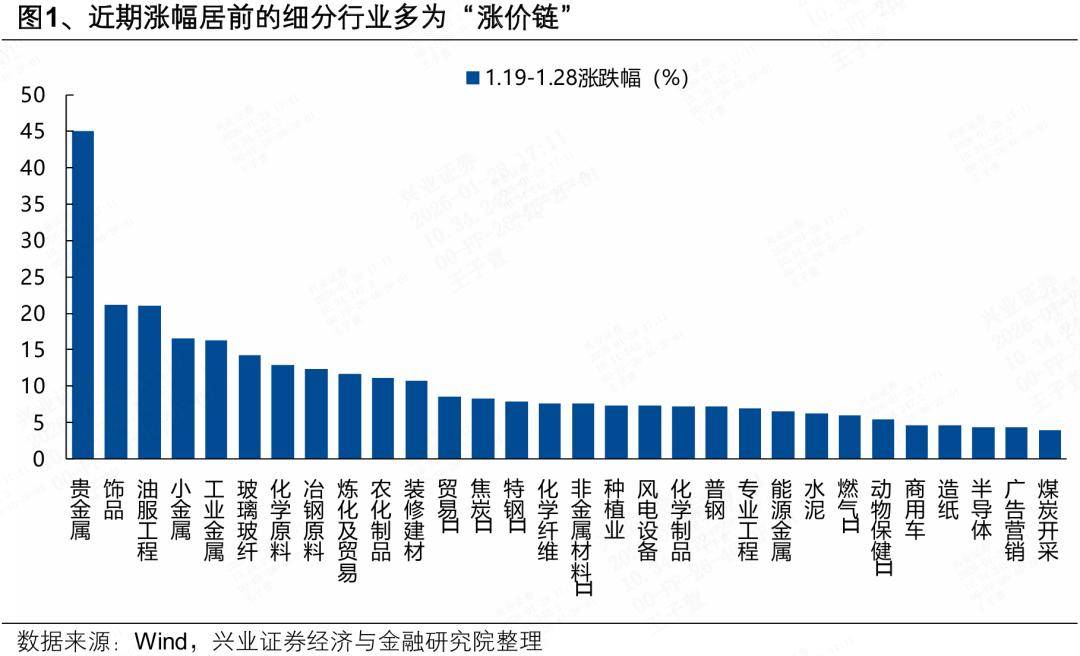
全球大公司要闻 | 科技巨头财报亮相,阿斯麦订单量炸裂
Wind万得· 2026-01-29 00:09
// 热点头条 // 1. 特斯拉: 2025 年第四季度营收 249.01 亿美元,每股收益 0.5 美元超预期,毛利润率 20.1% ,运营 利润 14.1 亿美元。计划一季度发布 Optimus 第三代量产版本, 2026 年底前开始生产,最终产能每年 100 万台机器人。 2. 工业富联:预计 2025 年第四季度净利润同比上升 56%-63% , AI 服务器营业收入环比增长超 50% ,受益于全球 AI 算力需求激增,公司在高端制造领域的技术优势进一步凸显。 3. 但斌旗下东方港湾海外基金 ORIENTAL HARBOR INVESTMENT FUND : 2025 年四季度末持仓总 市值约 13.16 亿美元,折合人民币超 90 亿元,大笔加仓谷歌,第一大重仓股由英伟达变为谷歌,反映 出对 AI 应用端长期价值的看好。 4. 阿斯麦: 2025 年四季度净销售额 97 亿欧元创纪录,订单额 132 亿欧元超预期两倍,上调 2026 年 销售额指引至 340-390 亿欧元,毛利率 51%-53% ,称极紫外光刻机需求为增长主因,同时计划在荷 兰和美国裁员约 1700 人以优化成本结构。 5. 希 ...





存储巨头长鑫科技的万亿赌局
阿尔法工场研究院· 2026-01-29 00:07
以下文章来源于妙投APP ,作者Eastland 妙投APP . 虎嗅旗下二级市场投研服务品牌,为您提供精选上市公司价值拆解,热门赛道产业链梳理 导语:净亏损近200亿元的芯片公司,为何被市场赋予万亿市值的想象空间? 2025年12月30日,上交所受理了长鑫科技科创板IPO申请,这家国产存储龙头在国内DRAM产 业链中占据绝对C位,且带动了上下游的集体腾飞。 回顾长鑫的崛起之路,一个无法回避的关键问题是,一家在2023年净亏损近200亿元的芯片公 司,为何能在两年后站上科创板IPO的起点,并被市场赋予万亿市值的想象空间? 答案可能并不在某一次财务反转,而在一次发生于行业最低谷的豪赌。2023年,全球DRAM价格 暴跌超过40%,三大巨头反周期压制,新进者普遍被认为"必死无疑"。就在这一年,长鑫科技选 择承受巨额亏损,持续扩产,并完成1αnm工艺突破与DDR5量产准备。 这是一场以现金流、技术与产能为筹码的提前下注——赌的是下一个周期里,中国的DRAM龙头 公司能否更上一层楼,在全球产业链中具备统治地位。 一次"豪赌"成了"惊险一跃" 长鑫科技主营的DRAM(动态随机存取存储器)是集成电路的核心元件之一。从服务 ...

三星第四季度净利润135亿美元 同比增长155%
Feng Huang Wang· 2026-01-28 23:46
凤凰网科技讯北京时间1月29日消息,三星电子(KRX:005930)今天发布了截至12月31日的2025年第四季 度及全年财报。财报显示,三星第四季度营收为93.84万亿韩元(约合656.04亿美元),较上年同期的75.79 万亿韩元增长23.82%;归属于三星母公司股东的净利润为19.29万亿韩元(约合134.87亿美元),较上年同 期的7.58万亿韩元增长154.64%。(作者/箫雨) 三星 ...

三星电子第四季度营业利润创新高,年度营业利润首次被SK海力士超越
Xin Lang Cai Jing· 2026-01-28 23:45
Core Viewpoint - Samsung Electronics reported record operating profit and sales in Q4 2025, driven by strong sales of high-end semiconductor products, including High Bandwidth Memory (HBM), amid the global growth of artificial intelligence (AI) [1][7]. Group 1: Financial Performance - The operating profit for Q4 2025 reached 20.07 trillion KRW (approximately 13.9 billion USD), compared to 6.49 trillion KRW in the same period last year, marking a significant increase [1][7]. - Revenue for the same quarter grew by 23.8% year-on-year, totaling 93.83 trillion KRW [1][7]. - The net profit for Q4 2025 was 19.64 trillion KRW, reflecting a 153.3% increase compared to Q4 2024 [2][8]. Group 2: Business Segments - The Device Solutions (DS) division, responsible for chips, achieved an operating profit of 16.4 trillion KRW in Q4 2025, a record high, significantly up from 2.9 trillion KRW in the previous year, driven by strong sales of general DRAM and HBM products [2][8]. - The Device Experience (DX) division, which includes mobile and TV businesses, reported an operating profit of 1.3 trillion KRW in Q4 2025 [3][9]. - Specifically, the mobile business generated an operating profit of 1.9 trillion KRW, down from 2.1 trillion KRW in the same quarter last year, while the home appliance segment incurred an operating loss of 600 billion KRW, compared to a profit of 2 trillion KRW in Q4 2024, primarily due to global tariff issues [4][10]. Group 3: Annual Performance - For the full year 2025, Samsung Electronics reported a net profit of 45.2 trillion KRW, representing a year-on-year growth of 31.2% [5][11]. - The annual operating profit was 43.6 trillion KRW, up 33.2% year-on-year, with total sales increasing by 10.9% to 333.6 trillion KRW [6][12]. - This marked the first time Samsung's annual operating profit fell below that of SK Hynix, which reported an operating profit of 47.2 trillion KRW for the previous year [6][12].
利润增长三倍创历史新高 三星人工智能需求强劲
Xin Lang Cai Jing· 2026-01-28 23:29
三星电子称其第四季度营业利润增长了两倍多,创下历史新高,并预测未来芯片需求强劲,因为人工智 能竞赛导致芯片供应紧张,价格上涨。 三星电子称其第四季度营业利润增长了两倍多,创下历史新高,并预测未来芯片需求强劲,因为人工智 能竞赛导致芯片供应紧张,价格上涨。 这一业绩凸显了这家世界顶级内存芯片制造商强大的定价能力,预计其利润增长将在今年加速。 三星在一份声明中说,"预计正在进行的人工智能热潮将在2026年第一季度继续推动整个行业的有利市 场条件"。 这家韩国公司在10月至12月期间的运营利润为20万亿韩元(139.8亿美元),符合其20万亿韩元的预 期,高于去年同期的6.49万亿韩元。 该公司本季度收入为 93.8 万亿韩元,同比增长 24%。 第四季度,三星的主要现金奶牛--芯片业务的营业利润同比激增 470%,达到创纪录的 16.4 万亿韩元, 而受芯片价格飙升挤压的手机业务利润则下降至 1.9 万亿韩元。 责任编辑:王永生 这一业绩凸显了这家世界顶级内存芯片制造商强大的定价能力,预计其利润增长将在今年加速。 三星在一份声明中说,"预计正在进行的人工智能热潮将在2026年第一季度继续推动整个行业的有利市 场条 ...
AI“吃内存”停不下来?闪迪财报能否再来一次指引惊喜?
美股IPO· 2026-01-28 23:17
Core Viewpoint - The core focus of SanDisk's financial report is not on past performance but on whether the company's guidance for future quarters can surprise the market again, driven by strong demand from AI and tight supply in the NAND flash memory market [1][3]. Industry Upward Cycle - The current upward cycle in the NAND storage industry is driven by structural changes on both the demand and supply sides, with AI applications significantly increasing data storage demand and limited supply growth leading to a persistent supply-demand gap [5]. - SanDisk is identified as a key beneficiary of the AI-driven data explosion, with expectations that if actual performance and future guidance continue to exceed consensus, it could drive substantial stock price increases [5][6]. Q2 Earnings Forecast - Bernstein predicts that SanDisk's non-GAAP earnings per share (EPS) for Q2 2026 will reach $3.79, surpassing the market expectation of $3.45, primarily due to a projected 14% quarter-over-quarter increase in average selling price (ASP) [7]. - The continuous rise in ASP is seen as a critical variable for driving the company's profitability growth, providing solid fundamental support for Q2 performance [7]. Q3 Guidance Potential - SanDisk's guidance for Q3 2026 is expected to have significant upward potential, with Bernstein forecasting a non-GAAP EPS of $6.52, based on a 22% quarter-over-quarter increase in ASP, which is well above the market expectation of $4.62 [8]. - If ASP increases by 40%, the EPS could potentially rise to $9.06, indicating substantial earnings elasticity under tight supply conditions [8]. Industry Performance Correlation - SanDisk's market performance will largely correlate with the overall sentiment in the semiconductor storage industry, with key signals expected from Samsung Electronics regarding the stability of NAND flash price increases and strong end-user demand [9].
AI“吃内存”停不下来?闪迪财报能否再来一次指引惊喜?
Hua Er Jie Jian Wen· 2026-01-28 15:31
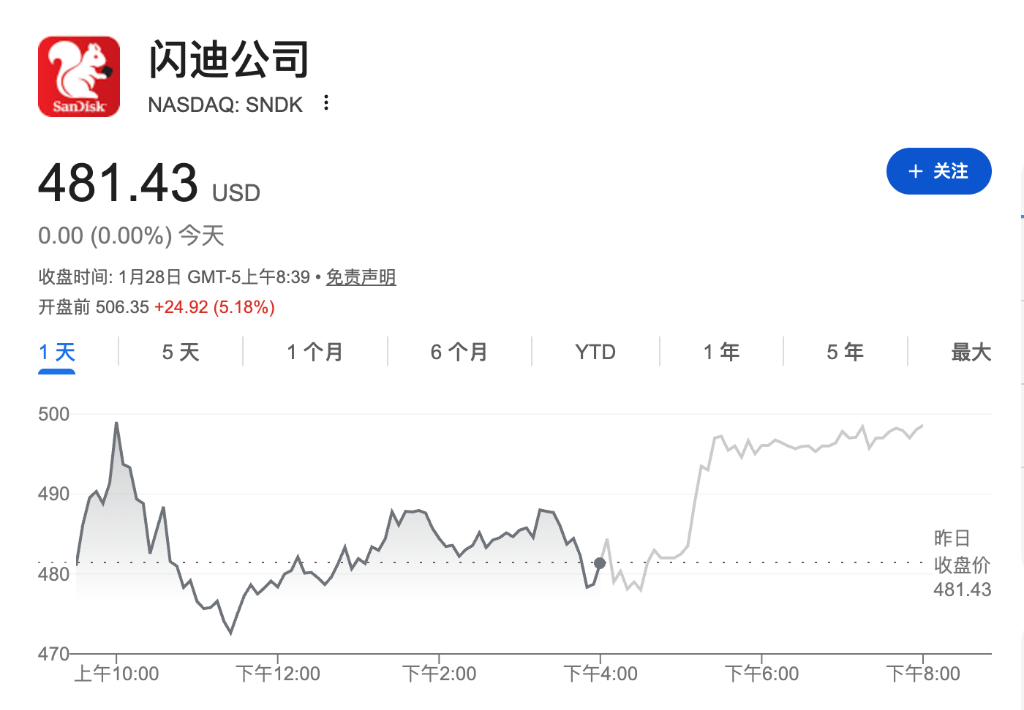
BERNSTEIN SOCIETE GENERALE GROUP(以下简称为伯恩斯坦)最新报告维持了对闪迪"跑赢大盘"的评级,并将目标价定为580美元,这意味 着相较于当前约481.42美元的收盘价,仍有20%的潜在上涨空间。 报告认为,当前NAND闪存行业正处在一个由AI需求激增与供给增长放缓共同驱动的强劲上行周期。在此背景下,持续上涨的平均售价为闪迪本 季度的业绩提供了坚实支撑。 伯恩斯坦预计,闪迪第二财季的业绩将再次超越市场普遍预期,而公司对第三财季的业绩指引,则具备极大的上调可能,这可能成为本次财报的 最大看点。 行业上行周期加持:AI 引爆需求,供给持续收紧 本轮NAND存储行业上行周期的核心驱动力在于供需两侧的结构性变化。需求端,人工智能应用爆发持续拉动数据存储需求,市场对存储产品的 预期因英伟达Vera Rubin平台等相关技术进展而被进一步推高。供给端,行业整体产能扩张受限,新增供给稀缺,导致供需缺口持续存在,直接 推动NAND闪存价格进入明确的上升通道。 更早的2025年11月6日,闪迪给出的2026财年第二季度非GAAP每股收益指引为3.0至3.4美元,同样大幅高于市场预期的1.99美元, ...
神秘资金尾盘才出手!今天,AI产业链传来多个重要消息
Mei Ri Jing Ji Xin Wen· 2026-01-28 14:59
Group 1: AI Applications and Developments - The new open-source model Kimi K2.5 from Moon's Dark Side can schedule 100 agents simultaneously, improving efficiency by 4.5 times [2] - DeepSeek's latest document recognition model, DeepSeek-OCR 2, enhances recognition performance by 3.73% through improved visual encoder design [2] - Baidu's Wenxin APP has launched the first "multi-agent" group chat feature, allowing multiple AI roles to be activated in a single chat [2] Group 2: AI Hardware Investments - NVIDIA is investing $2 billion in AI cloud service provider CoreWeave to help build over 5 GW of AI data centers by 2030 [3] - Micron Technology plans to invest $24 billion in Singapore over the next decade to build a new NAND flash memory factory [4] - SK Hynix will exclusively supply HBM3E chips to Microsoft's Maia 200, which is claimed to outperform Amazon's Trainium and Google's TPU [4] Group 3: Market Trends and Performance - A-shares saw collective gains, with the Shanghai Composite Index rising by 0.18% and the Shenzhen Component and ChiNext Index increasing by 0.09% and 0.71%, respectively [6] - Mysterious funds showed late-stage activity in ETFs, particularly when the Shanghai Composite Index rose significantly [7][8] - AI applications are experiencing a rebound, with notable gains in core stocks like BlueFocus [9] Group 4: Sector Insights - The semiconductor sector is experiencing a price increase, driven by rising costs in wafer foundry and packaging, with expectations for chip design prices to also rise [12] - The AI-driven semiconductor industry is likely to see price hikes across the supply chain, potentially impacting consumer electronics costs [12] - The commercial aerospace sector is showing signs of recovery, with a focus on transitioning from policy-driven to market-driven growth [10]


