
亚马逊

Search documents
利好突袭!医药巨头暴涨!
证券时报· 2025-11-11 23:56
Core Viewpoint - The overall performance of Chinese concept stocks is relatively flat, with the Nasdaq Golden Dragon China Index down by 0.06%. However, XPeng Motors' stock has surged over 20% in the last two trading days, indicating strong investor interest in the company [1][9]. Group 1: US Stock Market Performance - The three major US stock indices closed mixed, with the Dow Jones Industrial Average rising by 1.18% to a record closing high of 47,927.96 points, while the S&P 500 increased by 0.21% to 6,846.61 points, and the Nasdaq index fell by 0.25% to 23,468.3 points [2][3][8]. - Major technology stocks showed mixed results, with Apple rising over 2%, while Nvidia fell nearly 3% and Tesla dropped over 1% [4]. Group 2: Energy and Pharmaceutical Stocks - Energy stocks collectively rose, with ConocoPhillips up nearly 3% and ExxonMobil increasing by over 1% [5]. - Novo Nordisk's stock surged nearly 7% following positive Phase II clinical trial results for its experimental drug Coramitug, which aims to treat amyloidosis [5][6]. Group 3: Chinese Concept Stocks - XPeng Motors' stock rose nearly 8%, driven by excitement over its new humanoid robot, IRON, which has garnered significant attention from users and investors [9][10]. - Other Chinese stocks like Qihoo 360 and Yum China saw gains of nearly 3%, while companies like JinkoSolar and Alibaba experienced declines of over 3% [10]. Group 4: Precious Metals - International gold and silver prices saw an increase, with COMEX gold futures slightly up and silver futures rising by over 1% [11][12][13]. - The passing of a funding bill in the US Senate is expected to boost economic data releases and may lead to renewed expectations for interest rate cuts, which typically support precious metal prices [13].


软银清空英伟达股份,道指创历史新高
Di Yi Cai Jing Zi Xun· 2025-11-11 23:41
Market Overview - The U.S. stock market showed mixed results, with the Dow Jones Industrial Average reaching a record closing high as investors focused on the potential end of the longest government shutdown in history [2] - The S&P 500 index saw 10 out of 11 sectors rise, with the healthcare sector leading with a 2.33% increase, driven by gains from Eli Lilly, Johnson & Johnson, and AbbVie [2] Index Performance - The Dow Jones Industrial Average rose by 559.33 points, or 1.18%, closing at 47,927.96 points [2] - The S&P 500 index increased by 14.18 points, or 0.21%, closing at 6,846.61 points [2] - The Nasdaq Composite Index fell by 58.87 points, or 0.25%, ending at 23,468.30 points [2] Major Companies - Nvidia led the decline among the "Magnificent Seven," dropping 2.96% to $193.16, following SoftBank's announcement of selling all 32.1 million shares of Nvidia for approximately $5.8 billion, raising concerns about high valuations in the AI sector [2] - Microsoft rose by 0.53%, Amazon by 0.28%, Apple by 2.16%, and Alphabet by 0.42%, while Meta fell by 0.74% and Tesla by 1.26% [2] Chinese Stocks - The Nasdaq Golden Dragon China Index saw a slight decline of 0.06%, with Xpeng Motors rising over 7% and Netease and Li Auto increasing by over 1%, while Alibaba fell over 3% and Bilibili and NIO dropped by over 1% [2] Economic Indicators - The U.S. House of Representatives returned to Washington after a 53-day recess to vote on a bill that could end the government shutdown, with investor sentiment improving as a result [3] - ADP's latest weekly data indicated that U.S. private sector layoffs averaged about 11,000 per week over the past four weeks, suggesting a weakening job market [3] Individual Stock Movements - Coreweave's stock fell over 16% despite reporting better-than-expected Q3 results, as the company lowered its full-year revenue guidance to approximately $5.05 billion to $5.15 billion due to delivery delays from third-party data center developers [4] - AMD's stock dropped over 2% but rebounded about 4% in after-hours trading, with management projecting an earnings per share target of around $20 over the next 3-5 years [4] - Paramount Skydance's stock surged nearly 10% after announcing further cost-cutting measures and plans to invest an additional $1.5 billion in streaming and film operations [4] Commodity Prices - International oil prices increased, with WTI crude oil futures rising by 1.51% to $61.04 per barrel and Brent crude oil futures up by 1.72% to $65.16 per barrel [4] - COMEX gold futures fell by 0.14%, closing at $4,116.30 per ounce [4]

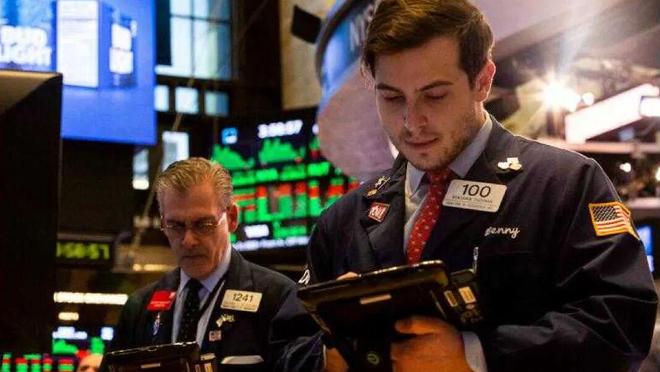
深夜 科技股大跌!特朗普 突发警告
Zheng Quan Shi Bao· 2025-11-11 15:40
Market Overview - US stock market opened mixed on November 11, with Dow Jones slightly up by 0.18%, while S&P 500 and Nasdaq indices fell by 0.22% and 0.52% respectively [1][2]. Technology Sector - The technology sector faced pressure, with major tech companies showing mixed results; Apple rose over 1%, while Nvidia dropped over 3% [3]. - SoftBank Group liquidated its Nvidia shares in October, cashing out $5.83 billion, raising concerns about an AI bubble [3]. - AI-related stocks generally declined, with COREWEAVE dropping over 11% after revising its 2025 revenue forecast down from a maximum of $5.35 billion to a range of $5.05 billion to $5.15 billion [3]. Chip Sector - Chip stocks also experienced declines, with Micron Technology falling nearly 4% and ARM and other firms dropping over 3% [5]. Economic Concerns - President Trump warned that a negative ruling from the Supreme Court regarding large-scale tariffs could lead to over $3 trillion in losses, posing significant economic and national security risks [6][7]. - The Supreme Court is reviewing the legality of tariffs imposed under the International Emergency Economic Powers Act, with skepticism expressed by several justices regarding the government's authority to impose such tariffs [7].

AI泡沫争议再起!多位顶尖大咖PK 这次有何不同?
2 1 Shi Ji Jing Ji Bao Dao· 2025-11-11 14:43
Core Viewpoint - The debate surrounding the "AI bubble" has intensified, with prominent figures in the AI field expressing differing opinions on whether current investments and valuations are sustainable or indicative of a bubble reminiscent of the 2000 internet bubble [1][3][9]. Group 1: AI Industry Perspectives - Jensen Huang argues that unlike the unused "dark fiber" from the early internet era, today's GPUs are fully utilized, suggesting a robust foundation for a new trillion-dollar industry [1]. - Fei-Fei Li emphasizes that AI is still a nascent field with vast potential beyond language processing, indicating significant growth opportunities [1]. - Yann LeCun expresses skepticism about the current paradigm of large language models achieving human-level intelligence, suggesting the need for fundamental breakthroughs [1]. Group 2: Market Reactions - Following Meta's Q3 2025 earnings report, its stock plummeted over 11%, primarily due to investor concerns over its substantial AI capital expenditures [2]. - The stock market's volatility has amplified discussions about the "AI bubble," with comparisons being drawn to the 2000 internet bubble [3]. Group 3: Key Players and Valuations - OpenAI has become a symbol of the current AI frenzy, securing over $1 trillion in infrastructure and chip agreements, yet its estimated valuation of $1 trillion contrasts sharply with its projected annual revenue of $13 billion [4]. - NVIDIA's market capitalization recently surpassed $5 trillion, driven by significant orders for its upcoming chips, showcasing its dominance in the AI sector [5]. - Tesla's ambitious compensation plan for Elon Musk requires the company's market value to reach $8.5 trillion, highlighting the aggressive growth expectations in the AI space [5]. Group 4: Diverging Opinions on AI Investments - There is a stark divide in opinions regarding AI investments, with some experts warning of an impending bubble while others assert that the current AI investment landscape is fundamentally different from the past [9][10]. - David Solomon from Goldman Sachs and Bill Gates have expressed concerns about the sustainability of current AI investments, likening them to the internet bubble [9][10]. - Conversely, proponents argue that the current return on invested capital (ROIC) for AI investments is improving, and NVIDIA's price-to-earnings ratio is lower than during the internet bubble [9]. Group 5: Future of AI and Economic Impact - The Federal Reserve Chairman Jerome Powell stated that the AI boom is not another internet bubble, citing the presence of mature business models and stable profits in AI companies [11]. - Bezos noted that even if an AI bubble bursts, the infrastructure built will remain valuable, akin to essential utilities for future advancements in artificial general intelligence (AGI) [10][12]. - The timeline for achieving AGI remains uncertain, with many companies potentially struggling to survive until that milestone is reached [12][13].
AI泡沫争议再起!多位顶尖大咖PK,这次有何不同?
2 1 Shi Ji Jing Ji Bao Dao· 2025-11-11 14:41
Core Viewpoint - The ongoing debate about the "AI bubble" is intensifying, with prominent figures in the AI field expressing differing opinions on the sustainability and future of AI investments [1][3][8]. Group 1: AI Industry Perspectives - Jensen Huang argues that unlike the internet bubble of the early 2000s, where much infrastructure was unused, today's GPU resources are fully utilized, indicating a robust foundation for a new trillion-dollar industry [1]. - Fei-Fei Li emphasizes that AI is still a nascent field with vast unexplored areas, particularly in "spatial intelligence" beyond language [1]. - Yann LeCun expresses skepticism about the current large language models achieving human-level intelligence, suggesting that fundamental breakthroughs are necessary [1]. Group 2: Market Reactions - Following Meta's Q3 2025 earnings report, its stock plummeted over 11%, primarily due to investor fears regarding its substantial AI capital expenditures [2]. - The stock market's volatility has amplified discussions around the "AI bubble," with comparisons being drawn to the 2000 internet bubble [3]. Group 3: Financial Metrics and Valuations - OpenAI's valuation has reportedly soared to $1 trillion, while its projected annual revenue is only $13 billion, raising concerns about a valuation-revenue imbalance reminiscent of the dot-com era [5]. - NVIDIA's CEO revealed that the company has accumulated $500 billion in orders for its upcoming chips, pushing its market capitalization to over $5 trillion [5]. - Tesla's ambitious compensation plan for Elon Musk requires the company's market value to increase to $8.5 trillion, with a target annual profit of $400 billion, highlighting the aggressive growth expectations in the AI sector [5]. Group 4: Institutional Concerns - Michael Burry has taken significant short positions against NVIDIA and Palantir, reflecting institutional concerns about excessive AI investments [6][7]. - The divergence in opinions about the AI bubble is stark, with some experts warning of an impending collapse while others believe the revolution is just beginning [8]. Group 5: Long-term Viability and Infrastructure - Amazon plans to increase its capital expenditures to approximately $125 billion in 2025 for AI-related infrastructure, despite announcing significant layoffs, indicating a complex relationship between AI investment and workforce management [11]. - Bezos suggests that even if an AI bubble bursts, the infrastructure built will remain valuable for future advancements in artificial general intelligence (AGI) [11]. - The timeline for achieving AGI remains uncertain, posing a challenge for many companies to survive until that potential future [12].
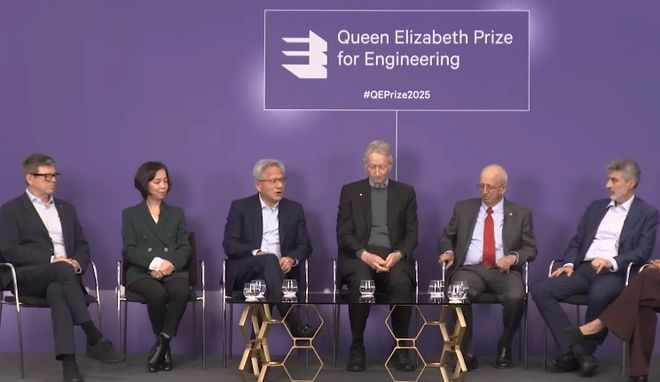
AI泡沫论甚嚣尘上之际 微软(MSFT.US)真金白银驳斥:百亿美元投向葡萄牙海岸数据中心
智通财经网· 2025-11-11 13:12
Core Insights - Microsoft announced a significant investment of up to $10 billion to build a large AI data center in Sines, Portugal, marking it as one of the largest investment projects in Europe for the year [1][4] - This investment counters the prevailing "AI bubble" narrative, reinforcing the ongoing "AI super investment cycle" [1][3] - The data center will be developed in collaboration with local developer Start Campus and UK startup Nscale, with the first building already opened in March [1][2] Investment and Infrastructure - Microsoft has signed a long-term capacity leasing agreement for AI computing infrastructure in Sines, as part of its expansion to meet the growing AI computing demands of its Azure cloud platform [2] - The company is also entering into long-term partnerships with several "neocloud" service providers to secure AI computing resources, including CoreWeave Inc. and Nebius Group NV [2] - Sines is becoming a key investment hub due to its geographical advantages, including large-scale submarine cables connecting Europe with Brazil and Africa [2] Market Sentiment and Future Outlook - The substantial investment by Microsoft serves as a strong rebuttal to concerns about an AI investment bubble, especially as major tech companies continue to expand their AI data center capabilities [3][4] - Analysts predict that overall capital expenditures for large tech companies could rise significantly from approximately $380 billion this year to nearly $550 billion or $600 billion by 2026, driven by the next wave of AI spending [4] - Major financial institutions believe that the global AI infrastructure investment wave is just beginning, with potential investments reaching $3 trillion to $4 trillion by 2030 [5]

AI基建狂潮之下,我们可以向历史学到什么?
3 6 Ke· 2025-11-11 11:53
Core Insights - Nvidia's stock price surpassed $207.86, marking a market capitalization of $5.05 trillion, making it the first company to reach this milestone [1] - Nvidia's rapid growth is attributed to its strategic decisions and the surge in demand for AI computing power, particularly following the emergence of generative AI technologies like ChatGPT [1] - The historical context of technological revolutions suggests that the success of AI as a general-purpose technology depends on the timely development of supporting infrastructure [2] Group 1: Nvidia's Market Position - Nvidia has transformed from a small graphics card company to a tech giant with a market cap exceeding the GDP of Germany and Japan [1] - The demand for AI computing power has led major AI companies to invest heavily in GPUs, benefiting Nvidia significantly [1] Group 2: Historical Context of Technological Revolutions - Major technological revolutions have historically been driven by general-purpose technologies, which require corresponding infrastructure for effective implementation [2] - The lessons from past revolutions, such as the steam engine and electricity, highlight the importance of infrastructure in realizing the full potential of new technologies [2][8] Group 3: Infrastructure and Standardization - The early stages of infrastructure development often face challenges such as lack of standardization, which can hinder efficiency and interoperability [22] - The AI infrastructure currently mirrors past scenarios where various entities operate independently, leading to fragmentation [6][22] - Establishing common standards is crucial for maximizing the potential of AI technologies and ensuring cohesive development [22] Group 4: Lessons from Past Crises - Historical technological bubbles have often resulted in over-investment in infrastructure, which later becomes foundational for future advancements [26][27] - The concept of "constructive destruction" suggests that while financial bubbles are risky, they can also provide essential infrastructure for future growth [26][27] - The key for the AI industry will be to effectively utilize the infrastructure developed during the current investment phase, regardless of potential market corrections [27][28]
美股英伟达暴涨6%,引领纳指报复性反弹
3 6 Ke· 2025-11-11 05:52
Group 1 - The reopening of the Z government is expected to boost market sentiment and restore delayed economic data, providing more information for the Federal Reserve's December decisions [1] - Trump's proposal of "tariff dividends" aims to return tariff revenues directly to the public, enhancing consumer spending and investor confidence [1] - Nvidia's strong performance, particularly a 5.79% increase, has contributed to the market's upward movement [1] Group 2 - Nvidia has requested TSMC to increase the monthly production of its new Blackwell chips by 50%, indicating a significant demand increase [2] - Huang Renxun stated that market demand is expanding at an explosive rate, prompting major HBM chip suppliers to ramp up production [4] - The AI chip market is experiencing a reassessment of Nvidia's growth potential, positively impacting the overall tech sector [4] Group 3 - The optical communication sector is witnessing a surge, driven by the need for high-speed optical interconnects to support AI data centers [5] - Major cloud providers are expected to significantly increase their capital expenditures, with a forecast of $473 billion by 2027 [5] - Ciena (CIEN) and Credo Technology (CRDO) have seen substantial stock price increases, reflecting the strong performance of the optical communication sector [7][8] Group 4 - Robinhood plans to launch a new fund aimed at retail investors to access rapidly growing private AI companies, indicating a shift in asset management towards individual investors [11][12] - The fund will focus on a concentrated portfolio of top private companies, potentially using leverage to enhance returns [12] - Despite structural risks associated with the fund's design, there is strong investor interest in AI themes, suggesting a robust market for such financial products [13]
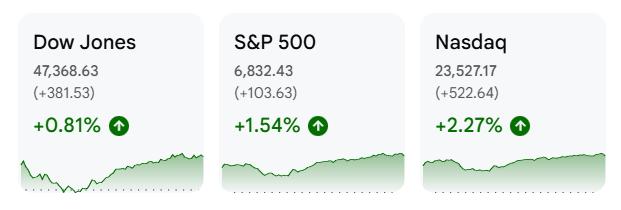
英伟达大涨
Xin Lang Cai Jing· 2025-11-11 03:08
Core Viewpoint - The U.S. stock market experienced a rebound on November 10, with the Nasdaq leading the gains, driven by strong performances from major tech stocks like Nvidia, which saw its largest single-day increase since April [2] Group 1: Stock Market Performance - On November 10, the Nasdaq Composite Index rose by 2.27%, the Dow Jones increased by 0.81%, and the S&P 500 gained 1.54% [2] - Nvidia's stock surged by 5.79%, marking its largest single-day gain since April, closing at $199.05 per share with a total market capitalization of approximately $4.84 trillion [2] Group 2: Nvidia's Recent Developments - Nvidia's stock reached an all-time high of $212.19 per share on October 29, with a market cap of $5.156 trillion, becoming the first company to surpass a $5 trillion valuation [2] - Nvidia announced a partnership with Deutsche Telekom on November 4 to build an AI computing center in Munich, deploying up to 10,000 GPUs with an investment of around €1 billion, expected to be completed by the end of Q1 2026 [2] Group 3: Strategic Investments and Collaborations - Nvidia has reached agreements with Samsung, Hyundai Motor Group, and SK Group to supply over 260,000 accelerated chips for AI projects in South Korea [3] - The company plans to invest up to $1 billion in AI company Poolside and has also invested $1 billion in Nokia to enhance connectivity solutions [4] - Nvidia is collaborating with Uber to develop an autonomous driving platform, aiming to deploy approximately 100,000 self-driving vehicles by 2027, utilizing its latest DRIVE AGX Hyperion 10 platform [5]
海外科技公司2025Q3业绩总结:资本开支预期上调,云需求信号强劲
Southwest Securities· 2025-11-11 02:57
Investment Rating - The report indicates a positive investment outlook for the technology sector, particularly for major cloud service providers and digital advertising companies [2]. Core Insights - The combined revenue of the four major overseas technology companies reached $411.4 billion in Q3 2025, marking a year-on-year increase of 16%, the highest growth rate since Q1 2022 [4][12]. - Net profit for these companies totaled $86.6 billion, with an overall net profit margin of approximately 21% [15][17]. - Capital expenditure expectations for 2026 have been significantly raised, with projections indicating a potential doubling of capacity over the next two years [4][6]. - Cloud revenue growth has reached historical highs, with a year-on-year increase of 26% in Q3 2025, reflecting strong demand signals [4][7]. - Digital advertising revenue also exceeded market expectations, with a year-on-year growth of 18% [4][7]. Performance Overview - The four major technology companies reported a combined revenue of $411.4 billion in Q3 2025, with a year-on-year growth rate of 16% [12][14]. - Net profit for Q3 2025 was $86.6 billion, with a net profit margin of about 21% [15][17]. - Microsoft, Google, Amazon, and Meta all reported revenues that exceeded market expectations, with specific figures of $77.7 billion, $102.3 billion, $180.2 billion, and $51.2 billion respectively [9][22][27]. Capital Expenditure - Capital expenditure guidance has been revised upwards, with Microsoft indicating a growth rate for FY2026 that will exceed FY2025 [4][6]. - Amazon projected a cash capital expenditure of approximately $125 billion for 2025, with expectations for continued increases in 2026 [4][6]. Cloud Computing - The combined cloud revenue of the three major cloud providers reached $79.1 billion in Q3 2025, with year-on-year growth rates of 28% for Microsoft, 34% for Google, and 20% for Amazon [4][7]. - Backlog orders for cloud services showed strong demand, with year-on-year growth rates of 51% for Microsoft, 82% for Google, and 22% for Amazon [4][7]. Digital Advertising - The total advertising revenue for the four major companies was $145.7 billion in Q3 2025, reflecting a year-on-year increase of 18% [4][7]. - Each company reported growth in advertising revenue, with Microsoft at 15%, Google at 13%, Amazon at 24%, and Meta at 26% [4][7].