蜜雪冰城

Search documents
新茶饮六小龙:2025上半年,谁赢麻了?
Xin Lang Cai Jing· 2025-08-01 01:40
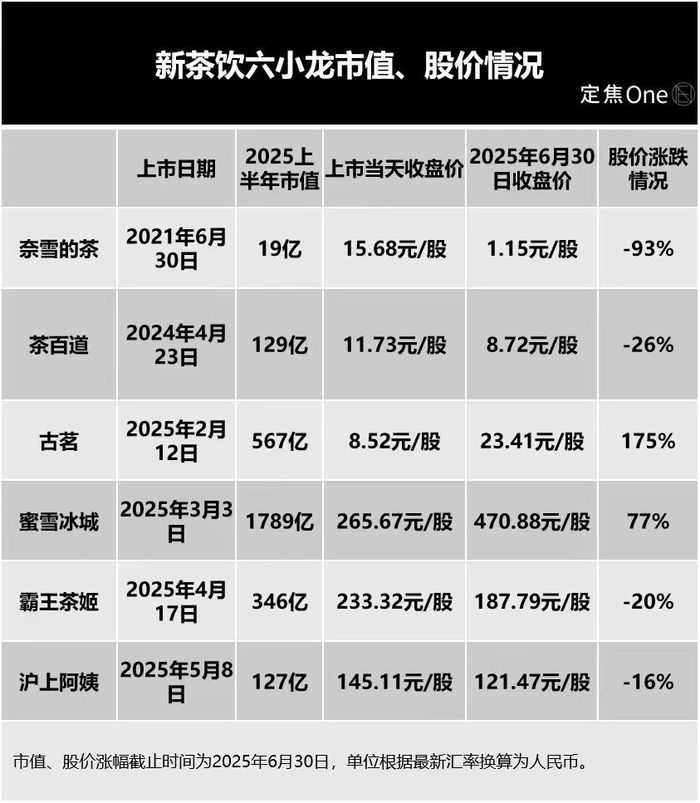
Core Viewpoint - The new tea beverage industry is experiencing a significant transformation with the emergence of the "New Tea Six Dragons," which includes brands like Mixue Ice City, Bawang Chaji, and others, marking a shift from growth competition to stock competition as the market matures [1][17]. Group 1: Market Performance - Mixue Ice City leads the market with an annual sales volume of 9 billion cups and revenue of 24.829 billion, establishing itself as the "scale king" [1][10]. - Bawang Chaji has the highest profitability metrics, with a gross margin of 47.76% and a net margin of 20.27%, outperforming other brands in terms of efficiency [11]. - The market capitalization of the "New Tea Six Dragons" as of June 30, 2025, is led by Mixue Ice City at 178.9 billion, followed by Guming at 56.7 billion, and others trailing significantly [5][6]. Group 2: Stock Performance - Stock price changes from listing to mid-2025 show significant divergence, with Guming increasing by 175% and Mixue Ice City by 77%, while Nayuki Tea plummeted by 93% [4][5]. - The stock performance reflects market sentiment, with some brands experiencing initial gains followed by declines, indicating volatility in investor confidence [2][8]. Group 3: Financial Metrics - In terms of revenue, Mixue Ice City leads with 24.829 billion, nearly double that of Bawang Chaji at 12.406 billion, with other brands trailing behind [10]. - The majority of Mixue Ice City's revenue comes from franchise operations, with 99.96% of its stores being franchises, which significantly boosts its revenue [10][11]. - Bawang Chaji's profitability is notable despite its smaller scale, indicating a focus on high-margin products and efficient operations [11][12]. Group 4: Strategic Directions - The industry is shifting towards supply chain efficiency, differentiated positioning, and global expansion as the market becomes saturated [17][19]. - Mixue Ice City has the largest and most mature supply chain, with over 60% of its ingredients sourced in-house, allowing for cost control and stable supply [17]. - Brands are increasingly looking to expand internationally, with Mixue Ice City planning to open 300-500 new stores abroad, particularly in Southeast Asia and Europe [19][21].

谁在“围猎”星巴克?
3 6 Ke· 2025-08-01 01:18
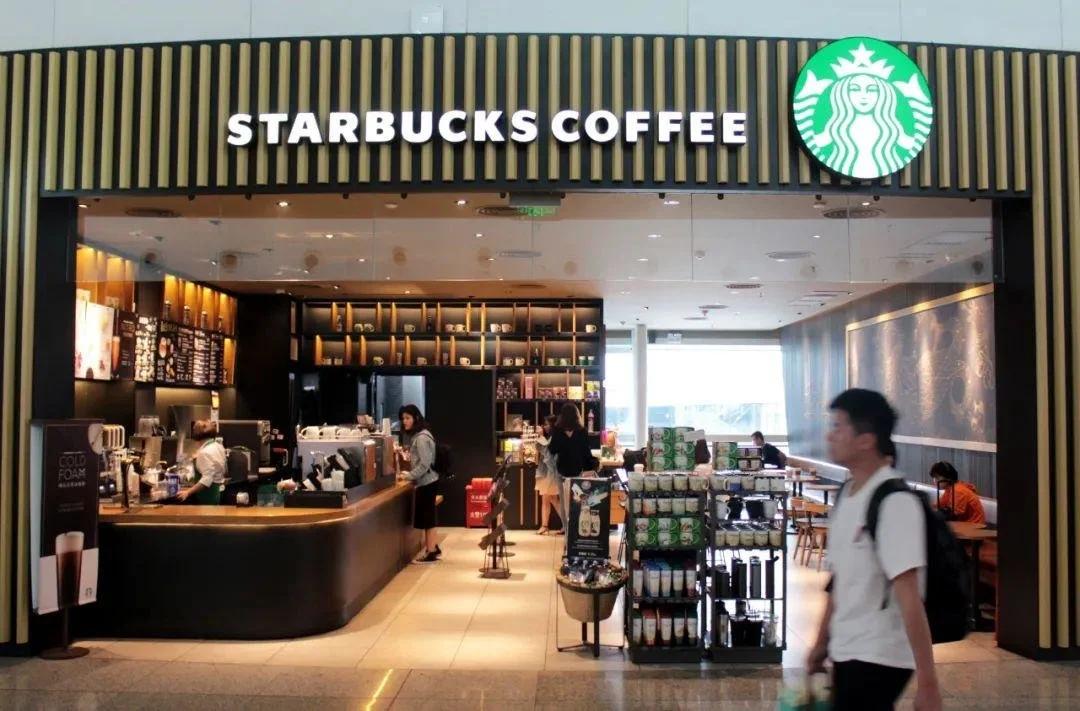
Core Insights - Starbucks' market share in China has significantly declined from a peak of 42% in 2017 to 14% in 2024, despite a strong performance in its Chinese operations with a 7% increase in store count year-over-year [3][6] - Luckin Coffee has shown remarkable growth, reporting a total net revenue of 12.36 billion yuan, a 47.1% year-over-year increase, and a GAAP operating profit growth of 61.8% to 1.7 billion yuan [3][19] - The coffee market in China is experiencing intense competition, particularly in lower-tier cities and price-sensitive segments, with various brands aggressively expanding their presence [4][12] Market Performance - Starbucks' global net profit has decreased by 47.1%, while its Chinese operations have seen a 2% increase in same-store sales and a 6% increase in transaction volume [1][3] - The number of registered coffee shops in China has surged, with nearly 30,000 new registrations, marking a 19.54% increase in the first half of the year [4][6] Competitive Landscape - Brands like Luckin Coffee and Mixue Ice City are targeting the lower-tier markets and one- to two-line cities, with Mixue aiming to exceed 10,000 stores by the end of the year [3][15] - The coffee market is shifting towards a "store-in-store" model, allowing brands to leverage existing retail spaces, which has become a common strategy among various coffee brands [9][11] Consumer Behavior - The average coffee consumption in China has increased from 9 cups per year in 2021 to approximately 22 cups in 2024, indicating significant growth potential compared to countries like the U.S. and Japan [14][18] - Price remains a critical factor in consumer decision-making, with brands competing aggressively on pricing to capture market share [18][19] Strategic Focus - Starbucks is expanding into 166 new county-level markets in China, but faces challenges due to its higher price point compared to competitors [6][12] - The coffee market is transitioning from rapid store expansion to a focus on operational efficiency and product quality, as brands seek to establish a sustainable presence [19]


用心用情为企业办实事解难题——狠抓作风服务企业促发展之二
He Nan Ri Bao· 2025-07-31 23:18
Core Viewpoint - The article emphasizes the importance of supporting enterprises to stabilize and promote economic growth, highlighting the proactive measures taken by the government to assist businesses in overcoming challenges and achieving high-quality development [1][4]. Group 1: Economic Stability and Growth - The province is actively implementing the "Learn, Check, Reform, Serve, and Guarantee the Real Economy" initiative to help enterprises overcome difficulties and enhance confidence and motivation for development [1]. - In the first half of the year, the province's key economic indicators grew faster than the national average, indicating a positive economic outlook and resilience against challenges [1]. Group 2: Direct Support to Enterprises - Local governments are addressing the specific needs of enterprises by coordinating project approvals, providing policy guidance for international expansion, and customizing support packages to accelerate project completion [2]. - A significant focus is placed on resolving financing issues for private enterprises and enhancing project services through direct engagement with businesses [2]. Group 3: Challenges and Solutions - Despite achievements, the article acknowledges the complex and changing development environment, which presents both opportunities and risks for enterprises [3]. - There is a call for continuous engagement with businesses to understand their real issues and demands, emphasizing the need for immediate action to enhance enterprise satisfaction [3]. Group 4: Government Commitment - The government is reaffirming its commitment to supporting enterprises, signaling that serving businesses is integral to the overall work agenda of the province [4]. - A collaborative effort between the government and enterprises is encouraged to ensure effective support and to foster a conducive environment for high-quality economic development [4].
观茶|AI成门店督导,“智能奶茶”时代全面到来?
Nan Fang Nong Cun Bao· 2025-07-31 14:34
观茶|AI成门店 督导,"智能奶 茶"时代全面到 来?_南方+_南 方plus 日前,茶饮品牌 沪上阿姨与蚂蚁 集团子公司数字 蚂力宣布达成战 略合作,率先在 业内引入"AI督 导员"系统,通 过高精度多模态 大模型,将传统 人工巡店的"人 海战术"升级为 数字化监控,为 行业的智能化管 理变革注入了新 动力。 在"万店时代"重 构茶饮门店管理 茶饮品牌在门店 管理上,一般会 由督导定期进行 现场巡店,一名 督导员的有效管 理半径通常不超 过20家门店。对 沪上阿姨这类头 部品牌而言,突 破万店规模将面 临严峻的管理挑 战,依赖传统人 工督导已然捉襟 见肘。 数字蚂力推出 的"AI督导员"基 于多模态大模型 技术,可精准识 别门店内的工作 人员、行为、物 品与环境状态, 识别准确率超过 90%。其技术能 力可以覆盖食品 安全监控、标准 化生产保障、运 营效率管理等门 店运营的关键环 节。"有工具的 帮助,我不需要 花大量时间去反 复核对,而是能 把更多精力放在 服务顾客和激励 团队上,工作效 率更高了。"一 位沪上阿姨店长 说。 AI技术将督导员 从"找问题"中解 放,转向"解决 问题"。当系统 自动完成标准 ...

吃到外卖商战红利,瑞幸干出了两个“星巴克”
Guo Ji Jin Rong Bao· 2025-07-31 13:12
Financial Performance - Luckin Coffee reported total net revenue of 12.359 billion yuan for Q2 2025, a year-on-year increase of 47.1%, marking the first time quarterly revenue exceeded 10 billion yuan, setting a historical record [1] - The net profit reached 1.251 billion yuan, up 43.6% year-on-year, with a net profit margin of 10.1% [1] - In comparison, Starbucks China reported revenue of 719 million USD (approximately 5.68 billion yuan) for the same period, indicating that Luckin's revenue is more than double that of Starbucks [1] Store Expansion - As of the end of Q2, Luckin Coffee operated 26,200 stores, with approximately 65% being self-operated and 35% franchised [3] - The company added over 3,800 stores in the first half of the year, exceeding initial expansion plans [3] Customer Engagement - The average monthly transaction customer count reached a record high of 91.7 million, a year-on-year increase of 31.6% [6] - The operating profit margin for self-operated stores slightly decreased to 21% from 21.5% in the same period last year [6] Market Competition - The competitive landscape in the tea and coffee market is intensifying, with major platforms like JD, Taobao, and Meituan launching significant subsidy campaigns [6][9] - Luckin Coffee, along with other brands, benefited from these subsidies, which have created a favorable external environment for growth [6] International Expansion - Luckin Coffee accelerated its international expansion, with a total of 89 overseas stores, adding 24 in Q2, the fastest growth since its international operations began [10] - The company opened two stores in the U.S., which is considered a highly competitive market for coffee [11] - Despite the expansion, the overseas business is currently operating at a loss, and the company plans to expand steadily and adapt to local markets [12] Product Development - The company has struggled to launch standout products in recent years, with no significant new hits reported in the first half of the year [12] - Recent product launches include light jasmine tea and a collaboration with Duolingo, but these have not demonstrated strong competitive advantages [12]
吃到外卖商战红利,瑞幸干出了两个“星巴克”
Guo Ji Jin Rong Bao· 2025-07-31 13:08
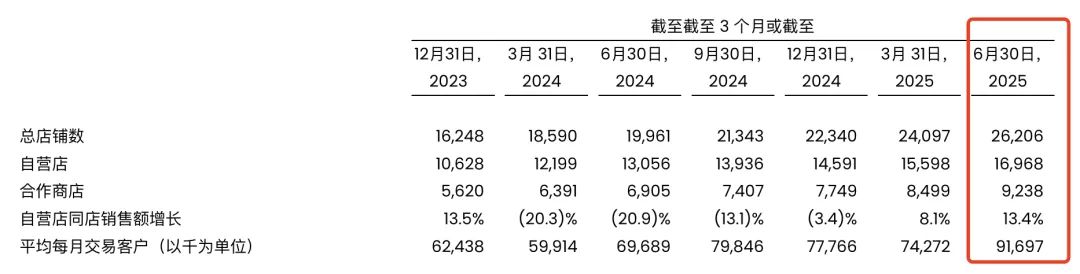
Core Viewpoint - Luckin Coffee reported a record high total net revenue of 12.359 billion yuan for Q2 2025, marking a year-on-year growth of 47.1% and achieving a net profit of 1.251 billion yuan, up 43.6% year-on-year, with a net profit margin of 10.1% [1] Financial Performance - The total net revenue for Q2 2025 reached 12.359 billion yuan, a significant increase of 47.1% year-on-year, and the first time quarterly revenue exceeded 10 billion yuan [1] - Net profit for the same period was 1.251 billion yuan, reflecting a year-on-year growth of 43.6%, with a net profit margin of 10.1% [1] - Compared to Starbucks China, which reported revenue of approximately 5.68 billion yuan for the same period, Luckin's revenue was more than double [2] Market Position and Expansion - As of the end of Q2 2025, Luckin Coffee operated 26,206 stores, with approximately 65% being self-operated and 35% franchised [3] - The company added over 3,800 stores in the first half of the year, exceeding initial expansion plans [4] - Monthly average transaction customers reached a record high of 91.7 million, a year-on-year increase of 31.6% [6] Competitive Landscape - The competitive environment in the tea and coffee market is intensifying, with major platforms like JD, Taobao, and Meituan launching significant subsidy campaigns [6][8] - Luckin Coffee's gross merchandise volume (GMV) for the quarter was 14.179 billion yuan, surpassing the total revenue of a competitor for the previous year [2] International Expansion - Luckin Coffee has accelerated its international expansion, with a total of 89 overseas stores, including 24 new stores in Q2 2025, marking the fastest growth since its international operations began [9] - The company opened two stores in the U.S. in June 2025, which attracted market attention due to the competitive nature of the U.S. coffee market [10] Product Development - Despite the introduction of over 100 new products annually, the company has struggled to create standout products in the current market, with recent launches lacking competitive strength [12][13] - Notable new products include light jasmine tea and a collaboration with Duolingo, but they have not achieved the same level of market impact as previous successful offerings [13]
吃到外卖商战红利,瑞幸干出了两个"星巴克"
Guo Ji Jin Rong Bao· 2025-07-31 13:05
Core Insights - Luckin Coffee reported a record high total net revenue of 12.359 billion yuan for Q2 2025, marking a year-on-year increase of 47.1% and achieving over 10 billion yuan in a single quarter for the first time [1] - The company's net profit reached 1.251 billion yuan, up 43.6% year-on-year, with a net profit margin of 10.1% [1] - Despite strong financial performance, the stock market reacted negatively, with shares closing at $38.26, down 0.88% on the day of the earnings release [1] Financial Performance - Luckin's gross merchandise volume (GMV) for the quarter was 14.179 billion yuan, significantly higher than the total revenue of 10.736 billion yuan for a competitor, "Hushang Ayi" [1] - The average monthly transaction customer count reached a record high of 91.7 million, reflecting a year-on-year growth of 31.6% [5] Store Expansion - As of the end of Q2, Luckin operated 26,206 stores, with approximately 65% being self-operated and 35% franchised [3] - The company added over 3,800 stores in the first half of the year, exceeding initial expansion plans [3] Market Environment - The competitive landscape in the tea and coffee market has intensified, with major platforms like JD, Taobao, and Meituan launching significant subsidy campaigns [6] - Luckin, along with other brands, benefited from these subsidies, which have created a favorable environment for growth [3][6] International Expansion - Luckin accelerated its international expansion, adding 24 new overseas stores in Q2, bringing the total to 89, with notable openings in Singapore, Malaysia, and New York [9] - The company aims to replicate its domestic success in international markets, although it currently faces losses in its overseas operations [9] Product Development - The company has struggled to create standout products in recent years, with no major hits reported in the first half of the year despite launching over 100 new products [11][12] - Recent product launches have generated some industry buzz but have not demonstrated significant competitive strength [12]
中国餐饮品牌扎堆出海,美国市场真的好做吗?(上)|科技早知道
声动活泼· 2025-07-31 10:09
Core Viewpoint - Chinese restaurant brands are increasingly seeking overseas expansion, particularly in the U.S., due to a saturated domestic market and slower growth [1][4][5] Group 1: Market Characteristics - The U.S. is viewed as a strategic high ground for many brands, offering the largest consumer market and a mature capital environment [1][4] - The U.S. restaurant service industry is projected to reach $1.5 trillion by 2025, with an expected growth of about 4% from 2024 [8][10] - The U.S. has approximately 200 million frequent dining consumers, making it a significant market despite lower population density compared to China [9][12] Group 2: Challenges of Entering the U.S. Market - High labor costs and complex legal compliance present significant challenges for Chinese brands entering the U.S. market [1][4] - Many brands struggle with supply chain issues and regional protection when franchising, which is a common practice in the U.S. [21][23] - The average investment for a restaurant in the U.S. ranges from $800,000 to $1 million, including franchise fees and setup costs [23][64] Group 3: Cultural and Operational Adaptations - Successful entry into the U.S. market often requires localization of the menu to cater to local tastes, which can dilute the authenticity of Chinese cuisine [31][32] - Brands that initially target the Chinese community often find it challenging to transition to a broader audience [36][41] - The operational model in the U.S. differs significantly from China, with a focus on long-term community engagement rather than rapid expansion [76] Group 4: Investment and Growth Potential - The U.S. capital market is seen as a vital component for brand growth, with lower listing thresholds and higher valuations compared to other markets [17][18] - Brands that can establish a strong presence in the U.S. may have the potential to replicate their success on a larger scale [9][78] - The lifecycle of restaurants in the U.S. tends to be longer, with many establishments operating for decades due to less competition and a focus on community [74][76] Group 5: Case Studies and Examples - Some brands, like 茉莉奶白, have reported monthly revenues of $500,000, indicating strong market potential [70] - Successful brands often adapt their offerings significantly, with many retaining only a small percentage of their original menu items when entering the U.S. [82] - The experience of brands like 海底捞 highlights the difficulties in maintaining service standards and operational efficiency in the U.S. [44][46]
180亿,刘强东买走了
投资界· 2025-07-31 08:21
Core Viewpoint - JD.com has announced the acquisition of CECONOMY, Germany's largest consumer electronics group, for approximately €2.2 billion, equivalent to over ¥180 billion, marking a significant step in its international expansion strategy [1][3][8]. Group 1: Acquisition Details - The acquisition aims to enhance CECONOMY's growth while maintaining its independent operations, with plans to transform it into a leading omnichannel consumer electronics platform in Europe [7][11]. - CECONOMY operates over 1,000 stores across 12 European countries, with its core brands MediaMarkt and Saturn holding over 30% market share in Germany [5][6]. - The deal is seen as a strategic move for JD.com to quickly establish a local presence in Europe, leveraging CECONOMY's existing store network and supply chain capabilities [11][12]. Group 2: Market Context - The competitive landscape in the retail sector is intensifying, with JD.com facing rivals like Alibaba, Pinduoduo, SHEIN, and TikTok in the global e-commerce arena [12][14]. - The acquisition reflects a broader trend of consumer mergers and acquisitions, as companies seek to strengthen their market positions amid increasing competition [15][19]. - JD.com’s strategy emphasizes a combination of self-built infrastructure and acquisitions to navigate the complexities of the European market [11][12].

少林寺现场直击:新住持微笑挥手进入围挡的方丈室
第一财经· 2025-07-31 06:52
Core Viewpoint - The article discusses the recent changes and public interest surrounding the Shaolin Temple, particularly focusing on the new abbot, Shi Yinle, and the temple's management and commercialization issues [1][5]. Group 1: Shaolin Temple Overview - Shaolin Temple is part of the Songshan Shaolin Scenic Area, which includes various tourist attractions such as the Pagoda Forest and martial arts museum [2]. - There have been conflicts between Shaolin Temple and the scenic area regarding ticket revenue sharing and land use [2]. Group 2: Commercialization Issues - The commercialization of Shaolin Temple has faced criticism, particularly regarding the presence of high-priced incense and QR code-collecting monks [2]. - Recent visits revealed the absence of these controversial practices, indicating a potential shift in management approach [2][3]. Group 3: New Abbot's Background - Shi Yinle, the new abbot, has a background in Buddhist education and previously served as the abbot of Baima Temple [5]. - He has expressed a desire to maintain traditional Buddhist practices rather than focusing on commercialization, contrasting with the previous management style at Shaolin Temple [5][6].