阿里妈妈

Search documents
阿里健康(00241.HK)拟提升与阿里妈妈营销推广服务年度上限 为期两年
Ge Long Hui· 2025-11-26 10:59
Group 1 - The core point of the article is that Alibaba Health has announced a marketing promotion service framework agreement with Alibaba Mama, covering a three-year period from April 1, 2024, to March 31, 2027 [1] - The board anticipates that the original annual cap for marketing promotion services for the two fiscal years ending March 31, 2027, will be insufficient to meet the group's business needs [1] - On November 26, 2025, the board proposed to amend the original annual cap for marketing promotion services in accordance with the Listing Rules Chapter 14A [1]

亮点速递|12月10日,共赴一场品牌与流量的思想交锋
Sou Hu Cai Jing· 2025-11-21 15:33
Group 1 - The conference titled "2024-2025 Annual Marketing Conference and the 23rd Outstanding Brand Marketing Annual Meeting" will be held on December 10 in Beijing, focusing on the theme of "the collision of brand economy and traffic economy" [2][3] - The event will address the core issues of marketing in the current landscape, emphasizing the transition from traffic-driven strategies to value-driven brand competition as traffic dividends diminish [3] - The conference will explore three main themes: "Sincere Breakthrough," "Multi-dimensional Resonance," and "Responsible Coexistence," aiming to unlock new paths for sustainable brand growth [3][4] Group 2 - The "Sincere Breakthrough" segment will focus on brand infrastructure reconstruction in the AI era, highlighting how brands can leverage AI for efficient operations and core value delivery [3] - The "Multi-dimensional Resonance" discussion will tackle the industry pain points of fragmented traffic, sharing case studies on how brands can convert short-term traffic into long-term engagement [3] - The "Responsible Coexistence" segment will examine the balance between brand building and market conversion, exploring effective models for dual empowerment of short-term results and long-term brand assets [4] Group 3 - The 23rd Outstanding Brand Marketing Annual Meeting will present a list of exemplary marketing cases, showcasing various brands' responses to market changes over the past year [5][12] - The diversity of the showcased cases reflects the complexity and authenticity of the current marketing environment, providing insights into industry trends and inspiring new ideas [12]

官宣 | 2024-2025年度营响大会暨第二十三届杰出品牌营销年会定档12月10日
经济观察报· 2025-11-19 10:00
Core Viewpoint - The article discusses the upcoming "2024-2025 Annual Marketing Conference and the 23rd Outstanding Brand Marketing Annual Meeting," focusing on the intersection of brand economy and traffic economy, emphasizing the need for collaboration and integration in marketing strategies [3][4][6]. Group 1: Event Overview - The conference will take place on December 10 at the Beijing North Star Intercontinental Hotel, co-hosted by the China Advertising Association and Economic Observer [3]. - This event marks the 23rd iteration of a significant industry gathering aimed at exploring the future of marketing amidst ongoing changes [4][6]. Group 2: Key Themes - The conference will address critical questions such as how brands can build long-term assets that endure through cycles, the role of AI in reshaping narrative logic, and the balance between commercial benefits and social value in the context of globalization and sustainability [6][20]. - The event will feature three main chapters: 1. "Sincere Breakthrough" focusing on how AI can empower brands [17]. 2. "Multi-dimensional Resonance" discussing the transition from short-term bursts to long-term management [18]. 3. "Responsible Coexistence" examining how brands can balance social and commercial values [19]. Group 3: Award Highlights - The "23rd Outstanding Brand Marketing Annual Meeting" will showcase exemplary marketing cases, with a rigorous evaluation process having recently concluded [7][8]. - Notable marketing cases include campaigns from companies like Dongfeng Yipai, Alibaba Mama, and White Elephant Foods, highlighting innovative strategies in the marketing landscape [11][12].
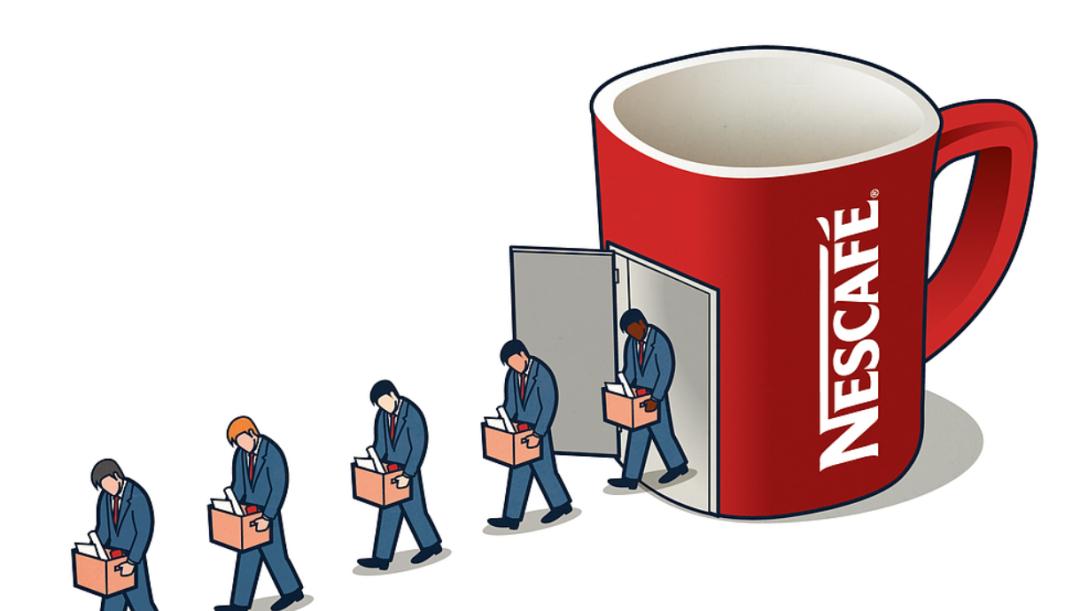
AI加速狂飙,裁员如火如荼
3 6 Ke· 2025-11-12 09:17
Core Insights - Accenture's CEO announced a significant workforce reduction, with over 10,000 employees laid off in three months due to the inability to adapt to AI skills [1] - The rise of generative AI is reshaping the skill requirements in industries traditionally reliant on human labor, such as consulting and advertising [1][2] - Major companies like Nestlé and Procter & Gamble are also cutting jobs, indicating a broader trend across consumer brands [2] Group 1: Impact on Industries - The consulting and advertising sectors are experiencing the most significant job cuts, as AI begins to take over core tasks previously performed by humans [2] - The advertising industry is particularly affected, with many companies reducing middle and junior creative roles due to the efficiency brought by generative AI [4] - AI Agents are becoming essential infrastructure in advertising, leading to reduced creative support needs and fewer jobs in the supply chain [4] Group 2: Job Restructuring and AI Integration - The automation of processes in programmatic advertising has shielded it from the job cuts seen in other areas, as these processes were already moving towards automation [5] - Job cuts are not merely about replacing humans but reflect a strategic restructuring to integrate AI into workflows, enhancing efficiency [6][9] - Companies are transitioning roles from traditional execution to AI collaboration and oversight, indicating a shift in job functions rather than outright replacement [10][12] Group 3: Future Trends and Organizational Changes - The trend of layoffs is not one-sided; companies like Microsoft are also considering rehiring for AI-driven roles, suggesting a dynamic adjustment in workforce needs [10] - The advertising industry is moving towards a decentralized model where individual roles will emphasize cross-functional skills and AI collaboration [12][14] - The ongoing adjustments in workforce structure highlight the need for companies to balance efficiency with strategic decision-making capabilities [14]

估值大起大落!明略科技港交所上市,腾讯为最大股东
Bei Ke Cai Jing· 2025-11-03 06:36
Core Viewpoint - Minglue Technology, a leading enterprise-level data intelligence application software provider in China, successfully listed on the Hong Kong Stock Exchange, with a significant opening price increase of 98.58% [1] Company Overview - Minglue Technology's IPO price was set at 141 HKD per share, raising approximately 902 million HKD (about 826 million RMB) [1] - The company achieved a market capitalization of 41.29 billion HKD (approximately 37.81 billion RMB) shortly after its listing [1] - The founder and CEO, Wu Minghui, has over 19 years of experience in the big data and AI industry, having previously founded the marketing data analysis platform Miaozhen Systems and expanded Minglue's business into government services and offline digital transformation [2] Financial Performance - According to the prospectus, Minglue Technology's revenue for 2022, 2023, and 2024 is projected to be 1.269 billion RMB, 1.462 billion RMB, and 1.381 billion RMB, respectively, with net profits of 1.638 billion RMB, 318 million RMB, and 7.949 million RMB [1] - In the first half of 2025, the company reported a revenue of 644 million RMB, a year-on-year increase of 13.93%, but incurred a net loss of 204 million RMB [1] Market Context - Minglue Technology is recognized as the largest data intelligence application software supplier in China, with a projected market size growth from 16.9 billion RMB in 2020 to 32.7 billion RMB in 2024, reflecting a compound annual growth rate (CAGR) of 17.9% [4] - The market is expected to reach 67.5 billion RMB by 2029, with a CAGR of 15.6% from 2024 to 2029 [4] Investment and Valuation - The company has experienced significant fluctuations in valuation, with a peak post-E-2 round financing of 3.05 billion USD in November 2020, dropping to 540 million USD by November 2023, representing a decline of over 80% [3] - Despite a recovery in subsequent financing rounds, the current valuation remains significantly lower than its peak [3] Strategic Focus - Wu Minghui emphasizes the importance of founder involvement in model development and sees vertical domain models as a future trend [5] - The company aims to expand its model offerings to global markets, targeting both Chinese enterprises going abroad and local overseas businesses [5] Competitive Landscape - The data intelligence sector features diverse participants, including internet giants like Alibaba and Tencent, specialized SaaS providers, and traditional IT service companies [5] - Minglue Technology faces challenges from increased competition due to internet giants leveraging their traffic advantages and a market perception of its valuation premium compared to peers [5]
抖音带货商家的困局:为什么你的ECPM总是输给竞品?
Sou Hu Cai Jing· 2025-10-03 08:08
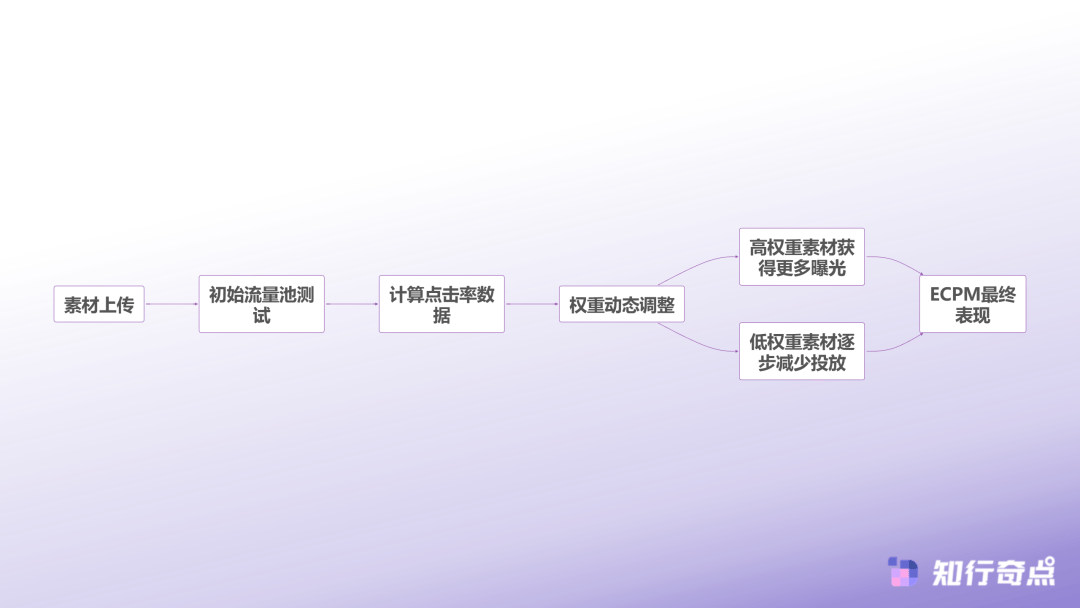
Core Insights - The article highlights a significant misunderstanding among practitioners regarding the core logic of Douyin's advertising system, emphasizing that material quality scores account for over 70% of the impact on ECPM, while bidding only contributes less than 30% [1][2][4] Group 1: Algorithm and Material Quality - Douyin has transitioned from traditional tagging to a neural network-based recommendation system, prioritizing user experience over commercial monetization [2][4] - The algorithm's scoring system places a high emphasis on click-through rates (CTR) and conversion rates, with CTR being the more critical metric [4] - New materials receive exploratory traffic, where CTR's weight can exceed 80%, and as materials mature, the weight balances to approximately 60% for CTR and 40% for conversion [4][9] Group 2: Testing and Efficiency - Successful merchants utilize a methodology of extensive material testing before large-scale deployment, often creating multiple versions to identify the best-performing ones [5][9] - AI-driven tools, such as those developed by Zhixing Qidian, enhance the efficiency of material testing, increasing hit rates from 20% to over 60% and improving ECPM by 40% [7][9] Group 3: Continuous Optimization - ECPM optimization is a comprehensive process influenced by various factors, but material quality remains the most critical element for maximizing ROI [9][11] - The rapid evolution of Douyin's algorithms necessitates that businesses adapt their strategies promptly to maintain effectiveness, with some companies reporting a 35% improvement in ROI through proactive adjustments [9][11] Group 4: Competitive Landscape - The competition in Douyin's e-commerce sector is intensifying, yet opportunities exist for those who understand the platform's operational mechanisms and focus on enhancing material quality rather than merely increasing bids [11]

阿里妈妈献礼中国农民丰收节:当AI改变土地与乡村、品牌与产业
Huan Qiu Wang Zi Xun· 2025-09-16 08:21
Core Insights - The integration of AI technology and digital solutions is transforming traditional agricultural practices and enhancing the branding and marketing of local products in China [1][6] - Companies like Carbin Koneer, Xinlu Coffee, and Lin Qingxuan are leveraging AI tools to optimize their marketing strategies, product innovation, and supply chain management, leading to significant growth and improved farmer incomes [2][3][5] Group 1: AI and Digital Transformation - AI technology is being utilized to create innovative marketing strategies, allowing brands to generate creative content efficiently and reduce costs [2] - Digital marketing tools are enabling brands to analyze consumer preferences and seasonal demands, guiding product development and enhancing market penetration [3][5] - The use of AI in supply chain management is improving procurement processes and incentivizing farmers, resulting in increased production and income for agricultural communities [3][5] Group 2: Case Studies of Successful Brands - Carbin Koneer has successfully utilized AI to create a unique brand identity and optimize its product offerings, significantly increasing sales and brand recognition [2] - Xinlu Coffee has transformed its business model by embedding AI throughout its commercial processes, leading to a substantial increase in market share and farmer income [3] - Lin Qingxuan has effectively addressed inventory challenges through AI-driven marketing strategies, resulting in improved conversion rates and customer loyalty [5] Group 3: Economic and Social Impact - The shift from traditional agricultural products to branded goods is creating a positive feedback loop that enhances farmer income and stimulates regional economic growth [6] - The collaboration between local brands and AI technology is fostering a sustainable growth model that benefits both producers and consumers [6] - The transformation of local products into recognized national brands is contributing to the revitalization of rural economies in China [6]
阿里妈妈用AI改变土地与乡村、品牌与产业
Yang Shi Wang· 2025-09-16 07:47
Core Insights - The integration of AI technology and digital solutions is transforming the agricultural landscape in China, enabling brands to enhance their market presence and product value [1][6] - Companies like Carbin Koneer, Xinlu Coffee, and Lin Qingxuan are leveraging AI tools to optimize marketing strategies, supply chain management, and product innovation, leading to significant business growth and improved farmer incomes [2][3][5] Group 1: AI and Digital Solutions in Agriculture - AI technology is being utilized to create innovative marketing strategies and optimize supply chains, allowing traditional agricultural products to transition into recognized brands [6] - The use of AI tools has enabled brands to automate content creation, analyze consumer preferences, and enhance product offerings, resulting in increased market competitiveness [2][3][5] Group 2: Case Studies of Successful Brands - Carbin Koneer utilized AI to generate creative content and analyze market trends, leading to a successful launch of seasonal product lines and a stable supply chain with Xinjiang cotton [2] - Xinlu Coffee adopted AI-driven marketing strategies to enhance brand visibility and optimize supply chain management, resulting in increased farmer incomes and a market penetration rate of 45% [3] - Lin Qingxuan leveraged AI for precise consumer targeting and marketing efficiency, transforming inventory challenges into opportunities and significantly increasing ROI [5]
AI如何让获客成本直降80%,利润翻三倍?
Hu Xiu· 2025-09-05 06:01
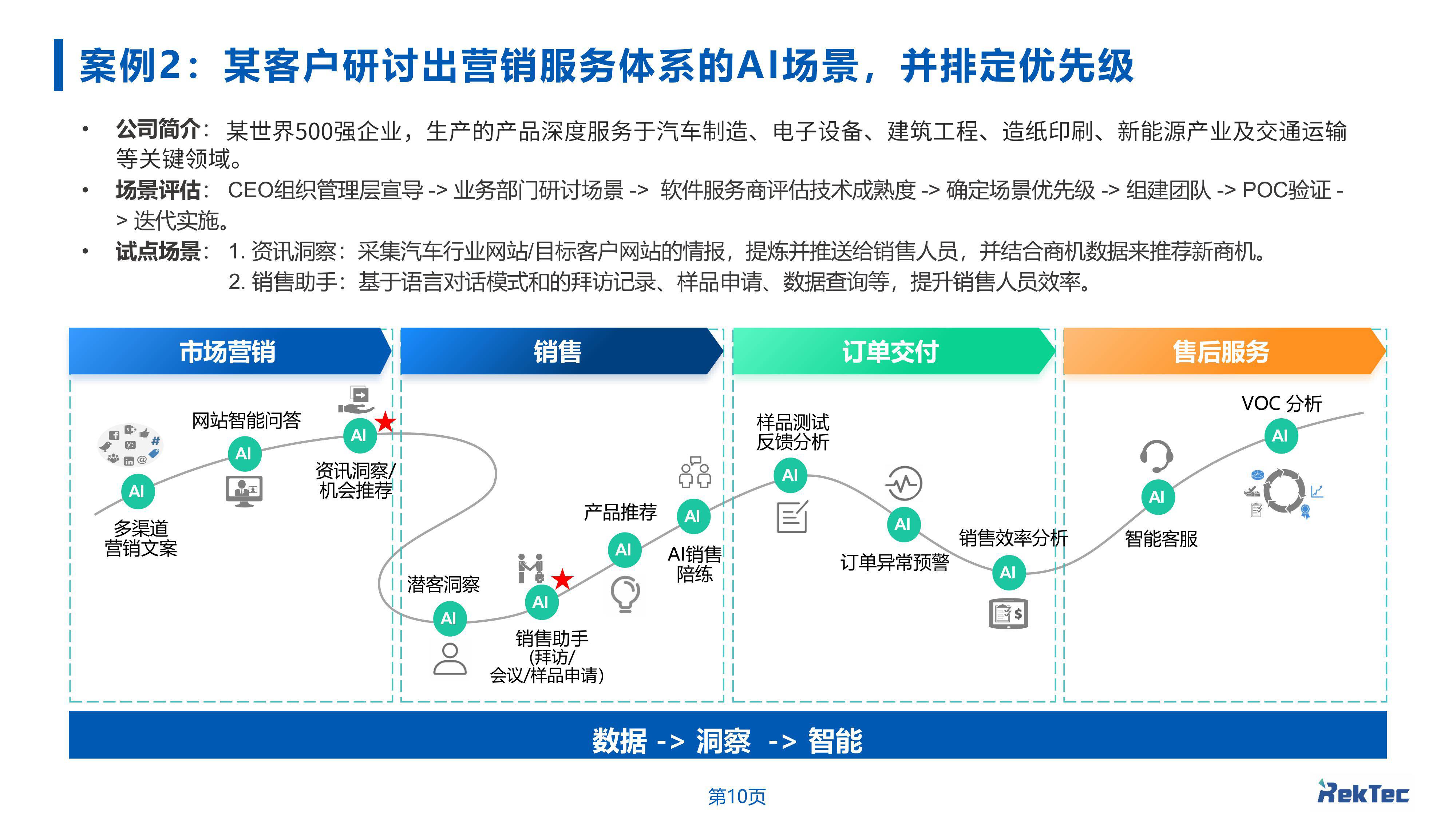
Core Insights - The article discusses how AI can significantly reduce customer acquisition costs and enhance profitability for businesses, particularly in the context of marketing and sales efficiency [2][30]. Group 1: AI Integration in Marketing - AI is positioned as a "second brain" for sales, marketing, and service personnel, emphasizing its role beyond just a tool [3]. - The development of a proprietary AI platform by RuTai integrates four key capabilities: knowledge management, workflow engine, dialogue support, and agent creation tools [4][5]. - The platform transforms general AI capabilities into secure, controllable, and easily deployable enterprise tools, addressing critical issues like data security and system integration [5]. Group 2: AI Applications in Customer Journey - AI can enhance various stages of the customer journey, including customer acquisition, conversion, delivery, and service [6]. - A case study involving a Fortune 500 automotive parts company illustrates how AI can streamline sales processes by automating customer information retrieval and opportunity identification [6][11][12]. - AI tools can intelligently recommend products based on customer needs, improving the accuracy and efficiency of sales recommendations [13]. Group 3: Addressing B2B Marketing Challenges - Current B2B enterprises face challenges such as low marketing efficiency and poor customer matching, leading to industry "involution" [18]. - AI can help identify new market opportunities by analyzing data and breaking cognitive boundaries, as demonstrated by a chip trading company that expanded its market reach [18][19]. - The article outlines a framework for achieving cost reduction, efficiency improvement, and high-quality growth through AI [19]. Group 4: Quantitative Benefits of AI - AI can reduce customer acquisition costs by over 50%, with traditional costs ranging from 150-200 yuan per lead [24]. - Sales efficiency can be significantly improved, allowing sales personnel to focus on high-quality leads rather than spending time on low-value tasks [24]. - The article highlights that AI can help businesses identify and target high-value customers, leading to increased order profit margins by up to 30% [24]. Group 5: Industry Engagement and Future Directions - The event featured participation from various industry leaders and decision-makers, indicating a strong interest in AI marketing applications [22]. - There is a general confusion in the industry regarding the practical implementation of AI in marketing, prompting further discussions and workshops [23]. - The article concludes with a call for collaboration among industry leaders to explore the logic and future directions of AI marketing [26].
AI广告革命:4700亿美元利润池的争夺与重构
3 6 Ke· 2025-08-26 08:23
Core Insights - The article discusses the transformative impact of AI on the advertising industry, highlighting advancements in AI-driven advertising technologies and their implications for marketing strategies and content creation [2][3][20]. Group 1: AI Advertising Landscape - AI advertising has bifurcated into two main application areas: AI advertising marketing focused on precise targeting and AI advertising production centered on content generation [3]. - Major players like Google and Meta have developed successful AI advertising products such as Performance Max and Advantage+, which automate cross-channel ad placements based on user-defined goals [3][4]. - Tencent and ByteDance are also advancing AI in advertising, with Tencent's "Tencent Advertising 3.0" and Byte's UBMax system enabling automated ad placements [4][5]. Group 2: AI in Content Creation - Generative AI tools are revolutionizing creative production, with platforms like Douyin's "Instant Creation AI" and Tencent's "Miaosi" significantly reducing content creation costs and improving efficiency [5][6]. - Companies like WPP and Publicis are leveraging AI to enhance video production, integrating AI with traditional creative processes to optimize output [5][6]. Group 3: Evolution of AI Marketing - The AI marketing industry is projected to reach 66.9 billion yuan by 2025, evolving through three stages: tool application, system integration, and ecological collaboration [7][8]. - The current transition from the first to the second stage is marked by leading platforms integrating AI across marketing processes, enhancing overall efficiency [8][9]. Group 4: Challenges in AI Advertising - The industry faces challenges such as data silos that limit system effectiveness, algorithm opacity leading to trust issues, and market disorder due to inconsistent service quality [9][10][11]. - The lack of quantifiable standards for advertising effectiveness complicates the evaluation of AI-driven services, leading to significant price disparities and quality variations [11]. Group 5: Future Trends in AI Advertising - The future of AI advertising is characterized by the integration of decision-making and generative AI, creating a seamless process from creative development to ad optimization [20][21]. - The industry is also moving towards establishing regulatory frameworks and ethical standards to address issues arising from AI-generated content and advertising practices [20][21]. - Experience design is emerging as a key competitive advantage, emphasizing the importance of human insight in AI-driven advertising to foster genuine user engagement [20][21].