
产能治理

Search documents
“反内卷”与成本让利共振,钢铁板块迎来估值修复窗口
Mei Ri Jing Ji Xin Wen· 2026-02-25 02:02
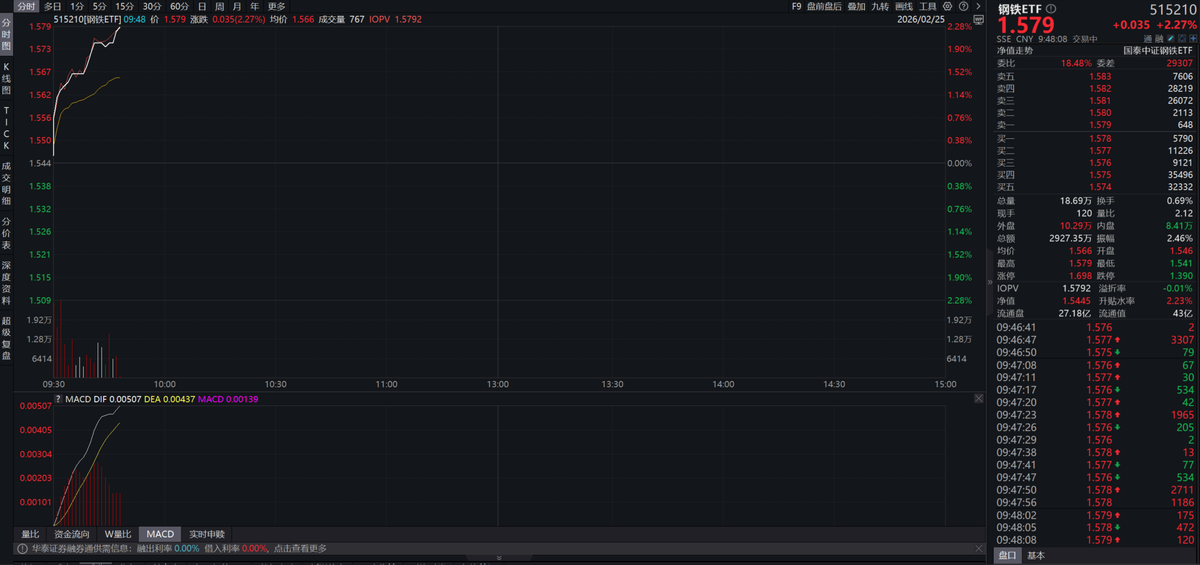
钢铁行业"反内卷"不再只是口号。新版的稳增长方案对供给总量控制提出了更明确要求,加上环保督察常态化,违规产能正加速出清,行业集中度有望进一 步提升。 政策框架日益清晰。据华创证券分析,《钢铁行业稳增长工作方案(2025-2026年)》较2023年版本在控制供给总量方面要求更为明确。政策不仅延续"产能 +产量"双控思路,更在碳管理、企业分类评级等方面提供了可操作的抓手,为落后产能退出建立了长效机制。 环保督察持续高压。2025年9月,第三轮第四批中央生态环境保护督察组通报显示,"未经审批新增炼钢产能""批小建大""违规建设"等问题依然存在。后续 对违规项目的查处力度有望进一步加强,有效压缩市场实际供给总量。 当前钢铁板块正站在一个"预期低位、基本面筑底、催化将至"的拐点上。在基本面、政策面、成本面三重共振下,钢铁板块的上涨弹性值得期待,全市场唯 一钢铁ETF(515210)涨超2%。 从产业端看,经历了四年多下行周期,今年冬储累库力度为近年来最弱,库存总量处于近年低位,映射出产业链心态的极度谨慎;但从另一维度,低库存缓 解了节后去库压力,供需弱平衡格局基本形成。从政策端看,"反内卷"成为行业核心关键词,《钢铁行 ...

江西铜业2026年业绩发布与资源项目进展引关注
Xin Lang Cai Jing· 2026-02-12 12:12
Group 1: Company Performance - The company plans to hold a board meeting on March 26, 2026, to review and approve the annual performance announcement for the year ending December 31, 2025, and to propose a final dividend if applicable [2][6] Group 2: Project Advancement - The company continues to layout resource projects through overseas acquisitions and collaborations. The full acquisition of the Cascabel copper-gold project from SolGold and partnerships in the Ainak copper mine and North Peru mining projects are expected to progress, potentially increasing self-produced copper output and resource reserves. The company adheres to a "resource-first" strategy, which is anticipated to enhance long-term resource security [3][7] Group 3: Industry Policies and Environment - The China Nonferrous Metals Industry Association has stated that it will solidly advance the governance of copper smelting capacity, having already halted over 2 million tons of copper smelting projects. This policy may optimize the industry supply-demand structure and provide potential support for leading enterprises. The association will continue to cooperate with relevant departments to strictly control new capacity [4][8]
供需双弱格局延续,铜价暂陷震荡格局
Hua Tai Qi Huo· 2026-02-05 03:39
1. Report Industry Investment Rating - Copper: Cautiously bullish [8] - Options: Sell put options [8] 2. Core View of the Report - After a significant decline, copper prices are showing signs of stabilizing and rebounding as gold prices gradually stabilize. The persistently low TC price pattern remains unchanged, so the probability of continuous decline is not high. However, due to the approaching Spring Festival holiday, demand continues to weaken. For enterprises with buy - hedging needs, they can carry out appropriate small - scale hedging (about two weeks' worth), but the position should not be too heavy. It is expected that the copper price will operate in the range of 98,000 yuan/ton to 110,000 yuan/ton before the Spring Festival [8] 3. Summary by Relevant Catalogs 3.1 Market News and Important Data 3.1.1 Futures Quotes - On February 4, 2026, the main contract of Shanghai copper opened at 104,950 yuan/ton and closed at 105,160 yuan/ton, a 0.63% increase from the previous trading day's close. The night - session main contract of Shanghai copper opened at 104,000 yuan/ton and closed at 102,590 yuan/ton, a 2.22% decrease from the afternoon closing price of the same day [1] 3.1.2 Spot Situation - According to SMM, the average spot price of SMM 1 electrolytic copper was at a discount of 100 yuan/ton, a 20 - yuan increase from the previous day. The copper price ranged from 103,800 to 105,010 yuan/ton, and the closing price was 103,830 yuan/ton. The market supply of goods was tight, and holders were reluctant to sell at low prices, causing the spot discount to gradually narrow. Downstream procurement slowed down, and the pattern of weak supply and demand continued. It is expected that the discount will continue to narrow slightly today [2] 3.2 Important Information Summary 3.2.1 Macro and Geopolitical Aspects - Iranian Foreign Minister Araqchi clarified Iran's official stance on the talks with the US in Oman, stating that the talks will be held in Muscat, the capital of Oman, at around 10 a.m. on February 6. The US previously rejected Iran's proposal to change the original meeting location from Istanbul, Turkey, to Oman, which raised concerns in the Middle East about the possibility of Trump taking military action [3] 3.2.2 Economic Data - The US added 22,000 new ADP jobs in January, far lower than the market expectation of 48,000. The previous value was revised down from 41,000 to 37,000. The US Bureau of Labor Statistics (BLS) announced that it will release the January non - farm payroll report on February 11, the job vacancy data on February 5, and reschedule the release of the January CPI on February 13 [3] 3.2.3 Mining End - Swedish copper and zinc mining company Boliden said on February 3 that heavy rainfall in Portugal in January caused water management problems at its Somincor mine. Although the company maintained its performance guidance for the mine in 2026, it said that the overall impact of the rain on the first - quarter performance would depend on future weather conditions. Boliden's CEO Mikael Staffas said that considering the company's leverage ratio, including net reclamation debt, which is much higher than the 20% target in the dividend policy, the company will not consider additional cash distribution this year [4] 3.2.4 Smelting and Import - On February 4, the China Nonferrous Metals Industry Association announced that it has stopped more than 2 million tons of new or planned copper smelting projects, indicating a key substantial progress in the industry's self - initiated capacity management and "anti - involution" policy. The association will continue to cooperate with national departments to strictly control new copper smelting projects, aiming to reverse the passive situation of the increasing proportion of imported copper concentrates. The association is also promoting the improvement of the copper resource reserve system, including expanding the national strategic reserve scale and exploring the establishment of a commercial reserve mechanism [5] 3.2.5 Consumption - In January 2026, the terminal consumption of copper products showed the characteristic of pre - holiday rush, but there were differences among specific sectors. In the power sector, State Grid orders were the core support, but project - end orders were weak. The home appliance industry was strong due to the year - end peak season. The automotive sector had stable orders. Traditional sectors such as construction and hardware were dragged down by the real - estate slump. High copper prices significantly suppressed terminal demand, and downstream procurement showed a "buy - on - dips" characteristic. It is expected that terminal consumption will enter a seasonal trough in February [6] 3.2.6 Inventory and Warehouse Receipts - LME warehouse receipts changed by 1,450 tons to 178,650 tons compared with the previous trading day. SHFE warehouse receipts changed by 751 tons to 159,772 tons. On February 4, the domestic electrolytic copper spot inventory was 330,400 tons, a change of 7,600 tons from the previous week [7]
“十四五”我国钢铁压减产量超1亿吨
Xin Lang Cai Jing· 2026-02-01 19:21
Core Viewpoint - The steel industry in China is undergoing significant structural reforms during the "14th Five-Year Plan" period, with a focus on capacity management and production reduction exceeding 100 million tons. The "15th Five-Year Plan" will emphasize controlling new capacity, optimizing existing capacity, mergers and acquisitions, and facilitating the exit of outdated capacity [1][2]. Group 1: Capacity Management and Production - During the "14th Five-Year Plan," the steel industry has reduced production by over 100 million tons and will continue to focus on capacity governance in the "15th Five-Year Plan" [1]. - By 2025, China's crude steel production is projected to be 961 million tons, a decrease of 4.4% year-on-year, while pig iron production is expected to be 836 million tons, down 3.0% year-on-year [1]. - The industry aims to strictly control new capacity and ensure the exit of illegal and non-compliant capacity, promoting a continuous optimization of the capacity structure [1][2]. Group 2: Export and Profitability - Despite a decline in domestic consumption, steel exports are expected to reach a record high of 119 million tons in 2025, an increase of 7.5% year-on-year, with an average export price of $694 per ton, down 8.1% year-on-year [1]. - The steel industry's total revenue for key enterprises in 2025 is projected to be 6.1 trillion yuan, a decrease of 3.1% year-on-year, while total profits are expected to rise by 140% to 115.1 billion yuan [2]. - The industry is experiencing a shift towards profitability, with the main steel business achieving a profit of 44.5 billion yuan, marking a turnaround from losses [2]. Group 3: Industry Consolidation and Collaboration - The industry is accelerating mergers and acquisitions, with major companies like Baowu Steel taking the lead in self-regulating production and inventory [2]. - By 2025, the concentration of the top 10 steel companies is expected to reach 43.1%, an increase of 4.2 percentage points from 2020, indicating a trend towards greater industry consolidation [2]. - The industry is focusing on enhancing collaboration with downstream sectors such as shipbuilding, transportation, and heavy equipment to explore new markets and applications for steel products [3]. Group 4: Green Development and Regulatory Measures - The steel industry is committed to promoting green and low-carbon transformation, aiming to complete ultra-low emission modifications for surplus capacity [3]. - A dynamic public management mechanism for ultra-low emissions will be established, transitioning from energy consumption control to carbon emission control [3]. - The industry will optimize export structures and implement strict management measures for certain steel product export licenses to ensure high-quality development of export trade [3].
中国官方:推动CPI温和回升的有利因素在累积
Zhong Guo Xin Wen Wang· 2026-01-19 06:26
Core Viewpoint - The favorable factors driving a moderate recovery in China's Consumer Price Index (CPI) are accumulating, with the CPI expected to remain stable in 2025, reflecting a complex macroeconomic environment and structural characteristics in pricing [1][2]. Group 1: CPI Trends and Influences - In 2025, China's CPI is projected to remain flat compared to the previous year, with the core CPI (excluding food and energy) rising by 0.7%, an increase of 0.2 percentage points from the previous year [1]. - The overall price level in China has been low, with food prices decreasing by 1.5% in 2025, contributing to a 0.27 percentage point decline in CPI [1]. - Energy prices are expected to decrease by 3.3% in 2025, impacting CPI by approximately 0.25 percentage points [1]. Group 2: Economic Context and Policy Support - The current low CPI is influenced by both domestic and international macroeconomic conditions, with traditional growth drivers slowing down and external pressures affecting domestic price adjustments [2]. - In December 2025, the CPI rose by 0.8%, the highest increase since March 2023, indicating a gradual improvement in supply-demand relationships in certain sectors [2]. - The implementation of consumption-boosting policies and coordinated fiscal and financial measures are expected to gradually expand consumer demand, providing a foundation for stable price operations [2].
“数”说信心!去年12月PPI环比连续3个月上涨 相关行业价格出现积极变化
Yang Shi Wang· 2026-01-09 09:01
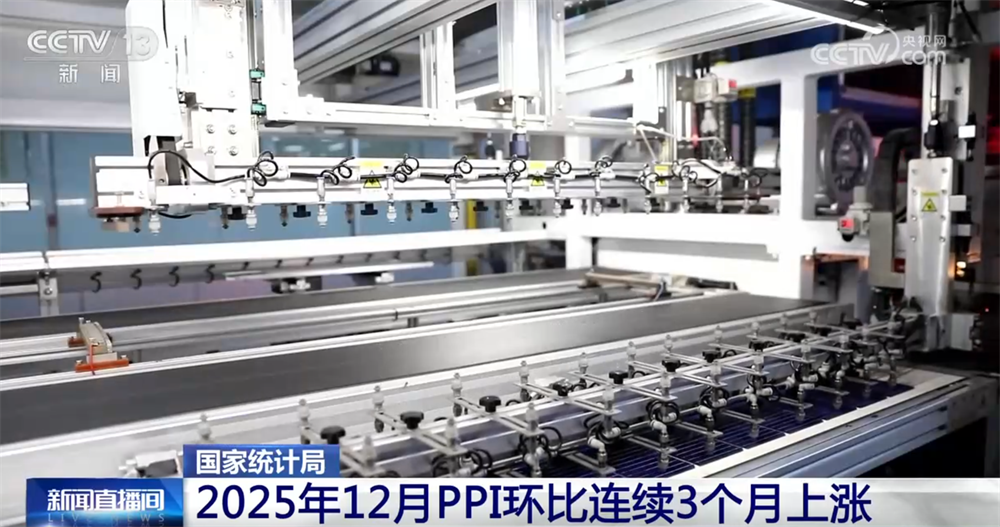
Group 1 - The core viewpoint of the articles indicates that the industrial producer price index (PPI) has shown signs of recovery, with a month-on-month increase for three consecutive months as of December 2025, reflecting improvements in market competition and price adjustments in key industries [1][3] - In December 2025, the PPI increased by 0.2% month-on-month, marking an expansion of 0.1 percentage points compared to the previous month, with notable price increases in coal mining and processing, lithium-ion battery manufacturing, and cement manufacturing [1] - The year-on-year decline in PPI has narrowed by 0.3 percentage points compared to the previous month, indicating a positive shift in pricing dynamics across various sectors due to effective macroeconomic policies [3] Group 2 - The ongoing comprehensive rectification of "involution-style" competition is leading to a significant reduction in price declines in industries such as electrical machinery and equipment manufacturing, while the demand for raw materials is increasing due to the green and intelligent transformation of industries [5] - There is a growing demand for high-quality consumer goods among residents, which is positively impacting the supply-demand situation in sectors like cultural, educational, and sports entertainment products, resulting in better price increases compared to previous years [5]
浙商宏观:预计流动性驱动下A股将在2026年继续走强,低波红利与科技成长交织的结构化行情
Sou Hu Cai Jing· 2026-01-03 11:56
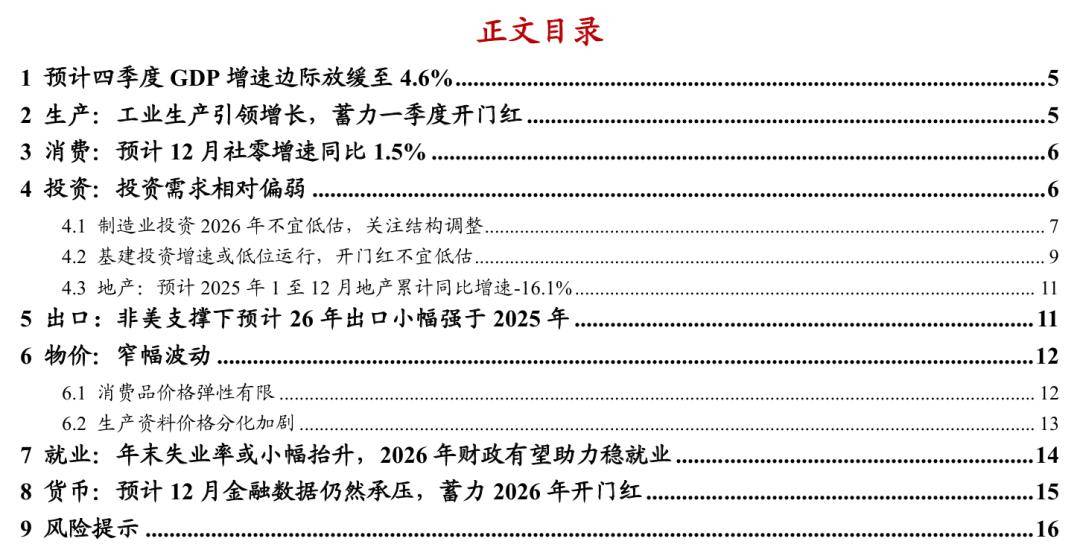
Economic Overview - The GDP growth rate for Q4 2025 is expected to slow to 4.6%, with a strong production sector and moderate demand recovery [1][14] - Industrial production is projected to maintain steady growth, significantly supporting the overall GDP growth target [2][15] - External demand remains resilient, with export growth expected to continue positively [1][5] Production - The industrial added value growth rate for December is estimated at 5.0%, with an annual growth rate of 5.9% for 2025, significantly higher than GDP growth [2][15] - Improvement in demand is noted, driven by pre-holiday inventory buildup and construction progress [2][16] - Manufacturing enterprises are experiencing improved production and market demand, with production growth slightly outpacing demand [2][16] Consumption - The retail sales growth rate for December is expected to be 1.5%, a slight increase from 1.3% [3][19] - Policies supporting the replacement of old products are anticipated to bolster consumer spending, particularly in durable goods [3][19] - The automotive sector continues to face challenges with declining sales and increased discounts, impacting overall retail recovery [3][20] Investment - Fixed asset investment for 2025 is projected to decline by 3.3%, with manufacturing investment showing resilience at 1.2% growth, while infrastructure and real estate investments are under pressure [4][23] - The investment environment has been notably weak since June 2025, with a focus on stabilizing growth in 2026 [4][25] - Manufacturing and broad infrastructure investments are expected to jointly drive growth in early 2026, with a projected increase of 2.5% for the year [4][25][30] Export - December export growth is anticipated at 3.9%, with an annual growth rate of 6.6% for 2026, supported by stable external demand from non-developed countries [5][5] - The stabilization of US-China trade relations and reduced trade friction with Europe and Japan are expected to benefit exports [5][5] Prices - The Consumer Price Index (CPI) growth rate for December is expected to be 0.7%, while the Producer Price Index (PPI) is projected at -1.9% [6][6] - The overall price level is expected to remain stable, with core CPI showing signs of recovery [6][6] Employment - The urban unemployment rate for December is projected to rise slightly to 5.2%, influenced by seasonal factors [7][7] - Continued policy support is expected to help stabilize employment, particularly for vulnerable groups [7][7] Monetary Policy - Financial data for December indicates continued pressure, with new loans and social financing expected to decline [8][8] - The central economic work conference emphasizes the need for flexible monetary policy to support economic stability and reasonable price recovery [8][8]
政策精准调控防内卷,龙头提质增效赢先机 | 投研报告
Sou Hu Cai Jing· 2025-12-26 02:55
Core Viewpoint - The steel industry is experiencing a tightening supply trend, with a projected decrease in crude steel production and an increase in exports, indicating a shift towards quality and structural improvements in production policies [1][2]. Supply Side - As of November 2025, the cumulative crude steel production in China reached 890 million tons, a year-on-year decrease of 4.04%, with a reduction of 3.8 million tons compared to the same period in 2025 [1]. - The current round of regulatory policies emphasizes innovative capacity governance, focusing on quality and structure rather than merely eliminating ineffective capacity or controlling production levels [1]. Demand Side - By October 2025, China's cumulative steel exports amounted to approximately 110 million tons, an increase of 13.29 million tons year-on-year, with net steel exports accounting for about 13% of crude steel production, nearing the pre-reform high of 15% in 2015 [2]. - Although the demand for construction steel is still declining, the rate of decline is narrowing, indicating that demand is approaching its bottom [2]. - Manufacturing steel demand is expected to remain stable, driven by sectors such as automotive, home appliances, and shipbuilding, along with increased demand from new infrastructure projects like wind power and photovoltaics [2]. Cost Side - Global iron ore demand is expected to decline, with China's industrial structure upgrades leading to reduced steel demand, while growth in other emerging markets is insufficient to offset this decline [3]. - In the first half of 2025, supply looseness has put downward pressure on coking coal prices, with price movements primarily driven by supply adjustments rather than strong demand growth [3]. - The price of scrap steel is expected to remain stable with limited fluctuations, continuing to exert pressure on upstream and downstream profits [3]. Investment Recommendations - The combination of supply-side production controls and more proactive fiscal policies is likely to enhance sector valuations [4]. - Demand for construction steel is stabilizing, while manufacturing steel demand is showing positive trends, with exports shifting towards higher quality and indirect models [4]. - The elimination of outdated capacity is expected to increase the concentration of leading enterprises, with a necessary trend towards high-quality product development [4]. - Recommended companies include industry leaders with product structure advantages such as Baosteel (600019.SH), Nanjing Steel (600282.SH), and Hualing Steel (000932.SZ), as well as special steel companies with high barriers and added value like CITIC Special Steel (000708.SZ), Jiuli Special Materials (002318.SZ), and Yongjin Co., Ltd. (603995.SH) [4].


国家发改委:深入整治“内卷式”竞争
Zheng Quan Shi Bao Wang· 2025-12-16 01:57
Core Viewpoint - The article emphasizes the importance of advancing the construction of a unified national market in China, aiming to eliminate barriers and promote a more efficient economic environment [1] Group 1: Market Construction - The article advocates for the deepening of the construction of a unified national market, focusing on breaking down obstacles that hinder this process [1] - It highlights the need to unify market foundational systems and rules, including property rights protection, market access, information disclosure, social credit, mergers and acquisitions, and market exit regulations [1] - The article calls for the elimination of barriers related to resource acquisition, qualification recognition, bidding, and government procurement [1] Group 2: Regulatory Framework - There is a push to standardize local government economic promotion behaviors and eliminate local protectionism and market segmentation [1] - The article stresses the importance of establishing integrated circulation rules and standards to lower logistics costs across society [1] - It mentions the need to improve statistical, fiscal, and assessment systems that support the construction of a unified market [1] Group 3: Competition and Industry Upgrading - The article addresses the need to tackle "involution" competition and promote capacity governance in key industries [1] - It emphasizes the implementation of policies to resolve structural contradictions in key industries and facilitate quality upgrades [1] - The article calls for legal governance of low-price disorderly competition and unified market supervision and enforcement, reinforcing anti-monopoly and anti-unfair competition laws to create a healthy market order [1]
物价水平保持企稳态势
Jing Ji Wang· 2025-12-12 01:35
Group 1 - The Consumer Price Index (CPI) increased by 0.7% year-on-year in November, the highest since March 2024, driven primarily by a reversal in food prices from a decline to an increase [2][4] - Core CPI, excluding food and energy, rose by 1.2% year-on-year, maintaining above 1% for three consecutive months, indicating stable inflationary pressures [2][4] - The increase in CPI was influenced by seasonal price rises in services and industrial consumer goods, with notable increases in household appliances (4.9%) and clothing (2.0%) [2][4] Group 2 - The Producer Price Index (PPI) saw a month-on-month increase of 0.1% but a year-on-year decline of 2.2%, reflecting seasonal demand increases in certain industries [4][5] - The PPI decline was less severe than in previous months, with improvements noted in sectors such as coal mining and photovoltaic equipment manufacturing, indicating a narrowing of price drops due to ongoing capacity governance [4][5] - Emerging industries, including new materials and intelligent services, are driving price increases in related sectors, with significant year-on-year price rises in external storage devices (13.9%) and artistic products (20.6%) [5][6] Group 3 - To maintain price stability and promote reasonable price recovery, there is a need to continue expanding domestic demand and optimizing market competition [6][7] - The upcoming year-end period is seen as a critical time for consumption, with plans for various promotional activities to stimulate consumer spending [7] - The outlook for 2026 suggests that with the implementation of demand expansion policies and ongoing capacity governance, prices are expected to rise moderately, supported by improvements in supply-demand structures [7]