卡脖子

Search documents
国家发改委谈城镇化建设:又有一千多万人过上现代化城市生活
Nan Fang Du Shi Bao· 2026-01-20 04:00
Group 1 - The implementation of the Private Economy Promotion Law has led to over 120 meetings with private entrepreneurs to address development challenges [1][2] - The total economic output of China reached 140 trillion yuan, with a growth rate of 5%, maintaining a leading position among major global economies [1] - The innovation-driven development strategy has been emphasized, with significant advancements in artificial intelligence, biomedicine, and robotics, positioning China at the forefront of global research and application [1] Group 2 - The Hainan Free Trade Port achieved a 6.1% increase in goods exports, with 88.9% of exports directed to non-U.S. markets [2] - The total import value reached 18.48 trillion yuan, maintaining approximately 10% of the global import share, making China a key export destination for 79 countries and regions [2] - The urbanization rate reached 67.89% by the end of the year, an increase of 0.89 percentage points, allowing over 10 million people to enjoy modern urban living [2]
黄仁勋都要笑醒了:融资80亿,75亿去理财,拿钱不办事?到底谁是韭菜?
Sou Hu Cai Jing· 2026-01-03 13:34
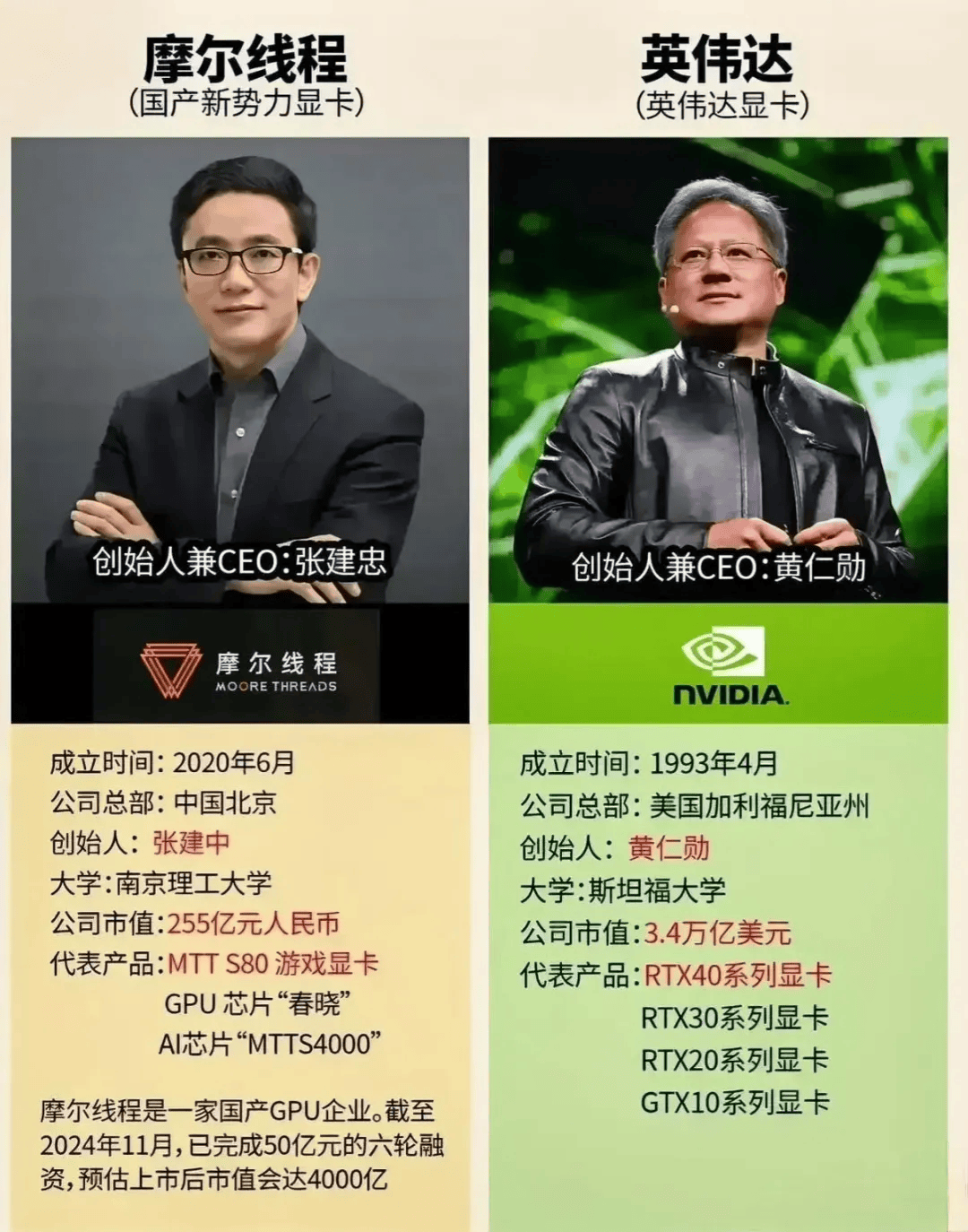
Group 1 - The core issue revolves around the unexpected decision of the company to allocate 7.5 billion for "cash management" shortly after its IPO, raising questions about the appropriateness of such spending [3][5] - The company, established in less than five years, is positioned as "China's first GPU stock," with its founder having a background at NVIDIA, which has attracted significant investor interest [4][5] - The initial public offering (IPO) saw a dramatic surge in stock price, with a 470% increase on the first day and a market capitalization exceeding 440 billion, indicating a market driven more by narrative than fundamentals [5][6] Group 2 - Investor disappointment stems from a perceived disconnect between high expectations for the company and its decision to prioritize cash management over immediate R&D investments [6][9] - The capital market values not just compliance but also the commitment to innovation, and the company's actions have created a sense of dissonance regarding its ambitions to compete with industry leaders like NVIDIA [7][9] - The broader market trend shows a shift where companies may prioritize rapid fundraising over substantial R&D, potentially undermining long-term technological advancement [8][10] Group 3 - The company faces a critical challenge of maintaining investor trust by demonstrating tangible technological progress rather than relying solely on capital to buy time [9][10] - As the excitement fades, the focus will shift to measurable performance indicators, such as computational power and ecosystem maturity, rather than past financial decisions [10] - The ongoing narrative suggests that the real risk lies in over-reliance on market hype without delivering on technological promises, highlighting the need for a clear strategy moving forward [10]

创投2025:投硬投新,已是春来?
Shang Hai Zheng Quan Bao· 2025-12-28 19:10
Core Viewpoint - The Chinese venture capital market is experiencing a turning point after a prolonged downturn, with signs of recovery and optimism emerging in 2025 [1] Funding Structure Optimization - The venture capital market in 2025 is characterized by a diverse funding structure led by state-owned enterprises (SOEs), with SOEs accounting for 55% of limited partners (LPs) and 81% of controlling interests [2] - The number of private equity fund managers has reached 11,600, with 4,099 being state-owned, managing 64.5% of the total fund size [2] - The entry of banks and insurance companies is enhancing the funding landscape, with new asset investment companies (AICs) being established to support this trend [3] Focus on Hard Technology - Investment in "hard technology" and innovation is becoming the main theme, with a significant increase in funding for sectors like semiconductor, biomedicine, and artificial intelligence [4] - The proportion of angel investments has risen from 17% to 25% in the first three quarters of 2025, with early-stage investments maintaining a high level of interest [4] Diverse Investment Strategies - Investment strategies are evolving to focus on key processes such as supply chain autonomy, digital transformation, carbon neutrality, health innovation, and consumer support [5] - The venture capital industry is transitioning from a consumer internet focus to a hard technology-centric model, which is crucial for maintaining global competitiveness [6] Innovative Financing Tools - The introduction of various financing tools, such as the promotion of science and technology bonds, is providing new avenues for funding in the venture capital sector [7] - International capital is returning to the Chinese market, with measures in place to attract foreign sovereign funds and enhance the investment landscape [8] Exit Strategies and Market Recovery - The IPO market is showing signs of recovery, with 191 IPOs completed in 2025, involving 1,114 investment institutions and an average internal rate of return (IRR) of 47.14% on the first day [9] - Mergers and acquisitions (M&A) are also on the rise, with 1,855 domestic M&A transactions completed, accounting for 95.1% of the total transaction volume [10] Ongoing Challenges - Despite the positive trends, the venture capital industry still faces significant exit pressures, with over 17 trillion yuan in funds awaiting resolution [11] - The industry remains highly dependent on the IPO market's health for profitability, indicating that a vibrant capital market is essential for overall success [11]
投资摩尔线程浮盈7倍,他为何敢下重注?拓锋董事长卢春霖:跟踪调研6个月,重点考察三方面
Mei Ri Jing Ji Xin Wen· 2025-12-05 13:49
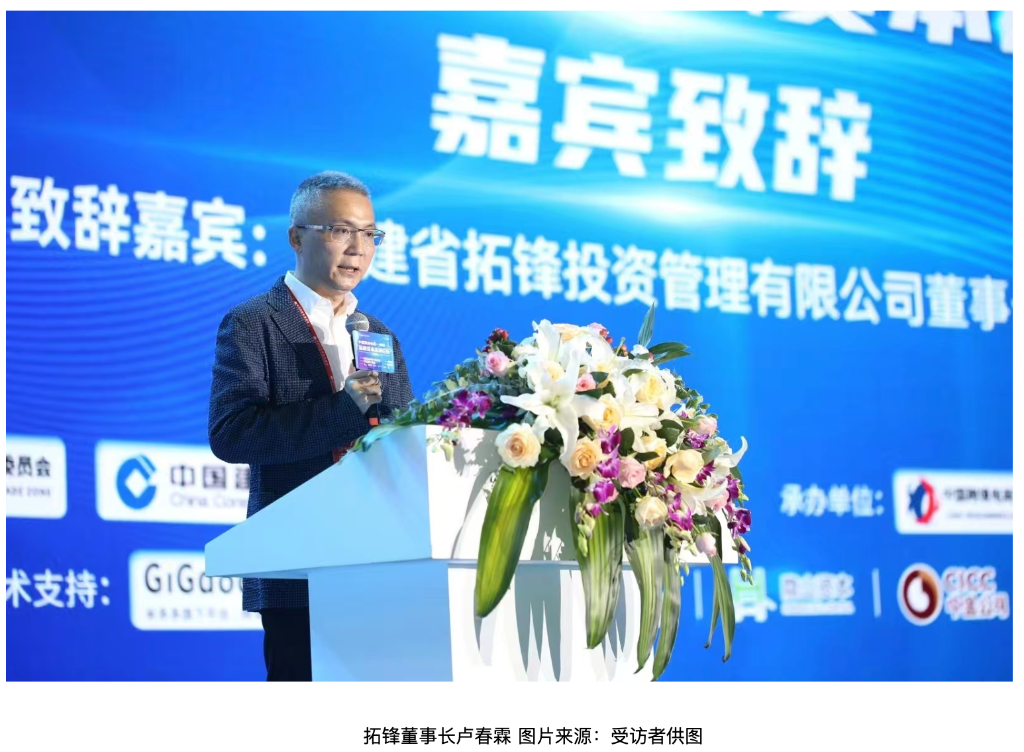
Core Insights - The article highlights the significant investment success of Tuofeng Private Equity Fund Management Co., led by Lu Chunlin, particularly in the semiconductor sector, with a focus on companies like Moore Threads and Cambrian [1][5][19] - The investment strategy emphasizes long-term value creation and ecosystem integration rather than short-term financial returns [15][18] Investment Strategy - Tuofeng's investment in Moore Threads has yielded over 700% returns, showcasing the potential of domestic GPU companies in China [1][15] - The firm has established strategic partnerships with institutions like the Chinese Academy of Sciences to access cutting-edge technology and projects [6][8] - Lu Chunlin's approach involves a deep understanding of the semiconductor industry, focusing on various segments from chip design to hardware and AI applications [17][18] Market Context - The article discusses the changing landscape of China's capital market, particularly the shift from traditional financial metrics to a focus on technological innovation and ecosystem collaboration [5][15] - The semiconductor industry is viewed as a critical area for investment, with opportunities arising from the need to build a domestic supply chain and reduce reliance on foreign technology [19] Company Profiles - Moore Threads is highlighted as a key player in the GPU market, with a strong team and innovative technology that positions it well for future growth [10][12] - Other investments by Tuofeng include companies like Mu Xi Integrated Circuit and Qingwei Intelligent Technology, indicating a diversified approach within the semiconductor sector [16][18] Future Outlook - Lu Chunlin believes that the next 5 to 10 years will be a golden period for investment in the semiconductor supply chain, as China aims to establish its own ecosystem [19]

美媒炒作:不止稀土,中国还有三招能掐住美国
Guan Cha Zhe Wang· 2025-11-06 05:27
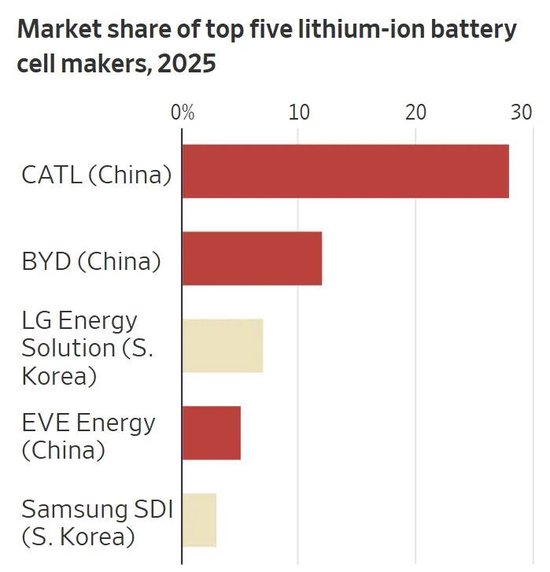
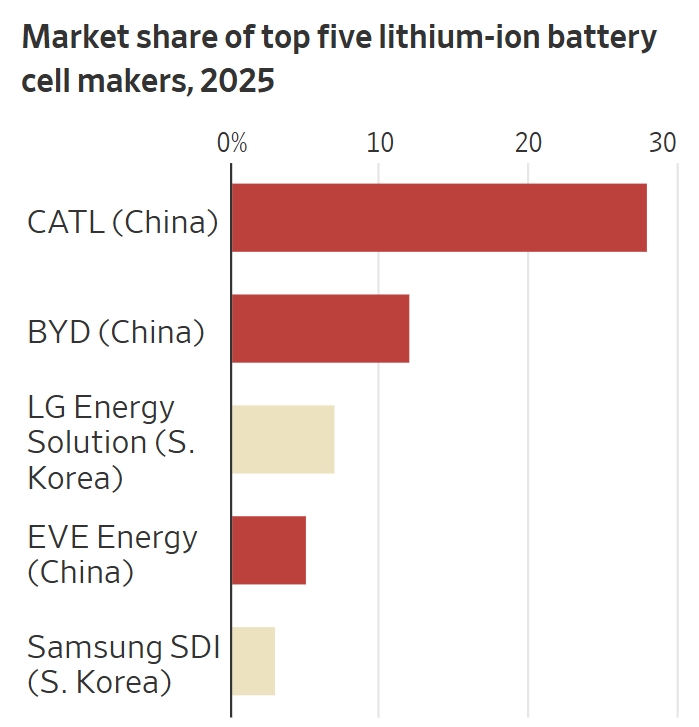
Core Viewpoint - China emphasizes the dual-use nature of rare earth materials and asserts that export controls are a common international practice, while the U.S. continues to propagate the narrative of "weaponizing" rare earth supplies, extending this rhetoric to other sectors [1][14]. Group 1: Rare Earth and Battery Industry - China has established a dominant position in the supply chain through decades of industrial policy, controlling key rare earth minerals and compelling negotiations with the U.S. [1] - Chinese suppliers produce 79% of global battery cathode materials and 92% of anode materials, with a 63% market share in lithium refining products, 80% of refined cobalt supply, and 98% of refined graphite supply [2]. - The two largest battery manufacturers globally are Chinese companies, CATL and BYD, indicating China's critical role in electric vehicle and green energy technology [1][2]. Group 2: Semiconductor Industry - China holds approximately one-third of the global capacity for mature process semiconductors, essential for automotive, consumer electronics, and defense sectors [6]. - The U.S. Geological Survey indicates that China will produce 99% of global gallium and is a major producer of germanium, with export controls on these minerals already in place [6][10]. Group 3: Pharmaceutical Industry - A significant portion of active pharmaceutical ingredients (APIs) in the U.S. is sourced from China, including key components for widely used medications like acetaminophen and ibuprofen [9][10]. - China has prioritized pharmaceutical and medical device production in its industrial development strategy, aiming for innovation and self-sufficiency [13][14]. Group 4: Economic Self-Sufficiency and Strategic Positioning - Over the past two decades, China has systematically pursued economic self-sufficiency, reducing reliance on Western imports and establishing leverage over critical supply chains [14][15]. - The Chinese government continues to enhance its industrial capabilities, aiming to build a resilient supply chain and a robust manufacturing sector [15][16]. - Experts note that the U.S. has become increasingly dependent on China for rare earth materials, complicating efforts to impose restrictions on Chinese exports [16].
“不止稀土,中国还有三招能卡美国脖子”
Guan Cha Zhe Wang· 2025-11-06 02:11
Core Viewpoint - The article discusses China's strategic dominance in critical industries such as rare earths, lithium-ion batteries, semiconductors, and pharmaceuticals, emphasizing its ability to leverage this position against the U.S. amid ongoing tensions and trade disputes [1][13]. Industry Insights - **Rare Earths**: China has established a commanding position in the rare earth supply chain, which is viewed as a dual-use resource with military and civilian applications. The U.S. has attempted to portray this as a "weaponization" of supply, but China maintains that export controls are standard international practices [1]. - **Lithium-Ion Batteries**: China produces 79% of global battery cathode materials and 92% of anode materials. The two leading battery manufacturers, CATL and BYD, are Chinese companies, and a significant portion of battery components globally is sourced from China [2][5]. - **Semiconductors**: China holds about one-third of the global capacity for mature process semiconductors, which are essential for various industries, including automotive and consumer electronics. The country has invested heavily in semiconductor manufacturing to achieve self-sufficiency [5][8]. - **Pharmaceuticals**: A large portion of active pharmaceutical ingredients (APIs) used in U.S. medications is sourced from China. For instance, key ingredients for popular medications like acetaminophen and ibuprofen are predominantly produced in China [11][12]. Strategic Developments - **Policy Initiatives**: In 2015, China set ambitious goals for its electric vehicle industry, leading to significant growth in domestic manufacturers. Recent measures have been taken to further solidify its technological edge in lithium-ion battery production and semiconductor manufacturing [5][11]. - **Self-Sufficiency Goals**: Over the past two decades, China has focused on reducing its reliance on Western imports, achieving notable success in various sectors, including rare earths and pharmaceuticals. This strategy has made it increasingly difficult for the U.S. to exert pressure on China [13][15]. - **Global Supply Chain Impact**: The article highlights that the U.S. is more dependent on Chinese rare earths than China is on U.S. agricultural products, indicating a significant imbalance in the trade relationship. This dependency complicates U.S. efforts to retaliate against China [15][16].


“不止稀土,中国还有三招能掐住美国”
Guan Cha Zhe Wang· 2025-11-06 01:57
Core Viewpoint - The article discusses China's strategic dominance in critical industries such as rare earths, lithium-ion batteries, semiconductors, and pharmaceuticals, emphasizing its ability to leverage this position against the U.S. amid ongoing geopolitical tensions [1][14]. Group 1: Rare Earths and Supply Chain Control - China has established a leading position in the supply chain for rare earths, which are crucial for both military and civilian applications, and has implemented export controls as a common international practice [1]. - The U.S. media has suggested that China's control over rare earths has forced negotiations with former President Trump, highlighting the perceived "weaponization" of supply chains [1][14]. Group 2: Lithium-Ion Batteries - China produces 79% of the world's battery cathode materials and 92% of anode materials, controlling 63% of the market for refined lithium products, 80% of refined cobalt, and 98% of refined graphite [2]. - The two largest battery manufacturers globally are Chinese companies, CATL and BYD, which dominate the electric vehicle and energy storage markets [5]. Group 3: Semiconductor Industry - China accounts for approximately one-third of the global capacity for mature process semiconductors, which are essential for automotive, consumer electronics, and defense industries [5]. - The country has invested billions to enhance its semiconductor manufacturing capabilities, aiming for self-sufficiency [5]. Group 4: Pharmaceutical Sector - A significant portion of active pharmaceutical ingredients (APIs) used in U.S. medications is sourced from China, including key ingredients for widely used drugs like acetaminophen and ibuprofen [12]. - China has prioritized the development of its pharmaceutical and medical device industries, aiming to innovate and reduce reliance on foreign imports [12][14]. Group 5: Strategic Self-Sufficiency - Over the past two decades, China has systematically pursued economic self-sufficiency, reducing dependence on Western imports and establishing a robust industrial base [14][16]. - The Chinese government continues to strengthen its industrial capabilities, emphasizing the importance of a resilient supply chain and a modernized manufacturing system [14].
“二十年来中国一直在加强自力更生,美国打压中国更难了”
Guan Cha Zhe Wang· 2025-11-04 03:40
Core Viewpoint - The article emphasizes China's long-term strategy of self-reliance, which has significantly reduced its dependence on Western imports and established a robust position in critical industries, making it increasingly difficult for the U.S. to contain China [1][2]. Group 1: Self-Reliance Strategy - Over the past two decades, China has systematically pursued economic self-sufficiency, achieving notable success in sectors such as rare earths, antibiotic raw materials, and electrical equipment, thereby creating leverage against U.S. economic pressures [1][2]. - The U.S. has found it increasingly challenging to retaliate against China due to its established dominance in key manufacturing areas, including antibiotics and low-end chips [2][4]. Group 2: Industrial Strength and Global Position - China has made significant advancements in the quality and quantity of its manufactured goods since joining the World Trade Organization in 2001, now producing over 220 of the 500 major industrial products that rank first globally [2]. - The Chinese government is focused on enhancing its industrial system to improve supply chain resilience and economic security, as highlighted in recent high-level meetings [2]. Group 3: U.S.-China Trade Dynamics - Experts note that China has successfully excluded many U.S. products from its supply chain, except for the most advanced chips designed by U.S. companies but not manufactured in the U.S. [4]. - The article points out that the U.S. dependency on Chinese rare earths is significantly greater than China's reliance on U.S. soybeans, indicating a strategic miscalculation by the Trump administration during the trade war [5].
“行业洞察”助力东北振兴 赋能沈阳产业高质量发展
Xin Hua Cai Jing· 2025-10-23 14:28
Core Insights - The article emphasizes the importance of leveraging local resources and industrial ecosystems for investment attraction in Shenyang, a key city in Northeast China's revitalization efforts [1][2] - The "Shenyang Industrial Insight Decision Analysis Platform 2.0" has been upgraded to enhance its capabilities in data analysis and industry insights, aiding in high-quality industrial development [2][4] Industrial Development - The platform utilizes big data to help Shenyang identify its industrial strengths and weaknesses, facilitating targeted investment strategies [2][3] - Shenyang's new energy vehicle industry is highlighted as a significant sector, with a comprehensive score of 84.57, indicating strong growth potential and a robust ecosystem [2][3] Investment Opportunities - There is a call for Shenyang to attract key manufacturers in lithium-ion battery materials and related services, as the midstream battery industry presents substantial growth opportunities [3] - The aerospace industry in Shenyang is also noted for its strong growth potential, with an expected output value exceeding 110 billion yuan in 2024, supported by a complete industrial chain [3][4] Competitive Landscape - The aerospace sector in Shenyang shows a high concentration of quality enterprises, with nearly 90% of patents expected to be invention patents by 2025, indicating a strong competitive position [4] - The platform aims to support the establishment of a modern industrial system unique to Shenyang, enhancing its regional leadership in various sectors [4]
荷兰“芯”慌:当光刻机遇上稀土,谁才是真正的“卡脖子”高手?
Xin Lang Cai Jing· 2025-10-16 09:23
Group 1: Semiconductor Industry - The EUV lithography machines from ASML are heavily reliant on rare earth permanent magnets, with each machine requiring 1.2 tons of these materials, 80% of which are sourced from China [2] - In 2023, the Netherlands followed the US in restricting DUV lithography machine exports to China, leading to a two-week halt in ASML's DUV production, resulting in a loss of 4 million euros per day [2] - If the Netherlands imposes further restrictions, a potential cut in rare earth supplies could severely impact ASML's EUV production, with a projected loss of 60 billion euros in semiconductor equipment exports, accounting for 35% of the Netherlands' total equipment exports [2] Group 2: Agricultural Sector - The Netherlands is the second-largest agricultural exporter globally, with China being its third-largest market, projected to export 12 billion euros in agricultural products to China in 2024 [4] - Cheese exports to China are significant, with 180,000 tons sold, making up 25% of the Netherlands' total cheese exports; any trade restrictions could lead to a 25% price drop, resulting in losses exceeding 100 million euros for Dutch dairy farmers [4] - The flower industry, particularly tulips, is also at risk, as China imports 500 million tulips annually; increased inspections could lead to a 30% price drop, severely impacting small flower farmers [6] Group 3: Logistics and Trade - The Port of Rotterdam, crucial for the Dutch economy, handles 460 million tons of cargo in 2024, with 22% related to China; any reduction in trade could lead to an 8% drop in container throughput, equating to a loss of 368,000 standard containers [8] - The logistics company DSV has 18% of its revenue from China; a decrease in trade through Rotterdam could lead to significant job losses, with 2,000 dockworkers potentially affected [9] - The Netherlands' trade surplus with China is projected at 4.5 billion euros in 2024; retaliatory measures from China could flip this surplus into a deficit, negatively impacting GDP growth [11]