
日本经济复苏

Search documents
2026·真实中国人的真实年(下)
格隆汇APP· 2026-02-19 09:04
Group 1 - The article captures the essence of the Chinese New Year celebrations across various regions, highlighting the warmth and cultural significance of these moments [3][5][21] - It emphasizes the transformation of cities like Shenzhen, where the sense of belonging and community has grown stronger over the years, making it a second home for many [56][72] - The narrative showcases the diverse ways in which people celebrate the New Year, from traditional customs to modern interpretations, reflecting the evolving nature of cultural practices [33][65][86] Group 2 - The article discusses the changes in Japan, noting a shift towards a more vibrant economy and a rightward political trend, which could impact investment opportunities in the region [6][9][10] - It highlights the differences in societal values between Canada and the U.S., with Canada promoting a more inclusive and average lifestyle, which may influence investment strategies in North America [13][14] - The piece also touches on the importance of cultural connections and community bonding during the New Year, which can affect consumer behavior and market dynamics [15][18][19]


ATFX:高市解散众议院 2月8日重新大选日元走向何方?
Xin Lang Cai Jing· 2026-01-21 01:53
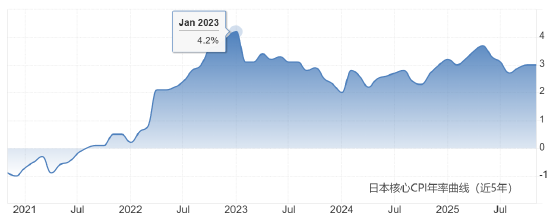
Group 1 - The core point of the article is that Japanese Prime Minister Sanna Takichi plans to dissolve the House of Representatives and call for a new election, which raises concerns about the timing and implications of this decision given the lack of a major economic crisis in Japan [1][7] - Takichi's approach has been characterized by a strong alignment with the United States while adopting a hardline stance towards other countries, which mirrors the foreign policy of former Prime Minister Shinzo Abe [1][7] - The dissolution of the House of Representatives is seen as a strategic move to strengthen the ruling coalition's position, as Takichi's policies have reportedly caused significant damage to the macroeconomy, potentially interrupting the recovery trend [1][7] Group 2 - Financial institutions predict Japan's core CPI for December to drop to 2.4%, down from 3%, indicating a potential loss of inflation advantage which is critical for economic recovery [4][10] - The Japanese yen has been depreciating significantly, with the USDJPY exchange rate increasing from 103.24 in January 2021 to 157.94 in January 2026, marking a depreciation of 52.98% [4][10] - While yen depreciation can boost tourism and exports, it also signals a decline in national strength, and if the upcoming election does not meet Takichi's expectations for increased seats, the depreciation trend may accelerate [4][10] Group 3 - The USDJPY is currently trading within a channel, with recent price action indicating a potential new upward trend if the lower channel support holds [6][13] - Key resistance levels to watch are the middle and upper channel lines, and a significant drop below the lower channel could lead to a larger correction in the USDJPY [6][13]
21专访|野村日本首席经济学家:警惕日美货币政策反向市场风险
2 1 Shi Ji Jing Ji Bao Dao· 2025-12-09 07:08
Core Viewpoint - The Bank of Japan (BOJ) is expected to raise interest rates in December, with potential implications for both domestic and global markets, particularly in the context of contrasting monetary policies with the U.S. Federal Reserve [1][3]. Group 1: Interest Rate Expectations - The BOJ is anticipated to increase the interest rate to 0.75% in December, with a subsequent hike expected in January 2027 [2][3]. - The last rate hike occurred in January 2023, raising the rate from 0.25% to 0.5%, marking the highest borrowing cost in 17 years [1][2]. Group 2: Economic Performance - Japan's GDP contracted by 1.8% year-on-year in Q3 2023, indicating a return to negative growth since Q1 2024 [2][4]. - The economic downturn is attributed to a decline in housing investment and a drop in exports, alongside stagnant private consumption and business investment [4][5]. Group 3: Inflation Dynamics - Inflation in Japan is primarily driven by supply-side factors, with over half attributed to these influences rather than demand-side factors [2][6]. - There is an expectation that inflation will transition from cost-push to demand-driven by 2026, aided by government fiscal policies [2][5]. Group 4: Market Reactions and Risks - The market has already priced in the BOJ's anticipated rate hike, suggesting limited risk of significant market volatility following the adjustment [3][4]. - The potential for a "Japan-U.S. monetary policy divergence" could lead to market fluctuations, especially with the U.S. Federal Reserve expected to announce rate cuts around the same time [4][5]. Group 5: Manufacturing Sector Insights - The Japanese manufacturing sector has shown signs of contraction, with the PMI recorded at 48.7, indicating ongoing challenges due to weak demand [6]. - Despite the current contraction, there are signs of improvement in sub-indices, suggesting potential for future production increases [6]. Group 6: Fiscal Policy and Debt Management - The BOJ is reducing its bond purchases, indicating a shift towards normalizing interest rates and managing its balance sheet effectively [8]. - The rise in long-term bond yields reflects fiscal policy adjustments rather than monetary policy changes, with the government focusing on selective spending and returning excess tax revenue to the public [8].
日本央行行长:日本经济温和复苏,12月将审慎评估加息路径
Sou Hu Cai Jing· 2025-12-01 07:35
Core Viewpoint - The Bank of Japan's Governor Ueda Kazuo reiterated that the Japanese economy has achieved a "moderate recovery," despite a temporary negative GDP growth expected in the third quarter of 2025 [1] Economic Outlook - Ueda noted that the uncertainty surrounding Japan's economic outlook is diminishing as companies continue to raise wages and prices, alongside a gradual recovery in the overseas economy [1] - The Governor emphasized that the basic assessment of economic activity and prices by the Bank of Japan remains unchanged [1] Wage Growth and Corporate Behavior - Ueda highlighted that the minimum wage for the fiscal year 2025 is expected to increase by over 5% year-on-year, which is likely to encourage broader corporate wage increases [1] - He stressed the importance of confirming whether the initial trends leading into the annual wage negotiations in spring next year possess sufficient momentum [1] Monetary Policy - Regarding monetary policy, Ueda stated that it is necessary to adjust the easing measures appropriately to achieve the price stability target, indicating that adjustments should neither be too late nor too early [1] - He explained that even if policy interest rates are raised, a loose financial environment will be maintained, clarifying that rate hikes should be viewed as "moderately easing the accelerator" rather than "slamming the brakes" to support stable economic and price growth [1]
“瞪羚”挑战“大象”:日本经济复苏背后的企业战争
3 6 Ke· 2025-10-26 00:07
Core Insights - The article discusses the transformation of Japan's economic recovery and the challenges it faces, particularly in the context of the competition between emerging entrepreneurial firms (referred to as "gazelles") and established corporate giants (referred to as "elephants") [12][14] - It highlights the historical context of Japan's economic struggles since the burst of the asset bubble in the early 1990s and the recent signs of recovery post-COVID-19, including a consistent positive growth rate since 2021 and inflation surpassing the central bank's target [2][5] Economic Context - Japan's GDP, when adjusted for purchasing power parity, is projected to be approximately six times that of China by 2024, although on a per capita basis, it remains only half of Japan's [1] - The long-standing economic stagnation, termed the "lost decades," has led to a perception of Japan as a country that has been surpassed by others, particularly China [1] Recovery Indicators - Since 2021, Japan has maintained an average annual growth rate of nearly 1%, with an unemployment rate consistently below 3% [2] - The Consumer Price Index (CPI) inflation rate has approached 3%, indicating an end to the long-standing deflationary pressures that have plagued the economy [2] Structural Changes - The book by Richard Katz emphasizes the need for Japan to adapt its economic and social systems to new development stages, moving away from rigid employment practices like lifetime employment and seniority-based pay [5][6] - The labor market is becoming more competitive, with a significant increase in the proportion of non-regular employees from 15% in the 1980s to nearly 40% currently, reflecting a shift towards performance-based advancement [5] Challenges to Innovation - The entrenched interests of large corporations hinder the growth of innovative small and medium-sized enterprises (SMEs), which are crucial for economic dynamism [6][9] - The historical reliance on government policies that favored large firms has created a barrier for "gazelle" companies to thrive, as their success could undermine the market position of established "elephant" firms [6] Policy and Institutional Shifts - The relationship between the government and the market has evolved, with a shift from direct industrial policy to a focus on competition policy, reflecting the need for a more market-driven resource allocation [7] - The reforms in the banking sector and real estate market post-bubble have been essential for creating conditions conducive to economic recovery [8] Comparative Analysis - Katz's work complements other literature on Japan's economy by focusing on recent developments and the micro-level changes within firms, contrasting with broader historical analyses [11]

日本或迎首位女首相,“安倍经济学”继承者将把经济带向何方?
2 1 Shi Ji Jing Ji Bao Dao· 2025-10-04 14:22
Core Viewpoint - The election of Sanae Takaichi as the new president of Japan's ruling Liberal Democratic Party (LDP) is expected to lead to her becoming Japan's first female Prime Minister, although she will face significant political challenges due to the LDP's minority status in the Diet [1][3]. Group 1: Election Results - Sanae Takaichi won the LDP presidential election with 185 votes, defeating Agriculture Minister Shinjiro Koizumi, who received 156 votes [1][2]. - The election involved two rounds of voting, with no candidate achieving a majority in the first round [2]. Group 2: Political Landscape - The LDP currently holds the largest number of seats in the Diet but lacks a majority, complicating Takaichi's ability to pass legislation and manage government budgets [1][3]. - Analysts suggest that Takaichi's success in the election was partly due to her strong support from local party members, contrasting with Koizumi's reliance on online campaigning tactics that faced criticism [2]. Group 3: Economic Policies - Takaichi is seen as a proponent of "Abenomics," advocating for continued monetary easing and expansionary fiscal policies [1][6]. - She has proposed significant economic measures, including eliminating the food consumption tax and increasing defense spending, which may stimulate short-term market activity but pose long-term fiscal risks [6][7]. Group 4: Market Reactions - Following Takaichi's election, expectations of yen depreciation and a steepening of the Japanese government bond yield curve have emerged, reflecting market anticipation of her economic policies [5][6]. - The Japanese stock market has already begun to reflect these expectations, with the Nikkei 225 index reaching new highs [6]. Group 5: Challenges Ahead - Takaichi faces multiple challenges, including the need to rebuild trust in the LDP, navigate a minority government, and balance economic growth with fiscal sustainability amid rising inflation and public debt [4][7]. - The current economic environment, characterized by high inflation and currency fluctuations, will require careful management to avoid exacerbating fiscal risks [3][7].
日经225指数上涨,日经ETF涨超2%,日经225ETF、日经225ETF易方达、日本东证指数ETF涨超1%
Ge Long Hui· 2025-09-04 06:57
Group 1 - The Nikkei 225 index rose by 1.46%, with Nikkei ETFs increasing over 2%, indicating a positive market trend in Japan [1] - Foreign investors are reshaping the structure of the Japanese capital market, highlighted by Berkshire Hathaway increasing its stake in Mitsubishi Corporation to 10.23% [1] - Mitsubishi Corporation and Mitsui & Co. are engaging in discussions with Berkshire Hathaway regarding their shareholdings, reflecting ongoing interest from foreign investors [1] Group 2 - The manager of the Nikkei 225 ETF E Fund anticipates a stable domestic demand supported by a virtuous cycle of wages and inflation, despite external uncertainties [2] - The Bank of Japan is expected to gradually normalize its monetary policy, focusing on interest rate hikes and balance sheet reduction, which will be key market focal points [2] - Ongoing corporate governance reforms in Japan are encouraging companies to prioritize shareholder returns, such as increasing dividends and stock buybacks, attracting long-term value investors [2] Group 3 - The Nikkei 225 index serves as a key benchmark for the Japanese stock market, reflecting the performance of 225 major blue-chip companies and the overall economic recovery [3] - The index's performance has outpaced Japan's nominal GDP growth, drawing renewed attention from global investors amid corporate governance reforms and global supply chain restructuring [3] - The E Fund manager notes that Japan's economy faces challenges from inflation, trade policy uncertainties, and geopolitical tensions, which could impact growth [3] Group 4 - Key variables to watch in the second half of the year include the outcomes of the Japanese Senate elections and progress in US-Japan tariff negotiations [4] - The Japanese stock market is expected to maintain upward momentum due to factors such as potential interest rate cuts by the Federal Reserve and strong performance in the technology sector [4] - The exchange rate of the yen will be influenced by the pace of monetary policy divergence, economic data validation, and geopolitical developments, with a slight appreciation against the RMB anticipated [4]
基本面稳定修复,但长端利率波动性明显加大
HTSC· 2025-08-29 02:53
Economic Performance - Japan's GDP in Q2 exceeded expectations with a quarter-on-quarter annualized growth rate of 0.6%[10] - The manufacturing PMI for August rose to 49.9, approaching the expansion threshold, while the services PMI decreased to 52.7[2] - The unemployment rate remained stable at 2.5%, with nominal wage growth increasing to 2.2%[19][22] Trade and Production - Exports in July fell by 2.3% year-on-year, with exports to the U.S. declining by 10.1%[3] - Industrial production index in June rebounded to a year-on-year growth of 2.8%[3] - New orders for machinery in June increased by 7.6% year-on-year, indicating resilient investment[3][43] Inflation and Prices - Japan's CPI in July decreased to 2.9% year-on-year, with energy prices contributing to the decline[3][63] - The CPI for energy fell by 1% year-on-year, a drop of 4.7 percentage points from the previous month[3] - The price of rice remains high, contributing to a 11.5% increase in agricultural product prices year-on-year[3][76] Financial Markets - The Nikkei 225 index reached a historical high, increasing by 4.2% in August[4] - The 30-year Japanese government bond yield rose to 3.21%, the highest since 1999, reflecting concerns over fiscal sustainability[4] - The 10-year Japanese government bond yield increased by 7 basis points to 1.62%[4] Monetary Policy - The Bank of Japan's interest rate expectations have slightly increased to 17 basis points as of August 25[4] - The central bank maintained the policy rate at 0.5% during the July meeting, indicating a hawkish stance[5] - There are expectations for fiscal expansion due to the ruling coalition's electoral challenges[5]

参加大阪世博会!大咖带队考察日本金融、地产、新消费等核心产业
华尔街见闻· 2025-08-07 11:05
Core Viewpoint - The article highlights the increasing interest in Japan's financial and real estate markets, particularly following Warren Buffett's investments in Japanese assets, which have contributed to significant gains in the Nikkei index over the past two years [2][4]. Group 1: Japan's Economic Recovery - Japan's economy is emerging from the "lost three decades," with inflation returning in 2024 and a notable increase in employee wages, which rose by 5.25% in the latest labor negotiations, marking the highest level in 34 years [4]. - The yield on Japan's 10-year government bonds reached its highest level since 2008 on July 23, 2024, indicating a shift in the economic landscape [4]. Group 2: Real Estate Market Dynamics - Following the burst of the real estate bubble, Japan's rental and sales ratios have become more attractive, with core cities like Tokyo experiencing a rise in real estate prices in recent years [5]. - The article mentions a previous successful research trip to Tokyo, which focused on various sectors including real estate, finance, and healthcare, leading to the current trip to Osaka and Kyoto to further explore these opportunities [5]. Group 3: Research Trip Details - The upcoming research trip from September 8 to 13, 2025, will include in-depth investigations into the real estate and cosmetics industries, featuring discussions with executives from notable companies like Ze Yu Group and TOA [12][16]. - Participants will also visit significant cultural sites and engage in activities such as experiencing Japanese whisky production at the Yamazaki Distillery and exploring the Panasonic Museum [37][35]. Group 4: Expert Guidance - The research trip will be led by experienced financial experts, including renowned economists who will provide insights into Japan's economic opportunities and asset allocation strategies [49][42].

植田和男乐观表态助日元企
Jin Tou Wang· 2025-08-04 04:03
Core Viewpoint - The Japanese economy is experiencing a "moderate recovery," supported by positive economic data and a new US-Japan trade agreement that reduces macroeconomic uncertainty [1] Economic Indicators - The USD/JPY exchange rate is currently around 147.60, up 0.16% from the previous close of 147.36 [1] - June economic data shows industrial output increased by 1.7% month-on-month, exceeding market expectations [1] - Retail sales rose by 2.0% year-on-year, indicating resilience in domestic consumption [1] Market Sentiment - Positive economic data has strengthened market confidence in the ongoing recovery of the Japanese economy, bolstering expectations for future interest rate hikes by the Bank of Japan [1] - The yen has rebounded significantly from recent lows against the dollar, supported by the economic outlook [1] Monetary Policy Outlook - Analysts suggest that if the recovery trend continues, the Bank of Japan may initiate a normalization of monetary policy by the end of the year, providing further upward momentum for the yen [1] Technical Analysis - The USD/JPY momentum has slightly shifted to a bearish outlook; if it falls below 147.00, the next support level is at 145.85, followed by the convergence of the 100-day and 50-day simple moving averages at 145.71 [1] - A break below this level could test the 144.00 mark [1]