
海外市场

Search documents
车企马年开工信:反内卷、AI、海外成关键词
Jing Ji Guan Cha Wang· 2026-02-25 11:09
2月24日春节后复工首日,吉利汽车集团CEO淦家阅、长安汽车总裁赵非、上汽通用五菱总经理吕俊成以及小鹏汽车董事长何小鹏陆续发布新春开工信,为 马年征程定下基调。 在"内卷"与"淘汰赛"的双重压力下,各家车企的战略重点既有共性,又各具特色。 吉利汽车:坚定"反内卷",聚焦五大战役 面对白热化的市场竞争,吉利汽车集团提出"反内卷",拒绝恶性消耗,转而聚焦技术、品质与品牌的长期主义。淦家阅在信中表示,面对激烈市场竞争,吉 利将摒弃内卷式恶性竞争,坚定走内涵式、可持续发展道路,聚焦技术、品质、品牌、服务与企业道德五大战役。 首先是AI科技化加速,吉利表示2026年将继续快速迭代千里浩瀚 G-ASD,G-ASD H7 方案也将搭载到领克和吉利银河的多款车型上,同时,在智能座舱方 面,超拟人智能体 Eva 将具备更强的交互能力,并能实现国内领先的舱驾联动体验。 第二是能源多元化。2026年,吉利全新一代甲醇混动车型量产上市,每公里使用成本约0.2元,同时加快加注网络建设,覆盖率提升至60%。此外,吉利将 把长续航、超快充的800V平台引入吉利银河品牌,全系电混车型纯电续航突破200公里;今年上半年正式发布i - HEV智 ...


一汽解放:公司尊重友商的优秀发展成果,也始终积极对标学习
Zheng Quan Ri Bao Wang· 2026-02-12 05:48
Core Viewpoint - The company emphasizes its commitment to continuous improvement and innovation in response to competitive pressures while focusing on key areas such as new energy, intelligent networking, and overseas markets [1] Group 1 - The company respects the achievements of its competitors and actively learns from their successful development [1] - The company aims to deepen its core business and accelerate transformation through management upgrades and product innovation [1] - The company is dedicated to enhancing its competitiveness to provide maximum returns to its investors [1]

“广货行天下”需瞄准三大市场
2 1 Shi Ji Jing Ji Bao Dao· 2026-02-05 22:23
Core Viewpoint - The development of service consumption is crucial for China's economic growth, with a significant gap compared to developed countries, indicating a vast potential for growth in this sector [2][3] Group 1: Service Consumption Trends - By 2025, the proportion of per capita service consumption expenditure in China is expected to reach 46.1%, while developed countries typically exceed 60%, with some even over 70% [2] - It is predicted that during the 14th Five-Year Plan period, service consumption will account for over 50% of total consumption, marking an irreversible trend [2] Group 2: Relationship Between Service and Goods Consumption - Both service and goods consumption are essential for expanding domestic demand, with service consumption focusing on growth and goods consumption on quality improvement [3] - The tourism sector exemplifies this relationship, with over 6.5 billion domestic tourist trips expected by 2025, highlighting the interconnectedness of service and goods consumption [3] Group 3: Market Opportunities for "Guangdong Goods" - The overseas market presents new opportunities for Guangdong goods, transitioning from low-margin exports to high-quality brand exports, particularly in emerging markets like Southeast Asia and Europe [4] - The Guangdong-Hong Kong-Macao Greater Bay Area, with over 80 million residents, serves as a significant market for both high-end and cost-effective products, providing a testing ground for product optimization [4] - The untapped potential in lower-tier markets, particularly in rural areas, offers significant opportunities for Guangdong goods, focusing on quality-price ratios rather than premium pricing [4] Group 4: Future Directions for Guangdong Goods - Future consumption trends are expected to lean towards intelligence, sustainability, differentiation, and emotional connection, where Guangdong has competitive advantages [5] - Guangdong's digital economy and advancements in AI and IoT are leading to innovative products, while the focus on green products aligns with global consumption trends [5] - The integration of local cultural elements into products enhances emotional value, appealing to younger consumers [5]

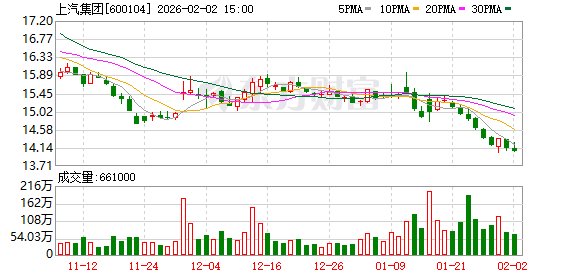
自主、新能源、海外三大引擎同步发力 上汽集团1月销售32.7万辆同比大增23.9%
Zhong Guo Jing Ying Bao· 2026-02-02 12:47
Core Viewpoint - In January 2026, SAIC Motor Corporation achieved significant sales growth, continuing its strong performance from 2025, with a total vehicle sales of 327,000 units, representing a year-on-year increase of 23.9% [3][4]. Sales Performance - SAIC's total vehicle sales in January reached 327,000 units, with retail sales at 363,000 units, leading the domestic automotive industry in both wholesale and retail sales [3]. - The sales of SAIC's self-owned brands amounted to 214,000 units, marking a year-on-year growth of 39.6%, accounting for 65.3% of the company's total sales, an increase of 7.3 percentage points compared to the same period last year [4]. - The sales of SAIC's new energy vehicles (NEVs) reached 85,000 units, reflecting a year-on-year increase of 39.7%, positioning the company among the industry's leaders [4]. Brand Performance - SAIC Passenger Vehicles sold 77,000 units in January, up 53.8% year-on-year; SAIC Maxus sold 18,000 units, a growth of 18.2%; and SAIC-GM-Wuling sold 105,000 units, increasing by 37% [4]. - The sales of SAIC's NEVs included 28,000 units from SAIC Passenger Vehicles, a staggering increase of 576.9% year-on-year; 4,000 units from SAIC Maxus, up 24.6%; 6,000 units from SAIC-GM, a growth of 316.1%; and 36,000 units from SAIC-GM-Wuling [4]. International Market - In January, SAIC's overseas sales reached 105,000 units, a remarkable year-on-year increase of 51.7%, maintaining a strong position in the industry [5]. - The MG brand, which has been the top-selling self-owned brand in Europe for 11 consecutive years, ranked second in monthly sales in the UK automotive market in December 2025, surpassing major global brands [5]. Future Outlook - SAIC Motor Corporation aims to deepen reforms in 2026, focusing on user-centric innovation and the application of cutting-edge technologies such as AI, smart driving, smart cockpit, smart chassis, and solid-state batteries [5].

海外订单与新兴产业驱动高增长,德州上市公司答卷亮眼
Da Zhong Ri Bao· 2026-02-02 00:44
Core Insights - The overall performance of listed companies in Dezhou is significantly improving, with many companies forecasting a net profit increase of over 50% for the fiscal year 2025, and some even projecting growth as high as 167.98% to 212.03% [1][2] Group 1: Company Performance - Five out of eleven listed companies in Dezhou have released performance forecasts, with notable examples including Suotong Development, which expects a net profit of 730 million to 850 million yuan, representing a year-on-year increase of 167.98% to 212.03% [1][2] - Other companies also show impressive growth, such as Shuangyi Technology with a projected net profit exceeding 150 million yuan, an increase of 80% to 100%, and Tongyu Heavy Industry expecting a net profit of over 62.5 million yuan, up by 51.05% to 75.22% [2] Group 2: Market Dynamics - The aluminum industry, particularly the prebaked anode sector, is experiencing favorable conditions, leading to price increases for Suotong Development's main products [2] - New production capacities from joint ventures with high-quality clients are contributing to significant year-on-year growth in production and sales [2] Group 3: International Expansion - Overseas markets are becoming a crucial growth engine for many listed companies, with Suotong Development seeing a substantial increase in overseas orders and signing a joint venture agreement with Emirates Global Aluminium worth approximately $295 million [3] - Baolong Chuangyuan is experiencing a rapid recovery in international orders, which is driving significant growth in its international business [3] Group 4: Emerging Sectors - New sectors such as new energy vehicles and low-altitude economy are emerging as new growth drivers for companies, with Shuangyi Technology expanding its product offerings to include components for new energy buses and drones [4] Group 5: Regional Economic Resilience - The overall positive performance of listed companies reflects the stability and improvement of the regional economy, with companies across various sectors such as new materials, environmental technology, and heavy machinery showing resilience [5] - Dezhou is actively fostering a supportive environment for listed companies, with initiatives aimed at enhancing the quality and quantity of listings on the North Exchange [6]
石药集团:长效代谢平台解锁重磅出海交易-20260201
HTSC· 2026-02-01 13:25
Investment Rating - The investment rating for the company is maintained as "Buy" with a target price of HKD 19.25 [1][4]. Core Insights - The company has announced a significant overseas transaction involving its long-acting peptide drug metabolism AI discovery platform, which includes a USD 1.2 billion upfront payment, up to USD 3.5 billion in development milestones, and up to USD 13.8 billion in potential sales milestones, along with a double-digit percentage royalty on net sales to AstraZeneca [1][2]. - This transaction is the largest among domestic pharmaceutical companies in the year and is comparable to the 2015 upfront payment scale between 3SBio and Pfizer [1]. - The company is expected to benefit from the upfront payment, leading to a high apparent year-on-year growth in net profit for 2026 [1][3]. Summary by Sections Transaction Details - The deal with AstraZeneca includes a USD 1.2 billion upfront payment, a maximum of USD 3.5 billion in development milestones, and a maximum of USD 13.8 billion in potential sales milestones, along with a double-digit percentage royalty on net sales [2]. - The platform includes core assets such as GIPR/GLP-1R (monthly formulations) and three preclinical weight loss pipelines with different mechanisms of action [2]. Platform Mechanism - The company possesses a globally leading liposome platform, and the fluid crystal technology allows for long-term release of active ingredients, enabling monthly or longer dosing [2]. Pipeline Potential - The company’s pipeline includes significant projects such as EGFR ADC, which is expected to enter Phase III clinical trials both domestically and internationally, and other oncology and autoimmune therapies [3]. - The company is focusing on filling gaps in its wild-type lung squamous carcinoma layout with PD-1/IL-15 and has ADC pipelines targeting HER3, B7H3, DLL3, among others [3]. Profit Forecast and Valuation - The company’s net profit is projected to be RMB 4.45 billion in 2025 and RMB 8.46 billion in 2026, with corresponding EPS of RMB 0.39 and RMB 0.73 [4][9]. - The target price is set at HKD 19.25, reflecting a 24x PE for 2026, with adjustments made based on the anticipated impact of product procurement [4][11].
这类产品,资金狂买!最高净申购超60亿份
Zhong Guo Ji Jin Bao· 2026-01-23 01:33
Group 1 - The total scale of public funds reached 31.62 trillion units by the end of 2025, with a net subscription of 706.79 billion units in the fourth quarter, representing a growth rate of 2.29% [1] - Various fund types, including money market, index, QDII, bond, commodity, and FOF, experienced net subscriptions, while mixed funds saw the highest net redemptions, shrinking by 82.30 billion units [1][5] - Despite overall net redemptions in actively managed equity and mixed funds, 38 actively managed equity funds attracted net subscriptions exceeding 500 million units, with the highest being 6.20 billion units [2][3] Group 2 - The top actively managed equity fund, managed by Zhang Haiqiao, attracted a net subscription of 6.20 billion units, with a net subscription ratio of 2126.19% [2] - The second highest net subscription was for a fund managed by Zhang Lu, which garnered 5.22 billion units and a net subscription ratio of 513.27% [2] - The bond market showed a "rise then fall" trend, with bond funds achieving a net subscription of 824.34 billion units, increasing their total scale to 9.09 trillion units [6] Group 3 - QDII funds saw a net subscription of 1.31 trillion units, increasing their total scale to 8.17 trillion units, with a leading net subscription ratio of 19.04% [6] - Commodity funds achieved a net subscription of 238.42 billion units, with a total scale of 943.89 billion units, marking the highest net subscription ratio of 33.8% among fund types [6] - The mixed fund category experienced a net redemption of 82.30 billion units, reducing its total scale to 2.65 trillion units, with a net redemption ratio of 3.02% [5][6]
2026年销量目标现分化: 传统车企稳健推进 新势力冲刺高增长
Zhong Guo Zheng Quan Bao· 2026-01-15 21:12
Core Insights - The automotive market in 2026 is characterized by significant differentiation in sales targets among major car manufacturers, with a total target exceeding 21.55 million units, approximately 63% of the 2025 domestic sales volume [1] - Traditional automakers are focusing on stable growth rates of 10% to 30%, while new entrants and cross-industry brands are setting aggressive targets of 34% to 67.5%, indicating a strong push for market share [1] Summary by Company - **Geely**: Set a sales target of 3.45 million units for 2026, a 14% increase from 2025, with a focus on 2.22 million units of new energy vehicles (NEVs), achieving a penetration rate of 64.3% [1] - **Chery**: Aims for 3.2 million units, a 14.03% increase from 2025's 2.81 million units, with plans to launch 17 key models [2] - **Dongfeng Group**: Targets 3.25 million units, a 30% increase from 2025, with 1.7 million NEVs and 600,000 units for export [2] - **Great Wall Motors**: Sets a more conservative target of 1.8 million units, a 36% increase from 2025's 1.32 million units [2] - **Leap Motor**: Aims for 1 million units, a 67.5% increase from 2025's 596,600 units, leveraging core technology and a competitive parts system [2] - **Xiaomi**: Targets 550,000 units, a 34% increase from 2025's 410,000 units, emphasizing a stable expansion strategy [3] - **NIO**: Plans for a sales range of 456,000 to 489,000 units, maintaining a growth rate of 40% to 50% [3] - **GAC Toyota**: Sets a conservative target of 800,000 units, a 3.6% increase from 2025 [3] - **SAIC Volkswagen**: Aims for 1 million units, maintaining 2025 levels, with plans for 7 new NEV models [3] Market Dynamics - The automotive industry is shifting from incremental expansion to competition within existing market shares, with varying growth rates reflecting companies' strategies and market conditions [4] - Traditional automakers are generally targeting growth rates between 13% and 30%, with NEV sales growth rates significantly higher, indicating a consensus on NEVs as the main growth driver [4] - New energy vehicle sales targets are notably higher than overall sales targets, with Geely and Changan targeting 32% and 26.2% growth rates respectively [4] Strategic Considerations - The high growth targets set by new entrants are driven by the need for scale to improve cash flow and profitability, but achieving these targets will require strong organizational capabilities [5] - Key factors influencing the achievement of sales targets include the rollout of new energy products, success in overseas markets, and the overall capability of the companies [6] - The industry is expected to see a 4.3% growth in exports, with companies like BYD targeting 1.5 to 1.6 million units for overseas sales [6]






传统车企稳健推进 新势力冲刺高增长
Zhong Guo Zheng Quan Bao· 2026-01-15 20:48
Core Insights - The automotive market in 2026 is characterized by significant differentiation in sales targets among major car manufacturers, with a total target exceeding 21.55 million units, approximately 63% of the 2025 domestic sales volume [1] - Traditional automakers are focusing on stable growth rates of 10% to 30%, while new entrants and cross-industry brands are setting aggressive targets ranging from 34% to 67.5%, indicating a strong push for market share [1] Summary by Company - Geely aims for a sales target of 3.45 million units in 2026, a 14% increase from 2025, with a focus on 2.22 million units of new energy vehicles, achieving a penetration rate of 64.3% [1] - Chery targets 3.2 million units, a 14.03% increase from 2025, with plans to launch 17 key models focusing on electrification and intelligence [2] - Dongfeng Group sets an ambitious target of 3.25 million units, a 30% increase from 2025, with a focus on 1.7 million new energy vehicles and 600,000 exports [2] - Great Wall Motors adopts a more cautious approach with a target of 1.8 million units, reflecting a 36% increase from 2025 [2] - Leap Motor aims for 1 million units, a 67.5% increase, building on a strong 2025 performance of 596,600 units [2] - Xiaomi targets 550,000 units, a 34% increase, emphasizing a production strategy driven by orders [3] - NIO sets a sales target range of 456,000 to 489,000 units, maintaining a growth rate of 40% to 50% [3] - GAC Toyota's target is 800,000 units, a modest 3.6% increase, while SAIC Volkswagen aims for 1 million units, maintaining its 2025 target [3] Market Dynamics - The differentiation in sales targets reflects a shift from incremental expansion to competition within existing market shares, with the difficulty of achieving these targets closely tied to each company's base, product layout, and systemic capabilities [4] - Traditional automakers are generally targeting growth rates between 13% and 30%, with a notable emphasis on new energy vehicle sales growth, which is significantly higher than overall growth targets [4] - New energy vehicles are recognized as the main growth engine, with companies like Geely and Changan setting ambitious growth targets for their new energy vehicle sales [4] - The aggressive targets set by new entrants are seen as a response to the need for scale, cash flow improvement, and valuation support, although they face challenges in converting scale into systemic strength [5] Key Factors for Target Achievement - The success of sales targets hinges on three main dimensions: the rollout of new energy products, effectiveness in overseas market expansion, and the overall systemic support capabilities of the companies [5] - Companies like Geely and Changan are expected to achieve their targets due to stable completion rates and robust channel layouts, while some joint venture brands may face risks of market share erosion despite conservative targets [5]

日度策略参考-20260109
Guo Mao Qi Huo· 2026-01-09 05:51
Report Industry Investment Rating No relevant content provided. Core View of the Report - The market sentiment cooled slightly yesterday, with the commodity market weakening significantly and the stock index showing a volatile trend. The trading volume also contracted. After a rapid rise, the stock index has entered a stage of shock consolidation. There are no obvious macro-level negatives at present, and the short-term outlook for the stock index remains bullish. The bond futures are favored by the asset shortage and weak economy, but the central bank has recently warned of interest rate risks. Attention should be paid to the Bank of Japan's interest rate decision. [1] - The prices of various commodities are affected by different factors, such as supply and demand, policy changes, and macro sentiment. The report provides trend judgments and trading suggestions for each commodity, including metals, energy, chemicals, and agricultural products. [1] Summary by Related Catalogs Macro Finance - Stock Index: After a rapid rise, the stock index has entered a stage of shock consolidation. There are no obvious macro-level negatives at present, and the short-term outlook for the stock index remains bullish. Attention should be paid to capital flows and market sentiment changes. [1] - Treasury Bonds: The bond futures are favored by the asset shortage and weak economy, but the central bank has recently warned of interest rate risks. Attention should be paid to the Bank of Japan's interest rate decision. [1] Non-Ferrous Metals - Copper: The copper price has fallen from its recent high, but there are still disruptions in the mining end. The downside space for the copper price is expected to be limited. [1] - Aluminum: There has been an accumulation of domestic electrolytic aluminum stocks recently, and the industrial driving force is limited. The macro anti-involution sentiment has ebbed, and the aluminum price has fallen from its high. [1] - Alumina: The supply side of alumina still has a large release space, and the industrial side exerts downward pressure on the price. However, the current price is basically near the cost line, and the price is expected to fluctuate. [1] - Zinc: The fundamentals of zinc have improved, and the cost center has shifted upward. The recent macro sentiment has been good, and the zinc price has risen. However, considering the still existing pressure on the fundamentals, caution is advised regarding the upside space. [1] - Nickel: The market's concerns about nickel supply have significantly cooled, and the LME nickel inventory has increased significantly recently. The nickel price has corrected from its high. Since Indonesia has not disclosed the specific amount and said that it is still in the process of accounting, there is still uncertainty about the implementation of the subsequent policy. The short-term volatility risk of the nickel price has increased. Attention should be paid to the implementation of Indonesia's policy, changes in macro sentiment, and changes in futures positions, and risk control should be done well. [1] Precious Metals and New Energy - Gold and Silver: The annual weight adjustment of the BCOM index has officially started, and the exchange has introduced multiple risk control measures for silver to suppress speculative enthusiasm. The prices of precious metals have fallen across the board, with a significant decline in silver. In the short term, gold and silver are expected to continue to be weak and volatile. In the medium and long term, attention can be paid to the opportunity to buy on dips after this round of risk release. [1] - Platinum and Palladium: Platinum and palladium have followed the weakening of precious metals. In the short term, they are expected to be in a wide-range volatile pattern. In the medium and long term, with the still existing supply-demand gap for platinum and the tendency of palladium to have a loose supply, platinum can still be bought on dips or a [long platinum, short palladium] arbitrage strategy can be adopted. [1] Industrial Products - Industrial Silicon: There is an increase in production in the northwest and a decrease in production in the southwest. The production schedules for polysilicon and organic silicon in December have decreased. [1] - Polysilicon: It is the traditional peak season for new energy vehicles. The demand for energy storage is strong. The supply side has increased production resumption. There is a short-term rapid increase. [1] - Rebar and Hot Rolled Coil: In the short term, sentiment and capital have a greater influence than industrial contradictions. One can try to follow long positions with a stop-loss; for futures-spot trading, participate in positive spread positions. [1] - Iron Ore: There is sector rotation, but the upside pressure on iron ore is obvious. It is not recommended to chase long positions at this level. [1] - Non-Ferrous Metals: There is a combination of weak reality and strong expectations. The current supply and demand situation remains weak, but in terms of expectations, energy consumption double control and anti-involution may have an impact on supply. [1] - Soda Ash: Soda ash follows the trend of glass. In the medium term, the supply and demand situation will be more relaxed, and the price will be under pressure. [1] - Coking Coal and Coke: If the "capacity reduction" expectation continues to ferment and there is pre-holiday restocking of spot goods, coking coal may still have room to rise. However, since the current market's "capacity reduction" expectation mainly comes from online rumors, it is difficult to judge the actual upside space. After a significant increase, the volatility will intensify, and caution should be exercised. The logic for coke is the same as that for coking coal. [1] Agricultural Products - Palm Oil: The MPOB December data is expected to be bearish for palm oil, but palm oil will reverse under the themes of seasonal production reduction, the B50 policy, and US biodiesel in the future. Short-term rebounds due to macro sentiment should be watched out for. [1] - Soybean Oil: The fundamentals of soybean oil are relatively strong. It is recommended to allocate more in the oil sector and consider a long Y, short P spread. Wait for the January USDA report. [1] - Rapeseed Oil: The trade relationship between China and Canada may improve, and Australian rapeseed will be imported smoothly. After the rapeseed trade flow is opened up, the trading logic of rapeseed oil will gradually shift from the domestic tight supply situation to the global rapeseed production increase expectation. There is still room for the price to fall. Short-term rebounds due to macro sentiment should be watched out for. [1] - Cotton: There is a strong expectation of a good harvest for domestic new crops, and the purchase price of seed cotton supports the cost of lint cotton. The downstream operating rate remains low, but the inventory of yarn mills is not high, and there is a rigid demand for restocking. Considering the growth of spinning capacity, the demand for cotton in the new crop market year is relatively resilient. Currently, the cotton market is in a situation of "having support but no driving force." Future attention should be paid to the tone of the No. 1 Central Document in the first quarter of next year regarding the direct subsidy price and cotton planting area, the intention of cotton planting area next year, the weather during the planting period, and the demand during the "Golden Three and Silver Four" peak season. [1] - Sugar: Currently, there is a global surplus of sugar, and the supply of domestic new crops has increased. The short-selling consensus is relatively strong. If the futures price continues to fall, there will be strong cost support below. However, there is a lack of continuous driving force in the short-term fundamentals. Attention should be paid to changes in the capital side. [1] - Corn: The fundamentals of corn have not changed significantly. The spot price remains firm, and the progress of grain sales at the grassroots level is relatively fast. Most traders have not yet strategically built inventories, and feed enterprises maintain a safe inventory. There is a certain restocking demand before the holiday. The short-term outlook for CO3 is expected to be oscillating and slightly bullish. Attention should be paid to the dynamics of policy grain auctions. [1] - Soybean Meal: The domestic market may restart the auction of imported soybeans; the relationship between China and Canada is expected to ease, and China is expected to suspend the tax on Canadian rapeseed meal; the macro sentiment has cooled, and the domestic market has returned to the fundamentals and shown a significant decline. Recently, it has been greatly affected by policy news. The soybean meal futures price is expected to be mainly oscillating in the short term. Attention should be paid to the adjustment of the January USDA supply and demand report and the trend of the Brazilian premium. [1] - Pulp: Pulp has fallen today due to the decline in the commodity macro market. The overall price has not broken through the oscillating range. The short-term commodity sentiment fluctuates greatly, and it is recommended to observe cautiously. [1] - Logs: The spot price of logs has shown a certain sign of bottoming out and rebounding recently. The further downside space for the futures price is expected to be limited. However, the January overseas quotation has still slightly declined, and the log futures and spot markets lack upward driving factors. It is expected to oscillate in the range of 760 - 790 yuan/m³. [1] - Hogs: Recently, the spot price has gradually stabilized. Supported by demand and with the出栏体重 not yet fully cleared, the production capacity still needs to be further released. [1] Energy and Chemicals - Crude Oil: OPEC+ has suspended production increases until the end of 2026. There is uncertainty about the Russia-Ukraine peace agreement. The United States has imposed sanctions on Venezuela's crude oil exports. [1] - Fuel Oil: In the short term, the supply-demand contradiction is not prominent, and it follows the trend of crude oil. The probability of the 14th Five-Year Plan's rush demand being falsified is high, and the supply of Ma Rui crude oil is not short. The profit of asphalt is relatively high. [1] - BR Rubber: The futures position has declined, and the number of new warehouse receipts has increased. The increase in BR has slowed down temporarily. The spot price has led the rise to repair the basis, and BR continues to focus on the upward momentum above the 12,000 yuan line. The listed prices of BD/BR have been continuously raised, and the processing profit of butadiene rubber has narrowed. The overseas cracking device capacity has been cleared, which is beneficial to the long-term export expectation of domestic butadiene. The tax on naphtha also has a positive impact on the butadiene price. Fundamentally, butadiene rubber maintains high production and high inventory operation, and the trading center is generally average. Styrene-butadiene rubber is relatively better than butadiene rubber. [1] - PX and PTA: The PX market has experienced a rapid rise, but this round of rise is not due to a fundamental change. The fundamentals of PX do have support, and the market is expected to continue to tighten in 2026, driven by the new PTA production capacity in India and the organic growth of demand. Domestic PTA maintains high production. The gasoline spread is still at a high level, which supports aromatics. [1] - Ethylene Glycol: There is news that two sets of MEG plants in Taiwan, China, with a total annual capacity of 720,000 tons, plan to stop production next month due to efficiency reasons. Ethylene glycol has rebounded rapidly during the continuous decline, stimulated by supply-side news. The current operating rate of the polyester downstream remains above 90%, and the demand performance is slightly better than expected. [1] - Short Fiber: The PX market has experienced a rapid rise, but this round of rise is not due to a fundamental change. Domestic PTA maintains high production, and the domestic polyester load has declined. The short fiber price continues to closely follow the cost fluctuations. [1] - Styrene: The Asian styrene market is generally stable. Suppliers are reluctant to lower prices due to continuous losses, while buyers insist on pressing prices due to weak downstream polymer demand and compressed profits. Although the downstream demand is weak, the domestic market has a strong bullish sentiment due to export support. The market is in a weak balance state, and the short-term upward momentum needs to be driven by the overseas market. [1] - Urea: The export sentiment has slightly eased, and there is limited upside space due to insufficient domestic demand. There is support from anti-involution and the cost side below. [1] - PF: Geopolitical conflicts have intensified, and there is a risk of an increase in crude oil prices. There are fewer maintenance activities, the operating load is at a high level, and there are overseas arrivals, so the supply has increased. The downstream demand operating rate has weakened. In 2026, there will be more new production capacity, and the supply-demand surplus will further intensify, and the market expectation is weak. [1] - Propylene: There are fewer maintenance activities, the operating load is relatively high, and the supply pressure is relatively large. The improvement in the downstream is less than expected. The propylene monomer price is at a high level, the crude oil price has risen, and the cost support is strong. Geopolitical conflicts have intensified, and there is a risk of an increase in crude oil prices. [1] - PVC: In 2026, there will be less global new production capacity, and the future expectation is relatively optimistic. Currently, there are fewer maintenance activities, new production capacity is being released, and the supply pressure is increasing. The demand has weakened, and the orders are not good. The differential electricity price in the northwest region is expected to be implemented, which will force the clearance of PVC production capacity. [1] - LPG: The January CP has risen more than expected, and the cost support for imported gas is relatively strong. The geopolitical conflicts between the United States, Venezuela, and the Middle East have escalated, and the short-term risk premium has increased. The trend of inventory accumulation in the EIA weekly C3 inventory has slowed down, and it is expected to gradually turn to inventory reduction. The domestic port inventory has also decreased. Domestic PDH maintains high production and deep losses. There is a rigid demand for global civil combustion, and the demand for MTBE from overseas olefin blending for gasoline has declined temporarily. Since January 1, 2026, naphtha has been re-taxed, and the long-term demand expectation for light cracking raw materials such as LPG has increased, and the performance of downstream olefin products is relatively strong. [1] Shipping - Container Shipping - European Line: It is expected to peak in mid-January. Airlines are still relatively cautious in their trial reflights. The pre-holiday restocking demand still exists. [1]