防风险

Search documents
稳投资稳预期 地方债发行提速
Zheng Quan Ri Bao Wang· 2026-02-27 12:35
宋向清认为,地方政府专项债券加快发行起到稳投资、扩内需、补短板、防风险的多重支撑作用。通过 提前投放资金,快速拉动重大项目开工建设,稳定基础设施投资大盘,带动上下游产业需求,有效扩大 内需;同时补齐民生与基建短板,增强城市与产业园区承载能力,夯实长期增长基础。再融资债券合理 置换存量债务,则有助于缓释地方财政压力、优化债务结构,为经济平稳运行提供可靠保障。 2月27日召开的中共中央政治局会议强调,"要继续实施更加积极的财政政策和适度宽松的货币政策"。 今年以来,地方政府债券发行提速。数据显示,截至2月27日,各地已发行地方政府债券规模合计已超2 万亿元,计划发行地方政府债券规模累计已达到2.6万亿元。 "新增专项债券与用于置换存量隐性债务的再融资专项债券各占一半,实现了稳投资与防风险的动态平 衡。"中信证券首席经济学家明明告诉《证券日报》记者,同时,2026年开年以来,地方政府专项债发 行呈现发力节奏前置、投向精准聚焦、结构双轮驱动的鲜明特点。一季度地方政府专项债券集中放量, 以抢抓"十五五"开局。资金投向上则严格遵循"负面清单",精准滴灌"两重两新"领域,严禁投向无收益 项目。 2025年12月份召开的中央 ...
浦发银行遭重罚 罚没总金额超4250万元 多名责任人被追责
Mei Ri Shang Bao· 2026-02-24 22:29
除了违反账户管理、清算管理等基础业务规定的行为之外,其征信管理方面亦有不少违规点,这些都是 当前银行业监管查处的重点领域之一。 同时,对相关责任人同步予以警告并处罚款,分别来自该行信用卡中心、运营管理部、信息科技部、零 售信贷部、公司业务部、零售业务部、网络金融部(移动金融部)、法律合规部(案件防控办公室)等多个 核心部门。其中,来自浦发银行信用卡中心的夏某平因违反账户管理规定,违反信用信息采集、提供、 查询及相关管理规定,未按规定履行客户身份识别义务,被警告并处罚款31.5万元,成为此次个人处罚 中金额最高的责任人;来自运营管理部的潘某东罚款金额也达13.5万元,其违法行为为违反账户管理规 定,未按规定保存客户身份资料和交易记录,两项违规均与反洗钱和基础业务合规有着密切关系。 商报讯(记者叶晓珺)近日,中国人民银行公布的行政处罚信息表显示,上海浦东发展银行股份有限公司 (以下简称"浦发银行(600000)")及其多名责任人因多项违法违规行为被处以重罚,其中,浦发银行被 警告并没收违法所得27.545608万元,罚款4222.89万元,个人罚款合计75.5万元。此次处罚覆盖范围广 泛,充分体现了监管部门对银行 ...

【西街观察】A股本命年“稳”字为先
Bei Jing Shang Bao· 2026-02-23 12:25
历经三轮完整的生肖循环之后,属马的A股又将迎来新的本命年。 回望前三个马年,A股从初生牛犊到野马狂奔。如今终于逐渐成长为求稳致远的良驹。第四个本命年 里,稳增长与防风险的政策平衡仍是A股"压舱石"的强力保障,"稳"字为先也是逾2亿股民最直观的市场 期待。 A股的三轮马年行情,恰是市场从野蛮生长到成熟规范的生动缩影。1990年首个马年,A股以"老八 股"起步,市场初创,奠定了资本市场的雏形;2002年的马年,A股开始告别早期的无序波动;2014年 的马年,曾走出过一轮波澜壮阔的牛市,但杠杆失控的教训也历历在目。 三轮马年,从无到有、从乱到治,A股在学习中成长,让市场各方深刻认识到,暴涨不可持续,稳健才 能长久。 站在2026年马年的新起点,A股体量已今非昔比。市场扩容至近5500家上市公司,总市值迈上百万亿元 台阶,投资者数量突破2亿,资本市场已成为服务实体经济、承载居民财富的核心载体。 追涨杀跌、题材炒作的投机逻辑逐渐退场,价值投资、长期持有成为主流共识,监管体系、交易规则、 投资者保护机制日趋完善。一系列的向好转变,都为A股的稳定提供了坚实的保障。 对于逾2亿股民来说,"稳"是最朴素的期待,也是最理性的选择 ...
《求是》杂志发表习近平总书记重要文章《当前经济工作的重点任务》
国家能源局· 2026-02-15 09:49
Core Viewpoint - The article emphasizes the importance of focusing on key tasks for economic work in 2026, highlighting the need to strengthen domestic demand and build a robust domestic market [2] Group 1: Economic Strategy - The strategy includes promoting consumption and expanding investment, utilizing China's vast market advantages, and implementing special actions to boost consumption [2] - There is a focus on increasing central budget investment and optimizing the use of local government special bonds to stimulate private investment [2] Group 2: Innovation and Technology - The article stresses the need for innovation-driven growth, with a focus on technological advancements leading to industrial upgrades and the establishment of international technology innovation centers [3] - It highlights the importance of protecting intellectual property in emerging fields and accelerating the transformation of scientific achievements [3] Group 3: Reform and Market Dynamics - The article calls for deepening reforms to enhance high-quality development, including establishing a unified national market and addressing "involution" competition [3] - It emphasizes the need for a comprehensive reform of state-owned enterprises and support for the private economy [3] Group 4: International Cooperation - The article discusses the importance of maintaining openness and promoting multi-field cooperation, including the integration of trade and investment [4] - It advocates for the development of digital and green trade, as well as enhancing the overseas service system [4] Group 5: Sustainable Development - The article highlights the commitment to green transformation, including carbon reduction and pollution control measures [5] - It outlines plans for energy system construction and the promotion of renewable energy applications [5] Group 6: Social Welfare and Employment - The article emphasizes prioritizing employment and implementing actions to stabilize job markets for key groups such as graduates and migrant workers [6] - It also discusses the need for healthcare reforms and support for vulnerable populations [6] Group 7: Risk Management - The article stresses the importance of risk management in key areas, particularly in stabilizing the real estate market and addressing local government debt risks [6] - It calls for measures to optimize debt restructuring and mitigate financing platform risks [6]


2026年地方政府怎么干:下篇:任务怎么做?
Yuekai Securities· 2026-02-13 07:43
证券研究报告 | 宏观深度 2026 年 02 月 13 日 分析师:罗志恒 执业编号:S0300520110001 电话:010-83755580 邮箱:luozhiheng@ykzq.com 分析师:方堃 执业编号:S0300521050001 电话:010-83755575 邮箱:fangkun@ykzq.com 近期报告 《【粤开宏观】透视 2026 物价新局:基期 轮换、体感差异与回升之路》2026-02-11 《【粤开宏观】从地方调研看宏观经济:市 场预期、收入分配与微观活力》2026-02-09 《【粤开宏观】如何认识 5%与 140 万亿》 2026-02-02 《【粤开宏观】2025 年中国区域经济版图: 东进西稳,南升北降》2026-02-01 《【粤开宏观】美联储新主席沃什将如何 "掌舵"?能否保持独立?》2026-01-31 宏观研究 【粤开宏观】2026 年地方政府怎么干 ——下篇:任务怎么做? 摘要 本文是"2026 年地方经济怎么干"系列的下篇,主要聚焦地方政府的重点任 务,核心是地方围绕扩内需、促创新、育产业、防风险四大板块的部署安排 和各地因地制宜发展产业的情况。2026 年 ...
吴晓军春节前夕看望各界干部群众和驻青部队
Xin Lang Cai Jing· 2026-02-12 19:35
吴晓军强调,年关将至,要树牢以人民为中心的发展思想,关心爱护困难弱势群体,做好民生商品保供 稳价,把党和政府的温暖关怀送到千家万户。要着力防风险、保安全、护稳定,守牢安全生产底线,防 范化解矛盾纠纷,做好节假日值班值守,最大限度减少事故发生。要精心策划组织接地气、有吸引力的 节日活动,不断创新消费业态、拓展消费场景,促进假日文化和旅游消费,积极营造平安祥和欢乐的过 节氛围。 王卫东、杨志文、程基伟参加有关活动。 西宁市城东区八一路街道博雅路南社区里张灯结彩、喜气洋洋,吴晓军走到正在写春联、做手工、排舞 蹈的各族群众身边,唠家常,问冷暖,话新春。城西区通海路街道综合养老服务中心里环境整洁、气氛 温馨,看到老人们在这安享晚年、其乐融融,吴晓军叮嘱工作人员要继续用心用情做好服务。强调,要 积极解决群众急难愁盼,促进各民族之间广泛交往交流交融,为社会更加幸福和谐贡献力量。吴晓军还 看望了省人民医院的医护人员,指出要把经济发展成效体现在卫生健康水平提升上,为全省各族群众提 供更加优质高效的医疗服务。 在驻青某部队机关,吴晓军查看了解部队官兵训练、学习情况,对部队服务地方经济社会发展、积极参 与抢险救灾、维护安全稳定表示 ...
一次出手8公斤金条,套现近900万元:投资者心态生变
Sou Hu Cai Jing· 2026-02-12 11:07
一次出手8公斤金条,套现近900万元:投资者心态生变!金价的剧烈波动改变了投资者的心态,买卖两 旺的现象再次出现在金市,但投资主线已转向"防风险"。2月10日,尽管是工作日,北京菜百首饰总店 依然人头攒动。在金价高位震荡的情况下,大额套现频繁出现,一位女士一次性卖出8公斤金条引起了 人们的注意。同时,一些投资者看到金价稳定后也积极入市,虽然一次性买入几公斤金条的大户不少, 但大多数购金者更偏爱小克重金条。 "一次出手8公斤金条,套现近900万元" 王女士展示了她多年来陆续购买的8公斤金条,并详细记录了每根金条的购买凭证、发票和证书。工作 人员花了超过一个小时才完成这笔业务。这些金条以每克1120元的价格回购,扣除手续费后,王女士套 现近900万元。近期,每天都有千万元级别的套现案例,大多是前些年购入的投资金条。金价持续上涨 时,许多投资者待价而沽,但随着金价高位震荡,出手的投资者明显增多。 一次出手8公斤金条,套现近900万元:投资者心态生变 一位大爷表示,他每年都会买一些金条,已经积累了十几公斤。虽然看好金价长期走势,但他为了控制 风险,选择先卖出一部分。前段时间金价上涨时他捂紧不卖,但高位跳水后决定降低总 ...

全市人力社保工作会议召开
Xin Lang Cai Jing· 2026-02-11 22:53
本报讯(记者 廖晨霞)2月10日,全市人力资源和社会保障工作会议召开,总结"十四五"时期事业发展 成效,分析"十五五"面临的形势,部署今年工作任务。 (来源:天津日报) 2026年,我市将着力稳就业、强技能、聚人才、优保障、激活力、防风险,推动人社各项工作再上新水 平,努力实现"十五五"良好开局。重点抓好七个方面工作:着力保稳定提质量,以稳就业促进稳市场、 稳企业;着力织密网兜底线,以强社保促进稳运行、稳预期;着力育人才兴产业,以人才链赋能创新 链、产业链;着力提待遇促增收,以增加收入扩内需、助消费;着力护权益促和谐,以协商调解化解矛 盾纠纷;着力提质量增效能,以高效优质服务提升治理水平;着力强作风守底线,以激发活力促进善作 善成。 转自:天津日报 2025年,全市人社系统坚决落实市委、市政府工作部署,不断提高服务发展、深化改革、改善民生、促 进和谐能力。就业目标超预期完成,全市城镇新增就业32.7万人,城镇调查失业率低于年度控制目标。 社会保障能力持续提升,养老、工伤、失业保险新增参保人员29.74万人、2.45万人、0.94万人。人才队 伍建设全面加强,出台加快引进培养用好人才服务新质生产力发展20条措施 ...
“防风险”会成为利率下行的限制么?
Ge Long Hui· 2026-02-10 01:03
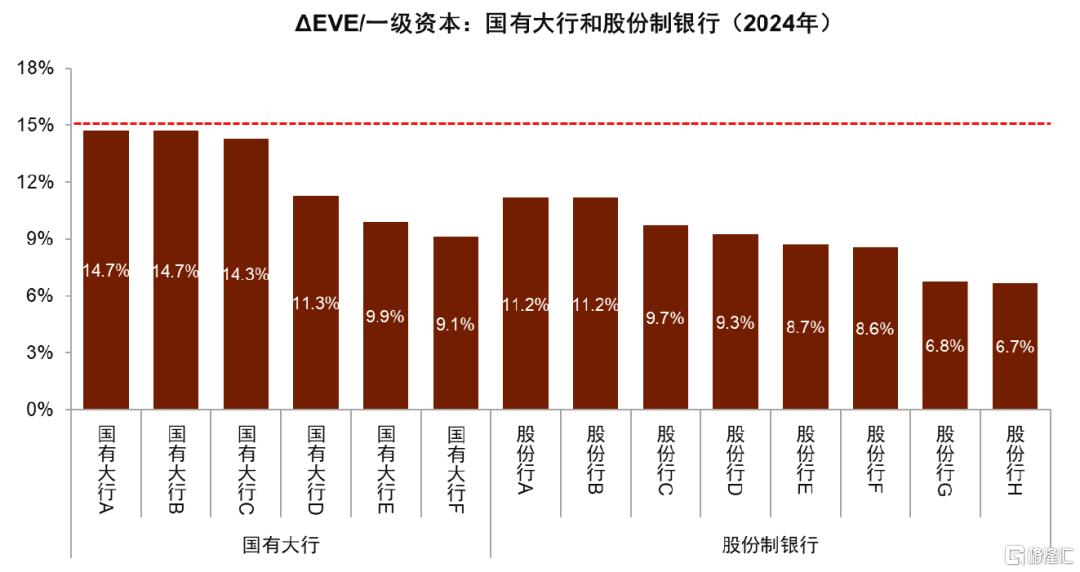
Core Viewpoint - The concept of "risk prevention" is becoming a limiting factor for banks in holding long-term government bonds, with some banks reaching regulatory thresholds for the ratio of economic value change to tier 1 capital (ΔEVE/tier 1 capital) [1][2][5]. Group 1: Regulatory Environment - A significant portion of Chinese commercial banks has been acquiring long-term government bonds, with a net issuance of approximately 14 trillion yuan expected by 2025, including 12 trillion yuan for bonds with maturities of 10 years or more [2]. - The ΔEVE ratio is a key regulatory metric that measures potential maximum losses banks may face under different interest rate shock scenarios, with some major state-owned banks approaching a ΔEVE of 15% [2][5]. - International experiences indicate that "risk prevention" does not equate to rigid adherence to regulatory thresholds, as seen in Japan and the U.S., where regulatory measures have been adjusted based on operational realities [5][10]. Group 2: International Comparisons - Japan has adjusted its ΔEVE thresholds for smaller banks, allowing a higher ratio of 20% compared to 15% for larger banks, reflecting the operational context of these institutions [5]. - The U.S. has relaxed its supplementary leverage ratio (SLR) requirements for large banks to enhance their ability to provide liquidity in the U.S. Treasury market, indicating a flexible approach to regulatory measures [10]. - Unlike Japan and Europe, the U.S. has minimal regulatory oversight on banks' interest rate risk, allowing banks to set their own ΔEVE thresholds without a mandated "red line" [10]. Group 3: Economic Stability and Monetary Policy - Ensuring macroeconomic stability is fundamental for effective risk prevention, with a focus on flexible fiscal and monetary policies that can adapt to economic cycles [11]. - Current economic conditions in China show weak internal demand, necessitating fiscal expansion to stabilize the overall economic and financial landscape [12]. - The People's Bank of China has significant room for balance sheet expansion, with total assets at 48.2 trillion yuan, indicating potential for increased liquidity support for government bond issuance [19].
中金:“防风险”会成为利率下行的限制么?
中金点睛· 2026-02-09 23:38
Core Viewpoint - The article discusses the impact of risk prevention measures on banks' ability to hold long-term government bonds, emphasizing that while there may be short-term disruptions, the long-term outlook remains stable as macroeconomic stability is prioritized [1][3]. Regulatory Indicators - The economic value change relative to tier 1 capital (ΔEVE) is a key regulatory indicator, with some banks already reaching the regulatory threshold. In 2024, four major state-owned banks and two joint-stock banks are projected to have ΔEVE exceeding 10%, with three state-owned banks nearing 15% [3][6]. - International experiences indicate that risk prevention does not necessitate rigid adherence to regulatory thresholds. For instance, Japan has adjusted its ΔEVE thresholds for smaller banks, allowing for a more flexible approach [6][12]. International Comparisons - The U.S. has recently relaxed regulatory requirements on supplementary leverage ratios to enhance large banks' market-making capabilities for U.S. Treasury securities. The SLR for global systemically important banks (G-SIBs) was reduced from 5-6% to 3.5-4.5% [12][13]. - Unlike Japan and the Eurozone, the U.S. has minimal regulation on banks' interest rate risk, allowing banks to set their own ΔEVE thresholds without a strict 15% limit [12][13]. Macroeconomic Stability - Ensuring macroeconomic stability is deemed the most fundamental risk prevention measure. The article suggests that fiscal and monetary policies should be flexible to adapt to economic cycles, with a focus on maintaining adequate liquidity [1][14]. - Current economic conditions in China indicate a need for fiscal expansion to stabilize overall demand, as private sector leverage and local debt levels remain high [14][20]. Potential Adjustments in Regulation - There is room for adjustment in ΔEVE regulatory requirements, particularly in the assumptions used for interest rate shocks. The article suggests that China's parallel interest rate shock could be around 200 basis points, indicating potential flexibility in regulatory thresholds [17][20]. - The People's Bank of China has significant room for balance sheet expansion, with total assets at approximately 48.2 trillion yuan, which is 34.4% of GDP, indicating a potential for increased liquidity support for government bond issuance [20][22].