
加息预期

Search documents
波动和压力来自哪里,什么时候结束?
Hu Xiu· 2025-11-04 12:06
Group 1 - Global markets are experiencing synchronized declines, with significant adjustments in East Asian markets, particularly Japan down 1.7% and South Korea down 2.2% [3] - The primary trigger for this global downturn is linked to the Federal Reserve's interest rate decisions, with concerns about inflation potentially leading to a pause in rate cuts or even speculation about a return to a rate hike cycle [3] - If the Fed pauses rate cuts or raises rates, it would tighten liquidity, which is crucial for maintaining or advancing current high stock market levels [3] Group 2 - The overall market reaction indicates a chain impact on various asset classes, with stock markets responding first, a strong dollar approaching the 100 mark, and precious metals like gold and silver facing pressure [3] - U.S. Treasury yields are rising, indicating a reverse correlation with bond prices, which are also under pressure [3]
日央维持现行政策 美元/日元在153附近震荡
Jin Tou Wang· 2025-10-31 02:49
Core Viewpoint - The USD/JPY exchange rate is experiencing fluctuations, currently trading around 153.8000, with a slight decline of 0.19% as the market digests previous gains and awaits further signals regarding interest rate changes in Japan [1][2]. Group 1: Market Dynamics - The USD/JPY opened at 154.1100 and closed the previous trading day at 154.1200, indicating a slight downward movement after reaching an eight-month high due to increased demand for safe-haven assets [1]. - The Bank of Japan's decision to maintain its current policy has created uncertainty regarding the timing of future interest rate hikes, which may limit the appreciation of the yen [1]. - The market is currently cautious, preferring to wait for more information about potential interest rate hikes in December or early next year, especially in light of the new Prime Minister's expected aggressive fiscal spending plans [1]. Group 2: Technical Analysis - The USD/JPY remains below the monthly high resistance zone of 153.25-153.30, with a potential for bearish trading if it breaks below the 152.00 level [2]. - A significant drop below 152.00 could lead to further declines towards the key support levels of 151.10-151.00, confirming a bearish trend [2]. - Conversely, if the USD/JPY can break through the 153.25-153.30 resistance zone, it may attempt to reclaim the 154.00 level, with potential extensions towards 154.50 and 154.75-154.80 [2].
日本东京核心通胀走高 短期内加息预期得以维持
Xin Hua Cai Jing· 2025-10-31 00:43
Group 1 - The core CPI in Tokyo for October increased by 2.8% year-on-year, remaining above the Bank of Japan's inflation target of 2%, which sustains market expectations for a potential interest rate hike in the short term [1] - The Tokyo core CPI, excluding volatile fresh food prices, was higher than market expectations of 2.6%, with a previous value of 2.5% [1] - The Tokyo CPI year-on-year, which excludes both fresh food and energy prices, was reported at 2.8%, also exceeding the September figure of 2.5% [1] Group 2 - Despite consumer inflation being above the 2% target for over three years, the Governor of the Bank of Japan emphasized the need for caution in considering further interest rate hikes due to uncertainties surrounding the impact of U.S. tariff policies on the Japanese economy [1]
通胀高企强化日本央行加息预期
Jin Tou Wang· 2025-10-27 07:27
Group 1 - The Japanese yen has depreciated against the US dollar for seven consecutive days, reaching a two-week low, with the latest USD/JPY rate at 153.0100, up 0.10% [1] - Japan's service industry inflation rose again in September, with the Producer Price Index accelerating from 2.7% in August to 3.0%, reinforcing expectations for a potential interest rate hike by the Bank of Japan (BoJ) [1] - The new Japanese Prime Minister, Fumio Kishida, is seen as a successor to former Prime Minister Shinzo Abe's economic policies, raising concerns about Japan's fiscal health and limiting aggressive bullish bets on the yen [1] Group 2 - Investors are cautious ahead of key meetings from the Federal Reserve (Fed) and BoJ, with short-term focus on resistance at 153.25 and support at 152.65 [2] - From a technical perspective, a sustained buy above the 153.25-153.30 range could trigger further bullish momentum for USD/JPY, potentially targeting levels up to 155.00 [3] - Immediate support is noted at the 152.65 level, with a potential drop below this level leading to further declines towards 152.00 and possibly 151.10-151.00 [3]
日本股市再创新高,日本央行行长最新发声→
Sou Hu Cai Jing· 2025-10-21 01:13
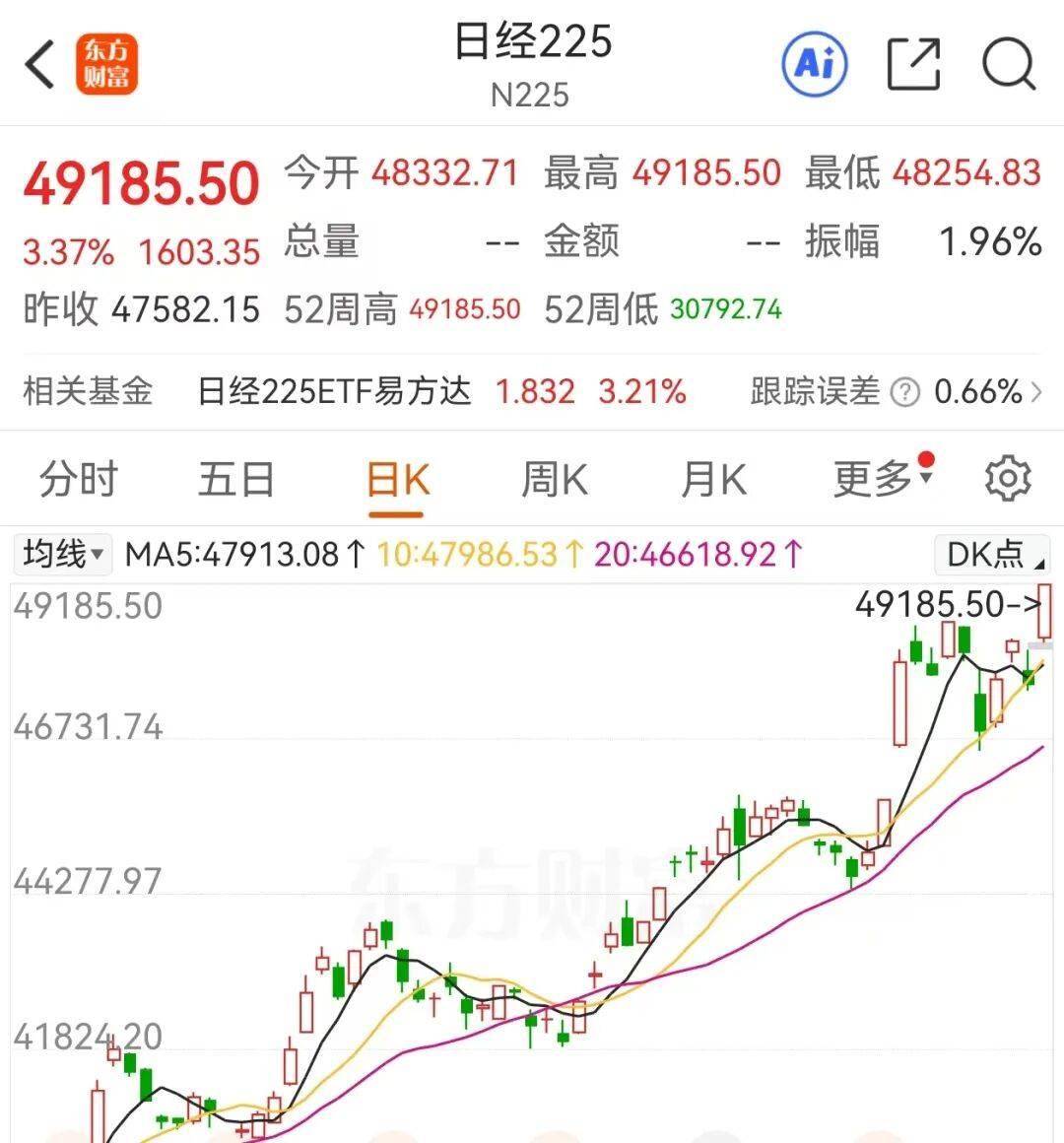
Market Overview - On October 20, the Japanese stock market experienced a significant surge, with the Nikkei 225 index rising over 1600 points, marking its first-ever breach of the 49000-point threshold, closing at 49185.5 points, a 3.37% increase from the previous trading day [2][4] - The rise in the stock market is attributed to the expected political stability following the anticipated victory of Fumio Kishida in the upcoming prime ministerial election, as the Liberal Democratic Party (LDP) and the Japan Innovation Party are set to sign a coalition agreement [1][4] Political Developments - The coalition agreement between the LDP and the Japan Innovation Party indicates that Fumio Kishida is likely to win the prime ministerial election on October 21, reducing political uncertainty in Japan [1][4] - Kishida is viewed as a proponent of "Abenomics," advocating for expansionary fiscal policies aimed at doubling Japan's economic size within ten years through tax cuts, economic stimulus, and government investment [5] Economic Policies - Kishida emphasizes the importance of demand-driven growth supported by rising wages and corporate profits, suggesting that current inflation is primarily due to rising raw material costs rather than domestic economic growth [5] - Analysts believe Kishida's victory may lead to a more accommodative monetary policy, potentially delaying interest rate hikes by the Bank of Japan (BOJ) until the new government's policies are clearer [5][7] Sector Performance - The semiconductor sector saw significant gains, with Kioxia Holdings rising nearly 9%, and other companies like LASERTEC and Tokyo Electron also experiencing substantial increases [4] - Financial stocks performed well, with Mizuho Financial Group up over 6%, and other banks like Chiba Bank and Sumitomo Mitsui Financial Group rising over 4% [4] Central Bank Insights - BOJ Governor Kazuo Ueda indicated that the decision on interest rate hikes will consider various data, including information gathered during his time in Washington [6] - Ueda noted that while global and U.S. economies show resilience, the impact of U.S. tariff policies on Japan's economy will be a critical factor in the BOJ's decision-making process [6][7] - Some BOJ policymakers have expressed the need to be cautious about rising prices and are prepared to raise the benchmark interest rate, with discussions around the timing of such a move being influenced by political uncertainties [8]

暴涨1600点,日本股市突然引爆
Zheng Quan Shi Bao· 2025-10-20 11:17
Market Performance - The Japanese stock market experienced a significant surge, with the Nikkei 225 index rising over 1600 points, marking a historic high by surpassing 49000 points, with a daily increase of over 3% [1][3] - As of the afternoon close, the Nikkei 225 index stood at 49185.5 points, reflecting a 3.37% increase from the previous trading day [3] Political Developments - The Liberal Democratic Party (LDP) and the Japan Innovation Party are set to sign a coalition agreement, indicating that Fumio Kishida is likely to win the prime ministerial election on October 21 [1][6] - Analysts suggest that the reduction of political uncertainty has positively impacted the Japanese stock market, with expectations that Kishida will implement low-interest rates and increased government spending [1][6] Sector Performance - The semiconductor sector saw collective gains, with Kioxia Holdings rising nearly 9%, LASERTEC up over 5%, and Tokyo Electron increasing by over 4% [5] - Financial stocks also performed well, with Mizuho Financial Group rising over 6%, and Chiba Bank and Sumitomo Mitsui Financial Group both up over 4% [5] - Electrical machinery stocks showed strength, with Yaskawa Electric up over 7%, Fanuc increasing by over 6%, and Fuji Electric rising nearly 4% [5] Economic Policy Outlook - Kishida is viewed as a proponent of "Abenomics," advocating for expansionary fiscal policies aimed at doubling Japan's economic scale within ten years, which includes tax cuts, economic stimulus, and government investment [6] - Kishida emphasized the need for collaboration between the government and the central bank to ensure demand-driven growth supported by rising wages and corporate profits [6] Monetary Policy Implications - Market participants believe Kishida's victory may introduce uncertainty regarding monetary policy, potentially delaying interest rate hikes by the Bank of Japan until new government policies are clearer [7] - The Bank of Japan Governor has indicated that various data will be considered before deciding on interest rate changes, emphasizing the importance of global economic conditions [9][10]


喜娜AI速递:昨夜今晨财经热点要闻|2025年10月17日
Sou Hu Cai Jing· 2025-10-16 22:17
Group 1 - The U.S. Treasury Secretary revealed that the Trump administration is strengthening control over key strategic sectors to counter China's economic initiatives, marking a shift from the "free market" ideology [2] - The U.S. stock market experienced a decline due to concerns over bank bad debts and escalating trade tensions with China, alongside a government shutdown entering its third week [2] - Japanese central bank officials indicated that inflation targets may be reached sooner than expected, increasing expectations for interest rate hikes [2] Group 2 - On October 16, multiple A-share companies reported share reductions, with no companies announcing increases, indicating potential market impacts [3] - NIO faced a lawsuit for securities fraud, leading to a significant drop in its stock price, which affected the broader automotive sector [3] - Indonesia confirmed the procurement of Chinese J-10 fighter jets as part of its military modernization efforts [3] Group 3 - The Ministry of Industry and Information Technology announced a special action plan aimed at enhancing computing power, with long-term investment opportunities anticipated in the sector [4] - Fuyao Glass announced a leadership change with Cao Dewang resigning as chairman, while the company reported revenue and net profit growth, leading to a slight increase in stock price [5] - Gold prices reached a new high, driven by expectations of Federal Reserve rate cuts and geopolitical risks, with a significant year-to-date increase of over 60% [5]


加息押注消退,日元势创今年最大单周跌幅
Hua Er Jie Jian Wen· 2025-10-10 03:41
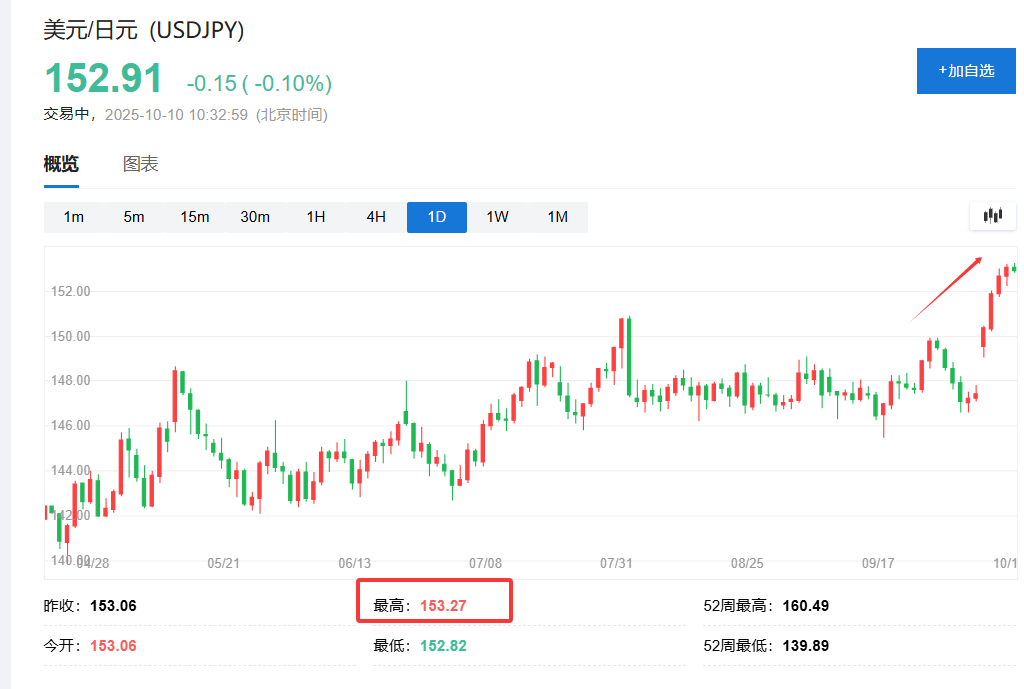
Group 1 - The Japanese yen is experiencing its worst week in a year, with a nearly 4% decline this week, trading around 153 against the US dollar, the lowest level since mid-February [1][3] - The sharp decline in the yen is primarily due to market concerns over the potential election of a dovish figure, Sanae Takaichi, as Japan's first female Prime Minister, which may reduce the likelihood of further interest rate hikes by the Bank of Japan [3][4] - Market sentiment regarding Japan's monetary policy has turned pessimistic, with traders adjusting their expectations significantly, now estimating a 45% chance of a rate hike in December [4] Group 2 - Investors believe that Takaichi's fiscal policy stance may pose political resistance to future interest rate increases by the Bank of Japan, leading to a shift in market expectations [4] - The market has fully priced in a 25 basis point rate hike in March next year, indicating that hopes for tightening monetary policy in the short term have been pushed further into the future [4] - Expectations for intervention in the foreign exchange market by Japanese authorities are also diminishing, as recent comments from Finance Minister Shunichi Suzuki suggest that immediate intervention is unlikely, potentially encouraging further selling of the yen [4]
日本10年期国债收益率升至1.67%,2008年7月以来最高
Sou Hu Cai Jing· 2025-10-03 04:56
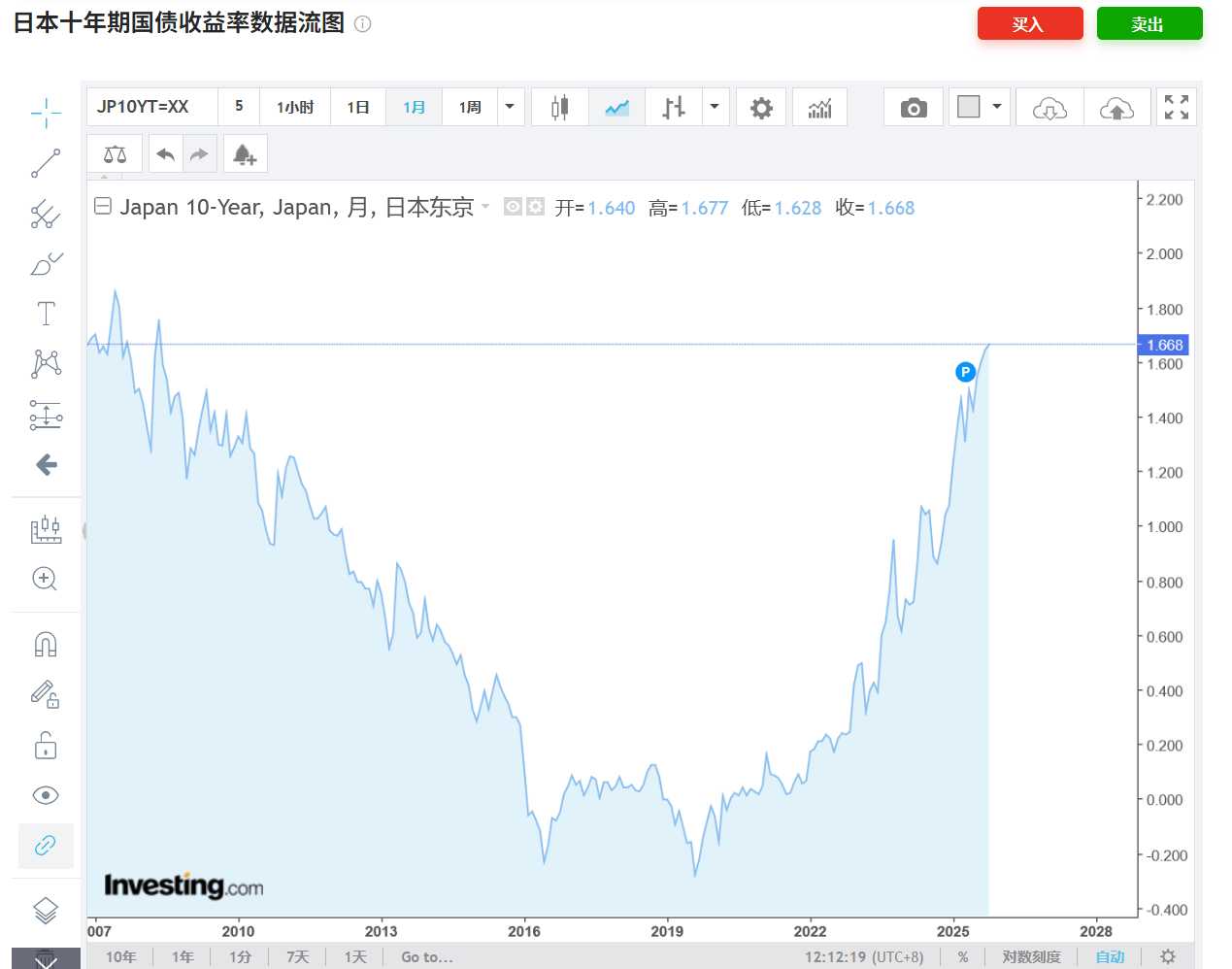
Core Points - Japan's 10-year government bond yield has risen to 1.67%, the highest level since July 2008 [1] - The Ministry of Finance set the coupon rate for the upcoming 10-year bonds at 1.7%, an increase from 1.5% in the previous quarter, marking a 17-year high [4] - The rise in long-term interest rates is driven by expectations of an early interest rate hike by the Bank of Japan [4] Summary by Category Government Bonds - The coupon rate for the 10-year government bonds has been adjusted to 1.7%, reflecting a significant increase from the previous rate of 1.5% [4] - The increase in interest rates may lead to higher debt servicing costs for the government, raising concerns about fiscal pressure [4] Monetary Policy - Two policy committee members of the Bank of Japan proposed raising the policy rate to around 0.75% during the September monetary policy meeting, contributing to market expectations of a rate hike in October [4] - The ruling party's minority status in both houses of parliament has heightened vigilance regarding fiscal expansion, which is also a factor contributing to the rise in long-term interest rates [4]
日本央行副行长暗示10月或加息,称经济达标将继续上调利率
Zhi Tong Cai Jing· 2025-10-02 09:49
Core Viewpoint - The Deputy Governor of the Bank of Japan, Shinichi Uchida, reiterated that the central bank will raise the benchmark interest rate if the economy performs as expected, following optimistic corporate confidence indicators [1][2] Group 1: Economic Indicators - The short-term survey released by the Bank of Japan shows that corporate confidence remains at a good level, particularly in the manufacturing sector, which has improved for two consecutive quarters [1] - The large non-manufacturing index remains high, indicating overall positive sentiment in the economy [1] Group 2: Market Reactions - Following Uchida's remarks, the Japanese yen experienced significant fluctuations, initially strengthening before retreating, closing around 147.16 against the US dollar [1] - Market observers noted that Uchida's comments seem to pave the way for a potential interest rate hike in October, although he did not overly commit to this stance [1] Group 3: Interest Rate Expectations - The probability of an interest rate hike in the upcoming meeting has risen to approximately 60%, a significant increase from 22% at the beginning of the month [2] - Recent comments from two committee members opposing the maintenance of the 0.5% policy rate have contributed to the heightened expectations for a rate increase [2] Group 4: Political Context - The Bank of Japan faces domestic political uncertainties, particularly with the ruling Liberal Democratic Party holding a leadership election, which may influence the central bank's policy flexibility [2] - A recent survey indicated that one of the candidates supports maintaining the 0.5% interest rate, while others believe the decision should be left to the central bank [2]