安全边际

Search documents
多资产配置穿越市场波动82只含权基金成佼佼者
Zheng Quan Shi Bao· 2025-08-20 22:47
Core Viewpoint - The discussion around a bull market is increasing as the Shanghai Composite Index surpasses 3700 points, but stock selection remains challenging due to the need for safety margins and rapid industry rotation [1] Group 1: Fund Performance - Guangfa JiYuan Bond Fund has achieved positive annual returns in all eight years since its establishment in January 2017, with a maximum drawdown controlled within 6%, significantly better than the average of 10.88% for similar funds [2] - The fund's five-year return rate is 25.37%, ranking in the top 15% of its category [2] Group 2: Investment Strategy - The fund manager, Liu Zhihui, employs a combination of top-down and bottom-up approaches for asset allocation, maintaining a stable stock investment ratio of 15%-20% over the past five years [2] - In bond investments, the focus is primarily on high-grade credit bonds, with an average duration of less than three years, but can be extended during favorable market conditions [2] Group 3: Market Outlook - Liu Zhihui holds a relatively optimistic view for the A-share market in the second half of the year, believing it is transitioning from "strong reality, weak expectations" to positive expectations, which is beneficial for large-cap stocks [3] - The preferred allocation strategy includes a balanced approach, focusing on sectors such as overseas expansion, resources, large financials, leading manufacturing, and innovative pharmaceuticals, selecting competitive companies with market share expansion and valuation protection [3]
目前中国股市远达不到泡沫化的状态!中泰姜诚最新发声:我们要时刻瞄准,但不需要频繁开枪
聪明投资者· 2025-08-19 07:03
Core Viewpoint - The A-share market is suitable for value investing, where stock prices serve as an external variable to assess potential returns rather than a variable to predict [2][25][26]. Group 1: Market Performance and Investment Strategy - As of August 18, the Shanghai Composite Index reached a nearly ten-year high, closing at 3728.03 points, with the A-share market capitalization surpassing 100 trillion yuan, marking a historical peak [2]. - The current stock prices are not as cheap as they were ten months ago, and some stocks have seen a decline in implied returns. However, the Chinese stock market is not in a bubble state when viewed alongside the Hong Kong market [2][55][56]. - The investment strategy emphasizes patience and a different perspective, focusing on long-term value rather than short-term market fluctuations [8][16][39]. Group 2: Fund Performance and Manager Insights - The fund managed by Jiang Cheng has shown a year-to-date return of 6.03%, with a three-year return of 23.77% and a five-year return of 74.68%, indicating stable performance [3]. - Jiang Cheng maintains a conservative approach, focusing on traditional sectors such as banking, chemicals, construction, and real estate, with a long-term investment horizon [3][5]. - The investment philosophy includes a significant emphasis on understanding the underlying value of assets and avoiding value traps, dedicating 20% of research efforts to identifying potential pitfalls in existing holdings [20][22]. Group 3: Value Investment Principles - Value investing is defined as an investment behavior aimed at acquiring asset value, with cash returns being the primary measure of value creation [23]. - The market's price volatility can create more opportunities for value investing, as it allows investors to buy undervalued assets [25][26]. - Safety margin is viewed as a conservative attitude, acknowledging the unpredictability of future market conditions and focusing on protecting against adverse scenarios [18][19]. Group 4: Market Dynamics and Long-term Outlook - The current market environment presents both pressures and opportunities, with a need for caution at the micro level while maintaining optimism at the macro level [58][59]. - Continuous learning and adaptation to new market dynamics are essential for identifying long-term investment opportunities, especially in emerging sectors like AI and innovative pharmaceuticals [40][43][45]. - The investment approach encourages a focus on long-term goals and the ability to tolerate short-term market fluctuations without being overly influenced by them [52][63].

伯克希尔新进的神秘公司揭晓!股价盘后大涨超10%
Ge Long Hui· 2025-08-15 05:06
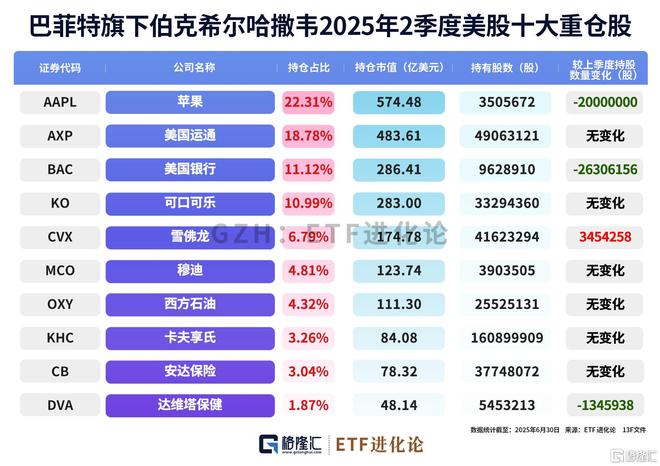
Group 1 - Berkshire Hathaway made a significant investment in UnitedHealth, acquiring 5.039 million shares at a cost of $314 per share, resulting in a market value of $1.57 billion by the end of the quarter, making it the 18th largest holding [1] - UnitedHealth's stock price surged over 10% in after-hours trading following the 13F filing [1] - The company has faced challenges, including a 45% decline in stock price this year and the murder of its CEO, leading to a suspension of annual performance forecasts and an ongoing investigation by the U.S. government [1] Group 2 - As of the end of Q2, Berkshire's U.S. stock holdings reached a market value of $257.5 billion, with the top ten holdings accounting for 87% of the total [2] - The top ten holdings include Apple, American Express, Bank of America, Coca-Cola, Chevron, Moody's, Occidental Petroleum, Kraft Heinz, Chubb, and DaVita [2][3] Group 3 - Berkshire sold approximately $6.92 billion worth of stocks while purchasing only $3.9 billion in Q2, indicating a cautious investment approach [5] - Cash and cash equivalents stood at $344.1 billion, slightly down from $347 billion in the previous quarter, marking the first decline in three years [5] - Warren Buffett emphasized the importance of waiting for the right investment opportunities rather than rushing into potentially poor investments [5] Group 4 - Berkshire's stock investments are highly concentrated, with 70% of the portfolio in five core holdings: Apple, American Express, Bank of America, Coca-Cola, and Chevron [7]

20cm速递|科创板100ETF(588120)涨超2%,科技行业估值分化凸显安全边际
Mei Ri Jing Ji Xin Wen· 2025-08-11 04:25
Group 1 - The core viewpoint of the article highlights that the current valuation of the technology sector is at approximately 50% or below historical levels, with certain segments like semiconductor materials and emerging technologies showing higher valuations compared to their three-year history [1] - The Pacific Securities report indicates that the PB-ROE values for the Sci-Tech 50 and growth style are the lowest, suggesting that investors are paying the least growth premium for these sectors, which implies a higher margin of safety [1] - Recent performance shows that industries such as pharmaceuticals, communications, and media have seen significant gains, while the computer industry has experienced the largest downward adjustment in profit expectations [1] Group 2 - The Sci-Tech 100 ETF (588120) tracks the Sci-Tech 100 Index (000698), which includes 100 securities with larger market capitalization and better liquidity from the Sci-Tech board, covering strategic emerging industries like new-generation information technology and biomedicine [1] - The index can experience daily fluctuations of up to 20%, reflecting the overall performance of leading technology innovation companies in the Sci-Tech board market [1] - Investors without stock accounts are advised to consider the Guotai CSI Sci-Tech 100 ETF Initiated Link A (019866) and Guotai CSI Sci-Tech 100 ETF Initiated Link C (019867) [1]
ROE≠投资收益率,为何还要重视ROE?
雪球· 2025-08-10 06:19
Core Viewpoint - The article argues that the relationship between Return on Equity (ROE) and investment returns is not as straightforward as often perceived, emphasizing the importance of understanding the nuances of ROE in evaluating companies [3][10]. Group 1: ROE and Net Profit Growth Rate - ROE is defined as net profit divided by shareholder equity, and if a company does not pay dividends, a long-term ROE of 20% implies a net profit annual growth rate of 20% [5]. - In cases where companies distribute dividends, long-term ROE can exceed net profit growth rate, especially if a company pays out 100% of its profits [5]. Group 2: Understanding ROE and Investment Returns - For a company like Kweichow Moutai with a PE ratio of 20 and a dividend yield of 5%, if net profit growth is 0%, the long-term ROE remains at 36%, but investment returns will not exceed 5% [7]. - If net profit growth is 10%, the investment return can be 15%, indicating that investment returns do not necessarily correlate with ROE [8]. Group 3: Importance of ROE - High historical ROE indicates strong past profitability and potential for future growth, suggesting that companies with a history of high ROE are likely to remain strong performers [10]. - The correct use of ROE is to filter for quality companies and analyze their profitability logic rather than using it solely for valuation and return calculations [11]. Group 4: Insights - Long-term returns are derived from initial dividend yield plus long-term growth rate, emphasizing the importance of company quality for stable dividends and growth [13]. - The focus should be on long-term performance, as short-term factors can significantly impact company performance and valuation [14]. - Emphasizing long-term growth is crucial, as it is the primary source of returns, with low growth leading to low returns [16]. - Safety margins are important, as future growth rates are uncertain, while current dividends are more predictable [16]. - The significance of dividend reinvestment is highlighted, as a high initial yield can still provide meaningful returns even with zero growth [16]. - The article advises against unrealistic expectations of rapid wealth accumulation, noting that consistently high growth companies are rare [16]. - A good investment idea held for a long time can yield substantial returns, and frequent trading may lead to missed opportunities [16].

巴菲特投资“滑铁卢”真相:表面亏50%,实则大赚60%! 深度起底 “股神” 巴菲特的传奇人生 | 全球投资名人堂
私募排排网· 2025-08-10 01:07
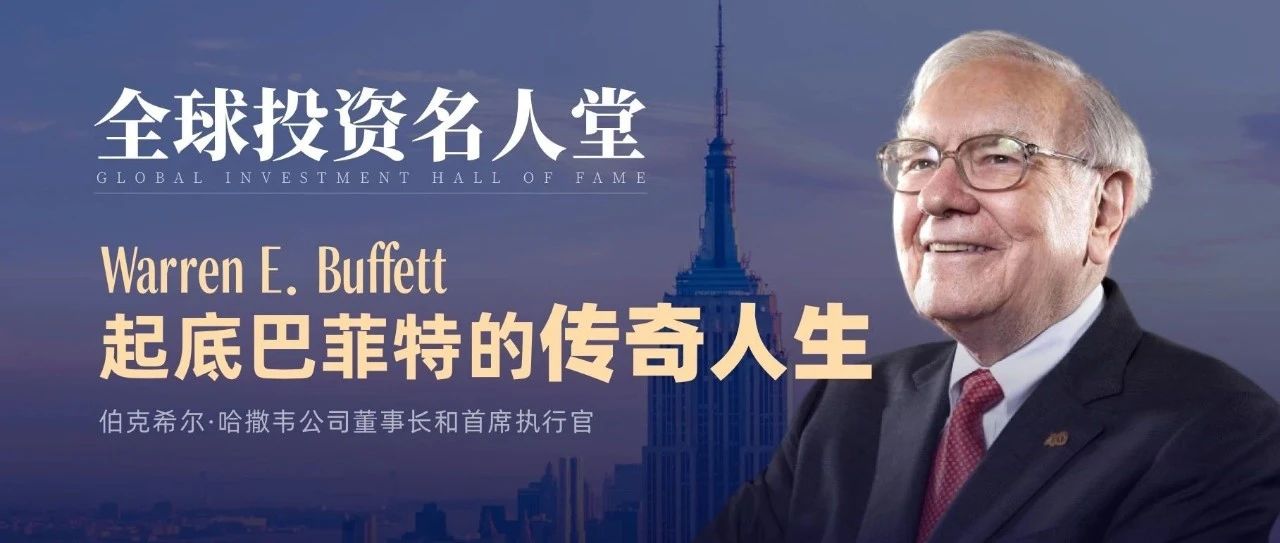
Core Viewpoint - Warren Buffett, known as the "Oracle of Omaha," has created an unparalleled investment legacy, achieving significant wealth through strategic investments and a unique approach to value investing [3]. Group 1: Background and Early Life - Buffett was born on August 30, 1930, in Omaha, Nebraska, into a family with a strong business background, which influenced his frugality and investment mindset [10]. - His father, Howard, initially pursued a career in insurance but later became a stockbroker, which exposed Buffett to the stock market from a young age [11]. - Buffett displayed an early affinity for money and business, starting his first venture at age seven by selling gum door-to-door [14]. Group 2: Investment Journey - Buffett's investment philosophy was shaped by his mentor, Benjamin Graham, particularly the concept of "margin of safety," which emphasizes investing in undervalued stocks [15]. - In 1962, Buffett began acquiring shares of Berkshire Hathaway, initially seeing it as an undervalued investment opportunity [18]. - Under Buffett's leadership, Berkshire Hathaway transformed from a struggling textile company into a diversified investment conglomerate, expanding into various sectors including insurance and energy [18]. Group 3: Recent Developments - As of early 2025, Buffett expressed caution regarding the U.S. stock market, noting that the S&P 500's price-to-earnings ratio had reached a near 20-year high, indicating potentially inflated valuations [20]. - Berkshire Hathaway's stock portfolio was valued at approximately $256.46 billion, with significant holdings in Apple, American Express, and Coca-Cola, which together accounted for over 50% of the portfolio [21][24]. - Buffett maintained a substantial cash reserve of $344 billion, positioning Berkshire to capitalize on future market opportunities [25]. Group 4: Investment Principles - Buffett's investment principles include the importance of long-term holding, focusing on companies with strong fundamentals, and avoiding speculative investments [28][29]. - He emphasizes the significance of understanding a company's intrinsic value and the importance of high return on equity (ROE) as a key indicator of a company's financial health [36]. - Buffett advocates for investing in businesses that one understands well, avoiding the temptation to chase trends outside one's expertise [34].

达利欧:比能力更重要的是你的价值观
聪明投资者· 2025-08-03 02:03
Core Viewpoint - Ray Dalio, founder of Bridgewater Associates, has completed the transfer of his remaining shares and resigned from the board, marking the end of a management transition that began in 2022 [1][2]. Group 1: Management Transition - The management transition process at Bridgewater was initiated by Dalio in 2010, but it faced challenges, with seven individuals serving as either sole or co-CEOs over the next decade [1]. - Bob Prince and Greg Jensen have emerged as the current co-CIOs and are now the most important shareholders of the company [2]. Group 2: Dalio's Future Role - Dalio will continue to serve as a strategic mentor and long-term client for Bridgewater, expressing satisfaction with the transition, likening it to seeing a child grow strong and independent [4]. Group 3: Market Insights - Dalio has issued warnings regarding the market's insufficient pricing of debt crisis risks and the limitations of AI in addressing the U.S. fiscal challenges [4].
企业优质和价格便宜,谁更重要?
雪球· 2025-07-30 08:29
Core Viewpoint - The article emphasizes the importance of both selecting the right company and buying at the right price in investment decisions, with a stronger focus on the reliability of the company first and then the price being reasonable [3]. Group 1: Investment Philosophy - Value investing is fundamentally about finding a price that offers a margin of safety compared to the intrinsic value of a company, making price a critical factor in investment decisions [4][5]. - The concept of "reasonable price" is often misunderstood; it is not about absolute numbers but rather the relationship between current money and future earnings [4][8]. - Buffett's investment decisions are not influenced by short-term market variables like index movements or economic cycles; instead, he focuses on whether the price is attractive relative to the company's intrinsic value [5][6]. Group 2: Historical Examples - Historical investments by Buffett, such as in Washington Post and GEICO, illustrate his strategy of buying when prices are low relative to intrinsic value, regardless of market conditions [6][7]. - Buffett's approach includes revisiting previous investments to determine if they are worth adding to, based on current pricing [6][7]. Group 3: Investment Mindset - The essence of investing is to find opportunities where the price is significantly lower than the intrinsic value, exemplified by the saying "buying $1 for $0.40" [8]. - Many investors focus on short-term price movements rather than the distance between current prices and intrinsic values, which can lead to missed opportunities [8][9]. - Buffett advocates for purchasing high-quality companies at reasonable prices rather than low-quality companies at low prices, as the former will likely appreciate in value over time [9].

这些年对“价值”的理解有很多变化!“安全边际之父”赛思·卡拉曼最新对话:最糟糕的日子能做到这三点,会是一种竞争优势……
聪明投资者· 2025-07-30 07:05
Core Insights - The primary need for investors hiring investment managers is to avoid mistakes and manage emotional impulses rather than solely to maximize returns [3][28] - Long-term investment success requires a unique approach, while excessive differentiation can lead to failure [3] - The concept of "margin of safety" is crucial, allowing for potential errors by purchasing assets at a sufficiently low price [3][8] - Maintaining a calm, open mindset and readiness to act during challenging times can provide a competitive advantage [3][50] Group 1: Investment Philosophy - Seth Klarman emphasizes the importance of risk control over absolute returns, noting that Baupost has only experienced five years of negative returns in its 42-year history, with a maximum drawdown of 12% [5][74] - The investment strategy focuses on constructing a portfolio that effectively protects against downside risks, including cash reserves and prioritizing high-quality debt instruments [10][72] - Klarman's approach to value investing has evolved, now considering not just tangible asset values but also the potential for value realization and market recognition [8][13] Group 2: Decision-Making Process - Baupost's investment decision-making involves multiple team members, including partners and analysts, who rigorously evaluate potential investments [34][39] - Discussions often center around risk assessment, with team members encouraged to challenge assumptions and consider potential pitfalls [41][46] - The culture at Baupost promotes open dialogue, allowing team members to express differing opinions without fear of repercussions [45][46] Group 3: Market Conditions and Opportunities - Klarman notes that the current market environment, characterized by rising interest rates, presents both challenges and opportunities, particularly in the private credit sector [66][68] - The firm is currently focusing on distressed assets and credit opportunities, with a significant portion of its portfolio allocated to these areas [62][63] - The investment strategy remains flexible, adapting to market conditions without adhering to a rigid allocation framework [61][62] Group 4: Psychological Factors in Investing - Baupost places significant emphasis on psychological factors in investment decisions, aiming to avoid panic and emotional reactions during market downturns [47][50] - Klarman believes that maintaining composure and an open mindset during adverse market conditions can lead to advantageous investment opportunities [50][52] - The firm encourages a culture of resilience, where team members are trained to recover from investment setbacks and maintain a long-term perspective [71][72]
金融破段子 | 情绪走高时,不妨先琢磨如何构建安全边际
中泰证券资管· 2025-07-28 09:42
Core Viewpoint - The recent sentiment in the A-share market has entered an upward channel, with increased discussions among investors about participating in the market despite concerns about potential downturns [2] Group 1: Investment Strategies - Emphasis on constructing a safety margin in investments, as highlighted by fund managers who have shared their insights on this topic [2] - The concept of "multi-scenario hypothesis" is introduced, which encourages investors to consider various potential outcomes and not rely solely on a single prediction [5][6] - Investors are advised to acknowledge their limitations and focus on existing facts rather than future predictions, preparing for different scenarios [5] Group 2: Market Sentiment and Caution - The analogy of forest fire risk levels is used to illustrate the importance of being cautious when market sentiment becomes overly optimistic, suggesting that investors should be more prudent during such times [9] - The idea is to avoid fixating on the exact timing or causes of market changes, instead focusing on the overall risk level associated with market conditions [9] - Investors are encouraged to maintain a learning mindset and improve their understanding to better seize market opportunities [10]