
碳排放双控

Search documents
未来科学城能源谷高质量发展大会在北京昌平召开
Zhong Guo Xin Wen Wang· 2025-11-23 13:29
Core Insights - The 2025 Future Science City Energy Valley High-Quality Development Conference was held in Beijing, focusing on central-local integration, collaborative innovation, and the active development of the Future Science City [1][2] - The conference attracted over 400 representatives from enterprises, industry experts, and investment institutions, emphasizing the importance of building an international scientific and educational platform for cutting-edge energy technologies [1][2] Group 1: Agreements and Collaborations - The Changping District government signed strategic cooperation agreements with representative enterprises, including projects with state-owned enterprises and high-quality private enterprises, to enhance regional industrial development [2][3] - A collaborative innovation platform between central enterprises and universities was established, aiming to facilitate organized technology transfer and deepen the integration of technological and industrial innovation [3] - The Future Science City Huanneng New Energy Fund was launched, with government investment leading the establishment of a mother fund to promote energy technology innovation and industry clustering [3][4] Group 2: Technological Innovations and Initiatives - The launch of the Future Science City Carbon Monitoring and Management Platform, which utilizes Tsinghua University's "electric-carbon coupling" theory and machine learning algorithms, aims to provide precise carbon emission calculations and support regional green development [4] - The 2025 "Central Enterprise Strong Youth Scientist" initiative was introduced to identify and invite 50 young scientists from central enterprises to foster a high-level talent gathering platform [4][5] - The second phase of the National Electric Power Investment Central Research Institute's innovation base was inaugurated, focusing on advanced energy technology and supporting the integration of large, medium, and small enterprises [5][6] Group 3: Institutional Developments - The establishment of the Future Science City Central Enterprise Research Institute "Dean Alliance" aims to enhance collaborative innovation and resource sharing among research institutes [5][6] - The alliance will facilitate various levels of communication and cooperation, including technical seminars and roundtable meetings, to promote efficient gathering and optimization of innovation elements [6]
“十五五”经济社会发展主要目标解读积极稳妥推进和实现碳达峰
Jing Ji Ri Bao· 2025-11-22 23:43
Core Viewpoint - The article emphasizes China's commitment to achieving carbon peak and carbon neutrality as a solemn promise to the international community and an inherent requirement for high-quality development [1][2]. Group 1: Carbon Peak and Neutrality Goals - The "14th Five-Year Plan" period is crucial for China to actively promote carbon peak and carbon neutrality, contributing significantly to global climate governance [2][3]. - China has established a comprehensive carbon reduction policy framework over the past five years, with provincial governments implementing local carbon peak plans [3][4]. Group 2: Green Development and Energy Transition - China has cultivated over 6,400 green factories and more than 490 green industrial parks, leading the world in new energy vehicle production and sales [3]. - The country has built the world's largest renewable energy system, with renewable energy accounting for nearly 60% of total installed power generation capacity, achieving wind and solar power installation targets ahead of schedule [3]. Group 3: Carbon Emission Control Measures - The "Suggestions" propose implementing a dual control system for carbon emissions, focusing on both total emissions and intensity, transitioning from energy consumption control to carbon emission control [5]. - The energy sector's low-carbon transition is critical for achieving national contribution goals, requiring a balance between supply assurance and emission reduction [6]. Group 4: Carbon Market and Policy Recommendations - The article discusses the expansion of the national carbon emissions trading market and the establishment of a voluntary greenhouse gas reduction trading market [8]. - Recommendations include enhancing the carbon market's coverage, introducing quota allocation methods, and reforming the assessment of national carbon emission targets [9].
积极稳妥推进和实现碳达峰
Jing Ji Ri Bao· 2025-11-22 21:56
Core Viewpoint - The article emphasizes China's commitment to achieving carbon peak and carbon neutrality as a solemn promise to the international community and an inherent requirement for high-quality development [1][2]. Group 1: Carbon Peak and Neutrality Goals - The "14th Five-Year Plan" period is crucial for China to actively promote carbon peak and carbon neutrality, contributing significantly to global climate governance [2][3]. - China has established a comprehensive carbon reduction policy framework over the past five years, with over 6,400 green factories and more than 490 green industrial parks developed [3]. Group 2: Energy Transition and Low-Carbon Development - The energy structure in China is expected to shift from a coal-dominated model to a multi-energy complementary approach, with oil and natural gas roles evolving to support both energy security and raw material needs [7]. - The electricity sector is identified as a key area for achieving national contribution goals, requiring a transition to zero carbon and supporting decarbonization in other sectors [6]. Group 3: Carbon Emission Control Measures - The implementation of a dual control system for carbon emissions, focusing on both total emissions and intensity, is highlighted as a critical step in the green transition [5]. - The national carbon market currently covers about 70% of carbon emissions, and there are suggestions to expand its coverage and improve market efficiency through various measures [8][9]. Group 4: Climate Adaptation and Resilience - The new national contribution goals include building a climate-adaptive society, guiding future actions for climate change adaptation over the next decade [9]. - Enhancing public awareness and strengthening technological support for climate adaptation are prioritized, along with developing a comprehensive adaptation technology system [9].
碳市场周报-20251121
Jian Xin Qi Huo· 2025-11-21 11:03
Report Overview - Report Title: Carbon Market Weekly Report - Date: November 21, 2025 Industry Investment Rating - Not provided in the report Core Viewpoints - The Chinese government is actively promoting the construction of the carbon market, with policies aiming to expand coverage, control quota总量, and increase market vitality [9][10] - The expansion of the national carbon emissions trading market will gradually cover major industrial emission - intensive industries by 2027, marking a new stage in using market - based mechanisms for deep - emission reduction [10] Summary by Directory 1. Carbon Market Weekly Overview - In October, the national carbon market's comprehensive price had a high of 59.30 yuan/ton, a low of 50.34 yuan/ton, and a closing price of 51.96 yuan/ton, down 10.37% from the previous month. The trading volume and turnover of different trading methods were also reported [7] - In the 3rd week of November, the national carbon market quota had a high of 70.14 yuan/ton, a low of 60.02 yuan/ton, and a closing price of 65.27 yuan/ton, with a weekly increase of 8.48%. The total trading volume was 1169.44 million tons, and the total turnover was 701.0284 million yuan. Price expectations for November and December 2025 were also given [8] 2. Market News - The central government issued an opinion to expand the carbon market's coverage, implement quota总量 control and paid distribution, and improve market vitality [9] - China's carbon market construction aligns with the "dual - carbon" goal, and will gradually implement quota总量 control and paid distribution as the carbon - peak process advances [10] - The expansion schedule of the national carbon emissions trading market was announced, with major industrial sectors to be included by 2027, covering about 75% of CO2 emissions [10] - The "Chengdu Declaration" at the 2025 8th China International Photovoltaic and Energy Storage Industry Conference called for anti - "involution" in the industry and promoted high - quality development [10]
行业2026年度投资策略:“反内卷”为盾,需求为矛,化工有望迎来新一轮景气周期
2025-11-20 02:16
Summary of the Chemical Industry Conference Call Industry Overview - The chemical industry is currently at the bottom of its cycle, a state that has persisted for over a year, with leading companies showing poor performance and price differentials indicating low market conditions [1][3][4] - Capital expenditure and fixed asset investment growth have significantly slowed down, leading to reduced capacity for traditional chemical products [1][4] Core Insights and Arguments - The necessity of "anti-involution" arises from the high concentration of China's manufacturing industry, the short-term difficulty in recovering real estate demand, and diminishing marginal effects of capturing international market share [1][5] - If anti-involution is not implemented, it could lead to long-term losses for state-owned enterprises, negatively impacting local governments and the banking system [1][5] - Current oil prices around $60 are neutral for the chemical industry, while coal prices are at historical median levels, meaning cost impacts are no longer the primary concern [1][6][8] - The market cycle in the chemical industry is determined by both supply and demand, with supply-side reforms capable of triggering turning points, while demand dictates the cycle's height [1][9][10] - Future years are expected to see a historic turning point in key metrics for China's manufacturing sector, including ROE, gross margin, and net profit [1][11] Important Developments - Since July, the Central Financial Committee has emphasized addressing the issue of involution, marking a significant turning point for the chemical sector, with chemical ETFs rising by 40%-50% since then [1][12] - The "15th Five-Year Plan" explicitly includes comprehensive measures to address involution-style competition, reflecting the government's commitment to this issue [1][12] - The state has shifted its policy focus from energy consumption control to carbon emission control, indicating stricter management of future expansions [1][13] Micro-Level Changes - Recent changes at the micro level include investigations by the Ministry of Industry and Information Technology into loss-making industries, with guidance on anti-involution measures [1][14] - State-owned enterprises are being urged to lead the anti-involution efforts, with companies like PetroChina and Sinopec beginning to close outdated facilities [1][14] Investment Opportunities - Investors are advised to focus on leading companies in the petrochemical and coal chemical sectors, as these are the first targets for national restructuring [1][15] - Sub-industries with high operating rates but average profitability, such as polyester filament, PTA, and spandex, are also recommended for attention [1][16] - The refrigerant sector is highlighted as a benchmark for successful anti-involution, currently valued low and worth monitoring [1][16] Future Outlook - The development rhythm of the chemical industry is expected to continue focusing on self-discipline and anti-involution actions until the end of the year, with a significant evaluation period around March-April 2026 [1][17] - Different types of investors are encouraged to consider leading petrochemical and coal chemical companies to avoid missing out on the overall market trend, while also exploring flexible sub-industries for potential gains [1][18]
加快经济社会发展全面绿色转型(学习贯彻党的二十届四中全会精神)
Ren Min Ri Bao· 2025-11-18 23:09
Core Viewpoint - The 20th Central Committee of the Communist Party of China has approved the "Suggestions on Formulating the 15th Five-Year Plan for National Economic and Social Development," emphasizing the importance of accelerating the comprehensive green transformation of economic and social development during the 15th Five-Year Plan period, reflecting the strong will and determination of the Party leadership to prioritize ecological and green development [1][2]. Group 1: Significance of Green Transformation - Accelerating the comprehensive green transformation is essential for promoting high-quality development, as green development is a key characteristic of high-quality growth [3]. - The green transformation is a fundamental strategy to address ecological and environmental issues, aiming to reduce pollution and carbon emissions from the source [4]. - It is also a strategic move to shape new advantages in international cooperation and competition, as global trends are increasingly favoring green and low-carbon development [5]. Group 2: Current Situation and Challenges - The 15th Five-Year Plan period is critical for achieving carbon peak goals, with both historical opportunities and significant challenges ahead [6]. - Domestically, while there have been notable advancements in green transformation, structural issues such as reliance on coal and high emissions remain [7]. - Internationally, competition in the green low-carbon sector is intensifying, with various countries vying for leadership in green technologies and climate governance [8]. Group 3: Key Tasks for Green Transformation - Establishing a new energy system is crucial, as the energy sector accounts for over 85% of national carbon emissions, necessitating a shift towards clean and efficient energy sources [10]. - Implementing a dual control system for carbon emissions is essential, focusing on local, industrial, and enterprise-level management to ensure accountability [11]. - Advancing ecological environment zoning and control measures will help create a spatial framework for high-quality green development [12]. - Enhancing resource management and promoting a circular economy are vital for improving resource efficiency and reducing consumption [13]. - Developing supportive policies for green low-carbon development is necessary to internalize external costs and foster a conducive environment for sustainable practices [14]. - Strengthening international cooperation in green transformation is important for leveraging external opportunities and addressing global environmental challenges [15]. Group 4: Goals and Future Directions - The establishment of a green production and lifestyle is a key goal for the 15th Five-Year Plan, guiding the direction for comprehensive green transformation [16].
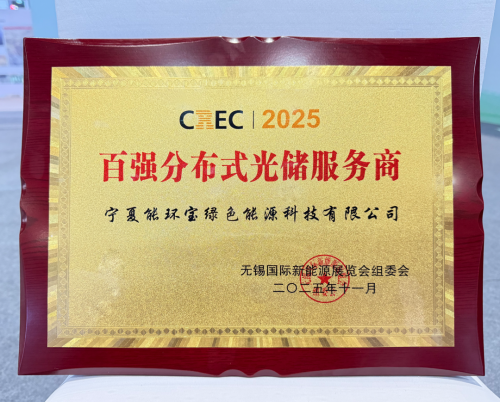
华为、隆基都来了!国际新能源展“光储百强”揭晓,能环宝靠什么摘得桂冠?
Jin Tou Wang· 2025-11-17 05:28
Core Insights - The 17th Wuxi International New Energy Exhibition (CREC2025) was held from November 13 to 15, showcasing over 200 leading companies and attracting more than 30,000 professional visitors, emphasizing its role as a "super window" for global new energy trends [1] - The exhibition serves as a core platform for communication between government and enterprises, industry exchanges, and public education, becoming a "barometer" for the global new energy industry [2] - The event featured prominent figures from various sectors, including government officials and industry leaders, discussing the future of energy transformation and the shift towards carbon emission control [3] Industry Trends - The distributed photovoltaic operation and maintenance sector is entering a "golden age," with significant recognition for companies like Nenghuanbao, which won the title of "Top 100 Distributed Energy Service Providers for 2025" [4] - The energy structure is undergoing a historic transformation, with the National Energy Administration supporting the "new energy + energy storage" model, accelerating the transition to green electricity [6] - The demand for professional operation and maintenance services is increasing, particularly with the rise of grid-connected energy storage, leading to a focus on smart operation and maintenance through IoT and big data [6] Technological Advancements - Nenghuanbao positions itself as a technology-driven smart operation and maintenance service provider, leveraging its proprietary NiOS smart energy management system to gain a competitive edge [7] - The NiOS system integrates big data analysis and AI algorithms to enhance operational efficiency, enabling proactive maintenance and real-time monitoring of energy systems [9] - The company aims to provide a comprehensive, intelligent, and efficient operation and maintenance service, contributing to the high-quality development of the distributed photovoltaic industry [10]

“能碳未来 绿动全球”第十七届无锡国际新能源展览会开展
Zhong Guo Jing Ji Wang· 2025-11-14 02:07
Group 1: Event Overview - The 17th Wuxi International New Energy Exhibition opened on November 13, showcasing approximately 20,000 square meters of new technologies, products, and applications across five key areas: energy equipment, green energy, AI + energy, energy infrastructure, and sustainable energy development [1] - Over 100 industry leaders, including GCL Group and Trina Solar, participated in the exhibition, which featured seven high-level industry matchmaking activities for comprehensive insights and networking opportunities [1] Group 2: Technological Innovations - Far East Holdings presented an "AI + computing power + electricity" approach, demonstrating a smart ecosystem integrating computing power, storage, and transmission to maximize the synergy between energy and computing [1] - Huaguang Huaneng showcased its under-construction Huaguang Industrial Green Microgrid demonstration project, while the debut "Energy Integration" exhibition area featured groundbreaking products like a 5G-connected drone cockpit from China Telecom and a vertical take-off security drone from Superwing Technology [1] Group 3: Industry Insights - GCL Group Chairman Zhu Gongshan emphasized that the energy transformation will shift from "dual control of energy consumption" to "dual control of carbon emissions" over the next five years, highlighting technology, low carbon, and digitalization as key competitive advantages in the new energy sector [2] - The China Energy Research Society Chairman Shi Yubo pointed out the growing demand for electricity from high-value industries like artificial intelligence and commercial aerospace, advocating for the establishment of zero-carbon computing hubs in industrial clusters like the Yangtze River Delta [2] Group 4: International Collaboration - The European Energy Storage Association's global supply chain and finance leader, Zhuang Bowen, called for strengthened collaboration to promote global clean energy development, noting Europe's insufficient battery manufacturing capacity and the need for partnerships with Chinese manufacturers [3] - The exhibition attracted international guests from 16 countries, showcasing Wuxi's increasing global influence and resource connectivity, particularly in the context of Europe's strong demand for Chinese new energy products and technologies [3] Group 5: New Platforms and Initiatives - Several important platforms were launched during the opening ceremony, including the expansion of the Wuxi New Energy Overseas Liaison Center and the establishment of the United Nations/International Organizations Sustainable Procurement Service Center in Wuxi [4] - The Global Green Low Carbon Innovation Center was inaugurated to serve as an international comprehensive innovation platform aimed at integrating resources to promote the development and application of new energy technologies [4]
中金 | 深度布局“十五五”:绿色发展篇
中金点睛· 2025-11-14 00:18
Core Viewpoint - The "15th Five-Year Plan" is crucial for achieving carbon peak goals and sets the direction for economic and social development in China, emphasizing the importance of carbon emission control and the transition to a new energy system [2][3]. Group 1: Carbon Emission Control - The transition from energy consumption dual control to carbon emission dual control begins in the "15th Five-Year Plan," focusing on intensity control as a primary measure [3][5]. - The carbon intensity reduction target during the "15th Five-Year Plan" is based on achieving a 65% reduction from 2005 levels by 2030, with coal and oil consumption peaking as key objectives [5][6]. - Predictions indicate that coal consumption will peak around 2028, while oil consumption is expected to peak between 2025 and 2027, with estimates of 7.7 to 8 million tons [6][7][8]. Group 2: New Energy System Development - The "15th Five-Year Plan" prioritizes the construction of a new energy system, aiming for non-fossil energy to account for over 25% of energy consumption by 2030, requiring an annual increase of 1% during this period [6][9]. - The plan outlines three main actions for achieving carbon peak: industrial structure optimization, electrification of economic activities, and cleaner power generation [9][10]. Group 3: Industrial and Economic Transformation - Key industries such as steel, petrochemicals, and building materials, which account for about 50% of carbon emissions, will undergo energy-saving and carbon reduction transformations, targeting a reduction of approximately 4 million tons of CO2 emissions [10][12]. - The electrification of industrial, building, and transportation sectors is projected to contribute to a reduction of 3.5 million tons of carbon emissions by 2030, with significant growth expected in the electric vehicle market [14][15][18]. Group 4: Green Investment and Market Creation - Achieving carbon peak will require an estimated investment of 17.5 trillion yuan, with an average annual investment of 3.5 trillion yuan, expected to boost GDP growth by 1.2% [24][25]. - The green finance sector is anticipated to grow, with a current capacity to support 2.5 trillion yuan annually, necessitating policies to reduce the green premium and enhance investment in low-carbon technologies [25][26]. Group 5: Carbon Market Development - The carbon market will evolve in two phases: the first phase focuses on expanding coverage and establishing a foundation by 2027, while the second phase aims to make the carbon market a primary channel for greenhouse gas reduction by 2030 [26][29]. - By the end of the "15th Five-Year Plan," the carbon market is expected to cover 80% of carbon emissions, with a focus on improving the efficiency of renewable energy systems and reducing costs [26][30].

《国家碳达峰试点(成都)实施方案》印发 绿色低碳产业竞争力到2030年处于全国前列
Si Chuan Ri Bao· 2025-11-12 06:48
Core Points - Chengdu government has issued the "Implementation Plan for National Carbon Peak Pilot (Chengdu)" to effectively promote carbon peak initiatives before 2030 [1][2] - The overall goal is to reduce energy consumption and carbon emissions per unit of GDP, enhance the competitiveness of green low-carbon industries, and establish a robust policy framework for green low-carbon development by 2030 [1] Group 1: Key Areas of Focus - The plan outlines eight key areas of work, including promoting clean and efficient energy use and optimizing industrial structure [2] - Specific initiatives include the construction of low-carbon and zero-carbon parks, enhancing green building standards, and implementing energy consumption limits for public buildings [2] Group 2: Policy Innovations - The plan proposes the exploration of a dual control system for carbon emissions and the establishment of a product carbon footprint management system [2] - Tasks include developing a rapid reporting system for carbon emissions in industrial enterprises and creating a carbon budget management system [2]