智能化

Search documents
11月乘用车零售量同比减少7%,特斯拉在欧洲推出平价版Model 3 | 投研报告
Zhong Guo Neng Yuan Wang· 2025-12-12 02:03
Core Viewpoint - The automotive market in China is experiencing a mixed performance, with a decline in overall retail sales but a significant increase in the new energy vehicle (NEV) segment [1][2][3] Market Overview - The automotive sector saw a weekly increase of +1.38%, with the best-performing sub-sector being automotive parts [2] - The cumulative retail sales of passenger vehicles from January to November reached 21.52 million units, a year-on-year increase of +6% [1][2] - In November, the retail sales of passenger vehicles were 2.263 million units, down -7% year-on-year but up +1% month-on-month [1][2] New Energy Vehicle Performance - In November, NEV retail sales reached 1.354 million units, marking a year-on-year increase of +7% and a month-on-month increase of +6% [1][2] - The penetration rate of NEVs in the passenger vehicle market reached 59.8% in November [1][2] Company-Specific Developments - BYD's sales in November were 480,200 units, continuing to show a year-on-year decline [3] - Li Auto launched its first AI smart glasses, marking its entry into the wearable AI device market [3] - Deep Blue Automotive initiated a new round of financing aimed at R&D and brand enhancement [4] Investment Recommendations - Companies involved in intelligent vehicle technology and those with potential overseas sales are recommended for investment [5] - Specific vehicle manufacturers to watch include BAIC Blue Valley, Great Wall Motors, and GAC Group [6] - Recommended automotive parts companies include Songyuan Safety, Zhejiang Xiantong, and Lingyun Co., Ltd. [7]

汉得信息:暂不涉及传感器的研发与生产
Ge Long Hui· 2025-12-12 01:33
Core Viewpoint - The company, Hand Information (300170.SZ), positions itself as a comprehensive service provider for enterprise digitalization and intelligent products and solutions, focusing on software products, solutions, consulting services, and implementation delivery, without involvement in sensor research and production [1] Group 1 - The company offers a range of digital and intelligent software products and solutions [1] - The services provided include consulting and implementation delivery [1] - The company does not engage in the research and production of sensors [1]

研判2025!中国接地电阻测试仪行业分类、市场规模及发展趋势分析:行业迈入成熟阶段,技术应用与市场规模双轮扩张[图]
Chan Ye Xin Xi Wang· 2025-12-12 01:21
Core Insights - The grounding resistance tester industry in China has entered a mature development stage, characterized by steady market expansion and deepening technology applications. The market size is projected to reach approximately 1.236 billion yuan in 2024, with a year-on-year growth of 13.92% [1][5]. Industry Overview - Grounding resistance testers are specialized instruments used to measure the grounding resistance of grounding devices, widely applied in sectors such as electricity, communication, railways, petrochemicals, and construction. Their core function is to assess the safety of electrical equipment grounding systems by measuring the resistance between the grounding body and the earth [2]. Market Size - The grounding resistance tester industry is experiencing steady growth, with the market size expected to reach about 1.236 billion yuan in 2024, reflecting a 13.92% increase year-on-year. Competition has shifted from price-based to a comprehensive contest of technical performance, brand service, and solutions, with leading companies consolidating their market positions through product upgrades and application expansion [5]. Key Companies - The industry exhibits a competitive landscape characterized by concentration among leading firms and differentiation among smaller players. Companies like Uride and Wuhan State Grid have achieved differentiation through technological breakthroughs, such as Uride's UT278 series, which supports dual-mode measurement and has a range of up to 30 kΩ with a resolution of 0.001Ω [5][8]. Industry Development Trends 1. **Integration of Intelligence and IoT**: The industry is accelerating its transformation into "smart safety stewards" with the maturity of AI algorithms, 5G communication, and cloud platform technologies. Smart testers can automatically collect data and upload it to cloud platforms for AI diagnosis of grounding faults [11]. 2. **High Precision and Multi-Function Integration**: Technological iterations have improved measurement precision to a resolution of 0.001Ω, meeting the "zero error" acceptance standards for smart grids. The functionality of devices is extending to include soil resistivity measurement and continuity testing, adapting to new energy power plants and data centers [11]. 3. **Policy and Green Standards Driving Sustainable Development**: The dual push from "dual carbon" goals and new power system construction policies is promoting industry expansion and standard upgrades. The National Energy Administration has reinforced mandatory standards for grounding safety, while local governments provide subsidies for high-precision equipment [12].


研判2025!中国静电除尘器行业分类、市场规模及重点企业分析:破局细颗粒治理瓶颈,静电除尘器行业迎来技术革新关键期[图]
Chan Ye Xin Xi Wang· 2025-12-12 01:21
Core Insights - The Chinese electrostatic precipitator (ESP) industry is currently undergoing a critical phase of technological upgrades and market structure optimization, with a projected market size of approximately 23.6 billion yuan in 2024, representing a year-on-year growth of 8.26% [1][6]. Industry Overview - Electrostatic precipitators are industrial devices that purify dust particles from gases using high-voltage electric fields, effectively capturing particles ranging from 0.01 to 50 micrometers [2][3]. - The industry is characterized by two main types of ESPs: plate-type and tubular-type, each with distinct structural forms, applicable scenarios, and performance characteristics [3]. Market Size - The market for electrostatic precipitators in China is expected to reach about 23.6 billion yuan in 2024, with an annual growth rate of 8.26% [1][6]. - Traditional ESPs have limited efficiency in capturing fine particulate matter, particularly PM2.5, prompting innovative solutions such as the use of dielectric materials with a textured structure and low-frequency bipolar power supplies [1][6]. Key Companies' Performance - Leading companies like Longking Environmental Protection and Fida Environmental Protection dominate the market, leveraging their full industry chain advantages to capture significant market shares in the power and steel sectors [7]. - Fida Environmental Protection reported a revenue of 2.544 billion yuan in the first three quarters of 2025, marking a 14.40% increase year-on-year, with a net profit of 204 million yuan, up 21.10% [7]. - Baoneng New Energy achieved a revenue of 6.754 billion yuan in the same period, reflecting a 10.61% growth, with a net profit of 821 million yuan, increasing by 38.62% [7]. Industry Development Trends 1. **Technological Innovation**: The industry is moving towards smart and low-carbon solutions, integrating IoT, big data, and AI for real-time monitoring and adaptive regulation, which reduces operational costs [8]. 2. **Expansion of Application Scenarios**: Non-electric industries such as steel, cement, and waste incineration are expected to drive demand growth for ESPs, supported by carbon control policies [8]. 3. **Global Market Expansion**: Chinese ESP companies are accelerating their global presence and standard output, with leading firms establishing projects in over 40 countries and contributing to international standards [9][10].


稳定、实用!无人车配送催生快递“人机协作”新生态
Bei Jing Ri Bao Ke Hu Duan· 2025-12-11 23:41
Core Insights - The introduction of unmanned delivery vehicles is significantly enhancing logistics efficiency, particularly during peak periods like "Double 11" [1][2] - Unmanned vehicles are primarily serving as a "transit" role between delivery stations and couriers, reducing the time couriers spend on transportation [2][3] - The logistics industry is increasingly integrating intelligent devices, but human labor remains essential for personalized services and complex tasks [3][4] Group 1: Unmanned Delivery Vehicles - Unmanned delivery vehicles have been officially launched in Qingdao, with 51 vehicles currently in operation, improving delivery efficiency [1][2] - The average time saved per courier due to the use of unmanned vehicles is over 1.5 hours per day, significantly enhancing operational efficiency [2] - The carrying capacity of unmanned vehicles, such as the "New Stone Age" model, is 500 kilograms, which is three times that of traditional delivery tricycles [2] Group 2: Impact on Logistics - The introduction of unmanned vehicles has improved the logistics capacity in rural areas, with a 20% increase in overall transportation volume during peak periods [2][5] - The logistics industry is undergoing a transformation with the integration of unmanned vehicles, supported by government policies aimed at reducing logistics costs and promoting smart logistics [5] Group 3: Human Labor and Rights - Despite advancements in automation, human couriers remain the backbone of the logistics industry, handling approximately 3800 packages daily at the Qingdao station, with unmanned vehicles managing only a third of this volume [3][4] - There are ongoing efforts to ensure the rights and welfare of couriers, with various local governments implementing measures to support them amid the industry's transition to automation [5][6]

多项指标表现亮眼我国单月汽车产量首超350万辆
Zhong Guo Zheng Quan Bao· 2025-12-11 20:17
Core Insights - China's automotive industry continues to show strong growth, with November production surpassing 3.5 million units and exports exceeding 700,000 units, indicating a robust market performance [1][4] - The production and sales of passenger vehicles remain stable, while commercial vehicles show significant recovery, driven by macroeconomic improvements and infrastructure investments [2][3] Production and Sales Data - In November, automotive production reached 3.532 million units, and sales were 3.429 million units, with month-on-month increases of 5.1% and 3.2%, respectively [1] - Cumulative production and sales for the first 11 months were 31.231 million and 31.127 million units, reflecting year-on-year growth of 11.9% and 11.4% [1] Passenger Vehicle Market - Passenger vehicle production and sales in November were 3.144 million and 3.037 million units, with month-on-month growth of 5% and 2.6%, and year-on-year growth of 1.1% and 1.2% [1][2] - The first 11 months saw cumulative production and sales of 27.388 million and 27.256 million units, with year-on-year growth of 12% and 11.5% [1] Commercial Vehicle Market - November saw commercial vehicle production and sales of 388,000 and 392,000 units, with month-on-month increases of 6.6% and 8.6%, and year-on-year growth of 18.6% and 24.4% [2] - Natural gas commercial vehicles performed exceptionally well, with November sales reaching 23,000 units, a year-on-year increase of 87.5% [2] New Energy Vehicles (NEVs) - NEV production and sales in November were 1.88 million and 1.823 million units, with year-on-year growth of 20% and 20.6%, capturing 53.2% of total new vehicle sales [3] - Cumulative NEV production and sales for the first 11 months were 14.907 million and 14.78 million units, with year-on-year growth of 31.4% and 31.2% [3] Export Performance - November exports reached 728,000 units, marking a month-on-month increase of 9.3% and a year-on-year surge of 48.5%, setting a new monthly record [4] - Cumulative exports for the first 11 months totaled 6.343 million units, reflecting a year-on-year increase of 18.7% [4] - NEV exports in November were 300,000 units, with a month-on-month increase of 17.3% and a year-on-year increase of 260% [4]
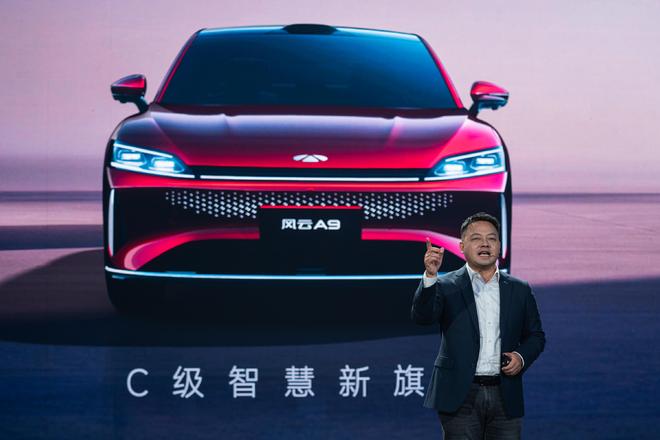
奇瑞的智能化,要更加“不客气”了?
Guan Cha Zhe Wang· 2025-12-11 11:33
Core Insights - Chery is undergoing a significant transformation in its approach to smart technology, consolidating its previously fragmented efforts into a unified smart center to enhance efficiency and innovation [2][10] Group 1: Leadership Changes and Structural Reorganization - Hu Weilong, a key figure from Geely, is set to join Chery to lead the development of advanced driver assistance systems, while Xie Baojun will oversee the overall electronic architecture [1] - Chery's establishment of the Smart Center in May 2023 aims to integrate its subsidiaries, Lion Technology and Dazhuo Intelligence, into a cohesive unit focusing on smart cockpit, assisted driving, and digital architecture [1][10] Group 2: Historical Context and Initial Challenges - Chery has been investing in smart technology since 2010, establishing Lion Technology to develop connected vehicle technologies, and has faced challenges in resource allocation and strategic planning [3][6] - The dual strategy of Dazhuo Intelligence, focusing on both quickly marketable ADAS systems and long-term L4 autonomous driving projects, led to resource dispersion and hindered progress [6][7] Group 3: Future Plans and Strategic Goals - Chery plans to launch 30 models equipped with its "Falcon Smart Driving" technology by the end of 2023, with a target to achieve L3 level autonomous driving by 2026 [10][12] - The company has signed a strategic cooperation agreement with Huawei, committing over 10 billion yuan and a team of 5,000 for the development of its smart brand [10][12] Group 4: Challenges Ahead - Integrating diverse teams from Lion Technology, Dazhuo Intelligence, and the R&D headquarters poses a significant management challenge for Chery [12] - The company must navigate a complex supplier landscape while balancing in-house development and partnerships to optimize its smart technology offerings [12] - Brand repositioning remains a critical challenge, as Chery seeks to establish a clear value proposition and enhance brand perception in the competitive market [12]
宝马集团“换帅”落定
Guo Ji Jin Rong Bao· 2025-12-11 11:21
Core Insights - BMW Group is undergoing a significant leadership change as it navigates the transition towards electrification and digitalization in the global automotive industry [1] Leadership Transition - Milan Nedeljkovic will officially take over as Chairman of BMW Group on May 14, 2026, after Oliver Zipse steps down on May 13, 2024, marking the end of his 35-year career at BMW [2] - Nedeljkovic has been with BMW since 1993 and has extensive experience in production management, having led key factories and implemented flexible production lines for various vehicle types [2][3] - Zipse's tenure has been marked by resilience during crises such as the COVID-19 pandemic and supply chain disruptions, and he has spearheaded the largest strategic transformation in BMW's history with the "New Generation" vehicle program [3] Market Performance - In the first three quarters of 2023, BMW Group's global sales reached 1.7959 million units, a 2.4% increase year-on-year, with Q3 sales at 588,300 units, up 8.8% [3] - Regional performance showed divergence, with Europe and the Americas experiencing growth, while Asia, particularly China, faced a decline [3] - In China, the largest single market for BMW, sales dropped by 11.2% year-on-year to 465,000 units, accounting for 25% of global sales [4] Challenges in China - The decline in sales in China is attributed to structural issues, with traditional models like the 3 Series and 5 Series dominating sales, while electric models like the i3 and iX1 underperformed [4] - The competitive landscape in China's electric vehicle market is intensifying, with local brands achieving high sales and advanced technology features becoming critical [4] Strategic Responses - BMW has initiated several measures to address challenges in the Chinese market, including management changes and technology partnerships with companies like Momenta, Alibaba, and Huawei [5] - Nedeljkovic's primary mission will be to ensure the successful implementation of the "New Generation" vehicle program and to enhance localization strategies in China [5]
精彩抢先看 | 价值与投资——蜕变破局 文娱行业新叙事
第一财经· 2025-12-11 10:19
Core Viewpoint - The article emphasizes the importance of rational, value, and long-term investment in the context of China's capital market reforms, particularly focusing on the entertainment industry and its potential for growth and transformation [1]. Group 1: Industry Insights - The entertainment industry in China is experiencing significant changes in content forms, production methods, and industry structure, driven by trends such as intelligence, digitalization, and IP commercialization [1]. - There is a growing demand among Chinese residents for cultural and spiritual experiences, indicating a vast potential and broad prospects for the entertainment sector [1]. Group 2: Event and Discussion - A discussion featuring key industry figures, including the secretaries of Oriental Pearl and Shanghai Film, as well as the chief analyst from CICC, will explore how the entertainment industry can promote "Chinese stories" globally and leverage new technologies and operational models for growth [1]. - The event will be recorded and made available on the Yicai website and app on December 12, 2025, at 15:00 [1].


交通银行“云跨行3.0”:“重构时间”,赋能企业财资管理数智跃迁
第一财经· 2025-12-11 10:14
Core Viewpoint - The article emphasizes the transformation of China's manufacturing sector towards high-quality development, focusing on the competition of "time and efficiency" in the global supply chain, shifting from a labor-driven advantage to an "efficiency dividend" driven by financial, informational, and credit flows [1]. Group 1: Reconstruction of Settlement Time - The "Yun Kuan Hang 3.0" system addresses the inefficiencies of traditional cross-border payments, which can take 1-3 business days, by enabling "second-level transfers, real-time receipts, and immediate collections" through integration with over 220 domestic and international banks [3][4]. Group 2: Reconstruction of Management Time - The article highlights the challenges in financial management, such as manual operations and long reconciliation cycles, and how the "1+3+N" smart treasury service system provides customized solutions for complex management needs, enhancing efficiency and control [6][7]. Group 3: Reconstruction of Decision Time - The "Yun Kuan Hang 3.0" system enables real-time decision-making through a dynamic visualization dashboard, interactive smart reports, and mobile instant responses, transforming financial management from a cost center to a core value creation entity [9][10]. Group 4: Reconstruction of Ecological Time - The article discusses the importance of ecosystem collaboration in the digital economy, where the "Yun Kuan Hang 3.0" system facilitates a collaborative network among enterprises, supply chains, banks, and ecosystem partners, enhancing overall efficiency [12][13]. Group 5: National Responsibility - The "Yun Kuan Hang 3.0" system reflects the bank's commitment to enhancing financial productivity and supporting national strategies, aiming to improve supply chain efficiency and provide a secure, efficient global funding channel for enterprises [14][15].