AI芯片

Search documents
盛美上海“期中”业绩亮眼,七大板块产品共筑未来增长引擎
Mei Ri Jing Ji Xin Wen· 2025-08-18 01:33
Core Viewpoint - Semiconductor equipment company, Shengmei Shanghai, reported impressive performance in the first half of 2025, with significant revenue and profit growth driven by strong demand in the Chinese market and effective execution of its technology differentiation strategy [1][3][4]. Financial Performance - Shengmei Shanghai achieved operating revenue of 3.265 billion yuan, a year-on-year increase of 35.83% - The net profit attributable to shareholders reached 696 million yuan, up 56.99% year-on-year [1][3]. Market Demand and Strategy - The rapid growth in revenue and net profit is attributed to robust demand in the Chinese market, successful order accumulation, and efficient delivery and acceptance processes [3]. - The company has implemented a "product platformization" strategy, enhancing product technology and performance to meet diverse customer needs [3][4]. R&D Investment - In the first half of 2025, the company's R&D investment totaled 544 million yuan, a 39.47% increase year-on-year, representing 16.67% of operating revenue [5]. - The company has filed a total of 1,800 patents, with 494 granted, of which 489 are invention patents, indicating a strong focus on innovation [4][5]. Industry Position and Growth Potential - Shengmei Shanghai ranks fourth globally in semiconductor cleaning equipment with an 8.0% market share and third in semiconductor plating equipment with an 8.2% market share [7]. - The company is actively upgrading its products, including the Ultra C wb wet cleaning equipment, which utilizes patented nitrogen bubbling technology, enhancing its competitiveness in advanced chip manufacturing [7][8]. Future Outlook - The company anticipates full-year revenue for 2025 to be between 6.5 billion and 7.1 billion yuan, reflecting confidence in future growth based on industry trends and order forecasts [6]. - Shengmei Shanghai has developed a range of products, including cleaning, plating, and advanced packaging equipment, addressing a market potential of approximately 20 billion USD [9].


台积电美国厂,开始挣钱了
半导体行业观察· 2025-08-18 00:42
Core Viewpoint - TSMC's expansion in the U.S. is showing promising results, with significant profits from its Arizona facility, indicating a successful shift towards American manufacturing in the semiconductor industry [2][3][4]. Financial Performance - TSMC reported a net profit of NT$3,982.7 billion for Q2, with the Arizona plant contributing NT$42.32 billion in net profit, marking its first profit contribution to the parent company [2][4]. - The company's consolidated revenue reached NT$9,337.9 billion, with a net profit growth of 60.7% year-on-year and a gross margin of 58.6%, setting a historical record [4][6]. Production Capacity and Demand - The Arizona P1 plant has a monthly production capacity of approximately 30,000 4nm wafers, fully booked by major clients like Apple and AMD [3][6]. - TSMC's U.S. facilities currently meet only 7% of the U.S. chip demand, highlighting the need for further expansion to satisfy local market requirements [6][8]. Competitive Landscape - TSMC's investment in the U.S. is driven by the need to secure major clients and avoid tariffs, with over 90% of its high-margin orders coming from U.S. customers [4][6]. - The competition is intensifying, as companies like Samsung are also expanding their semiconductor manufacturing capabilities in the U.S. [6][8]. Advanced Packaging and AI Demand - The demand for advanced packaging, particularly CoWoS technology, is surging due to the rise of AI applications, leading to capacity constraints across Taiwan's packaging facilities [9][10]. - TSMC's advanced packaging plant in Chiayi is facing delays, exacerbating the supply-demand imbalance in the market [10][11].

大基金“进退有序”:减持回笼资金,聚焦半导体核心环节助力产业升级
Huan Qiu Wang· 2025-08-17 02:55
Group 1 - The National Integrated Circuit Industry Investment Fund (referred to as "Big Fund") has accelerated its investment recovery pace since August, with multiple semiconductor companies announcing reduction plans [1][3] - In 2023, the Big Fund has planned or implemented reductions in 8 semiconductor listed companies, with only Baiwei Storage involving the second phase of reduction, while others are from the first phase [1][3] - The reduction scale has expanded this year, with companies like Tongfu Microelectronics and others entering the reduction period, and the amount reduced from Tongfu Microelectronics exceeding 700 million yuan, with over 70% of the reduction completed [3] Group 2 - The Big Fund's operational logic shows a clear stratification, with the first phase fund accelerating exits from mature fields to support subsequent investments, while the second and third phases focus on strategic core areas [3] - The Big Fund's "orderly entry and exit" reflects its dual goals of market-oriented operations and strategic support, aiming for a virtuous cycle through capital exit while continuously investing in key technologies [3] - The third phase of the Big Fund has a registered capital of 344 billion yuan, with future investments expected to strengthen the domestic semiconductor ecosystem in areas like AI chips and advanced packaging [3]
华为产业链分析
傅里叶的猫· 2025-08-15 15:10
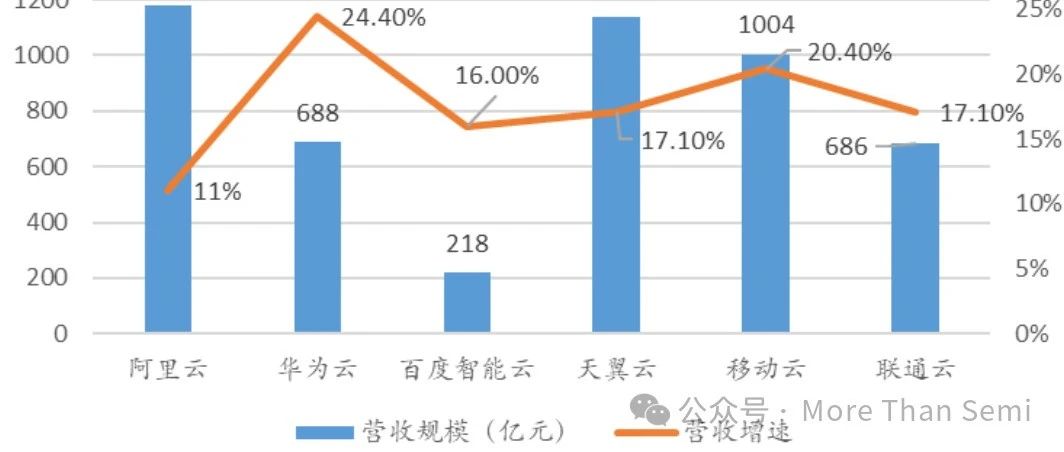
Core Viewpoint - Huawei demonstrates strong technological capabilities in the semiconductor industry, particularly with its Ascend series chips and the recent launch of CM384, positioning itself as a leader in domestic AI chips [2][3]. Group 1: Financial Performance - In 2024, Huawei achieved a total revenue of RMB 862.072 billion, representing a year-on-year growth of 22.4% [5]. - The smart automotive solutions segment saw a remarkable revenue increase of 474.4%, while terminal business and digital energy businesses grew by 38.3% and 24.4%, respectively [5]. - Revenue from the Chinese market reached RMB 615.264 billion, driven by digitalization, intelligence, and low-carbon transformation [5]. Group 2: Huawei Cloud - The overall public cloud market in China is projected to reach USD 24.11 billion in the second half of 2024, with IaaS accounting for USD 13.21 billion, representing a year-on-year growth of 14.4% [6]. - Huawei Cloud holds a 13.2% market share in the Chinese IaaS market, making it the second-largest cloud provider after Alibaba Cloud [6]. - Huawei Cloud's revenue growth rate reached 24.4%, the highest among major cloud vendors in China [6]. Group 3: Ascend Chips - The CloudMatrix 384 super node integrates 384 Ascend 910 chips, achieving a cluster performance of 300 PFLOPS, which is 1.7 times that of Nvidia's GB200 NVL72 [10]. - The single-chip performance of Huawei's Ascend 910C is approximately 780 TFLOPS, which is one-third of Nvidia's GB200 [10][11]. - The Ascend computing system encompasses a comprehensive ecosystem from hardware to software, aiming to meet various AI computing needs [15][20]. Group 4: HarmonyOS - HarmonyOS features a self-developed microkernel, AI-native capabilities, distributed collaboration, and privacy protection, distinguishing it from Android and iOS [12]. - The microkernel architecture enhances performance and fluidity, while the distributed soft bus technology allows seamless connectivity among devices [12][13]. Group 5: Kirin Chips - The Kirin 9020 chip has reached high-end processor standards, comparable to a downclocked Snapdragon 8 Gen 2 [23]. - The Kirin X90 chip, based on the ARMv9 instruction set, features a 16-core design with a frequency exceeding 4.2GHz, achieving a 40% improvement in energy efficiency [25][26]. Group 6: Kunpeng Chips - Kunpeng processors are designed for servers and data centers, focusing on high performance, low power consumption, and scalability [27]. - The Kunpeng ecosystem strategy emphasizes hardware openness, software open-source, enabling partners, and talent development [29].
新高!A股这一赛道,诞生多只翻倍牛股
Zheng Quan Shi Bao· 2025-08-15 09:55
Market Performance - A-shares continue to rise strongly, with the ChiNext Index increasing by 8.58%, marking the largest weekly gain of the year, while the Shanghai Composite Index reaches a three-and-a-half-year high, frequently challenging the 3700-point mark [1] - Market turnover has exceeded 2 trillion yuan for three consecutive days, with weekly turnover surpassing 10 trillion yuan, the highest since November of last year [3] Financing Activities - Margin traders have significantly increased net purchases, with a net buy of 45.7 billion yuan, the largest weekly net buy of the year, and margin balance surpassing 2 trillion yuan, the highest in 10 years since June 2015 [4] - The electronics sector is the most favored by margin traders, receiving over 13.3 billion yuan in net purchases, while machinery equipment and other sectors also saw substantial net inflows [4] Sector Highlights - The glass fiber sector index surged by 16.38%, achieving the largest weekly gain of the year, while the PCB (Printed Circuit Board) sector index rose by 6.85%, marking nine consecutive weeks of increases [5] - The demand for electronic-grade glass fiber cloth is surging due to explosive growth in AI chips, leading to supply shortages and extended delivery times for high-end materials [7] Price Trends - Prices for glass fiber products are on the rise, with the average price of alkali-free glass fiber reaching 4373 yuan/ton, up 227 yuan/ton year-on-year, and electronic yarn priced at 9100 yuan/ton, up 757 yuan/ton year-on-year [7] - The brokerage sector has seen a significant increase in stock prices, with a collective rise of 7.78%, marking the largest weekly gain of the year, and several brokerage firms reaching multi-year highs [7] Financial Statistics - The central bank reported that non-bank deposits increased by 2.14 trillion yuan in July, while household deposits saw a net decrease of 1.1 trillion yuan [10] - With rising market risk appetite, the net asset return rate for brokerage firms is expected to enter an upward phase, indicating a potential for sustained performance in the brokerage sector [10]
英伟达学徒遍地,他偏要另起炉灶
Hu Xiu· 2025-08-15 09:21
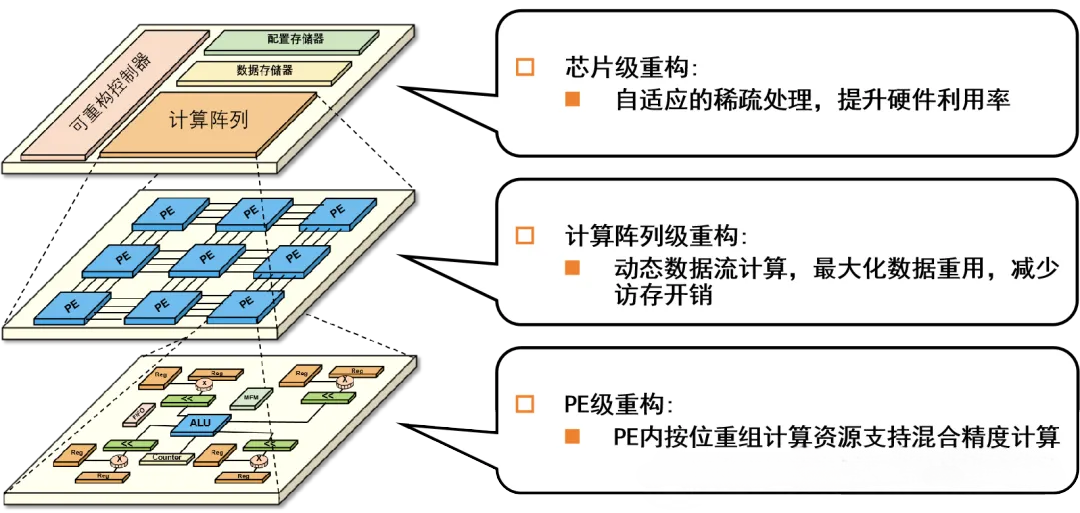
Core Viewpoint - The article discusses the emergence of reconfigurable chips as a potential disruptor to the dominance of traditional GPU architectures, particularly those developed by Nvidia and Intel. Wang Bo, the founder of Qingwei Intelligent, represents a new approach that diverges from established paths in the AI chip market [1][2]. Group 1: Reconfigurable Chip Technology - Reconfigurable chips allow for dynamic configuration of computing resources, contrasting with GPUs that follow a fixed instruction-driven model. This flexibility enables multiple tasks to be performed without the need for extensive data transfer protocols [2][3]. - The architecture of reconfigurable chips moves away from the traditional von Neumann architecture, focusing on data flow-driven computation rather than instruction-driven processes [5][6]. Group 2: Market Position and Strategy - Wang Bo emphasizes that to compete with established players like Nvidia, companies must not follow the same paths, as this leads to inevitable failure. Instead, innovation and differentiation are crucial [2][24]. - Qingwei Intelligent aims to achieve a "5x cost-performance advantage" over competitors, which includes superior performance and lower costs, to attract customers and encourage them to switch from existing models [14][24]. Group 3: Product Development and Challenges - The company faced significant challenges in transitioning from laboratory technology to commercial products, requiring a focus on reliability, compatibility, and customer needs [8][21]. - After initial setbacks in consumer electronics, Qingwei Intelligent pivoted to focus on AI-centric chip development, leading to the successful launch of the TX81 chip, which has already garnered over 20,000 orders [11][14]. Group 4: Future Prospects and Innovations - The next generation of TX8 series chips will incorporate "3D storage" technology to enhance performance and achieve the promised cost-performance advantage [15][25]. - The company is also working on compatibility with existing ecosystems, including Nvidia's CUDA and open-source frameworks like Triton, to facilitate easier adoption of their technology by potential customers [28][29].

液冷产业爆发,看好国内0-1突破
NORTHEAST SECURITIES· 2025-08-15 06:41
Investment Rating - The report rates the industry as "Outperforming the Market" [5] Core Insights - The high power consumption of AI chips is accelerating the adoption of liquid cooling technology, with cold plate solutions becoming mainstream in data centers [1] - Policy incentives and the demand for computing power are driving the rapid growth of the liquid cooling industry, with significant market potential anticipated by 2025 [2] - The penetration rate of liquid cooling technology is still in its early stages, but is expected to see rapid growth as high-power chips become more widely used [3] Summary by Sections Section 1: Industry Dynamics - The latest Blackwell Ultra chip from NVIDIA has a power consumption of 1.4kW, leading to a total rack power consumption of 120-130kW, making traditional air cooling inadequate [1] - Liquid cooling technology is projected to be adopted in over 50% of new data center projects by the end of 2025, driven by policies such as China's "East Data West Computing" initiative [2] Section 2: Market Growth - The Chinese liquid cooling server market is expected to grow at a compound annual growth rate (CAGR) of 46.8% from 2024 to 2029, potentially reaching a market size of $16.2 billion by 2029 [2] - The global penetration rate of liquid cooling in data centers is currently around 10%, with expectations to rise to over 30% in China by 2025 [3] Section 3: Industry Opportunities - The increasing shipment of NVIDIA's Blackwell series chips is a key driver for the adoption of liquid cooling, with projections indicating that Blackwell will account for over 80% of high-end GPU shipments by 2025 [3] - The report highlights several companies involved in the liquid cooling supply chain, including Xiangxin Technology and Kexin New Source, as potential beneficiaries of this growth [3]
三大股指小幅低开 沪指跌0.18%
Shang Hai Zheng Quan Bao· 2025-08-15 02:45
Group 1 - The A-share market opened slightly lower on August 15, with the Shanghai Composite Index down by 0.18%, the Shenzhen Component Index down by 0.28%, and the ChiNext Index down by 0.2% [1] - Sectors such as AI chips, precious metals, and digital currencies experienced the largest declines [1]
娃哈哈天猫旗舰店改名?最新回应丨今日财讯
Sou Hu Cai Jing· 2025-08-14 14:21
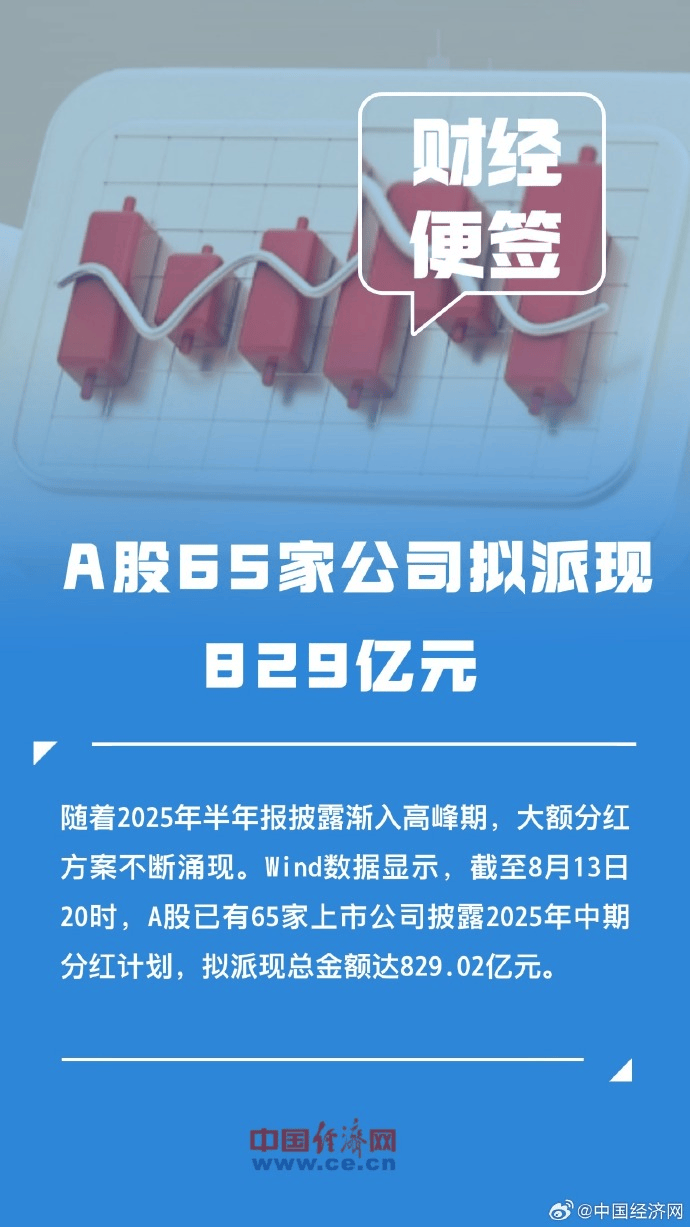
Group 1 - China's artificial intelligence patent count accounts for 60% of the global total, showcasing significant advancements in digital technology and the rise of domestic operating systems like HarmonyOS, which has reached over 1.19 billion devices [2][5] - A total of 65 A-share companies have announced plans to distribute dividends amounting to 82.902 billion yuan for the 2025 interim report, indicating a trend of substantial dividend payouts [3][5] - The Shanghai Composite Index has surpassed the 3700-point mark, increasing by 0.46%, with AI chips and Chiplet concepts leading the market gains [7] Group 2 - The national food safety supervision and sampling results for the first half of the year show an overall non-compliance rate of 2.61%, a decrease of 0.17 percentage points compared to the same period last year [8] - The total import and export value of the Yellow River Basin reached 3.67 trillion yuan in the first seven months of the year, reflecting a year-on-year growth of 7.8%, which is higher than the national average growth rate of 4.3% [8] - The ecological product value in the Tianjin Eco-city has exceeded 10 billion yuan for the first time, growing approximately 21 times since its establishment, with a projected value of 11.12 billion yuan for 2024 [8] - The number of inbound and outbound travelers at Beijing's ports is expected to exceed 13 million by 2025, marking an 18.7% year-on-year increase [8] Group 3 - JD Group reported a net revenue of 356.66 billion yuan for Q2, representing a year-on-year growth of 22.4%, surpassing the estimated 335.45 billion yuan [9]

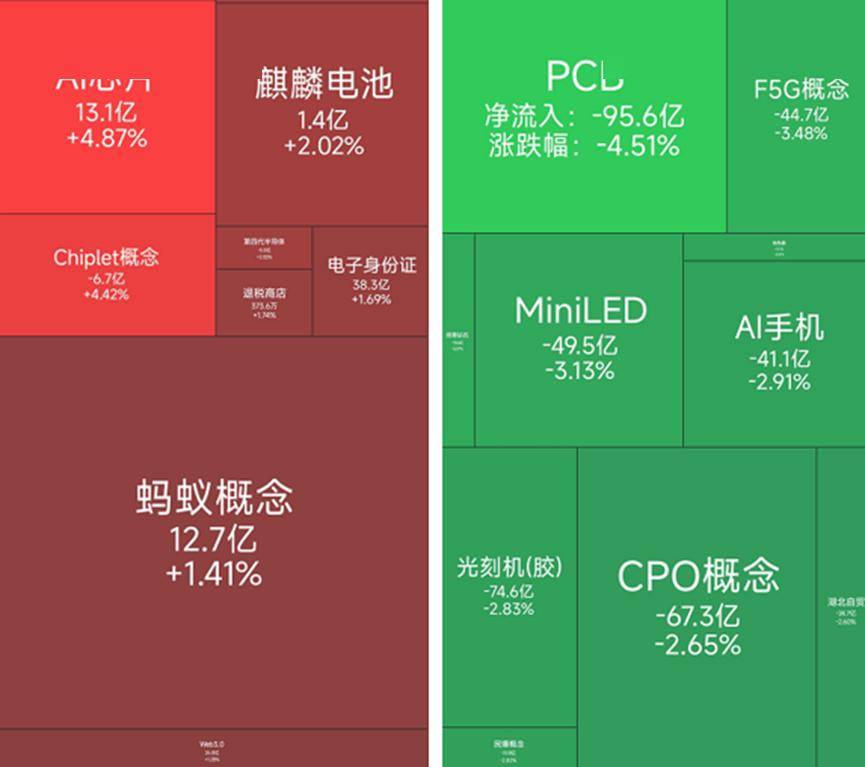
AI芯片概念涨幅居前,17位基金经理发生任职变动
Sou Hu Cai Jing· 2025-08-14 09:01
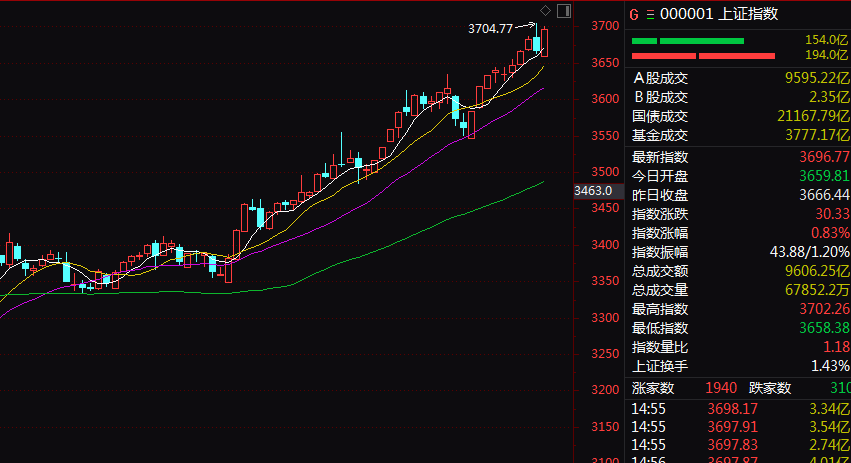
Market Performance - On August 14, all three major A-share indices closed lower, with the Shanghai Composite Index down 0.46% at 3666.44 points, the Shenzhen Component Index down 0.87% at 11451.43 points, and the ChiNext Index down 1.08% at 2469.66 points [1] - Sectors that performed well included AI chips, Kirin batteries, and Ant Group concepts, while sectors such as PCB, photolithography (glue), and CPO concepts saw declines [1] Fund Manager Changes - In the past 30 days (July 15 to August 14), 507 fund products experienced changes in fund managers, with 23 announcements made on August 14 alone [3] - Reasons for fund manager changes included work transitions for 3 managers across 8 funds, product expirations for 2 managers across 4 funds, and personal reasons for 2 managers across 11 funds [3] Fund Manager Performance - Longsheng Fund's Wang Guijun currently manages assets totaling 38.702 billion yuan, with the highest return product being Changsheng Shengyu Pure Bond A (003102), which achieved a 32.28% return over 4 years and 241 days [4] - Xinda Australia Fund's Zhu Ran manages assets totaling 2.184 billion yuan, with the highest return product being Hongtu Innovation New Technology Stock (006265), which achieved a 342.81% return over 2 years and 324 days [5] Fund Research Activity - In the past month, Huaxia Fund conducted the most company research, engaging with 56 listed companies, followed by Penghua Fund, Bosera Fund, and Southern Fund with 53, 51, and 49 companies respectively [8] - The telecommunications equipment sector was the most researched, with 294 instances, followed by the chemical products sector with 217 instances [8] Recent Company Focus - In the last month, the most researched company by public funds was Defu Technology, with 79 fund management companies participating in the research, followed by Zhongji Xuchuang and Zhongchong Co., with 75 and 71 companies respectively [8] - In the past week (August 7 to August 14), the most researched company was Nanwei Medical, with 60 fund institutions conducting research, followed by Baiji Shenzhou, Xin Qiang Lian, and Anke Biological with 55, 51, and 38 institutions respectively [9]