
产业升级

Search documents
磷复肥:产业竞争力全面跃升
Zhong Guo Hua Gong Bao· 2025-12-16 02:31
Core Viewpoint - During the "14th Five-Year Plan" period, China's phosphate fertilizer industry has achieved significant improvements in competitiveness through optimization of layout, structural adjustments, technological innovation, and green transformation, ensuring supply and upgrading the industry [1] Group 1: Layout Optimization - The phosphate fertilizer industry has seen a steady increase in concentration and balanced regional development, with the output of phosphate fertilizer in key provinces expected to grow by approximately 6% by the end of the "14th Five-Year Plan" [2] - The top ten enterprises in the industry are projected to increase their output by 10%, while the number of large-scale phosphate fertilizer production enterprises is expected to decrease by 35% [2] - The market share of compound fertilizers has risen from 36% at the end of the "13th Five-Year Plan" to around 42% by the end of the "14th Five-Year Plan" [2] Group 2: Structural Adjustment - The industry has undergone significant upgrades in raw material structure, product structure, and organizational structure, enhancing collaborative effects [3] - The raw material structure has diversified, with the economic grade of low-grade phosphate rock decreasing to 14%-16%, and imports of phosphate rock steadily increasing [3] - The production capacity of new high-efficiency fertilizers, such as ammonium polyphosphate and water-soluble monoammonium phosphate, has expanded, with the capacity of wet-process phosphoric acid increasing threefold compared to the end of the "13th Five-Year Plan" [3][4] Group 3: Green Transformation - The phosphate fertilizer industry has integrated green development concepts into the entire production process, achieving significant results in environmental governance and resource recycling [5] - The utilization rate of phosphogypsum has increased by nearly 16 percentage points, and the recovery rate of associated fluorine resources has significantly improved, with some facilities achieving over 60% recovery [5] - Approximately 30 compound fertilizer enterprises have received "green factory" certification, and the industry is promoting energy-saving measures and waste recycling systems [6]
2025上市公司跨境并购典型案例汇编
Sou Hu Cai Jing· 2025-12-16 02:23
Core Insights - Chinese listed companies are increasingly engaging in cross-border mergers and acquisitions (M&A) as part of a strategic shift from merely exporting products to establishing global brands, technologies, and ecosystems [1][2][5] - The driving force behind these M&A activities has evolved beyond mere scale expansion to include strategic objectives such as enhancing technological capabilities, acquiring high-end brands, and building comprehensive global market networks [2][4] Group 1: Strategic Objectives and Trends - The M&A cases illustrate a clear strategic orientation, focusing on addressing technological gaps and enhancing global competitiveness rather than opportunistic acquisitions [2][5] - Companies like Wanhua Chemical and Haier have successfully transformed their business models through strategic acquisitions, positioning themselves as leaders in their respective industries [2][4] Group 2: Innovative Transaction Models - Various innovative transaction models have emerged, balancing efficiency, risk management, and stakeholder interests, such as the "controlling shareholder first acquires + subsequent injection into the listed company" model [3][4] - The use of industry funds has become a crucial method for overcoming financial bottlenecks, exemplified by Changdian Technology's acquisition of Star Semiconductor [3] Group 3: Post-Merger Integration and Cultural Challenges - Successful M&A outcomes hinge not only on the completion of transactions but also on effective post-merger integration, particularly in managing cross-cultural challenges [4][5] - Companies that respect cultural differences and gradually integrate operations tend to achieve better synergy and value creation [4] Group 4: Macro Perspective on Industry Upgrades - The series of cross-border M&A cases reflects the upgrading of China's industrial structure and the reshaping of its global competitiveness, particularly in sectors like semiconductors, pharmaceuticals, and high-end manufacturing [4][5] - Notable acquisitions, such as Fosun Pharma's purchase of Gland Pharma, highlight the strategic moves to secure high-value segments in global supply chains [4] Group 5: Maturity of Cross-Border M&A - Chinese listed companies have entered a more mature and rational phase of cross-border M&A, supported by clear national strategies and improved capital market conditions [5] - Despite ongoing challenges, these companies are accumulating valuable experience that aids their transformation from "the world's factory" to "the world's headquarters" [5]


散货利好!几内亚120万吨氧化铝新项目启动!
Sou Hu Cai Jing· 2025-12-16 01:42
2025年12月12日几内亚博凯多巴利——赢联盟氧化铝几内亚公司(Winning Consortium Alumina Guinea,WCAG)120 万吨/年氧化铝项目今日在此间正式 奠基(上图)。该项目总投资约 12 亿美元,占地约 107 公顷,采用国际先进的拜耳法工艺及智能化生产控制系统,规划建设原料制备、溶出、沉降、分 解、蒸发、焙烧六大核心工艺车间,并配套燃气动力辅助区域,着力打造从铝土矿开采、氧化铝加工到物流输出的完整产业链体系。 赢联盟现场总指挥吴琼(上图)随后致辞,感谢几内亚共和国总统马马迪·敦布亚阁下为国家工业化进程提供的清晰方向与坚定信心,并向矿业部及地方 政府在项目推进过程中展现的高效协作表示敬意。他表示,赢联盟与几内亚携手走过十年,亲历并见证了几内亚成长为全球重要的铝土矿生产国,而氧化 铝项目正是推动产业升级、实现资源价值最大化的关键一环。他强调,项目的顺利推进离不开孙修顺总指挥的坚定领导,也离不开政府与当地社区长期以 来的信任与支持。 根据项目技术方案,氧化铝生产全过程(上图)将严格遵循国际环保与安全标准,从矿石预处理、溶出、固液分离、结晶分解,到蒸发与焙烧等关键环 节,均采用成熟 ...

试种富硒大米 沪浙携手共富
Jie Fang Ri Bao· 2025-12-16 01:39
Core Viewpoint - The article highlights the successful trial of selenium-rich rice cultivation in a collaborative effort between villages in Zhejiang Province, showcasing a model for agricultural transformation and market responsiveness [1] Group 1: Agricultural Transformation - The initiative involves a 20-acre selenium-rich rice trial field led by Xinxin Village in Shanghai's Jinshan District, in partnership with neighboring villages [1] - The project aims to upgrade existing agricultural practices by improving soil quality, as the local soil lacks natural selenium properties [1] - The first step in the transformation is soil improvement, which is a one-time process that can maintain its effects for 40 to 50 years [1] Group 2: Market Response - The trial features two high-quality rice varieties from Zhejiang, namely Zhe He Xiang and Jia He, using a "test first, promote later" approach to assess adaptability and market response [1] - The initial batch of selenium-rich rice has already received over 2,000 orders for 15,000 pounds, indicating strong market interest even before harvesting [1] - The unique product positioning and diverse sales channels have contributed to the rapid market acceptance of the rice [1]
中经评论:墨西哥提税或透支发展潜力
Jing Ji Ri Bao· 2025-12-16 00:05
Core Viewpoint - Mexico's recent proposal to increase import tariffs on products from countries without free trade agreements, including China, is seen as a short-term solution to economic pressures, potentially sacrificing long-term economic stability for immediate benefits [1][2][4]. Group 1: Economic Context - Mexico's economy is under increasing pressure, with the growth forecast for 2025 being revised down from positive to negative, and the central bank lowering the annual growth expectation from 0.6% to 0.3% [2]. - The proposed tariff increases are expected to generate an additional revenue of 70 billion pesos (approximately 3.76 billion USD) for the national treasury, addressing a fiscal deficit projected to reach 5.7% of GDP in 2024, the highest in decades [2]. Group 2: Tariff Details - The new tariffs will apply to approximately 1,400 product categories, including automobiles, toys, steel, textiles, and plastic products, with rates ranging from 10% to 50%, effective January 1, 2026 [1]. - Some adjustments were made to the initial proposal, reducing tariffs on certain automotive parts, light industrial products, and textiles, but the overall impact is expected to harm trade relations, particularly with China [1]. Group 3: Domestic Reactions - The proposal has sparked significant debate within Mexico, with supporters arguing it addresses unfair competition and reliance on imports, while opponents warn that increased tariffs will raise production costs and ultimately burden consumers [2][3]. Group 4: Long-term Implications - The reliance on tariffs as a solution is criticized for failing to address underlying economic issues, as Mexico's manufacturing sector is heavily dependent on global supply chains, which could be disrupted by increased costs [3][4]. - The shift in trade policy may deter foreign investment, undermining Mexico's image as a reliable production base and creating uncertainty for international capital [3][4]. - The approach of using protectionist measures to solve problems in an open economy may lead to Mexico's economic isolation, especially in the context of global supply chain restructuring [4].
国民经济延续稳中有进发展态势(锐财经)
Ren Min Ri Bao Hai Wai Ban· 2025-12-15 22:51
Core Viewpoint - The macroeconomic policies in China have shown positive effects, leading to stable economic growth and expansion in various sectors, including production, market sales, and foreign trade [2][5]. Economic Performance - In November, industrial production maintained steady growth, with the industrial added value of large-scale enterprises increasing by 4.8% year-on-year, remaining consistent with the previous month [3]. - The equipment manufacturing sector experienced significant growth, with its added value rising by 7.7%, contributing 59.4% to the overall industrial growth [3]. - Retail sales of consumer goods increased by 1.3% year-on-year, with notable growth in cosmetics (6.1%) and gold and jewelry (8.5%) [3]. Employment and Prices - The urban unemployment rate remained stable at 5.1% in November, unchanged from the previous month [4]. - Consumer prices rose by 0.7% year-on-year, with a 0.5 percentage point increase from the previous month, marking three consecutive months of price recovery [4]. Policy Support - The implementation of proactive macroeconomic policies has played a crucial role in supporting stable economic operations [5]. - Policies aimed at promoting consumption and investment have been effective, with significant increases in retail sales of home appliances (14.8%), cultural office supplies (18.2%), and communication equipment (20.9%) from January to November [6]. Investment and Production - Equipment investment grew by 12.2% year-on-year from January to November, contributing 1.8 percentage points to overall investment growth [6]. - The added value of large-scale equipment manufacturing increased by 9.3%, accounting for 36.4% of total industrial output [6]. Business Performance - From January to October, the revenue of large-scale industrial enterprises increased by 1.8%, while profits rose by 1.9%, marking three consecutive months of growth [7]. - In the service sector, revenue increased by 7.6% and profits by 7.8% during the same period [7]. Outlook for Economic Goals - The data from the first eleven months indicates favorable conditions for achieving the annual economic growth target, supported by expanding market demand and effective macro policies [8]. - The ongoing implementation of policies related to "two new" and "two heavy" constructions is expected to further stimulate demand and production [9].
墨西哥提税或透支发展潜力
Jing Ji Ri Bao· 2025-12-15 22:39
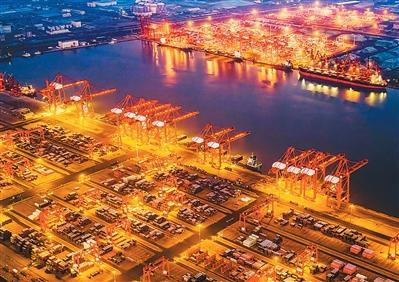
Core Viewpoint - Mexico's recent proposal to increase import tariffs on products from countries without free trade agreements, including China, is seen as a short-term solution to economic pressures, potentially sacrificing long-term economic stability for immediate benefits [1][4]. Group 1: Economic Context - Mexico's economy is under increasing pressure, with the growth forecast for Q3 2025 turning negative and the central bank lowering the annual growth expectation from 0.6% to 0.3% [2]. - The proposed tax increase is expected to generate an additional revenue of 700 billion pesos (approximately 37.6 billion USD) for the government, addressing a fiscal deficit projected to reach 5.7% of GDP in 2024, the highest in decades [2]. Group 2: Domestic Reactions - The proposal has sparked significant debate within Mexico, with supporters arguing it addresses unfair competition and reliance on imports, while opponents warn that increased tariffs will raise production costs and ultimately burden consumers [2][3]. Group 3: Supply Chain and Investment Risks - The reliance of Mexico's manufacturing sector on global supply chains means that increased tariffs could heighten the risk of supply chain disruptions, particularly given the limited domestic production capacity [3]. - The sudden shift in trade policy may deter foreign investment, undermining Mexico's image as a reliable production base and creating uncertainty for international capital [3][4]. Group 4: Long-term Implications - The protectionist measures are unlikely to enhance industrial competitiveness and may instead squeeze small and medium-sized enterprises due to rising raw material costs [4]. - Historical precedents indicate that short-term fiscal gains from tariffs may not compensate for long-term economic losses, as seen when Mexico had to retract tariffs on aluminum due to domestic production shortages shortly after their implementation [4].
特色优势赋能中小企业 金融聚力服务区域发展
Zhong Guo Zheng Quan Bao· 2025-12-15 20:19
● 本报记者 宋维东 大连股交中心总经理王松日前在接受中国证券报记者专访时表示,作为大连市唯一合法的区域性股权市 场运营机构,大连股交中心将坚持高标准站位,保持韧性、耐心和定力,以沉下去的功夫做好各项基础 工作,发挥多层次资本市场"塔基"和企业上市"苗圃"作用,扩大特色优势,为优质中小企业提供全方 位、全生命周期的金融服务,聚焦专精特新企业梯度培育,打通资本与实体经济连接通道,助力优质企 业利用资本市场实现高质量发展。 成果丰硕 近日,大连股交中心"专精特新"专板培育层企业康丰科技获准挂牌新三板。这家深耕连续挤压和包覆技 术领域的科技型企业曾三次荣获国家科技进步奖,此次能快速在新三板挂牌、实现在资本市场进阶发 展,正是得益于三四板"绿色通道"机制的全程协助。 "为破解企业挂牌周期长、流程衔接难等痛点,2024年大连股交中心与全国股转公司签署《监管合作备 忘录》,正式开通三四板'绿色通道',为以专精特新企业为代表的拟挂牌、拟上市企业搭建对接资本市 场的直达通道。"王松说。 康丰科技的快速挂牌,正是大连股交中心高效链接全国性资本市场资源、助力区域优质企业加速对接新 三板的有益实践,也是精准服务中小企业的经典案例。 ...
前11个月一万亿美元顺差!是好事还是麻烦?普通人都能看懂的解读
Sou Hu Cai Jing· 2025-12-15 19:22
Group 1 - China's trade surplus reached $1.076 trillion in the first 11 months of the year, exceeding last year's total [1] - Exports totaled $3.41 trillion, a year-on-year increase of 6.2%, indicating strong performance despite a sluggish global economy [4] - The composition of exports has shifted from traditional goods to high-tech products, with new categories like electric vehicles and lithium batteries growing by 30% [8][10] Group 2 - Imports of bulk commodities increased in volume, but prices fell, leading to a modest increase in total import value [10] - The total import value increased by only 830 billion RMB compared to the previous year, highlighting that the surplus is primarily driven by exports [12] - The increase in trade surplus has bolstered foreign exchange reserves, which now exceed $3.2 trillion, enhancing the country's economic resilience [12][14] Group 3 - The trade surplus has contributed to GDP growth, helping to stabilize the annual growth target of around 5% [14] - The appreciation of the RMB has made studying abroad and travel cheaper, with tuition fees for top U.S. universities decreasing by approximately 2,800 RMB [15] - However, the high trade surplus has led to concerns from Western countries about unfair trade practices, potentially resulting in trade barriers [17] Group 4 - Traditional export businesses are facing challenges due to RMB appreciation, which reduces their profit margins [20] - The shift towards high-end products may lead to job losses in traditional manufacturing sectors, as fewer workers are needed to produce higher-value goods [22] - The slow growth in imports suggests that domestic consumption and investment demand are not fully recovering, indicating an over-reliance on exports [24][26]
部分钢铁产品纳入出口许可证管理
Zheng Quan Ri Bao· 2025-12-15 16:19
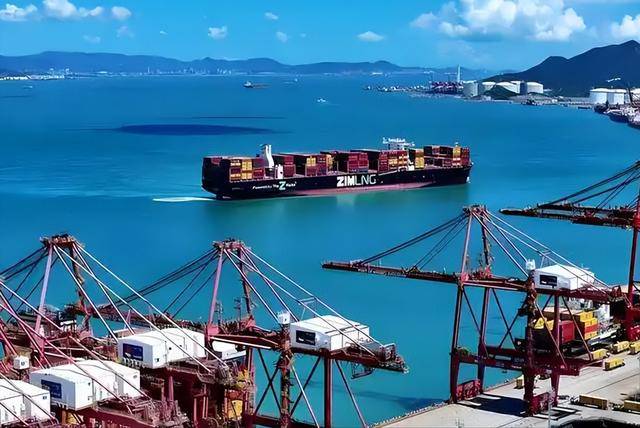
Core Viewpoint - The Ministry of Commerce and the General Administration of Customs of China announced adjustments to the "Export License Management Goods Catalog (2025)", including certain steel products, effective from January 1, 2026. This policy aims to drive industry upgrades amid the ongoing expansion of China's steel exports [1]. Group 1: Policy Impact - The new policy is expected to help transition steel exports from "scale expansion" to "value enhancement" [1]. - In the first eleven months of 2025, China's steel export volume reached 107.7 million tons, a year-on-year increase of 6.7%, indicating the steel industry's deep integration into the global market [1]. - The inclusion of steel products in the export license management covers the entire industry chain, which is beneficial for long-term industry development [1]. Group 2: Industry Transformation - The policy aims to curb the disorderly export of low-value-added products and assist companies in facing international trade barriers [1]. - Analysts suggest that the policy will lead to a reduction in the export of low-value-added products, impacting the "volume compensates for price" model [2]. - The focus on compliance and quality will push companies towards high-value-added products, fostering technological innovation and enhancing competitiveness [2]. Group 3: Recommendations for Companies - Steel companies are encouraged to increase R&D investments in high-performance products such as bearing steel, gear steel, and high-temperature alloys [3]. - Some leading domestic companies have begun exporting "green steel" products, achieving a carbon reduction of 50% per ton of steel through full-process carbon verification [3].