
绿色低碳转型

Search documents
5000亿新型工具有望拉动超5万亿投资 多地项目资金已投放
Sou Hu Cai Jing· 2025-10-10 02:31
Core Insights - The National Development and Reform Commission announced a new policy financial tool with a total scale of 500 billion yuan, aimed at supplementing project capital [1] - The funds are being rapidly deployed across various regions, targeting urban renewal, transportation, water management, logistics, energy, agriculture, heating networks, and environmental protection projects [1][6] - The financing terms for these new tools are relatively long, with some projects approved for financing periods of 15 to 20 years, addressing capital shortages in key areas [1][9] Group 1: Project Deployment - The first batch of funds has been allocated to projects such as the Wuxi to Yixing intercity rail project, which received 3.199 billion yuan, marking it as the largest project approved in Jiangsu province [3] - In Suzhou, a project received 384 million yuan, making it the largest single project approved among the first batch in the city [3] - The Yongjia County project in Zhejiang received 256 million yuan for urban renewal, with a total investment of 4.8 billion yuan [4] Group 2: Sector Focus - The new financial tools are primarily directed towards traditional infrastructure sectors such as transportation, energy, and urban renewal, with a significant portion of projects already in the pipeline [7] - Emerging industries like digital economy, artificial intelligence, and low-altitude economy are also key focus areas for the new financial tools, aiming to support economic transformation [8][9] - The tools are designed to ensure that at least 20% of the funding goes to private enterprises, promoting a balanced investment approach [9] Group 3: Investment Impact - The 500 billion yuan in new policy financial tools is expected to leverage approximately 2.5 to 3.3 trillion yuan in total investment, significantly boosting fixed asset investment growth [10] - It is estimated that the deployment of these tools could increase fixed asset investment growth by at least 4.9 percentage points if all projects are completed [10] - The tools are projected to drive infrastructure investment growth by 3 to 4 percentage points annually over the next three years, with a notable impact expected in the fourth quarter of this year [10]

为全球气候治理合作注入更多正能量
Ren Min Ri Bao· 2025-10-10 00:51
Core Points - China aims to reduce its total greenhouse gas emissions by 7%-10% from peak levels by 2035, marking a significant shift from intensity control to total control of carbon emissions [1][2] - The new targets include increasing the share of non-fossil energy consumption to over 30%, expanding wind and solar power capacity to six times that of 2020, and achieving a forest stock of over 24 billion cubic meters [1][2] - The announcement reflects China's commitment to global climate governance and its role as a responsible major country [2][4] Group 1: National Contribution Goals - The "1+3+3" framework combines qualitative and quantitative targets, with the first goal being the reduction of total greenhouse gas emissions [2] - The three quantitative indicators represent an enhancement of previous 2030 targets, showcasing China's intensified efforts to combat climate change [2][3] - New qualitative indicators include making new energy vehicles the mainstream of new vehicle sales and establishing a nationwide carbon trading market covering major high-emission industries [2][3] Group 2: Global Climate Governance - The new national contribution is expected to boost international confidence in climate governance and enhance global cooperation [4] - China's renewable energy system is the largest and fastest-growing globally, providing over 80% of the world's photovoltaic components and 70% of wind power equipment [4] - The country has made significant progress in implementing its 2030 national contributions, with a continuous decline in carbon emissions per unit of GDP [4][5] Group 3: Challenges and Future Directions - Achieving the 2035 targets will require substantial efforts from China and a favorable international environment [6][7] - Experts emphasize the need for technological innovation and policy guidance to facilitate the transition to low-carbon energy sources [7] - The realization of national contribution goals depends on fair international conditions, stable cooperation, and secure supply chains [7]
让碳市场更好助力绿色低碳转型
Ren Min Ri Bao· 2025-10-09 23:06
Core Insights - The national carbon trading market in China is designed to convert emission reduction pressure into internal motivation, encouraging various sectors to participate in the green and low-carbon transition [1][2] - The market has become the largest in the world in terms of greenhouse gas emissions coverage, effectively managing over 60% of the national carbon dioxide emissions by including industries such as steel, cement, and aluminum [1][2] - The carbon market is expected to enhance trading vitality, with a projected transaction volume of 18.114 billion yuan in 2024, marking the highest level since its inception in 2021 [2] Group 1 - The carbon trading market allows companies to sell excess carbon emission allowances and reinvest the proceeds into energy-saving projects, creating a positive feedback loop [1] - The market aims to promote technological advancement and industrial upgrades by limiting carbon emissions in key sectors [2] - The establishment of a voluntary greenhouse gas reduction trading market broadens participation across various industries, complementing the mandatory carbon trading market [2] Group 2 - The construction of the carbon market is a significant institutional innovation that requires effective management mechanisms, comprehensive regulations, and reliable trading systems [3] - The government has issued guidelines to enhance the carbon market's effectiveness and international influence, aiming for a more vibrant and impactful system [3] - There is a focus on expanding the market's coverage and improving the quality of emission data while combating fraudulent activities [3]
新一轮国家自主贡献宣布,一揽子应对气候变化 为全球气候治理合作注入更多正能量(美丽中国)
Ren Min Ri Bao· 2025-10-09 22:21
Core Points - China aims to reduce its total greenhouse gas emissions by 7%-10% from peak levels by 2035, marking a significant shift from intensity control to total control of emissions [2][3] - The new targets include increasing the share of non-fossil energy consumption to over 30%, expanding wind and solar power capacity to over 360 million kilowatts, and increasing forest stock to over 24 billion cubic meters [2][3] - The initiative emphasizes the importance of a comprehensive approach to climate change, covering all sectors of the economy and including non-CO2 greenhouse gases [4][3] Summary by Categories National Contribution Goals - The new national contribution goals are described as a "1+3+3" framework, combining qualitative and quantitative targets [2][3] - The qualitative targets include making new energy vehicles the mainstream in new vehicle sales and establishing a nationwide carbon trading market covering major high-emission industries [2][3] Global Climate Governance - China's new contribution is expected to enhance global confidence in climate governance and strengthen international cooperation on climate change [4][3] - The announcement aligns with the 10th anniversary of the Paris Agreement, marking a critical phase in global climate governance [1] Renewable Energy and Emission Reduction - China has built the world's largest and fastest-growing renewable energy system, providing over 80% of global photovoltaic components and 70% of wind power equipment [6] - The average cost of wind and solar power generation has decreased significantly, with reductions of over 60% and 80% respectively over the past decade [6] Challenges and Future Directions - Achieving the 2035 targets will require significant efforts domestically and a favorable international environment [7][8] - Experts emphasize the need for technological innovation and policy support to facilitate the transition to low-carbon energy sources [8]
掘金柳巷煤矿从“黑金”到“绿金”的高质量发展之路
Sou Hu Wang· 2025-10-09 12:22
Core Insights - The article discusses the investigation into the asset quality of the Liuxiang Coal Mine, which is partially owned by a private entrepreneur with a diverse business background, including food processing and tourism [1][2]. Group 1: Asset Verification and Investment Opportunity - The project team identified the Liuxiang Coal Mine as a valuable asset, emphasizing the importance of verifying its coal mining qualifications and financial health [2]. - The major shareholder of Liuxiang Coal Mine is Huaneng Tongchuan Zhaojin Coal Power Co., Ltd., holding a 43% stake, which provides a unique advantage for the financial institution involved in the project [2]. - The mine has shown strong financial performance, with net profits exceeding expectations and a high cash flow, indicating a solid investment opportunity [4][5]. Group 2: Coal Quality and Production Efficiency - Liuxiang Coal Mine is noted for its high-quality coal, characterized by low ash and sulfur content, and high calorific value, making it competitive in the national coal market [4][5]. - The mine's operational efficiency is highlighted by its low production costs and high profit margins, ranking among the top in the industry [4][5]. - The mine has successfully maintained a high sales price for its coal, even amidst long-term supply agreements, demonstrating its market strength [5]. Group 3: Environmental and Technological Innovations - The article emphasizes the importance of environmental compliance and the implementation of green technologies in coal mining operations, particularly in response to increasing regulatory scrutiny [10][19]. - Liuxiang Coal Mine has adopted advanced technologies, including electric steam boilers and intelligent mining systems, to enhance operational efficiency and reduce environmental impact [19][20]. - The mine's commitment to sustainability is evident in its initiatives to utilize coal gangue for ecological restoration, contributing to land reclamation efforts [19]. Group 4: Regional Economic Impact - The development of the coal industry in the Yulin region has significantly contributed to local economic growth, with GDP increasing from 10 billion to 709.1 billion over 23 years [8]. - The region faces challenges related to environmental degradation and resource management, necessitating a shift towards sustainable practices in coal mining and energy production [9][10]. - Yulin has emerged as a key area for renewable energy development, leveraging its natural resources for wind and solar energy projects, thus transitioning from a coal-centric economy to a more diversified energy landscape [11][12].

ESG动态跟踪月报(2025年9月):NDC新目标锚定长期转型,荷兰养老金战略调整引关注-20251009
CMS· 2025-10-09 07:45
- The report focuses on the regulatory dynamics, market trends, and product issuance in the ESG field, providing a systematic review of important information from the past month for investors' reference[1] - As of the end of September, there were 930 ESG-themed funds in the A-share market, with a total scale of approximately 1.03 trillion yuan, an increase of over 4% from the beginning of the year[4] - The newly issued ESG bonds in September amounted to 125.674 billion yuan, with green bonds dominating the market[81] - The report highlights the strategic shift of the Dutch pension fund PFZW towards active investment, ending cooperation with several institutions like BlackRock[51][52] - The report also discusses the launch of the "National Tea Carbon Footprint Digital Platform," exploring the carbon management system for agricultural products[43]

畜牧业怎样转型才能实现减污降碳?
Jing Ji Ri Bao· 2025-10-07 07:30
Core Viewpoint - The recent policy documents emphasize the importance of promoting green and low-carbon development in the livestock industry, highlighting the need for a modern production system that is environmentally friendly and resource-efficient [1][2]. Group 1: Policy and Strategic Framework - The central government has issued guidelines to stimulate societal motivation for green and low-carbon development, particularly in agriculture [1]. - The "Two Mountains" concept is highlighted as a guiding principle for ecological civilization and green transformation in the livestock sector [1]. - The transition to a green livestock industry is urgent due to environmental pollution and greenhouse gas emissions from livestock farming, particularly methane and nitrous oxide [1]. Group 2: Technological and Educational Initiatives - There is a need to enhance the adoption of pollution reduction and carbon reduction technologies, which are currently limited due to low awareness and outdated facilities among livestock farmers [1][2]. - Increasing investment in technological innovation and digitalization is essential for improving production efficiency and reducing greenhouse gas emissions [2]. - Educating farmers about pollution reduction and carbon reduction technologies is crucial for facilitating the green transition in the livestock industry [2]. Group 3: Implementation and Support Mechanisms - Establishing a comprehensive technical promotion system that considers regional characteristics and employs diverse strategies is necessary for effective implementation [3]. - Encouraging the development of low-carbon feed is vital for reducing greenhouse gas emissions and supporting the industry's green transformation [3]. - Financial incentives and simplified approval processes for low-carbon feed products can enhance industry participation and innovation [3].
“零碳”地质公园里的巡线人
Xin Hua She· 2025-10-06 02:23
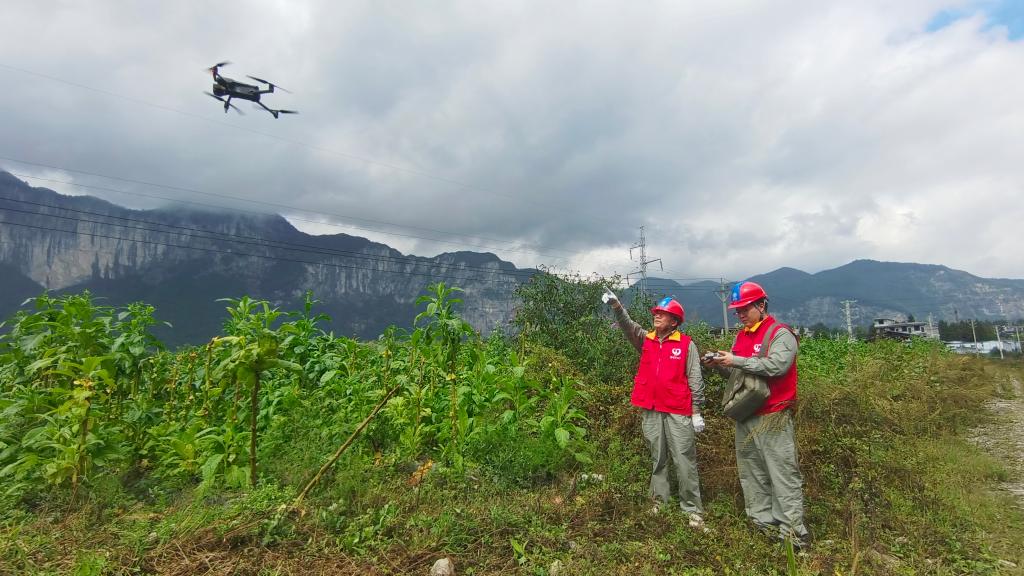
新华社武汉10月5日电(记者黎昌政)"走!"5日上午,迎着阳光,国网恩施供电公司沐抚供电所员工覃建皓与同事谭永军背上工具包,驱车驶向 湖北恩施大峡谷景区及周边民宿,开启新一天保电巡检。 国庆长假前四天,大峡谷景区累计接待游客人数超过5万人,较去年同期较大幅度增长,用电负荷持续攀升,安全保电任务更加繁重。节日期间, 国网恩施供电公司保电人员,每天都要对景区和周边民宿供电线路开展巡检。 "温度正常,设施设备运行平稳。"他们首先来到为恩施大峡谷景区地面缆车等供电的10千伏线路旁,使用无人机对线路进行巡检。无人机遥控器 显示屏里,线路运行情况一目了然。 大峡谷景区地面缆车是湖北首条地面观光缆车,2021年4月投入运营,每小时最大运送能力4100人,能减少游客转运等待时间,改善游客出行体 验。 "做巡检时一定要仔细,不能有一点疏漏。高峰时期线路出问题就糟了,会影响游客出行体验!"覃建皓说。他们通过无人机,从各个角度对电杆 金具等设施和线路通道进行检查,发现设施设备正常,不由得松了一口气。 10月5日,国网恩施供电公司保电人员用无人机巡视恩施大峡谷景区保电线路。新华社发(何厚英摄) 接下来,他们走向位于山腰的国家电网"光 ...
经济日报:实体经济根基不断巩固
Sou Hu Cai Jing· 2025-10-06 01:05
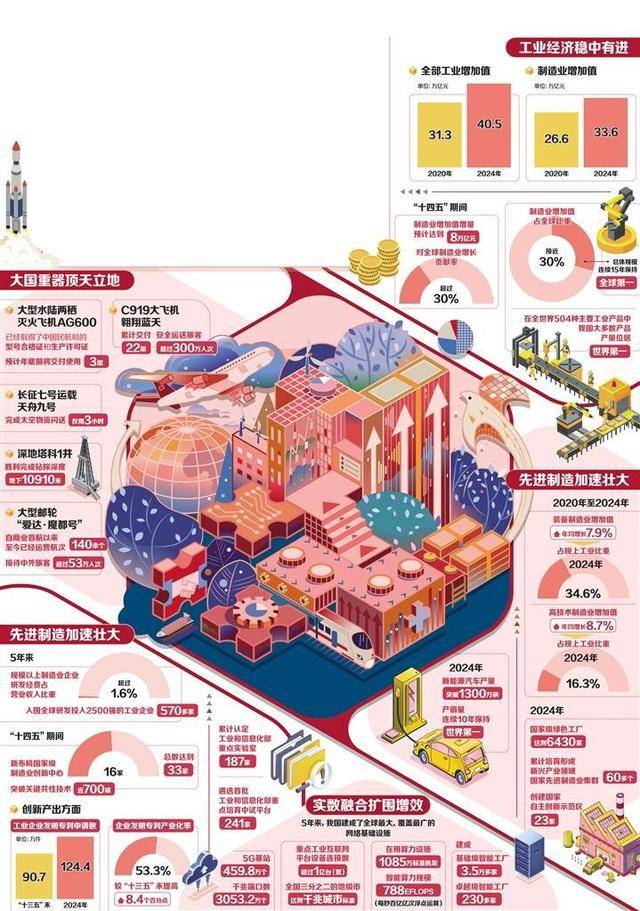
Group 1 - The core viewpoint emphasizes the importance of the real economy as the foundation of a country's economy, highlighting significant achievements during the "14th Five-Year Plan" period, including the manufacturing sector maintaining the world's largest scale for 15 consecutive years and industrial added value increasing from 31.3 trillion yuan to 40.5 trillion yuan [2] - The manufacturing sector's foundational role in the real economy is crucial for promoting high-quality economic development and enhancing national strength and international competitiveness [3] - The integration of technology innovation and green low-carbon transformation is essential for developing advanced manufacturing and intelligent manufacturing, thereby solidifying the foundation of the real economy [3] Group 2 - The deep integration of the real economy and digital economy is a distinctive feature of high-quality development during the "14th Five-Year Plan," with significant advancements in digitalization across production, management, and services [3] - The development of small and medium-sized enterprises (SMEs) has significantly improved in terms of quantity, efficiency, and quality during the "14th Five-Year Plan," enhancing the resilience of the industry [4] - The focus on strengthening the core competitiveness of the manufacturing sector and promoting the deep integration of technological and industrial innovation is vital for establishing a modern industrial system and ensuring stable economic development [4]
重申“产量压减”!业内最新研判:钢价四季度不宜过度悲观|观策论市
Qi Huo Ri Bao· 2025-10-05 23:59
Core Viewpoint - The Ministry of Industry and Information Technology and other departments have issued a plan for the steel industry aimed at stabilizing growth from 2025 to 2026, emphasizing capacity replacement, production reduction, and support for advanced enterprises while phasing out inefficient capacities [1][2]. Group 1: Policy Measures - The plan continues the trend of recent years in regulating the steel industry, focusing on increasing capacity replacement and implementing production reduction policies to maintain supply-demand balance [1]. - It promotes the classification and management of steel enterprises and aims to increase the supply of high-end products while ensuring stable prices and supply of raw materials [1][5]. Group 2: Market Dynamics - Despite a downward trend in steel prices in the first half of the year, the overall profitability of steel mills has improved due to a larger decrease in raw material prices compared to steel prices [2]. - The third quarter has seen a strong trend in raw material prices, with iron ore prices rebounding to around $107 per ton due to inventory replenishment by steel mills and unstable overseas shipments [2][3]. Group 3: Demand and Supply Outlook - The overall supply of steel remains abundant due to high iron water production, while demand is supported by shipbuilding, automotive, and strong exports, but is weakened by real estate and infrastructure sectors [3]. - The fourth quarter is expected to see a seasonal decline in construction steel demand, with limited potential for significant increases in rolled steel and exports [3]. Group 4: Industry Perspectives - Industry experts have differing views on the fourth-quarter steel market, with some indicating that the steel industry will face challenges in profitability management compared to the first half of the year [4]. - The plan emphasizes the need to implement annual crude steel production control tasks and achieve ultra-low emission transformation by the end of 2025, with a potential reduction space of around 10 million tons [4]. Group 5: Future Trends - The plan also highlights the importance of establishing a carbon footprint accounting standard system and promoting digital carbon management centers in anticipation of carbon trading market inclusion [5][6]. - Looking ahead to 2026, there is cautious optimism regarding the steel industry, with expectations of improved demand for construction steel and favorable conditions for steel exports, despite potential adjustments in export regions and product types due to tariffs [6].