
智能网联汽车

Search documents
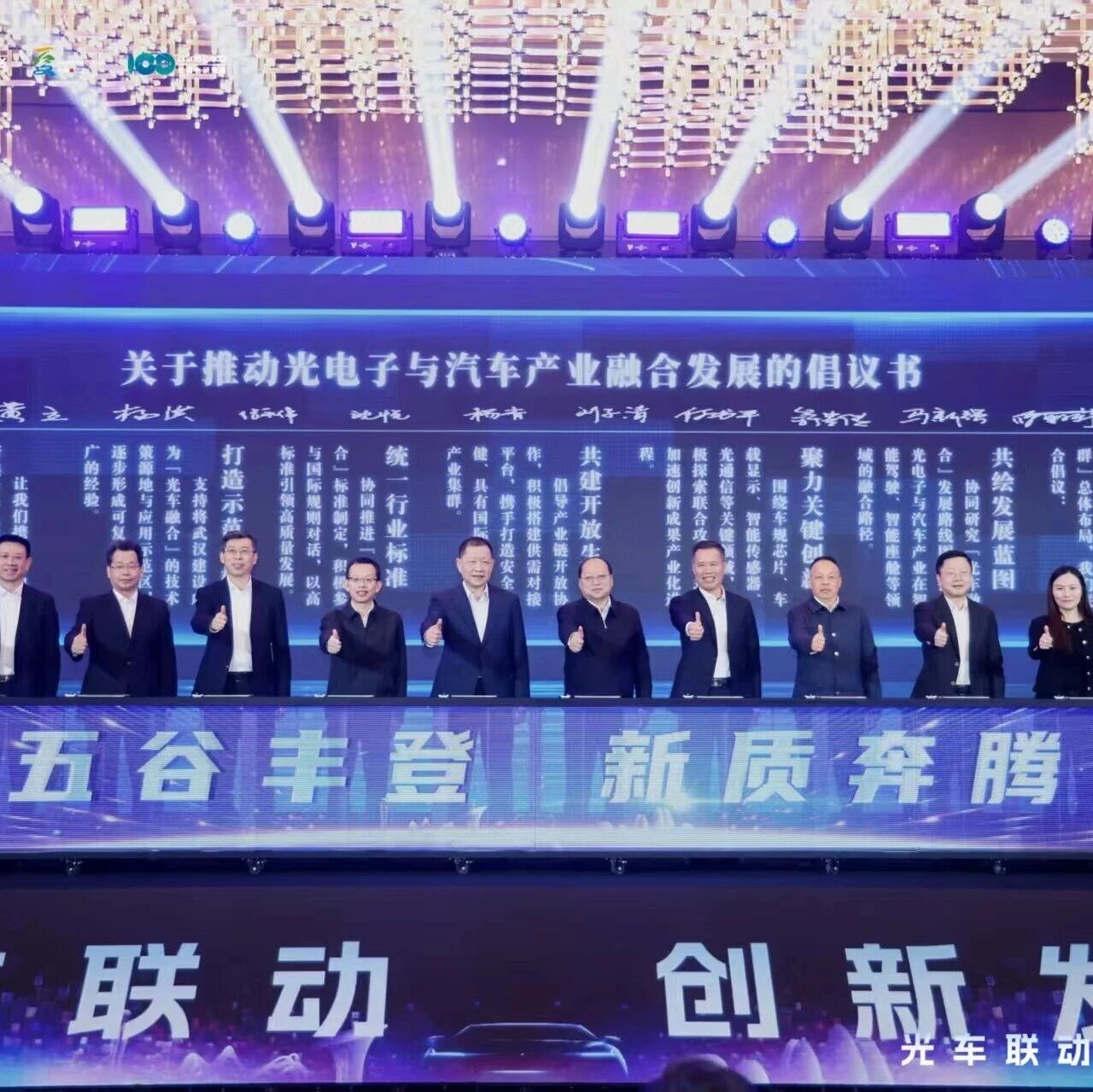
“光纤上车”爆发前夜,武汉抢占“光车融合”先机
第一财经· 2026-01-19 07:58
Core Viewpoint - The article discusses the emergence of L3-level autonomous driving and its impact on the automotive industry, particularly highlighting the integration of optical communication technology, which is expected to drive a new phase of cluster development in the sector [2][4]. Group 1: Industry Development - The automotive and optoelectronic information industries are key drivers of Wuhan's economic growth, with the city housing eight passenger car manufacturers and over 1,000 auto parts companies, achieving a total vehicle production capacity of 2.27 million units [4][5]. - By 2025, the scale of Wuhan's optoelectronic information industry is projected to reach approximately 850 billion yuan, with electronic information manufacturing contributing about 445 billion yuan and software business revenue around 405 billion yuan [5]. - The automotive industry in China is expected to surpass 10 trillion yuan in revenue by 2025, providing significant application scenarios for new technologies such as semiconductors and artificial intelligence [5][6]. Group 2: Technological Integration - The "optical-vehicle integration" initiative aims to address critical areas such as automotive-grade chips and smart sensors, establishing a collaborative research mechanism among various stakeholders [2][6]. - Companies like Wuhan Haiwei Technology and Wuhan Binary Semiconductor are leading advancements in automotive display technology and high-speed optical communication, respectively, with the latter's first domestically produced automotive-grade MCU chip set to launch this year [6][7]. - The transition from copper to optical fiber in vehicles is anticipated to enhance data transmission speed and reduce weight, with industry leaders predicting significant economic benefits from this shift [7]. Group 3: Challenges and Recommendations - The integration of communication, optoelectronics, and artificial intelligence into the automotive sector presents challenges such as technical compatibility, standardization, and supply chain barriers [7]. - To facilitate deeper integration, it is recommended to establish collaborative innovation platforms to address foundational issues in technology linkage, standard development, and certification [7].

汽车行业周报:低增长之年,追寻高质量发展-20260119
Guoyuan Securities· 2026-01-19 05:23
Investment Rating - The report maintains a "Recommended" investment rating for the automotive industry, indicating a positive outlook for certain segments within the sector [6]. Core Insights - The automotive industry is expected to experience low growth in 2026, with total vehicle sales projected to reach 34.75 million units, reflecting a year-on-year increase of 1%. Passenger vehicle sales are anticipated to grow by 0.5%, while commercial vehicle sales are expected to rise by 4.7%. The new energy vehicle (NEV) segment is projected to grow significantly, with sales expected to reach 19 million units, a 15.2% increase year-on-year, highlighting its role as a key growth driver [3][35]. - The report emphasizes the importance of macroeconomic policies and GDP growth targets in influencing vehicle sales, particularly in the passenger vehicle segment. The report suggests that sustained policy support is crucial for maintaining sales momentum [3][35]. Summary by Sections 1. Weekly Market Review (January 10-16, 2026) - The automotive sector index increased by 0.49%, outperforming the Shanghai Composite Index by 1.06 percentage points. The automotive services sector saw the highest gains, with a 4.51% increase [12][15]. 2. Weekly Data Tracking (January 10-16, 2026) - Retail sales of passenger vehicles from January 1-11 totaled 328,000 units, a 32% decrease year-on-year. Wholesale figures showed a similar trend, with 381,000 units sold, down 40% year-on-year. The NEV market also faced declines, with retail sales of 117,000 units, down 38% year-on-year [20][21]. 3. Industry News (January 10-16, 2026) - Key developments include partnerships for advanced driving technologies and initiatives to promote autonomous vehicle testing in regions like Hong Kong. Additionally, the report highlights the ongoing negotiations between China and the EU regarding electric vehicle trade, which could stabilize market conditions [25][28][30]. 4. Investment Recommendations - The report suggests focusing on structural opportunities within the automotive sector, particularly high-growth companies and regions, as well as the recovery of commercial vehicles and advancements in automotive technology [4].





贝斯特:暂无港交所上市计划
Jin Rong Jie· 2026-01-19 03:58
Group 1 - The core viewpoint of the article is that despite the positive developments in the company's subsidiary, the stock price has not increased, which raises questions among investors [1] - The company’s subsidiary, Yuhua Precision Machinery, has fully entered the linear motion components sector, with applications covering industrial mother machines (accounting for 21.6% of the downstream market), humanoid robots (potential market size in the hundred billion range), smart connected vehicles, and automation industries [1] - The company clarified that there are currently no plans for an IPO on the Hong Kong Stock Exchange, despite investor speculation [1]
上海发布“模速智行”行动计划,自动驾驶产业驶入加速赛道
GUOTAI HAITONG SECURITIES· 2026-01-18 12:28
股票研究/[Table_Date] 2026.01.18 [Table_Industry] 计算机 上海发布"模速智行"行动计划,自动驾 驶产业驶入加速赛道 [Table_Invest] 评级: 增持 | [姓名table_Authors] | 电话 | 邮箱 | 登记编号 | | --- | --- | --- | --- | | 杨林(分析师) | 021-23183969 | yanglin2@gtht.com | S0880525040027 | | 魏宗(分析师) | 021-23180000 | weizong@gtht.com | S0880525040058 | | 吕浦源(分析师) | 021-23183822 | lvpuyuan@gtht.com | S0880525050002 | | 朱瑶(分析师) | 021-23187261 | zhuyao@gtht.com | S0880526010002 | 本报告导读: 行 业 跟 踪 报 告 证 券 研 究 报 告 研 究 请务必阅读正文之后的免责条款部分 股 票 1 月 7 日三部门联合印发《上海高级别自动驾驶引领区"模速智行"行动计 ...
年需约20亿颗车载芯片,朱伏生:广州发力RISC-V通信芯片
2 1 Shi Ji Jing Ji Bao Dao· 2026-01-18 06:36
Core Viewpoint - RISC-V is rapidly emerging as a new generation open-source instruction set architecture, with significant contributions from China, particularly in high-value sectors like AI and high-performance computing [2] Group 1: RISC-V Industry Development - In 2024, global shipments of RISC-V-based chips have exceeded 10 billion units, with China contributing over 50% [2] - Guangzhou is actively working to establish itself as a core hub for the national integrated circuit industry, with RISC-V seen as a key opportunity for reshaping the chip industry landscape [4] Group 2: Challenges in RISC-V Industry - Current challenges in Guangzhou's RISC-V industry include insufficient policy support and a lack of clear development models, leading to a weak industrial ecosystem [4] Group 3: Recommendations for RISC-V Advancement - Recommendations include creating targeted development plans for RISC-V processors, establishing a RISC-V development fund, and implementing financial subsidies for RISC-V chip applications to enhance the overall scale of domestic RISC-V processor chip usage [5] - The automotive sector in Guangzhou, with major players like GAC and Xpeng, presents a natural advantage for developing automotive-grade chips, with an estimated demand of 2 billion vehicle chips annually by 2025 [5] Group 4: 5G Communication Chip Development - There is a strong demand for 5G communication chips in critical industries in Guangzhou, such as public transportation and energy, with a proposal to form an innovation consortium to develop RISC-V-based 5G RedCap terminal baseband chips [6] - This initiative aims to meet the urgent needs for autonomous and secure communication core chips in vital sectors while promoting the collaborative development of the RISC-V chip design and manufacturing supply chain in Guangzhou [6]


重夺“汽车第一城”,西部大佬杀回来了
创业邦· 2026-01-17 01:36
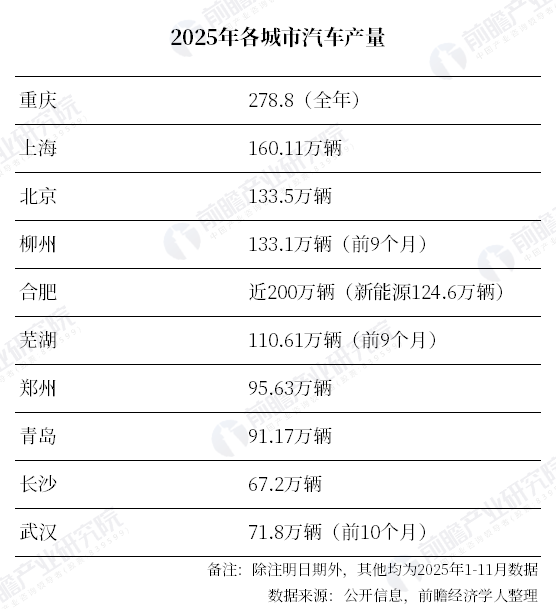
Core Viewpoint - The competition for the title of "Automobile Capital" in China is intensifying, with Chongqing set to achieve a record automotive production of 2.788 million vehicles in 2025, marking a 9.7% increase, and a significant rise in new energy vehicle (NEV) production to 1.296 million units, up 36% [6][8]. Group 1: Historical Context and Challenges - Chongqing aimed to become "China's Detroit" in 2013, reaching a peak production of 3.156 million vehicles in 2016, but faced a decline starting in 2017, with production dropping to 1.383 million vehicles by 2019 [8][9]. - The decline was attributed to a mismatch between Chongqing's focus on mid-to-low-end vehicles and the market's shift towards mid-to-high-end preferences, alongside production capacity issues [8][9]. - The rise of NEVs began to disrupt the traditional automotive landscape, with national sales surpassing 100,000 units within three years after first exceeding 10,000 units in 2015 [9]. Group 2: Strategic Shifts and Collaborations - Changan Automobile, a leading player in Chongqing, announced a plan in 2017 to phase out traditional fuel vehicles by 2025, but initially struggled to keep pace with national NEV growth [9][10]. - A turning point occurred in 2021 when Changan partnered with Huawei and CATL to launch new high-end NEV brands, resulting in a significant increase in sales, with total vehicle sales reaching 2.913 million units and NEV sales up 51.1% to 1.11 million units [10][14]. - The collaboration with Huawei has been pivotal for both Changan and Seres, with Seres becoming the first company to benefit from Huawei's "Smart Selection" model, leading to increased competitiveness in the NEV market [13][14]. Group 3: Future Prospects and Competitive Landscape - The automotive industry is entering a new competitive phase, with Chongqing positioned to lead in NEVs and smart driving technologies, especially after receiving approval for L3-level autonomous driving vehicles [17][19]. - Chongqing's strategic focus on becoming a "Smart Connected New Energy Vehicle Capital" by 2024 aims to leverage its unique geographical features for testing smart vehicles [19][20]. - However, challenges remain, including a lack of competitiveness in AI technology and talent shortages, which could hinder Chongqing's ability to maintain its leading position in the next industrial competition [21][22].


掀翻北上广深!中国汽车第一城,时隔9年再次易主
Qian Zhan Wang· 2026-01-16 13:53
Core Insights - The article highlights that Chongqing has reclaimed its title as "China's Automobile Capital" in 2025, achieving an annual automobile production of 2.788 million units, surpassing other major cities [1][4]. Production and Market Performance - Chongqing's automobile production reached 2.788 million units in 2025, while other cities like Shanghai and Beijing produced 1.6011 million and 1.335 million units respectively [2]. - The production figures indicate a significant recovery for Chongqing, which had previously faced a decline in production due to the shift towards new energy vehicles (NEVs) [2][4]. - In the first 11 months of 2025, Chongqing's automobile exports reached 45.98 billion yuan, marking a 16.8% year-on-year increase, with electric vehicle exports alone growing by 78.9% [4]. Transition to New Energy Vehicles - In 2025, NEVs accounted for 1.296 million units of Chongqing's total production, showcasing a shift from traditional fuel vehicles to electric vehicles [7]. - The penetration rate of NEVs in China surpassed 50% in 2025, indicating a significant transformation in the automotive industry towards electrification and smart technology [5][7]. Statistical Methodology Changes - A change in the statistical methodology from "enterprise legal person location" to "production location" has provided a more accurate representation of automobile production, benefiting cities like Chongqing that focus on local production [8]. Strategic Planning and Policy Initiatives - Chongqing's success is attributed to its proactive policies aimed at upgrading the automotive industry, including the introduction of guidelines for the development of NEVs and smart connected vehicles [9][10]. - The city has established a comprehensive framework for the development of the smart connected vehicle industry, focusing on both NEVs and intelligent networking [10]. Infrastructure and Ecosystem Development - The "Super Charging City" initiative aims to alleviate consumer anxiety regarding charging infrastructure, with an investment of 10 billion yuan to build over 1,200 supercharging stations and 80,000 charging piles by the end of 2025 [13]. - This initiative creates a feedback loop between manufacturing and consumer experience, enhancing product competitiveness through data-driven improvements [13]. Future Trends and Focus Areas - The article emphasizes the importance of high-level autonomous driving and software architecture as key areas for future development in the automotive industry [14][16]. - The need for domestic substitution of core components, such as SiC power semiconductors and high-precision MEMS sensors, is highlighted as a critical challenge for the industry's high-quality development [19].
过会!八年IPO长跑,河南有望再添一家A股企业丨极刻
Sou Hu Cai Jing· 2026-01-16 10:00
Core Viewpoint - Tianhai Automotive Electronics Group Co., Ltd. has successfully passed the review of the Shenzhen Stock Exchange's Growth Enterprise Market for its IPO, marking a significant milestone after a lengthy process that began in July 2017 [2][4]. Company Overview - Tianhai Electronics is a leading supplier of automotive electronic and electrical systems in China, focusing on the research, production, and sales of automotive wiring harnesses, connectors, and electronic products [4]. - The company ranks first in revenue from its main business of automotive wiring harnesses among A-share listed companies and is among the top three in automotive connectors [4]. Financial Performance - The company's revenue for 2022, 2023, and 2024 is projected to be 82.15 billion, 115.49 billion, and 125.23 billion yuan, respectively, with a compound annual growth rate of 23.47% [4]. - Net profit attributable to shareholders for the same years is expected to be 4.02 billion, 6.52 billion, and 6.14 billion yuan [4]. - In the first three quarters of 2025, revenue reached 108.98 billion yuan, a year-on-year increase of 25.35%, while net profit attributable to shareholders was 5.37 billion yuan, up 8.37% [5]. Cash Flow and Profitability - The net cash flow from operating activities for the first three quarters of 2025 was 3.09 billion yuan, a significant increase of 87.93% year-on-year [5]. - The gross profit margin has shown a declining trend from 15.94% in 2022 to 13.93% in mid-2025, influenced by various factors including rising raw material costs and increased labor expenses [5][6]. IPO Details - The company plans to raise approximately 24.6 billion yuan through its IPO, with funds allocated to various projects including connector technology upgrades and production base expansions [14]. - The largest portion of the funds, 8.36 billion yuan (33.98%), will be invested in the connector technology upgrade project [14]. Ownership Structure - Guangzhou Industrial Control holds 38.57% of Tianhai Electronics, making it the controlling shareholder, with the actual controller being the State-owned Assets Supervision and Administration Commission of Guangzhou [9][13]. - The company has undergone complex historical changes, including privatization and restructuring, to establish its current ownership and operational framework [9][10][12]. Subsidiary IPO - Tianhai Electronics' former wholly-owned subsidiary, Haichang Intelligent, is also pursuing an IPO, aiming to raise 4.52 billion yuan [16][17]. - Haichang Intelligent has been a significant customer for Tianhai Electronics, with sales figures indicating a strong interdependence between the two companies [17][18].
278.8万辆!“汽车第一城”桂冠,时隔九年重回山城重庆
Jin Rong Jie· 2026-01-16 09:08
Core Insights - Chongqing has regained its title as "China's Automobile Capital" with a total vehicle production of 2.788 million units in 2025, marking a 9.7% year-on-year increase [1] - The city's new energy vehicle (NEV) production reached 1.296 million units, reflecting a significant 36% growth, contributing to an automotive industry cluster exceeding 800 billion yuan [1] Group 1: Statistical Reform and Industry Landscape - The competition for "Automobile Capital" serves as a barometer for the evolution of China's manufacturing landscape, with Chongqing previously holding the title from 2014 to 2016 before being overtaken by cities like Shenzhen [2] - The National Bureau of Statistics has implemented a "law production and actual production" reform, which counts production based on the physical location rather than the corporate headquarters, leading to a more accurate reflection of industrial distribution [2] - This reform has leveled the playing field for cities like Shenzhen, which have significant production capacity outside their headquarters, while benefiting Chongqing, which has a strong local manufacturing base [2] Group 2: Dual-Engine Growth - Chongqing's resurgence is attributed to a robust transformation in its automotive industry, driven by local brands such as Changan and Seres, which have become the backbone of the sector [3] - Changan has undergone a "third entrepreneurship," focusing on new energy and smart technology, while Seres has achieved breakthroughs in the high-end market with its AITO series [3] - The 36% growth in NEV production in Chongqing significantly outpaces the national average, supported by strategic investments in range-extended technology that address consumer concerns [3] Group 3: Systematic Advantages - Chongqing's leadership is a result of its systemic capabilities, moving beyond mere vehicle production to establishing a resilient "industrial forest" [4] - The city is building a modern manufacturing cluster worth over 800 billion yuan, with a local supply rate of 45%, encompassing a complete supply chain from chips to various components [4] - As a central hub for the new western land-sea corridor, Chongqing has transformed its geographical disadvantages into advantages for international trade, enhancing logistics efficiency [4] Group 4: National Landscape and Competition - The automotive industry in China is entering a multi-polar era, with total vehicle production expected to reach approximately 34.5 million units in 2025, maintaining its position as the world's largest market for 17 consecutive years [5] - Cities like Hefei, Shanghai, and Guangzhou are undergoing transformations, with Hefei emerging as a leader in NEVs, while others are focusing on smart and high-end manufacturing [5] - The competition is intensifying at both city and provincial levels, with Anhui surpassing Guangdong in production, showcasing the strength of the Yangtze River Delta region [5] Group 5: Future Outlook - Regaining the title of "Automobile Capital" marks a milestone for Chongqing, signaling a shift towards competition based on technological innovation, brand value, and supply chain management [6] - The city faces challenges in leveraging its scale and manufacturing heritage to build sustainable global brand influence and achieve breakthroughs in core technologies [6] - The statistical reform represents a shift towards valuing tangible manufacturing over virtual headquarters, guiding resources towards genuine manufacturing and innovation centers [6]
《报告》:NOA供应商市场呈“双强主导”格局
Zhong Guo Jing Ying Bao· 2026-01-16 05:57
Core Insights - The report highlights the rapid development of intelligent connected vehicles in China, particularly focusing on urban Navigation Assisted Driving (NOA) technology, which is seen as a strategic pillar for modernizing the automotive industry [1][2]. Industry Background - Urban NOA technology is positioned as a critical bridge between advanced driver assistance systems and fully autonomous driving, directly impacting China's competitive stance in the global automotive industry [2]. - The market for urban NOA is characterized by a "dual strong leadership" structure, with companies like Momenta and Huawei holding significant market shares [2][5]. Market Dynamics - In the first eleven months of 2025, the cumulative sales of passenger vehicles equipped with urban NOA reached 3.129 million units, with a penetration rate of 15.1%, marking a 5.6 percentage point increase from 2024 [3][4]. - Domestic brands accounted for 81.1% of the urban NOA-equipped passenger vehicle sales, indicating strong innovation and competitiveness in the sector [3]. Technological Advancements - The market for NOA technology is rapidly expanding, with L2-level driving assistance features expected to be present in approximately 66.1% of new vehicles by the end of 2025 [3]. - The shift from highway NOA to urban NOA is accelerating, with a focus on integrating advanced technologies and enhancing user experience [7][8]. Competitive Landscape - The competitive landscape is driven by both in-house development by automakers and partnerships with third-party suppliers, with 19 brands developing their own urban NOA and 29 brands collaborating with third-party suppliers [5][6]. - Momenta leads the market with 414,400 units of urban NOA, representing 61.06% of the third-party supplier market, while Huawei follows with 19.76% [6]. Future Outlook - By 2030, urban NOA is projected to become a mainstream feature in both assisted and autonomous driving, with significant value creation anticipated for the automotive industry [9]. - The report outlines five key recommendations for enhancing the urban NOA ecosystem, including improving management systems, fostering technological innovation, and enhancing industry collaboration [10].