
标准化

Search documents
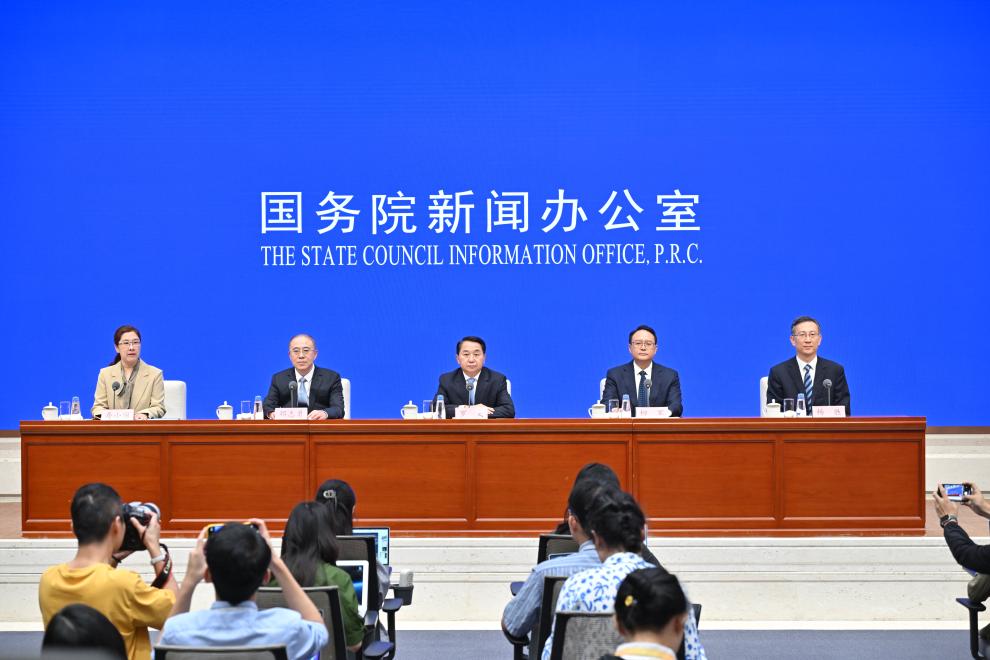
国家市场监管总局:35项中国汽车标准被多国采用
Zhong Guo Xin Wen Wang· 2025-09-04 12:40
Core Viewpoint - The Chinese National Market Regulation Administration has reported that 35 Chinese automotive standards have been adopted by multiple countries, highlighting the increasing international acceptance of Chinese standards in the automotive sector, particularly in electric vehicles [1][2]. Group 1: Adoption of Standards - 35 Chinese automotive standards have been adopted by countries such as Chile, Ecuador, and Nigeria, covering areas like safety, battery systems, and charging devices [1]. - The growing demand for Chinese standards from trade partners is driven by the rising popularity of Chinese electric vehicles in overseas markets [1]. Group 2: Role in Belt and Road Initiative - The standardization efforts are playing a foundational and leading role in promoting the Belt and Road Initiative, facilitating international trade in electric vehicles [1][2]. - The Chinese market regulation department has achieved significant results by promoting "soft connectivity" of standards to enhance "hard connectivity" and "heart connectivity" [1]. Group 3: International Standardization - China has led the development of international standards in smart manufacturing, including large-scale personalized customization and industrial network buses, which have been adopted by multiple countries [2]. - The establishment of a specialized group for civil aviation standards between China and Russia has resulted in the mutual recognition of 307 civil aviation standards, laying a solid foundation for technical exchanges and cooperation in the aviation sector [2]. Group 4: Future Plans - The market regulation department plans to accelerate the "soft connectivity" of standards along the Belt and Road, focusing on the internationalization needs of advanced manufacturing industries [2]. - There will be an emphasis on deepening standardization cooperation with Belt and Road countries, increasing the supply of Chinese standards in foreign languages, and implementing standardization capacity-building projects and overseas application pilot projects [2].
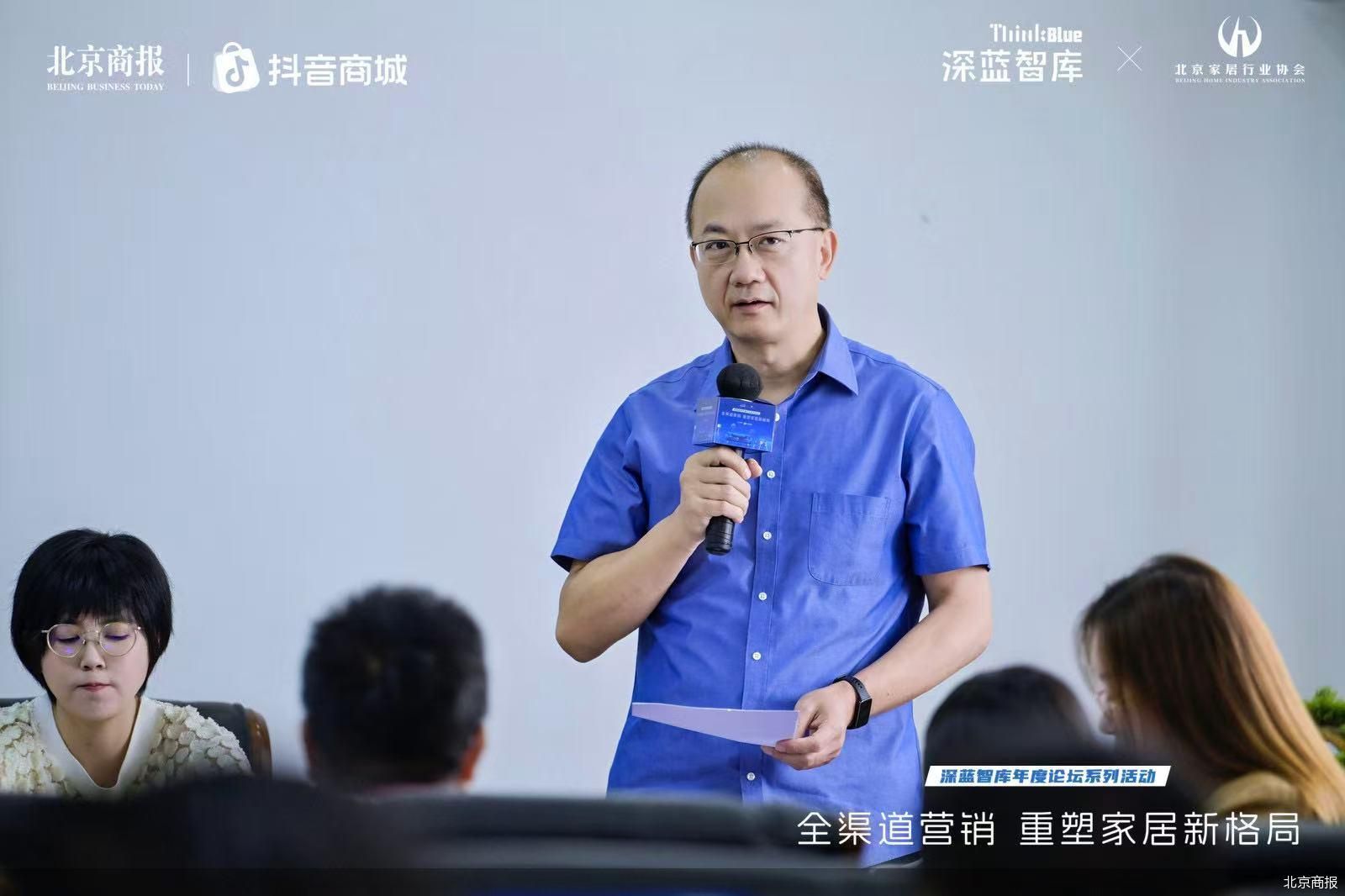
2025北京商报家居智库沙龙丨北京商报社社长兼总编辑李波涛:未来家居行业竞争将回归商业本质,标准化将是主要方向之一
Bei Jing Shang Bao· 2025-08-29 21:52
Group 1 - The annual forum by Deep Blue Think Tank focused on "Omni-channel Marketing Reshaping the New Landscape of Home Furnishing" and discussed how home furnishing companies can leverage omni-channel strategies and AI technology to achieve precise positioning and differentiated competition in the context of the "consumption grading" era [1][3] - The home furnishing industry is experiencing rapid growth due to market policy benefits and demand explosions, but it has not fully entered standardization, which affects consumer purchasing decisions [3] - Future competition in the home furnishing industry will return to the essence of business, with standardization as a primary direction, emphasizing quality as a core metric similar to the "good housing" era in real estate [3] Group 2 - The characteristics of "multi-fast-good-economical" consumption and the head effect in the market will become more pronounced as the standardization process in the home furnishing industry advances [3] - The industry faces challenges with non-standard products, which represent a shortcoming and pain point, indicating that where there are pain points and demands, there are opportunities [3] - The standardization in the home furnishing industry will facilitate technological applications and scale effects, significantly reducing marginal costs and further consolidating the advantages of leading enterprises [3]

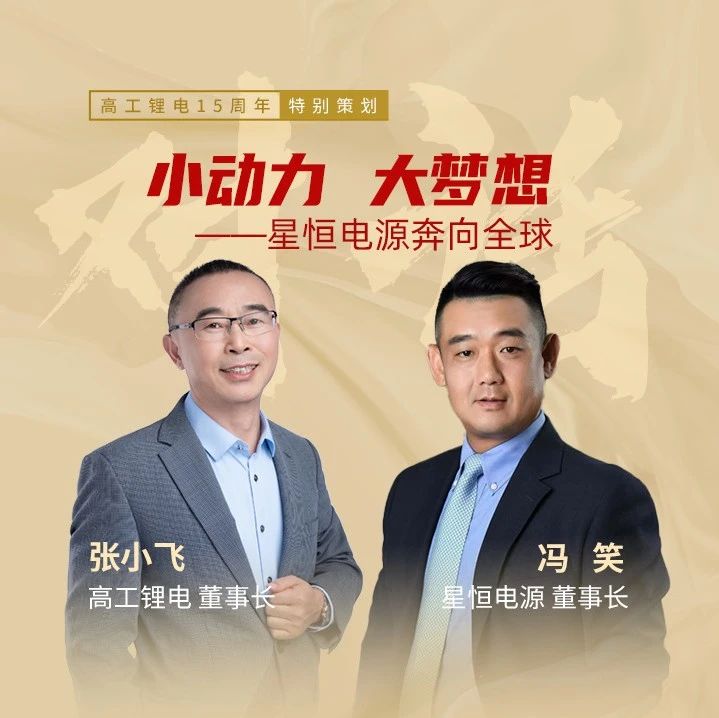
高工锂电15周年策划|飞哥对话冯笑:小动力大梦想 星恒电源奔向全球
高工锂电· 2025-08-28 10:25
Core Viewpoint - The article highlights the strategic determination and innovative approach of Xingheng Power, a pioneer in the lithium battery industry, which has successfully carved out a global presence in the "small power" sector while others focus on electric vehicles [1][4]. Group 1: Company Strategy and Vision - Xingheng Power aims to serve a potential customer base of 2 to 2.5 billion people over the next decade, focusing on regions like South Asia, Africa, and South America [1][13]. - The company emphasizes the importance of independent thinking and innovation, advocating for a diverse industry rather than homogeneous competition [1][19]. - The strategic focus is on lightweight vehicles, including two-wheelers and three-wheelers, as well as energy storage solutions, which are seen as critical areas for growth [6][10]. Group 2: Market Position and Achievements - Xingheng Power has achieved significant sales milestones, with a reported shipment of 33 million sets of lightweight vehicle batteries by the end of last year, with aspirations to reach 100 million sets in three years [10]. - The company has successfully penetrated international markets, with notable sales in Colombia, indicating a growing global footprint [14]. Group 3: Innovation and Product Development - The company’s product design is user-centric, focusing on standardization to enhance efficiency and reduce costs, which is crucial for meeting diverse market needs [10][19]. - The vision includes the future of batteries as assets rather than mere consumables, promoting the idea of battery banks and standardized products for various applications [8][19]. Group 4: Industry Perspective - The article discusses the broader implications of electrification, suggesting that electricity will become the most accessible and efficient energy source, impacting various sectors beyond just transportation [16][19]. - The narrative emphasizes the need for continuous innovation and adaptation in the battery industry, highlighting the importance of understanding market dynamics and consumer needs [19][21].
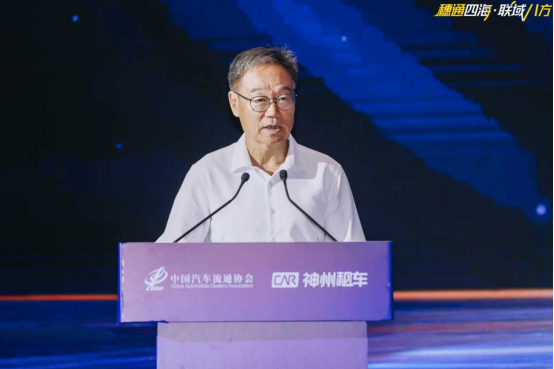
神州租车承办首届中国二手车出口大会:以生态之力,让“中国二手车”走向全球
Xiao Fei Ri Bao Wang· 2025-08-26 09:37
Core Insights - The 2025 China Used Car Export Ecological Conference was held in Guangzhou, focusing on the development of China's used car export industry, with participation from various stakeholders including government representatives and industry leaders [1][2] - Shenzhou Car Rental, a leading domestic car rental company, has launched its used car export services and initiated the establishment of a "Used Car Source Export Working Group" to promote a new phase of ecological, standardized, and branded development in the used car export sector [1][2][3] Industry Overview - China's used car export market is experiencing unprecedented opportunities, with export volumes surpassing 400,000 units in 2024, covering over 160 countries and regions [2] - The current period is characterized as a golden opportunity due to favorable policies and market growth, supported by a vehicle ownership of over 400 million and a mature supply chain [2] Company Initiatives - Shenzhou Car Rental has established 29 domestic used car centers and 6 overseas direct sales offices, covering 4,000 vehicles available for sale across more than 30 countries in regions such as the Middle East and Latin America [3][4] - The company emphasizes the importance of reliable vehicle sources and transparent information to enhance global competitiveness, shifting focus from price advantages to brand trust [4] Collaborative Efforts - The "Used Car Source Export Working Group" was officially launched, comprising 23 manufacturers, 7 financial leasing institutions, and various rental and distribution companies, aiming to integrate resources and enhance collaboration in the used car export sector [8][10] - The working group will focus on establishing vehicle standards, ensuring product transparency, and building a comprehensive overseas service system to support sustainable export operations [10][12]
从质量安全到低碳转型 造纸标准化工作迈上新台阶
Xiao Fei Ri Bao Wang· 2025-08-26 03:04
Core Viewpoint - The Chinese paper industry is undergoing a significant transformation from scale expansion to quality and efficiency improvement, and from traditional manufacturing to green and intelligent manufacturing, supported by standardization efforts in the sector [1] Group 1: Industry Development - The Chinese paper industry plays a crucial role in the national economy, covering various fields such as publishing, industrial packaging, and consumer goods [1] - The National Paper Industry Standardization Technical Committee has been recognized for its advanced contributions to standardization in the light industry sector [1][2] Group 2: Standardization Efforts - The Paper Standardization Committee has established seven sub-committees focusing on key areas like printing paper, cultural office paper, packaging paper, and sanitary products [2] - A series of critical consumer product standards have been developed, including those for sanitary napkins and baby diapers, ensuring safety and quality for consumers [2] Group 3: Green Development Initiatives - The committee is actively promoting green and low-carbon development by creating standards for green product evaluation and carbon footprint accounting in the paper industry [3] - New standards have been established to guide enterprises towards sustainable production practices, including guidelines for carbon footprint calculation [3] Group 4: Standardization Achievements - As of now, the Paper Standardization Committee manages a total of 511 national and industry standards, which provide a solid foundation for the sustainable development of the industry [4] - The committee has made significant strides in international standardization, enhancing China's influence and participation in global standards [4] Group 5: Future Outlook - The Paper Standardization Committee aims to continue improving the standard system, enhancing international standardization levels, and leading the industry towards sustainable development [5]
新华财经丨市场监管总局:“十四五”期间 国家标准总数已达到4.7万余项
Xin Hua She· 2025-08-23 03:29
Core Viewpoint - The article discusses the efforts of the State Administration for Market Regulation in China to enhance the standardization system to support high-quality development, focusing on faster, better, stronger, and more open standards. Group 1: Faster Standard Supply - The average development cycle for national standards has been reduced from 36 months to 16 months [1] - Implementation of the action plan to upgrade traction equipment and promote the replacement of old consumer goods has led to the release of important standards for electric vehicles and home appliances [1] Group 2: Better Standard Quality - Over 57% of important technology project standards have been established [2] - More than 2400 national standards have been released in key areas such as artificial intelligence and smart manufacturing [2] - The revised energy consumption limit standard for crude steel is expected to save over 10 million tons of standard coal annually [2] Group 3: Stronger Standard Effectiveness - More than 500 mandatory national standards related to safety production and consumer product safety have been introduced [2] - In the first half of the year, there was a 131% increase in newly established mandatory national standards and a 58% increase in newly published standards [2] - The formaldehyde release limit for man-made boards has been upgraded to E0 level, meeting the strictest global requirements [2] Group 4: More Open Standard Cooperation - During the 14th Five-Year Plan period, China has led the development of 1079 international standards and adopted over 6900 international standards [2] - More than 500 standards have achieved mutual recognition between China and other countries [2] - Chinese standards are being used in several international railway cooperation projects and agricultural standardization demonstration zones in Africa [2]
泰安|探秘泰安智能工厂“标准密码”
Da Zhong Ri Bao· 2025-08-22 01:44
Group 1 - The project for the construction of a national-level intelligent factory for power distribution and control equipment has been approved, marking a new journey for intelligent transformation in Tai'an's manufacturing industry [2] - The project integrates advanced technologies such as artificial intelligence, 5G, big data, and edge computing, establishing a standardized framework for the entire lifecycle of products from design to after-sales service [2][3] - The Tai'an Market Supervision Administration views standardization as a core engine driving high-quality development in the manufacturing sector, promoting a transition towards high-end, intelligent, and green manufacturing [2] Group 2 - The company involved in the intelligent green brewing project has achieved significant technological innovations and has led or participated in the formulation of 19 national and industry standards, filling gaps in the liquid food intelligent equipment industry [3] - The collaborative mechanism of "government guidance, enterprise leadership, and industry collaboration" has been established to promote standardization efforts, enhancing the overall ecosystem for industrial upgrading in Tai'an [3][4] - Shandong Lude New Materials Co., Ltd. has significantly improved production efficiency by 44.22%, reduced R&D cycles by 33.02%, and increased storage utilization by over 60% through the implementation of a comprehensive standard system [4]
铂爵旅拍的敌人,不是结婚率
创业邦· 2025-08-19 03:17
Core Viewpoint - The crisis faced by Bojue Travel Photography is attributed not only to macroeconomic factors but also to inherent issues within the business model, particularly its inability to scale effectively in a non-standardized service industry [5][8][10]. Group 1: Business Overview - Bojue Travel Photography was founded in 2011 by Xu Chunsheng, who previously operated two photography studios and identified the travel photography market as a blue ocean opportunity [7]. - At its peak, the company expanded globally and sponsored various reality shows, significantly increasing its brand visibility [8]. - However, since 2020, the company has experienced prolonged losses, leading to its eventual collapse, indicating that a blue ocean market does not guarantee success [8][10]. Group 2: Business Model Challenges - The travel photography business is asset-heavy, requiring significant investment in locations, equipment, and personnel, which increases operational costs [10]. - The nature of wedding photography is low-frequency and non-recurring, making it a one-time service with high customer acquisition costs, further complicating profitability [10][12]. - The lack of standardization in services leads to difficulties in scaling, as each customer has unique preferences that cannot be easily standardized [11][12]. Group 3: Comparison with Other Models - Other service industries, such as medical aesthetics, have found ways to standardize processes, allowing for scalability, unlike the travel photography sector [14][22]. - Companies like Flytographer have adopted a platform model, matching photographers with clients without incurring high operational costs, demonstrating a more sustainable business approach [22][23].

铂爵旅拍的敌人,不是结婚率
远川研究所· 2025-08-18 13:10
Core Viewpoint - The article discusses the downfall of Bojue Travel Photography, attributing its failure to a combination of macroeconomic factors and inherent business model flaws, particularly the challenges of scaling a non-standardized service in a declining market [4][7][10]. Group 1: Company Overview - Bojue Travel Photography was founded by Xu Chunsheng in 2011, focusing on wedding photography and expanding into personal and family portraits [6]. - At its peak, the company had a global presence and significant marketing efforts, including sponsorship of various reality shows [6][7]. - The company faced prolonged losses starting in 2020, leading to its eventual collapse after five years of financial struggles [7]. Group 2: Business Model Challenges - The travel photography business is likened to a travel agency but faces unique challenges, such as high asset costs and low repeat purchase rates [9][10]. - The business model requires significant investment in locations, equipment, and personnel, with one photography base in Xiamen costing around 80 million [9]. - The nature of wedding photography as a one-time service leads to high customer acquisition costs and limits scalability [9][10]. Group 3: Standardization Issues - The article emphasizes the low standardization in the travel photography industry, making it difficult to create a consistent service model [11][13]. - Unlike other service industries, travel photography lacks a fixed process, leading to variability in customer satisfaction and outcomes [12][13]. - The challenges of standardization are highlighted through comparisons with other industries, such as medical services, where standardization can lead to scalability [14][16]. Group 4: Comparison with Competitors - The article contrasts Bojue with competitors like Flytographer, which operates on a platform model, matching photographers with clients without incurring high operational costs [20][21]. - Flytographer's business model allowed it to remain profitable during the pandemic, showcasing a more sustainable approach compared to Bojue's traditional model [21].

小菜园(00999):高性价比中餐龙头,门店扩张进行时
SINOLINK SECURITIES· 2025-08-13 09:25
Investment Rating - The report initiates coverage with a "Buy" rating for the company [3] Core Views - The company is positioned as a high-cost-performance leader in the mass-market Chinese dining sector, with a robust growth trajectory and a focus on standardization and cost efficiency [1][2] - The mass-market Chinese dining industry is projected to grow at a CAGR of 8.9% from 2023 to 2028, with the company expected to capitalize on this trend through its expansion strategy [1][12] - The company has established a strong supply chain and operational standardization, which enhances its competitive edge in the market [2][46] Summary by Sections Company Overview - The company went public on December 20, 2024, raising HKD 790 million by issuing 101 million shares at an IPO price of HKD 8.5 [1] - As of 2024, the company operates 667 stores, with revenue of CNY 5.21 billion, reflecting a year-on-year growth of 14.5%, and a net profit of CNY 581 million, up 9.1% [1][22] Industry Trends - The mass-market Chinese dining sector is valued at approximately CNY 40 trillion, with a significant shift towards cost-effective dining options [12][15] - The chain restaurant penetration rate in China is expected to rise from 15% in 2020 to 23% in 2024, indicating a trend towards standardization in the industry [1][15] Competitive Advantages - The company targets the CNY 50-100 price range, aligning with consumer preferences for value dining, and has a strong operational model that allows for rapid store expansion [2][36] - The average investment payback period for new stores is 13.8 months, shorter than the industry average of 18 months, indicating strong growth potential [2][49] - The company has built a comprehensive supply chain system, including a central kitchen and 14 warehouses, enhancing its operational efficiency [2][46] Growth Outlook - The company is expected to open 130, 160, and 175 new stores in 2025, 2026, and 2027 respectively, with a theoretical maximum of 1,810 stores under neutral assumptions and 4,308 under optimistic scenarios [2][3] - Revenue projections for 2025, 2026, and 2027 are CNY 62.6 billion, CNY 76.8 billion, and CNY 92.9 billion, respectively, with corresponding net profits of CNY 7.2 billion, CNY 9.1 billion, and CNY 11 billion [3][6] Financial Projections and Valuation - The company is projected to achieve an EPS of CNY 0.61, CNY 0.78, and CNY 0.94 for 2025, 2026, and 2027, respectively, with a target price of HKD 18.07 based on a 20X PE for 2026 [3][6]