
经济转型

Search documents
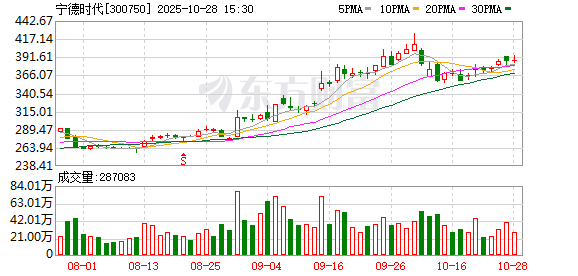
公募最新前十大重仓股亮相 宁德时代重返榜首
Zheng Quan Shi Bao· 2025-10-28 18:17
Core Insights - The third quarter report of public funds reveals a clear investment direction towards key sectors representing future productivity, driven by AI and energy revolution [3] - Ningde Times has regained its position as the top holding stock among public funds, surpassing Tencent Holdings [3][4] - The top ten heavy stocks reflect significant increases in sectors such as new energy, AI, internet, non-ferrous metals, and biomedicine [5] Group 1: Top Holdings - Ningde Times is the largest holding stock with a market value of 75.881 billion yuan, an increase of 23.852 billion yuan from the previous quarter, with 1,408 funds holding it [3][4] - Tencent Holdings is now the second-largest holding stock with a market value of 69.938 billion yuan, increasing by 10.788 billion yuan [3] - New entrants to the top ten include Zhongji Xuchuang and Industrial Fulian, ranking fourth and seventh respectively, with market values of 55.813 billion yuan and 36.343 billion yuan [4] Group 2: Investment Trends - Public funds have significantly increased their holdings in leading companies within new energy, AI, internet, non-ferrous metals, and biomedicine sectors [5] - Zhongji Xuchuang was the most favored stock, with an increase of 40.174 billion yuan in holdings, bringing its total market value to 55.813 billion yuan [5] - Other notable stocks with over 10 billion yuan increases in holdings include Alibaba, Ningde Times, and Tencent Holdings [5] Group 3: Reduced Holdings - Traditional sectors such as home appliances and banking have seen significant reductions in holdings, with companies like Xiaomi, Midea Group, and China Merchants Bank being the most affected [6] - Xiaomi Group experienced the largest reduction in holdings, with a decrease of 10.834 billion yuan [6] - Other companies that faced substantial reductions include Midea Group and SF Express, with decreases of 8.851 billion yuan and 7.480 billion yuan respectively [6]







国泰海通|策略:中国“转型牛”:改革迈向新高度——2025金融街论坛金融政策和资本市场改革点评
国泰海通证券研究· 2025-10-28 12:00
Group 1 - The article emphasizes the upcoming financial policy and capital market reforms in China, which are expected to further promote economic transformation and enhance the perception of Chinese assets [2][3]. - The Shanghai Composite Index is approaching 4000 points, indicating a "transformation bull" market in China, which is becoming an increasingly important asset in global allocations [2]. - The 20th Central Committee's Fourth Plenary Session reaffirmed the focus on economic development, serving as a cornerstone for capital market valuations [2]. Group 2 - The People's Bank of China announced the resumption of public market treasury bond trading, signaling a shift towards substantial monetary policy easing and a decrease in risk-free interest rates [3]. - The introduction of the "Double Innovation" reform and the new refinancing framework is expected to create a virtuous cycle between capital markets, economic transformation, and technological advancement [4]. - The establishment of the Sci-Tech Innovation Board's growth tier and the reform of the ChiNext Board will support economic transformation and align with national strategies [4]. Group 3 - Strict regulatory measures and the establishment of market stabilization mechanisms are aimed at improving the investability of Chinese assets and enhancing resilience against risks [5]. - The article highlights the potential for a diverse market with various sectors, including technology, new materials, and financial stability, to experience revaluation [5]. - The focus on technology growth sectors such as internet, TMT, new energy, and innovative pharmaceuticals is noted as a key driver for the current market trend [5].


杨德龙:新质生产力全面纳入“十五五”规划 本轮科技牛行情有望延续
Xin Lang Zheng Quan· 2025-10-25 12:59
Core Viewpoint - The 20th Central Committee's Fourth Plenary Session approved the guidelines for the 15th Five-Year Plan, emphasizing high-quality development, technological self-reliance, and significant improvements in social civilization and living standards, with a nominal GDP growth rate of approximately 5.4% over the next decade [1][2]. Economic Development Goals - The main objectives for the 15th Five-Year Plan include achieving significant results in high-quality development, enhancing technological independence, deepening reforms, improving social civilization, and advancing the construction of a beautiful China [1][2]. - By 2035, the goal is to elevate China's economic, technological, and national strength significantly, with per capita GDP reaching the level of moderately developed countries [1]. Capital Market Implications - The 15th Five-Year Plan signals positive developments for the capital market, reinforcing investor confidence in China's long-term economic growth and potentially extending the current bull market [2]. - The plan outlines a clear economic development path for the next five years, which is expected to attract more capital into the technology sector, further driving the ongoing technology bull market [2]. Focus on Innovation Industries - The plan highlights the importance of nurturing emerging industries, with a target for the "three new" economy's contribution to GDP exceeding 18% by 2024 [3]. - Key strategic emerging industries include new energy, new materials, aerospace, and low-altitude economy, with the potential to create several trillion-yuan markets [3]. - Future industries such as quantum technology, biomanufacturing, hydrogen energy, and 6G are identified as new growth points for the economy [3]. Market Dynamics and Investment Opportunities - The current market is experiencing significant differentiation, with technology innovation sectors seeing substantial gains while traditional sectors lag behind [4]. - The ongoing economic transition is expected to reduce opportunities in traditional industries, which may face overcapacity and operational difficulties [4]. - The rapid growth of household deposits, exceeding 160 trillion yuan, and declining interest rates on bank deposits are likely to drive investors towards the capital market in search of higher returns [5]. Conclusion - The 15th Five-Year Plan is set to inject new momentum into economic development, with a focus on innovation and technology, while traditional sectors may face challenges [4][5].
三季度信贷投向显韧性 普惠、科创、消费构筑金融支持新格局
Jing Ji Guan Cha Wang· 2025-10-24 10:53
Core Insights - The People's Bank of China reported a slowdown in the growth of RMB loans, with a balance of 270.39 trillion yuan at the end of Q3 2025, reflecting a year-on-year growth of 6.6%, down from 7.1% at the end of Q2 [1] - The report highlights a significant transformation in the credit structure, with funds being directed towards key areas of the national economy and weaker sectors [1] Group 1: Inclusive Micro Loans - The balance of inclusive micro loans reached 36.09 trillion yuan by the end of Q3, showing a year-on-year growth of 12.2%, slightly down from 12.3% in Q2 [2] - In Q3, 3.15 trillion yuan was added in new inclusive micro loans, with 520 billion yuan added in Q3 alone, lower than the approximately 730 billion yuan added in Q2 [2] - The focus of inclusive micro loans is shifting from rapid expansion to stable coverage, emphasizing service depth and accessibility [2] Group 2: Technology Loans - By the end of Q3, 27.54 million technology SMEs received loan support, with a loan acquisition rate of 50.3%, up from 50% in Q2 [3] - The loan balance for technology SMEs reached 3.56 trillion yuan, with a year-on-year growth of 22.3%, slightly down from 22.9% in Q2 [3] - The number of high-tech enterprises receiving loans was 26.66 million, maintaining a stable loan acquisition rate of 57.6% [3] Group 3: Non-Housing Consumer Credit - The balance of household loans in both domestic and foreign currencies was 83.94 trillion yuan, with a year-on-year growth of 2.3%, down from 3% in Q2 [4] - Consumer loans excluding housing reached 21.29 trillion yuan, growing by 4.2% year-on-year, with 3.062 trillion yuan added in the first three quarters [4] - The balance of household operating loans was 25.21 trillion yuan, reflecting a year-on-year growth of 4.8%, indicating active financing demand from small business operators [4] Group 4: Structural Changes in Credit - The report indicates a structural differentiation in credit data, illustrating the macro picture of China's economic transformation [4] - As traditional credit engines slow down, sectors like inclusive finance, technology, and green loans are expected to take on more responsibility in supporting the real economy [4] - The transition in credit structure is seen as a result of policy guidance and a natural selection of market dynamics, moving from asset collateral logic to value creation logic [4] Group 5: Challenges and Future Outlook - The adjustment in inclusive loan growth suggests emerging sustainability boundaries, while technology loans face long-term risk pricing challenges [5] - The ongoing contraction in real estate loans and the slowdown in traditional infrastructure loans are reshaping the entire credit creation mechanism [5] - Future policy design should focus on institutional building and long-term mechanisms to ensure financial resources are efficiently directed towards the real economy [6]
卡尼:加拿大计划到2035年将对非美国市场的出口额提高一倍
Huan Qiu Shi Bao· 2025-10-23 22:45
Core Points - Canada is shifting its trade focus away from the United States, aiming to double exports to non-U.S. markets by 2035, targeting an additional trade net benefit of 300 billion CAD [1][2] - The Canadian economy is facing challenges due to U.S. tariffs, particularly in the aluminum, steel, automotive, and lumber sectors, with over 75% of Canadian exports currently directed to the U.S. [1][2] - The Canadian GDP contracted by 0.4% in Q2 due to declining exports and investments, while the unemployment rate rose to 7.1%, the highest in over four years [2] Trade Strategy - Canada has signed a free trade agreement with Indonesia and established foundational agreements with the UAE, EU, and Germany in various sectors [2] - The Canadian government is also looking to strengthen ties with global powers like India and China while deepening relationships with traditional allies [2] Economic Outlook - The Canadian government plans to announce a new budget on November 4, which will include strategies for climate competitiveness, new immigration plans, and international talent attraction [2] - Prime Minister Carney warned that the global competition is intensifying, and immediate action is necessary to avoid increasing pressure on the economy [2]
加拿大计划扩大对非美市场出口以减少对美依赖
Xin Hua She· 2025-10-23 06:16
Core Viewpoint - Canada plans to double its exports to non-U.S. markets over the next decade to reduce reliance on the U.S. economy [1] Group 1: Economic Strategy - Canadian Prime Minister Carney stated that the nature of trade relations with the U.S. is changing amid a more turbulent and competitive global environment [1] - The Canadian government is preparing to build a stronger economy and is calling on Canadians to be ready for upcoming challenges [1] Group 2: Trade Relations - Since the beginning of the year, Canada and the U.S. have had multiple disputes over tariff issues, indicating a shift in their traditional trade relationship [1] - Carney emphasized that Canada must fundamentally reshape its economy in response to escalating U.S. tariffs [1] Group 3: Infrastructure Projects - In September, the Carney government officially announced the first batch of key national projects, which include energy, minerals, and port construction [1] - The plan aims to boost the domestic economy through large-scale infrastructure development while reducing dependence on the U.S. [1]
第十五届江苏—澳门·葡语国家工商峰会在澳门开幕
Xin Hua Ri Bao· 2025-10-22 23:09
Core Points - The 15th Jiangsu-Macau and Portuguese-speaking Countries Business Summit opened in Macau, attended by key officials from Jiangsu Province and Macau [1] - Jiangsu's GDP is expected to reach a new milestone during the 14th Five-Year Plan, indicating a shift towards a dual-directional opening and a proactive role in global supply chains [1] - The summit emphasized the importance of enhancing industrial and technological cooperation, trade and investment exchanges, and cultural interactions between Jiangsu and Macau [1] Group 1 - Jiangsu Province is set to achieve its fourth trillion-yuan GDP milestone during the 14th Five-Year Plan [1] - The region is transitioning from a primarily eastward opening to a balanced approach that includes both east and west [1] - There is a focus on moving from a commodity and factor flow-based opening to a more institutionalized form of openness [1] Group 2 - Five cooperation projects in legal services, health care, sports, new energy, and tourism were signed during the summit [1] - Various entities, including the Jiangsu Provincial Financial Office and Huai'an City, promoted Jiangsu's modern financial industry and other sectors [1]
9月经济数据点评:经济分化加大,稳预期需加力
Huachuang Securities· 2025-10-21 09:50
Economic Growth Perspective - In Q3, the actual GDP growth rate was 4.8%, while the nominal GDP growth rate was 3.7%[5] - Industrial output growth was 6.2%, while demand growth (including retail, fixed investment, and exports) was 2.98%, resulting in a growth rate difference of 3.2%[5] - Export growth was 7.1%, compared to a combined growth of 1.92% for retail and fixed investment, leading to a difference of 5.18%[5] Consumer Spending Insights - The combined growth rate for travel and policy-driven replacement consumption was 8.6%, while essential consumption categories like food and clothing saw a growth rate of only 0.3%[5] - The consumer spending tendency in Q3 was 68.1%, down from 68.9% in the same period last year, indicating a decline in consumer confidence[48] Investment Trends - Fixed asset investment growth was -6.6% in Q3, a significant drop from the previous value of 1.8%[43] - Equipment investment grew by 14%, contrasting with a -4.1% decline in construction investment, highlighting a shift towards new economic sectors[15] Market Expectations and Policy Recommendations - To stabilize market expectations, it is crucial to maintain confidence in long-term economic transformation and short-term price recovery, with a target Q4 growth rate of around 4.5% to meet the annual goal[4] - The need for further reduction in mortgage rates is emphasized, as the cumulative decline in second-hand housing prices was 3.93% while mortgage rates only decreased by 3 basis points[8] Employment and Labor Market - The total number of rural laborers working outside their home areas reached 19.187 million, with a year-on-year growth of 0.9%[52] - The urban survey unemployment rate was 5.2%, showing a slight decrease from the previous month[56]
温差与转型共存(国金宏观孙永乐)
雪涛宏观笔记· 2025-10-21 08:01
Core Viewpoint - The article discusses the disparity between macroeconomic data and microeconomic experiences, highlighting the ongoing economic transformation in China and its implications for growth and distribution [2][10]. Economic Growth Data - In Q3, GDP at constant prices grew by 4.8% year-on-year, down from 5.2% in the previous quarter, while nominal GDP growth was 3.7%, down from 3.9% [4]. - To achieve the annual growth target of 5%, a Q4 GDP growth of 4.6% is required [4]. Investment and Consumption Trends - Q3 saw significant declines in fixed asset investment, retail sales, and exports, with respective growth rates dropping to -6.6%, 3.4%, and 7% [4]. - The disparity between GDP growth and the decline in investment and consumption indicates a "temperature difference" in economic performance [5]. Industrial and Service Sector Performance - Industrial output increased by 5.8% year-on-year in Q3, with high-tech manufacturing growing by 9.6%, outpacing overall industrial growth [8][9]. - The service sector also showed resilience, with a 5.4% increase in value added, particularly in information technology and business services [9]. Consumption and Investment Discrepancies - Retail sales growth fell by 2 percentage points in Q3, but service consumption remained stable, contributing 2.7 percentage points to GDP growth [14]. - Fixed asset investment declined by 6.6%, yet capital formation still positively impacted GDP growth by 0.9 percentage points [14]. Future Economic Outlook - Despite potential declines in Q4 growth due to high base effects, effective policy measures are expected to support the achievement of the 5% growth target [16]. - The focus for Q4 will be on boosting service consumption and fixed asset investment, with significant financial support anticipated [16][17].

生产强于需求,转型与温差共存
SINOLINK SECURITIES· 2025-10-21 05:58
Economic Growth - The cumulative growth rate for the first three quarters is 5.2%, establishing a solid foundation for achieving the annual target of 5%[3] - The minimum GDP growth requirement for the fourth quarter is set at 4.6% to meet the annual goal[3] Policy Measures - Continuous and stable policies will be maintained, with potential for monetary policy adjustments such as interest rate cuts if pressures increase[3] - Fiscal policy may involve increasing the scale of policy financial tools and utilizing government bond balances to support growth[3] GDP Performance - In Q3, GDP at constant prices grew by 4.8% year-on-year, down from 5.2%, while nominal GDP growth was 3.7%, also lower than the previous 3.9%[5] - Q3 fixed asset investment (FAI) saw a significant decline of 6.6%, while retail sales growth dropped to 3.4%[5] Economic Disparities - The gap between constant price GDP growth and nominal GDP growth indicates a disparity in economic performance, with nominal GDP growth at its lowest for 2023[8] - The GDP deflator index has shown negative growth for ten consecutive quarters, reflecting ongoing price pressures in the economy[8] Sectoral Insights - Industrial value added increased by 5.8% year-on-year in Q3, with high-tech manufacturing growing by approximately 9.6%[12] - Service sector value added rose by 5.4%, with information technology services leading at 11.2% growth[12] Investment Dynamics - Despite a decline in fixed asset investment, capital formation contributed positively to GDP growth, adding 0.9 percentage points[19] - The performance of intangible asset investments, particularly in software, has been relatively strong, benefiting from advancements in artificial intelligence[19] Future Outlook - Economic growth may slow in Q4 due to high base effects, particularly in consumer goods, with automotive retail showing negative growth[21] - Policy efforts will focus on boosting service consumption and fixed asset investment, with an estimated 2.2 percentage point support from new fiscal measures[21] Risk Factors - Risks include US-China trade tensions, tariff increases, and global supply chain adjustments, which may impact exports and corporate profits[4] - Ongoing geopolitical changes and international market fluctuations could affect commodity prices and related industries[4]