
自研芯片

Search documents
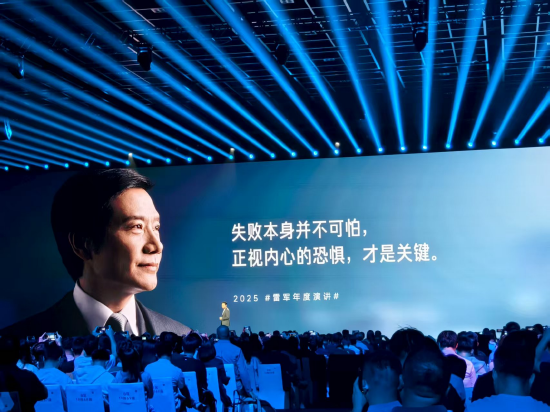
雷军谈自研芯片命名:我建议还叫松果,大家坚决不同意,最后起了玄戒
Xin Lang Ke Ji· 2025-09-25 11:30
Core Viewpoint - Xiaomi's Chairman and CEO Lei Jun emphasized the challenges of developing self-researched chips, particularly in overcoming the failures experienced with the Pinecone project, highlighting the importance of confronting internal fears [2] Group 1: Chip Development - Lei Jun stated that the difficulty in developing self-researched chips lies not only in the technology but also in the ability to recover from past failures [2] - The project was initially suggested to retain the name "Pinecone," but the team ultimately decided on "Xuanjie," symbolizing a serious commitment to chip development [2]


雷军谈造芯:至少投入五百亿
Hua Er Jie Jian Wen· 2025-09-25 11:18
Core Viewpoint - Xiaomi's founder Lei Jun emphasized that developing chips is essential for the company's success, committing to at least ten years of investment and a budget of 50 billion yuan for self-developed mobile SoCs [1] Group 1 - The company plans to invest 50 billion yuan in self-developed mobile SoCs over the next decade [1] - Lei Jun highlighted the importance of chips in Xiaomi's growth strategy [1] - The commitment to a long-term investment reflects the company's dedication to innovation in the semiconductor space [1]
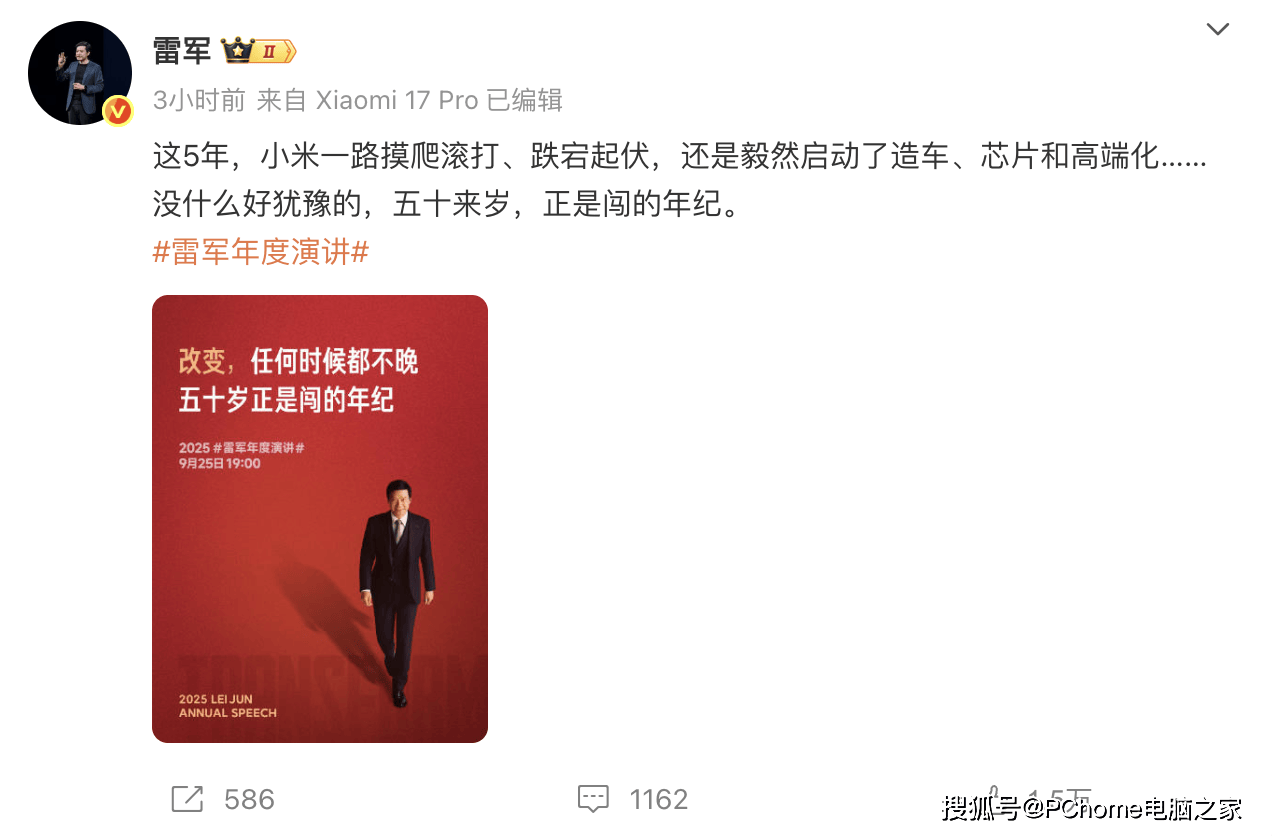
雷军称五十来岁正是闯的年纪:改变,任何时候都不晚
Sou Hu Cai Jing· 2025-09-25 03:34
Core Insights - Xiaomi's founder and CEO Lei Jun emphasizes the company's determination to innovate and expand into new sectors such as automotive, chips, and high-end products during his upcoming annual speech [1][4] Group 1: Automotive Sector - Xiaomi's first vehicle, the SU7, is set to begin deliveries in April 2024, with a target of 135,000 units for the year, exceeding initial goals [8] - The company plans to launch its second model, the YU7, in 2025, aiming for a delivery target of 300,000 units [8] Group 2: Chip Development - Xiaomi has invested over 13.5 billion in research and development for its chip technology, including the launch of the self-developed 3nm SoC chip "Xuanjie O1" in 2025 [8] - The company has made significant progress in various chip segments, including the "Pengpai C1" and "P1" chips [8] Group 3: High-End Market Strategy - Xiaomi's high-end product strategy has shown remarkable results, with sales of models priced above 4,000 yuan increasing by 48% year-on-year [8] - Flagship products like the Xiaomi 15 Ultra have gained a foothold in the premium market through advanced technologies such as satellite communication and Leica imaging [8]
如何应对苹果自研基带芯片?高通中国区董事长孟樸:加强与安卓厂商合作、多元化布局
Mei Ri Jing Ji Xin Wen· 2025-09-24 09:20
Core Insights - Apple is making significant progress in developing its own baseband chips, having introduced the self-developed C1 chip in the mid-range iPhone 16e and the upgraded C1X in the newly released iPhone Air, indicating a gradual reduction in reliance on Qualcomm for baseband technology [1][2] - Qualcomm's strategy in response to Apple's move includes strengthening partnerships with Android manufacturers to compensate for the loss of iOS business and diversifying its operations beyond mobile phones into sectors like automotive, IoT, and PCs [1] Group 1 - Apple has successfully integrated its self-developed baseband chips into its latest iPhone models, marking a strategic shift away from Qualcomm [1] - Qualcomm acknowledges the impact of Apple's self-developed chips on its business, stating that its future plans post-2027 do not include any business with Apple [1] - The baseband chip technology is characterized by high technical barriers, with only a few manufacturers globally, including Qualcomm, MediaTek, Samsung, Unisoc, and Intel, with Qualcomm being the dominant player [2]


蔚来ES8重塑价格体系 “不击穿何以涅槃”?
2 1 Shi Ji Jing Ji Bao Dao· 2025-09-22 23:18
Core Viewpoint - NIO's aggressive pricing strategy for the new ES8 is a calculated decision aimed at revitalizing the brand and achieving profitability by Q4 2025, amidst a significant transformation within the company [1][5]. Pricing Strategy - The new ES8's starting price is set at 298,800 yuan, nearly 100,000 yuan lower than the second-generation model, reflecting a strategic shift in pricing [1]. - CEO Li Bin attributes this pricing decision to advancements in technology, scale effects, and self-developed components that have improved cost control [2]. Production and Delivery - NIO plans to increase the total production capacity of the new ES8 to 40,000 units this year, despite challenges in scaling production quickly due to equipment investment timelines [3]. - The demand for large SUVs in China is growing, with only 6.5% of total SUV sales being six-seat models, indicating significant market potential [3]. Market Trends - The shift in family structures in China, driven by policies encouraging larger families, is expected to sustain demand for spacious vehicles until around 2036 [3]. - Li Bin believes the era of extended-range large SUVs is fading, with a transition towards pure electric vehicles becoming more prominent [4]. Financial Health and Efficiency - NIO's stock has rebounded over 100% from its lows, reflecting improved market confidence following a recent $1.16 billion equity financing aimed at technology development and network expansion [5][6]. - The company's asset-liability ratio stands at 93.39%, indicating a critical need for capital [6]. Operational Improvements - NIO has implemented a new operational mechanism called Cell Business Unit (CBU) to enhance efficiency and accountability within the organization [6]. - In Q2, NIO's sales, general, and administrative expenses were 3.965 billion yuan, showing a year-on-year increase of 5.5% but a quarter-on-quarter decrease of 9.9% [7]. Research and Development - R&D expenses in Q2 were 3 billion yuan, down 6.6% year-on-year, reflecting improved return on investment as past investments begin to yield results [7][8]. - The new 900V high-voltage platform and lightweight design of the ES8's battery pack contribute to enhanced performance and cost efficiency [8]. Strategic Transition - The pricing of the ES8 signifies NIO's shift from a "high-end player" to a "mainstream brand," with the challenge of converting short-term market interest into sustainable profitability [8].

继续推荐互联网云+芯片,游戏板块,提示长视频政策底:——互联网传媒周报20250915-20250919-20250922
Shenwan Hongyuan Securities· 2025-09-22 10:10
Investment Rating - The industry investment rating is "Overweight," indicating that the industry is expected to outperform the overall market [11]. Core Viewpoints - The report emphasizes the importance of the internet cloud computing sector, driven by AI advancements and self-developed chips, which are expected to enhance profitability and avoid homogenization in competition [4][3]. - The report highlights the acceleration of revenue for domestic internet cloud companies in Q2 2025, driven by strong growth in AI-related computing power and token revenue [4]. - The gaming sector is also recommended, with expectations of continued growth in Q3 2025 due to new product contributions and a favorable valuation basis [4]. Summary by Sections Internet Cloud Computing - The report suggests that the domestic market is replicating the growth trajectory of North American cloud giants, with AI driving cloud demand and capital expenditures [4]. - Key players recommended include Alibaba, Tencent, Kingsoft Cloud, and Baidu, each with unique strengths in AI applications and self-developed chips [4]. Gaming Sector - The report anticipates a positive outlook for the gaming sector, with a projected PE range of 15-20x for 2026, indicating potential for valuation uplift [4]. - Recommended companies include Tencent, Giant Network, and Huya, with specific focus on their strong operational capabilities and IP value [4]. Long Video and Film Industry - The report notes a policy bottoming out for long video series, which is expected to improve project turnover and ROI for film investments [4]. - Companies like Mango TV and Reading Group are highlighted for their potential recovery in fundamentals [4]. Consumer Entertainment - Continued recommendations for consumer entertainment companies such as NetEase Cloud Music and Pop Mart, indicating growth potential in the sector [4].
一款印度特供机,揭示了自研芯片更多的意义
3 6 Ke· 2025-09-22 03:41
Core Points - Samsung has launched the Galaxy F17 in the Indian market, targeting entry-level users with competitive specifications for a budget smartphone [1][3] - The device supports up to 2TB of storage expansion and promises six major Android version updates, which is a significant advantage over many flagship devices [3] - Samsung's close collaboration with Google may provide it with advantages in accessing new Android system updates and customizing the software [3][5] Specifications - The Galaxy F17 features a 6.7-inch 90Hz display, up to 8GB RAM and 128GB storage, a 13MP front camera, and a rear camera setup of 50MP + 5MP + 2MP [1] - It is powered by Samsung's Exynos 1330 SoC, built on a 5nm process, featuring two 2.4GHz A78 cores and six 2.0GHz A55 cores, along with a Mali-G68MP2 GPU [5] - The Exynos 1330 is comparable to MediaTek's Dimensity 7025 and Qualcomm's Snapdragon 4 Gen1, indicating that it is not the lowest tier in the market [5] Industry Implications - The launch of the Galaxy F17 highlights the potential for self-developed chips to enhance the competitiveness of entry-level devices, challenging the notion that self-developed technology is only for high-end products [7][9] - The focus on long-term software support and system updates can significantly improve user experience and satisfaction, especially in the budget segment [9]

台积电前五大客户,将洗牌
半导体行业观察· 2025-09-22 01:02
Core Viewpoint - The global semiconductor industry is experiencing intense competition in AI applications, with predictions that TSMC's major customer rankings will change by 2026, while Apple remains the largest customer with significant revenue contributions [2][4]. Group 1: Customer Rankings and Revenue Contributions - In 2025, TSMC's top customers are expected to be Apple (25-27%), Nvidia (11%), MediaTek (9%), Qualcomm (8%), AMD (7%), Broadcom (7%), and Intel (6%). By 2026, the rankings will shift, with Apple (22-25%), Broadcom (11-15%), Nvidia (11%), MediaTek (9-10%), Qualcomm (8%), AMD (7%), and Intel (7%) [3][4]. - Apple is projected to contribute TSMC's highest revenue in 2024, estimated at NT$624.3 billion, marking a 14.2% year-on-year increase and accounting for 22% of total revenue [7][8]. - Broadcom is anticipated to rise rapidly, potentially becoming one of TSMC's top three customers by 2026, driven by partnerships with AI companies like OpenAI [4][5]. Group 2: Apple's Strategic Moves - Apple has reportedly secured over half of TSMC's 2nm production capacity for 2026, allowing it to leverage advanced manufacturing processes ahead of competitors [6][7]. - TSMC's 2nm production is set to begin in the second half of 2025, with Apple being the primary customer for the initial capacity [8]. - Apple's strategy of early reservations for advanced process technology is expected to provide a competitive edge, enhancing product performance and customer benefits [8]. Group 3: TSMC's Expansion and Production Capacity - TSMC is expanding its production capabilities in the U.S., with strong demand for advanced processes, including the A16 level, from American clients [10]. - The company plans to invest a total of $165 billion in new facilities, including six new wafer fabs and advanced packaging facilities [11]. - By 2028, TSMC's overseas production capacity is projected to account for 20% of total capacity, with a focus on meeting the strong demand from U.S. clients [10].


美联储降息光速"变脸"!降息利好为何成了利空?全球央行各走各
Sou Hu Cai Jing· 2025-09-20 15:25
Group 1 - The Federal Reserve's decision to cut interest rates by 25 basis points has led to unexpected market reactions, with the dollar index rising and gold prices falling, indicating a shift from "trading expectations" to "verifying facts" in asset pricing [1][3][10] - The Federal Open Market Committee (FOMC) signaled a less dovish stance, suggesting only one additional rate cut next year instead of the previously expected two to three, which has influenced market dynamics [3][19] - The yield curve has steepened, reflecting market concerns about "stagflation" risks, as short-term rates have decreased while long-term rates remain stable [5][19] Group 2 - The U.S. stock market exhibited divergent trends post-rate cut, with the Dow Jones Industrial Average rising while the Nasdaq and S&P 500 indices fell, highlighting a significant shift in capital flows [7][8] - Technology stocks faced selling pressure, particularly Nvidia, which dropped over 2.6% due to concerns about demand for its chips, while Chinese tech firms like Alibaba and Baidu saw substantial gains driven by their self-developed chips [8][13] - The Chinese concept stocks outperformed, with the Nasdaq Golden Dragon China Index rising 2.85%, led by Alibaba and Baidu, as investors focused on the narrative of self-research capabilities amid challenges faced by U.S. chip giants [13][15] Group 3 - Global central banks are responding differently to the Fed's rate cut, with Canada following suit while the European Central Bank and others maintain their rates, indicating a divergence in monetary policy based on regional economic challenges [5][17] - The Fed's chairman's remarks about a "slower, longer" rate-cutting path reflect a complex economic outlook, balancing employment support against inflation risks, which is influencing capital flows [19][21] - The current market environment necessitates a shift from sentiment-driven to performance-driven investment strategies, emphasizing the importance of understanding the underlying logic of different markets [21][23]



光大证券:维持百度集团-SW(09888)“买入”评级 云计算、智能驾驶、自研芯片打开估值空间
智通财经网· 2025-09-18 06:14
Group 1 - The core viewpoint of the report is that Baidu Group's revenue and profit forecasts for 2025-2027 have been raised due to a recovery in advertising demand and contributions from its subsidiaries, such as Luobo Kuaipao and Kunlun Chip [1][2] - Baidu's revenue projections for 2025, 2026, and 2027 are now estimated at 130.8 billion, 139.9 billion, and 148.3 billion yuan, reflecting increases of 1.3%, 2.9%, and 3.0% respectively compared to previous forecasts [1] - The Non-GAAP net profit forecasts for the same period have also been adjusted to 18.2 billion, 20.5 billion, and 23.0 billion yuan, with increases of 1.5%, 3.3%, and 3.3% respectively [1] Group 2 - Baidu's net cash flow remains healthy, supporting long-term investments in AI strategies [2] - Luobo Kuaipao has achieved breakeven in the Wuhan region, validating its business model and accelerating order growth, while also successfully expanding overseas [2] - The shipment volume of Kunlun chips has exceeded expectations, and the integration of self-developed large models, computing platforms, and chips enhances the cost-effectiveness of training and inference, contributing to the establishment of an AI ecosystem barrier [2]
