超额收益

Search documents
朝闻国盛:股票组合偏离度管理的几个方案:锚定基准做超额收益
GOLDEN SUN SECURITIES· 2025-05-23 01:49
Core Insights - The report emphasizes the importance of benchmark anchoring for generating excess returns in stock portfolios, suggesting that fund managers should focus on individual stock alpha while controlling style and sector deviations [4][5][6]. Financial Engineering - **Strategy 1: Core-Satellite Approach**: Allocate W% of the portfolio to benchmark anchoring and (1-W%) to active management, allowing for better tracking error control while maintaining excess returns. A suggested W parameter is 40% for specific performance metrics [4]. - **Strategy 2: Industry Neutrality**: Ensure the stock portfolio's industry allocation matches that of the benchmark (CSI 300), which can reduce tracking error and lower the probability of underperformance by over 10% compared to the benchmark [5]. - **Strategy 3: Style Neutrality**: Maintain the original stock selection but adjust weights to minimize style deviation from the benchmark, which can effectively lower tracking error at minimal cost [6]. - **Strategy 4: Barbell Strategy**: For funds with distinct style biases, a dual strategy combining growth and defensive investments can help reduce tracking error and volatility, suitable for long-term investment goals [6]. Steel Industry - The report discusses the cyclical nature of national debt cycles, categorizing them into three phases: local government debt, centralization of local debt, and monetization of national debt, reflecting the broader economic cycles of labor and wealth [7]. Electronics Industry - **Company Overview**: 纳芯微 (Naxin Micro) is a leading player in automotive analog chips, with a product portfolio that includes over 3,300 models. The company holds the top market share among domestic manufacturers in automotive analog chips and magnetic sensors [8]. - **Financial Performance**: The company expects significant revenue growth, projecting revenues of 29.59 billion, 37.95 billion, and 47.29 billion yuan for 2025-2027, with corresponding net profits of -0.81 billion, 1.03 billion, and 2.95 billion yuan [8]. Pharmaceutical Industry - **Company Strategy**: 阳光诺和 (Sunshine Novo) plans to acquire 100% of 朗研 (Langyan) to accelerate innovation and enhance its business ecosystem, focusing on R&D services, pipeline cultivation, and a new quality industrial chain [10]. - **Financial Projections**: The company anticipates net profits of 2.33 billion, 2.88 billion, and 3.55 billion yuan for 2025-2027, reflecting growth rates of 31.3%, 23.8%, and 23.0% respectively [10]. Retail Industry - **Market Overview**: The retail sector showed a year-on-year growth of 5.1% in April, indicating a stable recovery with some sub-sectors improving. Key players include 华住集团 (Huazhu Group) and 永辉超市 (Yonghui Supermarket) [15]. - **Investment Opportunities**: The report highlights potential in sectors benefiting from tourism and new retail formats, suggesting a positive outlook for companies adapting to changing consumer behaviors [15]. Textile and Apparel Industry - **Company Performance**: 滔搏 (Tao Bo) reported a revenue decline of 6.6% for FY2025, with a significant drop in net profit by 41.9%, attributed to a challenging consumer environment and inventory adjustments [16]. - **Future Outlook**: Despite short-term pressures, the company is expected to recover with projected net profits of 13.01 billion, 14.81 billion, and 16.47 billion yuan for FY2026-2028 [16]. Food and Beverage Industry - **Company Strategy**: 青岛啤酒 (Qingdao Beer) is focusing on market expansion during peak seasons, leveraging cost advantages and scale effects to enhance profitability [18]. - **Financial Forecast**: The company projects net profits of 48.1 billion, 52.1 billion, and 56.5 billion yuan for 2025-2027, with growth rates of 10.7%, 8.2%, and 8.6% respectively [18]. Snack Industry - **Company Development**: 三只松鼠 (Three Squirrels) is expanding its product categories and distribution channels, aiming to create a comprehensive supply chain that integrates manufacturing, branding, and retail [21]. - **Market Positioning**: The company is leveraging its efficient supply chain to tap into broader market opportunities, transitioning from online to offline sales and exploring new retail formats [21].





煤炭、银行等权重走势偏强 市场是否面临风格切换?
第一财经· 2025-05-22 02:40
Market Overview - On May 22, the Shanghai Composite Index opened at 3381.87 points, down 0.17%, while the Shenzhen Component Index opened at 10274.68 points, down 0.19%. The ChiNext Index opened flat at 2065.41 points. The port shipping, beauty care, chemical fiber, and pet economy sectors saw the largest declines, while the power equipment, liquor, and education sectors experienced slight gains [1]. Guest Insights - Yuan Qiang, a senior market analyst at Guotai Junan Securities, suggests that current market analysis should not solely focus on the technology sector. From a cyclical perspective, certain industries are showing a clear leading trend, and in-depth research along this line could uncover high-potential investment opportunities [2]. - Chen Zhaoling, a senior investment advisor at Guodu Securities, notes that the risk-free rate is accelerating downward, yet certain sectors still possess strong allocation value. Although there is long-term growth potential in specific sectors, short-term adjustments may pose challenges [2]. - Fan Ming, a fund manager at Qianhai Duoying Wealth Management, indicates that the market style is undergoing a phase adjustment, presenting mid-term allocation opportunities. Over the next one to two quarters, style switching may create structural opportunities in certain sectors [3]. Brokerage Perspectives - CITIC Securities highlights that the domestic wind turbine industry is expected to enter a phase of simultaneous growth in volume, price, and profit, leading to dual recovery in performance and valuation. The demand for wind power is showing significant recovery, supported by a shift in industry focus towards product quality and sustainable operations [6][7]. - China Galaxy Securities reports that the asymmetric interest rate cuts are stabilizing bank interest margins. Despite some fluctuations in bank performance in Q1, recent financial policies are expected to accumulate positive factors for the banking sector, indicating a potential performance turning point [8].


四大证券报精华摘要:5月21日
Xin Hua Cai Jing· 2025-05-21 01:02
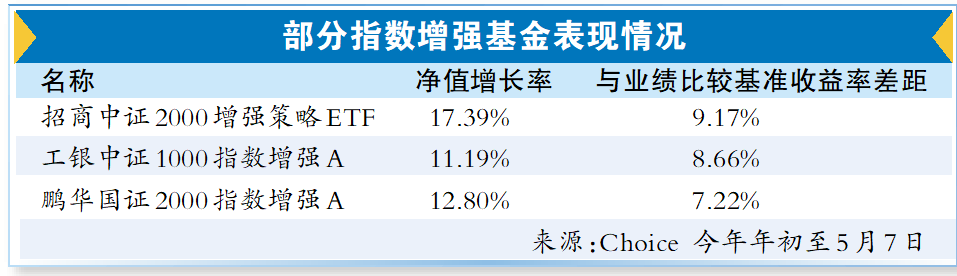
Group 1 - The A-share market has seen high activity this year, with nearly 80% of quantitative index-enhanced funds outperforming their benchmarks, particularly those tracking small-cap indices like CSI 1000 and CSI 2000 [1] - The overall market activity has favored quantitative strategies, with growth and trading behavior factors contributing significantly to excess returns [1] - Investors are increasingly focusing on the stability of excess returns, prompting index-enhanced products to prioritize stable excess returns while managing risk exposure [1] Group 2 - "Fixed income plus" products are becoming a key focus for public fund institutions, aligning with investors' demand for absolute returns and the need for fund companies to grow their management scale [2] - There is a belief among public fund professionals that equity assets present structural opportunities, while fixed income assets have long-term investment logic, highlighting the value of "fixed income plus" allocations [2] Group 3 - Foreign institutions have recently become bullish on Chinese assets, with firms like Goldman Sachs and UBS raising their target indices for Chinese stocks, indicating a favorable window for investment [3] - Improved expectations for China's economic growth and the potential recovery of A-share company earnings are seen as attractive factors for foreign capital [3] - Ongoing measures to stabilize the market and expectations are expected to enhance the appeal of China's capital market to foreign investors [3] Group 4 - Institutional research activity has surged, with over 500 listed companies attracting various institutional visits since May, particularly in the electronics and machinery sectors [4] - The electronics sector, led by companies like Anji Technology, has seen significant interest, with 241 institutions conducting research, while the machinery sector's Hengda attracted 238 institutions [4] - Institutions are primarily focused on the fundamental performance of listed companies, including business layout, product conditions, and earnings performance [4] Group 5 - Many macro-strategy private equity firms are maintaining a positive net long position in equity assets, favoring Hong Kong internet and dividend-paying stocks due to the challenges of bond investments in a low-interest-rate environment [5] - The low-interest-rate era has made equity assets more appealing, especially with ongoing policy support and increased stock buybacks from listed companies [5] Group 6 - Several high-performing North Exchange theme funds have implemented purchase limits to maintain strategy effectiveness and protect investor interests [6] - Fund companies are also restructuring the performance benchmarks of their North Exchange theme funds and increasing research efforts to navigate the high volatility of the "North Exchange track" [6] Group 7 - The solid-state battery industry is accelerating its commercialization, with multiple companies actively investing in this sector [8] - Recent battery technology exhibitions showcased new solid-state battery products, indicating ongoing technological breakthroughs and a faster industrialization process [8] - A total of 49 A-share companies are involved in the solid-state battery sector, with companies like CATL expressing confidence in achieving small-scale production by 2027 [8] Group 8 - The recent implementation of the "technology board" in the bond market has led to increased participation from various institutions, indicating a rapid advancement in the market [10] - The expansion of the technology bond market is expected to optimize the structure of issuers, maturities, and varieties, enhancing market depth and resilience [10] - The development of the technology bond market presents numerous opportunities for institutional investors, with expected improvements in yield, safety, and liquidity [10] Group 9 - The recent reduction in Loan Prime Rate (LPR) by 10 basis points is expected to have further downward potential in the coming months, as the central bank continues to implement growth-stabilizing policies [11] - The LPR for one year is now at 3%, and for five years or more, it is at 3.5%, reflecting a proactive approach to monetary policy [11] Group 10 - The scale of bank wealth management products has reached a historical high of over 31 trillion yuan, with expectations for continued growth following recent deposit rate cuts by major banks [12] - As of May 20, the total scale of bank wealth management products has reached 31.28 trillion yuan, indicating strong market interest [12] Group 11 - The private equity fund industry is experiencing a trend of "survival of the fittest," with 475 private fund managers deregistering this year, reflecting an acceleration in industry consolidation [13] - This trend is seen as beneficial for optimizing the industry ecosystem and promoting high-quality development, ultimately protecting investors' rights [13]
公募指增产品超额收益“加速跑”
Zhong Guo Zheng Quan Bao· 2025-05-20 21:47
Group 1 - The A-share market has seen high activity this year, with nearly 80% of public quantitative index-enhanced funds outperforming their benchmarks, achieving excess returns [1][2] - Funds tracking small and micro-cap indices like CSI 1000 and CSI 2000 have shown particularly significant excess returns, with some products achieving over 11 percentage points of excess return compared to their benchmarks [2][3] - The overall market activity has been favorable for quantitative strategies, with growth and trading behavior factors contributing significantly to excess returns [1][4] Group 2 - The competition for excess returns among quantitative products has intensified due to rapid growth in both public and private quantitative fund sizes [4] - The performance of quantitative funds has improved due to upgrades in alpha and risk models, with contributions from AI-driven factors and fundamental factors being notable [4][6] - The recent regulatory framework emphasizes the importance of stable excess returns, leading to a focus on diversified sources of excess returns and risk management [6][5] Group 3 - Products tracking large and mid-cap indices like CSI 300 and CSI 500 have not performed as well, with some achieving over 5 percentage points of excess return, but overall performance is less impressive compared to small-cap products [3][4] - The newly established CSI A500 index-enhanced products have shown varied excess return performance, influenced by factors such as establishment timing and stock selection model effectiveness [3][4] - The market's volatility has prompted quantitative fund managers to impose stricter constraints on risk exposure, helping to maintain excess returns during market downturns [6][4]
后明星时代公募基金研究系列之六:主动权益基金应该如何选业绩比较基准?
Shenwan Hongyuan Securities· 2025-05-20 11:11
1. Report Industry Investment Rating - No relevant information provided 2. Core Viewpoints of the Report - The market overestimates the proportion of active equity funds underperforming their benchmarks. Selecting a benchmark that matches the fund manager's style can significantly reduce the proportion of funds with performance 10% lower than the benchmark [3][19] - The S&P 500 is the most widely - chosen benchmark for active equity funds in the US, and Russell style indices are also highly recognized [24][25] - In the short - term, banks, non - banks, and food and beverage are under - allocated industries, while electronics, media, and machinery are over - allocated industries. Active equity funds in Hong Kong still prefer growth - oriented industries [3][38][43] - When selecting a performance comparison benchmark, factors such as index style suitability, market recognition, stability, investment opportunities, and long - term viability should be considered [3] 3. Summary According to the Table of Contents 3.1 Market Overestimates the Proportion of Active Equity Funds Underperforming Their Benchmarks 3.1.1 Problems of Directly Selecting Broad - based Indices as Benchmarks - The two simple calculation methods currently used in the market may not have reference value for the future. The data on the proportion of funds underperforming benchmarks in the past has randomness and cannot reflect the true ability of active equity funds [10][11] - If fund managers choose broad - based indices as benchmarks without changing their investment strategies, the probability of their performance being more than 10% lower than the benchmark in three years is uncontrollable. Selecting a benchmark that matches the investment style is more important [16][19][20] 3.1.2 Benchmarks Used by Overseas Active Equity Funds - In the US, the S&P 500 is the most widely - chosen benchmark, with a scale proportion of over 40% in all active products investing in the US. Russell style indices such as Russell 1000 Growth and Russell 1000 Value are also highly recognized [24][25] - Different types of US active funds have different benchmark selection preferences. For example, the S&P 500 is commonly chosen for large - cap core products, while Russell 2000 is dominant in small - cap core products [26] 3.2 Short - term Market Transaction Expectations 3.2.1 Industry and Stock Dimensions: Under - allocation of Finance and Traditional Consumption, Over - allocation of Technology and Growth - Balanced style funds under - allocate non - banks, banks, and food and beverage, and over - allocate media, automobiles, and machinery. Growth style funds under - allocate food and beverage, transportation, and public utilities, and over - allocate electronics, power equipment, and machinery. Value style funds under - allocate banks, non - banks, and building decoration, and over - allocate power equipment, real estate, and pharmaceutical biology [33][34][35] - Different industry - themed funds also have different over - and under - allocation situations. Overall, banks, non - banks, and food and beverage are industries with large under - allocation amounts, while electronics, media, and machinery are industries with large over - allocation amounts [38] 3.2.2 Hong Kong Stock Allocation: Over - and Under - allocation Relative to the Hang Seng Index - In Hong Kong stocks, under - allocated industries include banks, non - banks, and commerce and retail, while over - allocated industries include pharmaceutical biology, media, and electronics. Active equity funds in Hong Kong still prefer growth - oriented industries [43] 3.3 How to Select Performance Comparison Benchmarks for Active Equity Funds 3.3.1 Indices Currently Issued by Mainstream Index Companies - Active equity funds commonly choose broad - based indices, industry - themed indices, and SmartBeta products as performance comparison benchmarks. The top 5 most - tracked indices are usually broad - based indices such as the CSI 300, CSI 800, Hang Seng Index, CSI 500, and CSI Hong Kong Stock Connect Composite [46] - Mainstream index companies issue three types of indices: broad - based indices, SmartBeta indices, and industry - themed indices, covering multiple markets and strategies [49] 3.3.2 Indices More Likely to Generate Excess Returns - Three factors affect a fund's excess returns: investment ability, investment breadth, and investment opportunities. Indices with wider coverage and more investment opportunities can generate higher excess returns, but their Beta may be weaker [53][57] 3.3.3 How to Select Broad - based Indices - From multiple perspectives such as industry allocation deviation, standard deviation of component stock returns, and stock - selection tolerance, the CSI A500 index is more in line with the investment styles of most fund managers [61]
活动预告 | 第一届:全球弈熵交易论坛·上海
对冲研投· 2025-05-20 10:07
Core Viewpoint - The article invites participants to the "First Global Yiyang Trading Forum" in Shanghai, focusing on uncovering excess returns in a volatile market environment in 2025, emphasizing the unique investment opportunities arising from China's market reforms and technological innovations [1][2]. Group 1: Macro Perspective - Experts will analyze the asset rotation rhythm under the divergence of global central bank policies and geopolitical risk pricing models [2]. - The forum will cover a framework for major asset allocation against the backdrop of narrowing China-US interest rate differentials [2]. Group 2: Stock Market Insights - A private equity leader with over 20 years of experience will reveal a quantitative identification system for industry rotation in high-volatility environments [2]. Group 3: Futures Market Analysis - Commodity futures experts will discuss trend-following opportunities amid global supply chain restructuring and risk position management strategies during extreme market conditions [2]. Group 4: Options Trading Strategies - Experienced traders will analyze arbitrage opportunities within volatility surface distortions and teach techniques for capturing cross-market volatility premiums [2]. - A practical workshop on "Multi-Asset Linked Trading" will be conducted, focusing on integrated hedging strategies involving stocks, futures, and options [2]. Group 5: Event Details - The forum is scheduled for May 24, 2025, at the Star River Bay Hotel in Shanghai, accommodating 1,000 participants [5]. - The event is organized by Super Trader and Fudan Qiushi Wealth Forum, with support from various financial institutions [4].

担心“扣钱”而去买银行股,为何说公募基金不可能这么做?
Sou Hu Cai Jing· 2025-05-15 04:02
Group 1 - The core viewpoint of the news is that the new performance benchmark assessment for public funds has led to increased attention on bank stocks, as funds need to outperform the CSI 300 index to avoid penalties [1][3] - Bank stocks have seen a significant rise, contributing to the Shanghai Composite Index breaking through 3400 points, indicating a potential shift in fund allocations towards large financial institutions [1][3] - The argument that public funds will buy bank stocks due to performance concerns is considered flawed, as many fund managers aim to outperform the market and have historically not relied on bank stocks for excess returns [3][4] Group 2 - The current valuation of large bank stocks is relatively high, and buying them to meet performance benchmarks could be seen as a risky move for fund managers [3] - The new assessment criteria, which focus on a three-year performance period rather than annual assessments, allow funds to adopt a more strategic approach to investment without immediate pressure [4] - The intrinsic nature of active equity funds is to generate excess returns while managing risks, and deliberately investing in bank stocks to meet benchmarks could diminish the value proposition of these funds for investors [4]

基金的业绩比较基准是什么?
Sou Hu Cai Jing· 2025-05-14 02:28
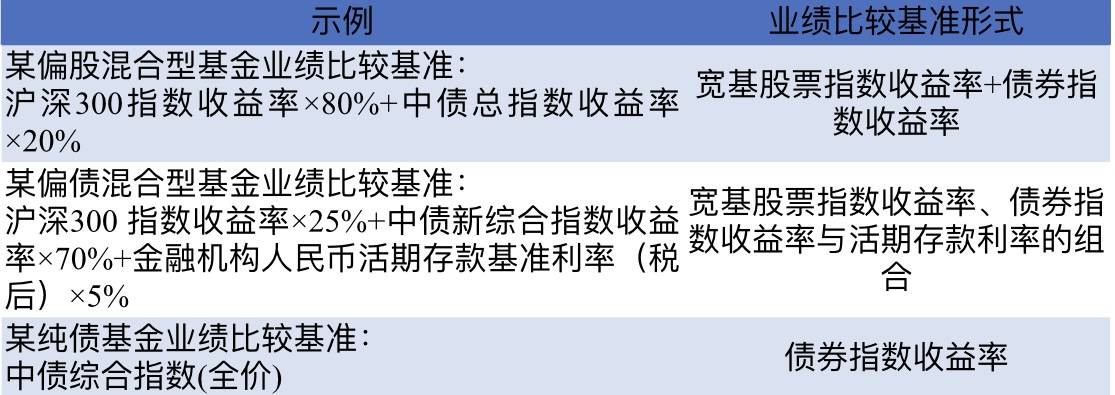
Core Viewpoint - The China Securities Regulatory Commission (CSRC) issued an "Action Plan for Promoting the High-Quality Development of Public Funds," emphasizing the implementation of a performance-based floating management fee model for newly established actively managed equity funds, and strengthening the constraints of performance benchmarks [1]. Summary by Category Performance Benchmark Definition - The performance benchmark is a critical "baseline" set by fund companies based on fund type, investment scope, philosophy, and strategy, allowing comparison of fund returns to assess whether excess returns are generated and their stability [1]. Types of Performance Benchmarks - **Index Return Type**: The most commonly used form, typically a single index or a combination of index returns, or a combination of index returns with other rates (e.g., current deposit rates) [2]. - **Market Interest Rate Type**: Based on market interest rates, often adding or subtracting a fixed rate, such as "one-year RMB time deposit rate (after tax) +2%," commonly seen in money market funds and some pure bond funds [2]. - **Absolute Value Type**: Defined by a specific value, such as "annualized return of 6%," often used by funds seeking absolute returns, though less common [3]. Implications of the Action Plan - The Action Plan proposes establishing a floating fee mechanism linked to fund performance, promoting a model where fund company income is tied to the excess returns generated by the fund, fostering a healthier industry development and aligning investor interests [3].
未知机构:东财建材周观点央行降准降息百强企业投资回升关注超额收益机会继续推荐三-20250512
未知机构· 2025-05-12 02:00
Summary of Conference Call Notes Industry Overview - The conference call discusses the construction materials industry, particularly focusing on cement and glass products, amidst recent monetary policy changes by the central bank [1][2]. Key Points and Arguments - **Monetary Policy Impact**: The central bank announced a 0.5% reduction in the reserve requirement ratio and a 0.1% decrease in policy interest rates, expected to inject approximately 1 trillion yuan into the market [3]. - **Cement Market Performance**: As of May 9, the national cement shipment rates were reported at 48%, with regional rates in East and South China at 52% and 54% respectively, showing a month-on-month decline of 1.5%, 0.9%, and 7.2 percentage points [1]. - **Price Trends**: The average price of cement decreased by 4.5 yuan per ton to 387 yuan per ton, marking a 15 yuan drop since early April [1]. - **Glass Market Update**: The average price of float glass was reported at 1318 yuan per ton, down 14 yuan from the previous week, with inventory levels at 58.17 million heavy boxes, an increase of 3.4% [1]. - **Fiber Market**: The average price of alkali-free glass fiber yarn in East China was 3650 yuan per ton, down 50 yuan from before the May Day holiday [1]. Investment Opportunities - **Excess Return Potential**: Historical data suggests that the construction materials sector has a high probability of achieving excess returns compared to the CSI 300 index when the real estate market shows signs of stability and improvement [3][4]. - **Real Estate Market Indicators**: As of April 28, the second-hand housing price index for first and second-tier cities was 196.84 and 145.02 respectively, indicating a stabilization trend. Notably, the investment amount from 30 monitored real estate companies reached 87.6 billion yuan in April, a year-on-year increase of nearly 100% [3]. Recommended Investment Lines - **Main Line One**: Focus on large-scale construction materials with improving supply-demand dynamics, emphasizing price elasticity and high dividend yields [5]. - **Main Line Two**: Favorable outlook on leading consumer building material companies with long-term growth potential, highlighting performance elasticity in high-demand consumer segments [7]. - **Main Line Three**: Interest in companies transitioning or expanding into high-growth sectors such as semiconductors, AI, and robotics [7]. Recommended Companies - **Cement Companies**: Conch Cement, Huaxin Cement, China Jushi, TPI Cement, Shangfeng Cement, Changhai Co. [6]. - **Consumer Building Materials**: Sankeshu, Oriental Yuhong, Beixin Building Materials, Weixing New Materials, Tubao, with a focus on Jianlang Hardware, Qinglong Pipeline, and Longquan Co. [7]. - **High-Growth Companies**: Quartz Co., Planet Graphite, with attention to Zhongqi New Materials [8]. Risk Factors - Potential risks include demand falling short of expectations, gross margins not meeting forecasts, and delays in receivables [8].


理财档案|指数增强如何实现超额收益?关注成分股数量和行业
Guang Zhou Ri Bao· 2025-05-08 15:29
近期,指数增强基金走势火热,今年以来已有超七成指数增强基金,收益跑赢跟踪的标的指数。指数增强基金是什么?如何投资呢? 有业内人士表示,指数增强基金适合有一定风险承受能力的投资者,波动性较大的指数可能更容易获得超额收益。而指数的成分股越 少、行业区别越小,相关指数增强基金越难实现超额收益。 指数增强基金有望实现超额收益管理费相对高 普通指数基金主要是复制跟踪指数构建投资组合,而指数增强基金,会将80%的资金投资标的指数的成分股,而剩下的20%资金会由基 金经理和投资团队采用精选个股等策略,力争增厚产品收益。 成分股越少、行业区别越小越难实现超额收益 记者采访了解到,指数增强基金实现超额收益,整体成分股数量越少越难做,成分股行业区别越小越难做。"例如银行指数,由于银行 和银行之间区别较小,非常难做增强,而科技指数就相对更好做增强。"有公募基金业内人士指出。 有公募基金业内人士指出,通常情况下,中证1000指数增强型基金的平均超额收益大于中证500指数增强型基金,而中证500指数增强型 基金的平均超额收益又大于沪深300指数增强型基金。 李一鸣表示,波动性较大的指数可能更容易获得超额收益,基金经理可以通过把握个股波 ...