绿色低碳发展

Search documents
2025盐城投资环境说明会举行
Zhong Guo Xin Wen Wang· 2025-05-18 15:36
Core Insights - The 2025 Yancheng Investment Environment Conference was held, attracting over 50 Fortune 500 companies and more than 100 innovative technology enterprises [1][2] Group 1: Investment Opportunities - Yancheng is positioned as a significant gateway for coastal openness in Jiangsu, focusing on green and low-carbon development [2] - The Jiangsu Provincial Department of Commerce supports Yancheng in expanding openness and accelerating the construction of an open strong city [2] - The conference highlighted the signing of 30 projects, showcasing Yancheng's commitment to economic and technological innovation [2] Group 2: Strategic Partnerships - South Korea's New Mangjin Development Bureau expressed intentions to deepen cooperation with Yancheng, establishing a reliable partnership [2] - The Hong Kong Chinese General Chamber of Commerce emphasized Yancheng's role as a key production base for petroleum and petrochemical equipment, aiming to foster multi-level cooperation with Hong Kong enterprises [2] Group 3: Development Initiatives - Yancheng introduced its first batch of ten scene opportunity demand lists and ten scene capability case lists, along with a technology challenge list and outstanding technological achievements [2]
江苏海滨投资集团项目落地南京江北新区
Zhong Guo Jing Ji Wang· 2025-05-17 08:17
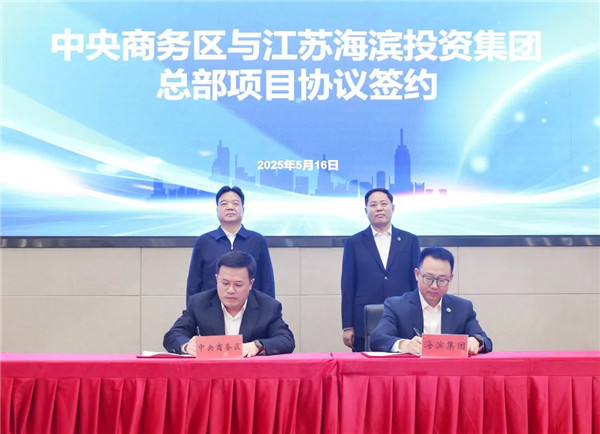
转自:南京江北新区 陆卫东表示,江苏海滨投资集团作为能源领域领军企业,在成品油、天然气、清洁能源开发与运贸等领 域成果斐然。希望双方以此次战略合作为契机,加快项目落地,实现合作共赢;聚焦双方优势,立足新 区产业基础、科教人才资源和海滨集团能源产业领域专业能力,做强氢能链条,推动集群发展;深化产 业协同,聚焦天然气储备、智能电网等重点领域,拓展应用场景,助推区域绿色转型发展。 许兴祥表示,此次签约是江北新区与集团优势互补的战略选择,更是落实长三角一体化、绿色低碳发展 国家战略的生动实践。以本次签约为契机,集团将推动相关产业资源迁入新区并打造氢能产业创新研究 院,深化产城融合,发展能源+科技平台,推动能源技术与先进制造业深度融合,打造"产业+能源"协 同发展的标杆项目。 江苏海滨投资集团、中石油南京公司、长江航道工程局华东公司相关负责同志,新区相关部局、平台、 国企主要负责同志参加活动。 5月16日,南京江北新区与江苏海滨投资集团签署战略合作协议,共同推动液化天然气贸易、制氢装 备、新能源研究院等方面的合作。南京市委常委、江北新区党工委书记、浦口区委书记陆卫东,江苏海 滨投资集团董事长许兴祥,江苏海滨投资集团副总 ...

市场规模蓬勃壮大,服务网络能效提升——透视4月份我国邮政快递业发展
Xin Hua She· 2025-05-16 12:34
新华社北京5月16日电 题:市场规模蓬勃壮大,服务网络能效提升——透视4月份我国邮政快递业发展 深入乡村、覆盖全国,这是当前我国邮政快递业稳健发展的一个缩影。国家邮政局16日发布的数据显 示,4月中国快递发展指数为443.2,同比提升6.5%,其中,发展规模指数为571.9,同比提升15.7%。 适逢清明节采茶、制茶旺季,叠加消费品"以旧换新"政策持续发力,4月份,我国快递企业深耕明前 茶、蔬果、鲜花、医药、珠宝、汽车配件等领域,积极服务现代农业与先进制造业,畅通逆向寄递服务 渠道,切实满足消费者多元化寄递需求。数据显示,4月份,我国邮政行业寄递业务量完成177.5亿件, 同比增长16.7%。其中,快递业务量完成163.2亿件,同比增长19.1%,日均业务量超过5.4亿件。 稳步扩增的业务规模,离不开邮政快递业智能化水平的提升。 山东鲁中快递电商生态产业园,一辆辆装满快递包裹的无人快递配送车穿梭于园区和快递驿站之间,为 当地居民和商家提供高效便捷的快递配送服务。 稳步扩增的业务规模,也离不开更加坚实的航空运输保障和不断拓展的寄递市场。 新华社记者叶昊鸣 清晨,云南保山种植基地内,一袋袋还带着泥土芬芳的紫皮蒜被 ...
申能股份: 申能股份有限公司投资者交流会议纪要
Zheng Quan Zhi Xing· 2025-05-16 09:33
Core Viewpoint - The company aims to enhance operational efficiency and accelerate green low-carbon development, achieving a record net profit of 3.944 billion yuan in 2024 and 1.011 billion yuan in Q1 2025 [1] Group 1: Operational Performance - The company plans to solidify safety and supply foundations while improving management efficiency and developing new production capabilities [1] - The company achieved a net profit of 1.011 billion yuan in Q1 2025, maintaining stable and orderly production operations [1] Group 2: Fuel Cost Management - The company has seen a significant year-on-year decrease in fuel costs and is actively optimizing procurement strategies to increase the proportion of low-cost coal [1] Group 3: Electricity Market Participation - The company is enhancing its marketing system to actively participate in the Shanghai electricity spot market, leveraging the performance advantages of its power generation units [1] Group 4: Renewable Energy Development - The company has made progress in large-scale renewable energy development, including the Hainan CZ2 project (Phase I) with 600,000 kW connected to the grid and ongoing preparations for 3.35 million kW wind and solar projects in Xinjiang [1] - Future plans include focusing on large-scale renewable energy development and expanding into comprehensive energy services, CCUS, green hydrogen production, and biomass [1] Group 5: Dividend Policy - The company emphasizes stable and sustainable cash dividends, proposing a cash dividend of 0.45 yuan per share for 2024, with a payout ratio of 55.8% and a total cash dividend of 2.2 billion yuan, marking a historical high [1]

创新新材: 2024年度环境、社会及管治(ESG)报告(英文版)
Zheng Quan Zhi Xing· 2025-05-15 12:39
Core Viewpoint - Innovation New Material Technology Co., Ltd. emphasizes its commitment to sustainable development, green production, and corporate governance, aiming to create a low-carbon aluminum industry while enhancing employee welfare and community engagement [1][2][3]. Company Overview - Innovation New Material is a large-scale enterprise engaged in the production of aluminum profiles, rods, cables, and other aluminum products, recognized as one of the largest aluminum alloy material production bases globally [4][5]. - The company operates 14 industrial parks across China and has a comprehensive production capacity of 4.8805 million tons, including various aluminum products [4][5]. Environmental Initiatives - In 2024, the company recycled and utilized 1.2109 million tons of secondary aluminum, significantly contributing to energy conservation and emission reduction [5][6]. - The company achieved 100% utilization of recycled aluminum with grade retention and has implemented various environmental management certifications, including ISO 14001 and ISO 50001 [6][7]. Social Responsibility - The company has a total workforce of 11,458 employees, with a focus on employee rights, diversity, and satisfaction, achieving a 90% employee satisfaction rate [6][7]. - It has actively participated in social welfare initiatives, providing educational grants and supporting local farmers [6][7]. Technological Innovation - Innovation New Material holds 537 patents, including 62 invention patents, and has integrated quality management systems into its production processes to enhance efficiency [6][7]. - The company is committed to advancing technological innovation and has established a robust research and development system to support its growth [8][9]. Governance and ESG Strategy - The company has established a comprehensive ESG governance framework, integrating stakeholder communication and sustainable development into its management practices [10][11]. - It has identified 18 key ESG materiality issues, focusing on climate change, resource management, and employee rights, to align its operations with stakeholder expectations [12][13].

北川羌族自治县县长周福兰:生态立县绘就高质量发展新画卷
Zhong Guo Huan Jing Bao· 2025-05-15 03:12
Core Viewpoint - Beichuan Qiang Autonomous County prioritizes ecological preservation as a foundation for development, striving for a harmonious balance between economic growth and environmental protection [1] Group 1: Ecological Protection Efforts - Beichuan has established a comprehensive ecological governance system involving government, enterprises, and society, promoting green and low-carbon development [2] - The county has invested a total of 367 million yuan in ecological protection over the past three years, emphasizing the consensus that development must not come at the expense of the environment [2] - Strict measures are in place for air pollution control, with 136 monitoring points under continuous surveillance and the implementation of a river and lake chief system for rural wastewater management [2] Group 2: Technological and Systematic Governance - The county is transitioning from traditional to scientific regulation, utilizing drones and portable detection devices to enhance monitoring efficiency [3] - A digital platform has been established for air pollution source management, enabling precise monitoring and control of pollution sources [3] - Collaborative efforts with neighboring regions have been initiated to implement a joint pollution control system for major river basins [3] Group 3: Green Economic Development - Beichuan is committed to ecological protection while promoting economic growth, with 976.52 square kilometers designated as ecological protection red lines, covering 31.66% of the county's total area [5] - The county is investing nearly 1 billion yuan in national reserve forest projects, maintaining over 4 million acres of forest land and achieving an annual carbon sequestration of over 1.5 million tons [5] - The development of high-quality agriculture and tourism is being emphasized, with significant income generated from eco-friendly products and tourism activities [5]
《人民日报》刊发珍酒李渡集团董事长吴向东署名文章
Sou Hu Cai Jing· 2025-05-14 11:54
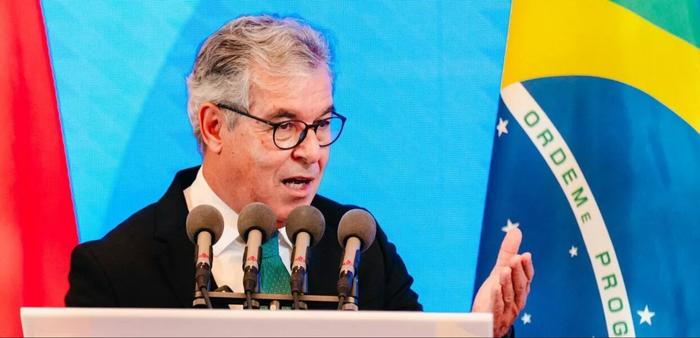
Group 1 - The core viewpoint of the article emphasizes the importance of adhering to traditional craftsmanship and enhancing product quality in the liquor industry, which is characterized by cyclical fluctuations [1][14] - The company aims for long-term development by focusing on differentiated product strategies and team building to continuously improve product quality and brand value [14] - The article highlights the significance of cultural and tourism resources in marketing, with initiatives like the establishment of the 1912 Zhenjiu Culinary Research Institute to create standardized and replicable food and liquor fusion models [13][14] Group 2 - The liquor industry is described as a cyclical sector where market fluctuations are normal, and the company is committed to "doing difficult but correct things" to win consumer trust through warm experiences [14] - The company is actively developing a wine tourism integration model, positioning itself as a new highland for wine tourism in Guizhou [13] - The brand strategy includes precise insights into social environments, consumer demographics, and communication patterns to enhance brand awareness and connect with target consumers [13]
巴西出口和投资促进局局长:巴中经贸关系迈入新阶段
Ren Min Wang· 2025-05-14 08:04
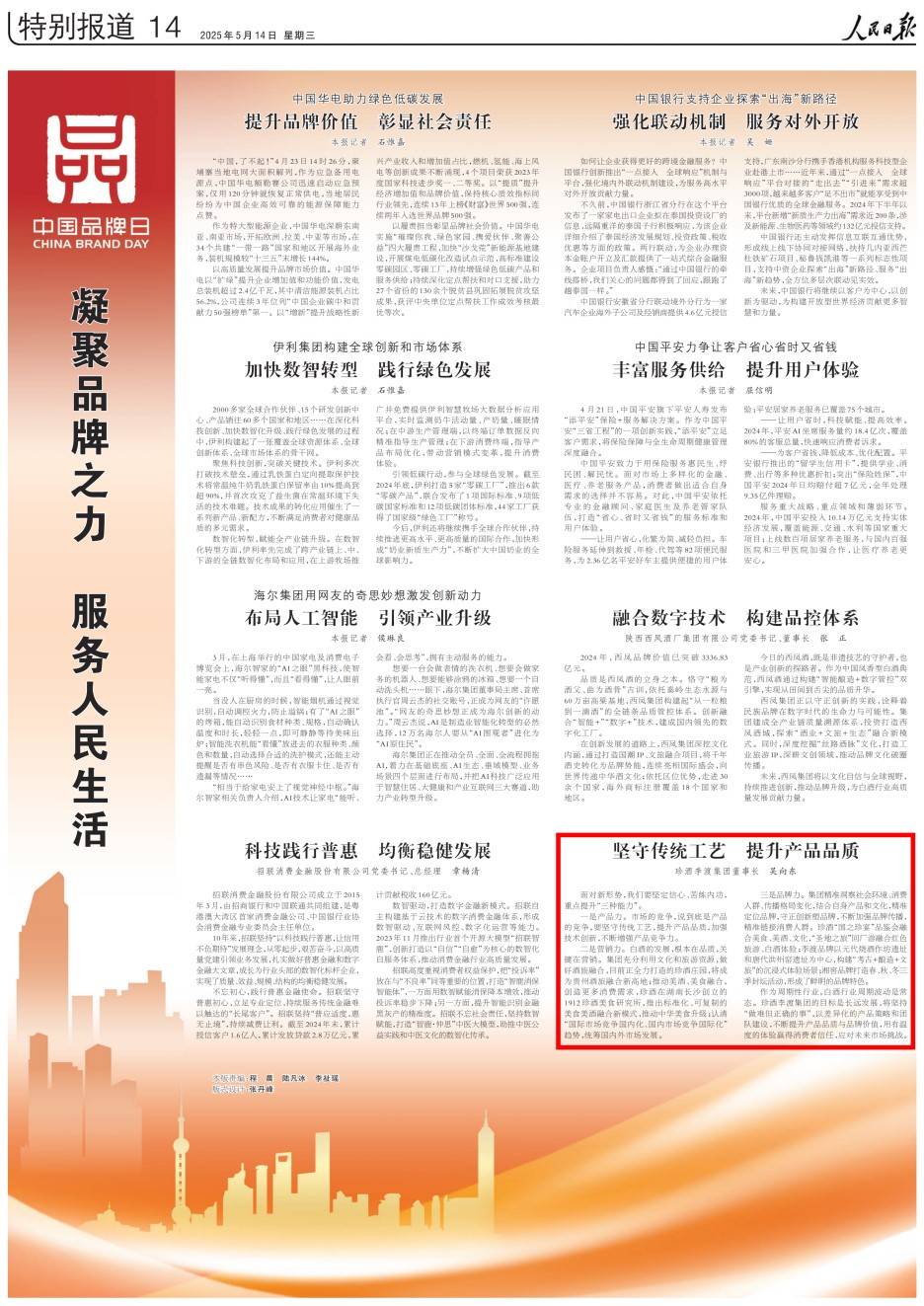
Core Insights - The "China-Brazil Business Seminar" marks a new historical stage in China-Brazil economic and trade relations, highlighting the commitment to multilateral trade and an open world economy [1][2] Group 1: Economic Cooperation - The trade volume between China and Brazil has surged from $2 billion at the beginning of the century to $160 billion currently, indicating strong growth momentum [2] - Chinese companies announced investments totaling over 27 billion Brazilian Reais in various sectors including express delivery, fast food, semiconductors, new energy, automotive manufacturing, and renewable energy during the seminar [2] - Brazil aims to increase the export of high-value products such as coffee, juice, and premium meat to China, moving beyond traditional bulk commodities [2] Group 2: Strategic Partnerships - Brazil emphasizes the importance of the comprehensive strategic partnership with China, particularly under the leadership of both countries' heads of state [2] - The Brazil-China High-Level Coordination and Cooperation Committee has been effective for 21 years, enhancing cooperation between the two nations [2] - Brazil, as the rotating chair of BRICS, seeks to deepen collaboration with China to enhance the representation and voice of emerging markets and developing countries in global governance [2] Group 3: Green Development - Brazil possesses unique advantages in clean energy and key mineral resources, expressing willingness to deepen cooperation with China in areas such as ethanol fuel and new energy vehicles [3] - Infrastructure connectivity, particularly the strategic significance of the Bio-Ocean Railway project, is highlighted as a means to support agricultural trade between the two countries [3] Group 4: Agreements and Future Initiatives - A memorandum of understanding was signed between the China Council for the Promotion of International Trade and Brazil's Export and Investment Promotion Agency to support business exchanges and cooperation in various fields [5] - The agreement aims to enhance collaboration in digital economy, smart manufacturing, clean energy, and low-carbon technologies, while welcoming Brazil's participation in key Chinese trade events [5]
全国碳排放权交易市场迈向新阶段
Zhong Guo Dian Li Bao· 2025-05-14 02:13
Core Viewpoint - The 20th National Congress of the Communist Party of China emphasizes the need to deepen ecological civilization reforms and promote a carbon trading market to achieve carbon peak and carbon neutrality goals [1] Group 1: Carbon Market Development - The national carbon emissions trading market currently covers 2,257 key emission units in the power generation sector, accounting for approximately 5.1 billion tons of CO2 emissions annually, which is about 40% of the national total [1] - The current carbon market is limited in industry coverage and has low market activity due to high homogeneity among participants, necessitating the inclusion of more high-emission industries such as steel, cement, and aluminum [1][2] - The Ministry of Ecology and Environment has issued a plan to gradually include the steel, cement, and aluminum industries into the national carbon emissions trading market, aiming to enhance carbon reduction efforts and create a more effective carbon market [1][2] Group 2: Policy Implementation and Mechanisms - The plan aims to expand the market coverage by incorporating around 1,500 enterprises from the steel, cement, and aluminum sectors, focusing on those with annual greenhouse gas emissions of 26,000 tons of CO2 equivalent [2] - It establishes a unified management system for emissions across various industries, enhancing the carbon pricing mechanism and encouraging companies to prioritize carbon management [2] - The plan outlines a multi-layered and differentiated collaborative control model for direct and indirect greenhouse gas emissions, integrating the carbon trading market with renewable energy and green certificate markets [2] Group 3: Data Management and Monitoring - The plan emphasizes improving carbon emission accounting standards and data governance, requiring enterprises to conduct high-quality measurements of key parameters and explore online monitoring technologies [3] - It mandates monthly verification of key parameters by major emission units and implements a three-tier data quality audit system to enhance transparency and reliability in the carbon trading market [3] Group 4: Allocation of Carbon Quotas - The plan details a phased approach to carbon quota allocation for the steel, cement, and aluminum industries, with the 2024 quota based on verified actual emissions, avoiding compliance costs for enterprises [4] - Future quotas for 2025 and 2026 will be determined based on carbon intensity, with a focus on minimizing the impact on normal business operations [4] - The plan aims to gradually tighten total quota limits to facilitate the transition of these industries towards green and low-carbon practices [4] Group 5: Recommendations for Policy Enhancement - The plan suggests establishing a long-term management mechanism for carbon emissions rights, gradually reducing annual quota totals while ensuring alignment with industry development stages [5][6] - It advocates for the integration of various policies to promote the collaborative development of carbon and electricity markets, enhancing the market's overall effectiveness [6]
凝聚品牌之力 服务人民生活(中国品牌日)
Ren Min Ri Bao· 2025-05-13 22:01
Group 1: China Huadian's Green Development - China Huadian has rapidly restored power in Cambodia within 120 minutes during a local grid failure, showcasing its efficient energy supply capabilities [1] - The company has expanded its installed capacity by 144% since the end of the 13th Five-Year Plan, with a total installed capacity exceeding 240 million kilowatts, of which 56.2% is from clean energy [1] - China Huadian has been ranked first in the "Top 50 Chinese Enterprises for Carbon Neutral Contribution" for three consecutive years [1][2] Group 2: China Bank's Cross-Border Financial Services - China Bank has launched the "One Point Access Global Response" mechanism to enhance cross-border financial services for enterprises [3] - The bank has facilitated over 3,000 cross-border service requests, providing comprehensive financial support for companies looking to expand internationally [3][4] - In 2024, the platform has seen nearly 200 new "new quality productivity going abroad" requests, involving credit support of approximately 13.2 billion yuan [3] Group 3: Yili Group's Global Innovation and Market System - Yili Group has established a global network of over 2,000 partners and 15 R&D innovation centers, with products sold in over 60 countries [7] - The company has achieved a significant breakthrough in technology, increasing the retention rate of lactoferrin in milk from 10% to over 90% [7] - Yili aims to create five "zero-carbon factories" and six "zero-carbon products" by the end of 2024, contributing to global green development [7] Group 4: China Ping An's Customer-Centric Services - China Ping An has introduced the "Tian Ping An" insurance and service solution, integrating insurance protection with comprehensive health management [9] - The company has provided 82 convenient services for car insurance, benefiting 236 million car owners [9] - In 2024, Ping An plans to invest 10.14 trillion yuan to support major national projects in energy, transportation, and water conservancy [10] Group 5: Haier Group's AI-Driven Innovation - Haier Group is leveraging AI technology to enhance smart home appliances, enabling them to recognize and respond to user needs [12] - The company is promoting a comprehensive embrace of AI across all levels and processes, focusing on smart living, health, and industrial internet [13] - Haier's CEO emphasizes the importance of consumer ideas in driving innovation, positioning the company as a leader in AI integration [12][13] Group 6: Xifeng Distillery's Quality Control and Brand Development - Xifeng Distillery has achieved a brand value exceeding 333.68 billion yuan by implementing a comprehensive quality control system [14] - The company is integrating digital technology into its production processes to enhance product quality and brand recognition [14] - Xifeng is exploring new models of cultural tourism and brand promotion, aiming to expand its global presence [14][15] Group 7: Zhaolian Consumer Finance's Digital Transformation - Zhaolian Consumer Finance has established a digital consumer finance system based on cloud technology, achieving balanced growth in quality, efficiency, and scale [16][17] - The company has issued loans totaling 2.8 trillion yuan and served 160 million customers, emphasizing its commitment to inclusive finance [17] - Zhaolian is focused on consumer rights protection and has developed intelligent systems to enhance service efficiency and reduce complaints [17]