
智能化

Search documents
奥迪中国罗英瀚:品牌传承仍是汽车业的竞争维度
Jing Ji Guan Cha Wang· 2025-11-30 02:29
Core Insights - Audi is advancing its product lineup in China, launching new models equipped with advanced technologies, including the A5L QianKun Intelligent Driving version and the A6L e-tron, showcasing its commitment to both fuel and electric vehicles [2][3][4] - The brand's strategy emphasizes the importance of heritage and brand recognition, particularly for repeat buyers, as it seeks to differentiate itself in a competitive market [3][4] - Audi's participation in Formula 1 (F1) is seen as a strategic move to enhance brand image and leverage racing technology for production vehicles, aligning with the new F1 regulations that bring race cars closer to consumer models [5] Product Development - Audi has introduced two new models at the Guangzhou Auto Show: the A5L QianKun Intelligent Driving version and the E5 Sportback, both featuring advanced driving technologies developed in collaboration with Huawei and Momenta [3][4] - The A5L QianKun is noted as the first fuel vehicle to incorporate Huawei's intelligent driving technology, while the E5 Sportback is the first model under the Audi brand to utilize a new integrated driving assistance system [3][4] Market Strategy - Audi's strategy in China involves a dual approach with FAW Audi focusing on localizing global models and SAIC Audi developing exclusive models for the Chinese market [4] - The company aims to address the challenge of maintaining competitiveness in a market where local brands are rapidly advancing in technology [3][4] F1 Investment Rationale - Audi's investment in F1 is part of a broader strategy to utilize racing as a testing ground for new technologies that can be applied to production vehicles, enhancing innovation and brand prestige [5] - The decision to participate in F1 aligns with the company's goal to establish itself as a leader in the electric vehicle era, with plans to fully acquire the Sauber Group to support its racing ambitions [5]


年均服务3亿人次,我国人力资源服务业加力促就业
Xin Hua She· 2025-11-29 21:32
Core Insights - The human resources service industry in China is focusing on enhancing employment by providing comprehensive services to both job seekers and employers, with an average of 300 million people served annually [1][2] Group 1: Industry Development - The industry has established mechanisms to match human resource supply and demand, particularly in high-end manufacturing, digital economy, and modern services, addressing labor shortages in these sectors [1] - The industry has provided professional support to over 50 million employers, offering a full range of human resource services from recruitment to training and assessment [1] Group 2: Technological Integration - The application of digital technologies, such as AI and big data, is transforming human resource services, enhancing recruitment efficiency by enabling precise candidate matching [2] - New business models and products are emerging in the human resources sector due to the widespread adoption of digitalization [2] Group 3: Internationalization - Many human resource service companies are actively expanding into international markets, providing comprehensive services for companies going abroad, including personnel management and training [3] - The manufacturing sector accounts for nearly 40% of the total service volume in the human resources industry, indicating a strong integration between these two sectors [3] Group 4: Pilot Cities and Local Initiatives - Certain cities, including Wuhan, are designated as pilot areas for integrating human resources services with key industries, aiming to enhance innovation and employment through collaborative development [4] - Wuhan plans to organize over 5,000 recruitment events annually to strengthen supply-demand matching and boost employment [4]
民生直通车 | 年均服务3亿人次,我国人力资源服务业加力促就业
Xin Hua She· 2025-11-29 11:33
Core Insights - The human resources service industry in China is focusing on enhancing employment opportunities, with an average of 300 million people served annually, and over 50 million employers supported since the 14th Five-Year Plan began [1][2] Group 1: Industry Development - The industry is establishing mechanisms to match human resource supply and demand, particularly in high-end manufacturing, digital economy, and modern services [1][2] - Various regions are exploring ways to expand the human resources service industry, promoting high-quality employment through initiatives like skill training and subsidies [2][3] Group 2: Technological Integration - The application of digital technologies, such as AI and big data, is significantly enhancing recruitment efficiency by allowing companies to accurately identify suitable candidates from large talent pools [2][3] - New business models and products in human resources services are emerging due to the widespread adoption of digitalization [2] Group 3: Internationalization - Many human resources service companies are actively expanding into international markets, providing comprehensive services for overseas enterprises, including personnel management and training [3] - The manufacturing sector accounts for nearly 40% of the total service volume in the human resources industry, indicating a strong integration between these sectors [3] Group 4: Local Initiatives - Wuhan, as a pilot city, aims to enhance collaboration between human resources services and key industries such as automotive manufacturing and health, organizing over 5,000 recruitment events annually to strengthen supply-demand matching [4]
民生直通车丨年均服务3亿人次,我国人力资源服务业加力促就业
Xin Hua Wang· 2025-11-29 10:50
Core Insights - The human resources service industry in China is focusing on enhancing employment by providing comprehensive services to both job seekers and employers, with an average of 300 million people served annually since the start of the 14th Five-Year Plan [1][2] Group 1: Industry Development - The industry has established a mechanism to match human resource supply and demand, particularly in high-end manufacturing, digital economy, and modern services [1] - Over 50 million employers have received professional support from the human resources service industry [1] - Various local initiatives are being implemented to strengthen the human resources service sector, including skill training and subsidies [2] Group 2: Technological Integration - The application of AI and digital technologies is transforming human resources services, enhancing recruitment efficiency through big data and intelligent matching technologies [2] - New business models and products are emerging in the human resources service sector due to the widespread adoption of digital technologies [2] Group 3: Internationalization - Many human resources service companies are actively expanding into international markets, providing comprehensive services for overseas enterprises [3] - The manufacturing sector accounts for nearly 40% of the total service volume in the human resources service industry, indicating a strong integration between these sectors [3] Group 4: Pilot Cities and Local Initiatives - Wuhan is one of the pilot cities focusing on the integration of human resources services with key industries such as automotive manufacturing and life sciences [4] - The city plans to organize over 5,000 recruitment events annually to strengthen supply-demand matching and enhance employment opportunities [4]
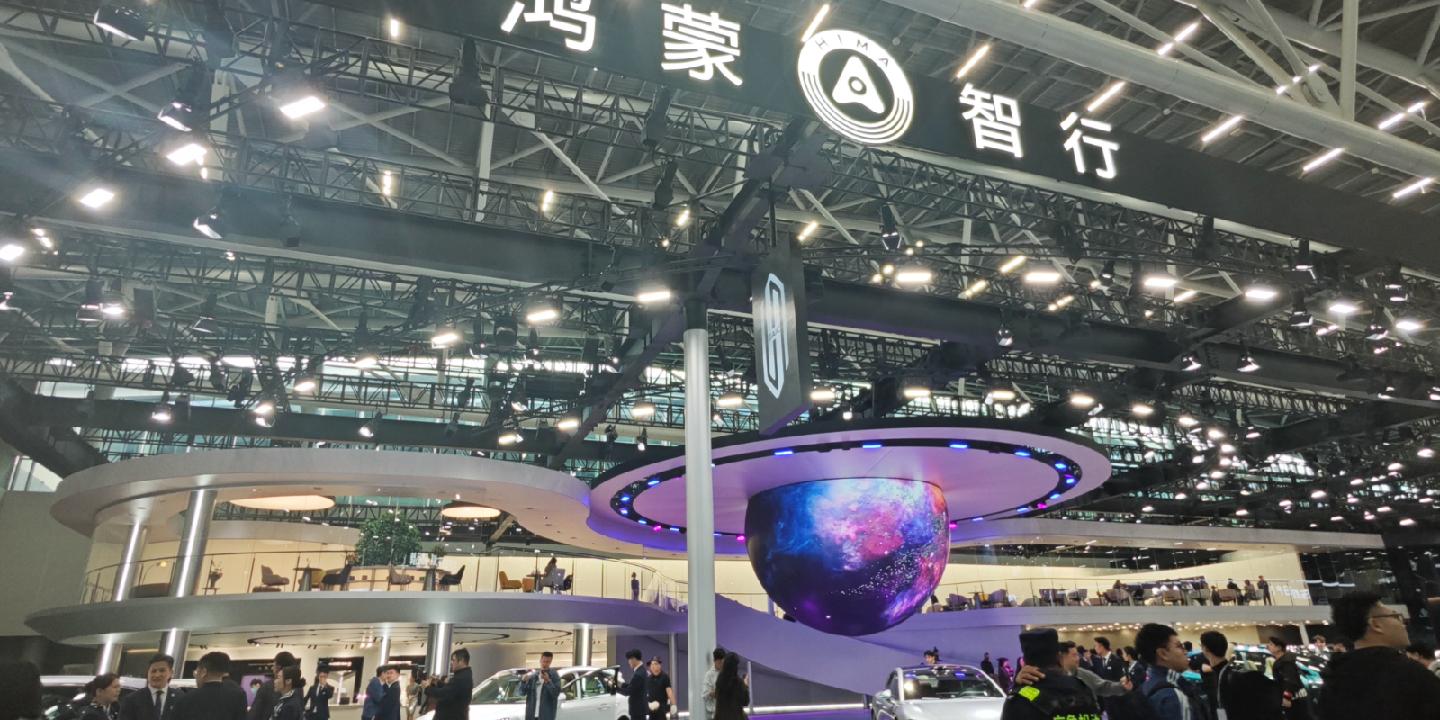
华为“占领”广州车展
Jing Ji Guan Cha Wang· 2025-11-29 09:24
Core Insights - The 2025 Guangzhou Auto Show is highlighted as the most significant event in terms of technological integration, particularly with Huawei's extensive presence and partnerships in the automotive sector [2][5][9]. Huawei's Dominance in the Automotive Sector - Huawei has established itself as an indispensable player in the Chinese smart automotive industry, with numerous car manufacturers leveraging its technology to enhance their products [2][9]. - The launch of Huawei's new "Jing" series brands, including "Qijing" and "Yijing," marks a significant expansion of its automotive offerings, with plans for multiple new models to be introduced in the coming years [3][4]. Collaborations and Partnerships - Huawei has formed partnerships with various automakers, including Dongfeng and GAC, to develop new vehicle brands and models, showcasing a collaborative approach to innovation in the automotive space [3][4][6]. - The introduction of the A5L Qiankun Intelligent Driving Version by FAW Audi, which is the first fuel vehicle to feature Huawei's Qiankun technology, exemplifies the growing trend of luxury brands adopting Huawei's solutions [6][7]. Market Performance and Sales - In October 2023, vehicles equipped with Huawei's Qiankun driving system achieved sales exceeding 100,000 units in a single month, indicating strong market acceptance [9]. - As of September 2023, new cars in China featuring urban navigation assistance reached 1.628 million units, with those using Huawei's technology accounting for approximately 27.8% of the market share [9]. Industry Trends and Consumer Perception - The increasing adoption of Huawei technology among various car manufacturers reflects a shift towards smart and connected vehicles, aligning with consumer demands for enhanced safety and connectivity [8][10]. - Despite the proliferation of "Jing" and "Jie" brands, concerns about differentiation among vehicles using Huawei technology have emerged, suggesting that manufacturers must focus on unique branding and product features to stand out in a competitive market [10][11].


全社会物流成本有效降低
Jing Ji Ri Bao· 2025-11-29 00:17
Core Insights - The logistics sector is crucial for the real economy, with a significant reduction in logistics costs supporting economic development and enhancing resource allocation efficiency [1][2][3] - In the first three quarters, China's total social logistics costs reached 14.2 trillion yuan, with a GDP ratio of 14%, marking the lowest level since records began [1][2][3] Group 1: Logistics Cost Reduction - The "linkage unloading" model implemented between Yangshan Port and Lusi Port has successfully reduced logistics costs, saving approximately 200 yuan for imports and 400 yuan for exports per container [2] - The ratio of social logistics costs to GDP has decreased from 18% in 2012 to 14% in 2024, with the current figure at 14% as of Q3 this year [2][3] Group 2: Structural Improvements - The reduction in logistics costs is attributed to the optimization and innovation within the logistics industry, as well as the deep integration of logistics with supply chains [3][4] - The logistics system is being enhanced through the construction of major logistics hubs and the establishment of a "channel + hub + network" operational framework [3][4] Group 3: Technological Advancements - The logistics sector is experiencing significant advancements in digitalization and automation, with the number of automated container terminals and bulk cargo terminals leading globally [4][5] - The application of technologies such as big data, cloud computing, and artificial intelligence is transforming logistics into a new productive force [5][6] Group 4: Policy and Reform - The "Action Plan" issued by the central government aims to reduce the logistics cost-to-GDP ratio to around 13.5% by 2027, focusing on key areas like railway and road freight [7][8] - The logistics cost structure consists of transportation (57%), warehousing (31.6%), and management costs (11.4%), indicating potential areas for further cost reduction [7][8]
济钢年产15万吨高端锻件生产线项目冲刺年底投产 锻造大国重器底座
He Nan Ri Bao· 2025-11-28 23:25
Core Insights - The project for the production line of high-end forgings with an annual capacity of 150,000 tons is in its final stages, with the first batch of 2,000 tons expected to be produced by the end of December [1][3] - The total investment for the project is 310 million yuan, aimed at supporting China's high-end equipment manufacturing in sectors like marine engineering and aerospace [1][3] Project Development - The project has been under rapid development since its initiation in November last year, with strong government support facilitating smooth administrative processes [3] - A leadership team has been established to ensure quality and progress are maintained simultaneously, with daily monitoring of the project [3] Market Demand and Response - There is a strong market demand for high-end forgings, with over 200 distributors and more than 2,000 direct supply companies already in contact with the company [4] - The company is committed to early production to meet the urgent needs of clients [4] Competitive Advantages - The company boasts high-performance materials, including large round billets and electric slag steel, which provide superior strength, temperature resistance, and fatigue resistance [4] - The project achieves a 95% self-sufficiency rate in energy through the use of recycled water, solar power, and surplus gas, leading to an estimated annual cost saving of 5 million yuan and significant carbon emission reductions [4] Industry Positioning - The company is positioned as a leader in the special steel market, ranking among the top five in total output nationwide and holding over 70% market share in the province [5] - The company is focused on high-end, intelligent, and green transformation, fostering an industrial ecosystem centered around itself [5]

深交所总工程师喻华丽:聚焦防风险、强监管、促高质量发展 全面推进“数智”交易所建设
Zheng Quan Shi Bao Wang· 2025-11-28 11:36
Core Insights - The Shenzhen Stock Exchange (SZSE) is focusing on risk prevention, strong regulation, and high-quality development during the 14th Five-Year Plan period, with a commitment to building a world-class exchange through digital and intelligent support [1][2] Group 1: Digital Infrastructure - SZSE aims to establish a mixed cloud system centered around group cloud, regulatory cloud, Shenzhen cloud, and public cloud, enhancing financial data exchange services and data center hosting services [1][2] - The exchange is building a digital service and regulatory platform that includes a trading system, regulatory technology application platform, business management service platform, office service platform, and information platform [2] Group 2: Digital Capability Enhancement - The exchange is enhancing its digital capabilities through collaboration in five core areas: technological innovation, research and development, system operation, data governance, and management governance [2][4] - A significant project led by SZSE, focusing on intelligent monitoring of abnormal trading behaviors, has been successfully completed and is being applied across the exchange and 15 industry institutions, improving regulatory technology levels [2][3] Group 3: AI Integration and Governance - SZSE is planning to implement "AI+" in core business areas, developing an intelligent regulatory system that covers risk monitoring and company supervision [4][5] - The exchange is committed to strengthening governance in AI applications, focusing on organizational, data, and security governance to ensure high-quality development of digital applications in the industry [5]
科技“金钥匙”打开铁路安全新格局(视频)
Zhong Guo Jing Ji Wang· 2025-11-28 09:48
Core Viewpoint - The Shenyang High-Speed Rail Infrastructure Section plays a crucial role in maintaining and managing multiple high-speed rail lines in Northeast China, leveraging technology to address operational challenges posed by diverse geographical and weather conditions [1] Group 1: Operational Responsibilities - The section is responsible for the maintenance, emergency response, and construction management of eight high-speed rail lines, including Shenda, Shendan, Panying, Jing-Shen, and Shenbai [1] - It faces management challenges due to the wide geographical span, diverse equipment types, and scattered work points across the region [1] Group 2: Technological Innovations - The section views technology as a key solution to operational challenges, establishing a "Crowd Wisdom Innovation Studio" that continuously enhances the efficiency of railway operations through various innovative outcomes [1] - It employs mechanization, intelligence, automation, and big data technologies to create a new safety management framework through iterative practices of exploration, problem-solving, and risk prevention [1]
载誉前行!南京依维柯领跑商用车高质量赛道
Zhong Guo Qi Che Bao Wang· 2025-11-28 09:40
Core Viewpoint - Nanjing Iveco has reaffirmed its leadership position in the Chinese light commercial vehicle sector by winning accolades for its electric vehicles, showcasing its commitment to innovation and market responsiveness [1][17]. Group 1: Electric Vehicle Innovations - The Iveco Juxing electric vehicle is positioned as a leader in the electric light commercial vehicle market, emphasizing safety, efficiency, and intelligence, which are critical for the transformation of urban transportation [2][4]. - The Juxing offers various configurations, including battery options of 51.5kWh, 77kWh, and 88.8kWh, with a fast-charging capability that allows charging from 20% to 80% in just 36 minutes, addressing user concerns about range and charging [4][6]. - The vehicle's operational efficiency is enhanced by a high-performance electric motor, achieving a maximum power of 150kW and a peak torque of 330N·m, resulting in significant cost savings over time compared to diesel counterparts [6]. Group 2: Safety and Comfort Features - The Juxing is equipped with advanced safety features, including an electronic handbrake, four-wheel disc brakes, and a Bosch ESP stability system, which collectively enhance vehicle safety [8]. - The vehicle includes a 12.3-inch touchscreen with an intelligent interaction system, providing a modern and comfortable user experience [8]. Group 3: Customization and Versatility of the De Yi Series - The De Yi series focuses on customized development, showcasing strong adaptability to meet diverse user needs in the light commercial vehicle market [9][10]. - The De Yi models feature a robust non-bearing chassis structure and a fourth-generation SOFIM engine, balancing power and fuel efficiency while optimizing emissions [12]. - The series offers a variety of body configurations, allowing for numerous customization options to cater to different operational scenarios, enhancing its market competitiveness [16]. Group 4: Strategic Vision and Market Position - Nanjing Iveco's recognition in the industry reflects its long-term commitment to technological innovation and market leadership in the light commercial vehicle sector [17]. - The company has developed a comprehensive product matrix covering various applications, including electric, intelligent, and customized solutions, positioning itself for future growth in the evolving market landscape [19].
